

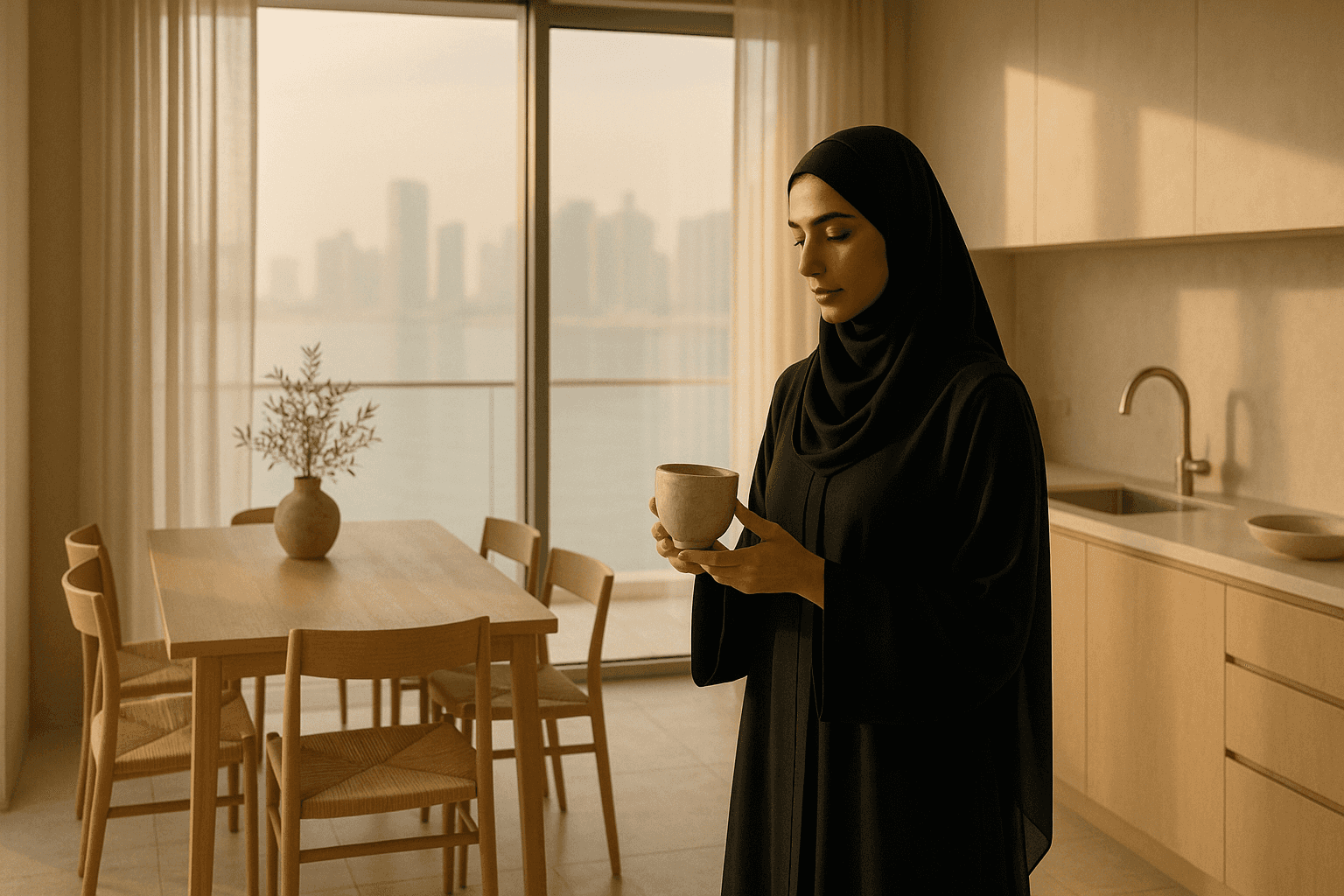
The Artisan's Address: A Dubai Property Guide
For Dubai's growing class of artists, designers, and makers, finding a home that is also a sanctuary for creativity is paramount. I'll guide you through the communities and properties that offer the space, light, and spirit for your craft.

For years, the story of Dubai property was one of vertical luxury and manicured beachfronts. But beneath that glossy surface, a different narrative has been taking shape — one driven by the city's burgeoning community of artists, makers, designers, and artisans. For them, a home is more than an address; it's a studio, a workshop, and a sanctuary. This is my guide to finding that perfect space.
Here’s what we'll explore in this guide:
- Defining the 'Artisan Home' in the context of Dubai's property market.
- The pros and cons of established creative districts versus emerging neighbourhoods.
- A deep dive into specific communities offering space, light, and value.
- A practical comparison: apartment vs. Villa for creative work.
- A line-by-line cost breakdown of buying a creative-friendly property.
- The importance of community infrastructure — from workshops to galleries.
- My final verdict on the best locations for Dubai's creative class.
What Makes an Artisan Home?
Before we can find the right property, we need to define what a 'Dubai artist home' truly is. It's a concept that goes far beyond a simple apartment or villa. In my experience working with clients from painters to potters, the criteria are consistent and specific. First and foremost is space — not just square footage, but usable, flexible space. This might mean a spare bedroom that can be converted, a large living area with a clear, uninterrupted wall, or a ground-floor unit with a generous terrace. For messier crafts like sculpture, carpentry, or ceramics, a maid's room with its own ventilation and water access, or better yet, a villa with a garage, becomes non-negotiable.
The second critical element is light. Natural light is the lifeblood of any visual artist. I’ve seen clients walk away from otherwise perfect properties simply because the orientation was wrong or the windows were too small. We're looking for corner units, floor-to-ceiling windows, or layouts that allow for dual-aspect light. In Dubai, where the sun is intense, it's also about controllable light. A north-facing aspect is often prized by painters for its consistent, indirect light, while a west-facing view might be a nightmare of afternoon glare. It’s a nuance that generic property searches often miss but is absolutely fundamental for a creative.
Finally, there's the less tangible but equally important factor of acoustics and durability. A musician needs a space where they can practice without disturbing neighbours, which points towards well-constructed buildings with solid walls or, ideally, a standalone villa. A ceramicist needs flooring that can handle a dropped piece of clay or a water spill. This steers us away from high-end properties with delicate marble floors and towards more practical finishes like high-quality porcelain tile or even polished concrete in some modern developments. These practical considerations are what separate a mere residence from a true live/work environment for an artisan. The ideal property allows for a certain amount of mess, noise, and modification without violating building rules or creating friction with the surrounding community.
The Gravity of Creative Hubs: Al Quoz & d3
 Featured project
For any serious conversation about creative communities Dubai, we have to start with the two epicentres: Alserkal Avenue in Al Quoz and the Dubai Design District, known as d3. These aren't just places of work; they are powerful magnets that shape the residential choices of the entire creative ecosystem. Al Quoz, with its industrial grit and sprawling warehouses, is home to the city’s most important contemporary art galleries, independent cinemas, and maker spaces. It is the heart of the city's grassroots creative scene. The challenge, however, is that Al Quoz itself has very limited formal residential offerings. It's primarily an industrial and commercial zone. Therefore, creatives who want to be close to its energy look to the communities on its periphery.
This is where neighbourhoods like Al Barari come into play for those with a higher budget. It’s a short drive from Al Quoz but feels a world away with its lush, dense landscaping and focus on serene living. An artist can spend their day amidst the industrial chic of Alserkal and retreat to a spacious, green sanctuary. The villas in Al Barari offer the square footage and privacy for a substantial home studio. On a more accessible budget, areas like Jumeirah Village Circle (JVC) or Arjan offer a compromise. They are a 10-15 minute drive away and provide a wealth of modern apartment options that are more affordable, many with balconies or terraces that can be used for cleaner crafts.
On the other side of the spectrum is d3, a purpose-built hub for the design, fashion, and luxury industries. It's polished, organised, and home to global brands, architectural firms, and the Dubai Institute of Design and Innovation. Unlike Al Quoz, d3 was designed from the ground up with residential components in mind. The executive residences and modern apartments within d3 itself are the ultimate in convenience for a designer or architect working there. However, this convenience comes at a premium. The real opportunity for many lies in the adjacent areas. Business Bay, with its forest of residential towers, is directly next door. An artist can find a spacious one or two-bedroom apartment with stunning canal or skyline views, often with a study or maid's room that is perfect for a home office or studio. The connectivity to d3 is smooth, and you benefit from the vibrant urban life of Business Bay after hours.
Emerging Neighbourhoods: Space and Value
While the gravitational pull of Al Quoz and d3 is strong, the most exciting developments for aspiring artisans are happening in Dubai's emerging neighbourhoods. These areas, often slightly further from the traditional centre, are where developers are experimenting with more generous floor plans and where your budget stretches significantly further. In my view, this is where the next generation of creative enclaves will form. These are the places that truly address the need for `craft friendly neighbourhoods Dubai` by providing the foundational element: affordable space.
Take Liwan in Dubailand, for example. It's a community that has quietly been gaining a following among those in the know. Characterised by its low to mid-rise buildings and distinctly San Francisco-inspired architecture, Liwan offers some of the most spacious apartments for their price point in Dubai. It's not uncommon to find one-bedroom apartments over 1,000 square feet, often with large balconies and extra storage space. This is a game-changer for someone needing a dedicated area for painting, crafting, or digital design. The community is still developing, which means prices are competitive, but the infrastructure is solid and its location just off Sheikh Mohammed Bin Zayed Road and Dubai-Al Ain Road provides excellent city-wide connectivity.
Another area I consistently recommend to creative clients is Arjan. Located just behind Dubai Hills and near the popular Dubai Miracle Garden, Arjan offers a mix of brand-new buildings from reputable developers. Because it's a newer area, the apartments often feature modern layouts with better light and more efficient use of space. You can find large studios and one-beds that feel more open and are easier to configure as a live/work area. Developers like Vincitore and Deyaar have projects here that focus on quality amenities without the price tag of prime central locations. For a creative professional, this means you can secure a brand-new property with a 10-year structural warranty and lower service charges, freeing up capital for your craft.
Finally, we shouldn't overlook areas like Dubai Production City (formerly IMPZ) and Dubai Studio City. As their names suggest, these zones were conceived to support the media and production industries. While known for their commercial spaces, they also have a growing number of residential buildings. The key advantage here is the existing infrastructure for creative enterprises and a population that is already skewed towards creative professions. You're more likely to find neighbours who are photographers, writers, and designers. The properties themselves, such as those in the Midtown development by Deyaar, are designed for modern living with an emphasis on community spaces, offering a balanced lifestyle for a reasonable budget. These areas represent the smart money for creatives who are playing the long game.
The Practicalities: Apartment vs. Villa
For an artisan, the choice between an apartment and a villa is not merely about lifestyle; it's a fundamental business decision. Each option presents a distinct set of opportunities and constraints that directly impact the creative process. An apartment offers urban connectivity, lower running costs, and access to shared amenities. A villa provides space, privacy, and the freedom to make a glorious mess. In my consultations, I always frame this as a trade-off between convenience and control.
A large apartment in a newer building can be an excellent choice for 'clean' creatives: writers, digital artists, graphic designers, or jewellers. The key is to look for specific layouts. A 'one-plus-study' is the classic choice, giving you a distinct, separate room for work. I also advise clients to look for corner units for dual-aspect light, or top-floor apartments which sometimes feature higher ceilings. The financial advantages are clear: apartments have a lower purchase price and significantly lower running costs. Service charges are a major factor, but they cover gym, pool, security, and building maintenance, which are costs you would have to bear yourself in a villa. However, the constraints are real. You are bound by the building's rules regarding noise, modifications, and sometimes even the type of business you can register to the address. You can't just knock down a wall or install industrial-grade ventilation.
“The perfect artisan home in Dubai isn't just about aesthetics; it's a strategic asset that balances the demands of your craft with the realities of the market.”
Conversely, a villa is the dream for many artisans, especially those involved in sculpture, carpentry, painting, or pottery. The primary benefit is the garage. In Dubai, a two-car garage in a standard three-bedroom villa is a vast, high-ceilinged space that is a blank canvas for a workshop. It’s separate from the main living area, has a durable concrete floor, and direct access to the outside. This is your space to be loud and messy. The garden offers another dimension for sculptors or even photographers needing outdoor space. Beyond that, the privacy of a villa means you are less likely to disturb neighbours with noise or fumes (provided you have proper ventilation). The downside is, of course, cost. Villas in desirable communities like Arabian Ranches or Sobha Hartland command a significant premium over apartments. All maintenance — from the air conditioning to the garden, is your own responsibility and cost. You are trading the convenience of a managed building for ultimate control over your environment.
A Worked Example: The Cost of a Creative Space
Let's move from the abstract to the concrete. Talking about space and light is lovely, but it’s the numbers that determine what’s possible. Let's imagine you are a graphic designer looking for a spacious one-bedroom apartment with a dedicated area for a home studio. You've identified a promising 950 sq ft unit in a new building in Arjan. Here is a realistic breakdown of the upfront costs to browse properties for sale and complete the purchase, assuming a purchase price of AED 1,100,000.
This is a secondary market transaction, so you'll need a mortgage. The Central Bank of the UAE mandates a minimum down payment for expatriate buyers.
Line-by-Line Purchase Cost Breakdown (AED 1,100,000 Property):
- Purchase Price: AED 1,100,000
- Down Payment (20% for expatriates on first property under AED 5M): AED 220,000
- Dubai Land Department (DLD) Transfer Fee (4% of price): AED 44,000
- DLD Registration Fee: AED 4,200 (This is a fixed fee including VAT)
- Real Estate Agency Fee (2% of price + 5% VAT): AED 23,100
- Mortgage Registration Fee (0.25% of loan amount): AED 2,200 (on the AED 880,000 loan)
- Bank Mortgage Arrangement Fee (approx. 1% of loan amount + 5% VAT): AED 9,240
- Property Valuation Fee (Bank requirement): AED 3,150 (approximate, includes VAT)
- Trustee Office Fee (for transfer): AED 4,200 (fixed fee)
Total Upfront Cash Required: AED 309,090
This figure is often a surprise to first-time buyers who only budget for the down payment. The various fees and administrative charges add nearly AED 90,000 to the initial cash outlay. It is critical to have this full amount liquid before you begin your property search. Once you own the property, you also need to factor in annual running costs. For our 950 sq ft apartment in Arjan, a reasonable service charge would be around AED 16 per sq ft.
Annual Running Costs Example:
- Service Charges (950 sq ft @ AED 16/sqft): AED 15,200 per year
- DEWA (Electricity & Water): Varies with use, but budget approx. AED 800-1,200 per month
- Home Insurance: Approx. AED 1,000 per year
These ongoing costs are just as important as the purchase price when assessing affordability. For a creative professional whose income can fluctuate, having a clear and conservative picture of all associated expenses is the cornerstone of a sustainable investment in both your home and your craft.
Community and Infrastructure
Beyond the four walls of your home studio, the surrounding community and its infrastructure play a vital role in the life of a creative professional. This is about more than just having a nice coffee shop nearby; it's about access to suppliers, collaborators, clients, and inspiration. This is where the choice of neighbourhood becomes deeply strategic. Living in a 'creative-friendly' area means being part of an ecosystem that supports your work practically and spiritually.
Proximity to specialised suppliers is a huge, often underestimated, factor. If you're a painter, being a short drive from a well-stocked art supply store in Al Quoz saves you hours each week. If you're a fashion designer, being near the textile shops of Satwa or Bur Dubai is essential. A carpenter needs easy access to the timber yards and hardware suppliers in industrial areas. Choosing a home in a location like Jumeirah Village Circle (JVC) or Al Barsha South offers a strategic advantage, as these areas are centrally located with excellent road access to Al Quoz, the industrial zones of Al Quoz, and the old city, while still providing affordable and spacious living options.
On top of that, the presence of shared facilities can be a game-changer. While still a growing trend, we are seeing more new developments that include co-working spaces, libraries, or multi-purpose 'residents' lounges'. While not a full-blown workshop, these spaces can be invaluable for meeting clients, collaborating with other freelancers, or simply getting out of your own apartment for a few hours. For instance, developments by Emaar Properties in Dubai Hills Estate often feature exceptional shared amenities that foster a sense of community. For those requiring more heavy-duty equipment, having a membership at a communal maker space like 'makespace' in Al Quoz, while living nearby, can be the perfect hybrid solution. You get the benefit of industrial-grade machinery without the cost and space commitment of owning it yourself. This allows you to opt for a smaller, more affordable apartment while still having access to professional-level tools.
The ideal property for a Dubai creative is a blend of personal space and community access. It requires finding a home with the right light and layout in a neighbourhood that provides practical support, from supply chains to collaborative spaces. The smartest buyers look for value in emerging areas like Liwan or Arjan, which offer the generous floor plans necessary for a home studio without the premium of established postcodes.
My Verdict: Where to Invest in Your Craft
After years of walking clients through warehouse conversions, spacious villas, and light-filled loft apartments, my advice for the Dubai artisan has crystallised. There is no single 'best' place, but there is a 'best fit' for your specific craft, budget, and lifestyle. If money is no object and your craft is messy, a villa in a green, quiet community like Arabian Ranches or even the ultra-luxe Al Barari is unbeatable. The garage is your workshop, the garden your canvas, and the privacy is absolute. The connection to the creative energy of Al Quoz is a short, stress-free drive away.
However, for the majority of creatives, value and practicality are the driving forces. This is where I believe the true opportunity lies. My personal recommendation for the balanced choice is to focus on the large, modern apartments in Arjan and Liwan. These areas are the sweet spot. They deliver the square footage and flexible layouts that are so crucial for a home studio, but at a price point that doesn't cripple you financially. The buildings are new, the amenities are excellent, and the communities are young and energetic. You get the benefits of a new build — lower maintenance, modern fittings, often a post-handover payment plan if buying off-plan, while being strategically positioned to access the whole city.
For those drawn to the polished world of design and fashion, I would suggest looking at the larger one and two-bedroom apartments in Business Bay on the border of the Design District. You get immediate access to the d3 ecosystem, a vibrant urban lifestyle, and properties with excellent layouts and stunning views that are perfect for client meetings. The cost is higher than in Arjan or Liwan, but the prestige and convenience can be worth it for a client-facing creative business. Ultimately, finding the right `artisan workshops property` in Dubai is about looking past the marketing brochures and focusing on the fundamentals: light, space, and a community that enables your work. The good news is, the options have never been better.
Sources
- Dubai Land Department (DLD) - dubailand.gov.ae
- Central Bank of the UAE - centralbank.ae
- UAE Government Portal (Property Purchase Information) - u.ae
Questions, answered
- Which Dubai areas are best for artists and creatives?
- Established creatives often look at areas near Al Quoz and Dubai Design District (d3), such as Business Bay or Al Barari. For more space and value, emerging neighbourhoods like Liwan, Arjan, and even some parts of Dubai Production City offer larger apartments suitable for a home studio.
- Can I legally run a creative business from my home in Dubai?
- Yes, for many creative professions, you can. The DED Trader Licence from Dubai Economy and Tourism allows freelancers and home-based business owners to operate legally. However, activities involving noise, hazardous materials, or significant client traffic may be restricted in residential zones, so you must check the specific rules for your activity.
- Are there properties in Dubai with dedicated workshops or maker spaces?
- While it's still a niche market, some new developments are incorporating co-working lounges and multi-purpose rooms that can be used for clean creative work. For heavy-duty craft, most artisans still look for a villa with a garage or a larger-than-average apartment layout they can adapt themselves.
- What should I budget for service charges in a creative-friendly apartment?
- Service charges in Dubai vary significantly by building quality, age, and amenities. For a spacious apartment in a mid-range but well-maintained building in areas like JVC or Liwan, you should budget between AED 14 and AED 20 per square foot, per year. For premium communities, this can exceed AED 25 per sqft.
- Is a villa or an apartment better for a creative professional in Dubai?
- It depends on your craft and budget. Villas offer unparalleled space, privacy, and often a garage perfect for a messy workshop, but come at a higher cost. Large apartments in newer communities can provide great natural light and flexible layouts for 'clean' crafts like digital art or writing, often with better access to urban amenities.
- How can I find a studio apartment in Dubai that's good for creative work?
- Look beyond the standard 'studio apartment Dubai creative' search. Focus on buildings with loft-style layouts, high ceilings, or corner units with dual-aspect windows for maximum light. Newer communities in areas like Arjan or Liwan often have more generous and unconventional floor plans compared to older, more central districts.

Yusuf writes about how Dubai actually lives — waterfront mornings, community dining, walkability, and the lifestyle premium built into an address.
Related stories
Dubai's Big Squeeze: Smaller Plots, Denser Living
Dubai real estate is undergoing a fundamental shift towards smaller plot sizes and higher density. We analyse the economic drivers, the impact on property values, and what this new era of compact urban living means for both homebuyers and investors.
Resort Living as Your Dubai Reality
Explore how to trade temporary staycations for a permanent home with five-star amenities in Dubai. I'll break down the real costs, best communities, and lifestyle trade-offs of embracing high-end resort living every day.
Finding Your Tribe in Dubai's Villa Communities
I explore which of Dubai's renowned villa communities attract specific expat nationalities and lifestyle groups, offering insights to help you find a place that feels like home.
Echoes, in your inbox
One thoughtful email a month. Market insight, new launches, no spam.