

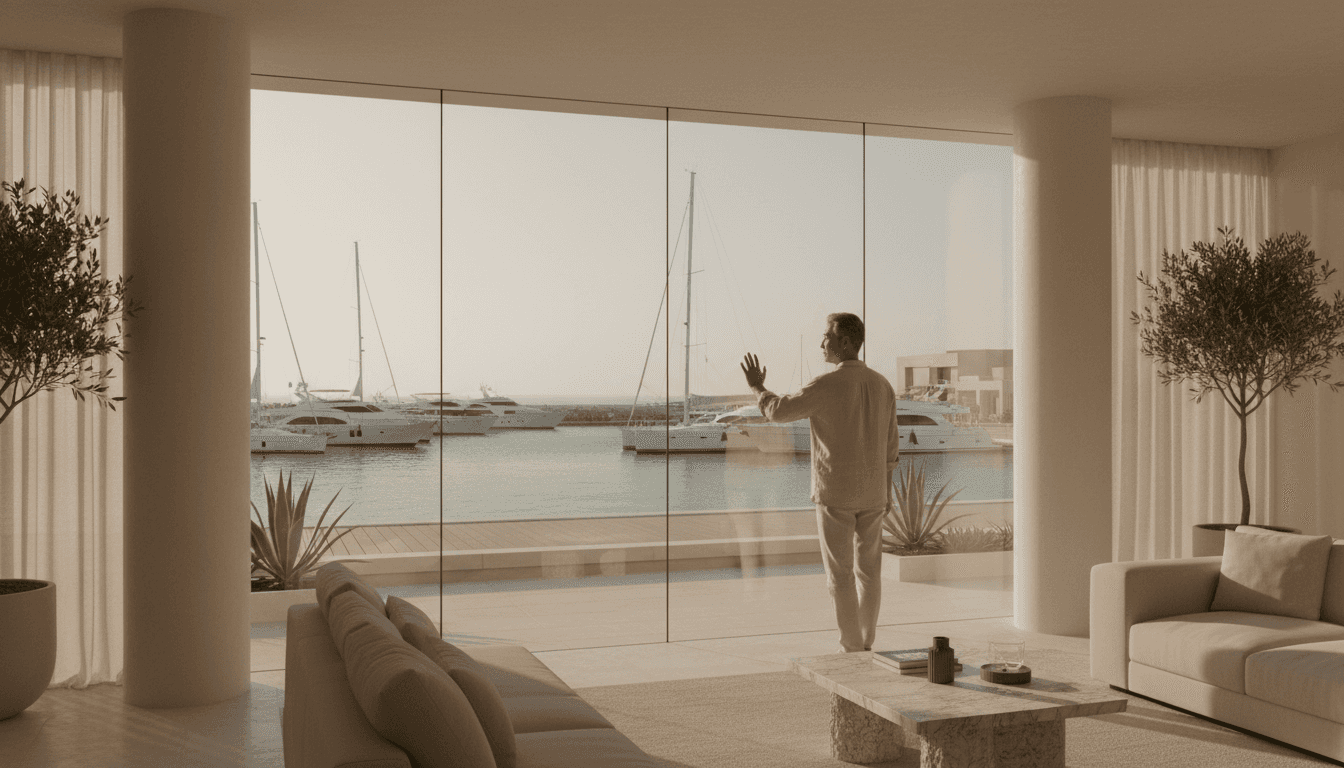
Resort Living as Your Dubai Reality
Explore how to trade temporary staycations for a permanent home with five-star amenities in Dubai. I'll break down the real costs, best communities, and lifestyle trade-offs of embracing high-end resort living every day.

The line between a five-star holiday and everyday life is blurring in Dubai's property market. But what does it really take to make your address feel like a permanent vacation?
Here’s what I'll explore in this guide to finding your own piece of paradise:
- The fundamental appeal of daily resort living in Dubai.
- Key communities that truly deliver a 'staycation' lifestyle.
- The financial reality: a full breakdown of the true costs involved.
- Branded residences versus developer-led resort communities.
- The amenity promise: what you actually get for your service fees.
- The practicalities: is this lifestyle a good fit for families and daily commutes?
- My personal verdict on the best options for different types of buyers.
The Dream of the Everyday Getaway
I remember the first time I walked through the lobby of a newly launched tower on the Palm Jumeirah. The scent of white tea and lemongrass, the gentle sound of a water feature, the sight of sunlight glinting off a vast infinity pool that seemed to merge with the Arabian Gulf. A client turned to me and said, “I spend a fortune every year to feel like this for one week. Why can’t I just live here?” That question, in my view, captures a fundamental shift in Dubai’s property market. The desire for a home is no longer just about square footage and proximity to work. It’s about curating a life. We’re seeing a powerful move towards what I call ‘permanent vacation homes’ — properties where the amenities and atmosphere of a luxury resort are not a temporary indulgence, but the baseline of daily existence.
This isn't just a trend for the ultra-wealthy. While the pinnacles of this lifestyle are found in exclusive enclaves, the concept has democratised. Developers have recognised the immense appeal of staycation homes in Dubai and are integrating high-end leisure facilities into a much wider range of projects. It’s a direct response to a global wellness trend and a post-pandemic recalibration of what a ‘home’ should provide. People want more than just shelter; they want a sanctuary, a place for recreation, and a community hub, all within walking distance. The promise is seductive: finish your workday and, instead of facing a long drive to a crowded gym or public beach, you take an elevator down to your private cinema, state-of-the-art fitness centre, or residents-only stretch of sand.
At Gaia Living, we consult with clients every day who are actively seeking this lifestyle. They are often professionals who travel frequently and want their home base in Dubai to feel like a five-star hotel. They are families who want to give their children a childhood of swimming pools and green parks. They are also savvy investors who recognise that properties with luxury amenities Dubai are in high demand on the rental market, commanding premium rates from tenants who are also chasing that resort experience. The city's master planners have leaned into this, creating entire districts purpose-built around leisure. Places like Emaar Beachfront or Bluewaters Island weren’t conceived as just residential areas; they were designed as destinations. This shift changes the entire calculus of buying a home. You’re not just acquiring real estate; you’re buying into a meticulously crafted lifestyle.
The Anatomy of a Resort Community
 Featured project
So what separates a standard apartment building with a pool from true Dubai resort homes? The difference is one of scale, quality, and integration. It's about creating a self-contained world where your daily needs and leisure desires are met with an exceptional level of service and design. In my experience, the best examples of these exclusive communities Dubai share a few core characteristics. Firstly, the arrival experience is paramount. This begins with a hotel-style porte-cochère, valet parking, and a grand lobby staffed with a 24/7 concierge. It’s designed to immediately signal a transition from the outside world into a private, managed environment. This isn’t just about aesthetics; it’s a functional service that simplifies life, whether you're carrying groceries or welcoming guests.
Secondly, the amenity stack is deep and varied. A basic gym and a simple rectangular pool don't cut it. We’re talking about multiple, temperature-controlled swimming pools — lagoon-style family pools, adult-only rooftop pools, and even private plunge pools on apartment terraces. The fitness facilities are often vast, with dedicated studios for yoga and spin classes, professional-grade equipment, and sometimes even on-site personal trainers. Beyond fitness, you’ll find residents' lounges for co-working or socialising, private cinemas, games rooms, and outdoor barbecue areas with dining pavilions. For families, a high-quality kids’ club and outdoor play zones are non-negotiable. It’s an ecosystem designed to keep you happily occupied within the community's bounds.
One of the most significant differentiators, especially in prime locations, is private beach access. Communities like The Palm Jumeirah, where developers like Nakheel pioneered the concept, or newer hubs like Emaar Beachfront, offer residents a pristine, managed beachfront just steps from their door. This is a game-changer. It elevates a property from being ‘near the sea’ to being a genuine beachfront resort. This is often complemented by on-site food and beverage options, from casual pool-side cafes to fine-dining restaurants. A project like Mina Rashid Yachts & Marina by Emaar takes this further, integrating a world-class marina lifestyle directly into the residential offering. The goal is to create a smooth experience where you rarely need to leave. It’s a powerful proposition, but as we’ll see, it comes with a price tag that extends well beyond the initial purchase.
Finally, the landscaping and public realm are as important as the buildings themselves. These communities invest heavily in creating a beautiful, walkable environment. Think lush, mature gardens, shaded pathways, and stunning water features. Al Barari is perhaps the ultimate example, a green oasis famous for its botanical gardens, lakes, and waterways. It feels less like a residential development and more like a tropical nature reserve. Similarly, Sobha Hartland, with its extensive green spaces along the Dubai Canal, offers a resort feel away from the coastline. This focus on the environment contributes hugely to the feeling of being in a sanctuary, a world away from the hustle of the city, even when you're just minutes from its heart.
The Financial Reality: Unpacking the True Cost
This is the conversation I have with every client mesmerised by the resort lifestyle. The glossy brochures and stunning show homes are one thing; the real-world numbers are another. Embracing high-end living Dubai requires a clear-eyed understanding of the total cost of ownership, which goes far beyond the sticker price. The purchase price itself carries a significant premium. A two-bedroom apartment in a resort-style community can easily cost 20-50% more than a similar-sized unit in a standard building in an adjacent area. You are paying for the beach, the brand, the view, and the promise of that lifestyle. But the upfront cost is just the beginning. The most critical number to scrutinise is the annual service charge.
Service charges are the fees you pay for the maintenance and operation of all those incredible amenities. They are calculated in AED per square foot of your property's area. In a standard Dubai building, you might expect to pay AED 12-18 per sq ft. In a high-end resort community, that figure can easily jump to AED 25, AED 35, or even upwards of AED 45 per sq ft. For a 1,500 sq ft two-bedroom apartment, that’s the difference between paying AED 22,500 per year and paying AED 67,500 per year. That AED 45,000 difference is a significant annual expense that you must factor into your budget for the entire time you own the property. These fees cover the 24/7 concierge, security, lifeguard salaries, pool chilling and heating, gym maintenance, landscaping, and the general upkeep of the building to a five-star standard. It's the price of convenience and luxury.
Let’s walk through a realistic, line-by-line cost breakdown for buying a secondary market two-bedroom apartment in a resort-style community for, say, AED 4,000,000.
- Property Price: AED 4,000,000
- Dubai Land Department (DLD) Transfer Fee: 4% of property price = AED 160,000
- DLD Admin Fee: AED 4,200 (fixed fee)
- Real Estate Agency Fee: 2% of property price + 5% VAT = AED 84,000
- Trustee Office Fee: Approximately AED 4,200 (for title deed issuance)
- No Objection Certificate (NOC) Fee: AED 500 - AED 5,000 (paid to the developer)
- Initial Upfront Cost (Cash Purchase): Approximately AED 4,252,400
If you're using a mortgage, the calculation changes. Assuming you're a resident eligible for an 80% loan-to-value mortgage:
- Down Payment (20%): AED 800,000
- Mortgage Registration Fee: 0.25% of loan amount (0.25% of AED 3.2M) = AED 8,000
- Bank Processing & Valuation Fees: Approx. AED 8,000 - AED 10,000
- Total Upfront Cost (Mortgage Purchase): Around AED 1,068,400 (Down payment + all other fees)
These are the one-time costs. Then, the recurring annual costs begin. Using our 1,500 sq ft apartment example with a service charge of AED 30 per sq ft, you’re looking at AED 45,000 per year. This fee is non-negotiable and legally enforceable by the Owners Association. My advice is always to request the last two years of service charge statements for any property you're serious about. This allows you to see the actual costs and check for any sudden increases. It's crucial to budget for these fees as a fixed, ongoing expense, just like a mortgage payment.
Branded Residences: The Pinnacle of Service
Within the world of resort living, branded residences represent the absolute peak. These are projects directly affiliated with a world-renowned luxury brand, most often a five-star hotel operator like Four Seasons, Ritz-Carlton, or Bvlgari, but sometimes also a fashion or design house. The key difference between a branded residence and a simple resort-style community is the service layer. When you buy into a branded residence, you are not just buying a property with great amenities; you are buying into the operational expertise and service culture of that brand. This means the staff — from the concierge to the maintenance team, are trained to the hotel's exacting standards. It’s a promise of a smooth, hotel-like living experience, every single day.
This comes with tangible benefits. Owners in branded residences often have access to the adjoining hotel's full suite of services, sometimes at a discount. This can include in-residence dining, housekeeping, laundry services, and spa treatments. It’s the ultimate turnkey lifestyle, where every possible domestic need can be outsourced to a trusted provider. An excellent example is the Bvlgari Residences at Jumeirah Bay, a project that combines stunning architecture with the impeccable service standards of the Bvlgari resort. Another is the work of Omniyat, a developer that has mastered this space with projects like The Lana Residences, Dorchester Collection. These aren't just apartments; they are curated homes managed by one of the world's most respected hospitality names.
“The real value in a branded residence isn't the marble in the lobby; it's the institutional memory of the service. It’s the doorman knowing your name, the concierge remembering your restaurant preferences, and the maintenance team operating with hotel-level efficiency.”
Of course, this level of service and prestige comes at a steep premium, both in purchase price and ongoing costs. Branded residences are typically the most expensive properties per square foot in any given area. Their service charges are also at the very top of the market, as they must cover the higher staffing levels and operational costs associated with the brand standard. There's also a brand fee, which is essentially a royalty paid for the use of the name and management system, baked into these charges. For buyers, the key question is whether this premium is justified. For many, the answer is a resounding yes. They are paying for peace of mind, unparalleled convenience, and the powerful status symbol that comes with the brand. Investors also see value, as branded residences often have strong capital appreciation potential and can achieve very high rental yields, particularly for short-term lets where they can be managed by the hotel's rental pool.
The Amenity Promise vs. Daily Reality
I always encourage clients to perform a 'lifestyle audit' before committing to a resort-style property. It's easy to be seduced by the endless list of amenities. A private cinema sounds wonderful, but will you actually use it? A cigar lounge might be beautifully appointed, but is it a space you'll frequent? The key is to honestly assess which facilities align with your actual, day-to-day life and which are just expensive novelties. The value proposition of high service charges diminishes quickly if you're only using the pool and gym. You are, after all, paying for the upkeep of everything, whether you use it or not. I advise clients to make a list: what are your non-negotiable daily or weekly activities? For a fitness enthusiast, a world-class gym and lap pool are essential. For a family with young children, a creative kids' club and a shaded playground are top priorities.
It’s also important to visit the community at different times of the day and week. How busy is the pool on a Friday afternoon? Is there a wait for the treadmills in the gym at 7 PM? This gives you a real-world sense of the community's atmosphere and how the amenities hold up under pressure. Some of the most popular communities can feel a bit like an actual resort on the weekends — vibrant and social for some, but perhaps too crowded for those seeking tranquility. The design and capacity of the amenities relative to the number of residents is a crucial factor that a good agent can help you assess. At Gaia Living, part of our due diligence for our clients involves understanding this resident-to-amenity ratio.
Another practical consideration is the guest policy. If a big part of your life is entertaining friends and family, you need to understand the rules. Can your guests use the private beach or the residents' lounge? Is there a limit on the number of guests you can bring to the pool? These policies vary widely and can significantly impact the social aspect of your resort-style home. A community that feels exclusive and private when you're alone might feel restrictive when you want to share it with others. These are the small, practical details that determine whether the lifestyle truly works for you. The dream of permanent vacation homes is powerful, but it must be grounded in the reality of your personal routine and social habits.
Is Resort Living Practical for Families?
The image of resort living often conjures up thoughts of couples or singles enjoying rooftop cocktails. However, many of Dubai's most successful resort-style communities are built squarely for families. Developers like Emaar and Nshama have excelled at blending the aspirational with the practical. A community like Arabian Ranches is a perfect case study. It combines a resort-like feel — with its golf course, polo club, and community pools, with the everyday necessities of family life. It has its own schools, medical clinics, and a community retail centre. The entire environment is designed for children to be able to ride their bikes, play in the parks, and have a safe, suburban-style upbringing, but with a distinctly upscale, leisurely feel.
Newer master-planned communities are doubling down on this model. Take Dubai Hills Estate, for example. It’s anchored by a championship golf course and the enormous Dubai Hills Mall, but it’s the family-friendly infrastructure that makes it so compelling. There are beautifully landscaped parks, splash pads, sports courts, and a network of jogging and cycling tracks. Crucially, it's also home to some of Dubai's top schools, like GEMS International School and King's College Hospital. This integration of education and healthcare within the resort-like setting is a huge draw for families. They don’t have to choose between a beautiful environment and practical convenience; they can have both. This makes the lifestyle sustainable in the long term, beyond just the initial holiday feeling.
Even in the more vertical resort communities, family needs are being addressed. On Palm Jumeirah, you’ll find nurseries and kids' clubs within residential towers. Creek Harbour, with its stunning waterfront promenade and views, is also being developed with extensive family-oriented parks and event spaces. The key for families is to look for communities where the 'resort' element is balanced by robust infrastructure. You need easy access to schools, supermarkets, and healthcare facilities. Proximity to major road networks like Sheikh Zayed Road is also vital for the school run and daily commute. The most successful family-oriented resort communities manage to feel like a secluded escape while still being exceptionally well-connected to the rest of the city.
My Verdict: Matching the Buyer to the Community
Having walked clients through countless properties in this category, my view is that there is no single 'best' resort community. The right choice depends entirely on your personal definition of paradise, your budget, and your life stage. It's about finding the perfect alignment between your lifestyle aspirations and the practical realities of a specific location. At Gaia Living, our role is to help you find that alignment.
For the young professional or couple seeking a vibrant, social, and quintessentially Dubai experience, I would point towards Emaar Beachfront or Bluewaters Island. The energy here is palpable. You have direct beach access, plenty of restaurants and retail on your doorstep, and iconic views. The trade-off is a higher density and a constant tourist buzz, which some find exciting and others overwhelming. These are places for those who want to be in the heart of the action.
For families prioritizing space, greenery, and a more serene environment, the choice is different. I’m a huge advocate for communities like Al Barari or Sobha Hartland. Al Barari offers an unparalleled connection to nature with its lush botanical gardens and waterways. It feels like a world apart. Sobha Hartland, particularly with its newer phases, provides large, modern homes with excellent green spaces and a prime location near Downtown, offering a superb balance of tranquility and access. For those looking for a more traditional, established family resort feel, the leafy streets and extensive facilities of Arabian Ranches remain a benchmark.
For the ultimate connoisseur of luxury and service, someone for whom convenience and prestige are the top priorities, only a branded residence will do. The offerings from developers like Omniyat in Business Bay or the Bvlgari residences in Jumeirah Bay are in a class of their own. They offer a level of effortless living that is simply unmatched. The cost is substantial, but for the right buyer, the value is undeniable. It’s the closest you can get to living in a five-star hotel, with the added benefit of it being your own home.
Choosing a resort-style home is a major financial and lifestyle decision. Look past the initial wow-factor of the amenities and perform a rigorous analysis of the annual service charges against your actual usage. The most successful purchases are made by those who find the perfect intersection between the dream of a permanent getaway and the practical demands of their daily lives.
Ultimately, the rise of the permanent vacation home is a sign of Dubai's evolution as a global city. It reflects a market that is maturing beyond simple accommodation to offer curated, world-class lifestyles. Finding your place within it requires introspection and expert guidance, but for those who get it right, the reward is a home that truly feels like an escape, every single day.
Sources
- Dubai Land Department (DLD): dubailand.gov.ae
- Real Estate Regulatory Agency (RERA): rera.gov.ae
- UAE Central Bank Mortgage Regulations: centralbank.ae
Questions, answered
- What are the best communities for resort-style living in Dubai?
- For waterfront luxury, consider Palm Jumeirah, Emaar Beachfront, and Bluewaters Island. For a more secluded, green resort feel, communities like Al Barari and Sobha Hartland offer incredible amenities with a focus on nature and wellness.
- Are resort-style properties a good investment in Dubai?
- They can be, as they often command premium rents and attract strong tenant demand due to their luxury amenities. However, they also come with higher purchase prices and service charges, so buyers must weigh the potential yield against the increased costs.
- How much are the service charges in a Dubai resort community?
- Service charges are significantly higher than in standard buildings. Expect to pay anywhere from AED 20 to AED 45 per square foot annually, depending on the level of amenities, the developer, and the exclusivity of the community.
- What's the difference between a branded residence and a resort-style community?
- A branded residence is officially partnered with a luxury hotel or fashion brand (e.g., Four Seasons, Bvlgari), offering their specific service standards. A resort-style community, often built by a master developer like Emaar or Nakheel, offers a similar five-star amenity set (pools, gyms, beach access) but without the third-party brand affiliation.
- Can I get a mortgage for a permanent vacation home in Dubai?
- Yes, mortgages are available subject to standard UAE Central Bank rules. As a resident, you'll typically need a down payment of at least 20% for properties under AED 5 million, or 25% for your first property over that threshold. Non-residents face stricter criteria.
- Is resort living in Dubai practical for families with children?
- Absolutely. Many modern resort communities like those in Dubai Hills Estate or Arabian Ranches are designed with families in mind, offering kids' clubs, play areas, and proximity to top-tier schools, blending the holiday feel with daily practicalities.

Yusuf writes about how Dubai actually lives — waterfront mornings, community dining, walkability, and the lifestyle premium built into an address.
Related stories
Dubai's Big Squeeze: Smaller Plots, Denser Living
Dubai real estate is undergoing a fundamental shift towards smaller plot sizes and higher density. We analyse the economic drivers, the impact on property values, and what this new era of compact urban living means for both homebuyers and investors.
Finding Your Tribe in Dubai's Villa Communities
I explore which of Dubai's renowned villa communities attract specific expat nationalities and lifestyle groups, offering insights to help you find a place that feels like home.
Post-Handover Quality: The Secret to Your Apartment's Value
Beyond the glossy brochures lies the real test of your property investment: how well a building ages. I'll break down why a developer's post-handover quality is the single most important factor for your apartment's long-term value.
Echoes, in your inbox
One thoughtful email a month. Market insight, new launches, no spam.