

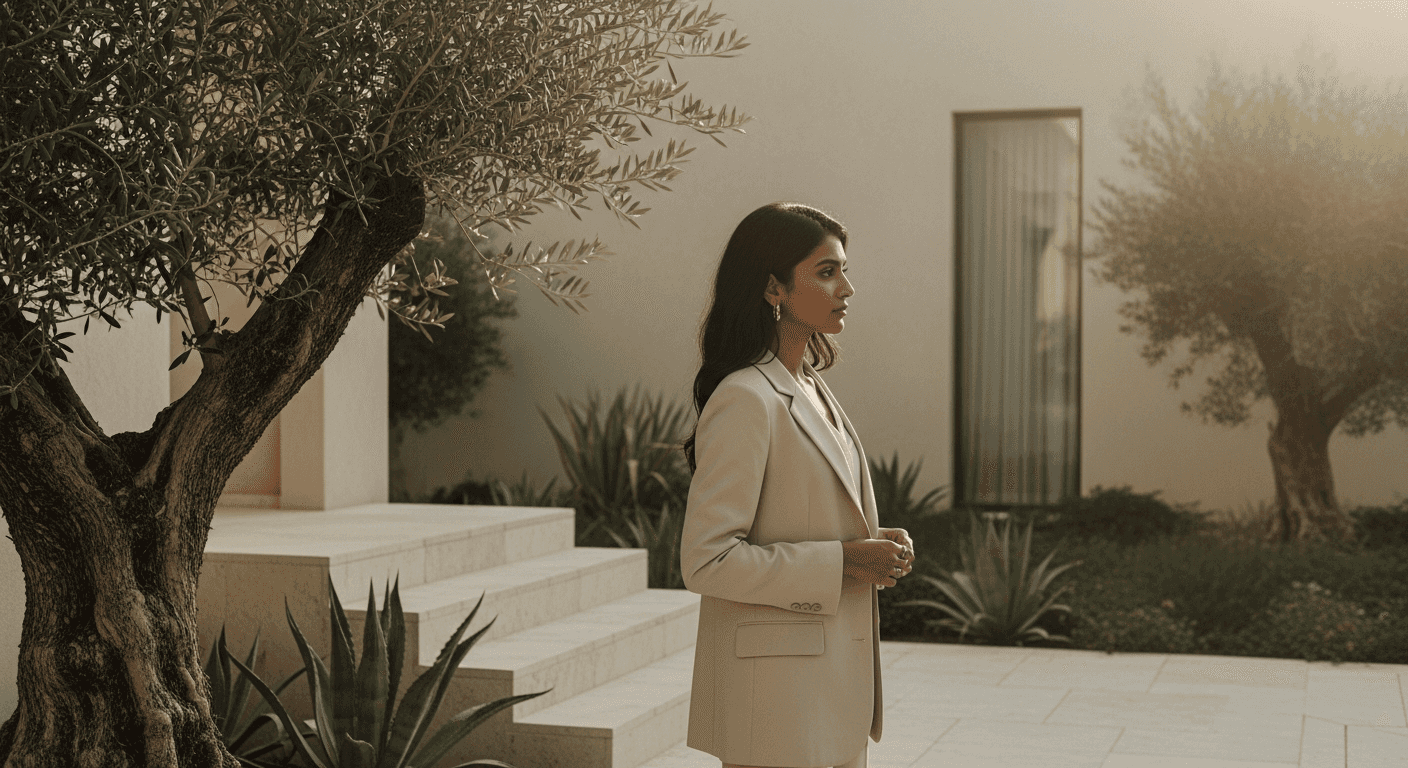
Dubai's Best Homes for Extended Families
Finding the right villa for multiple generations in Dubai is about more than just size. I'll explore the communities that truly cater to the needs of large, modern families, from layouts with private annexes to amenities that appeal to all ages.

More and more, the conversations I have with clients are about finding a home not just for their immediate family, but for the whole family. The desire for grandparents, parents, and children to live together — or at least, next door to one another, is a beautiful and deeply practical trend that is reshaping what we look for in a ‘forever home’ here in Dubai.
Here's what we'll explore in this guide:
- The evolving definition of a 'family home' in Dubai.
- Key features to look for in a true multigenerational villa.
- My personal take on the best communities for every lifestyle and budget.
- A complete, line-by-line breakdown of the costs involved.
- How to navigate the legal and practical sides of co-ownership.
The New Family Compound: Why Multigenerational Living is Thriving
For generations, the extended family unit has been the bedrock of society in this region. What I’m seeing now is a modern interpretation of that tradition, driven by a blend of cultural values and twenty-first-century pragmatism. After years of global mobility, many people are seeking to re-establish roots and bring their families closer. The convenience of having grandparents on hand for childcare is an undeniable pull for busy working parents. Conversely, older family members benefit from the support, companionship, and vibrancy of being part of a busy household. It’s a return to a village-like support system, but within the framework of a modern, master-planned Dubai community.
The city's lifestyle itself encourages this shift. Dubai is a place built for families. The safety, the world-class schools, the abundance of parks and recreational facilities — it all makes for an environment where every generation can find its niche. The pandemic also played a role, reminding many of us about the importance of having our loved ones near. I spoke with a client recently who had decided to sell their separate homes to buy one large property together. Their reasoning was simple: “We spent months apart, and we decided we never want to do that again. We want to share the daily moments, not just the holidays.” This sentiment is becoming increasingly common.
Developers are responding to this demand for extended family homes Dubai. We are seeing more layouts that go beyond just a high bedroom count. The market for multigenerational villas Dubai is maturing, with architects and builders thinking critically about privacy, accessibility, and shared spaces. It’s no longer enough to have five bedrooms; families now want a ground-floor suite for elderly parents to avoid stairs, a separate entrance for a young adult still living at home, or even a dedicated ‘majlis’ wing that can serve as a communal living area distinct from the main family lounge. This is a move away from the simple, large villa towards a more sophisticated, flexible home that can adapt as the family’s needs change over time.
What Makes a Villa Genuinely Multigenerational?
 Featured project
Finding a home that truly works for three generations under one roof requires looking beyond the square footage. A truly functional multigenerational home is a careful balance of shared spaces and private retreats. In my experience showing these properties, a few key features consistently make the difference between a large house and a harmonious family compound. First and foremost is the layout. The most sought-after properties feature at least one master bedroom suite on the ground floor. This is non-negotiable for many families with elderly parents, providing comfort and accessibility while ensuring they remain at the heart of the home.
Another critical element is the provision for private space. This might take the form of a villas with annex Dubai or a guesthouse, which offers the ultimate in independence for grandparents or adult children. More commonly, it manifests as a secondary family room or living area on the upper floor, giving teenagers or a second family unit their own space to relax. I’ve seen some magnificent custom villas in Al Barari that include entire ‘apartments’ within the main house, complete with a kitchenette and living room. Even in more standard layouts, a villa with two distinct living areas — one formal, one informal, can provide the necessary separation to keep everyone happy.
Here are the practical features I always advise my clients to look for:
- Ground-Floor Bedroom Suite: An absolute must for elderly relatives, with an en-suite bathroom, ample storage, and easy access to the main living areas.
- Multiple Living Areas: A formal living room for entertaining, a casual family room for daily life, and perhaps a smaller upstairs lounge or study area.
- Flexible Rooms: A study that can become a nursery, a playroom that can convert into a gym, or a large landing that can serve as a homework station.
- Separate Entrances: Even a secondary door from the garage or garden can provide a sense of independence for family members living in an attached suite.
- Ample Bathrooms: Ideally, most bedrooms should have an en-suite, or at least a very high bathroom-to-bedroom ratio to avoid morning traffic jams.
- A Well-Designed Kitchen: It needs to be large enough for multiple people to cook and gather, with plenty of storage and often a secondary ‘service’ kitchen for heavy cooking.
Finally, the outdoor space is just as important as the indoor. A garden with different zones — a patio for dining, a lawn for children to play, and a quiet, shaded corner for reading, allows everyone to enjoy the outdoors in their own way. A temperature-controlled pool is practically a standard requirement for spacious family villas in Dubai, providing a focal point for family leisure across all age groups. It's the thoughtful combination of these elements that creates a home where a large family can thrive together, not just coexist.
The Gold Standard: Arabian Ranches & The Meadows
When clients ask me for classic, reliable communities for large families, my mind immediately goes to two of Dubai's most beloved and established villa communities: Arabian Ranches and The Meadows. These areas represent the gold standard for a reason. They were master-planned by Emaar Properties from the outset with families in mind, and it shows in every tree-lined street and sprawling park. The sense of community here is palpable, built over two decades of school runs, weekend barbecues, and neighbourhood gatherings. This is where you find true Dubai family compounds, homes that have been lived in, loved, and often extended or upgraded over the years to accommodate growing families.
What makes Arabian Ranches so special for multigenerational living is the sheer scale and variety of its villas. The original phase, in particular, offers some of the largest plot sizes you will find in Dubai for the price point. Villas in sub-communities like La Coleccion, Hattan, and Mirador often exceed 6,000 sq.ft. And sit on plots of over 10,000 sq.ft. These are not just houses; they are estates. Many feature traditional layouts with ground-floor guest rooms, multiple living and dining areas, and large, mature gardens perfect for installing a private pool or creating a dedicated play area. The build quality is solid, and the aesthetic — while more traditional, has a timeless appeal that many families prefer over the stark white boxes of some newer developments.
Similarly, The Meadows, part of the wider Emirates Living community, offers that same sense of established greenery and space. The villas here, especially the larger types, are renowned for their generous layouts and positions backing onto the community lakes and parks. The infrastructure is mature: the schools are established, the community centres are bustling, and the road network is fully developed. For a family putting down long-term roots, this stability is priceless. You know exactly what you are getting. While you may not find the sleek, modern finishes of a brand-new villa, you get something arguably more valuable: a sense of place and a proven track record as one of Dubai's premier family neighbourhoods. These communities feel less like developments and more like hometowns.
Modern Luxury: Dubai Hills Estate & Al Barari
For families seeking a more contemporary aesthetic combined with top-tier luxury, two communities stand out: Dubai Hills Estate and Al Barari. These represent the new wave of spacious family villas, where modern architecture, premium finishes, and an integrated, wellness-focused lifestyle are paramount. Dubai Hills Estate, another masterpiece by Emaar, is often described as a ‘city within a city’. It has rapidly become one of the most desirable addresses for affluent families, and in my view, it absolutely lives up to the hype. The location is central, the amenities are world-class — including the magnificent Dubai Hills Park and Dubai Hills Mall, and the properties themselves are exceptional.
The villas in sub-communities like Parkway Vistas, Fairway Vistas, and the ultra-exclusive Hills Grove Villas are designed for modern multigenerational living. They feature open-plan layouts, floor-to-ceiling windows that flood the interiors with light, and high-end finishes as standard. Critically, many of the 6 and 7-bedroom layouts include a full guest suite on the ground floor and multiple living spaces, ticking those essential boxes for extended families. The plots are generous, and the entire community is woven around the championship golf course, creating stunning green views and a sense of openness. This is a community that caters to every generation, from the skate park for teenagers to the manicured walking trails for grandparents, all within a secure, pristine environment.
Then there is Al Barari, which is in a league of its own. It’s less a community and more a botanical paradise. The defining feature here is the incredible landscaping; over 60% of the development is dedicated to green space, with themed gardens, natural lakes, and freshwater streams. For families who value nature, privacy, and wellness above all else, there is simply no comparison. The villas themselves are palatial, with some of the largest and most unique layouts in Dubai. Many were designed as custom Dubai family compounds from the start, featuring separate guest houses, basement cinemas, private spas, and enormous rooftop terraces. The emphasis on privacy is absolute, with huge plots and dense foliage creating secluded family sanctuaries. The community centre, The Farm restaurant, and the Body Language health club provide a sophisticated, village-like hub. Al Barari isn’t for everyone — the price point is exclusive and the style is distinct, but for the right family, it is the ultimate expression of multigenerational luxury living in Dubai.
The Financial Reality: A Full Cost Breakdown
Finding the perfect home is one thing; financing it is another. It’s crucial to go into the process with a clear understanding of all the costs involved, not just the sticker price. The upfront fees can be substantial, and ongoing costs like service charges are a significant part of the long-term financial commitment. Let’s break down the typical costs for purchasing a resale villa, using a hypothetical example of a AED 10,000,000 property, which is a realistic starting point for a larger family home in a prime community.
First, the upfront government and agency fees. These are mandated and non-negotiable. The largest single cost is the Dubai Land Department (DLD) transfer fee, which is 4% of the purchase price. On our AED 10 million villa, that’s a significant AED 400,000. On top of that, you have fees for issuing the new Title Deed, which are typically AED 580 for properties over AED 500,000. As an agency, we charge a standard 2% fee for our services in sourcing the property, negotiating the deal, and managing the entire transfer process. This fee, along with most others, is also subject to 5% VAT. So, for a AED 10 million property, the agency fee would be AED 200,000 plus AED 10,000 in VAT.
If you are securing a mortgage, there are additional costs. According to Central Bank of the UAE regulations, expatriates typically need a minimum down payment of 20% for a first property under AED 5 million, and 35% for properties over AED 5 million. For a second property, the requirement is higher. For our example, a 35% down payment on AED 10 million is AED 3,500,000. You'll also pay a mortgage registration fee to the DLD, calculated at 0.25% of the total loan amount. If your loan is AED 6,500,000, this fee would be AED 16,250. Banks also charge arrangement fees, typically 0.5% to 1% of the loan amount, and a property valuation fee, which can be around AED 3,000-4,000.
Let's put it all together in a clear list for our AED 10,000,000 villa purchase (assuming a mortgage):
- Purchase Price: AED 10,000,000
- Down Payment (35%): AED 3,500,000
- DLD Transfer Fee (4%): AED 400,000
- Real Estate Agency Fee (2% + 5% VAT): AED 210,000 (AED 200,000 + AED 10,000)
- Mortgage Registration Fee (0.25% of AED 6.5M loan): AED 16,250
- Trustee Registration Fee: Approx. AED 4,200 (including VAT)
- Title Deed Issuance Fee: AED 580
- Bank Arrangement Fee (approx. 0.5% of loan): AED 32,500
- Bank Valuation Fee: Approx. AED 3,500
- Total Upfront Cash Required: Approx. AED 4,167,030
This demonstrates that you need to budget for roughly 6-7% of the property’s value in additional fees on top of your down payment. It’s a substantial figure, and one we always ensure our clients at Gaia Living are prepared for from day one. There should be no surprises on the day of transfer.
“The best multigenerational communities aren't just collections of big houses; they are ecosystems designed for family life, with amenities and a social fabric that supports every age group.”
Understanding Service Charges and Ongoing Costs
Beyond the initial purchase, the financial health of a community and its associated service charges are a critical factor in your long-term happiness and financial planning. These annual fees, levied by the owner's association and managed by the developer, cover the upkeep of all the beautiful amenities that attracted you to the community in the first place. This includes landscaping, security, swimming pool maintenance, gym upkeep, and cleaning of all common areas. For communities for large families, with their extensive parks, multiple pools, and vast infrastructure, these charges are essential.
Service charges are calculated in AED per square foot of your property's built-up area (BUA). The rate can vary dramatically from one community to another, influenced by the level of luxury, the density of the development, and the extent of the amenities. A community with basic parks and security will have a lower rate than one like Al Barari with its botanical gardens and extensive water features. For example, a well-established community like Arabian Ranches might have service charges in the range of AED 3 to AED 5 per sq.ft. For a 6,000 sq.ft. Villa, this would translate to an annual fee of AED 18,000 to AED 30,000. In contrast, a more exclusive, high-amenity community could have rates of AED 8 to AED 12 per sq.ft., pushing the annual cost for the same size villa to AED 48,000 to AED 72,000 or more.
It's a mandatory cost, regulated by Dubai's Real Estate Regulatory Agency (RERA), and you must be current on your payments to sell your property, as a No Objection Certificate (NOC) from the developer is required. Before you buy, it is imperative to request the full service charge history for the property. We always do this for our clients. You should look at the current rate, any history of steep increases, and the overall financial health of the owner's association. A well-managed community will have a healthy sinking fund for future major repairs (like replacing elevators in apartment buildings or resurfacing roads), ensuring the community retains its value and appeal for years to come. Don't be tempted to simply choose the property with the lowest service charge; often, you get what you pay for. A slightly higher fee in a meticulously maintained community is a far better investment than a lower fee in a neighbourhood that is slowly declining.
Legal & Practical Considerations: Co-Ownership and More
Buying a home as a family is a wonderful milestone, but it also adds a layer of complexity that needs careful management. When multiple family members are contributing to the purchase, it's vital to formalise the arrangement legally from the outset. In Dubai, it is straightforward to have multiple names on a property's Title Deed. The DLD allows for up to four individuals to be registered as co-owners. During the transfer process, you will specify the percentage of ownership for each person, which is then officially recorded on the Title Deed. This is the simplest and most common way to secure everyone's stake in the property.
However, the Title Deed only records ownership shares. It doesn't govern the 'what ifs'. What happens if one party wants to sell their share? What if, sadly, a co-owner passes away? How are ongoing costs and maintenance responsibilities divided? For this reason, I strongly advise all my clients who are co-purchasing to create a separate, private legal agreement, often called a co-ownership agreement or a property-sharing agreement. This document should be drafted by a qualified lawyer and should clearly outline all the terms of your joint ownership. It's a frank conversation that needs to be had, but having this clarity prevents future misunderstandings.
Your co-ownership agreement should cover key points such as:
- Financial Contributions: Clearly state who contributed what to the down payment and purchase fees.
- Ongoing Expenses: Define how service charges, utility bills, and maintenance costs will be split.
- Exit Strategy: Detail the process if one owner wishes to sell their share. This often includes a 'right of first refusal' for the other co-owners.
- Succession: While UAE inheritance laws for non-Muslims have become more flexible, specifying your wishes regarding your share in a registered will is crucial. The agreement can reference these wishes.
- Usage Rights: Define who lives in which part of the house and the rules for common areas, especially in a large, shared villa.
Taking these steps might seem overly formal for a close-knit family, but in my experience, it's an act of care. It protects everyone's investment and provides a clear, agreed-upon roadmap for the future, allowing the family to simply enjoy their beautiful new home together without financial ambiguity.
The ideal multigenerational home in Dubai is a blend of smart design, community infrastructure, and clear financial planning. Success lies in finding a property that offers both private retreats and inviting communal spaces, located within a community that provides amenities and a sense of belonging for every family member, from the youngest to the oldest.
Sources
- Dubai Land Department (DLD): https://dubailand.gov.ae/en/
- Central Bank of the UAE: https://www.centralbank.ae/en/
- The Official Portal of the UAE Government: https://u.ae/en/
Questions, answered
- Which Dubai communities are best for multigenerational families?
- Established communities like Arabian Ranches and The Meadows are excellent for their large, classic villas. For a more modern luxury feel, Dubai Hills Estate and Al Barari offer spacious contemporary homes. Newer areas like Tilal Al Ghaf also focus on large, flexible family layouts.
- Can I find villas with a separate annex or guest suite in Dubai?
- Yes, many larger villas in communities such as Emirates Hills, Al Barari, and certain types in Arabian Ranches feature layouts with a ground-floor guest suite, a driver's or maid's room with separate access, or a structure that can be used as an annex. Custom-built villas often include dedicated annexes.
- What is the typical budget for a 5+ bedroom villa in a top Dubai family community?
- Prices vary significantly. In communities like Arabian Ranches or The Meadows, expect to start from AED 7-10 million. In premium areas like Dubai Hills Estate, prices for larger villas often range from AED 15 million to over AED 30 million, while ultra-luxury properties in Al Barari or Emirates Hills can be much higher.
- Are there specific legal considerations for buying a family home together in Dubai?
- Yes, co-owning a property is common. You can register the property in up to four names on the Title Deed, specifying ownership percentages. It's crucial to have a separate legal agreement detailing financial contributions, responsibilities, and exit strategies, drafted by a qualified lawyer.
- What are the upfront costs when buying a large family villa in Dubai?
- Beyond the property price, you should budget for a 4% Dubai Land Department transfer fee, a 2% real estate agency fee, a Title Deed issuance fee of AED 580, and a mortgage registration fee of 0.25% of the loan amount if you're financing. These fees are all subject to 5% VAT.
- How important are service charges in a large villa community?
- Service charges are a significant ongoing cost, especially for large properties. They cover the maintenance of community parks, pools, security, and landscaping. For a 6,000 sq.ft. Villa, annual fees can range from AED 18,000 to over AED 60,000 depending on the community's exclusivity and amenities, so it's vital to factor this into your budget.

Sophia profiles Dubai's villa communities — schools, commute times, green space, and the intangible feel of a neighbourhood. She writes for families putting down roots.
Related stories
Dubai's Big Squeeze: Smaller Plots, Denser Living
Dubai real estate is undergoing a fundamental shift towards smaller plot sizes and higher density. We analyse the economic drivers, the impact on property values, and what this new era of compact urban living means for both homebuyers and investors.
Resort Living as Your Dubai Reality
Explore how to trade temporary staycations for a permanent home with five-star amenities in Dubai. I'll break down the real costs, best communities, and lifestyle trade-offs of embracing high-end resort living every day.
Finding Your Tribe in Dubai's Villa Communities
I explore which of Dubai's renowned villa communities attract specific expat nationalities and lifestyle groups, offering insights to help you find a place that feels like home.
Echoes, in your inbox
One thoughtful email a month. Market insight, new launches, no spam.