


Handover Done. What's Your Dubai Off-Plan Exit Strategy?
You've taken possession of your Dubai off-plan property. I'll walk you through the critical decision: sell for capital gain or hold for long-term rental income, weighing the real costs and opportunities of each path.

The moment you receive the keys to your off-plan property is a milestone, but it's a beginning, not an end. For the savvy investor, this is the point where the strategic thinking truly intensifies. The question shifts from 'when will it be ready?' to 'what's my next move?'. The right Dubai off-plan exit strategy, decided upon with a clear head and accurate numbers, is what separates a satisfactory investment from a truly successful one.
Here’s what I'll walk you through:
- The handover milestone: understanding the shift in your investment.
- Exit Strategy 1: Selling for capital appreciation immediately post-handover.
- Exit Strategy 2: Holding as a long-term rental asset for steady income.
- Calculating your true break-even point and potential profit.
- Market timing, community maturity, and macroeconomic factors.
- The practical steps for selling your newly completed property.
- The operational realities of becoming a landlord in Dubai.
- My verdict on choosing the right path for your specific goals.
The Handover Moment: More Than Just Keys
In the world of off-plan investment, 'handover' is the pivotal event. It's the formal process where the developer transfers possession of the completed property to you, the buyer. This isn't just a simple key exchange. It involves a final inspection (snagging), the settlement of any outstanding payments as per your Sale and Purchase Agreement (SPA), and, most importantly, the transition from holding a contractual right (represented by the Oqood registration) to owning a physical asset with a formal Title Deed issued by the Dubai Land Department (DLD). This distinction is fundamental. Before handover, you are trading a paper asset. After handover, you are dealing with real estate in its most tangible form.
This transition fundamentally alters your position as an investor. The speculative 'flip' — selling the contract before completion, is no longer an option. You now own a ready property, which opens you up to a much wider market of potential buyers, including end-users seeking a home and mortgage-backed purchasers who cannot buy off-plan. However, with ownership comes responsibility. The moment you take possession, the clock starts ticking on service charges. These annual fees, which cover the maintenance of common areas, security, and amenities, become your liability. You'll also need to connect and pay for utilities like DEWA (Dubai Electricity and Water Authority) and district cooling, if applicable. These are real, recurring costs that did not exist during the construction phase.
From my perspective, this is the moment the investment truly matures. The construction risk, which is a significant factor during the development period, largely dissipates. You are no longer betting on the developer's ability to deliver; you are managing a concrete asset. This shift requires a change in mindset. The focus moves from anticipating future value based on renders and masterplans to managing present-day costs and maximising value in the current market. The financial calculus changes entirely. If you have a post-handover payment plan, those instalments continue. If you plan to finance the final balloon payment with a mortgage, you now have debt service costs to consider. The handover moment forces you to confront the operational realities of property ownership, making your choice of exit strategy an immediate and critical decision.
Exit 1: Selling for Capital Appreciation
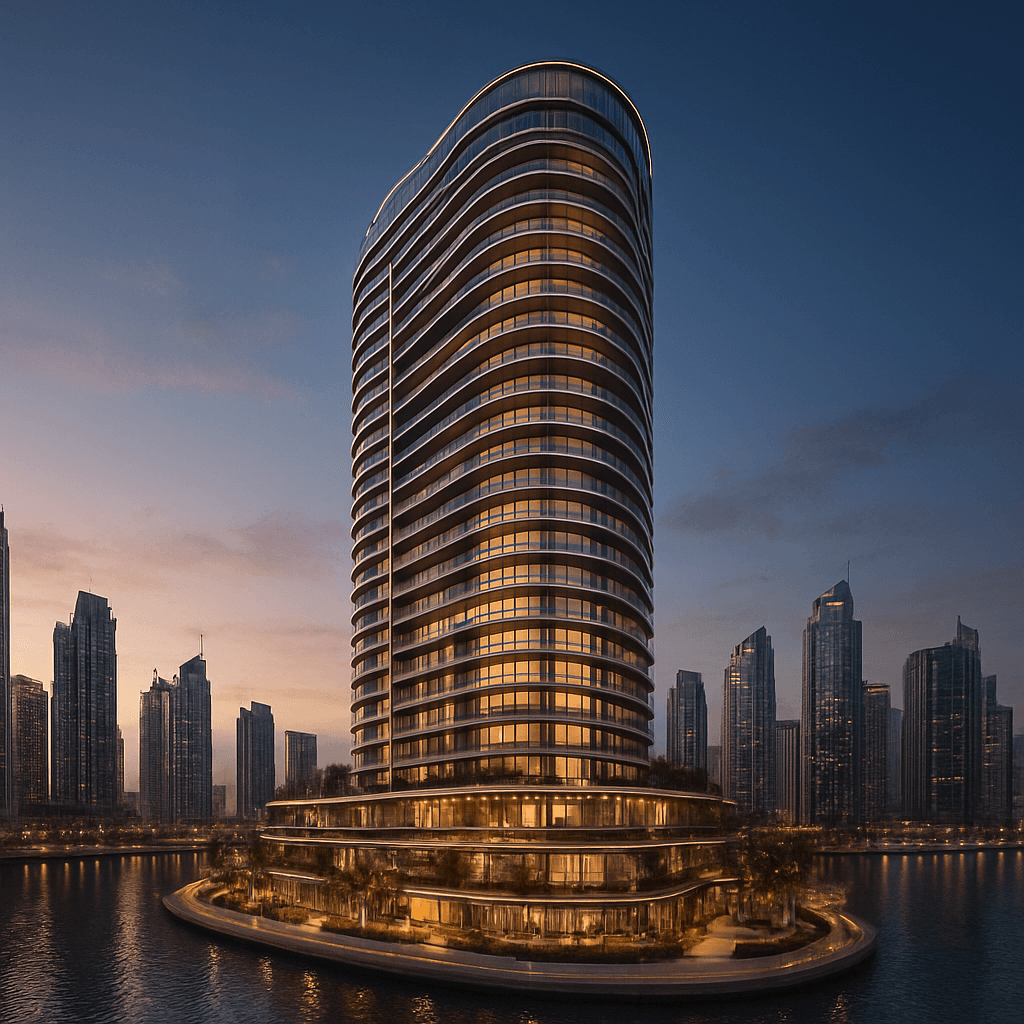 Featured project
The most common goal for many off-plan investors is capital appreciation. The strategy is simple in theory: buy low during the launch phase and execute a sale post-handover once the project and its surrounding community have matured, capturing the value uplift. This is the essence of `selling off-plan property after handover`. The ideal scenario sees you completing the purchase just as the area hits an inflection point — new infrastructure is complete, the landscaping is mature, retail and dining options are open, and a genuine sense of community has formed. Buyers are often willing to pay a premium for a brand-new, ready-to-occupy property they can see and touch, compared to the uncertainty of an off-plan purchase. This 'ready premium' is a key driver of your potential profit.
Consider the trajectory of communities like Emaar Beachfront or the early phases of Dubai Hills Estate. Investors who bought in at launch prices from a top-tier developer like Emaar saw significant value increases by the time those towers were handed over. The initial vision of a vibrant, high-end community was realised, attracting a wave of end-users and tenants that solidified market values. The same dynamic is often seen in master-planned villa communities such as those in Arabian Ranches or Damac Hills. Early investors benefit from the phased development; as more amenities, schools, and parks are delivered, the entire area becomes more desirable, lifting the value of the initial phases. A key factor here is the credibility of the master developer. With names like Nakheel or Sobha, there is a high degree of confidence that the promised amenities will be delivered to a high standard, de-risking the investment for the initial buyer.
However, profiting from this strategy is not as simple as just listing the property on the day of handover. A successful sale requires a careful calculation of your net position. The headline sales price is not your profit. You must subtract a significant list of costs to arrive at your true capital gain. These transactional costs are non-negotiable and must be factored into your initial investment thesis from day one. Failing to account for them can turn a perceived profit into a break-even or even a loss-making venture. Many an investor has been caught out by underestimating these figures. Before you even think about celebrating a price uplift, you need a clear-eyed view of your expenses.
Let's run through a realistic cost breakdown for selling a property. This is crucial for any `Dubai off-plan exit strategy`.
Example: Selling a Handed-Over Apartment - Agreed Sale Price: AED 2,000,000 - Costs to be Deducted: - DLD Transfer Fee (4% of sale price): AED 80,000 (Typically split 50/50 with the buyer, but often the seller's cost is factored into the net price negotiations) - Agency Fee (2% of sale price + 5% VAT): AED 42,000 - Trustee Office Fee for transfer: ~AED 4,200 - Developer No Objection Certificate (NOC) Fee: Varies widely, from AED 500 to AED 5,000. Let's assume AED 2,500. - Title Deed Issuance Fee (paid at handover): ~AED 580 - Total Selling Costs: ~AED 129,280 - Net Amount Received: AED 1,870,720 To find your actual profit, you must then subtract your total purchase cost (the original price plus the 4% DLD registration and Oqood fees you paid when buying) from this net amount. Only then do you have your true capital gain.
Exit 2: Holding for Long-Term Rental Income
The alternative to a quick sale is to transition from investor to landlord. This strategy involves holding the property as a `Dubai investment property long term` and generating a steady stream of income through rent. This approach appeals to investors with a longer time horizon, those seeking consistent cash flow over a lump-sum payout, or overseas buyers looking to secure a foothold in the Dubai market, perhaps with an eye on the Golden Visa program. The key metric for this strategy is rental yield: the annual rental income as a percentage of the total cost of the asset. A strong `post-handover rental yield Dubai` is the primary objective.
The appeal of the rental strategy is multifaceted. Firstly, it provides a regular income stream that can help cover ongoing costs like service charges, mortgage payments, and maintenance. In a favourable market, the net rental income (after all expenses) represents passive cash flow. Secondly, while you are earning rental income, the property itself continues to have the potential for capital appreciation over the long term. You are not forgoing the chance of a future price increase; you are simply choosing to realise it later, while earning an income in the interim. This dual-return potential (income and growth) is a powerful combination. For non-resident investors, holding a property valued at AED 2 million or more also makes them eligible to apply for the 10-year Golden Visa, a significant lifestyle and logistical benefit that adds another layer of appeal to the 'hold' strategy.
However, becoming a landlord is an active role, not a passive one. It comes with its own set of costs and responsibilities that must be managed diligently. The most significant ongoing cost is the service charge, which can range from AED 15 to AED 30+ per square foot per year depending on the building's age, quality, and amenities. For a 1,000 sq. Ft. apartment, this could mean an annual bill of AED 15,000 to AED 30,000, which directly eats into your gross yield. You also need to budget for maintenance (a leaking pipe, a faulty AC unit), which is the landlord's responsibility. Prudent investors set aside 3-5% of the annual rent for unforeseen repairs. There is also the risk of void periods — months when the property sits empty between tenants. A single vacant month represents an 8.3% reduction in your annual income. Professional property management can mitigate these headaches, but it comes at a cost, typically 5-7% of the annual rent.
To succeed with this strategy, you must choose your property wisely from the outset, focusing on areas with proven, resilient tenant demand. High-density, metro-adjacent communities like JVC, Business Bay, and parts of Dubai Marina consistently attract a large pool of professional tenants. Emerging areas like Arjan and Al Furjan offer attractive entry prices and are seeing growing demand as infrastructure improves. Your goal is to calculate the *net* yield, which is a far more important figure than the advertised gross yield. To do this, you must take your expected annual rent and subtract all your anticipated annual costs: service charges, maintenance allowance, property management fees, and a buffer for voids. The resulting figure, divided by your total property acquisition cost, is your true return. A net yield of 4-6% is a realistic and healthy target for a well-managed Dubai rental property.
Calculating Your True Break-Even Point
Whether you plan to sell or to hold, understanding your financial 'break-even' point is the most critical calculation you will make. This isn't simply the price you paid for the property. Your true break-even is the total sum of every dirham you have spent to acquire and hold the asset up to the point of exit. It's only by selling or renting for more than this comprehensive figure that you generate a genuine profit. I have seen too many investors focus on the headline purchase price and get a nasty shock when the final accounting is done. A disciplined approach requires tracking every single cost from day one.
Let's build a comprehensive checklist of costs that contribute to your break-even point. This forms the cost basis of your investment. It's the number you need to beat.
Your Total Investment Cost (Break-Even Point): - Purchase Price: The price stated in your SPA. - Initial DLD Fees: The 4% DLD transfer fee + trustee and registration fees paid at the time of purchase. - Oqood Fee: The DLD fee for registering the off-plan property (typically around AED 5,000). - Developer Admin Fees: Some developers charge fees for issuing the SPA or for other administrative processes. - Financing Costs: If you used a mortgage for a portion of the payment, all interest paid and associated setup fees are part of your cost basis. - Handover Costs: Any final payments due to the developer, plus the Title Deed issuance fee (~AED 580). - Service Charges: Every dirham paid in service charges from the day of handover until the day you sell. - Upgrades & Furnishing: The cost of any improvements, renovations, or furniture packs you've invested in to make the property more attractive to buyers or tenants. - Utility Connection Fees: One-time costs for connecting DEWA and district cooling.
“In my view, an investor who doesn't track these expenses on a spreadsheet from the day they sign the SPA is flying blind. Your profit is not an abstract concept; it is a precise number derived from diligent accounting.”
Once you have this comprehensive cost basis, you can make informed decisions. If you're planning to sell, you can now calculate the minimum sale price required to not only cover your initial investment but also the costs of the sale itself (the 4% DLD, 2% agency fee, etc.). For instance, if your total cost basis is AED 1.5M and your selling costs will be AED 100k, you need to sell for over AED 1.6M to be in the black. This is your effective break-even sale price. Similarly, if you are planning to rent, this cost basis is the denominator in your yield calculation. A lower total cost basis means a higher percentage yield for the same amount of rent, which is why securing a good deal at the initial launch is so powerful. This granular financial tracking is the hallmark of a professional investor and is a service we at Gaia Living continuously emphasize with our clients.
Market Timing, Community Maturity, and Macro Factors
No investment decision exists in a vacuum. Your choice of exit strategy — and its ultimate success, is heavily influenced by external factors beyond the four walls of your property. The three most important are market timing, the maturity of the specific community, and the broader macroeconomic environment. A brilliant property in a poorly timed market or a premature community can lead to a disappointing outcome. Conversely, an average property can perform exceptionally well when these external tides are all rising.
Market timing is the most debated factor. The Dubai property market operates in cycles, influenced by global economic trends, oil prices, local population growth, and government initiatives. Selling into a 'seller's market', where demand outstrips supply and prices are rising, is obviously ideal for a capital gains strategy. Holding and renting can be more attractive in a 'buyer's market', where sale prices might be flat, but rental demand remains strong, allowing you to earn income while waiting for the next upswing. Trying to perfectly 'time the top' or 'buy the bottom' is a fool's errand. A more pragmatic approach, in my opinion, is to focus on 'time in the market' and the specific micro-market of your property. Are properties in your building or community selling quickly? Are rental listings being filled in weeks or sitting for months? This on-the-ground data is often more valuable than broad-stroke market predictions.
Community maturity is a more controllable factor, as it can be assessed when you first choose your off-plan project. The 'phasing' of a master community is critical. Buying in Phase 1 and planning to sell at the handover of Phase 4 is a classic strategy. By then, the promised parks, schools, and retail centres are usually operational, creating a complete and desirable living environment. For example, the early investors in master plans like Meydan or Creek Harbour by Emaar bet on the long-term vision. Their exit timing should ideally coincide with the delivery of major community anchors, like the Creek Tower or major retail boulevards, which serve as catalysts for value. Selling too early, before the community's promises are fulfilled, often means leaving significant money on the table. A key part of our advisory role at Gaia Living is helping investors analyse the master plan and its delivery timeline to map out these potential value inflection points from the very beginning.
Finally, the macroeconomic picture provides the backdrop for everything. Factors like interest rates set by the UAE Central Bank directly impact the cost of mortgages, influencing buyer affordability. Higher interest rates can cool the sales market, potentially making the 'hold and rent' strategy more appealing. Conversely, low interest rates can fuel buyer demand, favouring a quick sale. Government policies, such as the expansion of the Golden Visa program or the introduction of new residency options, have a profound impact on long-term demand. The general economic health of Dubai, its population growth, and its success in attracting new businesses all flow down to the property market. A robust and growing economy creates jobs, attracts talent, and fuels both rental and sales demand, providing a safety net for all property investors.
Practical Steps for Selling Your Property
Once you’ve weighed the factors and decided that selling for capital appreciation is your preferred exit, the process becomes a practical, step-by-step exercise. Executing this process efficiently can save you time and money, ensuring you maximise your net return. Here’s a clear roadmap for `selling off-plan property after handover`.
First, you must have the legal right to sell. This means you need the Title Deed for the property in your name. This document is your proof of ownership, issued by the DLD after you have completed the handover process and settled all payments with the developer. Without the Title Deed, you cannot conduct a legal transfer to a new buyer. The next step is to partner with a reputable, RERA-certified real estate agency. Your agent will be your strategic partner, advising on a realistic asking price based on current comparable market data (a 'CMA'), marketing the property effectively, and navigating the negotiation and closing process. You will need to sign a formal listing agreement, known as RERA Form A, which authorises the agent to market your property. I cannot overstate the importance of choosing an agent who is a specialist in your specific community; their network and granular knowledge are invaluable.
With a marketing strategy in place, the focus shifts to preparing the property for viewings. A brand-new, empty apartment can feel sterile. In my experience, investing in a professional cleaning, ensuring all systems are working, and even light staging can dramatically increase its appeal and perceived value. It helps potential buyers envision themselves living there. Once you receive an offer you are happy with, you and the buyer will sign a Memorandum of Understanding (MOU) or Form F, and the buyer will typically place a 10% deposit cheque, held by the agency. This secures the deal while the administrative process unfolds. The crucial next step is obtaining a No Objection Certificate (NOC) from the developer. The developer will only issue this once they confirm you have no outstanding service charges or other liabilities with them. The fee for the NOC can range from AED 500 to AED 5,000 and is a cost borne by the seller.
Finally, the transfer of ownership takes place at the office of a DLD-approved registration trustee. This is the concluding step where you, the buyer, and your respective agents meet. The buyer will present the manager's cheques for the remaining balance of the property price and for the DLD's 4% transfer fee. You will hand over the keys and access cards. All documents are signed, the trustee processes the transaction in the DLD's system, and a new Title Deed is issued in the buyer's name. At this point, the transaction is complete, and the funds are released to you. It's a precise, regulated process designed to protect all parties, and having an experienced agent guide you through it is essential for a smooth closing.
The Realities of Being a Landlord in Dubai
Opting for the 'hold and rent' strategy transforms you from a property investor into a business operator. It’s a rewarding path, but it requires a professional mindset and a clear understanding of your legal and financial obligations under Dubai's rental laws, which are overseen by RERA. The first decision is whether to manage the property yourself or hire a professional property management company. Self-management can save you the 5-7% management fee, but it requires significant time and effort, especially if you are not based in Dubai. You would be responsible for advertising the property, conducting viewings, screening tenants, handling the Ejari registration, and being on call for maintenance issues.
If you engage a property management firm, like the service we offer at Gaia Living, they handle the entire lifecycle of the tenancy. This includes marketing the property across major portals, finding and vetting suitable tenants, collecting rent, managing maintenance requests, and handling the check-in and check-out process. For many overseas investors, this is not a luxury but a necessity. A good manager minimizes void periods, ensures the property is well-maintained, and provides peace of mind. Their fee is often easily offset by securing a quality tenant quickly at a good market rate and avoiding costly mistakes.
Here is a checklist of the key responsibilities for a landlord in Dubai:
- Ejari Registration: All tenancy contracts in Dubai must be registered on the Ejari system. This is a legal requirement and protects both the landlord's and tenant's rights. The cost is minimal but the process is mandatory.
- Maintenance: The landlord is generally responsible for major maintenance (AC, plumbing, electrical), while the tenant handles minor, day-to-day upkeep. This should be clearly defined in the tenancy contract.
- Service Charges: As the owner, you are responsible for paying the annual service charges to the owners' association or developer. You cannot pass this cost directly to the tenant; it must be factored into your target rent.
- Rent Increases: Any rent increase must be communicated to the tenant with 90 days' notice before the contract renewal. Beyond that, the permissible increase is governed by the RERA Rental Increase Calculator, which is based on how the current rent compares to the average for similar units in the area. You cannot simply increase the rent by an arbitrary amount.
- Dispute Resolution: In the event of a dispute (e.g., non-payment of rent), the official channel for resolution is the Rental Dispute Settlement Centre (RDC) in Dubai. Understanding this legal framework is crucial.
Becoming a landlord is about building a long-term asset. It requires patience, diligence, and a focus on providing a quality home for your tenant. A happy tenant is more likely to renew their lease, providing you with stable, predictable income. The most successful landlords I know are those who treat it as a business, keeping meticulous records of income and expenses, staying informed about market trends, and maintaining their property to a high standard.
Your Dubai off-plan exit strategy is not a single decision but a framework for analysis. The optimal choice — sell or hold, depends entirely on your personal financial goals, your timeline, your risk appetite, and a clear-eyed calculation of all associated costs versus the prevailing market conditions.
My Verdict: The Right Strategy for the Right Investor
After years of advising clients on off-plan investments, from initial purchase through to their post-handover exit, I've concluded there is no single 'best' strategy. The optimal path is deeply personal. Your decision to sell or hold should be a direct reflection of your original investment thesis and financial circumstances.
The 'Sell for Gain' strategy is best suited for the investor with a shorter time horizon, typically 3-5 years, whose primary goal is a lump-sum return on capital. This investor is often comfortable with market timing risk and has the liquidity to cover all transactional costs. They are essentially a trader, seeking to profit from a specific market cycle or the value uplift from a community's maturation. If you bought an apartment in an emerging area like Liwan or Dubai Science Park with the explicit goal of capturing the 'early-in' discount, and the market has performed as you hoped, then crystallising that gain by selling makes perfect sense. It allows you to redeploy that capital into the next opportunity. However, this strategy is less forgiving; if the market turns or your timing is off, you may be forced to sell at a break-even point or hold on and pivot to a rental strategy you weren't prepared for.
On the other hand, the 'Hold and Rent' strategy is the domain of the long-term wealth builder. This investor is less concerned with short-term market fluctuations and more focused on building a portfolio of income-generating assets. They are often seeking a hedge against inflation, a steady cash flow to supplement their income, and long-term, multi-generational capital preservation. This strategy aligns perfectly with investors who are also motivated by non-financial benefits, such as securing a Golden Visa for their family or owning a second home for future use. An investor who buys a premium villa in a stable, family-oriented community like The Meadows or a waterfront apartment on Palm Jumeirah is often playing a 10-20 year game. Their measure of success is the total return — net rental income plus eventual capital appreciation, over a decade or more.
Ultimately, my advice is to have a primary strategy in mind from day one, but also to build a contingency plan. Before you sign your SPA, ask yourself: 'If my plan is to sell at handover but the market is soft, am I financially and mentally prepared to become a landlord for a few years?'. Conversely, 'If my plan is to rent, but a sudden market surge presents me with an offer that represents 10 years' worth of net rental income upfront, am I willing to sell and capture that gain?'. The most successful investors we work with at Gaia Living are those who possess this strategic flexibility, grounded in rigorous financial modelling for both scenarios. They know their numbers, they understand the market, and they are prepared to adapt.
Sources
- Dubai Land Department (DLD): https://dubailand.gov.ae/en/
- RERA Rental Increase Calculator (via DLD): https://dubailand.gov.ae/en/eservices/rental-index/
- UAE Central Bank: https://www.centralbank.ae/
- UAE Government Portal (Golden Visa Information): https://u.ae/en/information-and-services/visa-and-emirates-id/residence-visas/golden-visa
Questions, answered
- What are the main exit strategies for a Dubai off-plan property after handover?
- The two primary exit strategies are selling the property immediately to realise capital gains, or holding it as a Dubai investment property long term to generate rental income. Your choice depends on your financial goals, risk tolerance, and the prevailing market conditions.
- How do I calculate the real cost of selling my property after handover?
- To calculate your net profit, you must subtract all costs from the sale price. These include the 4% Dubai Land Department transfer fee, a 2% agency fee, the No Objection Certificate (NOC) fee (AED 500 - 5,000), and any outstanding mortgage or service charges. Your true net gain is the sale price minus these costs and your original purchase price.
- Is it better to sell my off-plan property before or after handover?
- Selling before handover (a 'flip') avoids service charges and final payments but often attracts a smaller pool of specialist buyers. Selling after handover allows you to market a finished, tangible asset to a wider audience, including mortgage buyers and end-users, which can often command a higher price, but you incur handover and running costs.
- What is a good post-handover rental yield in Dubai?
- A good gross rental yield in Dubai typically ranges from 6% to 9% for apartments in high-demand areas, while villas are often lower, around 4% to 6%. To find your net yield, you must deduct service charges, maintenance, and potential void periods from the annual rent before dividing by the property's total cost.
- What documents do I need to sell my property after receiving the Title Deed?
- After handover, you will need your original Title Deed, your Emirates ID (or passport for non-residents), and a signed Form A (the listing agreement with your agent). You will also need to obtain a No Objection Certificate (NOC) from the developer before the final transfer at the Dubai Land Department trustee office.
- Can I get a Golden Visa by holding my off-plan property after handover?
- Yes, if the property's value is at least AED 2 million, you can apply for a 10-year Golden Visa after handover once you have the Title Deed. The property value is based on the purchase price stated in the Sale and Purchase Agreement (SPA). This is a significant benefit of the 'hold and rent' strategy for many overseas investors.

Isabelle covers off-plan and investment strategy — payment plans, handover risk, developer track records, and the maths of buying before completion.
Related stories

Homes for the Whole Family in Dubai
I explore Dubai's best communities for families who live and entertain on a grand scale, from sprawling villas to unique family compounds. This is my guide for those who value space, privacy, and togetherness above all.

Dubai's Landlord Tech Revolution
Technology is transforming what it means to be a landlord in Dubai, moving far beyond simple online listings to offer powerful new tools for leasing, management, and tenant relations. For investors, this shift from analogue to digital is a critical one to understand.

Dubai's Best Homes for Extended Families
Finding the right villa for multiple generations in Dubai is about more than just size. I'll explore the communities that truly cater to the needs of large, modern families, from layouts with private annexes to amenities that appeal to all ages.
Echoes, in your inbox
One thoughtful email a month. Market insight, new launches, no spam.