


Your Dubai Off-Plan Villa Checklist
Buying a villa off-plan in Dubai can be a fantastic way to secure a family home, but it requires careful due diligence. Here is my complete checklist, based on years of experience in Dubai's villa communities.

Buying an off-plan villa in Dubai is a journey I've guided many families through. The promise is powerful: a brand-new home, designed for modern life, in a community you can grow with, often secured with an attractive payment plan. But turning that glossy brochure into a happy home requires a healthy dose of realism and rigorous due diligence. As Gaia Living’s communities specialist, I’ve seen the incredible successes and the frustrating pitfalls. This is my personal, unfiltered guide on what you absolutely must check before signing on that dotted line.
Here's what we'll explore in detail:
- The developer's track record, and how to look beyond the marketing
- The sales and purchase agreement (SPA), your most important document
- Analysing the master plan and your villa's specific location
- Scrutinising the floor plan for real-world family living
- Calculating the true, total cost of your purchase beyond the ticket price
- Understanding the payment plan and your exit strategy
- The handover process and what to expect on day one
The Developer's Track Record: Beyond the Glossy Brochure
This is, without question, the most important factor in any off-plan purchase. A developer's reputation is your best predictor of future success. The Dubai market has matured significantly, and the government, through institutions like the Dubai Land Department (DLD) and the Real Estate Regulatory Agency (RERA), has put robust protections in place, such as the mandatory use of escrow accounts for buyer payments. These measures ensure your money is tied to construction progress. However, they don't guarantee quality, timeliness, or a well-managed community post-handover. That is where a developer's history speaks volumes.
When we talk about top-tier developers in Dubai, a few names consistently deliver. Emaar Properties is the benchmark for master-planned communities. If you buy a villa in Dubai Hills Estate or Arabian Ranches, you're not just buying a property; you're buying into a proven ecosystem of high-quality construction, meticulously maintained parks, and established retail and school infrastructure. My clients who have bought Emaar properties rarely complain about the fundamentals. The handover process is professional, the finishing is generally to a high standard, and the community management (while not cheap) maintains the value and appeal of the neighbourhood for years to come.
Other developers have carved out their own niches of excellence. Sobha Realty, with its flagship Sobha Hartland community, has built a reputation for obsessive attention to detail and vertical integration — they control almost every element of the construction process, from design to materials. This results in a level of finishing and quality control that, in my opinion, is among the best in the market. Majid Al Futtaim, known for its world-class malls, brings a similar focus on lifestyle integration to its residential projects like Tilal Al Ghaf. They understand how to build not just homes, but destinations. They are masters of creating a 'resort' feel with swimmable lagoons and community hubs that genuinely become the centre of residents' lives.
Your due diligence should be practical and hands-on. Don't just look at the renders for the project you're interested in. Go and visit a community the developer handed over two, five, or even ten years ago. Park your car and walk around. How do the streets look? Are the parks well-maintained? Speak to residents if you can. Ask them about their experience with snagging and the responsiveness of the developer's community management firm. This real-world evidence is worth more than any marketing slogan. A developer who maintains their older communities well is likely to do the same for their new ones. It shows a long-term commitment to their brand and their homeowners.
Your SPA: The Single Source of Truth
 Featured project
The Sales and Purchase Agreement (SPA) is the legally binding contract between you and the developer. It overrides everything said by a sales agent and every beautiful image in the brochure. I've seen buyers get into trouble by not reading this document carefully. It can be long and technical, but you must understand every clause. It's always a good idea to have it reviewed by a qualified legal professional, but here are the key areas I always tell my clients to focus on.
First, the completion and handover date. The SPA will specify an anticipated completion date. Crucially, it will also detail the grace period the developer is allowed for potential delays. This is standard practice, but you need to know if that period is six months, a year, or longer. This has major implications for your financial planning, especially if you are renting while you wait. The contract should also outline the compensation or recourse you have if the developer exceeds this extended deadline. Second, the specifications of the villa. The SPA should include a detailed breakdown of the materials, finishes, fittings, and brands that will be used. Do not rely on the show villa. The show villa is a sales tool, often filled with upgraded finishes and furniture not included in the standard price. The SPA is what the developer is contractually obligated to deliver. If it says 'Brand X' or equivalent for the kitchen appliances, you have to be comfortable with that. If a specific finish is important to you, make sure it is explicitly written into your contract.
Third, the payment schedule must be clearly linked to construction milestones. This is a RERA requirement for all off-plan sales. It ensures that you are paying for progress as it happens, with funds released from the escrow account by the DLD-approved trustee only upon verification of a construction stage. Your SPA will define these milestones. Finally, understand the default clauses for both parties. What happens if you are late on a payment? What are the penalties? Conversely, what are your rights if the developer fails to deliver on a key contractual promise? A well-drafted SPA will have clear, balanced clauses. Pay close attention to the developer's rules on reselling the property before completion (a 'flipper' clause). Most will require a certain percentage of the purchase price to be paid (commonly 40-50%) before they will grant a No Objection Certificate (NOC) for you to sell. Knowing these terms upfront is vital for your investment strategy.
The Master Plan and Your Plot's Position
When buying off-plan, you are buying a vision. The master plan is the blueprint for that vision, showing you the layout of the entire community. It dictates the long-term value and livability of your home. I spend a great deal of time with my clients pouring over these maps, because a villa’s specific location within the community — its micro-location, is almost as important as the community itself. A great home in a poor location will always be a compromise.
First, look at the big picture. Where are the entry and exit points for the community? A villa located near the main gate might have more traffic noise, but it also offers a quicker commute. Where are the community amenities? Being a short walk from the main park, swimming pool, or retail centre is a huge lifestyle advantage, especially for families with children. These 'walkable' properties often command higher resale values and rental yields. Conversely, being too close to the noise and traffic of a central hub might not be for everyone. I often advise clients to consider a home that is a 5-minute walk away, rather than directly opposite, to get the balance right.
Then, zoom in on your specific plot. The most sought-after villas are typically 'single row' — meaning they don't back directly onto another villa, offering more privacy. They might back onto a park, a green belt, or the community boundary wall. A 'corner plot' is also desirable as it usually offers a larger garden and only one direct neighbour. The least desirable plots are 'back-to-back', where your garden faces your neighbour's garden. When looking at the master plan, pay very close attention to what is behind your villa. Is it a quiet landscaped area or something less appealing? I've seen plots that look great on paper but are later revealed to be backing onto a major road or a large electrical substation. These elements will be shown on the detailed master plan, but you have to know to look for them. Ask the developer's representative to explicitly point out any utility buildings or infrastructure near your chosen plot. A good agent will be transparent about this; if they are evasive, it's a red flag.
Finally, consider the orientation of the villa. In Dubai's climate, a garden that is in shadow for most of the afternoon can be a blessing, making it usable for more of the year. A villa with large windows facing the direct afternoon sun in the summer will be more expensive to cool. While you can't always choose the perfect orientation, being aware of the sun's path across your plot can help you make a more informed decision between the available options. The difference between a sun-scorched, unusable garden and a shady, pleasant one can completely change your family's experience of the home.
Scrutinising the Floor Plan for Real-World Living
While the master plan tells you about the community, the floor plan tells you about your home. This is where you need to shift from an investor's mindset to a homeowner's. Imagine your family living in this space day-to-day. Developers are very good at creating layouts that look spacious and appealing on a 2D drawing, but some common design choices can be impractical for family life.
One of my biggest pet peeves is the trend of open-plan living taken to the extreme. While a large, open kitchen and living area is fantastic, some modern designs forget the need for functional, 'messy' spaces. I always look for a proper laundry room, not just a cupboard in a hallway. Is there a dedicated storage room for suitcases, sports equipment, and the general clutter of family life? Where will the vacuum cleaner live? These small, practical considerations make a huge difference. Another key feature for family villas in Dubai is a maid's room. Check its size and location. Is it a reasonably sized room with its own attached bathroom, or a tiny box tucked away as an afterthought? Even if you don't plan to have live-in help, this room is invaluable as a guest room, a home office, or a playroom.
“In my experience, the best villa layouts are those that successfully balance the 'wow factor' of open, light-filled spaces with the practical necessity of closed-off, functional service areas.”
Pay close attention to the flow and dimensions. Use the furniture on the plan as a guide, but be sceptical. Is the dining area large enough for the family table you own or want to buy? Will your sofa fit in the living room? Look at the bedroom sizes. Will they comfortably fit a bed, wardrobe, and a small desk for homework? I advise clients to measure their own furniture to get a real sense of scale. Also, check the 'dead space' — long, inefficient corridors or oddly shaped corners that are difficult to furnish. A well-designed villa uses its square footage efficiently. A plan with a BUA of 4,000 sq. Ft. can feel smaller than a well-laid-out 3,500 sq. Ft. home if the space isn't used wisely.
Here’s a practical checklist I run through with clients when reviewing a floor plan:
- Storage: Is there a dedicated storeroom? Are there built-in wardrobes in all bedrooms? Is there a linen closet?
- Service Areas: Is there a proper, closed-off laundry room? Is the maid's room functional with an en-suite?
- Kitchen Layout: Is it a show kitchen or a working kitchen? Is there a pantry? For larger villas, is there a 'dirty' or 'grease' kitchen for heavy cooking?
- Bedroom Sizes: Are the secondary bedrooms large enough for more than just a bed?
- Bathrooms: Does every bedroom have an en-suite? Is there a guest powder room on the ground floor?
- Outdoor Space: Is the garden a practical shape? Is there a direct connection from the main living area?
Thinking through these details will help you choose a home that functions as well as it looks.
Calculating the True Cost of Your Purchase
The advertised price of an off-plan villa is just the starting point. To budget properly, you must understand all the associated upfront and ongoing costs. Many first-time buyers are surprised by these additional expenses. At Gaia Living, we believe in complete transparency, so we always prepare a detailed cost breakdown for our clients. It’s crucial that you do the same for yourself.
The most significant upfront cost on top of your deposit is the Dubai Land Department (DLD) transfer fee. This is a mandatory government charge, currently set at 4% of the property's purchase price. Alongside this, there is an Oqood registration fee, which is required to formally register your off-plan purchase with the DLD. This fee is typically around AED 5,000, though it can vary. These two fees are non-negotiable and must be paid at the time of purchase.
Let’s walk through a realistic example for a 4-bedroom villa with a purchase price of AED 4,000,000.
Example Upfront Cost Breakdown:
- Purchase Price: AED 4,000,000
- Initial Deposit (10% of PP): AED 400,000
- DLD Fee (4% of PP): AED 160,000
- DLD Admin Fees: approx. AED 580
- Oqood Registration Fee: approx. AED 5,250
- Real Estate Agency Fee (if applicable, typically 2% of PP + 5% VAT): AED 84,000
- Total Initial Outlay: AED 649,830
As you can see, the total cash you need upfront is significantly more than just the developer's deposit. In this example, you need nearly AED 650,000 in cash to secure a property with a 10% deposit. It is absolutely vital to have these funds ready.
Beyond the initial purchase, you must budget for ongoing costs. The main one is community service charges. These are annual fees, paid per square foot of your villa's built-up area (BUA), that cover the maintenance of all shared facilities like parks, pools, security, and landscaping. For villa communities, these typically range from AED 3 to AED 6 per sq. Ft. So, for a 4,000 sq. Ft. villa, you should budget for AED 12,000 to AED 24,000 per year. RERA approves these charges annually, and they can change. Ask the developer for the estimated service charge for your specific villa type. Finally, remember to factor in the cost of furnishing your new villa and landscaping the garden, which is often handed over as bare sand. These can be substantial expenses that you'll incur soon after handover.
The Payment Plan and Your Exit Strategy
One of the biggest attractions of buying off-plan is the developer's payment plan. These plans allow you to spread the cost of the property over the construction period and sometimes for several years after handover. A typical plan might be '60/40', meaning you pay 60% of the price in instalments during construction, and the final 40% is due upon completion. More recently, we have seen very aggressive 'post-handover' payment plans, such as '40/60' where only 40% is paid by handover and the remaining 60% is paid over three to five years directly to the developer. These can be fantastic for managing cash flow and can make a property accessible to buyers who don't have the full amount ready.
However, you need to analyse the payment plan with a clear head. A long post-handover plan might seem attractive, but it can also lock you into the property. If you need to sell, the new buyer will have to be willing and able to take over the remaining payments. This can sometimes narrow your pool of potential buyers compared to a property that is fully paid for. You also need to have a clear strategy for the final 'bullet' payment due at handover. Will you be paying this from savings, or will you need a mortgage? If you plan to get a mortgage, you must speak to a bank or mortgage advisor *before* you commit. Under Central Bank of the UAE regulations, expatriate buyers can generally borrow up to 80% of the property value for their first home purchase (if under AED 5 million), meaning you need a 20% cash deposit. Your off-plan payments can form part of this equity, but you need to ensure your financial situation will be acceptable to a bank when the time comes.
It's also wise to consider your 'Plan B'. What if your circumstances change during the 3-4 years of construction? You might need to sell the property before it's finished. This is known as a secondary market sale or a 'flipper' sale. As mentioned earlier, the developer's SPA will specify the conditions for this. Typically, you must have paid a certain percentage (e.g., 40%) of the purchase price before the developer will issue an NOC to allow the sale. You will also be liable for the DLD fees again on the sale, though the burden is often shared between buyer and seller. Understanding these conditions is not about being negative; it's about being prepared. It gives you flexibility and ensures you won't face any surprises if your plans need to adapt.
The Handover, Snagging, and Beyond
After years of waiting, handover day is incredibly exciting. But the work isn't quite over. This is your first opportunity to inspect the finished property and ensure it meets the standards promised in the SPA. This process is called 'snagging'. You, or a professional snagging company you hire, will create a detailed list of all defects, from minor cosmetic issues like paint scuffs to more significant problems like faulty air conditioning or plumbing leaks. I strongly recommend hiring a professional. They have the experience and specialised tools (like thermal cameras to check for leaks) to spot issues you might miss. They will produce a comprehensive report that you can submit to the developer.
A good developer will have a clear and efficient process for rectifying these snags. They are contractually obligated to fix defects and will provide a 'Defect Liability Period' (DLP), which is typically one year from the handover date. During this year, the developer is responsible for fixing any structural, electrical, or plumbing issues that arise. You must understand the developer's process for reporting issues during the DLP. Is there an online portal? A dedicated phone number? A responsive team is the hallmark of a developer who cares about their reputation long after they've cashed the final cheque.
Once you have the keys, the final steps are to connect your utilities (DEWA) and register for your Title Deed with the Dubai Land Department. The Title Deed is the ultimate proof of ownership and is a moment of celebration. From here, you move from being an off-plan buyer to a homeowner and a member of a new community. It's a journey that requires patience and diligence, but the reward — a home tailored to your family's future in one of the world's most dynamic cities, is, in my view, well worth the effort.
Buying an off-plan villa is a strategic decision that hinges on more than just price and location. Your most critical task is to rigorously vet the developer's long-term track record. Combine this with a forensic reading of the SPA and a practical analysis of the master plan and floor plan to ensure the home you buy on paper is the home you'll love in reality.
## Sources - Dubai Land Department (DLD): https://dubailand.gov.ae/en/ - Real Estate Regulatory Agency (RERA): Part of the DLD website. - Central Bank of the UAE: https://www.centralbank.ae/
Questions, answered
- What is the biggest risk when buying an off-plan villa in Dubai?
- The primary risk is developer-related: significant delays in construction, a final product that doesn't match the promised quality, or poor community management after handover. Thoroughly vetting the developer's track record is the most critical step you can take.
- How much deposit do I need for an off-plan villa in Dubai?
- For off-plan purchases direct from a developer, the initial deposit is typically between 5% and 20% of the property value, as stipulated in the payment plan. If you plan to get a mortgage for the final payment, the Central Bank of the UAE mandates a minimum 20% down payment for expatriates on properties up to AED 5 million.
- What is Oqood and is it mandatory?
- Oqood is the process of registering your off-plan property purchase with the Dubai Land Department (DLD). It is mandatory. This process protects your rights as a buyer by creating an official government record of your ownership stake in the property under construction.
- Can I sell my off-plan villa before it's completed?
- Yes, you can sell your off-plan property in what's known as a secondary market transaction. However, developers typically require you to have paid a certain percentage of the property price (often 30-50%) before they will issue the No Objection Certificate (NOC) required for the sale.
- Are the renders and show homes an accurate representation of the final villa?
- Renders and show homes are marketing tools designed to look their best. While they provide a good idea of the layout and style, you must rely on the specifications listed in your SPA. Check details like ceiling heights, material finishes, and appliance brands in the contract, as these are what the developer is legally bound to deliver.
- What are the typical service charges for a villa in Dubai?
- Villa service charges in Dubai usually range from AED 3 to AED 6 per square foot of built-up area (BUA) annually. This fee covers the maintenance of community parks, pools, security, and other shared facilities. The exact amount is approved by RERA and can vary by community and the level of amenities provided.

Sophia profiles Dubai's villa communities — schools, commute times, green space, and the intangible feel of a neighbourhood. She writes for families putting down roots.
Related stories

Dubai's Big Squeeze: Smaller Plots, Denser Living
Dubai real estate is undergoing a fundamental shift towards smaller plot sizes and higher density. We analyse the economic drivers, the impact on property values, and what this new era of compact urban living means for both homebuyers and investors.
Resort Living as Your Dubai Reality
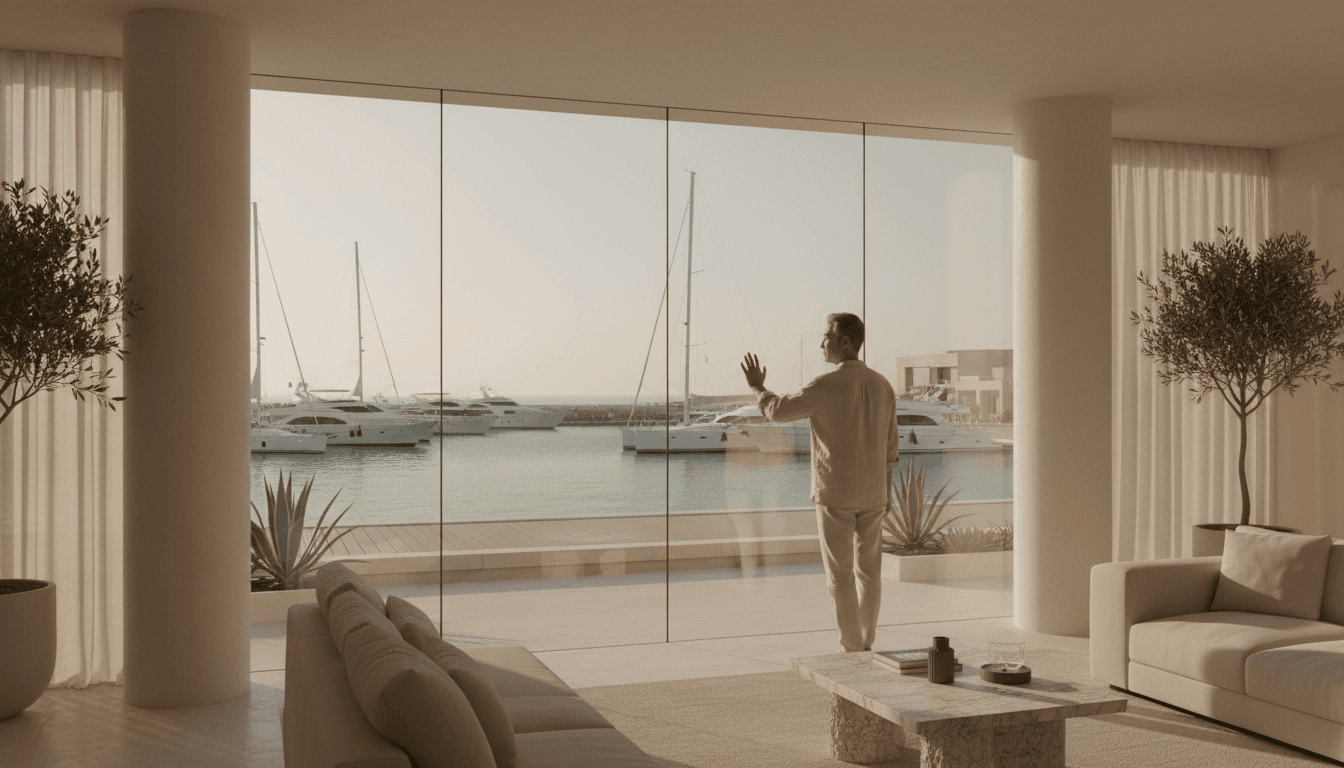
Explore how to trade temporary staycations for a permanent home with five-star amenities in Dubai. I'll break down the real costs, best communities, and lifestyle trade-offs of embracing high-end resort living every day.

Finding Your Tribe in Dubai's Villa Communities
I explore which of Dubai's renowned villa communities attract specific expat nationalities and lifestyle groups, offering insights to help you find a place that feels like home.
Echoes, in your inbox
One thoughtful email a month. Market insight, new launches, no spam.