

Old Charm, New Life: Renovating a Dubai Villa
Discover the immense potential in Dubai's established villa communities. My guide walks you through finding, budgeting for, and transforming an older property into your dream home.

There’s a certain magic to Dubai's first generation of villa communities that new launches, for all their gloss, struggle to replicate. I find that the process of breathing new life into these older charms through renovation offers a path to a truly personal and valuable family home.
Here's what we'll explore in this guide to upgrading a Dubai villa:
- The unique appeal of Dubai's established neighbourhoods.
- How to spot a villa with great renovation potential.
- A deep dive into the real costs of renovation, line by line.
- The official permit and approval process you must follow.
- How to choose the right contractor and design team.
- Key design trends that add the most value and joy.
- A final verdict on whether the journey is right for you.
The Enduring Allure of Dubai's Original Villa Communities
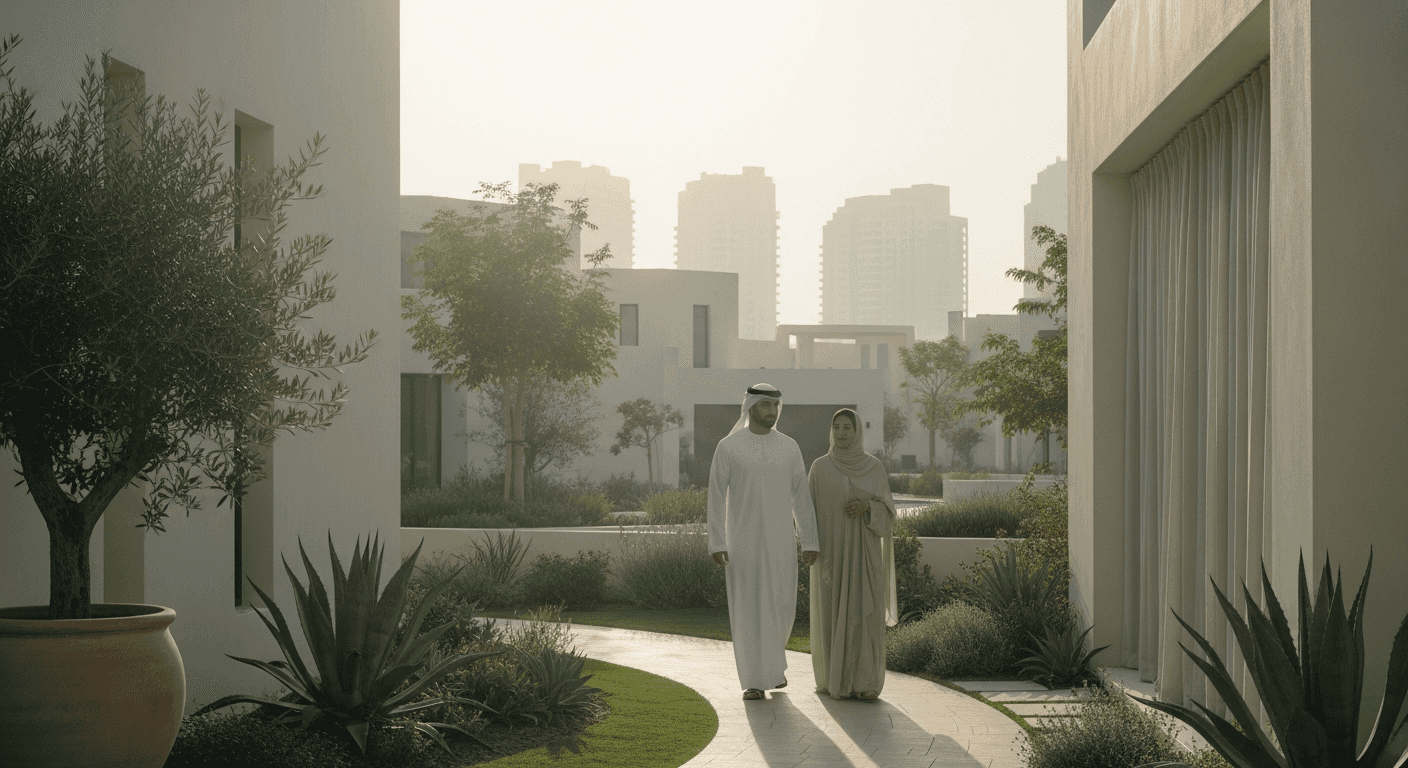
Whenever I drive through areas like The Meadows or the original phases of Arabian Ranches, I feel a sense of calm that is unique to these places. The trees are tall, the avenues are wide, and the gardens are lush and established. These communities, developed in the early 2000s, have had two decades to mature. They possess a character and a soul that only time can bestow. This is the primary reason why so many of our clients at Gaia Living are actively looking into buying old villas in Dubai. They aren't just buying a house; they're buying into a settled, stable, and deeply rooted neighbourhood with a proven track record for family living.
Beyond the beautiful, mature landscaping, the practical advantages are significant. The plot sizes are often far more generous than what you find in newer developments. A standard three-bedroom villa in The Springs, for example, might sit on a plot of over 3,000 square feet, offering a proper garden for children to play in and for families to entertain. In newer communities, a similar-sized home might be on a plot half that size. This generosity of space, both inside and out, provides a canvas for a truly transformative villa renovation. You have room to extend, to reconfigure, and to create the open-plan living spaces that modern families crave, without feeling constrained.
Finally, there's the location. Many of these established communities occupy what is now considered prime central real estate. Arabian Ranches is moments from Global Village with direct access to Sheikh Mohammed Bin Zayed Road. The Meadows and The Springs are set between the city's main arterial highways, placing them a short drive from Dubai Marina, key business hubs, and top-tier schools. This convenience is a powerful draw. While newer communities on the city's periphery offer attractive price points, they can't compete with the locational advantage and the short commutes that these older neighbourhoods provide. For many families, saving an hour in the car each day is a life-changing benefit that makes the prospect of an established communities renovation project incredibly appealing.
Identifying the Diamond in the Rough: What to Look For
 Featured project
When we're showing clients older villas, I always encourage them to look past the dated terracotta floor tiles and the dark wood kitchens. Those are cosmetic details, easily changed. The real art of buying old villas in Dubai is in assessing the 'bones' of the property. A good layout is the first thing I look for. Does the villa have a logical flow? Are the rooms well-proportioned? Some older layouts can be quite cellular, with lots of small, separate rooms. I look for non-load-bearing walls that can be easily removed to create the open-plan kitchen, living, and dining areas that are so popular today. A villa with a fundamentally sound and adaptable floor plan is a far better candidate for renovation than one with an awkward, unchangeable layout, no matter how low the asking price.
Next on my checklist is the villa's orientation and natural light. I always visit a potential property at different times of the day. A villa that is flooded with natural light feels bigger, happier, and more modern. Look at the size and position of the windows. Are they large enough? Do they face the right direction to capture the morning or afternoon sun without creating a greenhouse effect? Upgrading windows and adding sliding glass doors is a common part of a villa renovation in Dubai, but it's much easier and more cost-effective if the existing openings are already in sensible locations. A dark, north-facing villa will always be a challenge, whereas a property with a garden-facing wall just begging for a floor-to-ceiling glass installation is a renovator's dream.
Of course, a thorough technical inspection is non-negotiable. While a standard property snagging report is useful, for an older villa you intend to renovate, you need a more in-depth survey. The key systems to scrutinise are the HVAC (air conditioning), electricals, and plumbing. In a 15-20-year-old villa, these systems may be nearing the end of their operational life. Upgrading them is a significant but essential part of the cost of villa renovation Dubai. It's also crucial to check the roof for any signs of water damage or leaks, as this can be a costly fix. Finding a villa where a previous owner has already upgraded the AC units or re-plumbed the bathrooms can be a huge bonus, saving you tens of thousands of dirhams and a lot of disruption. A good surveyor will give you a clear picture of what needs immediate attention and what can wait, allowing you to budget with confidence.
The Money Talk: A Realistic Breakdown of Renovation Costs
This is the conversation I have most often with clients, and it's the most important one. The phrase 'cost of villa renovation Dubai' can mean anything from a few thousand dirhams for a paint job to millions for a full reconstruction. To bring clarity, I break it down into three broad categories. First is the cosmetic refresh, which involves painting, changing light fixtures, and perhaps replacing cabinet doors or countertops. This is relatively inexpensive, typically running from AED 150 to AED 250 per square foot. It’s a great option for making a villa liveable quickly or for a quick flip, but it doesn't address underlying issues or dramatically change the home's character.
“The biggest mistake I see is underestimating the cost of 'while we're at it' additions. Your budget needs a 15-20% contingency fund, non-negotiable.”
The second category, and the most common for the projects we're discussing, is the mid-range renovation. This is a more substantial undertaking. It usually includes a full kitchen and bathroom gut-out, new flooring throughout, new AC units, updated electricals and plumbing, landscaping, and often some internal non-structural wall removal to improve the layout. This is where you truly start upgrading a Dubai villa. Based on recent projects I've followed, a realistic budget for this level of work is between AED 400 and AED 700 per square foot. The final figure depends heavily on the quality of finishes you select — local ceramic versus Italian marble makes a world of difference to the bottom line.
To make this concrete, let's break down the potential costs for a mid-range renovation of a typical 2,700 sqft, 3-bedroom Type 3E villa in The Springs:
- Design & Permits: AED 20,000 - AED 35,000 (Includes architect/designer fees, developer NOC fees, and municipal permit fees).
- Demolition & Debris Removal: AED 15,000 - AED 25,000.
- Structural/Masonry Changes: (e.g., removing a wall, creating a new window opening) AED 10,000 - AED 30,000.
- Electrical & Plumbing (First & Second Fix): AED 40,000 - AED 70,000 (Full rewiring and re-plumbing).
- HVAC System Replacement: AED 35,000 - AED 50,000 (For new, efficient units and duct cleaning/replacement).
- Plastering & Painting: AED 30,000 - AED 50,000 (Includes high-quality paint).
- Flooring: AED 50,000 - AED 90,000 (Based on AED 150-300 per sqm for material and installation of LVT, parquet or mid-range tile).
- Kitchen: AED 60,000 - AED 120,000+ (Includes custom cabinetry, mid-range countertops like quartz, and appliances).
- Bathrooms (x3): AED 75,000 - AED 150,000 (Full strip-out, waterproofing, tiling, sanitary ware, fixtures).
- Doors, Wardrobes & Joinery: AED 40,000 - AED 80,000.
- Windows & Glazing: (e.g., new sliding door to garden) AED 30,000 - AED 60,000.
- Landscaping & Exterior: AED 25,000 - AED 50,000 (For basic hardscaping, irrigation, and planting).
- Contingency (15%): AED 64,500 - AED 124,500.
- Estimated Total: AED 494,500 - AED 934,500
This breakdown shows how quickly costs add up. The third category is the full gut renovation and extension. This involves stripping the villa back to its concrete shell, potentially adding a new room or even another floor, and completely rebuilding it to a bespoke, high-end specification. Here, costs can easily exceed AED 1,000 per square foot, and the final bill can run into the millions. This is a complex construction project, not just a renovation, and requires a highly experienced team. For most people considering an established communities renovation, the mid-range option provides the best balance of transformation and budget.
The Paper Trail: Navigating Permits and Approvals
Many aspiring renovators are so excited about design and finishes that they overlook the most critical first step: the approvals process. In Dubai, you cannot simply start knocking down walls. Attempting to do so can result in huge fines and a stop-work order from the authorities, forcing you to undo any changes. The process is meticulous, but it exists to ensure safety, structural integrity, and to maintain the aesthetic standards of the community. I always tell my clients to consider the permit timeline as part of the project timeline itself; it can take anywhere from four to eight weeks, sometimes longer, before a single hammer is swung.
The journey begins with the master developer of your community. Whether it's Emaar for Arabian Ranches and The Meadows, Nakheel for Jumeirah Islands and Jumeirah Village Triangle, or Dubai Properties for The Villa, you must first obtain a No Objection Certificate (NOC) for your proposed works. This involves submitting a detailed set of documents prepared by your appointed architect or engineering consultant. The developer's design review team will scrutinise your plans to ensure they comply with community guidelines regarding external appearance, boundary walls, and overall design language. They want to prevent renovations that detract from the neighbourhood's cohesive look.
Here is a typical checklist of documents required for a developer NOC application:
- Appointment letter for your chosen contractor and consultant.
- A copy of the contractor's trade license and your consultant's credentials.
- The title deed of the property.
- Your passport and Emirates ID copies.
- A full set of architectural drawings showing the existing layout and the proposed new layout.
- Drawings for any structural changes, stamped by a structural engineer.
- MEP (Mechanical, Electrical, Plumbing) drawings.
- A project timeline and a waste management plan.
Once you have the developer's NOC, you are not done. The next step is to submit this NOC along with your full drawing package to the relevant government authority for the final building permit. For most freehold communities developed by Emaar, this is the Dubai Municipality. For Nakheel communities, it's typically Trakhees, the planning and development authority for special development zones. This stage is a technical review to ensure your plans comply with Dubai's building codes, fire safety regulations, and structural standards. Your contractor cannot legally begin work on site until this final permit is issued and displayed. It’s a rigorous process, but it's your ultimate assurance that the work being done on your home is safe, compliant, and officially documented — which is vital for the property's future resale value.
Assembling Your A-Team: Choosing Contractors and Designers
Your choice of contractor will make or break your renovation experience. A great contractor is a partner who brings your vision to life on time and on budget, while a poor one can turn your dream project into a nightmare of delays, defects, and escalating costs. The absolute worst thing you can do is simply choose the cheapest quote. In my experience, an unusually low quote is a massive red flag. It often means the contractor is using substandard materials, unskilled labour, or plans to cut corners, and will likely hit you with endless 'additional' charges later on. I advise clients to get at least three to five detailed, itemised quotes from reputable, licensed contractors. Ask to see their trade license, proof of insurance, and most importantly, visit their completed projects and speak to their previous clients.
When you meet potential contractors, don't just talk about price. Discuss their process. How do they manage their projects? Who will be your single point of contact? How often will they provide progress updates? Look for a company that is organised, professional, and communicates clearly. A well-drafted contract is your most important tool for protection. The contract, ideally reviewed by a legal professional, should specify the full scope of work, a detailed payment schedule tied to project milestones (never pay more than a small deposit upfront), a clear project timeline with penalties for delays, and the exact specifications for all materials. This level of detail prevents misunderstandings and provides a clear framework for resolving any disputes that may arise.
While many contractors offer 'design and build' services, for a significant renovation, I strongly recommend hiring an independent interior designer or architect. This person is your advocate. Their job is to translate your ideas into a feasible, beautiful, and functional design, and to create the detailed technical drawings that the contractor will build from. They help you select finishes, fixtures, and materials that work together cohesively and fit your budget. Crucially, they can also provide project supervision, visiting the site regularly to ensure the contractor is executing their design to the correct standard. While it's an added upfront cost, a good designer saves you money in the long run by preventing costly mistakes, optimising the use of space, and helping you source materials at better prices. They are the creative and technical bridge between your vision and the contractor's execution.
Key Design Moves for Maximum Impact and Value
When embarking on a villa renovation in Dubai, it's tempting to get carried away with trends. However, after observing hundreds of these projects, I've found that a few key strategic moves consistently deliver the most significant impact on both lifestyle and resale value. The number one transformation, without a doubt, is opening up the ground floor. Older villas were often designed with a separate, closed-off kitchen, a formal dining room, and a separate living room. By removing the non-structural walls between these spaces, you create a single, light-filled, open-plan area that is perfectly suited to modern family life. This instantly makes the villa feel larger, more sociable, and more contemporary. A large kitchen island often becomes the new heart of the home, a place for casual meals, homework, and socialising while cooking.
Another game-changing move is enhancing the connection between the indoor and outdoor spaces. The gardens in established communities are a huge asset, yet many older villas have only a small door or a single window facing them. Replacing a solid wall with large-format sliding or bi-fold glass doors completely transforms the living area. It floods the space with natural light and creates a smooth flow to a newly landscaped patio or garden. This is particularly effective in Dubai, where the weather is perfect for outdoor living for more than half the year. This single change not only elevates your daily quality of life but is also a huge selling point that buyers are actively looking for. It visually doubles your living space and brings the beauty of your mature garden right into your home.
Finally, don't underestimate the power of a well-executed lighting plan. Older villas often suffer from poor lighting, typically a single, central ceiling fixture in each room. A layered lighting scheme, designed by a professional, can make a world of difference. This involves a combination of general ambient lighting (like recessed spotlights), task lighting (such as under-cabinet lights in the kitchen or reading lamps in the bedroom), and accent lighting (to highlight artwork or architectural features). Incorporating smart, energy-efficient LED lighting with dimmers allows you to change the mood of a room at the touch of a button. It's a relatively moderate investment within the overall cost of villa renovation Dubai, but its impact on the final look and feel of the home is immense. A well-lit home is a warm, inviting, and sophisticated home.
Buying and renovating an older villa is not a project for the faint of heart. It demands patience, a realistic budget, and a great team. Yet, for those willing to undertake the journey, the reward is a home with character, space, and a prime location that new builds simply cannot match.
The Final Verdict: Is It Worth It?
After guiding many families through this process, from their initial search for properties on our for sale portal to the final handover from their contractor, my answer is a resounding yes — with a few important conditions. The path of upgrading a Dubai villa is worth it if you approach it with your eyes wide open. It is a marathon, not a sprint. You must have a clear vision, a detailed budget with a healthy contingency, and the resilience to handle the inevitable small setbacks that come with any major construction project. It's not the easy route, but the most rewarding journeys rarely are.
The financial case can be very compelling. If you buy an older, un-renovated villa at the right price, and manage your renovation costs effectively, you can create significant equity. The final value of your beautifully modernised home in a prime, established community can be substantially higher than your total investment (purchase price + renovation cost). We've seen clients create their dream family home for a total cost that is still below the price of a smaller, less characterful new-build in a more remote location. It’s a powerful way to get more for your money and add tangible value.
But beyond the numbers, the real value lies in the home you create. You get to craft a space that is perfectly tailored to your family's needs and tastes, from the layout of the kitchen to the tiles in the bathroom. You get to live in a neighbourhood with a soul, with large trees, established parks, and a true sense of community. You are not just buying a property; you are restoring a piece of Dubai's residential history and making it your own. For many, that sense of creation, of putting your own stamp on a home and giving it a second life, is the most valuable return of all.
Sources
- Dubai Land Department (DLD): dubailand.gov.ae
- Trakhees (Department of Planning and Development): trakhees.gov.ae
- Dubai Municipality: dm.gov.ae
Questions, answered
- What is the average cost of a villa renovation in Dubai?
- The cost of a villa renovation in Dubai varies widely. A cosmetic update might cost AED 150-250 per sqft, a mid-range renovation AED 400-700 per sqft, and a full gut renovation with extensions can exceed AED 1,000 per sqft. A typical 3-bed villa renovation often falls between AED 300,000 and AED 600,000.
- Do I need a permit to renovate my villa in Dubai?
- Yes, almost all renovation work beyond simple painting requires permits. You'll need a No Objection Certificate (NOC) from your community's master developer (like Emaar or Nakheel) and then subsequent approvals from the relevant Dubai authority, such as Dubai Municipality or Trakhees.
- Which are the best older communities in Dubai for renovation projects?
- In my experience, communities like The Springs, The Meadows, Arabian Ranches, Jumeirah Islands, and Umm Suqeim are prime for renovation. They offer large plots, mature landscaping, and strong community infrastructure, providing a solid foundation for a beautiful modern home.
- How long does a typical villa renovation in Dubai take?
- The timeline depends on the scope. A cosmetic refresh can take 4-8 weeks. A substantial mid-range renovation usually takes 4-6 months, while a full gut renovation with structural changes or extensions can easily take 8-12 months, including the time for design and permit approvals.
- Can I live in my villa during the renovation?
- For minor cosmetic updates, it might be possible, but it's highly disruptive. For any significant work involving kitchens, bathrooms, or structural changes, it's almost always necessary to move out for the duration of the project for safety and practicality.
- Is buying and renovating an old villa a good investment in Dubai?
- It can be a very smart move. You acquire a property in a prime, established location, often with a larger plot than new-builds, and can add significant value through a well-executed renovation. The key is to buy at the right price and manage your renovation budget carefully to ensure a healthy return on investment.

Sophia profiles Dubai's villa communities — schools, commute times, green space, and the intangible feel of a neighbourhood. She writes for families putting down roots.
Related stories

Dubai's Big Squeeze: Smaller Plots, Denser Living
Dubai real estate is undergoing a fundamental shift towards smaller plot sizes and higher density. We analyse the economic drivers, the impact on property values, and what this new era of compact urban living means for both homebuyers and investors.
Resort Living as Your Dubai Reality
Explore how to trade temporary staycations for a permanent home with five-star amenities in Dubai. I'll break down the real costs, best communities, and lifestyle trade-offs of embracing high-end resort living every day.
Finding Your Tribe in Dubai's Villa Communities
I explore which of Dubai's renowned villa communities attract specific expat nationalities and lifestyle groups, offering insights to help you find a place that feels like home.
Echoes, in your inbox
One thoughtful email a month. Market insight, new launches, no spam.