

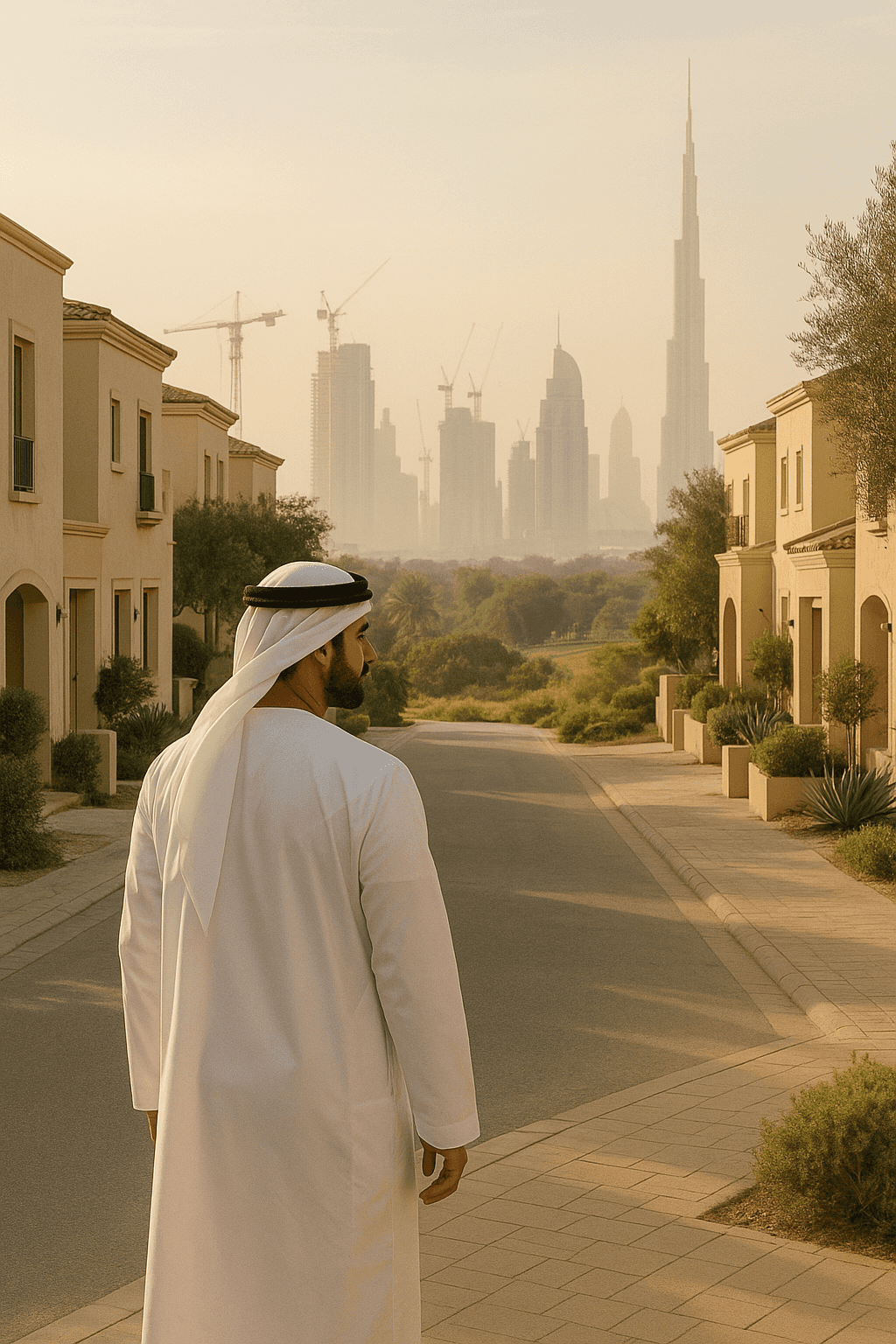
DWC Expansion: A New Gravity for Dubai Property
The colossal AED 128 billion expansion of Al Maktoum International Airport is set to fundamentally reshape southern Dubai. I break down what this means for property investors and residents in the surrounding communities.

The announcement of the AED 128 billion plan to make Al Maktoum International (DWC) the world's largest airport is not just another headline. It’s a seismic event that redraws the map of opportunity in Dubai, creating a new economic and demographic centre of gravity in the city’s south.
Here’s what we'll explore:
- The sheer scale of the vision and why it's more than just an airport.
- Which communities are poised for the most significant impact.
- A realistic look at the investment timeline: patience will be key.
- The tangible benefits: from rental yields to infrastructure upgrades.
- The risks and considerations, including noise and construction disruption.
- How to calculate the real cost of entry for a DWC-adjacent property.
- My verdict on the long-term DWC property investment case.
The AED 128 Billion Vision: More Than an Airport
When His Highness Sheikh Mohammed bin Rashid Al Maktoum approved the designs for the new passenger terminals at Al Maktoum International, it marked the official start of a project that has been on the master plan for years. The numbers are staggering: five parallel runways, 400 aircraft gates, and an ultimate capacity for 260 million passengers a year. To put that in perspective, that's almost five times the current size of Dubai International (DXB). Operations from DXB will be transferred to DWC over the coming decade, with the first phase targeting a capacity of 150 million passengers. This isn't just an expansion; it's a relocation of Dubai's primary aviation gateway.
But to see this only as an aviation story is to miss the point entirely. The vision is for an entire 'airport city' spanning 70 square kilometres. The official statements refer to a project that will house a million people. This is the core of the Al Maktoum Airport development: creating a self-sustaining ecosystem around the airport. This includes logistics hubs, commercial districts, residential communities, leisure facilities, and all the supporting social infrastructure like schools and hospitals. It is, in effect, the birth of a new city within a city, anchored by a global transport super-hub.
This strategy is a core part of the Dubai Economic Agenda D33, which aims to double the size of the city's economy. Logistics and aviation are pillars of this plan. By creating the world's largest airport next to the region's largest seaport in Jabal Ali, Dubai is building an unparalleled sea-to-air logistics corridor. This will attract a wave of global companies in e-commerce, manufacturing, and trade, all of whom need a place for their employees to live. The sheer scale of employment — from pilots and cabin crew to logistics managers, engineers, and service staff, is the fundamental driver for the real estate equation.
My analysis is that we're seeing a deliberate and strategic westward shift of Dubai's demographic and economic core. For the past two decades, the city's growth has radiated out from the Sheikh Zayed Road corridor, from the original World Trade Centre down through Business Bay and Dubai Marina. This project creates a powerful new anchor in the south, pulling development, infrastructure, and population density with it. This isn't just about building an airport; it's about building the next 50 years of Dubai. For property investors, this is the signal. When the government commits this level of capital and strategic intent, the direction of travel is clear.
Ground Zero: Dubai South and Expo City
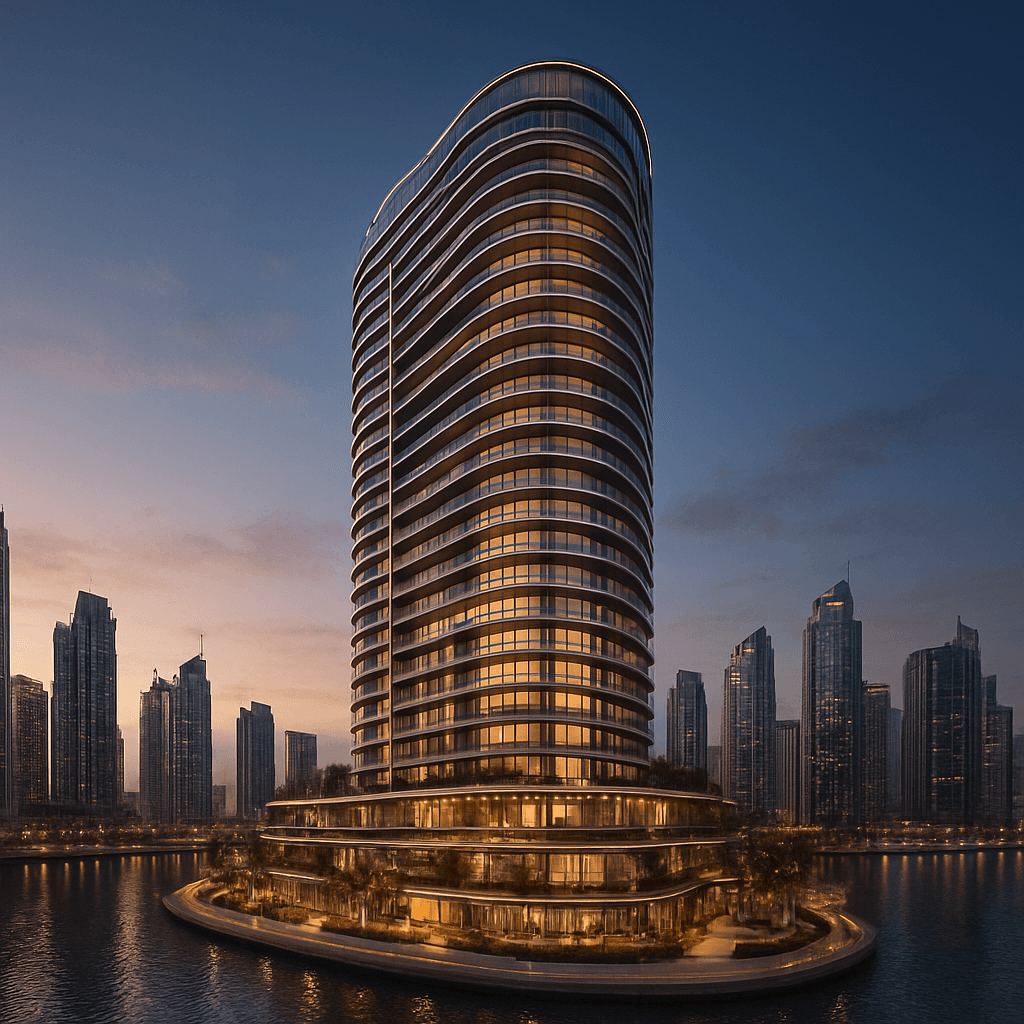 Featured project
The communities that stand to benefit most directly are, without question, those already on the ground within and adjacent to the DWC footprint. The epicentre of this transformation is Dubai South, the master-planned city that contains the airport itself. Comprising eight distinct districts covering residential, commercial, logistics, and aviation, Dubai South is purpose-built to be the airport city. We're already seeing significant developer activity here, with projects like Emaar South by Emaar Properties offering villas, townhouses, and apartments that have proven popular with families and professionals.
The real estate value proposition in Dubai South is straightforward. It offers proximity to the new economic engine, relatively affordable entry prices compared to established central Dubai areas, and a modern, master-planned living environment. As the airport's workforce grows, the demand for rental properties here will be immense. An airline pilot or logistics executive will prioritise a 10-minute commute over a 45-minute drive from older parts of town. This is the core of the Dubai South real estate value argument: it will become the default residential choice for a huge and growing pool of tenants.
Right next door is Expo City, the legacy site of Expo 2020. This is not just a collection of leftover pavilions; it has been reimagined as a clean, green, tech-focused urban centre. It already has a metro station, significant public realm, and a growing number of residential launches. Its strategic location between the old and new hearts of Dubai makes it uniquely positioned. Residents get the benefit of a mature, well-designed community from day one, with the future economic boom of DWC just minutes away. In my view, Expo City's blend of existing infrastructure and future-proof location makes it one of the most compelling propositions in the entire southern corridor.
Beyond these two, the ripple effect will be felt across the wider area. Communities along the E311 and E611 corridors, such as Town Square by Nshama and Damac Hills and Damac Hills II, will become more attractive due to improved connectivity and proximity to the new employment hub. These areas offer a different lifestyle, often focusing on larger villas and townhouses with extensive green space. While they are a slightly longer commute than Dubai South, they will appeal to families looking for more space. The key is that the definition of a 'prime location' in Dubai is about to be recalibrated. A 20-minute drive to DWC may soon be seen as more valuable than a 20-minute drive to Downtown Dubai for a significant segment of the population.
The Investment Timeline: This is a Marathon, Not a Sprint
While the excitement is palpable, it is crucial for investors to approach this opportunity with a clear-headed, long-term perspective. This is not a 'get rich quick' scheme. The full realisation of the DWC vision will unfold over a decade, likely longer. Property values will not double overnight. Instead, we should expect a steady, phased appreciation that tracks the project's milestones. The airport city property impact will be gradual and cumulative, not sudden and explosive.
My advice to clients at Gaia Living is to think in distinct phases. In the immediate term (1-3 years), the impact will be driven by sentiment and early infrastructure works. We'll see a surge of interest in off-plan launches in Dubai South and surrounding areas. Developers will accelerate their pipelines to meet this anticipated demand. For early investors, this is the ground floor. The key is to buy from reputable master developers like Emaar, who have a track record of delivering on their promises and creating vibrant communities. Getting in at the launch price on a well-conceived project in Emaar South or Expo City is the lowest-risk way to capture future upside.
In the medium term (4-8 years), as the first phase of the new terminal nears completion and major airlines begin shifting operations, the demand will become more tangible. This is when we'll see the first significant wave of new residents moving into the area. Rental demand will solidify, and we'll start to see real-world rental yields that validate the investment case. This is also when secondary market activity will pick up, as early investors who bought off-plan look to sell their completed properties to end-users. Prices will have risen from their initial launch levels, but there will still be significant growth potential as the airport's capacity continues to expand. This phase is about the transition from speculative demand to real, user-driven demand.
“The smart money understands that the DWC expansion is not a single event but a decade-long process. The biggest returns will go to those who align their investment horizon with the project's construction timeline.”
The long-term (10+ years) is where the full vision comes to life. With DWC operating as the world's primary aviation hub and the airport city fully populated, the southern corridor will be a mature and established economic zone. Real estate in Dubai South will no longer be considered 'emerging'; it will be a prime, established location with property values that reflect that status. The southern Dubai property trends will have shifted from high-growth to stable, blue-chip assets. Investors who held on through this entire cycle will have seen substantial capital appreciation and will be holding assets that generate strong, stable rental income. Patience is the single most important asset for a successful DWC property investment.
Tangible Benefits: Rents, Infrastructure, and Lifestyle
The case for investing in southern Dubai isn't just theoretical. It's grounded in concrete, measurable benefits that will emerge as the DWC project progresses. The most immediate and powerful of these is rental demand. An airport that employs hundreds of thousands of people creates a captive tenant base. We can expect a tiered rental market to develop, catering to different segments of the airport workforce. This is a crucial consideration for investors.
Here’s a breakdown of the likely tenant profiles and the property types they will seek:
- Executives and Pilots: This demographic will seek higher-end properties with premium finishes and lifestyle amenities. Larger apartments, townhouses, and villas in communities with golf courses or extensive parks, like those in Emaar South or the more established Arabian Ranches (which becomes a more manageable commute), will be in high demand. They value convenience and quality of life.
- Cabin Crew and Mid-Level Management: This large cohort will drive demand for well-located one and two-bedroom apartments. Proximity to the airport, access to public transport (like the Metro link to Expo City), and community retail will be key selling points. Projects in the core of Dubai South and Expo City are perfectly positioned to capture this segment. Investors should focus on properties with reasonable service charges and good building management, as this group is often well-informed and discerning.
- Technical and Ground Staff: This segment will create a robust market for more affordable options, such as studios and smaller one-bedroom apartments. Areas slightly further afield but with good road connectivity could cater to this demand. The sheer volume of this workforce will provide a very stable, high-occupancy rental base for investors in the right assets.
Beyond rental demand, the project necessitates a massive upgrade in public infrastructure. The government's commitment means we will see new roads, extensions to the Dubai Metro, and enhanced public bus networks. The Red Line of the metro already reaches Expo City, providing a direct link. Future plans will almost certainly involve extending this network to serve the new terminals and residential districts more directly. This improved connectivity won't just benefit airport workers; it will make the entire southern corridor more accessible and attractive to everyone, supporting long-term property values. This is how a city grows; infrastructure follows strategic investment, and value follows infrastructure.
Finally, the 'airport city' concept itself promises a significant lifestyle upgrade. The master plans for Dubai South and Expo City are not just about rows of apartment buildings. They incorporate parks, schools, clinics, shopping malls, restaurants, and entertainment venues. Emaar South already features an 18-hole championship golf course. The vision is to create complete, walkable communities where residents have everything they need on their doorstep. This focus on liveability is critical. It ensures that these areas are not just dormitories for the airport but desirable places to live in their own right, which is essential for sustaining long-term real estate value.
Understanding the Risks and Headwinds
No mega-project of this scale comes without risks, and a clear-eyed investor must factor them into their decision-making. The most obvious risk is the timeline. The ten-year target for Phase 1 is ambitious. Delays in construction, whether due to supply chain issues, engineering challenges, or shifts in global economic conditions, are always a possibility. An investment thesis predicated on a strict 2034 completion date could be challenged if the project timeline extends. This reinforces the need for a long-term, patient approach. If you might need to liquidate your investment in five years, this may not be the right play for you.
Another significant consideration is noise pollution. While modern airport design and flight path management are incredibly advanced, living very close to five active runways will inevitably involve some level of aircraft noise. Developers and city planners mitigate this through buffer zones, building insulation standards, and strategic land use, placing commercial and logistics areas in the zones of highest impact. As a buyer, it is your responsibility to do your due diligence. Scrutinise the master plan. At Gaia Living, we advise our clients to look at the planned flight paths and the orientation of a specific property. A villa in a quiet enclave facing away from the airport will offer a very different living experience to an apartment directly under a primary approach path.
Then there is the risk of oversupply. The announcement will trigger a rush of new project launches from various developers. While demand is expected to be huge, there is always a risk of a temporary mismatch between supply and absorption, particularly in the early years. If too many similar properties are handed over at the same time before the workforce has fully arrived, it could lead to short-term pressure on rental prices and occupancy rates. This is why I consistently stress the importance of buying from top-tier master developers like Emaar, Nakheel, or Aldar. Their ability to phase their communities, manage supply, and build the associated infrastructure gives their projects a significant advantage over smaller, standalone developments.
Finally, investors must anticipate construction disruption. Building a new city is a noisy, dusty, and disruptive process. For the next decade, residents in southern Dubai will live in proximity to one of the world's largest construction sites. Roads will be rerouted, heavy machinery will be a constant presence, and the landscape will be in a state of flux. While developers are adept at minimising the impact on completed communities, it's an unavoidable reality. This might deter some end-users in the short term, creating an opportunity for investors who can look past the temporary inconvenience to the long-term prize. This is a classic 'buy the disruption' scenario, but it requires a tolerance for the realities of living in a city that is actively being built around you.
The Cost of Entry: A Worked Example
Understanding the potential is one thing; financing the investment is another. Let's break down the actual upfront costs for a typical off-plan property in the Dubai South area. The numbers here are illustrative, based on current market conditions for new launches, but they provide a realistic picture of the capital required. Let's assume you're looking at a two-bedroom apartment with a purchase price of AED 1,500,000.
For an off-plan property, you will typically follow a developer's payment plan. A common structure is a 20% down payment on booking, followed by instalments during construction, and a final payment on handover. Here’s a line-by-line breakdown of the initial costs you would pay to the developer and the Dubai Land Department (DLD) upon signing the contract.
Upfront Costs for an AED 1,500,000 Off-Plan Apartment:
- Developer Down Payment (20%): AED 300,000
- DLD Transfer Fee (4% of Purchase Price): AED 60,000
- DLD Registration Fee (Oqood): Approximately AED 5,250 (This can vary slightly)
- Agency Fee (2% of Purchase Price + 5% VAT): AED 31,500 (AED 30,000 fee + AED 1,500 VAT)
- Total Upfront Cash Required: AED 396,750
It is critical to note that the 4% DLD fee is a mandatory government tax paid on every property transaction in Dubai. Similarly, the Oqood fee registers your off-plan purchase in the official government record. These are non-negotiable costs. The agency fee is our standard at Gaia Living for facilitating the purchase and providing expert guidance throughout the process. When budgeting, you must account for these closing costs on top of the developer's down payment. Many first-time investors make the mistake of only budgeting for the down payment, leading to a surprise shortfall.
After this initial payment, you would continue to pay instalments to the developer according to the payment plan, for example, 40-60% during the construction period. The remaining balance (e.g., 20-40%) would be due upon handover. At that point, if you are an investor, you can either pay the final amount in cash or secure a mortgage to finance it. For non-resident investors, the Central Bank of the UAE typically allows mortgages of up to 50% of the property value. For residents, this can go up to 75-80% for a first property. Understanding your financing options for the final handover payment is a crucial part of your investment strategy from day one.
My Verdict: A Generational Opportunity with Caveats
After weighing the immense potential against the tangible risks, my verdict is clear: the expansion of Al Maktoum International Airport represents a generational investment opportunity in Dubai real estate. The sheer scale of the government's commitment provides a powerful and undeniable signal about the future direction of the city. This is not a speculative vanity project; it is a core component of a long-term economic strategy that will create jobs, drive population growth, and anchor a new urban centre.
For investors, the implications are profound. This project effectively de-risks long-term investment in the entire southern Dubai corridor. The question is not *if* property values in areas like Dubai South and Expo City will appreciate, but by how much and over what timeframe. The combination of massive job creation, state-of-the-art infrastructure, and the development of complete, liveable communities creates a powerful trifecta for real estate growth. The potential for both capital appreciation and strong, stable rental yields is, in my professional opinion, unmatched by any other single project currently underway in the UAE.
However, this opportunity is not for everyone. It demands patience, a long-term investment horizon, and a clear understanding of the risks. Those seeking quick flips or immediate high returns should probably look elsewhere. The path will involve construction disruption, potential project delays, and periods where supply may temporarily outstrip demand. The investors who succeed will be those who can see past the dust and cranes to the gleaming global hub that will emerge in a decade's time. They will be the ones who buy from reputable developers, choose their specific unit with care, and have the financial resilience to hold the asset through the development cycle.
The DWC expansion is a city-defining mega-project that creates a compelling, long-term investment case for southern Dubai. For patient investors who prioritise quality and location, buying into well-planned communities like Emaar South and Expo City today is a strategic move to capture the growth that will inevitably follow the creation of the world's largest airport. It’s a chance to invest in the next chapter of the Dubai story, right on the ground floor.
At Gaia Living, we are already working with clients to identify the best opportunities in this emerging corridor. Our deep knowledge of the master plans and our relationships with the key developers allow us to provide the strategic advice necessary to navigate this complex but rewarding landscape. If you're considering a DWC property investment, the time to start the conversation is now. This is a moment that will be looked back on as a pivotal turning point for the Dubai property market.
Sources
- Dubai Land Department (DLD): dubailand.gov.ae
- UAE Government Portal (u.ae): u.ae/en/
- Government of Dubai, Dubai Media Office Announcements: dubai.ae
- Central Bank of the UAE (Mortgage Regulations): centralbank.ae
Questions, answered
- Will the DWC airport expansion increase property prices in Dubai South?
- Yes, the DWC expansion is widely expected to drive significant long-term appreciation in Dubai South and surrounding areas. The project will create jobs, demand for housing, and new infrastructure, which are all key drivers of real estate value.
- Which areas will benefit most from the Al Maktoum Airport development?
- The most immediate beneficiaries will be communities within Dubai South itself, such as Emaar South. Other nearby areas like Expo City, Jebel Ali, and potentially even parts of Damac Hills and Damac Hills II are also poised for positive growth due to improved connectivity and increased economic activity.
- Is now a good time to make a DWC property investment?
- For investors with a long-term horizon (10+ years), now represents a ground-floor opportunity. While the full impact is years away, prices are likely to rise as construction milestones are met. However, short-term speculators should be cautious, as this is a marathon, not a sprint.
- What are the potential risks of investing near the new airport?
- The primary risks are project delays, which are common with mega-projects, and potential noise pollution for properties directly under flight paths. Buyers should carefully study the master plan to understand community layouts and buffer zones relative to the airport's final configuration.
- How will the airport expansion affect rental demand in southern Dubai?
- Rental demand is projected to increase substantially, driven by the massive influx of professionals and workers in aviation, logistics, and related sectors. This is expected to create a strong and stable rental market, particularly for well-managed, mid-market apartments and townhouses.
- What is the timeline for the DWC airport expansion?
- The initial phase is planned for completion within ten years, aiming to boost capacity to 150 million passengers annually. The entire project, which targets a final capacity of 260 million passengers, is a multi-decade vision that will unfold in stages.
Omar tracks the announcements that move the market — new launches, regulation, mega-projects, and developer moves — and tells you what they actually mean for buyers.
Related stories
Rising Rates: A Stress Test for Dubai's Off-Plan Market
As global interest rates climb, I'm analyzing the real-world impact on Dubai's off-plan affordability for end-users and the crucial holding power of investors facing new exit pressures.
Calculating Your Real Dubai Holiday Home Net Yield
A detailed cost analysis of managing a short-term rental in Dubai. We break down every operational and regulatory expense to reveal the true net yield you can expect.
Old Charm, New Life: Renovating a Dubai Villa
Discover the immense potential in Dubai's established villa communities. My guide walks you through finding, budgeting for, and transforming an older property into your dream home.
Echoes, in your inbox
One thoughtful email a month. Market insight, new launches, no spam.