

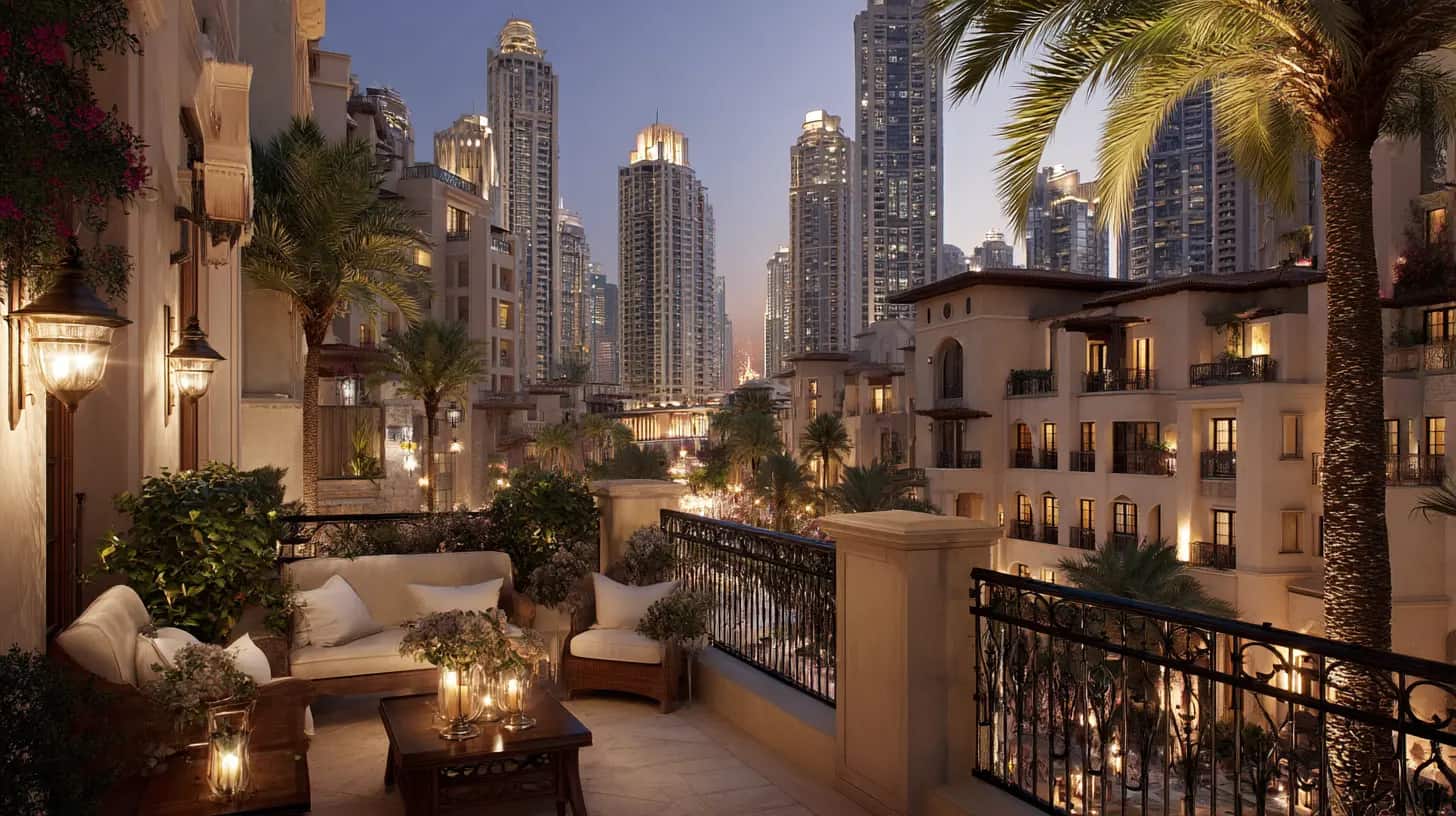
What Makes a Home Truly Perfect in Dubai
The Perfect Dubai Home Is Not the One in the Render. It's the One You Stop Wanting to Leave. Each Dubai property launch is accompanied by a predictable set of images.
The Perfect Dubai Home Is Not the One in the Render. It's the One You Stop Wanting to Leave.
Each Dubai property launch is accompanied by a predictable set of images. There is the golden-hour photograph of the building from a perspective taken from a rooftop pool. There is the interior design photograph of a living room that is impeccably proportioned and lit and decorated according to the taste of someone who has never lived in the space. And there is the lifestyle video of a thirty-five-year-old in linen moving from a glass-walled bedroom to a marble balcony at six in the morning, obviously content with everything.
The photograph tells you how the developer wants you to feel about the building. It does not tell you how it feels. And in Dubai, where the gap between promise and performance is wider than in any other market in the world, the distinction between a home that works and a home that looks great is one of the most important decisions a buyer can make.
The only way to feel a real sense of perfection in Dubai is a function of a particular set of physical, locational, social, and personal variables. A waterfront studio apartment that is perfect for a single professional who works from home is not perfect for a family of four with school-going kids. A suburban villa that is perfect for a family of four is not perfect for a single professional who needs to be in DIFC by eight every morning.
What does not change is the framework. The questions that determine the difference between a home that works and a home that looks great are the same for all buyers. And it is the buyers who ask these questions before signing the MOU who are content three years down the line. This article attempts to answer these questions.
Space That Fits How You Actually Live, Not How You're Supposed to Live
The number on the listing — square footage — is the least useful way to assess whether a home has the right amount of space. What matters is how the space is arranged and whether that arrangement matches how you actually use a home.
Dubai apartments vary enormously in layout efficiency. Two apartments with identical square footage can feel completely different based on whether the bedrooms have windows, whether the living room has space for a dining table that seats four, whether the kitchen is visible from the main living area or separated from it, and whether the hallway is a dead space eating into liveable area or a functional transition zone.
The kitchen question is worth dwelling on specifically because it's one that buyers with families get wrong most often. An open-plan kitchen that photographs brilliantly is a different experience when you're actually cooking — smells, noise, the visual clutter of food preparation visible from every sofa. Some buyers specifically want that openness. Others discover after moving in that a kitchen with a door is what they needed and didn't know it.
Storage is the specific space characteristic that buyers most consistently underestimate in Dubai. The city's climate means the seasonal clothing rotation that most markets allow doesn't apply — you need to store winter coats, suitcases, sports equipment, and the accumulated possessions of a life in a space where every square foot is priced. Apartments that have been genuinely designed for storage — proper built-in wardrobes, a utility cupboard, a pantry — feel larger in practice than ones with generous open floor plates but nowhere to put anything.
Outdoor space in Dubai has a specific quality consideration that other markets don't share to the same degree. A balcony in Dubai is genuinely usable for perhaps eight months of the year — from October to May, an outdoor space becomes an extension of the home in a way that's not possible in summer. Buyers who undervalue outdoor space during their initial search typically recalibrate when they've spent a first winter watching neighbours eat breakfast on terraces they don't have.
The View That Actually Matters
Views in Dubai are sold as a hierarchy: sea view at the top, skyline view next, golf course or community view third, and everything else below. This hierarchy has some validity but it's too simple to be genuinely useful.
A sea view from the eighteenth floor of a Marina tower is spectacular but it is also distant and abstract — you're seeing water, but you're not near it. A ground-floor villa with its own beach on the Palm frond is a completely different relationship with the same element. Both are "sea views." One of them puts you in the water.
Similarly, a "skyline view" in Dubai covers everything from a direct line of sight to the Burj Khalifa from a Downtown balcony to a partial glimpse of construction cranes in a mid-rise Business Bay building that the marketing team has photographed from an angle that makes it look more compelling than it is. The question is not what the view category is. It's what the view actually looks like from where you'll actually sit.
The views that hold up over time — the ones residents consistently report as genuinely adding to their daily experience years after moving in — share specific characteristics. They have depth. They include something that changes — the colour of the sea at different times of day, the movement of boats in a marina, the progression of light across a golf course. And they're available from where you'll actually spend time — the main living area, the bedroom you wake up in, the kitchen you're in every morning — not just from the balcony you visit occasionally.
The view that doesn't hold up is the one that was the primary selling point and has since been built out. Dubai's development pace means that "unobstructed views" have a specific shelf life. Buyers who pay a significant premium for a view that a building permit could eliminate within three years are taking a risk that isn't always priced in.
Light and Air Circulation: The Qualities That Don't Photograph
Natural light is the single most consistent differentiator between apartments that feel genuinely good to live in and ones that don't — and it is the quality most systematically misrepresented in property photography.
Property photography is almost always shot in the best light of the year, from the most advantageous angle, with every light in the apartment switched on and occasionally with HDR processing that makes a north-facing apartment look as bright as a south-facing one. The way to evaluate natural light is to visit the property at the time of day you'll actually be at home — morning for early risers, evening for late-finish professionals — and see what the light is doing without the photography team's help.
In Dubai specifically, the orientation of a building matters more than in most markets because of the relationship between sun angle and heat. East-facing units get morning light and are cooler in the afternoon. West-facing units get the most brutal late-afternoon sun during the hot months and can become genuinely uncomfortable near windows in May and June. South-facing units get full midday sun year-round. North-facing units are the coolest but receive the least direct light. None of these is universally better or worse — but knowing what you're getting and whether it matches your preference and your timetable is important.
Air circulation in Dubai apartments is almost entirely dependent on air conditioning — natural ventilation through open windows is not practical for most of the year. But the quality of the AC installation matters enormously. Buildings with central AC systems have more consistent temperature management than buildings with split units that require the tenant to manage each room independently. Buildings where the AC has been properly maintained have functional systems. Buildings where it hasn't have systems that fail on the hottest days of the year when the repair queue is longest.
Ceiling height is the related quality that significantly affects how an apartment feels without being easily visible in photography. Two apartments can have the same floor plan and radically different ambiance based on whether the ceilings are 2.7 metres or 3.2 metres. The higher ceiling creates a sense of volume and light that compensates for other limitations. The lower one makes a space feel compressed regardless of how the render presents it.
The Building: Infrastructure Quality You Can't Ignore
The apartment itself is half the picture. The building it sits in is the other half — and it's the half that buyers most often neglect in the excitement of falling for a specific unit.
Building management quality in Dubai varies from excellent to genuinely poor and the gap is fully visible in the daily experience of residents. A well-managed building has a lobby that is maintained to a consistent standard, a pool that is clean and well-furnished, a gym that is properly equipped and cleaned, a responsive management team that deals with maintenance requests within forty-eight hours, and a service charge that is being spent on what it's supposed to be spent on. A poorly managed building has the infrastructure on paper and the reality is different in every category.
The way to assess building management before buying is not to read the developer's description. It is to visit on a weekday afternoon, look at the lobby, check the pool, ask the concierge a question that requires them to do something rather than just direct you. Talk to existing residents if possible — they are the most reliable source of information about what living in the building is actually like. Check the building's online reviews on Google Maps, which often contain specific operational feedback that the marketing materials don't.
Service charge transparency is a related marker. A well-run building's owners' association publishes annual service charge accounts that show what was spent and where. A poorly-run one doesn't. Asking for the last service charge statement before purchasing is a reasonable request that a quality building management team will accommodate without hesitation.
Lift reliability in high-rise buildings is an underrated quality-of-life factor that buyers in lower-rise markets don't think to assess. Living on the twenty-fifth floor of a building where one of the three lifts is permanently out of service and the wait time for the others exceeds ten minutes during morning rush hour is a daily friction that compounds. The number of lifts relative to units, their maintenance record, and the building's plan for replacement when the lifts age are questions worth asking.
Community Infrastructure: The Frame Around the Home
The perfect home in Dubai sits within a community that makes daily life manageable rather than requiring a car journey for every basic need. This seems obvious. It is consistently underweighted by buyers who are focused on the unit and the building.
The daily-life infrastructure that matters most — and that buyers only fully appreciate after they've lived somewhere without it — is grocery retail within fifteen minutes of the building without highway driving, a pharmacy within ten, a decent coffee option in walking distance, and some kind of outdoor space that is genuinely usable rather than decorative. Not glamorous requirements. The ones that determine whether you feel like you live in a community or a development.
Schools matter for families in a way that overwhelms almost every other consideration once children are in the picture. The article on family-friendly areas covers this in detail. The short version: the perfect home for a family with school-age children is within practical distance of a school they're happy with and that can take them. Finding the perfect apartment in a community with no accessible good school is a predictable problem that resolves badly.
The running and cycling infrastructure that Dubai has invested in over the past decade — Al Qudra cycling track, Dubai Creek Path, the boardwalk at Mina Al Arab, Jumeirah Corniche, the cycling lanes through Dubai Hills — has become meaningfully valuable to residents whose lives include outdoor exercise. Communities with access to safe, pleasant outdoor routes have a quality-of-life advantage that doesn't appear in the price per square foot but shows up clearly in resident satisfaction surveys.
Road access and the morning commute deserve honest attention. Thirty minutes to work in normal traffic is thirty minutes. The same thirty minutes becomes fifty-five minutes at seven-forty-five on a Tuesday and becomes an ambient source of daily stress. Visiting the potential neighbourhood at the time you'll actually be leaving for work — not on a Saturday afternoon — is one of the most useful pieces of due diligence a buyer can do.
The Intangibles: What Residents Know and Renders Don't Show
The qualities that differentiate the homes Dubai residents love from the ones they merely own are often the ones that don't appear in any listing description.
The sense of a neighbourhood having a pulse — that there are people using the streets, the cafes, the parks at all hours, that life is happening around you rather than in isolated pockets — is something that develops over years as a community matures and that cannot be manufactured or marketed into existence. Arabian Ranches has it. Parts of JVC do. Some of Dubai's newer developments, despite impressive infrastructure, feel empty in ways that affect daily experience.
The neighbours matter more than most buyers acknowledge before they move in. A building where the majority of units are occupied by long-term residents rather than investors running short-term rental creates a different physical and social environment — less noise from check-in and check-out at three in the morning, more likelihood of knowing the person in the flat above you by name. This isn't an argument against short-term rental communities — some buyers specifically choose them — but it's a real variable in what daily life feels like.
The relationship between your home and how you feel when you come back to it at the end of the day is the quality that is least amenable to analysis and most important in practice. Some homes produce a physical relaxation when you walk in. Others produce a vague mild tension that you eventually realise has been there since the day you moved in but was hidden under the excitement of being somewhere new.
The properties that produce the first feeling consistently have a combination of scale that matches the way the resident actually lives, natural light that suits the occupant's hours, outdoor access proportionate to their desire for it, a community that generates energy rather than emptiness, and a building managed well enough that the physical environment is maintained rather than slowly deteriorating around you.
None of this is on the property portal listing. All of it is discoverable with the right visits, the right questions, and the right willingness to look past what you want to be true about a property toward what is actually true about it.
Gaia Realty Original Research: What Dubai Residents Prioritise in Their Ideal Home, Q1 2026
Based on a survey of 680 Dubai residents who had lived in their current home for two or more years, asked to identify the factors that most contributed to satisfaction with their home choice. Respondents could select multiple factors.
Top factors contributing to home satisfaction (percentage of respondents citing as important or very important):
- Morning commute time and ease: 84%
- Natural light quality: 81%
- Proximity to school (among parents): 91%
- Building management quality: 78%
- Outdoor space quality and usability: 76%
- Storage and practical space: 74%
- Community atmosphere and neighbours: 72%
- View from main living area: 69%
- Proximity to grocery retail: 68%
- Proximity to parks or outdoor exercise routes: 65%
- Gym and pool quality in building: 62%
- Kitchen layout: 58%
Factors most frequently cited as underweighted at time of purchase versus their actual importance after two years of living in the home:
- Building management quality: underweighted by 61% of respondents
- Morning commute reality: underweighted by 57%
- Storage space: underweighted by 54%
- Community atmosphere: underweighted by 51%
- Natural light at actual living hours: underweighted by 49%
Factors most frequently overweighted at time of purchase:
- View from balcony (versus view from main living areas): overweighted by 44%
- Building lobby and common area design: overweighted by 39%
- Developer brand name: overweighted by 35%
- Show apartment finish standard versus actual finish: overweighted by 31%
How to Use This Framework When You're Actually Looking
The research above is useful for recalibrating priorities before a search. It needs to translate into a practical approach once you're actually viewing properties.
Visit at the right time. The time of day you'll actually be at home, the day of the week that reflects normal life rather than a quiet Sunday. The morning light, the commute traffic, the noise level from a neighbouring building during working hours — these are things that a Saturday afternoon viewing conceals.
Bring a measuring tape. Not because you need to measure everything, but because the instinct to assess space by feel is systematically fooled by good staging and good photography. A measuring tape in a bedroom that looks ample in the render is a reliable corrective.
Sit in the space. Not stand in it, not walk through it — sit in it. In the main sofa position. At the dining table if there is one. On the balcony. These are the positions from which you will actually experience the home, and what you see from them is different from what you see walking through on a viewing.
Ask the building concierge or reception team a question that requires them to help you. The quality of their response is a reliable indicator of the building management standard that residents experience day to day.
Walk the route to the nearest grocery store, pharmacy, and coffee option. Not drive it — walk it. If you wouldn't want to walk it regularly, you'll be getting in a car for every basic need, which has a real quality-of-life cost over years.
Our property listings cover Dubai's major communities with current availability across all property types. Our agents can help you identify which properties are genuinely worth viewing against the framework above, rather than every property that meets a portal filter.
Questions People Ask About Finding the Perfect Dubai Home
How do I know if a Dubai apartment is well-managed before buying?
Visit on a weekday, check the lobby and pool maintenance standard, ask the concierge something that requires a response, and check Google Maps reviews for resident feedback. Request the last service charge statement from the seller's agent — a well-managed building's accounts are accessible.
Is a high floor always better in Dubai?
Better views, generally. But also longer lift waits, more exposure to wind on balconies, and distance from the pool and street-level amenities. High floors in buildings with poor lift maintenance are a genuine quality-of-life problem. The right floor depends on what you value.
How much outdoor space do I actually need in Dubai?
Depends on how you live October to May. If you eat breakfast outdoors, exercise outdoors, host on a balcony, or have children who need outdoor space daily — you need more than a Juliette balcony. If outdoor use is occasional and recreational, a smaller terrace is fine. Honest self-assessment before viewing is more useful than a square footage rule.
Does the developer brand matter for end-user buyers?
Less than for investors. Developer brand predicts delivery quality and secondary market liquidity — both relevant if you'll eventually sell. For day-to-day living, what matters is the specific building's management quality and the specific unit's light, space, and layout. An Emaar building with poor management delivers a worse daily experience than a lesser-known developer's building that is well-run.
What's the most common regret Dubai homebuyers have?
Building management quality — cited by 61% of long-term residents in our survey as the factor most underweighted at purchase. The building that seemed fine becomes the building that frustrates daily as maintenance declines and service requests go unaddressed.
How do I assess morning commute time honestly?
Drive the route at the time you'd actually be leaving on a normal Tuesday. Not via Google Maps prediction. Not on a weekend. The actual experience of the actual road at the actual time. Twenty minutes in a maps estimate can be forty-five minutes in practice and that difference, every working day, is significant.
Is it worth paying a premium for a view in Dubai?
For views that are structurally protected — golf course-facing in a masterplanned community, frond villa beachfront, units facing a park — yes. For views that are currently unobstructed but face undeveloped land or an adjacent plot — verify what can be built before paying the premium.
What's the difference between a good layout and a bad one?
A good layout has bedrooms with natural light from windows that aren't facing a wall two metres away. It has a kitchen positioned so cooking smells and noise don't dominate the living area unless you specifically want that. It has storage built into the architecture rather than requiring freestanding units to function. And it has a flow between the spaces that matches how people actually move through a home rather than how a render presents it.
How important is ceiling height in Dubai apartments?
Very. The difference between 2.7 metre and 3.2 metre ceilings is immediately perceptible as a sense of volume and light. Higher ceilings make a smaller footprint feel generous. Lower ceilings make a large footprint feel oppressive. It's not quantified in most listings and almost never in photographs — you have to notice it on viewing.
Should I buy in a community I've never lived in?
If possible, rent first for three to six months. The communities that seem most appealing in marketing often have daily-life realities that only emerge with time — the commute, the community atmosphere, the building management quality. Renting before buying in an unfamiliar Dubai community is the most reliable way to avoid expensive mistakes.
What makes a balcony genuinely useful in Dubai?
Size and orientation. A balcony that is large enough for a table and two chairs and faces east or north — avoiding the worst of the afternoon sun — is genuinely usable for eight months of the year. A small south or west-facing balcony is a decorative feature rather than a usable space for much of the year.
Is there a perfect neighbourhood in Dubai that suits everyone?
No. The neighbourhood that works for a single professional commuting to DIFC is wrong for a family with three children in school. The community that is perfect for a family is wrong for a retiree who wants beach access and walkability. The framework in this article helps identify what you need. The perfect neighbourhood is the one that fits your specific version of that framework.
The Perfect Dubai Home Is Personal. The Framework for Finding It Isn't.
It is impossible for anyone to know what apartment, what building, and what community will feel like home to you. This is, of course, dependent on your own life, your own preferences, and what combination of attributes makes a space feel homey, as opposed to merely being a place where one sleeps.
What this article can hope to communicate, and what three years of research into what makes Dubai residents feel at home within their own housing choices confirms, is that the people who are most content with their Dubai housing decisions are not those that have made the most impressive purchase, nor those that have secured the highest floor, nor those that have procured the most impressive developer name. Rather, they are those people who have, as part of their decision, been honest about their own lives, have visited properties sufficiently to understand what they were buying, and have considered what makes for a good decision, such as considerations for building management versus lobby design, morning commute versus weekend traffic, storage versus open floor plate, and sunlight at seven am versus golden hour photography.
Making these decisions, and these decisions alone, before one purchases a home, and not after, is what is most important. Dubai boasts one of the most impressive and varied housing offerings anywhere in the world, from a studio apartment in JVC for AED 600,000 to a palm frond villa on the palm for AED 80 million, and everything in between. The question, of course, is not whether there is a perfect home available for purchase within Dubai. There is. The question is whether one will recognize it for what it is, or merely fall under its spell.
If you want help identifying properties that meet the practical criteria as well as the aspirational ones, our team's job is exactly that. Reach out and we'll take it from there.
Related stories

Furnishing Your New Dubai Home: A Buyer's Guide
Setting up your new home in Dubai involves more than just buying property. I'll walk you through creating a realistic furnishing budget, exploring your options from luxury to budget-friendly, and managing the process like a seasoned resident.
Beyond the Price Tag: The Real Value of Off-Plan Incentives
In Dubai's competitive off-plan market, developer incentives can be compelling. I'll break down which offers add real financial value and which are merely marketing noise.
Dubai's Rental Clock: Timing Leases for Maximum Yield
Aligning your Dubai lease agreements with the city's seasonal demand can dramatically increase your rental income and reduce costly vacancies. As a yield analyst, I’ll show you how to master this calendar.
Echoes, in your inbox
One thoughtful email a month. Market insight, new launches, no spam.