

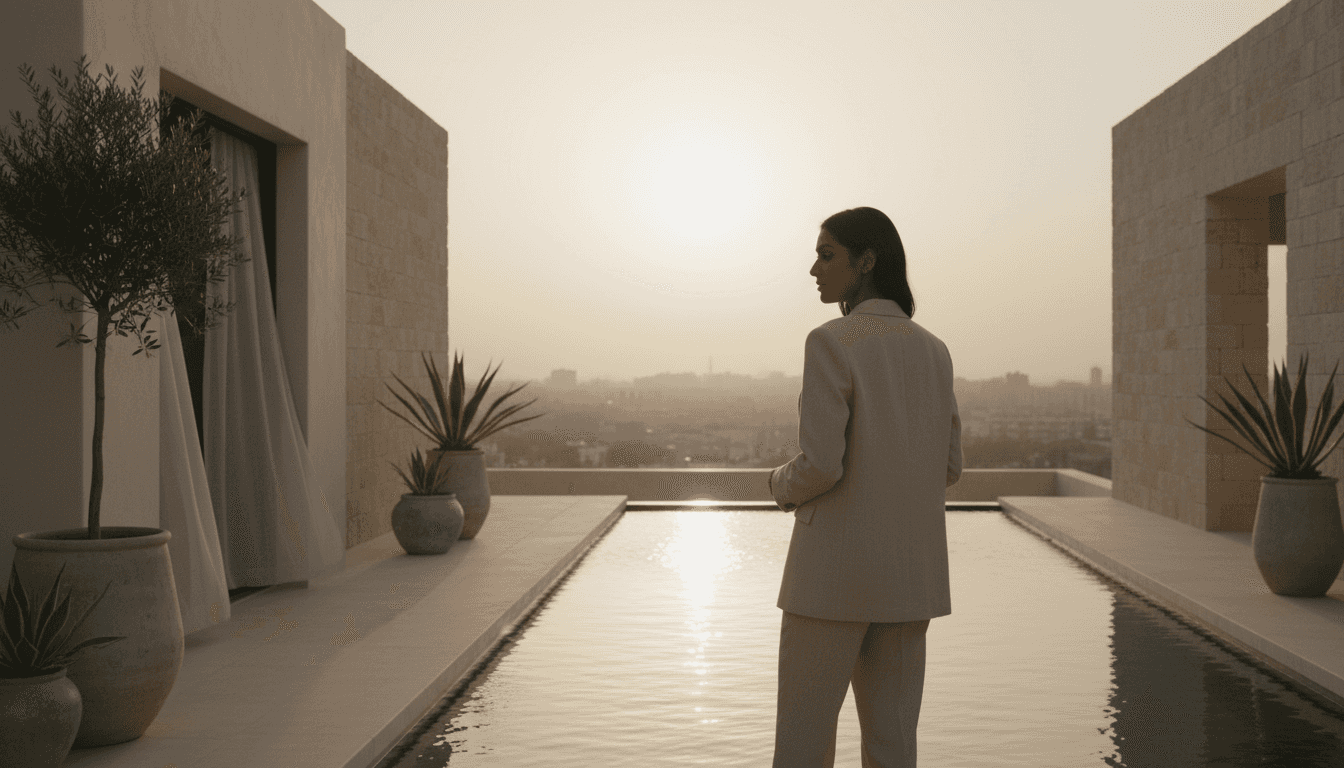
The Price of Privacy in Dubai's Gated Enclaves
In a city defined by spectacle, the ultimate luxury is discretion. I explore the appeal of Dubai's exclusive gated communities and what it truly costs to live behind the gates.

Dubai is a city built on being seen. From the world's tallest tower to its spectacular fountain shows, this is a place that celebrates visibility. Yet, for an increasingly significant portion of its most affluent residents, the ultimate currency isn't exposure; it's the ability to disappear.
In this article, I'll take you behind the manicured hedges of Dubai's most sought-after private enclaves. We will explore:
- The modern definition of luxury and its shift towards privacy.
- A deep dive into Dubai's most iconic private communities.
- The architectural 'tricks of the trade' that create seclusion.
- The tangible benefits of security and community.
- The true, line-by-line cost of living this exclusive lifestyle.
- My personal verdict on whether the premium is truly worth paying.
The New Definition of Luxury: More Than Just a Price Tag
For many years, luxury real estate in Dubai was synonymous with overt opulence. It was about the biggest chandelier, the most exotic marble, the sheer scale of a ballroom. While these elements still exist, my conversations with clients today reveal a profound shift in what high-net-worth individuals truly value. The new luxury is experiential and, above all, private. It's less about impressing guests and more about creating a personal sanctuary, a space shielded from the public gaze where a family can live with genuine freedom and peace of mind. This is the core appeal of discreet living Dubai is becoming famous for.
This trend isn't unique to Dubai, but it finds a unique expression here. In a city that is a global hub for business, travel, and media, the ability to control one's environment is the ultimate status symbol. We're seeing a move away from the 'glass box' penthouse that puts life on display towards properties that offer layers of seclusion. This might be a sprawling villa on a huge plot, a home surrounded by dense, mature landscaping, or a residence in a community where access is so tightly controlled that even a delivery driver's presence is a meticulously managed event. It is a fundamental rebalancing of priorities.
The developers who understand this are thriving. It's no longer enough to build a beautiful house; you have to build a beautiful, *private* house within a secure, managed, and exclusive ecosystem. This is why master-planned exclusive communities Dubai has pioneered are so successful. They don't just sell property; they sell a controlled lifestyle. They offer a complete package: security, world-class amenities, a curated neighbourhood feel, and the quiet promise that your home is your fortress. This is a powerful proposition for public figures, successful entrepreneurs, and families who simply want their children to be able to play outside without a second thought.
A Tale of Three Enclaves: Emirates Hills, Al Barari, and Jumeirah Bay
 Featured project
To understand the different flavours of privacy in Dubai, you only need to look at three standout examples. Each offers exclusivity, but they deliver it in fundamentally different ways, catering to distinct buyer profiles. They represent the pinnacle of private homes Dubai has to offer.
First is Emirates Hills, the original super-prime gated community Dubai became known for. Developed by Emaar Properties, it was conceived as the 'Beverly Hills of Dubai'. Its entire premise is built on space. The plots are enormous, measured in the tens of thousands of square feet, allowing for the construction of vast, palace-like mansions. Here, privacy comes from sheer distance. Your neighbour is so far away, and your property so large, that you exist in your own private world. The community's rolling green fairways of the Montgomerie Golf Club act as a beautiful, sprawling buffer. Emirates Hills is for the buyer who wants to make a statement of scale and legacy, creating a custom estate that is entirely their own vision. The entry ticket is formidable, with prices starting north of AED 50 million and reaching well over AED 200 million for trophy assets.
Then there is Al Barari. If Emirates Hills offers privacy through scale, Al Barari offers it through nature. Its name translates to 'the wilderness', and the developer has taken this to heart. A staggering 60% of the community is dedicated to green space, botanical gardens, and waterways. The result is a lush, tropical oasis that feels a world away from the desert. The villas are designed to be enveloped by this greenery. High walls are softened by cascading bougainvillaea, and mature trees create natural screens. Privacy here is sensory; it's the feeling of being enclosed by foliage, the sound of birds instead of traffic. Al Barari attracts a buyer who is perhaps more understated, someone who values wellness and a connection to nature. It's a different kind of status — one rooted in well-being and environmental aesthetics. The architecture is more consistent, often with a contemporary or Mediterranean feel, but the true luxury is the ecosystem it sits within.
Finally, we have Jumeirah Bay Island. This seahorse-shaped island is a project by Meraas and is arguably the most exclusive address in the city today. Its privacy is derived from its geography: it's an island, connected to the Jumeirah coastline by a single 300-metre bridge with a guarded access point. This creates an immediate and undeniable sense of separation. Home to the Bvlgari Resort and Residences, it offers a limited number of super-plots and branded villas. The appeal is the fusion of island seclusion with jaw-dropping views of the downtown skyline and the open sea. It's a paradox: you feel completely removed, yet you have one of the best views of the city's heart. This attracts a global elite who want the best of both worlds — waterfront tranquility and urban proximity. The price of entry here is the highest of the three, reflecting its unique location and limited supply.
The Architecture of Seclusion
Achieving true privacy isn't just about putting up a wall. It’s a sophisticated design challenge that architects and developers in Dubai's luxury enclaves have mastered. It starts with the master plan itself. Low-density planning is crucial. In communities like Arabian Ranches or the more premium sections of Sobha Hartland and Sobha Hartland II, streets are wide, and villas are set back on generous plots. This simple act of creating space is the first line of defence against prying eyes.
Plot orientation is another subtle but vital tool. The best developers will carefully position each plot to minimise overlooking. This means staggering homes so that a living room window doesn't look directly into a neighbour's pool area. They consider the path of the sun, the prevailing winds, and sightlines from every angle. In ultra-luxury projects, this is done on a plot-by-plot basis. I've seen villa designs where the entire layout is flipped or rotated to ensure the main family areas — the garden, the pool, the terrace, are shielded from view. This level of customisation is a hallmark of high-privacy homes Dubai developers excel at.
Then comes the landscaping. This is where communities like Al Barari truly shine. It's not just about planting a few palm trees. It's about strategic, layered planting. Fast-growing hedges create the first screen, followed by mid-height flowering shrubs for beauty and density, and finally, mature trees that provide a high canopy for shade and top-down privacy. Water features also play a role, with the gentle sound of a fountain or stream helping to mask noise from adjacent properties. The goal is to create a 'garden room' that feels like an extension of the home's interior — a completely private outdoor living space.
Finally, the architecture of the home itself is key. Features that enhance privacy include:
- Strategic Window Placement: Limiting the number and size of windows on sides facing neighbours, while using large expanses of glass on the rear facade opening onto the private garden.
- Internal Courtyards: A classic feature of Arabic design, the central courtyard creates a completely private outdoor space at the heart of the home, bringing in light and air without external exposure.
- Screens and Mashrabiya: Modern interpretations of traditional latticework are used to provide shade and privacy while still allowing for airflow and filtered light. They are both functional and beautiful.
- Elevated Plots and Basements: Some villas are built on slightly raised plots to give them a commanding, private position. Conversely, basement levels are being transformed into entertainment zones — cinemas, gyms, spas, that are naturally secluded and private.
The Tangible Benefits: Security, Community, and Amenities
While the concept of privacy can feel abstract, the benefits of living in one of these exclusive enclaves are very concrete. The most obvious is security. This goes far beyond a friendly guard at the gate. We're talking about a multi-layered security infrastructure. It begins with a single, controlled entry point, often using advanced systems like license plate recognition and RFID tags for residents. Visitor access is strictly managed, requiring pre-approval from the resident. This alone eliminates unsolicited traffic and provides immense peace of mind.
Inside the community, security is constant but discreet. Regular patrols, extensive CCTV coverage of all common areas, and perimeter monitoring are standard. Many communities have a central security hub that operates 24/7, ready to respond to any incident. For many of our clients, particularly those with young families or those who travel frequently, this comprehensive security is non-negotiable. It's the assurance that their home and family are protected, allowing a 'lock up and leave' lifestyle with complete confidence. This is a level of security that is almost impossible to replicate for a standalone villa in a non-gated area.
Beyond security, there's the element of a curated community. Because these enclaves have a high barrier to entry and are managed by a single developer or owners' association, there's a shared standard of upkeep and resident conduct. The streets are immaculate, the parks are perfectly manicured, and the common facilities are pristine. This creates a serene and predictable environment. It also fosters a sense of community among like-minded neighbours who value the same things — privacy, quality, and safety. Developers often encourage this with exclusive community events, from farmers' markets in Al Barari to social gatherings at the Emirates Hills clubhouse.
And then there are the amenities. These are not your average apartment block swimming pools. We're talking about championship golf courses, state-of-the-art fitness centres, world-class spas, gourmet restaurants, and even private schools, all within the community gates. In a community like Dubai Hills Estate, you have the golf club, a destination mall, a hospital, and schools, all interconnected by green corridors. This creates a self-contained world where your daily needs can be met without ever having to venture into the city's traffic. This convenience is a huge part of the luxury offering; it gives you back the one commodity money can't buy: time.
The Real Cost of Living Behind the Gates
This lifestyle of perfect lawns, silent streets, and absolute security comes at a significant price. Understanding the full cost is crucial for any potential buyer. It's not just the purchase price, which is already in the stratosphere. The ongoing costs are substantial and must be factored into any budget. Let's break down the real cost of acquiring and owning a property in a prime gated community Dubai.
First, the upfront costs. The purchase price is just the beginning. On top of that, you have a set of mandatory fees. The largest is the Dubai Land Department (DLD) transfer fee, which is 4% of the property value. There's also a DLD registration trustee fee, which is a fixed AED 4,200 for properties above AED 500,000. Then, you have the real estate agency fee, typically 2% of the purchase price plus 5% VAT on that fee. If you're taking out a mortgage, you'll also need to budget for the bank's arrangement fee and property valuation fee.
Let's put that into perspective with a worked example for a hypothetical AED 15 million villa:
- Purchase Price: AED 15,000,000
- DLD Transfer Fee (4%): AED 600,000
- Registration Trustee Fee: AED 4,200
- Agency Fee (2%): AED 300,000
- VAT on Agency Fee (5%): AED 15,000
- Mortgage Registration Fee (0.25% of loan): AED 30,000 (assuming an AED 12M loan)
- Bank Processing & Valuation Fees (approx.): AED 15,000
- Total Upfront Costs (excluding down payment): AED 964,200
So, before you've even made your first mortgage payment, you've spent nearly AED 1 million in associated costs. This is a critical calculation that we at Gaia Living always walk our clients through. There should be no surprises.
The second, and perhaps more important, long-term cost is the annual service charge. This is the fee you pay to the developer or owners' association to maintain the community's impeccable standards. These fees cover everything: security personnel, landscaping, maintenance of roads and streetlights, upkeep of the swimming pools, gyms, parks, and any other common facilities. Service charges are calculated per square foot of your property's built-up area (BUA). In Dubai's elite villa communities, you can expect these to range from AED 5 to AED 15 per square foot per year. For a 10,000 sq. Ft. villa, that could mean an annual bill of AED 50,000 to AED 150,000. These charges are regulated by the Real Estate Regulatory Agency (RERA), and owners have a say through their owners' association, but they are a significant and recurring expense that directly funds the exclusivity and privacy you're buying into.
My Verdict: Is the Premium Justified?
After years of guiding clients through these exclusive communities, my answer is a firm but qualified yes. The premium is justified, *if* your primary motivation is the acquisition of privacy, security, and a flawlessly managed lifestyle. You are not just buying square footage; you are buying into a private club. The high service charges that deter some are precisely what guarantees the pristine environment that attracts others. It's a self-selecting mechanism.
“For the global citizen who values time, security, and a predictable, high-quality environment for their family, the cost of entry into Dubai's elite enclaves is not an expense — it's an investment in a way of life.”
However, it's not the right choice for everyone. If your goal is purely to maximise rental yield or achieve the highest possible capital appreciation in the shortest time, there are other sub-markets and asset types that might be more suitable. The properties in these enclaves are less about speculative gains and more about long-term wealth preservation and lifestyle enhancement. They tend to be more resilient during market downturns because the demand from end-users remains stable. People who buy in Emirates Hills or Palm Jumeirah are typically buying their 'forever home' in Dubai, not a short-term trade.
What I advise my clients is to be brutally honest about their priorities. Make a list. If 'security for my children', 'not being overlooked', 'a quiet, green environment', and 'hassle-free living' are at the top, then a gated community is likely the right path. If 'low running costs' and 'maximum flexibility' are your main concerns, then a standalone villa in a non-gated neighbourhood like Jumeirah or Umm Suqeim might be a better fit, though you would sacrifice the layered security and communal amenities. There is no universally 'better' option — only what is better for you.
The premium paid for homes in Dubai's exclusive gated communities is a direct payment for a comprehensive package of privacy, layered security, and world-class amenities. While the upfront and ongoing costs are substantial, they purchase a level of control and peace of mind that is increasingly seen as the ultimate luxury in a global city. For the right buyer, it is a price well worth paying.
Ultimately, the decision to live behind the gates is a lifestyle choice. It's a choice to trade a degree of urban spontaneity for serene predictability. It's a choice to invest in an ecosystem that prioritises your peace and privacy above all else. For a growing number of people in Dubai and around the world, that choice is the easiest one they'll ever make. If you're considering this path, our team at Gaia Living is here to help you navigate the nuances and find the enclave that truly feels like home. You can start by exploring our curated selection of properties for sale in these exceptional Dubai communities.
Sources
- Dubai Land Department (DLD): dubailand.gov.ae
- Real Estate Regulatory Agency (RERA): Service charge management information.
- UAE Government Portal (u.ae): Information on property ownership laws and fees.
Questions, answered
- What are the most exclusive gated communities in Dubai?
- Emirates Hills is the original 'Beverly Hills of Dubai', known for its enormous custom-built mansions. Other top-tier enclaves include Jumeirah Bay Island for its waterfront setting and Al Barari for its unique focus on lush, dense greenery.
- How much does a villa in a top gated community cost?
- Prices vary significantly. In Emirates Hills, you'll rarely find anything below AED 50 million, with trophy assets exceeding AED 200 million. In Al Barari or Arabian Ranches, villas can range from AED 8 million to over AED 40 million depending on size and location.
- Are the high service charges in gated communities worth it?
- It depends on your priorities. These fees, which can range from AED 5 to AED 15 per sqft for villas, cover 24/7 security, immaculate landscaping, private roads, and exclusive amenities like clubhouses and golf courses. For residents who value privacy and a managed environment, the cost is often justified.
- What makes a community 'private' in Dubai?
- True privacy goes beyond a simple gate. It involves multi-layered security protocols, low-density master planning, large plot sizes, and intelligent architecture designed to minimise overlooking. The most exclusive communities control all access meticulously.
- Can foreigners buy property in these exclusive communities?
- Yes, all the major exclusive communities like Emirates Hills, Palm Jumeirah, and Al Barari are located in designated freehold zones. This means foreign nationals can purchase property with full ownership rights, which can be registered with the Dubai Land Department.
- What is the security like in Dubai's gated communities?
- Security is paramount and multi-layered. It typically includes a 24/7 guarded main gate with access control, regular patrols, perimeter monitoring, and often individual home alarm systems connected to a central security office. This provides a level of safety that is difficult to replicate in an open neighbourhood.

Yusuf writes about how Dubai actually lives — waterfront mornings, community dining, walkability, and the lifestyle premium built into an address.
Related stories
The Green Premium: Are Eco-Homes Worth It in Dubai?
Dubai is aggressively promoting green building standards, but does this translate into a tangible price premium for buyers and investors? We break down the real costs, benefits, and market reality.
Dubai's Best Villa Communities for Family Investment
I explore which established and emerging Dubai villa communities offer the best blend of family lifestyle and long-term investment value, moving beyond hype to focus on real market fundamentals.
The Resale Journey: Maximizing Your Apartment's Value
As an owner, preparing to sell your Dubai apartment requires more than just a listing. I'll walk you through the essential steps, from strategic pricing to final handover, to ensure you secure the highest possible market value.
Echoes, in your inbox
One thoughtful email a month. Market insight, new launches, no spam.