

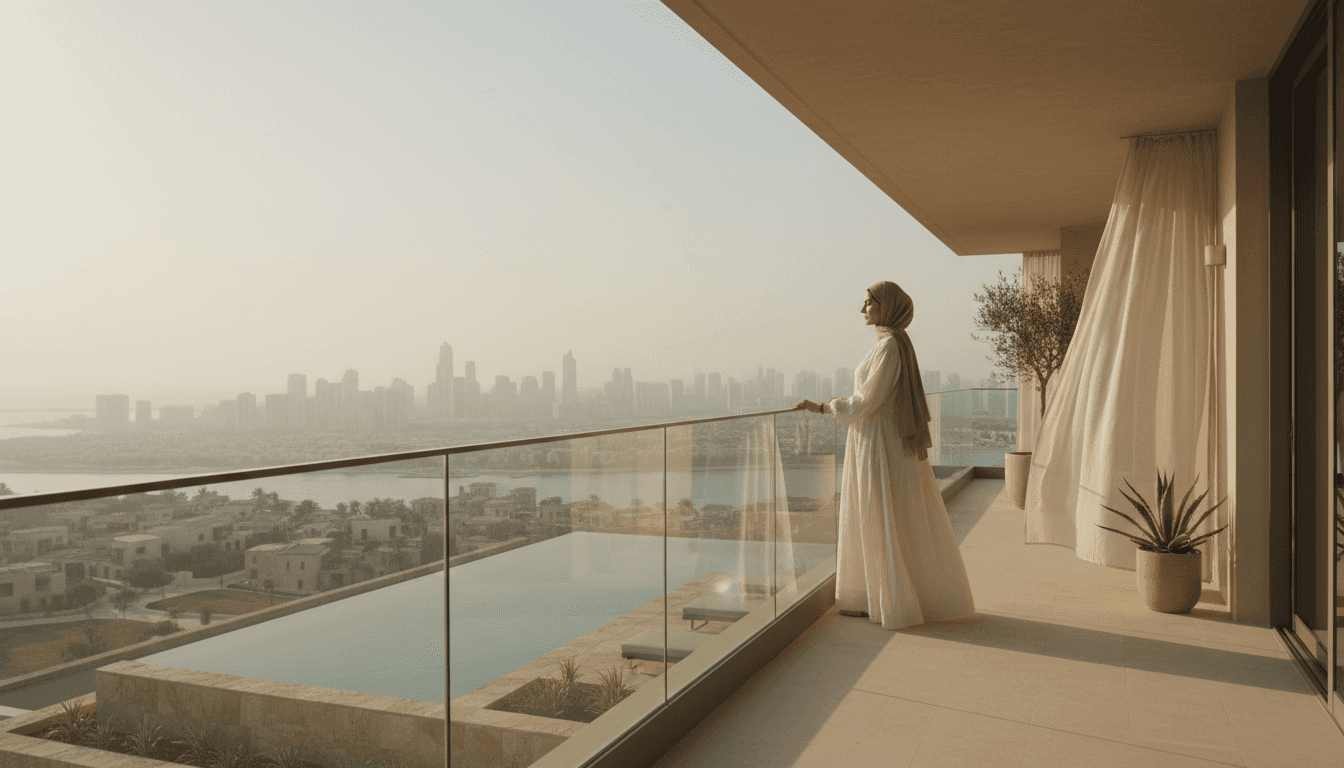
The Resale Journey: Maximizing Your Apartment's Value
As an owner, preparing to sell your Dubai apartment requires more than just a listing. I'll walk you through the essential steps, from strategic pricing to final handover, to ensure you secure the highest possible market value.

Selling an asset you've lived in, and perhaps poured your own personality and care into, is a significant financial and emotional decision. In my years focusing on Dubai's apartment market, I've seen countless owners approach this moment. The most successful ones — those who not only achieve a quick sale but truly maximize their apartment's resale value, are invariably the ones who treat it as a strategic project, not just a transaction.
Here’s what we'll explore in this guide to help you do just that:
- The critical first step: a realistic and data-driven market appraisal.
- Preparing your property for the market: beyond tidying up.
- The legal framework: understanding Forms A, B, and the role of the NOC.
- The numbers: a full breakdown of the costs you'll incur as a seller.
- Navigating viewings and offers like a professional.
- The final stretch: the transfer process and handing over the keys.
- Common pitfalls to avoid on your selling journey.
The Foundation: A Realistic Apartment Market Appraisal
Before you can think about marketing, staging, or viewings, you need a number. But not just any number. The single biggest mistake a seller can make is to anchor their expectations to an unrealistic price. This is where a professional and honest `apartment market appraisal` becomes the most critical part of your entire selling journey. It’s not about what you *hope* to get, what your neighbour *claims* they were offered, or what an online calculator spits out. It’s a rigorous analysis based on cold, hard data from the Dubai Land Department.
At Gaia Living, when we prepare an appraisal for a client, we don’t look at current listings on property portals. Those are asking prices, not selling prices. We pull the actual transaction data for comparable units that have recently sold and transferred in your specific building or cluster. We analyse the DLD's Form B contracts, which show the real price a buyer and seller agreed on. We then layer on the specifics of your unit. Is it a high floor with a premium Dubai Marina view, or a low floor facing a road? Have you done a full kitchen and bathroom renovation, or is it in its original developer-finish from a decade ago? These factors create significant price variance, even between identical layouts in the same tower.
For example, in a tower like Silverene in Dubai Marina, two identical two-bedroom apartments can have a price difference of 20% or more. One might have a full, unobstructed marina view, while the other looks over the building next door. In Business Bay, a corner unit in a tower like The Executive Towers with a direct Burj Khalifa view will always command a premium over an identical layout on the other side of the building with a less desirable view. The market knows and prices in these differences with brutal efficiency. An inflated price, based on emotion or wishful thinking, is the fastest way to have your property sit on the market for months, gathering dust and becoming stale in the eyes of buyers and agents. The first 30 days are crucial; that's when you have peak interest. Pricing it right from day one is your best strategy to `sell apartment Dubai` effectively.
My advice is to interview at least two or three agents who are genuine specialists in your building or community. Ask them to present their appraisal and justify it with data on recent transactions, not just active listings. A good agent will give you an honest assessment, even if it's lower than what you hoped for, and explain the logic behind it. They will walk you through the comparable sales and explain how your apartment stacks up. This data-led approach sets a realistic foundation for the entire process and is the first of many crucial `apartment selling tips UAE` I can offer. It prevents the slow, painful process of price reduction after price reduction, which ultimately signals desperation to the market and can lead to a lower final price than if you had listed correctly from the start.
The Presentation: Property Staging and Professional Marketing
 Featured project
Once you have your price, the next phase is preparing the product. Buyers in a sophisticated market like Dubai are purchasing a lifestyle, not just bricks and mortar. How your apartment presents online and in person can dramatically influence both the speed of the sale and the offers you receive. This is where strategic `property staging Dubai` comes into play, and in my view, it's no longer an optional extra; it's an essential investment to `maximize resale value Dubai`.
First, declutter and depersonalize. Buyers need to be able to envision themselves living in the space. This means packing away family photos, personal trinkets, and excess furniture that makes rooms feel smaller. The goal is a clean, neutral, hotel-like feel. This doesn't mean sterile. It means curated. Think of boutique hotels in DIFC or the serene palettes used in new developments by Emaar Properties. You want to create a canvas. A fresh coat of neutral paint (think whites, light greys, or warm beiges) can do wonders and is one of the highest-return investments you can make. It instantly brightens a space and covers up the scuffs and marks of daily life.
Next, address all the minor maintenance issues you've been ignoring. A flickering light, a dripping tap, a cracked tile, or a cupboard door that doesn't close properly. While these might seem small to you, a buyer sees a list of problems they will have to fix. It creates a narrative of poor maintenance and makes them wonder what larger, unseen issues might be lurking. Spend a few thousand dirhams getting a handyman to go through the apartment and fix everything. This small outlay can prevent a buyer from trying to negotiate a much larger amount off the asking price. A property that looks well-cared-for inspires confidence and justifies its price tag.
Finally, and most importantly, invest in professional photography and videography. The first viewing of your apartment will happen online. Poorly lit, smartphone photos will get your listing ignored, no matter how great the property is in person. Professional photos, taken with proper lighting and wide-angle lenses, make your apartment look spacious, bright, and appealing. A video walkthrough or a 3D virtual tour is now standard for premium properties. It allows serious buyers to pre-qualify your property, meaning the people who book physical viewings are already highly interested. At Gaia Living, we manage this entire process for our clients because we know it's fundamental. The cost is minimal compared to the value it adds, often leading to offers that are 5-10% higher than for a poorly presented property.
The Paperwork: Form A, NOCs, and the Legal Path
Navigating the administrative side of a property sale in Dubai is highly regulated and system-driven, which is a good thing. It provides security and clarity for both buyer and seller. The process starts the moment you decide to hire an agent. You cannot legally market your property without a signed RERA Form A. This is the contract between you and your brokerage, which is then registered on the Dubai Land Department's Trakheesi system. It specifies the property details, the asking price, the agent's commission (typically 2% of the final sale price), and the duration of the agreement. Be wary of any agent willing to work without a Form A; it's a violation of RERA regulations and offers you no protection.
Once a buyer is found and a price is agreed upon, the next key document is the Memorandum of Understanding (MOU), also known as Form F. This is the sale and purchase agreement between you and the buyer. It outlines all the terms of the deal: the price, the payment schedule, the date of transfer, and any specific conditions. The buyer will typically pay a deposit at this stage, usually 10% of the purchase price, which is held by the agency or a neutral third party. This MOU is a legally binding contract, so it's vital to ensure all details are correct before signing.
>The most crucial document you, as a seller, will need to procure is the No Objection Certificate (NOC) from the developer. This document confirms that all your service charges and any other community-related fees are paid in full. You cannot transfer ownership at the DLD without it.
The NOC process varies between developers. For major developers like Nakheel or Emaar, the process is often streamlined and can be done online, usually taking 3-5 working days. For smaller developers, it can sometimes be a more manual process requiring a visit to their office and might take longer. The fee for the NOC itself also varies, from a standard AED 500 + VAT to, in some cases, as much as AED 5,000 for more complex or premium developments. It's your responsibility as the seller to pay this fee. My advice is to initiate the NOC process as soon as the MOU is signed, as any delays here can hold up the entire transfer.
Here’s a simple checklist of documents you'll need to have ready:
- Your Original Title Deed: This is the ultimate proof of ownership.
- Your Emirates ID and Passport Copy: For identification.
- Signed RERA Form A: Your agreement with your agent.
- Signed MOU (Form F): The sale agreement with the buyer.
- Developer NOC: Proof that all service charges are settled.
- Mortgage Liability Letter: If the property is mortgaged, this letter from your bank states the exact outstanding amount required to release the mortgage. This is a critical document for the transfer process.
Having these documents prepared and in order saves immense time and stress. A disorganised seller can easily cause delays that frustrate a buyer and, in a worst-case scenario, could even jeopardise the deal.
The Numbers: A Seller's Cost Breakdown
One of the most common questions I get from sellers is, "What will this actually cost me?" Understanding the fees involved is essential for calculating your net proceeds and making informed financial decisions. It's not just the agent's commission; there are several other mandatory costs associated with the transfer of property in Dubai. Let's break them down for a hypothetical sale of a two-bedroom apartment in JVC for AED 1,500,000.
First, the Dubai Land Department (DLD) transfer fee. This is set at 4% of the property's sale price. While legally it can be paid by either party, the standard market practice in Dubai is for it to be split 50/50 between the buyer and the seller. So, on our AED 1.5M sale, the total DLD fee is AED 60,000, and your share as the seller would be AED 30,000. In addition to this, there are DLD administrative fees, which are around AED 4,200, also typically split between both parties, adding another AED 2,100 to your cost.
Next is the real estate agency commission. The standard fee in Dubai is 2% of the sale price, plus 5% VAT on the commission amount. For our example, 2% of AED 1,500,000 is AED 30,000. The VAT on this commission would be AED 1,500, bringing the total agency fee to AED 31,500. This fee is for the comprehensive service provided by your agent, from the initial `apartment market appraisal` and marketing to negotiating offers and guiding you through the complex transfer process.
Then we have the costs associated with the transfer itself, which takes place at a registered Trustee Office. The Trustee's fee for handling the transaction is typically AED 4,000 + VAT if the property value is over AED 500,000. This is paid by the buyer. However, if you have an existing mortgage on the property, there will be an additional fee for the Trustee to handle the mortgage discharge process, which is around AED 1,000-1,500, and this is a seller's cost. You'll also need the NOC from the developer, which as mentioned, can range from AED 500 to AED 5,000. Let's budget a mid-range figure of AED 1,500 for our JVC apartment.
Here is a line-by-line breakdown of the seller's costs for our AED 1,500,000 sale:
- DLD Transfer Fee (2% share): AED 30,000
- DLD Admin Fees (50% share): AED 2,100
- Real Estate Agency Fee (2%): AED 30,000
- VAT on Agency Fee (5%): AED 1,500
- Developer NOC Fee (estimate): AED 1,500
- Mortgage Discharge Fee at Trustee (if applicable): AED 1,200
- Total Seller Costs: AED 66,300
So, from your AED 1,500,000 sale price, you can expect your net proceeds to be approximately AED 1,433,700, before settling any outstanding mortgage. This clarity is vital. It allows you to plan your next move, whether it's reinvesting in another property, such as an off-plan unit in an up-and-coming area like Arjan, or repatriating the funds. Don't forget to also factor in the costs of staging and minor repairs, which could add another AED 5,000 to AED 15,000 to your upfront expenses. These are investments, not just costs, designed to secure that top-line sale price.
Viewings, Negotiations, and Closing the Deal
Once your property is perfectly presented and correctly priced, the viewings will begin. How you and your agent handle this phase is crucial. The goal of a viewing is to make a potential buyer feel at home and emotionally connect with the property. My first rule is simple: if possible, the owner should not be present during viewings. Buyers often feel uncomfortable asking direct questions or opening cupboards and visualising changes when the owner is hovering. It's the agent's job to build rapport, answer questions expertly, and handle any objections. Let them do their work.
Before any viewing, ensure the apartment is in 'show-home' condition. This means lights on, curtains open to maximize natural light and showcase the view, air conditioning at a comfortable temperature, and a fresh, neutral scent. Small touches make a big difference. Hide away the washing up, make the beds, and put fresh towels in the bathroom. These details contribute to an overall impression of a well-maintained, desirable home. A good agent will arrive 15 minutes early to prepare the property for the viewing, ensuring everything is perfect.
When an offer comes in, it's rarely the final asking price. Negotiation is a standard part of the process. This is where having a skilled agent proves its worth. They will have qualified the buyer, understood their level of seriousness and financial position (are they a cash buyer or do they need a mortgage?), and can advise you on whether the offer is fair. Don't be offended by a low initial offer; treat it as an opening gambit. Your agent should manage the negotiation professionally, providing a buffer between you and the buyer and working towards a price that is acceptable to you and realistic in the current market. Remember your data-driven appraisal; this is your anchor. Any offer should be considered in the context of those proven, recent sales.
Once a price is agreed, the deal moves towards the final transfer. If your buyer is taking a mortgage, their bank will conduct its own valuation. This is another reason why correct initial pricing is so important. If the bank's valuation comes in lower than the agreed sale price, the buyer may not be able to secure the full loan amount they need, which can jeopardise the deal. A property priced in line with the market is far more likely to pass the bank's valuation without issue. The final step is the meeting at the Trustee Office, where the buyer's payment is made, your mortgage (if any) is cleared, and the new Title Deed is issued in the buyer's name. At this point, you hand over the keys and access cards, and the sale is officially complete.
Selling your Dubai apartment for its maximum value is a direct result of meticulous preparation, realistic pricing based on hard data, and professional execution. From staging to the final signature, every step is an opportunity to enhance your property's appeal and secure a better return. It is a project to be managed, not a transaction to be rushed.
Sources
- Dubai Land Department (DLD): https://dubailand.gov.ae/en/
- Real Estate Regulatory Agency (RERA): Part of the DLD, regulations available on the DLD website.
- Central Bank of the UAE (CBUAE): https://www.centralbank.ae/ (for mortgage regulations)
- UAE Government Portal: https://u.ae/en/
Questions, answered
- What are the main costs when selling an apartment in Dubai?
- The main costs for a seller are the Dubai Land Department (DLD) transfer fee (typically split 50/50 with the buyer, so 2% for you), the real estate agency fee (usually 2% of the sale price), the No Objection Certificate (NOC) fee from the developer (AED 500 to AED 5,000), and any outstanding service charges or mortgage-related fees.
- How important is property staging when selling a Dubai apartment?
- Property staging in Dubai is critical. In a competitive market, a professionally staged apartment not only photographs better for online listings but also helps potential buyers emotionally connect with the space during viewings. This often leads to faster sales and higher offers, making it a very worthwhile investment.
- How do I get an accurate market appraisal for my apartment?
- An accurate apartment market appraisal involves a detailed analysis of recent, comparable sales (Form B transactions) in your specific building and community. A good agent will compare your unit's floor, view, condition, and any upgrades against these transactions, rather than just relying on current listings which reflect asking prices, not sold prices.
- What is a Form A and why do I need it to sell my apartment?
- Form A is the RERA-mandated contract between you (the seller) and your chosen real estate agency. It officially lists your property for sale, outlines the agent's commission, and sets the terms of the agreement. You cannot legally market your property in Dubai without a signed Form A, and it is registered on the DLD's Trakheesi system.
- What is an NOC and how long does it take to get?
- An NOC (No Objection Certificate) is a document from your property's developer confirming that all service charges and developer-related fees are paid up to date. It is a mandatory requirement for the property transfer at the DLD. The process can take anywhere from a few days to a couple of weeks, depending on the developer's efficiency.
- Can I sell my Dubai apartment if it still has a mortgage?
- Yes, you can sell a mortgaged property. The process involves obtaining a liability letter from your bank, and the buyer's payment (either their own funds or their mortgage) is used to clear your outstanding loan. The remaining balance is then transferred to you. The process is straightforward and handled by the Trustee Office during the transfer.

Ravi lives and breathes apartment living — from studio yields in JVC to branded residences on the Palm. Floor plans, service charges, and view lines are his love language.
Related stories

The Green Premium: Are Eco-Homes Worth It in Dubai?
Dubai is aggressively promoting green building standards, but does this translate into a tangible price premium for buyers and investors? We break down the real costs, benefits, and market reality.

The Price of Privacy in Dubai's Gated Enclaves
In a city defined by spectacle, the ultimate luxury is discretion. I explore the appeal of Dubai's exclusive gated communities and what it truly costs to live behind the gates.

Dubai's Best Villa Communities for Family Investment
I explore which established and emerging Dubai villa communities offer the best blend of family lifestyle and long-term investment value, moving beyond hype to focus on real market fundamentals.
Echoes, in your inbox
One thoughtful email a month. Market insight, new launches, no spam.