

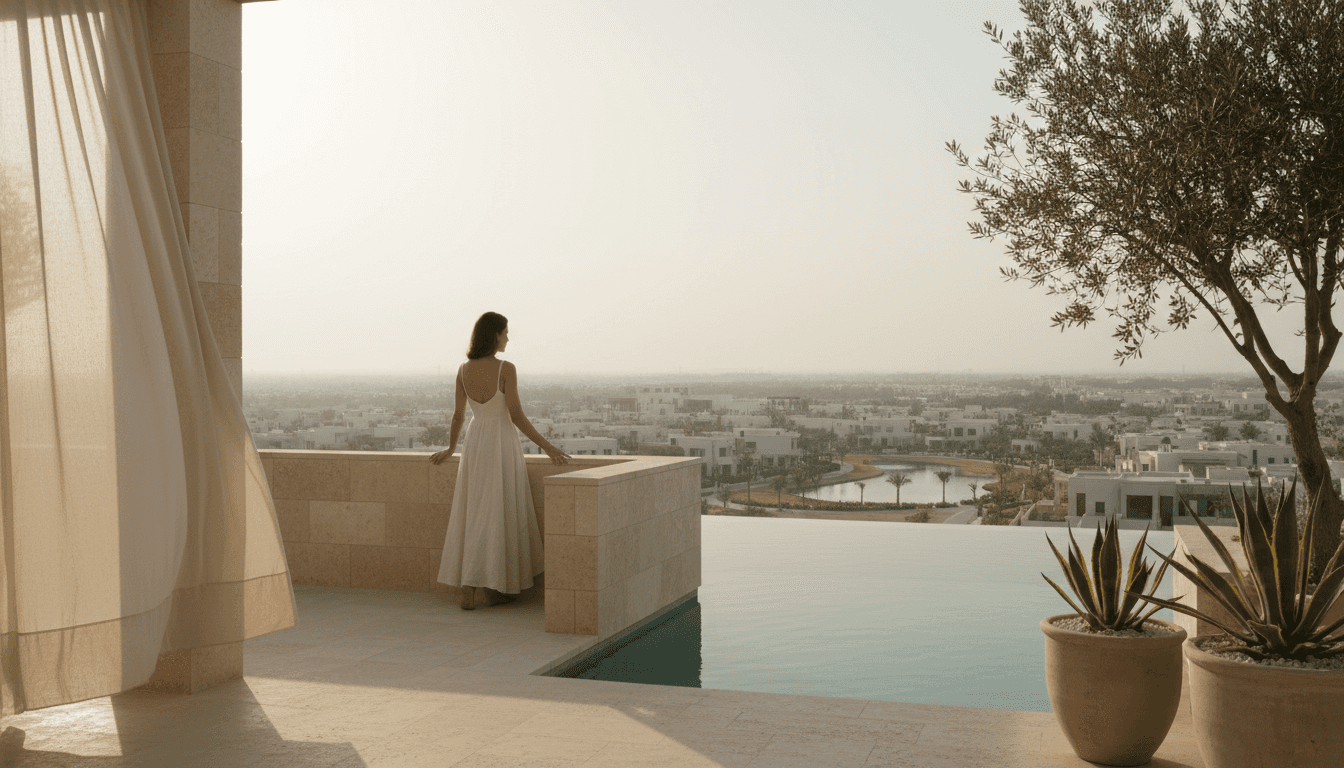
Dubai's Best Villa Communities for Family Investment
I explore which established and emerging Dubai villa communities offer the best blend of family lifestyle and long-term investment value, moving beyond hype to focus on real market fundamentals.

As a communities specialist, the question I hear most often from families is not just “Where should we live?” but “Where should we invest?”. For families putting down roots in Dubai, a home is more than just an asset; it’s the centre of their world. Finding a community that delivers both a wonderful family life and a sound long-term investment is the ultimate goal.
Here's what we'll explore:
- The defining traits of a true family investment community
- A deep dive into the established champions: Arabian Ranches and The Meadows
- Analysing the modern contenders like Dubai Hills Estate and DAMAC Hills
- The case for emerging communities with future growth potential
- A complete, line-by-line breakdown of the true cost of buying
- My final verdict on where the best value can be found
Defining a True Family Investment
When we talk about a ‘family villa investment Dubai’, it’s a very different conversation from a purely financial one. A spreadsheet might point you to the highest possible rental yield in a transient area, but a family investment has a double bottom line: quality of life and financial security. The best communities for family ROI are those where the ‘life’ part of the equation is so strong that it guarantees the ‘investment’ part. These are places with sticky demand. Families move in and stay for years, creating a stable, owner-occupier-dominated environment that is less susceptible to the sharp peaks and troughs of the wider market.
In my experience, three non-negotiable pillars support long-term property value in Dubai's family communities. The first is educational infrastructure. The proximity and quality of schools and nurseries are paramount. A community with two or three 'Outstanding' or 'Very Good' KHDA-rated schools within a 10-minute drive has an incredible competitive advantage. Parents will pay a premium and renters will queue for the convenience and peace of mind this offers. It creates a permanent, non-negotiable source of demand that underpins prices. Communities that were planned without this core anchor often struggle to mature beyond being just a collection of houses.
The second pillar is the quality of the public realm and amenities. I’m not talking about a token playground and a sad-looking pool. I mean genuine, usable green space. Think sprawling parks, interconnected walking and cycling trails, lakes, and active community centres. Emaar Properties perfected this model with its early masterplans, understanding that the space *between* the villas is just as important as the villas themselves. This creates a real neighbourhood feel, encouraging weekend strolls, kids playing outside, and community events. These are the intangible things that make a place a home, and they directly translate into tangible value. Buyers can feel the difference the moment they drive in.
Finally, the master developer's reputation and the ongoing community management are crucial. A well-managed community with reasonable service charges, pristine landscaping, and efficient security maintains its premium feel year after year. Developers like Emaar, Nakheel, and more recently Sobha Realty have built brands on this promise. When you buy into one of their flagship projects, you're buying a certain standard of living that you can trust will be upheld. This provides a safety net for your investment, ensuring the community doesn't degrade over time. It's this long-term stewardship that safeguards Dubai family home appreciation more than almost any other factor.
The Established Champions: Arabian Ranches & The Meadows
 Featured project
When clients ask for stable villa communities in Dubai, my mind immediately goes to the classics: Arabian Ranches and The Meadows. These neighbourhoods are the bedrock of the city's family villa landscape. Developed by Emaar in the early 2000s, they wrote the playbook on creating self-contained, green, and family-centric suburban life in the desert. Their enduring popularity is a sign of getting the fundamentals absolutely right from day one. They are, in my opinion, the gold standard for a mature family investment.
Arabian Ranches, often just called 'The Ranches', offers a distinct, almost rustic charm. The architecture is inspired by Arabian and Mediterranean designs, with earthy tones and terracotta roofs. What makes it a top-tier family investment is its completeness. It has its own school (Jumeirah English Speaking School), a golf club, a community retail centre with a Mediclinic, and beautiful parks and pools dotted throughout. The community is finished. There is no construction noise, no uncertainty about a new tower blocking your view. You know exactly what you are getting, and that certainty has immense value. This stability means it's less about speculative future growth and more about wealth preservation and steady, reliable appreciation.
“The best family investments aren't just about the four walls of the villa; they're about the school run, the weekend park walks, and the sense of belonging that you can't quantify on a spreadsheet.”
The Meadows, part of the wider Emirates Living master community, offers a similar proposition but with a slightly different feel. It’s even more verdant, with stunning lakes and mature landscaping that make you forget you’re in Dubai. Its proximity to Sheikh Zayed Road is a major advantage for commuting professionals, and it’s zoned for Dubai British School and Emirates International School, both highly sought-after. The villas here, while older, are often on larger plots than newer developments, giving families the space they crave. Because these communities are fully developed and have a high proportion of long-term residents, they operate like a real neighbourhood. This creates an exceptionally stable rental market, attracting families who want the lifestyle before they are ready to buy. For an investor, this means very low vacancy rates and a steady income stream.
Of course, the main drawback of these prime areas is the high entry price. A 3-bedroom villa in Arabian Ranches or The Meadows can easily command a price of AED 4.5 million to AED 6 million, depending on the type, condition, and location within the community. The properties are also older, meaning a buyer should budget for potential upgrades to kitchens, bathrooms, and AC systems. However, the premium you pay is for proven performance. These communities have weathered multiple market cycles and have consistently held their value better than most. For a family looking for a home for the next 10-15 years, the peace of mind and quality of life offered here are, for many, worth every fil.
The Modern Contenders: Dubai Hills Estate & DAMAC Hills
If the Ranches and Meadows are the established classics, then Dubai Hills Estate is the modern evolution of Emaar’s masterplan concept. Launched as a joint venture between Emaar and Meraas, it took all the lessons from the earlier communities and amplified them. It is, without a doubt, one of the most in-demand locations for family villa investment in Dubai today. The community is built around a championship golf course and features an almost unbelievable amount of green space, culminating in the vast Dubai Hills Park. The central location, straddling Al Khail Road, gives it superb connectivity to Downtown, the Marina, and both airports.
What sets Dubai Hills apart is the sheer quality and variety of its offerings. You have everything from the ultra-luxury villas of 'Billionaires' Row' on the golf course to more accessible townhouse communities like Maple and Sidra. This tiered approach creates a diverse and vibrant community. For families, the major draws are Dubai Hills Mall, King's College Hospital, and several premium schools right on the doorstep, including GEMS Wellington Academy and King's School Al Barsha. The infrastructure is brand new, the designs are contemporary, and the sense of a meticulously planned 'city within a city' is powerful. This combination has led to incredible demand and strong capital appreciation since its first handovers.
In contrast, DAMAC Hills and DAMAC Hills 2 represent a different approach to the modern family community, one focused on delivering value and a dazzling array of amenities. Located further out along Al Qudra Road, DAMAC Hills (the original) is anchored by the Trump International Golf Club Dubai. Its key differentiator is the sheer scale of its leisure facilities. You'll find a skate park, horse stables, fishing lakes, and a Malibu Bay wave pool. DAMAC Hills 2 doubles down on this concept with unique features like a water park, a boating lake, and dedicated sports fields. The appeal here is clear: an all-inclusive, resort-style lifestyle at a more accessible price point than the centrally located Emaar communities.
A typical 3-bedroom townhouse in DAMAC Hills might be priced between AED 2.5 million and AED 3.5 million, offering a lower barrier to entry for families. The trade-off, historically, has been the location. The commute into the city's main business hubs is longer, and the communities have taken time to feel fully established. However, as Dubai expands southwards and the infrastructure around Expo City and Al Maktoum International Airport matures, this location becomes strategically more compelling. For families who don't require a daily commute to the city centre, the value proposition is hard to beat. The long-term investment case for DAMAC Hills hinges on this continued urban expansion and the developer's ability to maintain the extensive amenities that form its core identity.
Emerging Communities & Future Growth
While established areas provide stability, the greatest potential for Dubai family home appreciation often lies in identifying the *next* great family community before it fully matures. This requires a bit more foresight and a higher tolerance for the uncertainties of a developing neighbourhood, but the rewards can be substantial. For me, two areas that stand out are the new phases being launched in masterplans like Sobha Hartland and Sobha Hartland II and the steady evolution of villa sub-communities in places like Al Furjan.
Sobha Hartland, located in Meydan, has been a game-changer. Its proximity to Downtown Dubai is a huge selling point, offering villa living just minutes from the city's core. What makes me confident in its long-term value is the developer's obsessive focus on quality. Sobha is one of the few truly integrated developers in Dubai, meaning they control almost every aspect of the construction process, from design to execution. This results in a superior finished product. Sobha Hartland II is now expanding on this success, promising even more green space and lagoon living. Buying into a new launch like Sobha Sanctuary within this masterplan offers a chance to get in at the ground level of a community with a proven track record and a developer known for excellence. The prices are at a premium, but you are buying into a vision of luxury and convenience that is rapidly being realized.
Another area I watch closely is Al Furjan. Developed by Nakheel, it's a community that has quietly but steadily come into its own. Located just behind Discovery Gardens and with excellent metro connectivity via the Route 2020 extension, it's exceptionally well-placed. The community consists of both Nakheel-built villas and townhouses, as well as plots that were sold to third-party developers, creating a diverse architectural landscape. While it may not have the single, grand vision of a Dubai Hills, it has fantastic fundamentals: two community pavilions with shops and restaurants, its own metro station, and easy access to Ibn Battuta Mall and the main arteries of Sheikh Zayed Road and Sheikh Mohammed Bin Zayed Road. Prices here are still relatively affordable compared to the Emaar communities, with 4-bedroom townhouses often available for under AED 4 million. It represents a solid, practical choice for families, and I believe its strategic location will ensure its value continues to grow steadily.
When considering these emerging areas, it’s vital to assess the masterplan's credibility and the developer's commitment. A key factor driving future growth in Dubai villas is the city's 2040 Urban Master Plan, which emphasizes creating healthier, greener, and more sustainable communities. Projects that align with this vision are more likely to receive government support and infrastructure investment, further boosting their long-term appeal. It's also wise to look at the planned amenities. A community that launches with clear commitments for schools, clinics, and retail is a much safer bet than one with vague promises of 'future development'.
The Numbers: Deconstructing the True Cost of Buying
Understanding the sticker price of a villa is just the start. To make an informed family investment, you need to budget for all the associated upfront costs and ongoing expenses. Many first-time buyers in Dubai are surprised by these additional figures. Let’s create a realistic, line-by-line cost breakdown for purchasing a ready villa. The official fees are set by government bodies like the Dubai Land Department (DLD).
Let’s assume you are buying a 4-bedroom villa in a community like Dubai Hills Estate for AED 5,000,000. Here’s a detailed breakdown of the likely costs:
- Purchase Price: AED 5,000,000
- Dubai Land Department (DLD) Transfer Fee: 4% of the purchase price = AED 200,000
- DLD Admin Fees: Approximately AED 4,200 (this is a fixed fee)
- Property Registration Fee: AED 4,000 (+ 5% VAT) for properties over AED 500,000 = AED 4,200
- Real Estate Agency Fee: 2% of the purchase price (+ 5% VAT) = AED 105,000
- No Objection Certificate (NOC) Fee: Paid to the developer to certify there are no outstanding liabilities. This varies but is typically between AED 500 and AED 5,000. Let's budget AED 1,500.
- Mortgage Arrangement & Valuation Fees: If you are financing the purchase, the bank will charge a valuation fee (approx. AED 2,500 - AED 3,500) and a processing fee (often 1% of the loan amount). Let's assume you're a cash buyer for simplicity, but this is a major cost for most.
- Conveyancer/Trustee Fees: You will need a RERA-registered trustee office to handle the transfer. Their fees are typically around AED 4,000.
Total Upfront Cost: * Subtotal of Fees: AED 200,000 + AED 4,200 + AED 4,200 + AED 105,000 + AED 1,500 + AED 4,000 = AED 318,900 * Total Outlay: AED 5,000,000 (Property Price) + AED 318,900 (Fees) = AED 5,318,900
As you can see, the additional costs are significant, amounting to over 6% of the property's price. It's crucial to factor this in from the outset. For buyers requiring a mortgage, the down payment is the largest initial barrier. As per Central Bank of the UAE regulations, expatriate buyers must put down a minimum of 20% for properties under AED 5 million, and 35% for properties above that. For a 5M villa, this would be a 20% down payment of AED 1,000,000, plus the ~AED 319k in fees.
Beyond the initial purchase, you must account for annual service charges. These fees cover the maintenance of all common areas: landscaping, security, pools, parks, and roads. They are calculated per square foot of your property's built-up area (BUA) and are a major factor in your long-term holding costs. In villa communities, these can range from AED 2.50 per sqft in more affordable areas to over AED 6.00 per sqft in the most premium, amenity-rich communities. For a 4,000 sqft villa, this translates to an annual bill of AED 10,000 to AED 24,000. A lower service charge directly translates to a better net return if you are renting the property out, and lower costs of ownership if you are living in it. When comparing two similar villas, the one with lower, more transparent service charges often represents the better long-term investment.
The Final Verdict: Balancing Lifestyle and Ledger
After walking through countless villas and speaking with hundreds of families over the years, my perspective on what constitutes the ‘best’ investment has become quite clear. It's not about finding the cheapest property or chasing the highest speculative gains. The wisest family villa investment in Dubai is one made in a community that you would be happy to call home for a decade or more.
For families prioritizing stability, proven performance, and an unmatched quality of life — and who have the budget to match, the established Emaar communities are in a league of their own. My personal preference leans towards Arabian Ranches. It has a warmth and authenticity that is hard to replicate. The mature trees, the established school, and the genuine neighbourhood feel provide a sense of permanence. While prices are high, the demand is relentless, making it one of the most secure places to invest your capital for the long term. It’s a blue-chip stock in the world of Dubai real estate.
For those with a slightly more flexible budget looking for something modern, with brand-new facilities and flawless connectivity, Dubai Hills Estate is the undeniable choice. It represents the pinnacle of modern master-planning and offers a lifestyle that is incredibly compelling for today's families. The potential for continued appreciation is strong, as the community is still cementing its status as one of Dubai's most prestigious addresses. The risk is minimal, and the upside, both in lifestyle and value, is immense. It's the modern classic and a brilliant choice for a family home and investment.
However, for families looking for the best combination of value, amenities, and future growth potential, my advice is to look seriously at the communities that are currently maturing. Areas like DAMAC Hills and Al Furjan offer a significantly lower entry point. While they may have required a compromise on location in the past, Dubai's southward expansion is changing that calculation. The sheer scale of amenities in DAMAC Hills offers a lifestyle that is hard to match for the price, while Al Furjan's metro access and practical location make it a dark horse for steady, long-term growth. Investing here is a bet on Dubai's continued development, but it's a bet that has paid off time and time again.
Ultimately, the best long-term family investment value is found in communities with an unshakeable 'why'. Why do people want to live there? If the answer is rooted in excellent schools, abundant green space, a tangible sense of community, and a trusted developer, you have found a safe and prosperous place for your family's future.
Sources
- Dubai Land Department (DLD): https://dubailand.gov.ae/en/#/
- Central Bank of the UAE: https://www.centralbank.ae/en/
- The UAE Government Portal (u.ae) for residency and visa information.
Questions, answered
- Which are the most stable villa communities for a family investment in Dubai?
- Established communities from master developers like Emaar, such as Arabian Ranches and The Meadows, offer excellent stability due to their mature infrastructure, schools, and strong community feel. These areas tend to hold their value well through market cycles.
- Are newer villa communities a good long-term investment?
- Newer communities like Sobha Hartland II or villas in emerging masterplans offer significant potential for capital appreciation as infrastructure develops around them. However, they carry more risk and potential for construction disruption in the short term compared to established areas.
- What are the typical upfront costs when buying a villa in Dubai?
- Expect to pay the property price plus approximately 7-8% in additional fees. This includes a 4% Dubai Land Department transfer fee, a 2% real estate agency fee, a title deed issuance fee, and a No Objection Certificate (NOC) fee, plus any mortgage-related charges.
- How do service charges affect the ROI of a family villa?
- Service charges are a significant annual cost, typically ranging from AED 3 to AED 6 per square foot for villas. Lower service charges directly improve your net rental yield and reduce your holding costs, making the investment more profitable over the long term.
- What is the key to a good family villa investment in Dubai?
- The best family villa investment balances lifestyle needs with financial sense. Look for communities with excellent schools, green spaces, and community amenities, as these features drive consistent rental demand and support long-term property value appreciation.
- Is it better to buy a ready or off-plan villa for a family home?
- A ready villa allows you to move in immediately and assess the finished quality and community. An off-plan villa often comes with a more attractive price and a flexible payment plan, but involves waiting for construction and carries handover risk.

Sophia profiles Dubai's villa communities — schools, commute times, green space, and the intangible feel of a neighbourhood. She writes for families putting down roots.
Related stories
The Green Premium: Are Eco-Homes Worth It in Dubai?
Dubai is aggressively promoting green building standards, but does this translate into a tangible price premium for buyers and investors? We break down the real costs, benefits, and market reality.
The Price of Privacy in Dubai's Gated Enclaves
In a city defined by spectacle, the ultimate luxury is discretion. I explore the appeal of Dubai's exclusive gated communities and what it truly costs to live behind the gates.
The Resale Journey: Maximizing Your Apartment's Value
As an owner, preparing to sell your Dubai apartment requires more than just a listing. I'll walk you through the essential steps, from strategic pricing to final handover, to ensure you secure the highest possible market value.
Echoes, in your inbox
One thoughtful email a month. Market insight, new launches, no spam.