

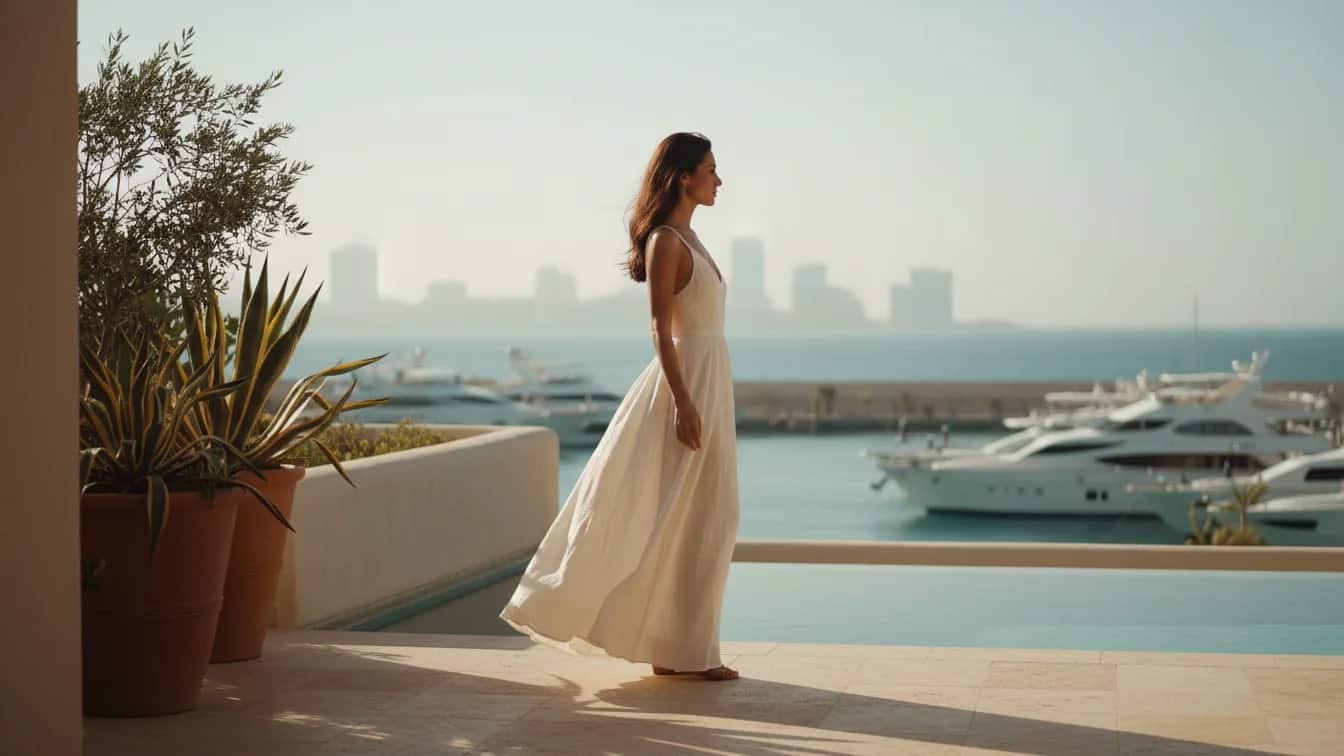
Private Gardens: Dubai's Greenest Villa Communities
A deep dive into the Dubai villa communities where generous gardens and true outdoor living aren't an afterthought, but the main event. Discover the established leafy suburbs and new launches offering the most private outdoor space for your family.

In a city defined by soaring verticals and architectural ambition, I find that the ultimate luxury is often horizontal. It's the simple, grounding pleasure of stepping from your living room onto a swathe of green that is entirely your own. For families in Dubai, the search for a home is increasingly a search for space — not just indoors, but outdoors too. This is a look at the Dubai villa communities that prioritise generous gardens and enable genuine outdoor family living.
Here's what I'll explore:
- The shifting definition of luxury: why plot size is the new ultimate status symbol.
- The 'Original Greens': legacy communities with mature landscapes and generous plots.
- The 'New Guard': modern masterplans designed around private outdoor space.
- The Ultra-Luxe Enclaves: where gardens are measured in acres, not square feet.
- The Hidden Cost of Green: budgeting for your private oasis.
- A Buyer's Checklist: what to look for when garden size is your priority.
- My Verdict: where I would choose to put down roots for outdoor living.
The New Luxury: Why Plot Size Is Everything
For years, the Dubai property narrative was dominated by superlatives: tallest building, biggest mall, most extravagant penthouse. But I've watched a subtle but powerful shift in the market, particularly since 2020. The desires of discerning buyers, especially end-user families, have recalibrated. The new status symbol isn't a top-floor view, but a ground-floor reality: a plot of land you can call your own. The pandemic was an accelerant, not the cause. It reminded everyone of the intrinsic value of a private sanctuary, a safe space for children to play, and a connection to nature, however curated.
This is more than just a trend; it's a fundamental re-evaluation of what makes a house a home. A large garden provides a buffer from the world, a canvas for personal expression, and a venue for priceless family memories. It’s where you host barbecues, set up a paddling pool on a hot Friday afternoon, and teach your children to kick a football. This demand for villas with big backyards has dramatically reshaped buyer priorities. At Gaia Living, we see it daily in our client briefs. The request for a 'large garden' or 'spacious plot' has moved from a 'nice-to-have' to a non-negotiable for a significant portion of family villa buyers.
The market has been slow to catch up. For much of the last decade, the development model favoured density. Developers found it more profitable to build more units on smaller plots, maximizing the built-up area (BUA) while squeezing the surrounding land. This led to a generation of villas where the garden was little more than a token strip of land, barely wide enough for a patio set. Finding genuine, spacious plots in Dubai requires knowing where to look. It means understanding the trade-offs between older communities with mature greenery and newer ones with modern amenities but often tighter footprints.
This scarcity has created a clear value premium. When two identical villas are for sale in the same community, the one with the larger, more private, or better-oriented plot will consistently command a higher price and sell faster. It's an asset that is difficult to replicate. You can always renovate an interior, but you can't create more land. This makes plot size a powerful and durable store of value, a factor that savvy buyers are increasingly willing to pay for. It represents a long-term investment in lifestyle, wellbeing, and future capital appreciation.
The 'Original Greens': Legacy Communities
 Featured project
When clients tell me they want a 'proper garden', my mind immediately goes to the legacy communities developed by Emaar Properties in the early 2000s. These neighbourhoods were conceived in a different era of Dubai's growth, one where land was more abundant and the masterplan philosophy was rooted in creating sprawling, suburban havens. They are the benchmark for outdoor family living in Dubai.
Arabian Ranches is the quintessential example. Driving through its various sub-communities, from Saheel to Mirador to Alvorada, you're struck by the maturity of the landscape. The trees are tall, the bougainvillea is lush, and the gardens feel established and private. Emaar's original vision gave homeowners genuinely spacious plots, many of which back directly onto parks or golf course fairways, enhancing the sense of space. It’s common to find four-bedroom villas on plots of 6,000 to 8,000 sq. Ft., with larger signature properties on plots exceeding 10,000 sq. Ft. This is the kind of space that allows for a sizeable pool, a dedicated play area, and still leaves room for a lawn. The trade-off, of course, is that the villas themselves are of an older design, and many require significant interior upgrades to meet modern tastes. But for those who prioritise the garden, it’s a trade-off worth making.
Then there are The Meadows, another Emaar masterpiece. Part of the wider Emirates Living master community, The Meadows offers a similar proposition to the Ranches but with a slightly more central location. The plots here are famously generous. I have seen three-bedroom villas in The Meadows with larger gardens than five-bedroom villas in some newer communities. The streetscape is defined by wide, tree-lined roads and interconnected lakes, creating a serene, established feel. The villas, again, are of a certain vintage. They feature the classic terracotta roofs and beige facades that defined Dubai's early 2000s architecture. But the 'bones' are incredible. The plot sizes allow for fantastic transformations, and a drive through the community reveals how many homeowners have invested in creating stunning outdoor living areas, complete with sunken seating pits, outdoor kitchens, and beautifully landscaped pools.
These communities are not without their challenges. The age of the properties means maintenance is a key consideration. Issues with plumbing, AC systems, and original window fittings are not uncommon. However, what you are buying into is an established ecosystem. The community centres are vibrant, the schools are in place, and the sense of community is palpable. You are also buying a finite resource. Emaar is not building any more communities like The Meadows or the original Arabian Ranches. This inherent scarcity provides a strong underpinning for property values. For families looking for villas with large gardens in Dubai, these original green suburbs remain, in my opinion, one of the most compelling and reliable options.
The 'New Guard': Modern Plans, Modern Compromises
Responding to the clear demand for family homes with outdoor space, a new generation of villa communities has emerged. These 'New Guard' masterplans, largely developed from 2014 onwards, have learned from their predecessors but are also shaped by the economic realities of modern development. They aim to deliver the "villa with a garden" dream to a broader audience, which often involves a delicate balance between plot size, price point, and amenities.
Dubai Hills Estate, a joint venture between Emaar Properties and Meraas, is arguably the most successful of this new generation. It’s often described as the 'new Arabian Ranches', and in many ways, the comparison is apt. It’s a vast, green, and meticulously planned community centered around a championship golf course. The villas in sub-communities like Sidra, Maple, and the more premium Parkway Vistas offer modern architecture and high-quality interior finishes straight from the handover. However, for gardens, there is a distinct hierarchy. The smaller three and four-bedroom townhouses and villas, while beautifully designed, sit on more compact plots than their legacy counterparts in The Meadows. The private outdoor space is certainly there, and it's a huge step up from an apartment balcony, but it isn't always vast. To find truly spacious plots in Dubai Hills, you need to look at the higher-end villa types, like the custom-built mansions in Hills Grove Villas or the larger independent villas, which come with a significantly higher price tag.
Another key player in this space is Damac Hills and Damac Hills II. DAMAC's strategy has been to use world-class amenities and branding — like the Trump International Golf Club in DAMAC Hills, as a major draw. The communities offer a wide range of villa types and price points. While some of the larger, signature villas boast impressive gardens, the standard three and four-bedroom units are often built on tighter plots to ensure the project remains competitive. The developer's focus is often on the incredible shared community facilities: the fishing lakes, skate parks, wave pools, and sports fields. The idea is that your private garden is an extension of this wider communal 'backyard'. For some families, this is a perfect solution. They get a modern home and access to world-class leisure facilities, and are happy to trade a huge private garden for it. For others, who prioritise seclusion and a large private plot above all else, it might feel like a compromise.
Then you have communities like Tilal Al Ghaf by Majid Al Futtaim and the newer phases of Arabian Ranches (Ranches III). These developers are actively trying to solve the plot-size puzzle. Tilal Al Ghaf, for instance, has been praised for its thoughtful masterplan, which includes a stunning recreational lagoon and a focus on wellness and walkability. Within the plan, there's a clear differentiation in plot sizes. The entry-level townhouses are compact, while the signature villa collections like 'Serenity' and 'Harmony' are designed with much more generous private outdoor space. This allows buyers to choose their priority. It’s a smart strategy, acknowledging that one size does not fit all. These communities represent the evolution of the Dubai suburb, offering modern design and incredible lifestyle amenities, but they require buyers to be very specific about which phase and which unit type they choose if a large garden is the primary goal.
The Ultra-Luxe Enclaves: Beyond the Garden
Beyond the popular, family-oriented suburbs lies a different category of community, where the concept of a 'garden' evolves into that of a private 'estate'. These are the ultra-luxe enclaves, where plot sizes are not just generous; they are extravagant. Here, privacy is absolute, and the landscape is an integral part of the architectural statement.
Al Barari is the undisputed king in this category. The name itself is Arabic for 'the wilderness', and the community lives up to it. From the moment you pass through the gates, you are enveloped in a dense, tropical paradise of mature trees, flowing streams, and themed gardens. It feels a world away from the desert. The developer's vision was audacious: to create Dubai's greenest and most sustainable community. An incredible percentage of the masterplan is dedicated to green space, not including the private gardens themselves. The villas here are set on vast plots, typically starting from 14,000 sq. Ft. and going up significantly from there. This allows for swimming pools that are genuinely for swimming laps, sprawling lawns, and intricate landscaping that creates a resort-like feel within your own property lines. The villas themselves are luxurious, with high-end finishes and large floor-to-ceiling windows designed to blur the line between indoor and outdoor living. Living in Al Barari is a unique lifestyle choice, and it comes at a premium, both in purchase price and in the cost of maintaining such a significant private landscape.
Another address synonymous with vast private plots is Emirates Hills. This is Dubai's original super-prime community, often called the 'Beverly Hills of Dubai'. It was one of the first areas where Emaar offered plots of land for sale, allowing owners to design and build their own bespoke mansions. As a result, the community is a diverse mix of architectural styles, all set on enormous plots, many with frontline views of the Address Montgomerie golf course. It’s a world of palatial homes where the garden is not just a feature but a core component of the estate, often incorporating multiple water features, gazebos, tennis courts, and lavish entertainment areas. While not a 'villa community' in the traditional sense of having pre-designed homes, it represents the pinnacle of owning land in Dubai.
More recently, we've seen new projects that cater to this ultra-high-net-worth demand for space. Communities like Sobha Sanctuary by Sobha Realty are being marketed specifically on the promise of expansive, private green spaces, with villas designed around tranquil water features and dense, forest-like landscapes. Similarly, bespoke villa projects on Palm Jumeirah and Jumeirah Bay Island offer a different kind of garden — a beachfront one. Here, the plot extends to the sand and sea, offering a version of outdoor living that is unique to Dubai. These properties are in a class of their own, representing the very peak of the market where the only limit to the garden is the owner's imagination and budget.
“In my experience, the villa you buy is only half the story. The land it sits on — its size, its privacy, its potential, is the other half, and it's the part that holds its value longest.”
The Hidden Cost of Green: Budgeting for Your Oasis
Finding a villa with a large garden is the first step. Understanding the true cost of owning and maintaining it is the crucial second. Many first-time villa buyers are surprised by the ongoing expenses associated with a spacious plot, and it's essential to budget for them realistically to avoid future financial stress. These costs go far beyond the purchase price.
The most significant ongoing expense is the service charge. In Dubai, villa service charges are typically calculated based on the plot area, not the built-up area of the house. This is a critical distinction. The fee, levied by the developer or owners' association, covers the maintenance of all communal areas: the parks, roads, security, and shared amenities. A larger plot means a larger share of these costs. Rates can vary significantly, from around AED 2.50 per square foot of plot area in more affordable communities to over AED 5.50 in premium, amenity-rich ones. For a 10,000 sq. Ft. plot, this can mean an annual bill of AED 25,000 to AED 55,000 or more, payable in quarterly or annual installments. It's vital to get the exact, up-to-date service charge rate from the seller or developer's association before you commit.
Next comes the direct cost of maintaining your private garden. This is a highly variable expense. A simple lawn with a few shrubs is relatively cheap to maintain, but a lush, landscaped garden with a pool is a different story. Here's a breakdown of potential monthly costs:
- Gardening Contract: A basic contract for lawn mowing, weeding, and trimming for a standard garden might cost AED 800 - AED 1,200 per month. For a very large or elaborately landscaped garden requiring specialist care, this could easily exceed AED 2,000.
- DEWA (Water & Electricity): Irrigation is the big one. An automated sprinkler system for a large lawn and extensive planting can significantly increase your water bill, especially during the hotter summer months. Expect an additional AED 500 - AED 1,500+ per month on your DEWA bill, depending on the garden size and efficiency of your irrigation system.
- Pool Maintenance: If your garden includes a swimming pool, this is a separate, regular cost. A weekly maintenance contract, including cleaning and chemical balancing, typically costs between AED 600 and AED 1,000 per month.
- Pest Control: Dubai's climate makes regular pest control a necessity, both inside the house and in the garden. An annual contract might cost between AED 1,000 and AED 2,000.
- Landscaping & Upgrades: This is a capital expense, not a running cost, but it's one to plan for. If you buy a villa with a 'blank canvas' garden, the initial cost of landscaping — installing a pool, patio, irrigation, and planting, can be substantial, easily running from AED 100,000 to AED 500,000 or more for high-end designs.
When you add it all up, the annual cost of simply maintaining a large garden with a pool can easily be in the range of AED 30,000 to AED 60,000, on top of your service charges. It's a significant financial commitment but one that most owners I speak to find worthwhile for the incredible lifestyle it affords. The key is to go in with your eyes open and a clear budget in mind.
A Buyer's Checklist for Garden Villas
When you're touring properties with the specific goal of finding a great garden, it's easy to be charmed by a sunny day and a patch of green grass. But a systematic approach is needed to ensure the space truly works for your family's needs, both now and in the future. Over the years, I've developed a mental checklist that I run through with my clients. It helps separate the merely adequate from the truly exceptional.
Here are the key points to consider when assessing a villa's private outdoor space:
- Plot Size vs. Usable Space: Don't just rely on the total plot size figure from the title deed. Walk the perimeter. How much of the space is actually usable? Steep slopes, awkward angles, or large areas taken up by utility units can dramatically reduce the functional size of a garden. I always look for a good, regular-shaped area, ideally rectangular, that can accommodate a pool, a play area, or a seating arrangement without feeling cramped.
- Privacy and Orientation: This is huge. Stand in the middle of the garden. How overlooked are you? Can neighbours in adjacent villas or apartment towers see directly into your entire outdoor space? Look for properties that back onto parks, golf courses, or community walkways, as these often offer the best privacy. Also, consider the sun's path. A north-facing garden might be shady and pleasant in summer but could be too dark and cool in winter. A west-facing garden will get intense afternoon sun, which is great for sunbathers but might make the patio unusable without proper shading.
- Potential and Precedent: What is the potential for upgrades? Look at what the neighbours have done. Have they extended their villas, added pools, or built pergolas? This is the best indicator of what the developer and Dubai Municipality will permit. If you plan to build a pool, check for underground services. The presence of neighbours' pools is a good sign. Getting a No Objection Certificate (NOC) from the developer for any structural changes is a critical step, so understanding the community rules is paramount.
- Access and Flow: How does the garden connect to the house? The best layouts have a smooth flow from the main family living or dining area out onto a patio or deck. Large sliding or bi-fold doors can transform the relationship between the indoor and outdoor space. Poor access, for example, only through a small side door from the kitchen, makes the garden feel disconnected and less usable.
- Maturity and Condition: In older communities, a mature garden with large trees can be a massive asset, providing instant shade and character that would take a decade to grow. But it can also be a liability. Check the health of large trees and palms. Are the irrigation systems functional? If you are buying a property with a 'blank canvas' garden, factor in the significant cost and time required for landscaping. A beautifully finished garden is a huge plus and adds tangible value to the property.
By methodically assessing each property against these criteria, you can move beyond a simple emotional response and make a logical, informed decision. The goal is to find a space that doesn't just look good on the day of the viewing but will provide joy, utility, and privacy for your family for years to come.
My Verdict: Where I Would Choose
After years of walking through hundreds of homes and gardens across Dubai, my clients often ask me for my personal verdict. If I were buying a family home today with a generous garden as my top priority, where would I focus my search? The answer, as always, depends on the blend of budget, lifestyle, and priorities.
For a family seeking that classic, established suburban feel with genuinely large plots and a mature landscape, my heart still belongs to the original legacy communities. I would focus my search on The Meadows or the quieter, more established parts of Arabian Ranches like Saheel or Mirador. The villas themselves may need a full interior renovation, and I would budget for that from the outset — perhaps an additional AED 500,000 to AED 1 million depending on the scope. But what you are buying is un-replicable: a mature community, tall trees providing shade and privacy, and plot sizes that modern developments rarely offer at a similar price point. It’s an investment in space and a proven, family-centric lifestyle. The long-term value is locked into the land, which in my view, is the safest bet in real estate.
If, however, the priority was a brand-new home with modern finishes and world-class community amenities, and my budget was more flexible, I would turn my attention to Dubai Hills Estate. It represents the best of the 'New Guard'. While the standard plots are more modest, I would specifically target a villa in a premium location within the community — perhaps a corner unit or one backing onto a park. These often come with a slightly larger and more private plot. The lifestyle on offer at Dubai Hills is phenomenal, with the central park, golf club, and Dubai Hills Mall creating a self-contained world. It offers a more turnkey solution than an older villa, and the Emaar brand provides confidence in the quality of the masterplan and long-term management.
Finally, if the budget were truly no object and the goal was to create a private, green sanctuary unlike any other, the choice would have to be Al Barari. It is, quite simply, in a league of its own. The sheer scale of the plots and the developer's fanatical commitment to landscaping create an environment that feels more like a tropical resort than a residential community. The cost of entry and maintenance is substantial, but for those who can afford it, Al Barari offers a lifestyle that is unmatched in Dubai for its connection to nature and absolute privacy. It is the ultimate expression of the 'private oasis' concept.
Ultimately, the best villas with large gardens in Dubai are found in communities where green space was a founding principle of the masterplan, not an afterthought. Whether you choose the mature landscapes of a legacy community or the premium plots in a modern masterplan, the key is to prioritise the land itself. It's the one feature you can't change, and the one that will deliver the most value to your family's life in the long run.
Sources
- Dubai Land Department (DLD): dubailand.gov.ae
- Real Estate Regulatory Agency (RERA): rera.gov.ae
- UAE Government Portal on Property Ownership: u.ae
Questions, answered
- Which Dubai community has the biggest villa plots?
- Al Barari is renowned for having some of the largest and most private villa plots in Dubai, often exceeding 15,000 sq. Ft. Legacy communities like Emirates Hills and Jumeirah Islands also offer exceptionally large custom plots for mansion-style properties.
- Are new villa communities in Dubai smaller than the old ones?
- Generally, yes. To maximise land use and offer more accessible price points, many new villa communities feature smaller plot sizes than legacy communities like Arabian Ranches or The Meadows built in the early 2000s. However, premium new developments are now re-emphasising larger plots as a key luxury feature.
- How much does it cost to maintain a large garden in a Dubai villa?
- Annual costs can range from AED 15,000 to AED 50,000+, depending on size, complexity, and features like a pool. This includes monthly gardening contracts (AED 800-2,000), DEWA bills for irrigation, pest control, and periodic pool maintenance.
- Can I extend my villa or build in the garden in Dubai?
- This depends entirely on the community developer and Dubai Municipality rules. You must obtain a No Objection Certificate (NOC) from the developer (e.g., Emaar, Nakheel) and then secure building permits. Rules are strict regarding plot boundaries, built-up area (BUA) limits, and aesthetic guidelines.
- What are the typical service charges for a villa with a large garden?
- Service charges for villas are calculated per square foot of the plot area, not the villa's built-up area. For communities with extensive greenery and amenities, expect to pay between AED 3.00 and AED 5.50 per sq. Ft. of your total plot size annually.
- Which developers are known for building villas with large gardens?
- Emaar Properties is famous for its early work in Arabian Ranches and The Meadows, which feature generous plots. Al Barari's developer is synonymous with huge, lush gardens. More recently, developers like Sobha Realty with Sobha Hartland II and Majid Al Futtaim are re-focusing on delivering villas with more substantial private outdoor space.

Sophia profiles Dubai's villa communities — schools, commute times, green space, and the intangible feel of a neighbourhood. She writes for families putting down roots.
Related stories
Dubai's Big Squeeze: Smaller Plots, Denser Living
Dubai real estate is undergoing a fundamental shift towards smaller plot sizes and higher density. We analyse the economic drivers, the impact on property values, and what this new era of compact urban living means for both homebuyers and investors.
Resort Living as Your Dubai Reality
Explore how to trade temporary staycations for a permanent home with five-star amenities in Dubai. I'll break down the real costs, best communities, and lifestyle trade-offs of embracing high-end resort living every day.
Finding Your Tribe in Dubai's Villa Communities
I explore which of Dubai's renowned villa communities attract specific expat nationalities and lifestyle groups, offering insights to help you find a place that feels like home.
Echoes, in your inbox
One thoughtful email a month. Market insight, new launches, no spam.