

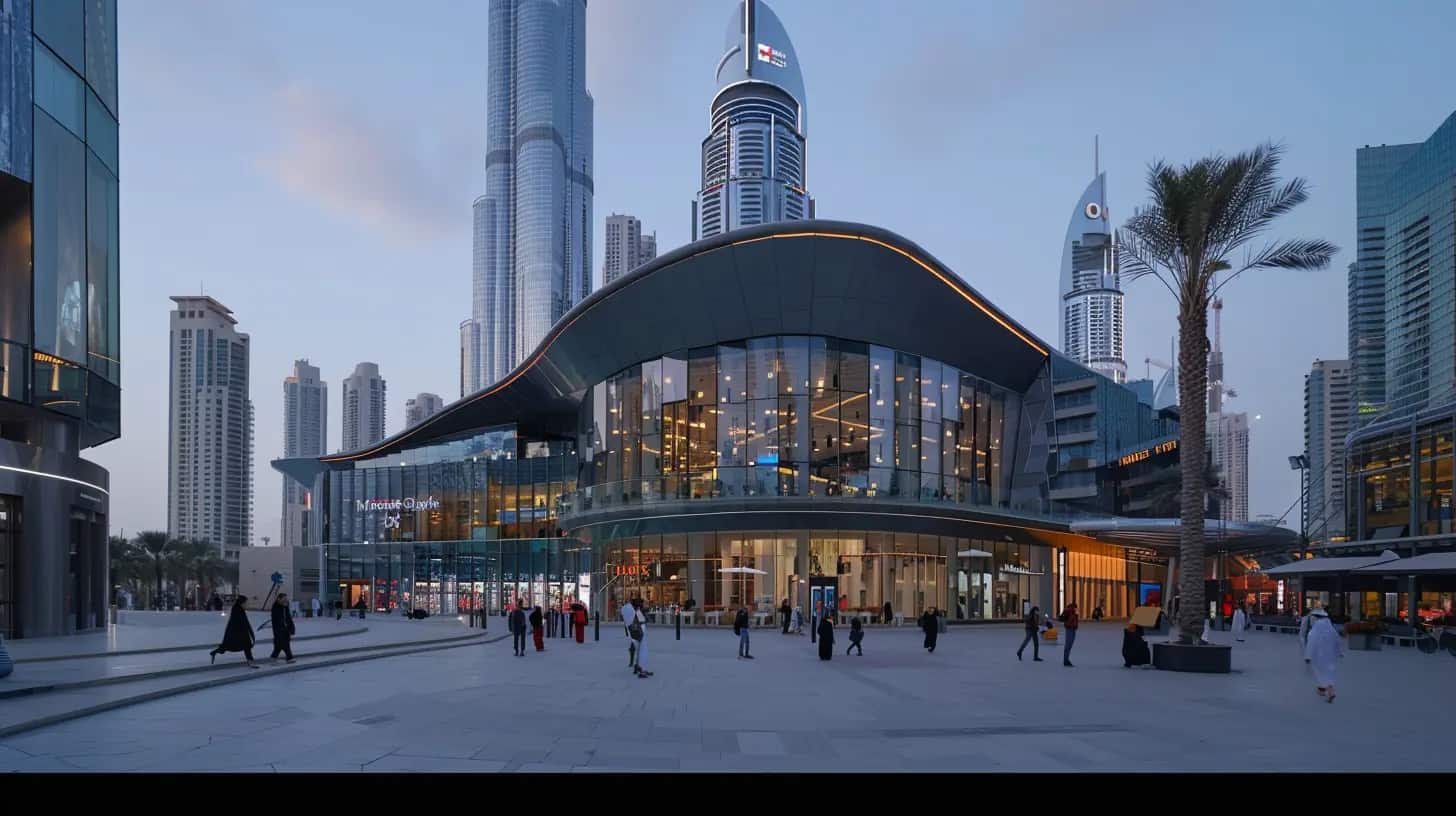
How Meraas Is Transforming Retail and Urban Living in Dubai
Meraas built City Walk, Bluewaters and La Mer. Here's how their retail destinations work, what they do to surrounding property prices, and where the value sits.
A casual evening walk through City Walk on a Friday evening proves to be a first and foremost experience not of a specific shop or restaurant but of an overall and specific impression: a clear and conscious focus on how people move through a space, where they stop, what captures their attention, and why they linger longer than their initial intentions suggest.
This is no accident and is a key differentiator between Meraas and the bulk of other developers currently operating in Dubai, some of whom are arguably as skilled and accomplished as Meraas. Established as a holding company in 2007 as a Dubai government initiative, Meraas has since grown to include some of the most frequented and talked-about destinations in Dubai: City Walk, Bluewaters Island, La Mer, The Beach at JBR, Boxpark, and Last Exit. These are not just shopping centers with varied and creative façade design; they are a specific and consistent approach to urban planning and development: the space between the shops is as important as the shops themselves, the outdoors is just as viable as an entertainment and social space as the indoors in Dubai’s climate, and that a retail environment is most successful when integrated into a lifestyle destination as opposed to a standalone transactional environment.
The success of Meraas’s projects is also borne out through their foot traffic and visitor numbers. Meraas is important to real estate investors and buyers for a very specific and different reason: Meraas’s retail and hospitality offerings are consistently among the highest-performing anchor projects within Dubai’s real estate landscape.
This article will cover both aspects of Meraas’s presence within Dubai: what Meraas is creating and why it is successful, and the implications for real estate investors within the regions earmarked for Meraas development.
What Meraas Actually Does — and Why It's Different
Meraas sits in an unusual position in Dubai's development landscape. It's not primarily a residential developer — though it builds residences. It's not primarily a hospitality company — though it operates hotels and resorts. It's not primarily a retail developer — though its destinations are among the highest-footfall retail environments in the UAE.
What Meraas actually does is masterplan entire urban districts from scratch, with retail, hospitality, F&B, entertainment, and residential components integrated from the beginning rather than bolted together afterward. The distinction matters because it produces fundamentally different outcomes.
What separates Meraas's approach from conventional retail development:
- Outdoor-first design: Every major Meraas destination is built around outdoor public space rather than enclosed mall format. City Walk, La Mer, The Beach, Bluewaters — all are primarily outdoor or semi-outdoor environments. This is a deliberate bet that Dubai's climate is manageable year-round with the right design, and it's a bet that's paid off consistently in terms of footfall and dwell time.
- F&B density and curation: Meraas invests significantly in the food and beverage mix at its destinations, curating a tenant profile that includes local concepts, regional operators, and international names in a ratio that feels authentic rather than generic. The result is destinations that locals and tourists both want to visit rather than destinations designed primarily for tourists.
- Entertainment anchoring: Ain Dubai on Bluewaters Island, the Coca-Cola Arena adjacent to City Walk, the beach clubs and water sports infrastructure at La Mer — Meraas builds entertainment anchors that generate their own visitation and drive dwell time beyond what retail alone can sustain.
- Residential integration: Almost every Meraas destination has a residential component either within the masterplan or directly adjacent. This is not accidental — residential buyers pay a premium to live within or next to a Meraas-curated environment, and that premium funds the quality of the destination itself.
- Public realm investment: The landscaping, street furniture, art installations, and public space programming at Meraas destinations are consistently above the Dubai norm. The company treats the public realm as a product, not a cost.
Roland Villena, Head of Retail Leasing at Meraas, said in a 2023 interview with Retail ME magazine that the company's approach "starts with the experience we want people to have, and works backwards to the mix of tenants and activations that creates it." That sequence — experience first, tenants second — is the opposite of how most retail developments are planned and it's why Meraas destinations feel different from the moment you arrive.
The Destinations: What Meraas Has Built and How They Perform
City Walk
City Walk is probably Meraas's clearest statement of what the company is trying to do — and it's worth looking at in some detail because it established the template that subsequent projects built on.
Opened in phases from 2013, City Walk is a mixed-use district in Jumeirah that combines open-air retail, F&B, entertainment, hotels, and residential towers in a walkable urban format that was genuinely new for Dubai when it launched. The streetscape is modelled loosely on European urban retail environments — wide pedestrian streets, outdoor dining, consistent architectural language — adapted for the Dubai climate with shade structures, misting systems, and planting that makes outdoor dwell time comfortable for most of the year.
The retail mix includes global flagships, regional concepts, and a strong food hall component. The entertainment anchors include a Reel Cinemas multiplex, a dedicated kids' entertainment zone, and regular public programming in the central plaza. The residential component — City Walk Residences — sits directly above and adjacent to the retail, giving residents immediate access to the destination while maintaining residential privacy through separate access and distinct building identities.
Retail occupancy at City Walk has consistently been above 93% since 2018 — a figure that most enclosed malls in Dubai would consider strong, and that is exceptional for an open-air format. Annual footfall is estimated at 30 to 35 million visitors, making it one of the most visited destinations in the UAE outside of the major mega-malls.
Bluewaters Island
Bluewaters is Meraas's most physically dramatic destination — a purpose-built island off the JBR coastline that didn't exist before 2013. The island is anchored by Ain Dubai, the world's largest observation wheel at 250 metres, and surrouned by a retail and F&B promenade, hotel properties, and a significant residential component (Bluewaters Residences).
The island's performance has been mixed in a way worth being honest about. Ain Dubai opened in 2021, attracted strong initial visitation, then closed for refurbishment in 2022 before reopening with an improved guest experience. The retail and F&B component has been slower to reach critical mass than City Walk — partly because the island's residential and tourist population is still building, and partly because it requires deliberate intent to visit rather than being on a route people naturally pass through.
Longer term, Bluewaters is probably the most interesting investment play in the Meraas portfolio precisely because it's the one destination where the full vision hasn't yet been fully realised. As residential occupancy builds and Ain Dubai operates at full capacity through the season, the destination's footfall and commercial performance should strengthen meaningfully.
La Mer
A beachfront retail and hospitality destination on Jumeirah's coast, La Mer is one of Meraas's most successful executions of the outdoor lifestyle destination model. The combination of a public beach, beach clubs, water sports, F&B, and retail in a relaxed, low-rise environment attracts a wide demographic mix and generates strong year-round (well, season-round) visitation.
The residential component at La Mer is smaller than at City Walk or Bluewaters, but the adjacent Jumeirah residential market benefits directly from the destination's presence. Properties within walking distance of La Mer have consistently outperformed the broader Jumeirah area on both rental demand and price appreciation since the destination opened.
The Beach at JBR
An open-air retail and dining destination on JBR's beachfront, The Beach was one of Meraas's earlier projects and remains one of its most consistently high-performing on footfall metrics. The combination of beach access, outdoor dining, a cinema, and regular events programming makes it a seven-days-a-week destination in season rather than a weekend activation.
For residential property investors, The Beach is relevant because it's one of the primary amenity drivers for JBR and Dubai Marina residential demand. Its presence is a significant reason why that corridor maintains rental occupancy and pricing at levels that newer, less amenity-rich communities struggle to match.
What the Meraas Effect Does to Property Values
This is the part that matters most for investors — and the data here is quite consistent.
Meraas destinations function as anchor assets that lift residential property values in their catchment areas. The mechanism is straightforward: high-quality retail and lifestyle destinations drive rental demand from the professional and family demographic that pays premium rents, which supports yields, which supports capital values. It's a compounding effect and it's visible in the transaction data.
How Meraas destinations have affected surrounding property markets:
- City Walk Residences have consistently traded at a 15% to 25% premium per square foot over comparable Jumeirah apartment stock not directly within the development
- Bluewaters Residences commanded a 20% to 35% premium over comparable Dubai Marina stock at launch, reflecting the island exclusivity and destination adjacency
- JBR and Marina properties within 500 metres of The Beach have shown average rental premium of 12% to 18% over comparable stock further from the destination
- La Mer's surrounding Jumeirah 1 area has seen consistent above-market price growth since the destination opened in 2018, particularly for apartments and townhouses in the 500 to 1,000 metre catchment
The premium is not permanent or guaranteed — it depends on the destination maintaining its quality and relevance, which Meraas has a strong track record of doing through continuous investment in programming and tenant curation. But the historic correlation between Meraas destination quality and surrounding residential premium is one of the most consistent patterns in Dubai's property market.
According to JLL's Dubai Retail Market Overview 2024, Meraas-operated destinations collectively account for a disproportionate share of Dubai's prime retail footfall relative to their combined gross leasable area — reflecting the effectiveness of the experiential retail model in driving visitation versus conventional enclosed mall formats. That footfall advantage directly translates into commercial and residential real estate value in the communities they anchor.
The Residential Products: Buying Into a Meraas Community
For buyers and investors, the relevant question isn't just whether Meraas's retail destinations are impressive. It's whether buying residential property in or adjacent to those destinations makes financial sense.
Current residential products within or adjacent to Meraas destinations:
- City Walk Residences — phases 1 and 2: 1 to 4-bedroom apartments in the heart of City Walk, with direct retail level access and strong rental demand from professionals and short-term rental guests. Secondary market prices currently AED 2,200 to AED 3,200 per square foot.
- Bluewaters Residences: 1 to 4-bedroom apartments and limited townhouses on Bluewaters Island. AED 2,500 to AED 4,000 per square foot in the current secondary market, reflecting the island scarcity premium.
- Bvlgari Residences, Jumeirah Bay Island: Meraas's ultra-premium co-development with Bvlgari Hotels on a dedicated island in Jumeirah. Among the most expensive residential product in Dubai — prices from AED 20 million to AED 200 million for the most exclusive villa plots. This is wealth preservation and trophy asset territory rather than yield-focused investment.
- Central Park at City Walk: a newer residential phase within the City Walk masterplan, offering access to the destination at slightly lower price points than the original City Walk Residences phases.
Gross rental yields across Meraas residential products (2025):
- City Walk Residences: 5% to 6.5% long-term, 9% to 13% short-term managed
- Bluewaters Residences: 4.5% to 6% long-term, 8% to 11% short-term managed
- Bvlgari Residences: yield-focused analysis is not the primary lens for this product — buyers are paying for exclusivity and scarcity, not optimising for rental income
The yield numbers at Meraas residential products are not the highest in Dubai. They're lower than JVC or Dubai South by 1.5% to 2.5% on a gross basis. What they offer instead is a combination of destination adjacency, brand recognition, and resale liquidity that thinner-yielding areas consistently struggle to match.
Our Research: Meraas Destinations vs. Conventional Dubai Retail on Key Metrics
We compared Meraas's destination retail model against three conventional enclosed mall formats in Dubai — Dubai Mall, Mall of the Emirates, and Ibn Battuta — across the dimensions most relevant to surrounding property markets and retail investment.
Meraas destinations vs. conventional malls — 2024 data:
- Average footfall per square metre of GLA: Meraas destinations significantly ahead — the open-air, destination format generates higher footfall intensity per unit of space than enclosed malls
- F&B as percentage of tenant mix: Meraas 35% to 45% vs. conventional malls 20% to 30% — the higher F&B ratio drives dwell time and repeat visit frequency
- Retail occupancy rates: Meraas destinations 92% to 96% vs. Dubai prime enclosed malls 94% to 98% — broadly comparable, both above market average
- Surrounding residential price premium vs. city average: Meraas catchment areas 15% to 35% premium vs. major enclosed mall catchments 8% to 18% premium — Meraas generates stronger residential value uplift per destination
- Short-term rental demand in catchment: Meraas catchment areas consistently index higher for short-term rental occupancy and nightly rates, driven by tourist visitation to destinations
- New retail concept entry point (first UAE location): Meraas destinations index higher for new international F&B and retail brands choosing their first UAE location — the tenant curation reputation attracts operators who want quality adjacency
The pattern is consistent. Meraas's model generates stronger surrounding residential value uplift, stronger F&B and experiential tenant density, and stronger tourist-driven short-term rental demand than conventional enclosed mall anchors — even when the raw footfall numbers are lower in absolute terms.
What's Coming Next: Meraas's Pipeline
Meraas doesn't publicise its full pipeline in the way that volume developers do, but several upcoming and in-development projects are either confirmed or in active market discussion.
Known and reported Meraas upcoming developments:
- Further phases of City Walk, including expanded F&B and entertainment programming and additional residential product
- Ongoing development of the Jumeirah Bay Island precinct surrounding the Bvlgari Resort — one of Dubai's most exclusive and most slowly developing land banks
- Reported involvement in new waterfront activation projects along the Jumeirah coastline corridor
- Continued investment in Bluewaters Island — both in Ain Dubai's operational programming and in the commercial and residential components of the island that are not yet fully built out
- Expansion of the Last Exit format — the drive-through F&B concept that Meraas has successfully deployed on multiple Dubai highway corridors — to new locations
The company's public posture in 2025 is less about new launches and more about deepening the quality and performance of existing destinations. That's a different strategy from a growth-at-all-costs developer, and it's consistent with Meraas's positioning as a quality-over-quantity operator.
If you're looking at property in or near any of Meraas's destinations, browse our City Walk listings and Bluewaters Island listings for current availability. Our broader Dubai property search covers the full range of communities across the emirate, and if you want a straigt conversation about which Meraas-adjacent community fits your budget and goals, just reach out to our team.
Related stories
Dubai's Blue Line: A New Property Corridor Emerges
The Dubai Metro Blue Line is more than just a transport link; it's a strategic infrastructure project set to redefine property values and investment potential across Dubai's western corridor. I'll break down which communities stand to gain the most.

Future-Proofing Your Dubai Villa with Smart Tech
A practical guide to integrating smart home technology into your Dubai villa. We explore the costs, benefits, and essential systems for creating a secure, efficient, and truly future-ready family home.
Parking: The Unsung Hero of Dubai Apartment Value
I explore how apartment parking allocation, from basement quality to visitor access, is a critical and often overlooked driver of property value and livability in Dubai.
Echoes, in your inbox
One thoughtful email a month. Market insight, new launches, no spam.