

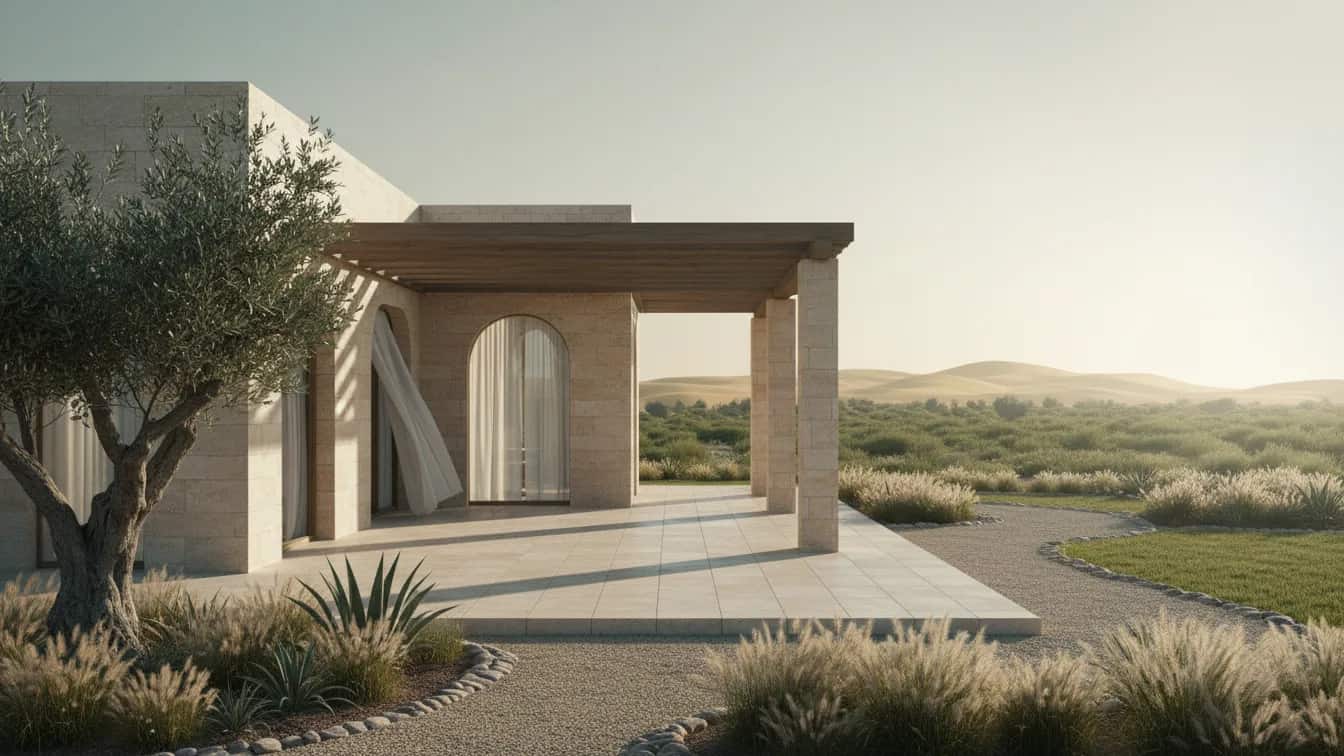
Living on the Edge: Dubai Villas Bordering Nature
For families seeking space and serenity, nothing compares to living beside Dubai's vast parks and nature reserves. I explore the villa communities that offer genuine green living, where your backyard opens onto something truly wild.

In a city defined by architectural ambition, the ultimate luxury is fast becoming something more elemental: space, silence, and a connection to the natural world. For many of us at Gaia Living, the most frequent request from families isn't for a specific bedroom count, but for a home that offers a genuine sense of escape — a place where children can play freely and the view from the window is of foliage, not another façade. This is the appeal of green living in Dubai, and it goes far beyond a landscaped garden.
Here’s what we’ll explore in this guide to Dubai's greenest addresses:
- The 'Green Premium': Why proximity to parks commands higher value and what it means for you.
- Al Barari: The benchmark for integrated nature living, bordering a vast reserve.
- Arabian Ranches & The Polo Club: Emaar’s original vision of desert suburbia and its relationship with equestrian grounds.
- Dubai Hills Estate: The modern interpretation with its iconic central park.
- DAMAC Hills & Trump Golf Club: Golf course living as a form of green expanse.
- Sobha Hartland II: A new contender with a focus on lagoons and forested landscapes.
- The Financials of Green Living: A breakdown of purchase costs and ongoing service charges.
- My Verdict: Which community truly delivers on the promise of bordering nature?
The 'Green Premium': Quantifying the Value of Nature Proximity
When we talk about real estate value, we often focus on tangible metrics: square footage, build quality, and proximity to business hubs. But in mature property markets worldwide, a less tangible but equally powerful factor is at play: the 'green premium'. This is the measurable increase in property value — both for sale and for rent, that comes from being close to significant green spaces. In Dubai, a city that has blossomed from the desert, this premium is not just present; in my experience, it's becoming one of the most resilient drivers of long-term capital appreciation for family homes.
Why does this premium exist? It’s a simple equation of supply and demand. The supply of villas directly bordering a large, protected park or a genuine nature reserve is inherently finite. You can always build another tower, but you can't easily replicate a 1.8 million square foot central park or a 60-million square foot conservation area. This scarcity gives these properties a durable competitive advantage. The demand, on the other hand, is growing. As Dubai's population becomes more settled, with more families putting down long-term roots, the desire for a lifestyle that balances urban convenience with natural tranquility intensifies. These are not just houses; they are environments chosen for well-being, clean air, and recreational space for children. These are the hallmarks of truly tranquil villa communities.
This isn't just a lifestyle benefit; it's a financial one. Properties in communities like The Meadows or Arabian Ranches that offer direct park access or back onto community green belts consistently command higher prices than identical units just a few streets away. During market fluctuations, these are often the last properties to see their prices soften and the first to recover. The green space acts as a protective buffer, underpinning the asset's value. For an end-user, this means a better quality of life. For an investor, it translates into a more secure asset with a lower vacancy risk and a stronger potential for capital growth. This is the essence of investing in nature proximity in Dubai.
Al Barari: The Original Green Sanctuary
 Featured project
When you discuss villas near nature reserves in Dubai, the conversation has to start with Al Barari. Long before 'biophilic design' became a marketing buzzword, Al Barari was quietly creating a botanical haven that feels worlds away from the city's hustle. Located just off Sheikh Mohammed bin Zayed Road (E311), its name literally means 'the wilderness' in Arabic, and it is the only community in Dubai that is, in itself, a destination-grade garden, bordering the vast Za'abeel 2 nature reserve. This isn't a community with a park; it's a community that *is* a park.
What sets Al Barari apart is its sheer commitment to landscaping. Over 60% of the 18.42 million square foot development is dedicated to green space, themed gardens, naturally landscaped lakes, and freshwater streams. This is not the manicured, cookie-cutter greenery you see elsewhere. It’s a dense, mature, and layered ecosystem. I've walked through its winding paths countless times, and the feeling of seclusion is immediate and profound. The air feels cooler, the sound of the city disappears, replaced by birdsong and rustling leaves. The villas themselves are designed to embrace this, with enormous glass windows and smooth indoor-outdoor living spaces. It is, by every measure, the gold standard for green living Dubai.
Of course, this level of immersion comes at a price, both in initial outlay and ongoing maintenance. Service charges here are among the highest in Dubai for villa communities, often in the range of AED 5-8 per square foot of built-up area annually. This is necessary to maintain the incredibly complex waterways, gardens, and shared facilities like The Farm restaurant and Body Language health club. But for the residents who choose Al Barari, it’s a price they are willing to pay for an unparalleled living experience. The community is split into different sub-communities, from the original grand villas in The Residences and The Reserve to newer, more contemporary offerings like The Nest and Chorisia. Buying here is a statement — a choice for a slower, more deliberate, and nature-centric lifestyle.
Arabian Ranches & The Polo Club: The Enduring Appeal of Suburban Green
If Al Barari is an immersive botanical retreat, then Emaar Properties' original Arabian Ranches is the quintessential family-friendly suburb, perfected. Opened in 2004, it was one of the very first gated villa communities in Dubai and set the template for everything that followed. Its enduring success lies in a simple, brilliantly executed formula: high-quality homes, excellent community amenities, and an abundance of mature, open green space. While it doesn't border a formal nature reserve, its entire western edge runs alongside the sprawling grounds of the Dubai Polo & Equestrian Club, creating a vast green buffer that defines the community's tranquil character.
I find that the villas in sub-communities like Mirador, La Coleccion, and Hattan, which directly overlook the polo fields, possess a unique charm. The view isn't of static wilderness, but of a living, breathing landscape of green fields, stables, and the elegant motion of horses. This provides a sense of openness and a connection to a classic, pastoral lifestyle that is rare in the region. Even away from the polo club, the master plan is rich with parks, lakes, and connecting green corridors. This is a place designed for walking, cycling, and for children to have a degree of freedom that's hard to find in more vertical communities. It’s the very definition of community park access.
Financially, Arabian Ranches represents a more accessible entry point into green living than Al Barari. A standard three-bedroom villa in a sub-community like Al Reem might trade for AED 3.5 million to AED 4.5 million, whereas a similar-sized home in Al Barari would be significantly more. Service charges are also more moderate, typically falling in the AED 2.50 to AED 4.00 per square foot range, which is very reasonable for the quality of upkeep Emaar provides. This combination of relative affordability, strong community infrastructure (including the Jumeirah English Speaking School - JESS, a top-tier school right inside the community), and genuine green ambiance is why, two decades on, Arabian Ranches remains one of the most sought-after addresses for family homes by parks.
Dubai Hills Estate: The Modern Masterpiece
Dubai Hills Estate is what happens when you take the successful formula of Arabian Ranches and reimagine it for a new generation. A joint venture between Emaar and Meraas, this 'city within a city' is anchored by the magnificent Dubai Hills Park, an 1.8-million-square-foot green lung at the heart of the community. It’s a spectacular space, with a splash park, skate park, sports courts, and jogging tracks, providing a central recreational hub for residents. The community also features an 18-hole championship golf course, which winds its way through the villa neighbourhoods, creating additional green corridors and premium views.
What I appreciate about Dubai Hills is the sheer variety of options that offer nature proximity. You have the ultra-luxury villas in 'Billionaire's Row' (Sector E) that back directly onto the golf course, offering some of the most prestigious addresses in Dubai. Then you have communities like Sidra, Maple, and Park Heights, which are arranged around a series of smaller community parks, all feeding into the main central park. This tiered approach means that a green lifestyle isn't just reserved for the wealthiest buyers. A family in a three-bedroom townhouse in Maple can enjoy the same park access as someone in a 30,000 sqft mansion on the golf course. This democratic approach to green space is a key part of its appeal.
“The true test of a 'green' community isn't just the size of its park, but how deeply that park is integrated into the daily life of every resident, from every price point.”
The location is another major advantage. Situated along Al Khail Road, it offers much faster access to Downtown Dubai, Dubai Marina, and the city’s business districts compared to more outlying communities. This combination of central location and expansive green space is a powerful one. It allows residents to have a serene, suburban family life without sacrificing urban connectivity. From a market perspective, this has translated into robust demand and strong capital appreciation since its launch. It is a prime example of a modern, master-planned community that has successfully used green space as its core value proposition, appealing to a broad cross-section of end-users and investors.
DAMAC Hills & The Trump International Golf Club
Further out along the Umm Suqeim Road extension (D63), you'll find Damac Hills and Damac Hills II. These communities take a slightly different approach to green living, centred primarily around championship golf courses. At DAMAC Hills, the entire master plan is wrapped around the Trump International Golf Club Dubai. The result is that a significant number of villas and townhouses enjoy direct frontage onto the immaculate fairways and greens. For golf enthusiasts, this is the ultimate lifestyle, but even for non-golfers, the course provides a vast, manicured landscape that ensures views, privacy, and a sense of openness.
The concept is simple: the golf course acts as a giant, shared back garden. Instead of looking onto another villa, your property overlooks a professionally maintained, multi-million-dollar landscape. This model has been hugely successful in attracting buyers looking for value. Typically, per-square-foot prices in DAMAC Hills have been more competitive than in Emaar's golf communities, offering a more accessible entry point for a home with a prime green view. The community also features 'The Park,' a four-million-square-foot parkland with various themed areas for recreation and leisure, adding another layer of green amenity beyond the golf course.
It's important to distinguish between DAMAC Hills (the original) and the more remote DAMAC Hills 2 (formerly Akoya Oxygen). While both are built around golf courses, DAMAC Hills is more established, with better connectivity and more mature infrastructure. DAMAC Hills 2 offers even more competitive pricing but comes with a longer commute. In my view, for those prioritizing the balance of green living and practical city access, the original DAMAC Hills is the stronger proposition. The community provides a wide range of property types, from small townhouses to large signature villas, all benefiting from the green expanse of the golf course, making it a key player in the market for family homes by parks.
Sobha Hartland II: A New Vision of Forested Living
A newer and incredibly ambitious addition to Dubai's green landscape is Sobha Hartland and Sobha Hartland II. Located in Mohammed Bin Rashid City, just minutes from Downtown Dubai, Sobha is pioneering a model that blends lush, forested landscapes with crystal-clear blue lagoons. While the original Sobha Hartland focused on proximity to the Dubai Water Canal and its own high-quality green spaces, Sobha Hartland II, along with projects like Sobha Sanctuary, is doubling down on nature. The master plan promises a blue-and-green oasis where over 60% of the land is dedicated to open space.
The vision for these new phases is compelling. The developer, Sobha, is known for its obsessive focus on quality and vertical integration — they control everything from design to construction, and they are applying that philosophy to the landscape. We're talking about dense, walkable 'forests', parks, and interconnected gardens surrounding stunning man-made lagoons where residents can swim and paddleboard. This creates a unique dual-aspect for many of the villas: a tranquil green view on one side and a vibrant water view on the other. It’s a very modern, resort-style interpretation of green living.
For buyers, especially those looking at off-plan launches, this presents an opportunity to get in on the ground floor of what could become one of Dubai's premier green addresses. The location in MBR City is superb, offering unparalleled access to the city core while promising a secluded, natural environment. The 5 and 6-bedroom villas in projects like Sobha Hartland II are being designed with floor-to-ceiling windows to maximize the views of the surrounding forests and water. This is a community built for the future, anticipating the growing demand for lifestyles that prioritize health, wellness, and a direct connection to both green and blue spaces. It’s one I am watching very closely as it takes shape.
The Financials of Green Living: A Cost Breakdown
Choosing a home in one of these communities is a significant financial commitment. It's crucial to understand not just the sticker price, but the full, all-in cost. Let's create a hypothetical example of purchasing a 4-bedroom villa in a community like Arabian Ranches or Dubai Hills Estate to illustrate the costs involved. This provides a realistic picture for families budgeting for their move.
Example Purchase: 4-Bedroom Villa - Agreed Sale Price: AED 5,000,000
Here are the typical upfront costs you would need to budget for, on top of the property price:
- Down Payment (for mortgage): If you are a UAE resident, the Central Bank of the UAE mandates a minimum 20% down payment for properties up to AED 5 million. For non-residents, this is typically 25% or higher.
- *Cost:* AED 1,000,000 (20% of AED 5M)
- Dubai Land Department (DLD) Transfer Fee: This is a mandatory government fee, calculated as 4% of the property's sale price.
- *Cost:* AED 200,000 (4% of AED 5M)
- DLD Administration Fees: There are fixed administrative fees payable to the DLD for processing the title deed transfer.
- *Cost:* Approx. AED 4,200
- Real Estate Agency Fee: This is the commission paid to the brokerage that facilitates the sale. The standard in Dubai is 2% of the sale price.
- *Cost:* AED 100,000 (2% of AED 5M) + 5% VAT (AED 5,000) = AED 105,000
- Trustee Office Fee: When a property transfer happens, it is processed through a DLD-approved Trustee Office, which charges a fixed fee.
- *Cost:* Approx. AED 4,200
- Mortgage Arrangement & Valuation Fees: If you are taking a loan, your bank will charge a processing fee (often up to 1% of the loan amount) and a fee for a mandatory property valuation.
- *Cost:* Approx. AED 25,000 (variable)
- No Objection Certificate (NOC) Fee: The developer of the community (e.g., Emaar) must issue an NOC to confirm you have no outstanding service charges. They charge an administrative fee for this.
- *Cost:* Approx. AED 500 - AED 5,000 (variable by developer)
Total Upfront Cash Required (approximate): AED 1,000,000 (Down Payment) + AED 200,000 (DLD) + AED 4,200 (DLD Admin) + AED 105,000 (Agency) + AED 4,200 (Trustee) + AED 25,000 (Bank) + AED 5,000 (NOC) = AED 1,343,400
Beyond the purchase, you must also budget for annual service charges. For a 4,000 sq. Ft. villa in Arabian Ranches at, say, AED 3 per sq. Ft., you would be looking at AED 12,000 per year. In Al Barari, at AED 6 per sq. Ft., the same sized villa would incur AED 24,000 annually. This covers security, landscaping of common areas, pool maintenance, and general upkeep of the community. Understanding these ongoing costs is just as important as the initial purchase price when assessing affordability.
Investing in a villa with nature proximity is a play on long-term, resilient value. The upfront 'green premium' is balanced by stronger capital preservation, higher rental demand, and an unmatched quality of life that simple square footage cannot provide.
My Verdict: Where is the Greenest Grass?
After years of walking these communities, talking to residents, and tracking their market performance, my conclusion is that the 'best' green community depends entirely on your personal definition of nature and your family's priorities. Each of these addresses offers a distinct flavour of green living.
For the purist, the uncompromising nature lover for whom budget is a secondary concern, Al Barari remains in a class of its own. It is the only place that delivers a truly immersive, botanical living experience. The density and maturity of its landscaping create a microclimate and a sense of seclusion that no other community can match. It is a choice for those who want to live *within* a garden, not just next to one.
For the classic suburban family life, my vote goes to the original Arabian Ranches. It strikes the perfect balance. It’s green, safe, and has a soul. The mature landscaping, the polo club backdrop, and the outstanding schools create a powerful sense of place and community. It feels established and authentic, and for many families, it simply feels like home. It represents the most proven and enduring model for family homes by parks in Dubai.
For the modern, connected family that wants green space without compromising on commute times, Dubai Hills Estate is the clear winner. The central park is a masterstroke, and the sheer quality of the overall master plan is undeniable. It combines the best of Emaar's community-building expertise with a prime location, making it arguably the most well-rounded and future-proof of the large-scale green communities. It is the new benchmark against which all future master plans will be measured.
Ultimately, the rise of these communities signals a maturation in the Dubai property market. We are moving beyond just building structures to creating environments. The demand for villas near nature reserves and tranquil villa communities is not a fleeting trend; it is a fundamental shift in what buyers value. It is a search for balance, well-being, and a place to put down roots, not just for a few years, but for a generation. And that, in my view, is a very green shoot of progress indeed.
## Sources - Dubai Land Department (DLD): dubailand.gov.ae - Central Bank of the UAE (CBUAE) Mortgage Regulations: centralbank.ae - UAE Government Portal (u.ae): u.ae/en
Questions, answered
- Which are the best villa communities in Dubai for nature lovers?
- Communities like Al Barari, directly bordering a nature reserve, and Arabian Ranches, adjacent to the Dubai Polo & Equestrian Club's grounds, are top choices. Sobha Hartland and Dubai Hills Estate also offer exceptional proximity to large, master-planned parks and green corridors.
- Are villas near parks more expensive in Dubai?
- Yes, there is often a price premium for properties with direct park access or views. This 'green premium' reflects the high demand for space, tranquility, and the lifestyle benefits associated with nature proximity, making it a strong factor in long-term value retention.
- What are the service charges like for these green communities?
- Service charges in premium villa communities with extensive landscaping, like Al Barari, can be higher, ranging from AED 5-8 per square foot of BUA annually. In communities like Arabian Ranches, charges are more moderate, typically between AED 2.5-4 per sqft, covering security, road maintenance, and communal park upkeep.
- Can I get a mortgage to buy a villa in these areas?
- Yes, all these communities are in freehold areas where expatriates can own property and secure mortgages. UAE residents typically need a 20% down payment, while non-residents require 25%, as stipulated by the Central Bank of the UAE. Banks readily lend for properties in these established and desirable neighbourhoods.
- What is the 'green premium' in Dubai real estate?
- The 'green premium' is the additional value, both in sale price and rental yield, that properties command due to their proximity to significant green spaces like parks, golf courses, or nature reserves. It's a key driver of capital appreciation and is particularly pronounced for family homes and villas.
- Is living near a nature reserve in Dubai practical for families?
- Absolutely. Most of these communities are master-planned with family needs in mind, offering excellent schools, retail centres, and healthcare facilities within or near the community. While they feel secluded, they maintain good connectivity to Dubai's main business and leisure hubs via major road networks.

Sophia profiles Dubai's villa communities — schools, commute times, green space, and the intangible feel of a neighbourhood. She writes for families putting down roots.
Related stories
Dubai's Big Squeeze: Smaller Plots, Denser Living
Dubai real estate is undergoing a fundamental shift towards smaller plot sizes and higher density. We analyse the economic drivers, the impact on property values, and what this new era of compact urban living means for both homebuyers and investors.
Resort Living as Your Dubai Reality
Explore how to trade temporary staycations for a permanent home with five-star amenities in Dubai. I'll break down the real costs, best communities, and lifestyle trade-offs of embracing high-end resort living every day.
Finding Your Tribe in Dubai's Villa Communities
I explore which of Dubai's renowned villa communities attract specific expat nationalities and lifestyle groups, offering insights to help you find a place that feels like home.
Echoes, in your inbox
One thoughtful email a month. Market insight, new launches, no spam.