

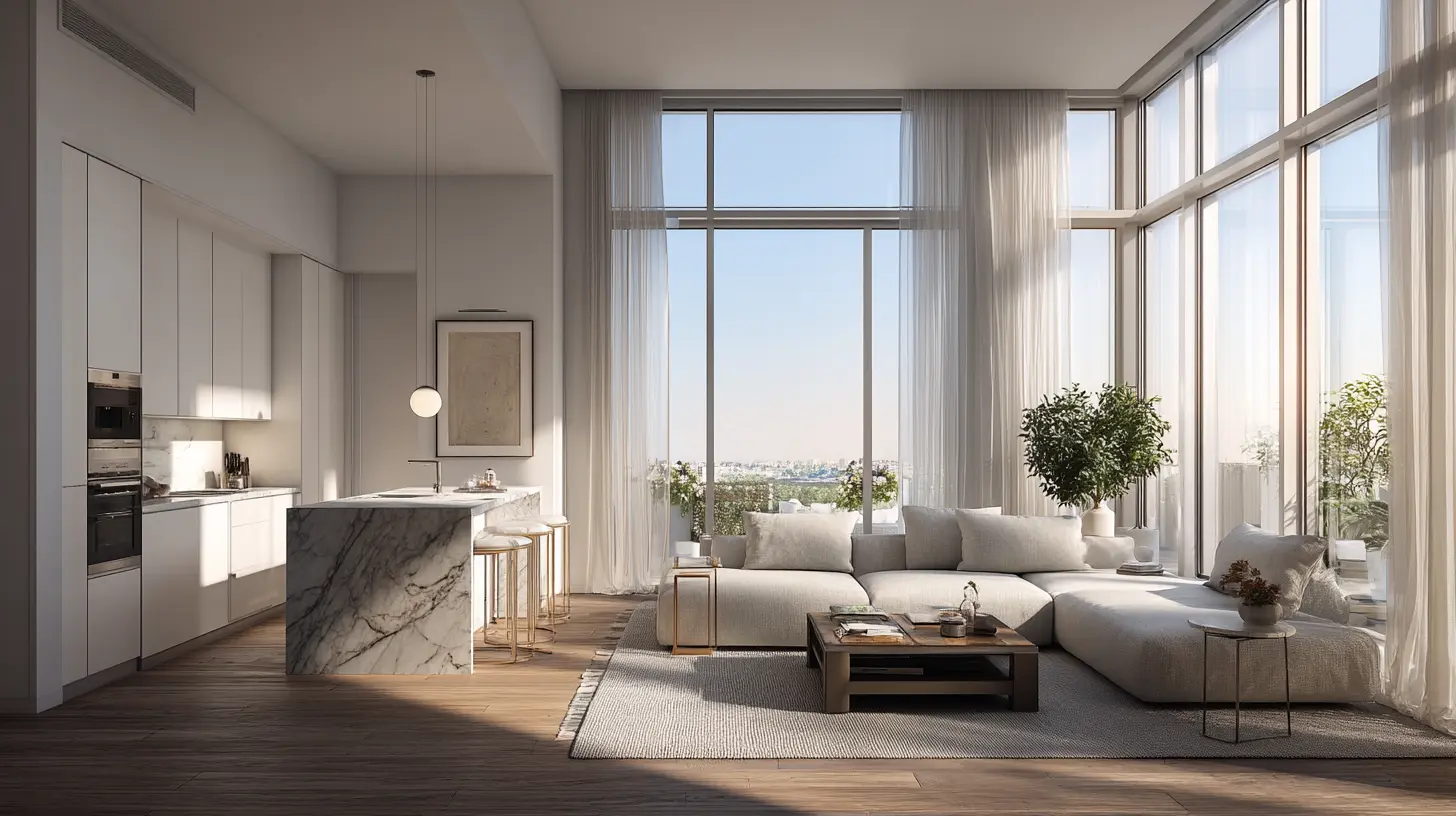
Dubai Property for Families With Kids: Where to Actually Look
Family-friendly Dubai areas vary enormously by what your family actually needs. Here's the honest comparison of the genuinely strong family communities.
Almost any property listing in Dubai includes the claim that it is family-friendly. The term has been so widely used by so many real estate agents that it has lost much of its meaning. A studio apartment in a Marina tower is family-friendly. A one-bedroom flat in JVC is family-friendly. A villa in Jumeirah Golf Estates is family-friendly. They cannot all be exactly alike for the same family at the same stage of life. Therefore, when one is looking to raise a family in Dubai, a better filter than marketing copy is needed.
We have helped a great many families decide on a property in Dubai through the years. The truth is that family buyers are often some of the easiest to misalign and some of the easiest to align properly, depending entirely upon whether or not the discussion begins with the proper questions. Families who start off by asking "where is the best area" end up regretting their decision within 18 to 24 months. Families who start off by asking "what does my family really need" end up settling into a community and becoming happy there. The context makes far more difference than most people expect.
In this article, we explain how families ought to approach the Dubai property decision in 2026. It covers what the actual options are, who each option works best for, the role of schools in determining the decision, what the budgets look like at various stages of a family's life, what the hidden costs are that don't get enough warning, and finally, the honest comparison of which communities are truly family-friendly. Our goal here is to assist in preparing families to think through their needs, rather than trying to sell a particular neighborhood as the answer to everyone's prayers. Different families need different things, and what is good for a family of two toddlers and one stay-at-home parent is seldom right for a family of three teenagers heading off to university, or one kid with two parents both working full-time.
What "Family-Friendly" Actually Needs to Mean for Your Specific Family
Before getting to neighborhoods, families need to define what family-friendly means for them specifically. The dimensions vary substantially.
For families with children under 5:
- Outdoor space (playground, garden, park) within walking distance
- Walkability for stroller logistics
- Pediatric medical care nearby
- Quiet enough for nap schedules
- Safe internal community streets for young children walking with parents
- Reasonable proximity to grandparents or extended family if applicable
- Access to baby supplies and basic family services
For families with children 5 to 11:
- School proximity (walking, cycling, or short drive)
- Multiple options for after-school activities (sports, arts, language, religious or cultural)
- Other families with similar-age children nearby for friendships
- Safe walking and cycling environment
- Parks and outdoor spaces for unstructured play
- Manageable distance for school run logistics during peak Dubai traffic
For families with children 12 to 18:
- Quality secondary school options accessible
- Independence-friendly transport (older kids can use metro, bus, walk to friends)
- Social spaces for teenagers (cafes, malls, sports facilities)
- University preparation infrastructure (tutoring, libraries, study spaces)
- Reasonable distance to broader Dubai for teenager social activities
- Lifestyle that supports the transition toward independence
For families with children at multiple stages:
- Compromises across all of the above
- Larger property footprint to give each child appropriate space
- Schools serving multiple year groups within reasonable proximity
- Community amenities that scale across age groups
For families with multi-generational living arrangements:
- Larger units with separate living areas
- Healthcare and accessibility infrastructure for older relatives
- Cultural community presence if specifically important
- Reasonable distance to extended family
The honest first step for any family buyer is to write down the specific needs and rank them. The families that struggle with Dubai property decisions are usually the ones trying to optimise for everything at once. Three to five clear priorities typically produce better outcomes than a long shopping list.
The Genuinely Strong Family Communities in Dubai for 2026
There's a subset of Dubai communities that genuinely deliver on family living, and a much larger set of communities that market themselves as family-friendly without quite delivering. Here are the ones that earn the description.
Dubai Hills Estate. The default family community for buyers in the AED 4M to AED 15M+ range. Strong school cluster, mature park infrastructure, central park genuinely used by residents, family-oriented mall, hospitals on-site. Suits families with school-age children prioritising school access and central location. We covered this community in detail in a separate article. Townhouses run AED 4.2M to AED 7.5M. Villas run AED 7M to AED 30M+ depending on cluster.
Arabian Ranches. The traditional villa community alternative. More established feel, larger plots in many cases, equestrian and golf community amenities, somewhat further from central Dubai. Strong school options including Jumeirah English Speaking School (JESS) Arabian Ranches and other established schools. Suits families wanting a more traditional villa community feel and willing to drive for non-essential errands. Villas typically AED 5.5M to AED 18M.
Jumeirah Golf Estates. Premium golf-focused community. Strong school options nearby (Victory Heights school, GEMS schools accessible). Larger plots and premium villa product. Suits families with golf interest and budget for premium villa pricing. Villas typically AED 8M to AED 25M+.
Mirdif and Mirdif Hills. More affordable family-focused community in eastern Dubai. Established Indian and Pakistani family demographic concentration in much of the area. Multiple Indian curriculum schools and selected international curriculum options. Suits families prioritising affordability and specific cultural community fit. Villa pricing AED 3.5M to AED 8M for older Mirdif. Mirdif Hills newer apartment and townhouse product AED 1.5M to AED 4M.
Town Square Dubai (Nshama). Mid-tier master-planned family community. Townhouses and apartments designed around park spaces and walkable streets. Multiple schools developing within and near the community. Suits families wanting newer product at mid-tier pricing with planned community feel. Townhouses AED 2.4M to AED 4.5M. Apartments AED 1.0M to AED 2.0M.
The Valley by Emaar. Brand-new master-planned family community on the southeastern edge of Dubai. Premium build quality, modern unit specifications, lifestyle infrastructure being built. Suits families with patience for the community to mature and willingness to take entry pricing for future appreciation. Townhouses AED 2.8M to AED 5.5M. Larger units higher.
Tilal Al Ghaf. Premium master-planned community with lagoon-focused lifestyle. Newer launch, high build quality, premium positioning. Suits families wanting newest premium product in a brand-new community. Villa pricing AED 6M to AED 35M+ depending on product.
Al Furjan. Mid-tier community with townhouses and apartments. Decent school access. Quieter feel than central Dubai. Suits budget-conscious families wanting more space than apartment living offers. Townhouses AED 2.2M to AED 4.0M.
The Sustainable City. Specifically focused on environmentally sustainable family living. Smaller community, well-designed, family-oriented. Suits families specifically valuing the sustainability angle. Villas typically AED 4.5M to AED 8M.
Damac Hills and Damac Hills 2. Master-planned community with golf and family amenities. More affordable than Jumeirah Golf Estates. Suits families wanting golf community feel at mid-tier pricing. Villas typically AED 3.5M to AED 9M.
Emirates Hills. Premium villa community with the highest-end pricing in Dubai. Larger plots, established community, premium school catchment. Suits families with substantial capital and prioritising prestige. Villas typically AED 25M to AED 200M+.
District One in Mohammed Bin Rashid City. Luxury villa community with central location and strong infrastructure. Premium positioning. Suits families wanting luxury villa product with relatively central location. Villas typically AED 15M to AED 100M+.
For apartment-living families (which is many Dubai families regardless of income), the genuinely strong apartment-based family options include certain Dubai Hills apartment clusters, parts of Downtown Dubai (specific buildings designed with family considerations), Bluewaters Island apartments, parts of City Walk, and certain newer JVC family-sized apartment buildings.
The Schools Question: Why It Drives the Property Decision
For families with school-age children, the school choice should drive the property choice and not the other way around. This is the single most important point we make to family clients.
The reasoning is structural. Quality schools in Dubai have specific catchments and waitlists. Once you commit to a school, the geography of your family life is largely determined. Daily school runs that take 45 minutes each way will dominate your routine in ways the property choice cannot compensate for. School fees vary enormously and the right school for your family financially might be the determining factor in the budget available for property.
The school landscape in Dubai by curriculum:
British curriculum schools include the GEMS portfolio (multiple schools at different price tiers), Kings' schools (mid-premium tier), Brighton College, Repton, Dubai College, Jumeirah English Speaking School (JESS), Hartland International, and many others. Annual fees range from approximately AED 35,000 to AED 130,000+ depending on school and year group.
American curriculum schools include American School of Dubai (ASD), Dubai American Academy (DAA), American School of Creative Science, GEMS American Academy, and others. Fees typically range from AED 60,000 to AED 110,000+.
International Baccalaureate (IB) schools include Dubai International Academy, GEMS Wellington, Repton (offers both British and IB pathways), and several others. Fees range from AED 65,000 to AED 130,000+.
Indian curriculum (CBSE/ICSE) schools include GEMS Modern Academy, Indian High School, Delhi Private School, and many others. Fees typically range from AED 25,000 to AED 65,000.
Other curricula include French (Lycée Français), German (DISD), Japanese, and various religious or specialised schools.
The questions families need to answer about schools before the property decision:
- Which curriculum aligns with our long-term plans (UAE long-term, return to home country, university destination)?
- What's our annual fee budget across all school-age children?
- How many children will be in school at the same time and at what year groups?
- Do we want sibling co-education at the same school?
- What waitlist position can we realistically target?
- How important is school transport availability versus parent-driven school runs?
- What specific academic, sports, arts, or cultural priorities do we have?
The 12 to 24 months before relocating to Dubai or before changing schools is not too early to start the school research. The strong schools have waitlists. The most popular year-group entry points (Foundation Stage 1, Year 7) fill quickly. Late-stage applicants often find themselves with limited choice.
Annual school fees for a family with two school-age children at mid-tier British curriculum schools typically run AED 140,000 to AED 220,000. Three children in premium schools can clear AED 350,000 annually. This is a serious recurring cost that needs to be factored into the property budget conversation. Buyers who allocate their full capital to the property and then discover the school fees are higher than expected typically face uncomfortable adjustments.
According to KHDA's annual school inspection ratings, the strongest schools by inspection rating are concentrated in specific Dubai geographic clusters: Dubai Hills/Al Barsha, the Marina/JLT/Tecom corridor, and parts of Mirdif. Families who specifically need access to "Outstanding" or "Very Good" rated schools effectively narrow their property search to these clusters.
Budget Realities at Different Family Stages
Understanding what each family stage actually costs annually beyond just property is one of the most underestimated parts of the family property decision.
Single-income family with two pre-school children:
- Property: AED 1.8M to AED 4M typical purchase
- Annual property running costs (service charges, utilities, maintenance): AED 25,000 to AED 60,000
- Pre-school or nursery fees per child: AED 35,000 to AED 70,000
- Healthcare and family insurance: AED 25,000 to AED 50,000
- Family transport (car, fuel, insurance): AED 20,000 to AED 40,000
- All-in family annual outlay above the property purchase: AED 150,000 to AED 300,000+
Dual-income family with two primary-school children:
- Property: AED 4M to AED 8M typical purchase
- Annual property running costs: AED 40,000 to AED 100,000
- School fees for two children: AED 120,000 to AED 200,000
- Healthcare: AED 30,000 to AED 60,000
- Family transport: AED 30,000 to AED 60,000
- After-school activities, sports, tutoring: AED 40,000 to AED 80,000
- All-in family annual outlay above the property purchase: AED 280,000 to AED 500,000+
Family with three school-age children spanning primary and secondary:
- Property: AED 6M to AED 15M typical purchase
- Annual property running costs: AED 60,000 to AED 140,000
- School fees for three children: AED 200,000 to AED 350,000
- Healthcare: AED 35,000 to AED 80,000
- Family transport: AED 35,000 to AED 80,000
- After-school activities, sports, tutoring: AED 70,000 to AED 150,000
- All-in family annual outlay above the property purchase: AED 450,000 to AED 850,000+
Family with multi-generational living:
- Property: AED 5M to AED 25M+ typical purchase
- Annual property running costs vary substantially with size
- Add medical care for older generation: AED 25,000 to AED 100,000+
- Domestic help if relevant: AED 25,000 to AED 60,000
- Other costs vary based on family stage of children
The point of these numbers isn't to discourage family relocation to Dubai or family property purchases. It's to provide a realistic sense of the recurring cost structure so families can budget honestly. The families that struggle financially in Dubai are typically the ones who allocated everything to the property purchase and underestimated the recurring costs. The families that thrive financially are typically the ones who allocated the property purchase to leave clear headroom for recurring family expenses.
A reasonable rule of thumb. The annual all-in family outlay (excluding the property purchase itself but including everything else) for a Dubai family is typically 8% to 14% of the property purchase price. So a family in a AED 5M property is typically spending AED 400,000 to AED 700,000 annually on running costs, schools, healthcare, transport, and lifestyle. Calibrate your property budget against your sustainable annual income accordingly.
Original Research: Family Property Outcome Patterns 2023 to 2025
We tracked the post-purchase outcomes of 156 family buyers across multiple Dubai communities over 2023 to 2025 and analysed which patterns predicted strong satisfaction versus regret. The goal was to identify the actionable factors families should prioritise.
Family buyers who reported strong satisfaction at 12 to 24 months post-purchase shared several common patterns:
- They had rented in their target community for at least 6 months before purchasing
- They had completed school admissions before the property purchase, not after
- They had walked the daily school run route at peak times before committing
- They had conservative budget headroom of at least 25% above their property cost for ongoing family expenses
- They had prioritised 3 or fewer factors as non-negotiable
- They had family member alignment on the priorities (both parents agreed on the trade-offs)
- They had realistic expectations about the lifestyle differences between communities
Family buyers who reported regret at 12 to 24 months shared different patterns:
- They had bought before completing school research and ended up commuting longer than expected
- They had extended their budget by 30%+ to access a "better" community without budgeting for the higher recurring costs
- They had picked the property based on weekday viewing without experiencing weekend traffic, school runs, or peak community use
- They had disagreed between spouses on priorities and one spouse essentially won the decision unilaterally
- They had changed family stage during the purchase process (had another child, children moved up school years) without recalibrating the property choice
- They had bought based on third-hand recommendations from friends or family without independent verification of the fit
The single strongest predictor of family satisfaction was completing the school decision before the property decision. Families who reversed this sequence reported regret at roughly 3 times the rate of families who got the school decision right first.
Specific outcome data from our 2023 to 2025 family client tracking:
- 78% of families who rented before buying in the same community reported strong satisfaction at 24 months
- 41% of families who bought without renting first in the target community reported strong satisfaction at 24 months
- Only 23% of families who bought based on third-hand recommendations reported strong satisfaction at 24 months
- Families who completed school admissions before property purchase reported satisfaction rates of 71% versus 38% for families who reversed the sequence
The patterns are consistent with what we see in client conversations. Family buyers who do the structured thinking and validate their assumptions before committing produce dramatically better outcomes than family buyers who optimise on intuition alone.
How the Best Family Communities Actually Compare in 2026
Here's the honest comparison of the genuinely strong family communities, organised by what each one optimises for.
For families prioritising school access and central location:
- Dubai Hills Estate is the default. Best school cluster, central location, mature infrastructure
- Mid-budget alternative: parts of Mirdif or Mirdif Hills with strong Indian curriculum schools
For families prioritising larger plots and traditional villa lifestyle:
- Arabian Ranches, Jumeirah Golf Estates, Damac Hills
- Older established communities with mature landscaping and equestrian or golf amenities
For families prioritising newest premium product:
- Tilal Al Ghaf, District One in MBR City, premium clusters in Dubai Hills
- Higher pricing reflects the newer construction and premium positioning
For families wanting newer master-planned communities at mid-tier pricing:
- Town Square, The Valley, Al Furjan
- Newer build quality at more accessible pricing than the established premium communities
For families specifically needing the lowest overall cost (budget-conscious mid-tier):
- Mirdif, Al Furjan, Dubailand family communities
- Trade-off is typically less central location and more limited premium school options
For families wanting urban apartment-based family living:
- Downtown Dubai (specific family-oriented buildings), parts of Marina, Bluewaters
- Trade-off is smaller per-unit footprint and less outdoor space
For families specifically valuing sustainability:
- The Sustainable City, parts of Dubai Hills with energy-efficient buildings
- More limited inventory but specific families value this dimension highly
For multi-generational families:
- Larger villa communities with separate accommodation options
- Arabian Ranches, Emirates Hills, Jumeirah Golf Estates, premium Dubai Hills
A short comparison for buyers wanting a quick read:
- Dubai Hills: best schools, central, balanced pricing, default family choice
- Arabian Ranches: traditional villa community, larger plots, older
- Mirdif: budget-conscious, Indian curriculum schools, more limited premium options
- Town Square: newer mid-tier master-planned, family-oriented design
- The Valley: brand-new Emaar community, longer commute, future-focused
- Tilal Al Ghaf: premium master-planned, lagoon focus, highest pricing
- Damac Hills: golf community at mid-tier pricing, master-planned
According to Property Monitor's market data, family-focused master-planned communities accounted for over 40% of Dubai's villa and townhouse transactions in 2024 and 2025, reflecting both the structural demand for family-sized product and the maturation of the family-focused community options.
Mona Hayat, Senior Vice President for residential at JLL MENA, has spoken publicly about how "Dubai's family-focused community development has been the most consistent residential growth story over the past five years." That's been our experience too. The premium family communities have appreciated more steadily than most other Dubai segments and have delivered genuine functional family living infrastructure that buyers couldn't find a decade ago.
The Bottom Line on Dubai Property for Families With Kids in 2026
Selecting the appropriate Dubai community for a family in 2026 is dependent on giving honest answers regarding the family's need at this particular point in life and an understanding of property costs and recurrent expenditure.
Most families with school-going kids will be advised to prioritize their choice regarding schools. Secure the school admission first, and then look into a property within a convenient commute from the school. Doing things the other way round comes with its own risks.
If you have a kid below preschool age, there is room to be flexible. Consider spacious homes, walkability, and proximity to facilities aimed at family entertainment. In such cases, school choices can be postponed for 1 to 3 years depending on how close the kid is to school age.
In families where the child is teenager, it is important to consider the quality of secondary schools around, lifestyle and socialization facilities in the vicinity, and the type of company the teenager would be mixing with over the next 5-7 years.
In case of multi-generational families, there should be ample space in the property for accommodating the extra people. The neighborhood should have adequate healthcare services and well-developed infrastructure.
Default recommendation remains relevant for most families – Dubai Hills for school admission and convenience; Arabian Ranches for villas in a traditional community; Town Square or The Valley for new, middle-level neighborhoods; Tilal Al Ghaf for the best among newly built properties; Mirdif for those who are cost-sensitive or want Indian curriculum schools; and family apartments in Downtown towers/Bluewaters, when apartment living is your choice.
Some closing remarks. It would be a good idea to rent first if possible. Making family-related decisions that cannot be easily reversed in 18 to 24 months is a costly mistake. Test assumptions by visiting on weekends, checking the time when schools run, talking to present residents. Be conservative on recurring expenses, and avoid prolonging your property purchase beyond what makes running of family convenient. Seek consensus among spouses on priority factors before choosing the property. Do keep in mind that today's community won't be appropriate in the next life stage, and it is alright. Purchase a home with an eye on your future.
As you see, Dubai can offer great family-oriented communities in 2026 despite various budget levels and different families' profiles. The trick is to find the community that suits you best and not just follow other people's advice or fancy 'family-friendly' labeling. If you'd like to receive some help in using the above guidelines for your case, feel free to evaluate 3 to 4 communities suitable for your profile and identify corresponding properties within those areas. This discussion we cover weekly. Browse what's currently available across Dubai or reach out and we'll take it from there.
Related stories
Dubai's Established Charm: The Case for Older Homes
In a city focused on the future, I believe the smartest move for many buyers is to look back. Dubai's seasoned communities offer space, character, and surprising value that new builds often can't match.
The True Cost of Owning a Dubai Property
Beyond the purchase price, your annual budget for a Dubai home must account for service charges, utilities, and maintenance. I'll break down every ongoing expense you need to plan for.
Calculating ROI on Dubai Rental Upgrades
As a landlord in Dubai, you can't just follow trends. I'll show you how to calculate the precise ROI of minor property upgrades to genuinely increase your rental yield.
Echoes, in your inbox
One thoughtful email a month. Market insight, new launches, no spam.