

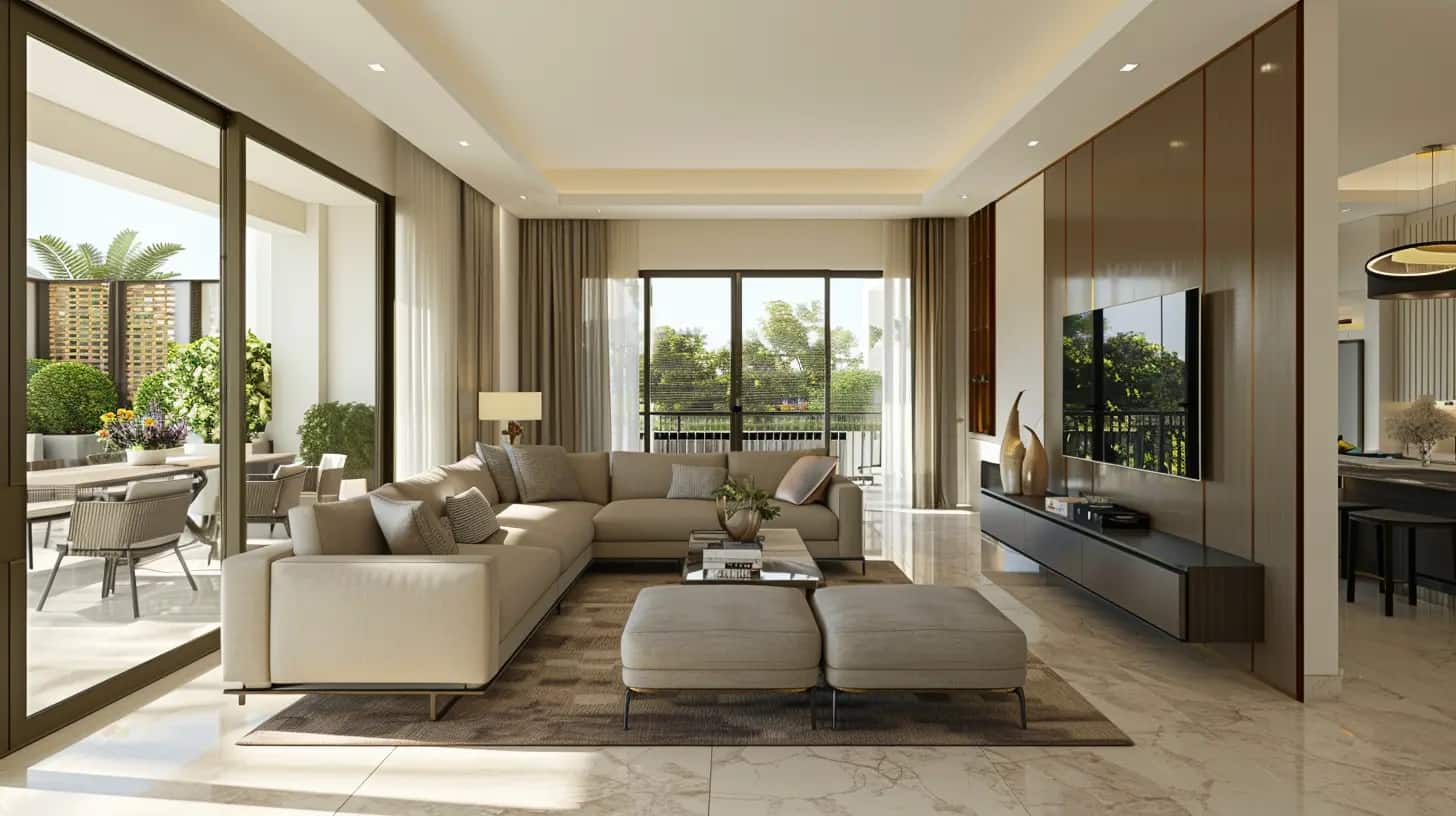
JVC in 2026: The Numbers Behind Dubai's Most Popular Affordable Area
Jumeirah Village Circle was never the place that used to evoke excitement as a postal code. Ten years ago, it was an under-construction project with many cranes, poor road infrastructure…
Jumeirah Village Circle was never the place that used to evoke excitement as a postal code. Ten years ago, it was an under-construction project with many cranes, poor road infrastructure, and the general perception of being the postal code chosen by the buyers who couldn't afford anything better. JVC back then represented broken promises, unfinished development, and towers growing much faster than the demand was.
But this is no longer the JVC of today. Quietly, but persistently, the area became Dubai's leading postal code by number of sales transactions, the primary entrance door to Dubai for many first-time buyers, and one of the strongest yield generators in the Emirate. Development is almost done. Infrastructure got built up. Amenities came. Price increase in the last two years was impressive, resulting in good capital gains for the owners on top of their rental revenues.
Nevertheless, 2026 JVC cannot be considered homogeneous. As it happens in the case of Marina and Downtown postcode and some other worth considering Dubai areas, there are several micro-markets in JVC at once. Towers launched during 2014 to 2018 period offer something completely different from those constructed between 2022 and 2025. There were streets which developed in the right direction better than others. There are developers which made good projects and those who failed. There is the story told by new Binghatti towers and another one told by old Belgravia and Bloom buildings; Samana and Object 1 towers have their story too.
The goal of this article is to show what 2026 JVC costs, where the most attractive rental yields (tower by tower) can be found in the area, what had changed over the last two years, which exact buildings are the best choice depending on the investment strategy, the current supply pipeline, and the crucial question every smart buyer must ask himself. Still the good entry point to Dubai real estate market in 2026 or not?
What JVC Property Actually Costs in 2026
The pricing picture in JVC has moved meaningfully over the last 24 months and the headline averages don't tell the whole story.
Average price per square foot in JVC sits at around AED 1,250 to AED 1,450 in early 2026, depending on building age, finish quality, and view. That's up roughly 22% to 30% from where the area sat in early 2024, and up close to 50% from the 2022 lows. The growth has been one of the strongest in any Dubai postcode over that period.
Within the average, the spread is wide. Newer premium towers like Belgravia Heights, Binghatti Onyx, and the recently completed Samana Mykonos are clearing AED 1,650 to AED 1,900 per square foot. Mid-aged buildings from 2018 to 2022 sit at AED 1,250 to AED 1,500. Older buildings from the original 2014 to 2017 wave can still be found at AED 950 to AED 1,200, particularly in less central locations within the Circle.
Representative price points in 2026:
- Studio in an older JVC tower: AED 480,000 to AED 650,000
- Studio in a newer JVC tower: AED 700,000 to AED 950,000
- 1-bedroom in an older JVC tower: AED 700,000 to AED 950,000
- 1-bedroom in a mid-aged JVC tower: AED 950,000 to AED 1.3M
- 1-bedroom in a newer premium JVC tower: AED 1.3M to AED 1.7M
- 2-bedroom in a mid-aged JVC tower: AED 1.4M to AED 1.9M
- 2-bedroom in a newer premium JVC tower: AED 2.0M to AED 2.8M
- Townhouses (where available): AED 2.5M to AED 4.5M
Rental rates have moved roughly in step with sales prices. A 1-bedroom that was renting for AED 55,000 to AED 65,000 in 2023 is asking AED 75,000 to AED 95,000 today. The market has absorbed the increases without significant resistance because tenant demand at this price point has been relentless. JVC is the default destination for the AED 70,000 to AED 110,000 annual rent bracket in Dubai and there's nowhere comparable to absorb that demand at scale.
What's changed underneath the headline numbers is the divergence between the best buildings and the worst. Two years ago a JVC unit was a JVC unit. Today there's a meaningful premium for build quality, layout efficiency, amenity package, and developer reputation. The Binghatti, Samana, and Object 1 buildings command 30% to 45% premiums over the older neighbouring towers. That gap is unlikely to close because the older inventory simply doesn't have the spec to compete on the same terms.
JVC Rental Yields in 2026: The Real Tower-Level Numbers
This is where JVC continues to make a stronger case than almost any other Dubai postcode. The yields are real, the tenant demand is consistent, and the operational simplicity of renting out JVC units is genuinely attractive.
We tracked rental performance across 134 JVC units we either managed directly or had visibility into through partner property managers during 2024 and 2025. The aggregate gross yield came in at 8.1% across the sample. Net yield, after service charges, agency fees, and a realistic vacancy assumption of 3 weeks per year, landed at 6.7%. Those are the numbers that have made JVC the default investor postcode for yield-focused buyers in 2026.
Tower-level breakdown was more interesting:
- Older value towers (2014 to 2017 vintage, well-maintained): gross yields 8.5% to 9.4%, net 7.0% to 7.8%
- Mid-aged solid towers (2018 to 2022 vintage): gross yields 7.5% to 8.3%, net 6.2% to 6.9%
- Newer premium towers (2022 to 2025 vintage): gross yields 6.4% to 7.2%, net 5.0% to 5.8%
- Branded or boutique JVC towers: gross yields 5.8% to 6.5%, net 4.4% to 5.1%
- Townhouse and villa products: gross yields 5.5% to 6.2%, net 4.6% to 5.2%
The pattern mirrors what we saw in the Marina analysis. The cheaper older buildings are yielding better than the newer premium ones, partly because of the math (lower acquisition cost) and partly because tenant demand at the AED 60,000 to AED 90,000 annual rent point is deeper than at the AED 110,000+ point.
A few specific tower-level data points from our 2025 tracking:
- A well-maintained 1-bed in a 2016 vintage building rented at AED 78,000 against a purchase price of AED 850,000, hitting 9.2% gross
- A 1-bed in a 2020 mid-tier building rented at AED 88,000 against a purchase price of AED 1.15M, hitting 7.7% gross
- A 1-bed in a 2024 premium tower rented at AED 115,000 against a purchase price of AED 1.55M, hitting 7.4% gross
- A studio in a 2018 vintage building rented at AED 58,000 against a purchase price of AED 580,000, hitting 10.0% gross
That last data point is genuinely striking. A 10% gross yield on a Dubai studio in a reasonable building is a number that doesn't really exist anywhere else in the city at scale. JVC has dozens of studio units performing in this range. For investors specifically targeting income generation rather than appreciation, this is the postcode that math works in.
Faisal Durrani, head of MENA research at Knight Frank, has noted that "JVC has matured from a speculative play into Dubai's most reliable income-generating postcode." That's exactly what the numbers show. The yields aren't a function of distressed pricing or a market bottom. They're structural, driven by genuine tenant demand at price points that newer Dubai inventory simply can't match.
The Best JVC Buildings for Different Investor Types in 2026
JVC has roughly 220 residential buildings across the Circle. They're not all equivalent. Here's what we've seen perform consistently for investor clients across different strategies.
For yield-led investors targeting net yields of 7%+:
- Plaza Residences series (well-maintained older buildings with strong tenant retention)
- The Crescent buildings (consistent rental performance, decent service charges)
- Diamond Views series (older but solid, easy to rent)
- Indigo Spectrum buildings (good value, reliable yields)
- Pantheon Boulevard (established, good central JVC location)
For balanced investors wanting yield plus appreciation:
- Bloom Towers (premium-feeling at mid-tier prices, has appreciated steadily)
- Belgravia series (well-finished, strong tenant covenant)
- Hyati Avenue (boutique scale, good build quality)
- Q Gardens series (newer, holds rental value well)
- Eaton Place (solid Damac product, reliable demand)
For appreciation-led investors with longer hold horizons:
- Binghatti Onyx, Crystal, and Trillionaire series (premium positioning, distinctive design)
- Samana Mykonos, Santorini, and similar (newer, well-finished, strong launch demand)
- Object 1 buildings (premium fitouts, strong reputation post-handover)
- LIV JVC (boutique premium product)
- Newer Ellington product where available (track record matters)
For townhouse-focused buyers:
- Belgravia townhouses (premium positioning within JVC)
- The townhouse clusters along the inner Circle roads
- Newer master-planned townhouse developments at the JVC perimeter
What we'd avoid in 2026, even at attractive entry prices, are buildings with chronic service charge disputes, ongoing major maintenance issues, or weak owners associations. A handful of the older JVC buildings have these problems and the headline yield gets eaten by special assessments and unresolved repair costs. There are also a few buildings in less central JVC locations that have struggled with rental demand because tenants prefer the central streets near the parks and amenities. The premium for central location within JVC is meaningful and persistent.
Mohamed Binghatti, chairman of Binghatti Developers and one of the most active JVC developers, has spoken publicly about how "JVC has become the proving ground for Dubai's mid-market design ambitions." His firm's product specifically has driven a meaningful upgrade in the area's premium tier and pulled valuations higher across newer launches.
What's Changed in JVC Over the Last 24 Months
Several shifts have happened in JVC since 2024 that matter for new investors entering the area.
The community has matured. JVC now has functional retail nodes, multiple grocery options, restaurants and cafes that serve genuine demand rather than just construction worker traffic, and parks that are actually used. The infrastructure conversation that dominated discussions three years ago is largely settled. New residents moving to JVC in 2026 are encountering a community, not a construction site.
The supply mix has shifted toward premium product. Most of the 2024 to 2025 launches have been at price points 30% to 50% above what was typical for JVC two years ago. Binghatti, Samana, Object 1, Tiger Properties, and several boutique developers have specifically targeted the AED 1.3M+ end of the market. This is changing what JVC means as an address. It used to be exclusively the affordable end. It's now also a credible mid-market option with newer towers approaching AED 1,800 per square foot.
The tenant pool has broadened. JVC was traditionally a single-professional and young-couple market. The tenant base today is more diverse, with more families taking 2-bedroom and townhouse units, more older expats moving from more expensive areas to free up cash flow, and an increasing share of remote workers using JVC as a Dubai base while working internationally. The implication for landlords is that unit type matters more than it used to. 2-bedrooms with proper layouts and townhouses are getting rented to longer-tenure tenants than the studio and 1-bed inventory.
Service charges have been relatively stable compared to other Dubai postcodes. JVC service charges typically run AED 12 to AED 18 per square foot per year, which is meaningfully below the AED 22 to AED 35 you see in Marina and Downtown buildings. This is one of the structural reasons JVC net yields hold up so well. The gap between gross and net is smaller than in premium postcodes, which means more of the rental income actually flows through to the investor.
According to CBRE's UAE Real Estate Market Outlook, JVC accounts for roughly 8% to 11% of Dubai's residential transaction volume in any given quarter, which makes it the highest-volume single postcode in the city. That liquidity matters. It means JVC units can be sold relatively quickly when needed, which is genuinely valuable for investors who might want to exit at some point.
The new visa rules also matter for JVC specifically. The recent removal of the AED 750,000 minimum property value for the 2-year property investor residence visa means that JVC is now the most accessible postcode in Dubai for buyers wanting residency through property at the lowest possible capital commitment. A AED 600,000 studio in a decent JVC tower now qualifies, where it didn't 12 months ago. This has injected new demand into the sub-AED 750k segment that didn't exist before, and JVC is the postcode best positioned to absorb it.
JVC Supply, Pipeline, and Market Outlook for 2026 to 2028
The JVC pipeline is substantial and worth understanding because it's the single biggest variable affecting the area's medium-term outlook.
The new construction pipeline for JVC through 2027 is in the range of 18,000 to 25,000 units, depending on which estimates you trust and how strictly you define the JVC boundary. That's a lot of units on top of an existing inventory of roughly 50,000. The supply pressure is real and any honest analysis of JVC has to acknowledge it.
What balances the supply pressure is the demand side, which has been similarly substantial. JVC absorbs new inventory faster than most Dubai postcodes because the price point is broadly accessible, the rental demand is deep, and the postcode is the default first-stop for buyers entering the Dubai market. The question for 2026 to 2028 is whether demand growth keeps pace with supply growth, or whether the new units coming online overwhelm the absorption capacity.
A few practical observations:
- Newer launches have been pricing aggressively, which suggests developers are confident in the demand picture
- Resale of older inventory has remained liquid, which suggests no oversupply panic in the existing market
- Rental rates have continued to firm despite the new supply, which suggests demand is keeping up
- The geographical spread of the new launches is mostly within central JVC, which is where the demand is strongest
- Smaller, more affordable units are still where the bulk of new launches are concentrated, matching the strongest demand segment
Our view is that JVC will probably see slower price growth over 2026 to 2028 than it did in 2024 to 2025, simply because the easier wins have been captured. Yields should remain attractive but may compress slightly as prices catch up further. The strongest performers will be the buildings that combine good location within the Circle, solid build quality, and reasonable service charges. The weakest performers will be peripheral JVC buildings with weaker amenities and aging infrastructure that the new premium product will pull tenants away from.
The investor playbook for JVC in 2026 looks something like this:
- Buy older, well-maintained units at the entry price point for maximum yield
- Buy newer mid-tier units in central JVC locations for balanced yield and appreciation
- Avoid buying at the very top end (AED 1.8M+ per 1-bed) unless you have a specific lifestyle reason because the appreciation premium isn't guaranteed
- Pay close attention to service charges, building maintenance budgets, and OA quality before signing
- Don't buy peripheral JVC just because the price looks attractive. The discount usually reflects real demand-side weakness
How JVC Compares to the Real Alternatives in 2026
A serious 2026 buyer looking at JVC should also be looking at three alternatives.
Dubailand offers similar pricing to JVC but with a different lifestyle proposition. Larger plots, lower density, more family-oriented, and a substantial pipeline of new master-planned communities. Yields are similar to JVC. The trade-off is that Dubailand is less established, less central, and less liquid for resale. Best for buyers prioritising space and family lifestyle over central location.
Town Square Dubai offers an alternative master-planned community at similar pricing with a more curated lifestyle proposition. Yields are slightly lower than JVC. Build quality is generally solid. The community is less mature than JVC but more uniformly developed. Best for buyers wanting a planned community feel rather than the more organic JVC environment.
Discovery Gardens offers older inventory at lower entry pricing, with solid yields driven by very deep rental demand at the lower end of the market. The trade-off is older buildings, less premium feel, and limited capital appreciation prospects. Best for pure yield investors with a long hold horizon.
A short comparison for buyers wanting a quick read:
- JVC: best liquidity, broadest tenant pool, highest transaction volume, mid-density
- Dubailand: lower density, family lifestyle, less liquid, similar yields
- Town Square: planned community feel, slightly lower yields, more uniform product
- Discovery Gardens: lowest entry, highest yields, oldest stock, weakest appreciation
The buyers we've seen make the best decisions in 2026 are the ones who genuinely run this comparison rather than defaulting to JVC because it's the obvious answer. JVC wins for many investor profiles. It loses for others. The point is to know which one you are before you buy.
The Bottom Line on JVC Property Investment in 2026
While JVC in 2026 is far from being the bargain that it was in 2022, it continues to represent a very attractive investment market for the right investor type. Prices have increased, JVC has matured, the future pipeline is tangible, and the gap between the best and worst buildings has widened to the point where building selection has become as important as postcode selection.
JVC is home to some of the most profitable buildings in Dubai for yield-focused investors willing to do active management or have competent property managers in place. With the right properties, net yields of 6.5% to 7.5% are realistically attainable, and tenants' needs are robust enough to bring the vacancy risks down significantly compared to most other districts in Dubai.
In search of the right balance between yield and appreciation, we see investors benefiting the most from the mid-tier 2018 to 2022 vintage buildings located in the middle of JVC. They are not priced at the same level as newly launched buildings and mature enough to offer predictable operating costs and established rental markets. Realistic net yields can be expected in the range of 5.5% to 6.5% with a steady appreciation between 4% and 7% until 2027.
While balanced investments with both components are possible in JVC, it appears unlikely to provide the highest gains in the form of appreciation for the next 3 to 5 years. While there will definitely be room for upside until the end of this period, the 2022 to 2025 price increases have brought significant value. Investors looking for a pure appreciation play should likely explore Creek Harbour, Dubai South, and select Business Bay assets instead of JVC.
JVC is still one of the easiest ways to break into the Dubai property market with an intention to occupy the unit. Studios at AED 480,000 and one-bedroom apartments at AED 700,000 are still available at realistic prices, making it possible for buyers to invest in their own homes in Dubai, something that was out of reach even 18 months ago due to high visa requirements.
The biggest mistake committed by JVC buyers in 2026 is seeing it as a homogeneous market. It is not. There are buildings in JVC that yield 9%, and there are those yielding 4.5%. Some of the properties grow in value reliably every year, while others have shown zero growth for three years. There are streets with booming micro-communities and there are streets that continue feeling half-unfinished. The specificity must be considered. The postcode does half of the work.
There are few postcodes that deserve the title of Dubai's most popular affordable district better than JVC. For more than 15 years, it kept fulfilling its mission, creating actual communities and offering attractive rentals and yields. Liquidity remains great. If you need assistance navigating through specific JVC buildings with current pricing, realistic yields, and objective advice on whether or not the particular tower suits your investment strategy, we do this on a weekly basis.
Browse what's currently available in JVC or reach out and we'll take it from there.
Related stories
Dubai's Established Charm: The Case for Older Homes
In a city focused on the future, I believe the smartest move for many buyers is to look back. Dubai's seasoned communities offer space, character, and surprising value that new builds often can't match.
The True Cost of Owning a Dubai Property
Beyond the purchase price, your annual budget for a Dubai home must account for service charges, utilities, and maintenance. I'll break down every ongoing expense you need to plan for.
Calculating ROI on Dubai Rental Upgrades
As a landlord in Dubai, you can't just follow trends. I'll show you how to calculate the precise ROI of minor property upgrades to genuinely increase your rental yield.
Echoes, in your inbox
One thoughtful email a month. Market insight, new launches, no spam.