

Downtown Dubai in 2026: Is It Still Worth the Price Tag
Downtown Dubai prices hit AED 2,900 per sq ft in 2026. Here's where the value still exists, where it doesn't, and how yields compare to Business Bay and Marina.
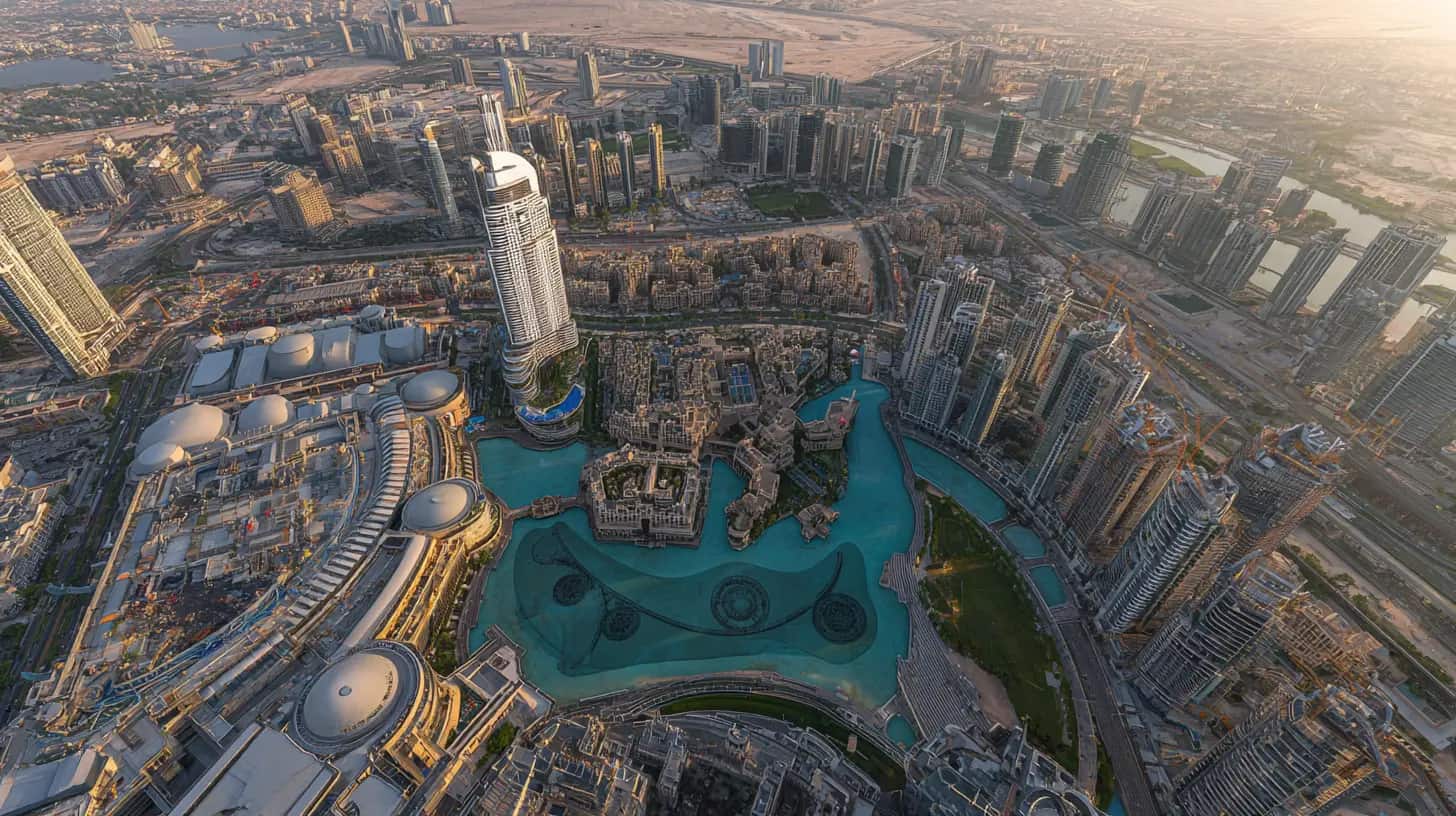
Downtown Dubai divides opinions. The famous skyline formed by Burj Khalifa, the Dubai Mall, the fountain show, and the Address hotels make Downtown Dubai one of the city’s flagship locations, and the prices reflect it. On a per-square-foot basis, Downtown is one of the most expensive locations in Dubai, holding the title for more than a decade. Is it still reasonable in 2026 to pay this much for Downtown properties?
The answer was discussed in detail here. Downtown Dubai is not a monolith but consists of three to four sub-markets built into it. Among them are branded residences located in Burj Khalifa or Address towers, mid-tier apartments in the old Emaar developments in Old Town, and new launches in Opera District or towers near Sheikh Mohammed bin Rashid Boulevard. Each submarket tells a story of value, yields, and future.
In brief: Downtown Dubai remains expensive, and the gap between the prices of Downtown Dubai real estate in comparison with other parts of the city has actually grown over the last eighteen months. It all depends on the buyer’s objectives and the role he wants to see this investment play. If there is no question of capital preservation or the purchase of a prestigious property, then this might not be the right place. However, if the yield is the goal, then Downtown should be left for cheaper options.
Here we discuss how much it actually costs to buy Downtown Dubai property in 2026, what makes the prices so high, where one can find good value in the area and where there is none, how rent yields are compared, the current market supply dynamics, and the question that no broker is willing to give an honest response to: is Downtown Dubai still a preferable location in 2026, or should one consider Business Bay or Creek Harbour?
What Downtown Dubai Property Actually Costs in 2026
Let's start with the numbers because everything else flows from these.
Average price per square foot in Downtown Dubai is sitting at around AED 2,650 to AED 2,900 in early 2026, depending on building, view, and floor. That's the broad average. The range underneath that average is wider than people think. A high-floor unit in the Burj Khalifa with a fountain view can clear AED 6,500 per square foot. A mid-floor 1-bed in 29 Boulevard or South Ridge will land somewhere between AED 2,200 and AED 2,500. Older units in Old Town can be found below AED 2,000 if you're patient and willing to compromise on view.
For comparison, the Dubai citywide average for apartments hit roughly AED 1,650 per square foot in late 2025 according to Property Monitor's market data. That puts Downtown at roughly a 65% to 75% premium to the citywide average. Eighteen months ago that premium was closer to 55%. So Downtown hasn't just kept pace, it's pulled further ahead.
A few representative price points in 2026:
- Studio apartment, mid-tier Downtown building, mid-floor: AED 1.4M to AED 1.8M
- 1-bedroom apartment, mid-tier building, mid-floor: AED 2.1M to AED 2.8M
- 2-bedroom apartment, mid-tier building, mid-floor: AED 3.4M to AED 4.6M
- 1-bedroom in a branded residence (Address, Vida): AED 3.5M to AED 5.5M
- 2-bedroom in Burj Khalifa, mid-floor without premium view: AED 5.5M to AED 7.5M
- 3-bedroom apartment in a premium tower: AED 7M to AED 12M+
- Penthouse units in the trophy buildings: AED 25M to AED 100M+
Rental prices have moved with sales. A 1-bedroom apartment in a mid-tier Downtown building was renting for AED 110,000 to AED 130,000 per year in 2023. Today that same unit is asking AED 150,000 to AED 175,000. The market has absorbed the increase without much resistance because demand at this price point hasn't softened.
The buyers driving the recent leg up are different from the buyers who drove the 2021 to 2023 rally. That wave was dominated by Russian and Indian capital fleeing volatility elsewhere. The 2025 to 2026 wave looks more like Western capital, particularly from the UK, Switzerland, and the US, alongside continued strong demand from Saudi Arabia and Egypt. Different buyer profile. Different sensitivity to price.
Where the Value Still Exists Inside Downtown Dubai
This is where buyers who lump "Downtown" into one category miss the most.
Within the broader Downtown postcode, there are pockets where the price-to-value ratio is genuinely strong, and pockets where you're paying a serious tax for the address. We've spent a fair amount of time mapping these and the differences matter.
Old Town and Old Town Island. The original Emaar communities at the base of the Burj Khalifa. Low-rise, traditional Arabian architecture, walkable, quieter than the towers. These properties have aged well and the lifestyle is genuinely distinctive in a way the glass towers aren't. Pricing here runs at a discount to the high-rise average because the buildings are older and the units are smaller in many cases. For buyers who actually want to live in their unit rather than rent it out, this is often the smartest sub-segment in Downtown.
Mid-tier towers along Mohammed bin Rashid Boulevard. Buildings like 29 Boulevard, South Ridge, The Lofts, Burj Vista, and Standpoint. These represent the workhorse Downtown product. Solid construction, decent views, walkable to the Mall, no trophy premium. Prices are firm but not crazy. Yields are okay rather than great. A lot of long-term residents and stable rental tenants.
Branded residences. The Address Downtown, Address Boulevard, Address Sky View, Address Residences Fountain Views, Vida Residences, and now the W Residences and similar luxury brands. You're paying for the brand, the hotel-grade service, and the resale liquidity these names create. The premium over an equivalent non-branded unit can be 40% to 60%. Whether that's worth it depends on whether you value the consistent property management and resale story, or whether you'd rather take that 40% and put it in a second property elsewhere.
Burj Khalifa itself. A category of one. Trophy address, scarcity value, the world's tallest building cachet. Pricing is essentially uncorrelated with the rest of Downtown. The market for these units is global UHNW buyers, and they don't price-shop the way ordinary buyers do. Buying here is closer to buying art than buying real estate. We have seen units approciate substantially over a decade, and we've also seen units sit on the market for two years because the seller wouldn't take a realistic price.
Newer launches in the Opera District and the eastern edge. This is where most of the recent supply has come in. Burj Crown, Forte, The Address Residences Opera, and others. Pricing on launch was relatively aggressive but secondary market values have held. The neigbourhood feel here is less established than Old Town and the towers feel more transient. Yield prospects are decent.
The buyers we see making the best deals in Downtown right now are typically doing one of three things:
- Buying older units in Old Town at a per-square-foot discount and using them as personal residences with a long hold horizon
- Buying mid-tier tower units off-market through agents who have direct seller relationships, often when sellers need to move quickly
- Buying branded residences specifically for the resale liquidity, accepting the premium as the cost of an exit option
The buyers we see overpaying in Downtown right now are usually doing one of two things:
- Buying high-floor luxury views in newer buildings at peak pricing because the agent showed them the view at sunset and they made an emotional decision
- Buying off-plan in trophy projects expecting Burj Khalifa-style appreciation, when the realistic outcome is more modest
There's a saying that's been around the Dubai market for years: in Downtown, you're never paying for the property, you're paying for the view of the Burj. The buyers who internalise that and buy accordingly do better than the ones who don't.
Rental Yields in Downtown Dubai vs the Rest of the City
This is where Downtown gets honestly difficult to defend on pure investment math.
Gross rental yields in Downtown averaged 5.1% in 2025 according to our internal tracking of 47 Downtown rental units we've either managed or had visibility into through partner property managers. Net yields, after service charges, agency fees, and the typical maintenance and vacancy, came in closer to 3.7% to 4.0%. That's not a great number relative to what's available elsewhere in Dubai right now.
Compare that to the citywide picture:
- JVC: 7.5% to 8.5% gross, 6.0% to 6.5% net
- Business Bay: 6.5% to 7.2% gross, 5.0% to 5.5% net
- Dubai Marina: 6.0% to 6.8% gross, 4.8% to 5.3% net
- Downtown Dubai: 5.0% to 5.5% gross, 3.7% to 4.0% net
- Palm Jumeirah: 4.5% to 5.5% gross, 3.2% to 3.8% net
Downtown is yielding less than every major alternative except Palm Jumeirah, and the gap to Business Bay is roughly 100 to 120 basis points on net yield. On a AED 3 million purchase, that's somewhere between AED 30,000 and AED 36,000 of net rental income per year you're giving up by choosing Downtown over Business Bay. Over a 10-year hold, that's serious money even before you factor in capital appreciation differences.
So why do people still buy Downtown for investment purposes? A few real reasons that aren't just emotional:
- Capital appreciation has historically outpaced yield in trophy postcodes. The bet is that the appreciation premium more than compensates for the yield drag
- Tenant quality is consistently higher in Downtown. Voids are shorter, payment defaults are rarer, and unit damage from tennant turnover is lower
- Resale liquidity is substantially better. A Downtown unit at fair market price typically sells in 3 to 6 months. A Business Bay unit can take 8 to 14 months
- Currency and political risk hedging. For overseas buyers, Downtown is one of the few Dubai postcodes that has the international name recognition to function as a balance sheet asset rather than just a rental
- Short-term rental potential is exceptional. Holiday home occupancy in Downtown runs higher than almost any other Dubai postcode, and ADRs are double or triple what equivalent units fetch elsewhere
Bassam Abu Dagga, founder of Property Monitor and one of the most quoted voices in Dubai real estate, has talked about how "the yield gap between trophy and non-trophy postcodes in Dubai has widened structurally over the past three years." That's exactly what we're seeing. Downtown is increasingly priced like a global trophy market (think parts of Manhattan or Mayfair) while the rest of Dubai still prices more like a yield-driven emerging market. Two different games happening in the same city.
Supply, Pipeline, and What That Means for Prices in 2026 and 2027
Downtown's supply story is genuinely interesting because it's the opposite of what's happening in most of Dubai.
The new construction pipeline for Downtown specifically is constrained. There simply isn't much developable land left within the strict Downtown postcode. Emaar continues to launch projects on the eastern edge near Sheikh Zayed Road, but the inner core is essentially built out. This is structurally different from Business Bay, JVC, Dubailand, and most other Dubai areas where the pipeline through 2027 is enormous.
According to CBRE's UAE Real Estate Market Outlook, Dubai citywide is expecting roughly 70,000 to 90,000 new residential unit completions per year through 2027. The Downtown share of that is in the low single-digit thousands. So the supply-demand picture in Downtown is genuinely tighter than the citywide picture, and that's part of what's been driving the recent price strength.
A few things to factor in on the supply side:
- Most recent Downtown launches have been in the Opera District extension or just outside the strict Downtown boundary
- The Burj Khalifa tower has a fixed unit count and units only come to market through resale
- Branded residences in the original Address towers don't get many new entrants
- New product is increasingly priced at the very top end (AED 4M+ for 1-beds), shifting the average up
- Older inventory in Old Town and the original boulevard buildings is the price-sensitive segment
The implication for buyers in 2026 is that Downtown's price floor is relatively well supported. The downside risk is more limited than it is in heavy-pipeline areas. That doesn't mean prices can only go up. It means a sharp correction in Downtown probably needs a global trigger rather than a local oversupply trigger.
Lifestyle, Location, and Who Should Actually Live Here
Numbers aside, Downtown is also a place to live, and that part of the equation matters more than buyers acknowledge.
The case for Downtown as a lifestyle choice in 2026:
- Walkability is the best in Dubai by a wide margin. Mall, restaurants, metro, parks all within 10 minutes on foot
- The metro connection at Burj Khalifa Station gives you easy access to most of the city without driving
- The community feel in Old Town is genuinely distinct and has held up over time
- Schools, clinics, and lifestyle services are abundant and high quality
- The fountain show, the Opera, Boulevard nightlife, and the Mall give the area a constant low-grade buzz that some people love
The case against:
- Traffic at peak times is genuinely frustrating, especially around Mall hours and weekend evenings
- Tourist density is high. If you don't want to share your supermarket and elevator with people taking selfies, this isn't your spot
- Service charges are among the highest in Dubai, often AED 25 to AED 35 per square foot per year for premium buildings
- Schools nearby are mostly international and expensive. Families with state school priorities should look at Dubai Hills or Arabian Ranches
- The boulevard area can feel transient. A lot of short-term tenants and a lot of turnover compared to older parts of the city
We've had clients move to Downtown and love it. We've had clients move to Downtown and move out within 18 months because the noise, traffic, and tourist density got to them. The lifestyle fit matters here more than in most Dubai areas because Downtown asks you to accept a certain density of activity in exchange for the location.
Mohamed Alabbar of Emaar (the developer behind essentially all of Downtown) has talked publicly about the area as "a 24-hour city in microcosm." That's accurate in both the positive and negative senses. If you want quiet, this isn't it. If you want to be at the centre of the action, nothing in Dubai compares.
How Downtown Stacks Up Against the Real Alternatives in 2026
A serious 2026 buyer looking at Downtown should also be looking at three alternatives. Here's the honest comparison.
Business Bay is Downtown's closest neighbour and the most direct comparison. Roughly half the price per square foot for similar build quality in newer towers. Slightly less walkable but improving fast with new infrastructure. Yields are meaningfully better. The lifestyle is more business-traveller and less tourist. For investment-led buyers, Business Bay frequently makes more sense than Downtown in 2026.
Dubai Creek Harbour is the long-game alternative. Lower current pricing, much larger pipeline, better future masterplan integration with the Creek Tower (whenever that finally happens), and a different lifestyle proposition focused on waterfront and family. Capital appreciation potential over 5 to 10 years is arguably higher than Downtown. Best for buyers with a long hold horizon.
Dubai Marina for buyers who want the trophy postcode feel without paying Downtown prices. Lower per-square-foot pricing, better yields, mature lifestyle infrastructure, more international tenant pool. Trade-off is that Marina has its own oversupply concerns at the lower end and the area has felt more transient since 2020.
The buyers we've seen make the best decisions in 2026 typically run this comparison explicitly. They look at Downtown and one or two alternatives side by side, not because Downtown isn't worth it, but because the decision deserves to be made with the alternatives priced in. Downtown wins for some profiles. It loses for others.
A short comparison for buyers wanting a quick read:
- Downtown: highest prestige, lowest yield, tightest supply, best resale liquidity
- Business Bay: similar lifestyle, better yield, more supply pressure, less resale liquidity
- Creek Harbour: long-game appreciation play, less developed currently, family-focused
- Dubai Marina: trophy postcode at lower price, more rental volatility, mature lifestyle
The Bottom Line on Downtown Dubai in 2026
Is Downtown Dubai still worth the price in 2026? Honestly, it depends. Yes, for some; no, for others. Winners always know beforehand where they belong and make this assessment before signing anything.
If preserving capital, brand prestige, high resale liquidity, and short-term rental are important, then Downtown is indeed strong. The supply is tight, international ultra-high-net-worth demand is stable, and a premium location premium has been earned over a decade already. There is no danger of a price crash, and the asset will always remain liquid enough for exiting purposes.
If yields and pure investment are your main objectives, Downtown might turn out to be too costly for investment in 2026. The yield spread relative to Business Bay is wide enough to cover the cost of a second property after just ten years, and the capital gain premium may not cover the yield premium.
If you want to live there, the issue is how well the lifestyle fits your profile. Indeed, walkability and centrality are top-notch there. In contrast, density, congestion, and tourist activity levels are the bottom line among residential areas of Dubai. People who love downtowns really enjoy it, and people who don't leave within two years.
The biggest mistake made by investors in Downtown Dubai in 2026 is counting on the postcode alone. Postcode is not enough here. Even within Downtown, some buildings appreciate steadily over time and others stand still for five years. Some apartments were acquired at reasonable prices, and some at all-time highs. To identify what unit, which building, and which price represent a good buy requires the same work here as anywhere else.
Downtown will stay Downtown. The Burj Khalifa will still be there, the Mall will be there, and the brand premium will be there too. But being "expensive" doesn't necessarily imply being "worth it" for everyone in 2026. Whether this applies or not depends on what kind of goals you pursue. If you need help finding specific Downtown buildings at current prices and yield estimates, we discuss precisely that every week. Browse what's currently available in Downtown or reach out and we'll take it from there.
Related stories
Dubai's Established Charm: The Case for Older Homes
In a city focused on the future, I believe the smartest move for many buyers is to look back. Dubai's seasoned communities offer space, character, and surprising value that new builds often can't match.
The True Cost of Owning a Dubai Property
Beyond the purchase price, your annual budget for a Dubai home must account for service charges, utilities, and maintenance. I'll break down every ongoing expense you need to plan for.
Calculating ROI on Dubai Rental Upgrades
As a landlord in Dubai, you can't just follow trends. I'll show you how to calculate the precise ROI of minor property upgrades to genuinely increase your rental yield.
Echoes, in your inbox
One thoughtful email a month. Market insight, new launches, no spam.