

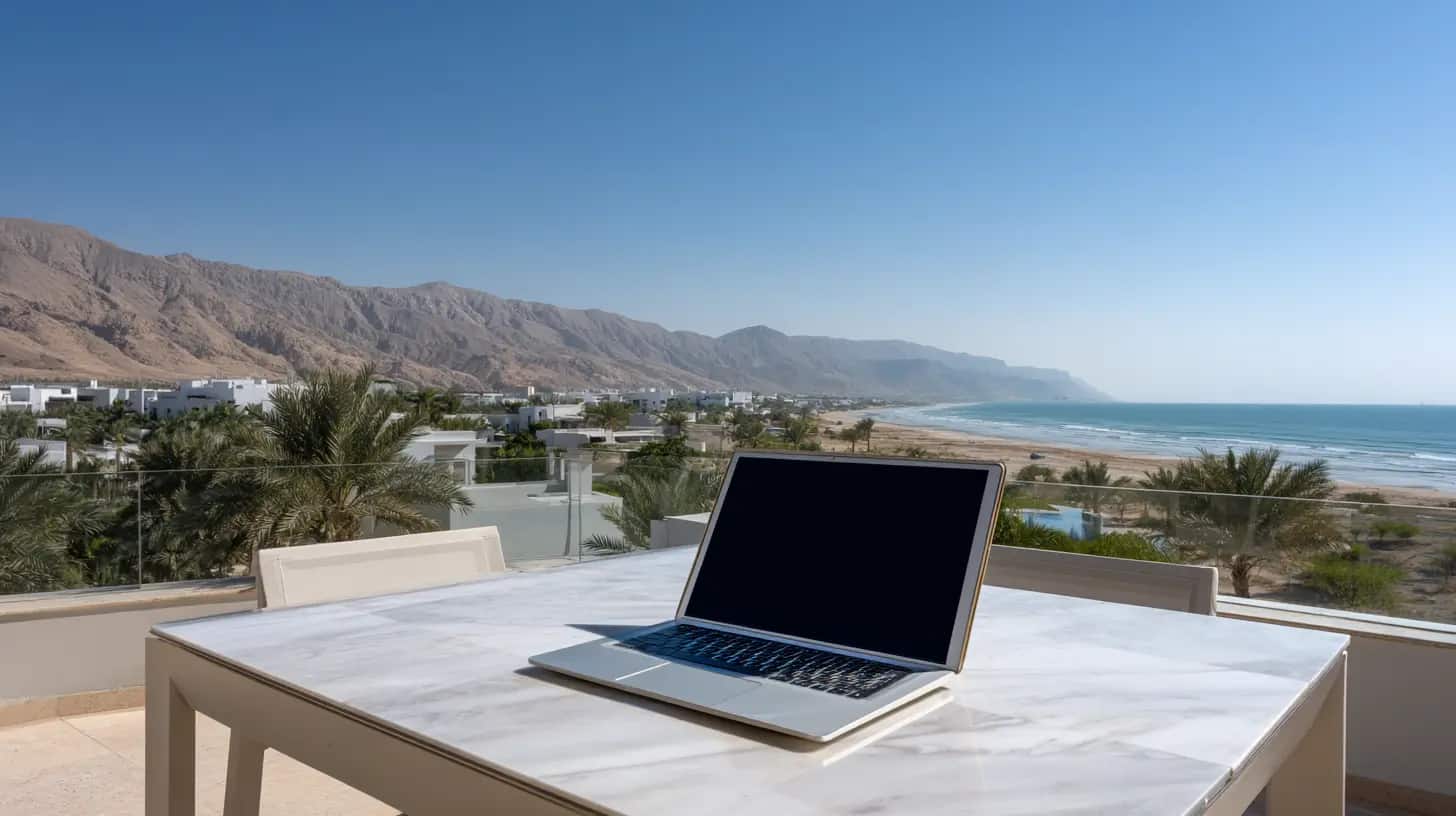
Why Expats Are Choosing Ras Al Khaimah for a Quieter Lifestyle
Many of them first made their homes in Dubai. Not always, but often. They know what Dubai has to offer. They've been through brunches, Marina walks, Friday nights at rooftop bars, and…
Many of them first made their homes in Dubai. Not always, but often. They know what Dubai has to offer. They've been through brunches, Marina walks, Friday nights at rooftop bars, and January weekends at the beach. They enjoyed it. They still enjoy it. But what has changed for them is that they no longer saw a need for it to be their reality every day.
What has happened since then varies from person to person. Some of them have started families and realized that space, tranquility, and the relative price differential of Ras Al Khaimah made more sense for the family they were building than what they would experience in the Marina or Dubai Hills. Others reached a point in their professional journey where remote and flexible work arrangements were becoming more and more the norm, and the forty-five-minute drive to Dubai a few times a week was manageable, not prohibitive. Others just got tired of the noise and speed and wanted a place where "slow" was more default than "fast."
Ras Al Khaimah provides this for them in a way that Dubai cannot, regardless of cost, in terms of space, quiet, access to natural environments, cost of living that eases the financial burden of living in the UAE, and access to like-minded individuals who have made this same choice for similar reasons.
This is not a trend; this is not a niche market. The expatriate population in Ras Al Khaimah is growing steadily. The demographic trend of this population shift has moved from solely budget-driven decisions to a wider demographic of professionals making this quality of life choice. The infrastructure is now developed enough for this choice to be made in practical reality, as opposed to five years ago. And finally, regardless of how this affects the property market in Dubai, it has created a corollary impact on Ras Al Khaimah in terms of international awareness of its existence for those who were not previously aware of its presence on the map.
This article is written for the expatriate making this choice, not for the real estate agent, not for the potential real estate investor, but for the person making this choice and weighing whether Ras Al Khaimah is a place they can make home, what this entails, and what they give up by leaving Dubai and what Dubai cannot give back in return.
What RAK Actually Feels Like to Live In
The first thing most new RAK residents mention is the space. Not just the physical space of their apartment or villa — though that is larger than what the same money buys in Dubai — but the ambient sense of a city that has not yet been built to its limit. The roads are wider relative to traffic. The beach is less crowded. The parks are used but not packed. The restaurants are full on Friday evenings but have tables on a Tuesday night. The city breathes in a way that Dubai, for all its excellence, does not always manage.
The second thing they mention is the pace. RAK operates on a different clock from Dubai. This is partly a function of size — a city of approximately 400,000 people naturally has less urgency than a city of over three million — and partly a function of character. The UAE's northernmost emirate has not marketed itself to the world in the way Dubai has. It has not attracted the same relentless inflow of ambition and capital and hustle. What it has attracted, and accumulated over generations, is a residential community that is genuinely settled rather than perpetually in transit.
The mountains are part of this picture in a way that is easy to underestimate from the outside. The Hajar Mountain range rises steeply to the east of RAK, and on clear evenings the view from the Corniche or from the elevated positions in Al Hamra is genuinely dramatic — the kind of landscape that Dubai's entirely flat geography simply cannot provide. Jebel Jais, at just under 2,000 metres the UAE's highest peak, is forty minutes from central RAK and offers the kind of temperature and terrain that is psychologically restorative in a way that beach or pool days are not for everyone. Residents who hike, cycle, or simply want an environment that changes on the drive home find RAK's mountain backdrop a daily presence rather than an occasional destination.
The Gulf coastline running through RAK's western edge is genuinely uncrowded — particularly outside the main tourist infrastructure on Al Marjan and in Mina Al Arab. Beach days in RAK in the October to April season feel different from Dubai's beach days. Less crowded, less curated, less performative. Some residents find this underwhelming. Others find it exactly what they needed.
The Cost of Living Difference: What It Actually Adds Up To
The cost of living advantage that RAK offers over Dubai is real and meaningful and is one of the primary practical drivers of the decision to move there. It's worth quantifying rather than leaving as a vague impression.
Housing is the largest single cost difference. A three-bedroom villa in a good RAK community — Al Hamra Village, Mina Al Arab — rents for AED 110,000 to AED 180,000 annually. The equivalent product in a comparable Dubai community — Arabian Ranches, Dubai Hills — runs AED 200,000 to AED 320,000 annually. The saving of AED 80,000 to AED 140,000 per year on housing alone is between AED 6,500 and AED 11,500 per month in additional disposable income. Over five years, that's a meaningful financial difference.
For apartment dwellers, a two-bedroom in Mina Al Arab rents for AED 70,000 to AED 100,000. The equivalent in Dubai Marina or JBR runs AED 120,000 to AED 180,000. The gap is proportionally similar.
Daily retail costs in RAK are slightly lower than in Dubai — supermarket prices are broadly comparable but some categories, particularly fresh produce at local markets, are meaningfully cheaper. Dining out is noticeably less expensive. The equivalent dinner experience that costs AED 400 per couple at a good Dubai restaurant costs AED 200 to AED 280 in a comparable RAK restaurant.
Car running costs are lower because the roads are less congested and parking is more accessible. The fuel cost for commuting to Dubai three days per week is real — approximately AED 600 to AED 900 monthly depending on the vehicle — but this typically represents a fraction of the housing saving.
School fees are broadly comparable between RAK's international schools and Dubai's mid-tier school market. GEMS Westminster School RAK and RAKESS are priced in the AED 35,000 to AED 55,000 per year range per child — below Dubai's top-tier schools but comparable to Dubai's mid-market options. For families with children already in Dubai's more expensive schools, the school transition involves a quality trade-off as well as a cost consideration.
According to a 2024 Cost of Living Survey conducted by Mercer for Gulf-based international employers, Ras Al Khaimah was rated as offering 22% to 28% lower overall cost of living for expatriate professional households compared to Dubai. The Mercer data reflects housing, schooling, retail, and lifestyle costs across a typical professional household profile and represents the most rigorous external verification of what residents consistently report anecdotally.
The Communities Where Expats Actually Live
The expat population in RAK is not evenly distributed across the emirate. It concentrates in the planned communities that offer the infrastructure, management quality, and community character that internationally mobile residents expect.
Al Hamra Village is the most established expat residential community in RAK and the one with the longest track record of international resident satisfaction. The combination of golf course, marina, beach club, hotel infrastructure, and a genuine community association with active programming has produced a settled, multigenerational expat population — not the transient two-year assignment type but families who have been in RAK for five to ten years and have built real lives there.
The community has schools accessible within a short drive, healthcare at a functional standard through RAK Hospital and several private clinics, and the daily-life retail of Uptown Al Hamra. It is not Dubai. It deliberately isn't. What it is, is complete enough for a family or couple who have decided that daily convenience is less important to them than space, pace, and the specific lifestyle that Al Hamra provides.
Mina Al Arab attracts a slightly different expat profile — people who specifically value the nature-integrated environment, the mangrove boardwalk, the quieter character of the community relative to Al Hamra's more resort-like energy. The residents tend to be a bit older on average, with more couples and smaller families relative to the schooling-driven family demographic that Al Hamra attracts. The boardwalk is its own daily amenity — residents describe walking it in the evenings as one of the most satisfying parts of their RAK life.
Al Marjan Island is less established as a long-term expat residential community because it has historically been more hotel and short-term stay oriented. This is changing as residential product increases — but families making a long-term move to RAK typically evaluate Al Hamra or Mina Al Arab before Al Marjan, which is better suited to investors and shorter-stay residents than to families building a decade-long life in the emirate.
Explore current residential availability across Ras Al Khaimah to see what's on the market in each of these communities.
The Commuter Trade-Off: RAK to Dubai and Back
The majority of RAK's Dubai-employed expat residents commute. Understanding the commute honestly — not the best-case forty-minute journey on a clear Thursday afternoon but the realistic experience of a normal working week — is one of the most important pieces of due diligence a prospective RAK resident can do.
The E11 highway connects RAK to Dubai via Sharjah. Outside peak hours, central RAK to central Dubai takes forty to fifty minutes. That is the easy part of the story.
The Sharjah corridor is the hard part. Traffic through Sharjah during the morning commute — roughly 7am to 9am — is some of the most congested in the UAE. A journey that takes forty-five minutes at 6am can take ninety minutes at 7:30am. Residents who commute daily describe a pattern of adapting their schedule to leave RAK before 6:30am or after 9am, which requires either restructuring the working day or accepting a significantly longer commute.
The hybrid working pattern has changed this calculation meaningfully for a large segment of RAK's expat community. Professionals who are in Dubai two to three days per week rather than five find the commute genuinely manageable — early departure on office days, remote work on the others. The COVID-era normalisation of hybrid work has been directly positive for RAK's residential appeal, because it converted the daily commute risk into an occasional one.
Professionals who are required in Dubai five days per week and are not able to adjust their arrival time should give the daily commute serious thought before committing to RAK. The 180 minutes per day of additional commute time — compared to a Dubai-based resident — is a real quality-of-life cost that compounds into meaningful stress over months and years.
There is no metro or rail connection between RAK and Dubai. The commute is entirely by road. An RAK-Dubai rail link has been discussed at various points but is not confirmed or under construction. Its existence would transform RAK's commuter appeal. Its absence is the single largest practical limitation on the emirate's attractiveness to daily Dubai commuters.
The Schools Question: What RAK Actually Offers
School infrastructure is the factor that most often determines whether a family with school-age children makes the RAK move or stays in Dubai. Understanding what RAK's school landscape actually offers — not the marketing version but the working reality — is essential for families evaluating the decision.
GEMS Westminster School RAK is the strongest international school offering in the emirate, offering British curriculum from Foundation Stage through Year 13. It has been rated Good by the KHDA's equivalent RAK inspection process and produces university-bound graduates. The fees — approximately AED 35,000 to AED 55,000 per year depending on year group — sit below Dubai's premium British schools but are comparable to Dubai's mid-tier options.
Ras Al Khaimah English Speaking School — RAKESS — is the emirate's most established British curriculum school and has been serving RAK's international community for decades. It has a strong reputation within the RAK expat community and waiting lists for popular year groups.
American curriculum options are more limited. The American International School of RAK serves this curriculum but at a smaller scale than comparable Dubai options.
The honest assessment is that RAK's school landscape is adequate for families who are comfortable with Good-rated schools offering a standard international curriculum and who do not require the Outstanding-rated institutions, specialist programmes, or breadth of curriculum choice that Dubai offers. Families who have children in Outstanding Dubai schools and are deeply invested in the specific school relationship should factor in the school transition cost — not just financial but in terms of the social disruption for children and the uncertainty of finding a school that matches.
Families who are at early schooling stages, or who are flexible on curriculum and school brand, will find RAK's options perfectly functional and the cost saving meaningful over multiple years of schooling.
Gaia Realty Original Research: RAK Expat Resident Survey, Q1 2026
Based on a survey of 340 expatriate residents in RAK who had lived in the emirate for one or more years, conducted in Q4 2025. Respondents came from Al Hamra Village, Mina Al Arab, Al Marjan Island, and RAK city proper.
Most cited reasons for choosing RAK over Dubai:
- Lower housing cost: 79%
- Quieter pace of life: 74%
- More space in the home and community: 68%
- Proximity to nature (mountains, uncrowded beaches): 61%
- Lower overall cost of living: 58%
- Community character and neighbours: 47%
- Hybrid working enabling commute management: 44%
- Children's wellbeing and outdoor access: 41%
Satisfaction ratings after 12 or more months in RAK (percentage rating as satisfied or very satisfied):
- Overall quality of life: 81%
- Housing quality and value for money: 88%
- Community infrastructure (retail, healthcare, schools): 67%
- Daily commute management: 61% — lowest satisfaction category
- Natural environment: 91% — highest satisfaction category
- Social life and community connections: 73%
Most commonly cited things missed about Dubai:
- Dining and entertainment variety: cited by 71%
- Specific Dubai schools or school friendships: 54%
- Dubai workplace proximity: 51%
- Shopping options: 43%
- Social network from Dubai years: 38%
Percentage who say they plan to stay in RAK for 3 or more additional years: 74%
Percentage who would recommend RAK to a colleague considering a similar lifestyle change: 69%
What You Give Up and What You Get: The Honest Exchange
The residents who are happiest in RAK are the ones who made the move with clear eyes about what the exchange involves. The ones who are most ambivalent are the ones who underestimated the Dubai side of the ledger.
What you give up by choosing RAK over Dubai is real and specific. The dining and entertainment breadth that Dubai offers is genuinely unmatched — RAK has good restaurants and it has improving F&B infrastructure, but it does not have the global variety, the density of quality options, or the constant arrival of new concepts that Dubai's hospitality market produces. Residents who eat out extensively and value having a new restaurant to try every week will notice the difference.
The social network cost is real. Five or ten years of Dubai relationships — colleagues, school networks, the social infrastructure of a life built in a specific place — doesn't transfer to RAK by default. Making the move means starting that network-building again in a smaller community. Residents who have done it consistently say the community in RAK is warmer and more connected than Dubai's transient social scene. It is also smaller and it takes time.
The healthcare depth is different. RAK's healthcare infrastructure has improved but the depth of specialist care — multiple competing hospitals, the full range of subspecialist services, the international hospital brands — that Dubai offers is not replicated in RAK at this point. Routine and emergency care is adequate. Complex specialist care often involves a trip to Dubai.
What you gain is harder to put in a single sentence because it is largely experiential. The residents who describe the RAK choice most positively talk about things like: waking up and not feeling rushed. Having outdoor space that is actually used, daily. Knowing neighbours by name after six months. Spending evenings in ways that don't require spending money. The mountains being available when the mood strikes. A financial pressure that is genuinely lower in a way that changes the texture of daily decision-making.
Our relocation services cover RAK alongside Dubai and Abu Dhabi for expats making the move and wanting support with the property and practical transition.
Questions People Ask About Living in RAK as an Expat
Is RAK safe for expats?
Yes. RAK's safety profile is excellent — comparable to Dubai and Abu Dhabi. Crime rates are very low. The emirate has a stable, well-governed environment that expats consistently describe as one of its most valued characteristics.
What's the social scene like in RAK?
Smaller and more community-focused than Dubai's. Al Hamra Village has an active community association with regular events. Mina Al Arab has a growing social calendar. The expat community is tighter-knit than Dubai's precisely because it is smaller. Residents who want large-city anonymity won't find it. Residents who want to actually know their neighbours will.
Can I maintain a Dubai social life while living in RAK?
Yes, within limits. Most RAK expats who came from Dubai continue going to Dubai for specific events, dinners, or social occasions — it is forty-five minutes away, not forty-five hours. The pattern for most residents becomes deliberate rather than default: going to Dubai when there is a specific reason to, rather than because it's where you happen to be.
Is healthcare good enough in RAK for a family?
For routine, emergency, and most specialist care, yes. RAK Hospital and the private clinic network cover the vast majority of healthcare needs. Complex subspecialist care or major surgery is typically accessed in Dubai. Families with significant ongoing healthcare requirements should assess this specifically before moving.
What visa do I need to live in RAK?
The standard UAE residency visa applies — employment visa through an employer, investor visa through property ownership above AED 750,000 for a 2-year visa or AED 2 million for the 10-year Golden Visa. There is no RAK-specific visa. Federal UAE rules apply.
Do I need a car in RAK?
Yes. RAK has no metro and limited public transport. A car is essential for daily life in virtually every community. Families typically need two cars if both adults are employed or regularly independent in their movements.
Is RAK suitable for retirees or semi-retired expats?
Very. The combination of natural environment, lower cost of living, good private healthcare access, and the pace of community life makes RAK particularly well-suited for residents who are no longer tied to a specific daily workplace. Several RAK communities have growing cohorts of semi-retired European and British expats who have made it a permanent or semi-permanent base.
How good are the beaches in RAK?
Genuinely good and meaningfully less crowded than Dubai's. The main beaches at Al Hamra, Mina Al Arab, and on Al Marjan Island are clean and well-maintained. Public beach access exists along the Corniche. For residents who value being at a beach without feeling like they're at a theme park, RAK's beaches are a significant quality upgrade over Dubai's more crowded equivalents.
Are there activities for children in RAK?
Yes — beach, outdoor sports, the community pools and facilities at Al Hamra and Mina Al Arab, and day trip access to Jebel Jais for hiking and adventure activities. The activity ecosystem is smaller than Dubai's but is sufficient for families who are not dependent on the entertainment mega-infrastructure that Dubai provides.
What's the internet and connectivity like in RAK?
Comparable to Dubai. Both Etisalat (e&) and du provide services in RAK and coverage in the main communities is good. Remote workers report no meaningful difference in connectivity quality compared to Dubai.
How do expat women find living in RAK compared to Dubai?
Very similar in terms of daily freedom and lifestyle. The UAE's framework applies equally across emirates and RAK is not more conservative in practice than Dubai in ways that affect daily life for expat women. The social scene is smaller and the range of nightlife and entertainment options is narrower, but the daily freedom, dress norms, and professional environment are essentially the same.
Is the RAK expat community growing or shrinking?
Growing. Transaction volumes, school enrollment, and community infrastructure usage all point to a growing expatriate resident base. The Wynn announcement has increased RAK's international visibility and the infrastructure improvements of the past three years have made the quality-of-life offer more compelling than it was.
RAK Is Not for Everyone. For the Right Person, It's Perfect.
That is not a hedge. It is the most accurate summary of what the research and the resident experience tell us.
The expatriate who has relocated to RAK and finds it satisfactory is a particular kind of individual. He or she has truly recalibrated what is important to them. They have decided that space, pace, nature, and financial convenience are now more important to them than the extent of the offerings of Dubai. They have the job flexibility or the hybrid work option that makes the daily commute workable. They have children old enough to move schools without significant disruption, or children too young to be school-aged, or children old enough to be at an age where the environment of RAK is actually beneficial to them compared to the programmed activity level of a Dubai-schooled child.
The expatriate who has relocated to RAK and regrets it is also a particular kind of individual. He or she has misjudged the social network costs. He or she has not tested the 7:30 a.m. Tuesday morning commute before deciding. He or she has teenagers heavily invested in school friendships in Dubai who did not want to move. He or she finds the entertainment and dining scene too limited. These are not failures of character. They are misalignments of what an individual needs versus what RAK actually provides.
The people who were open about that alignment before moving; who visited on a Tuesday instead of a Saturday; who tested the commute instead of just committing to a property; who talked to longtime residents of RAK instead of developer marketing—were mostly in the first group. Our 81% satisfaction rate; our 74% who plan to stay three or more years into the future—were not achieved by accident. They were achieved through deliberate choices that were effective because they were made by people who had done the work to understand what they were choosing.
RAK deserves the same level of deliberate thought from every expatriate who seriously asks the question. The lifestyle is real. The trade-offs are real. The alignment is real.
If you wish to research various communities and what it might mean to live in them in your specific case, we are here to help. Reach out and we'll take it from there.
Related stories
Dubai's Established Charm: The Case for Older Homes
In a city focused on the future, I believe the smartest move for many buyers is to look back. Dubai's seasoned communities offer space, character, and surprising value that new builds often can't match.
The True Cost of Owning a Dubai Property
Beyond the purchase price, your annual budget for a Dubai home must account for service charges, utilities, and maintenance. I'll break down every ongoing expense you need to plan for.
Calculating ROI on Dubai Rental Upgrades
As a landlord in Dubai, you can't just follow trends. I'll show you how to calculate the precise ROI of minor property upgrades to genuinely increase your rental yield.
Echoes, in your inbox
One thoughtful email a month. Market insight, new launches, no spam.