

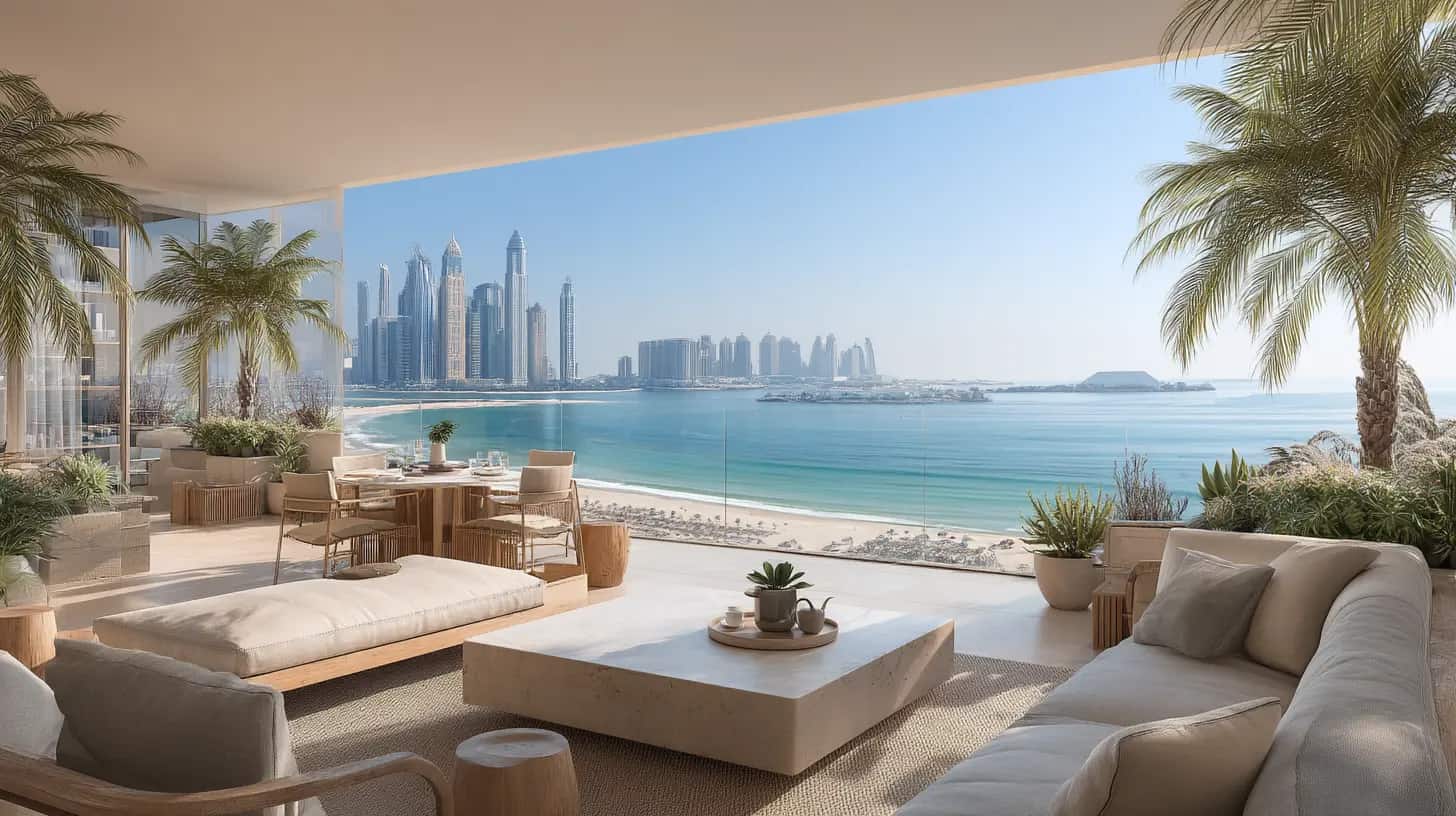
Why Jumeirah Village Circle Remains a Top Choice for Buyers
JVC Keeps Appearing at the Top of Dubai's Transaction Tables. There's a Reason for That. Every quarter, when DLD releases transactional data for Jumeirah Village Circle, it ranks near the…
JVC Keeps Appearing at the Top of Dubai's Transaction Tables. There's a Reason for That.
Every quarter, when DLD releases transactional data for Jumeirah Village Circle, it ranks near the top of transaction volume. Not just once, but every quarter. More transactions occur within JVC on a quarterly basis than occur within communities that boast three times the price per square foot, beach access, and have been designed by some of the world’s most renowned architects, and boast branded hotels and five-star amenities.
To say that investors and buyers have become accustomed to such facts is an understatement. For several years, no one has been surprised by such findings. Newcomers to Dubai, on the other hand, might still be. How does a landlocked, mid-density residential community, devoid of beach access and iconic skyline, manage to consistently lead transaction volume within one of the most dynamic real estate markets on the planet?
The answer is simple, yet worth stating clearly, as it forms a basis for understanding what drives demand for properties within a market as large and diverse as Dubai’s. JVC does not sell aspirations; it sells functionality. Dubai is home to a population that exceeds three million residents, and they require housing that supports their lives on a daily basis, yet is affordable.
What has allowed JVC to maintain its position as the market leader in transaction activity through various market cycles is exactly what will continue to propel JVC forward in the future: its blend of entry cost accessibility, real rental yield, broad demand from a large and continuously replenished population of working professionals, improving community amenities, and a secondary market with enough liquidity to allow for exit within reasonable timeframes. None of these is particularly exciting in terms of market characteristics; they are, however, each of them more important than anything else to a buyer seeking to build a meaningful portfolio as opposed to a story.
This article will outline a comprehensive argument for JVC as a sustainable choice for a buyer in 2026, touching on investment attributes, lifestyle attributes, improvements made within JVC over the last three years, and what JVC is not and will never be.
The Access and Connectivity That Define JVC's Location Value
Location in Dubai is not one-dimensional. A community's value relative to its price is not just about how prestigious the address sounds — it is about what can be reached from it, in what time, on what roads, at what time of day. JVC's location makes more sense when it is evaluated on these practical terms rather than on the prestige hierarchy.
JVC sits at the intersection of Al Khail Road and Sheikh Mohammed Bin Zayed Road — two of Dubai's primary arterial highways. This position gives residents access in multiple directions simultaneously. Dubai Marina and JBR are twelve to fifteen minutes by road. Downtown Dubai is eighteen to twenty-five minutes. Business Bay is twenty minutes. DIFC is twenty to twenty-five minutes. Dubai Internet City, Media City, and the tech cluster along the Sheikh Zayed Road corridor are ten to fifteen minutes.
For professionals who work in any of these zones — and the combined employment base of these areas is enormous — JVC represents a location where the commute is manageable without the premium pricing that living inside or immediately adjacent to these communities requires. The Marina charges a 40% to 60% premium over JVC for comparable apartments. Downtown charges more. JVC is the point at which the trade-off between price and commute time tilts decisively toward affordability for a large proportion of Dubai's professional population.
The Circle Mall effect has been the most visible single improvement to JVC's connectivity in recent years — not physical connectivity but lifestyle connectivity. The mall opened in 2021 and has been progressively adding anchor tenants, F&B operators, and services that make the community more self-contained. Before Circle Mall, JVC residents drove to the Marina or to Dubai Hills for most retail beyond basic supermarkets. The mall changed that calculation and reduced the daily-life friction that had been one of the community's legitimate limitations.
The absence of a metro station remains JVC's most frequently cited infrastructure gap. Dubai's Route 2020 metro extension passes close to the community and a station serving JVC has been proposed but not confirmed. Its arrival would meaningfully change the community's accessibility profile for residents without cars and would likely accelerate appreciation by connecting a car-dependent community to the metro network. Buyers who are comfortable with the current car-dependent model own an option on a significant infrastructure upgrade.
The Yield Case: Why Investors Keep Coming Back
JVC's yield profile is the most consistent reason investors cite for choosing it over higher-profile alternatives, and the numbers have been stable enough over long enough that they represent genuine market evidence rather than optimistic projection.
Gross yields on one-bedroom apartments in well-located JVC buildings run 7% to 9% consistently. Studios push to 8% to 10%. Two-bedrooms are slightly lower at 6% to 8%, reflecting the higher capital cost relative to the rent that the market can support for family-sized units. These are gross figures before management fees, service charges, and vacancy — net yields typically run 1% to 2% lower — but the starting point is strong enough to produce positive cash flow on standard UAE mortgage terms in most of the community's price range.
The tenant demand that underpins these yields is wide and consistently replenished. JVC's proximity to Dubai's major employment clusters means that virtually every new professional who arrives in Dubai and is working in the Marina, Downtown, Business Bay, or the tech corridor evaluates JVC during their apartment search. The community is typically the most affordable option within a reasonable commute of these employment zones, which generates the first-call tenant demand that keeps occupancy rates high.
Average occupancy rates in well-managed JVC buildings run 87% to 91% annually — above the Dubai average for mid-market communities and reflecting the depth of tenant demand. Annual renewal rates in the better-performing buildings run 63% to 69%, with Ellington and Binghatti buildings at the top of that range. These numbers mean that a well-selected, well-managed JVC investment spends less time vacant and generates more predictable annual cash flow than community-level yield comparisons suggest.
The capital appreciation that has accompanied the yield story since 2020 has been 38% to 55% across most JVC product types. Studios have appreciated toward the top of that range, larger units toward the bottom. This appreciation has been real and meaningful — investors who entered the community at 2019 to 2021 prices are holding significant unrealised gains. Whether that appreciation continues depends on supply dynamics that are worth examining honestly.
According to CBRE's 2025 Dubai Mid-Market Residential Report, JVC recorded the highest single-community residential transaction volume in Dubai in 2024 — over 8,500 transactions — confirming the depth of market activity that underlies the yield story. That liquidity is itself an investment quality: it means entry and exit are both achievable on reasonable timelines, which is not guaranteed in every Dubai community.
The Community Has Grown Up. The Infrastructure Took Time and It Is Now Real.
JVC was delivered into a landscape that was largely undeveloped when the first buildings were completed in the early 2010s. Roads, retail, schools, healthcare, parks — these came after the buildings rather than before, and the community spent its first several years working through the infrastructure gap that is the characteristic growing pain of large masterplanned developments.
That gap has been progressively closing. The current JVC infrastructure picture is materially better than it was three years ago and substantially better than it was five years ago.
Circle Mall is the anchor retail improvement. Its arrival in 2021 shifted JVC from a community that required a drive for most retail to one with a full-scale shopping centre, supermarket anchor, cinema, F&B options, and the category of community gathering space that turns a residential development into a functioning neighbourhood. The mall's ongoing tenant mix improvement — adding better F&B options, service tenants, and leisure categories — continues to improve the daily-life experience for residents.
The parks and green spaces within JVC have been maintained and improved across the community. JVC was masterplanned with a significant amount of landscaped open space between buildings, and while the quality varies by district, the established green corridors give the community a more liveable character than purely high-density urban environments. For families with children or residents who exercise outdoors, this green infrastructure adds daily-life value that doesn't appear in price-per-square-foot comparisons.
Healthcare in and around JVC has improved. The Mediclinic Me'aisem hospital, a full-service private hospital, opened close to JVC and provides the kind of accessible acute care that a residential community of JVC's size genuinely requires. Before its opening, emergency medical access required a significantly longer drive.
The school infrastructure in and around JVC has developed with the community's growing family population. GEMS United School, JSS International School, and several other established options are within practical distance. The school landscape is not as strong as Dubai Hills or Arabian Ranches — no outstanding school within the masterplan boundary itself — but it is functional and has improved as the surrounding community has matured.
Who Buys in JVC and Why the Mix Matters
JVC attracts a genuinely diverse buyer base, and that diversity is a structural strength rather than a characteristic to be glossed over.
The dominant buyer type is the yield-focused investor — typically a professional living in Dubai who is building a property portfolio at accessible price points, or an overseas investor who wants UAE residential exposure without the capital requirement of Dubai's premium communities. This is the buyer that JVC was built for and that continues to anchor its demand.
But the buyer base has broadened. End users — people buying to live in JVC rather than to rent it out — have been a growing share of transactions since the community's infrastructure improved. Young couples buying their first Dubai home, families who have evaluated other communities and found that JVC's combination of space, greenery, and value represents the best available option at their budget, single professionals who want to own rather than rent and can afford entry in this community when they can't in the Marina — these buyers add depth to demand that pure investor activity doesn't provide.
International buyers represent a growing share of JVC transactions. The community's combination of strong yields and accessible pricing appeals to investors from South Asia, the MENA region, and increasingly from European markets who are looking for UAE exposure at an entry point that doesn't require the capital commitment of the Palm or Downtown. Indian and Pakistani buyers are consistently the most active international buyer nationalities in JVC, reflecting both community networks and the value proposition that JVC represents for investors from markets where 7% to 9% yields on freehold property simply don't exist.
The diverse buyer base is relevant for investors because it means exit options are broad. When a JVC investor needs to sell, they can appeal to yield-focused investors, end users, international buyers, and mortgage-assisted first-time buyers simultaneously. That breadth of potential exit routes compresses the time on market and reduces the discount required to achieve a clean exit — the opposite of a thin, investor-only market where exit requires finding the specific buyer profile who entered with you.
Gaia Realty Original Research: JVC Buyer and Market Snapshot, Q1 2026
Based on DLD transaction records, active listing analysis, buyer survey of 280 JVC property owners, and rental registration data as of Q1 2026.
Transaction and market activity:
- Total JVC residential transactions in 2025: 8,700 — highest single-community volume in Dubai for third consecutive year
- Average days on market for secondary sales: 29 days
- Average days on market for Binghatti buildings: 19 days
- Average days on market for Ellington buildings: 22 days
- Off-plan share of JVC transactions in 2025: 41%
Buyer profile breakdown (2025 transactions):
- UAE-resident investor (buy-to-let): 48%
- End user (buying to live): 27%
- International investor (non-UAE resident): 25%
Gross yield by product type (current secondary market pricing):
- Studios: 8.5% to 10.5%, average occupancy 90%
- 1-bed apartments: 7% to 9%, average occupancy 88%
- 2-bed apartments: 6% to 8%, average occupancy 87%
- 3-bed apartments and duplexes: 5.5% to 7%, average occupancy 85%
Capital appreciation since January 2020:
- Studios: 45% to 58%
- 1-bed apartments (Binghatti and Ellington): 42% to 56%
- 1-bed apartments (mid-market established buildings): 37% to 52%
- 2-bed apartments: 35% to 50%
Buyer satisfaction survey findings (280 JVC owners, 2-plus years ownership):
- 84% rated JVC as meeting or exceeding their investment expectations
- 79% said they would buy in JVC again or recommend it to another investor
- Most cited reasons for satisfaction: yield performance (cited by 87%), tenant demand stability (81%), Circle Mall improvement (74%), liquidity at exit (68%)
- Most cited areas for improvement: metro access (cited by 78%), school quality within community (61%), evening and weekend community atmosphere (54%)
The Supply Question: Honest Assessment of JVC's Primary Risk
No honest account of JVC's investment case avoids the supply question, and this analysis doesn't either.
JVC was masterplanned for significantly more residential density than currently exists. Multiple plots remain undeveloped and are being built on continuously. At any given time, dozens of towers are under construction. This ongoing supply has been a feature of the community since its inception and will continue to be.
This supply dynamic is the reason JVC yields have remained elevated — more supply keeps rental rate growth moderate. It is also the reason capital appreciation has been solid rather than spectacular. Supply availability creates a ceiling on price growth because new product can always undercut the secondary market if prices run too far ahead of replacement cost.
The practical implication for investors is not that JVC should be avoided because of supply. It is that within JVC, position matters enormously. Buildings in the best locations — close to Circle Mall, with easy access to the main road exits, in the community's more established central districts — hold value better and generate better returns through supply cycles than buildings in peripheral districts where new supply is less constrained and tenant demand is more diluted.
The buildings that have maintained the strongest investment performance through JVC's supply growth are, consistently, the ones that offer a meaningful quality advantage over the community average — Binghatti's delivery speed and build consistency, Ellington's design premium, the established mid-market buildings in central locations that have earned tenant loyalty through years of good management. These buildings hold tenants when new supply comes to market because what they offer doesn't exist at the same price point in the new buildings.
Investors who buy on price alone in JVC — who choose the cheapest per-square-foot option without reference to location, building quality, or developer track record — are the ones who find their investment in the lower half of the community's performance range. The research is available. The due diligence is necessary. JVC rewards it.
Browse current JVC listings to see what's available across building tiers and price points with current asking prices for direct comparison.
JVC Versus Its Nearest Competitors
The buyer who is evaluating JVC is almost always comparing it to one or two other communities. Understanding how JVC stacks up against its most common comparisons is practical for both buyers and investors.
JVC versus Business Bay: Business Bay wins on capital appreciation and address prestige. JVC wins on yield and entry price. Business Bay's canal-facing units have a view premium that JVC doesn't have. JVC has more green space and a quieter residential character. For yield-focused investors at AED 700,000 to AED 1.2 million, JVC; for total-return investors at AED 1.1 million to AED 2 million, Business Bay is the stronger case.
JVC versus JLT: Very similar yield profiles — JLT runs 6.5% to 8.5% versus JVC's 7% to 9%. JLT has genuine commercial activity within the community that creates a stable professional tenant base. JVC has more green space and a more residential character. JLT is fully built out with no new supply risk. JVC has ongoing supply risk. For investors specifically concerned about supply, JLT is more supply-constrained.
JVC versus Dubai Hills Estate: Dubai Hills wins on school infrastructure, community maturity, and long-term tenant retention. JVC wins on yield — Dubai Hills' better-located apartments run 5.5% to 7% versus JVC's 7% to 9%. Dubai Hills is the better community for families as end users. JVC is the better pure yield investment for the price point.
JVC versus Mirdif: Both are accessible mid-market communities with good family appeal and mid-range yields. Mirdif offers villa product that JVC doesn't. JVC is better connected to Dubai's employment centres. Both are credible choices — the decision comes down to whether the buyer needs villa space or is comfortable with apartment living.
Our property search allows filtering across all of these communities by price range and property type for direct comparison.
Questions People Ask About Buying in JVC
Is JVC a good investment for a first-time Dubai buyer?
One of the strongest entry-level investment communities in Dubai. Accessible pricing, genuine yields, an active secondary market for exit, and improving infrastructure. The due diligence requirements — building selection, management quality — are real but manageable with the right guidance.
What's the best building type to buy in JVC?
One-bedroom apartments in well-located Binghatti or Ellington buildings represent the strongest combination of yield, tenant demand, and secondary market liquidity. Studios produce higher yields but higher tenant turnover. Two-bedrooms suit investors who specifically want family tenants with longer average tenancies.
Does JVC have a metro station?
Not yet. A station has been discussed but not confirmed. Its arrival would be a significant positive for the community — accelerating appreciation and improving accessibility for the tenant base. It is an option buyers own, not a guaranteed near-term improvement.
How does new supply affect my specific building?
Buildings in central locations near Circle Mall and the main road access points are more insulated from supply competition than peripheral buildings. Quality buildings from recognised developers hold tenants better when new supply arrives because the product differential is visible and valued by tenants who are choosing.
What's the minimum budget to buy in JVC in 2026?
Studios start around AED 400,000 to AED 500,000 for well-located stock in established buildings. That is genuinely the most accessible entry point for freehold property investment in a well-connected Dubai community in the current market.
Is JVC safe and well-maintained?
Generally yes. Safety in Dubai is broadly excellent across communities. Building maintenance quality varies — this is the variable to investigate rather than community-level safety, which is not a meaningful concern in JVC.
Can I get a mortgage for a JVC apartment?
Yes. Standard UAE Central Bank rules apply. JVC's price range makes it one of the most mortgage-accessible communities in Dubai for qualified borrowers — 80% LTV on properties under AED 5 million means a 20% deposit on most JVC apartments.
How long does it take to find a tenant in JVC?
In a well-managed building in a good location, one to three weeks. Buildings in peripheral locations or with management issues take longer. Demand is consistently active — the challenge is not finding a tenant but finding the right tenant through a proper screening process.
Is JVC suitable for families as well as young professionals?
Increasingly yes. The school infrastructure has improved, the parks are used by families with children daily, and Circle Mall has the kind of F&B and retail that makes family daily life functional. It is not Arabian Ranches or Dubai Hills for the family experience. It is a credible and affordable family community.
What are the main risks of investing in JVC?
Supply overhang affecting rental rate growth and creating competition for tenants. Management quality variance across the building stock. Limited capital appreciation ceiling relative to supply-constrained premium communities. None of these is fatal to the investment case — all of them require management through building selection and quality management.
Does JVC offer short-term rental opportunities?
Less compellingly than Marina or Downtown. JVC is not a tourist destination and occupancy rates for holiday rentals are lower than in tourist-facing communities. Long-term rental is the primary investment strategy that works here.
What's the single most important thing for a first-time JVC buyer to understand?
That the community-level yield figures conceal wide variance between the best and worst buildings. A 9% headline yield in a peripheral building with poor management may net 5% after vacancy and costs. The same 9% in a central Binghatti or Ellington building with professional management nets 7% to 7.5%. The gap between those outcomes is the gap between building selection done well and done poorly.
JVC Keeps Working Because the Fundamentals Keep Working.
The communities that win and sustain investor loyalty within a market are those that deliver on their promises under varying circumstances. JVC has delivered on its yields, infrastructure, tenant demand, and price of entry within one of Dubai’s most volatile and dynamic periods of property market activity. This is no accident, but rather a result of a community that is built on genuine functional demand.
While developments such as Circle Mall, healthcare infrastructure, upgraded roads, and the changing school landscape have added value to JVC, they have not changed its fundamental essence. JVC remains a well-connected, affordable, and mid-density residential community that caters to a large and expanding pool of professionals that need housing within commuting distance of Dubai’s employment centers. This demand does not diminish due to a more glamorous alternative available somewhere else; it does not diminish at all, as it is a fundamental demand.
The risks are real. Supply will continue to arrive. Yields will not compress significantly, and rental rate growth will continue to be modest. Capital appreciation will continue to be strong but not spectacular. The metro will arrive eventually. And when it does, it will be a real positive catalyst for this product type. Until then, it is fundamentals-based investing, and the fundamentals have been proven over time to be stable and reliable.
The real performers in JVC have been those buyers who understood what they bought and bought accordingly. Buyers who were disappointed were those who expected something else.
JVC is exactly as advertised. That is a compliment, not a criticism. It is a compliment in a market where promises and expectations can be far removed from reality. It is valuable in this market to be precise.
If you would like to explore current available inventory in JVC by building type and pricing, we watch this market daily. Reach out and we'll take it from there.
Related stories
Dubai's Established Charm: The Case for Older Homes
In a city focused on the future, I believe the smartest move for many buyers is to look back. Dubai's seasoned communities offer space, character, and surprising value that new builds often can't match.

The True Cost of Owning a Dubai Property
Beyond the purchase price, your annual budget for a Dubai home must account for service charges, utilities, and maintenance. I'll break down every ongoing expense you need to plan for.

Calculating ROI on Dubai Rental Upgrades
As a landlord in Dubai, you can't just follow trends. I'll show you how to calculate the precise ROI of minor property upgrades to genuinely increase your rental yield.
Echoes, in your inbox
One thoughtful email a month. Market insight, new launches, no spam.