

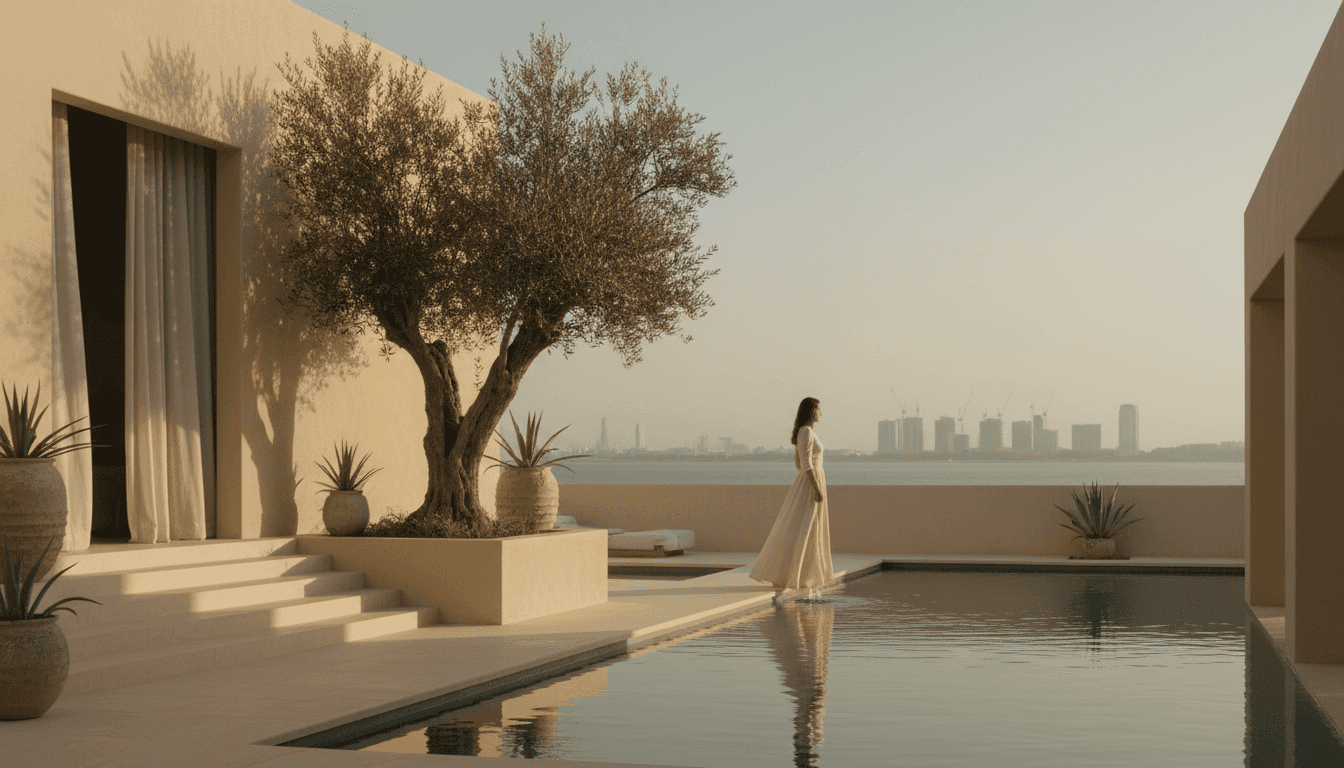
Wellness Real Estate: A Solid Dubai Investment?
Beyond yoga rooms and jogging tracks, Dubai’s new wave of wellness-focused communities promises holistic living. I break down whether this lifestyle trend translates into a sound financial investment.

The language of Dubai real estate is shifting. For years, it was about superlative luxury: the biggest, the tallest, the most opulent. Today, a quieter but more profound vocabulary is taking hold, centered on words like 'wellbeing', 'balance', and 'holistic'. This is the rise of the wellness community, a concept that is rapidly moving from a niche interest to a mainstream driver of development. But as a seasoned observer of this market, I urge my clients to look past the serene marketing and ask the hard-nosed questions. Is this a durable lifestyle shift that creates long-term value, or a fleeting trend? More pointedly, is a health-centric property in Dubai a solid investment, or are you just paying a premium for good vibes?
This is more than an academic question. We’re seeing a significant re-allocation of capital from major developers towards this segment. It's my job, and ours at Gaia Living, to dissect this trend and give you a clear-eyed view. We'll go beyond the brochure to examine the real costs, potential returns, and hidden risks. Here's what we'll explore:
- What truly defines "wellness real estate" in the demanding Dubai context.
- The key players, from the established pioneers to the ambitious new launches.
- The 'Wellness Premium': A forensic look at how much extra you're paying.
- The investment thesis: Analysing rental yields and capital appreciation potential.
- The flip side: Unpacking service charges, market saturation, and 'wellness-washing'.
- A detailed, line-by-line cost breakdown for buying into this dream.
- My final verdict on whether a health-centric property is a smart move for your portfolio.
Beyond the Buzzword: What Exactly is a Wellness Community?
First, we need a clear definition, because the term 'wellness' is in danger of becoming diluted through overuse. A building that simply has a Peloton bike in the gym is not a wellness community. In my view, true Dubai wellness real estate must demonstrate a conscious, integrated approach to health that is woven into the very fabric of the development. It’s a design philosophy, not just an amenity list. The bar for this is high, and it rests on several pillars that go far beyond standard luxury.
One of the most critical elements is air and water quality. In a city where we spend a significant amount of time indoors, developers in this space are investing in hospital-grade air filtration systems (MERV 13 or higher) to remove dust, pollutants, and allergens. Similarly, centralized, multi-stage water purification systems that provide near-distilled quality water from every tap are becoming a hallmark. These are not cosmetic features; they are substantive, expensive infrastructure investments that have a direct impact on residents' health. They form the foundation of a health-centric property in Dubai and are a key differentiator from a standard apartment tower.
Next is biophilic design. This is the practice of connecting people and nature within the built environment. It manifests as more than just a few potted plants. We're talking about architecture that maximizes natural light and ventilation, the use of natural materials like wood and stone, landscaped courtyards that are visible from within the home, and the integration of water features for their auditory and cooling effects. The goal is to reduce stress and create a calming atmosphere. Al Barari, the city's original wellness-focused community, remains the gold standard here, with its dense, mature private gardens and waterways creating a microclimate that is tangibly different from the surrounding area.
Finally, there is the software that runs on this hardware: the community and programming. This is where holistic living developments truly separate themselves. This includes access to on-site nutritionists, resident wellness coaches, organized yoga and meditation sessions, community farms providing organic produce, and even mental health support services. The amenities are also different. Instead of just a gym, you might find a cryotherapy chamber, an infrared sauna, a chemical-free swimming pool, and dedicated mindfulness rooms. It's an entire ecosystem designed to support a healthy lifestyle, not just facilitate it. A development that fails to deliver on this community aspect, in my opinion, is just a building with a nice spa.
The Pioneers and The New Wave: Dubai's Health-Centric Map
 Featured project
To understand the investment case, you need to know the landscape. The concept isn't entirely new to Dubai, but the scale and focus are. For over a decade, Al Barari has been the torchbearer. It was a radical vision when it launched: a low-density, ultra-green sanctuary in the desert. It proved there was a significant market for residents willing to pay a substantial premium for privacy, space, and a connection to nature. The enduring value and rental demand in Al Barari provide the historical proof-of-concept that underpins the current wave of development. It showed that wellness, when executed authentically and at the highest level, is not a fad.
Now, a new generation of developers is building on that legacy, taking the concept to different segments of the market. Sobha Realty is a prominent example with its master plan for Sobha Hartland II. While the entire community is designed with green space and walkability in mind, they are also launching specific projects within it that have an explicit wellness mandate. This includes features like enhanced air filtration, vitamin-C-infused showers, and extensive fitness facilities that cater to a broader audience than the ultra-high-net-worth demographic of Al Barari. This represents a democratization of the wellness concept, making it more accessible.
The developer Omniyat is pushing the boundaries at the very top of the market. Their collaboration with the Dorchester Collection on the 'Vela' and 'The Lana' projects in Business Bay integrates five-star hotel wellness services directly into the residential offering. Owners here don't just have access to a spa; they have access to a fully managed, world-class wellness facility as an extension of their home. This model, which we're seeing more of, blurs the lines between hospitality and residential living, offering a level of service and amenities that standalone buildings struggle to match. It's a key part of the amenities health property trend, where branded residences use a hotel's established wellness credentials.
Looking further afield, we see projects like AlJurf Gardens by IMKAN, situated between Dubai and Abu Dhabi. This project takes the Al Barari concept and adds a coastal element, focusing on a slower pace of life, community farming, and a private marina. It's a bet on the idea that true wellness also means escaping the frantic pace of the city core. These newer projects are where the market is being tested. They are often part of larger master communities, which provides some security, but their success will depend on delivering a genuinely differentiated wellness experience. For investors, this is where the opportunity — and the risk, lies. Watching the phased handovers and observing the secondary market in these new holistic living developments will be critical over the next 24 months.
The Wellness Premium: How Much Extra Are You Paying?
This is the crucial question for any investor. Lifestyle benefits are wonderful, but an investment must be measured in dirhams and fils. From our analysis at Gaia Living of both new launches and secondary market transactions, a clear 'Wellness Premium' exists. This premium can range from 15% to as high as 30% compared to a non-wellness-branded property of similar size, quality, and location. It's essential to break down where this premium comes from and whether it's justified.
The 'hard' costs are tangible. The advanced infrastructure — multi-stage air and water filtration systems, high-spec acoustic insulation, and the use of non-toxic, natural materials, is significantly more expensive to install and maintain. A developer building a wellness-focused tower can't just use standard glass; they need to use high-performance, acoustically-rated, UV-coated glazing. That adds a direct cost per square foot. Similarly, the sheer amount of land dedicated to landscaping, water features, and low-density planning in communities like Al Barari or Sobha Hartland II has a huge opportunity cost. That land could have been used to build more units, so its dedication to green space is factored into the price of the units that are built.
Then there are the 'soft' costs associated with the unique amenities health property offers. A fully-equipped, 10,000-square-foot gym is a baseline expectation in any luxury building in Dubai. A wellness facility, however, might include a yoga pavilion, a Pilates studio with reformers, a juice bar, consultation rooms for nutritionists, and hydrotherapy pools. These spaces are not only expensive to build but also to staff and operate. A developer must price units to cover these ongoing operational costs, at least until the homeowners' association takes over. This operational complexity is a key reason for the higher price tag and, as we'll see, the higher service charges.
“The wellness premium is not just for the tangible assets; you are paying for a curated community and a lower density of people using the facilities, which is a form of luxury in itself.”
To put this in perspective, consider two hypothetical two-bedroom apartments in a prime area like Meydan. One is in a standard, high-quality tower and might be priced at AED 2.5 million. An equivalent unit in a nearby wellness-focused development with all the bells and whistles — biophilic design, advanced air/water systems, and extensive programming, could easily be listed for AED 3.0 to AED 3.2 million. As a buyer, you must ask: am I comfortable paying AED 500,000 to AED 700,000 more for these features? For an end-user, the answer might be a simple 'yes' based on the perceived quality of life improvement. For an investor, the calculation is colder: will this premium translate into higher rent and faster capital appreciation to justify the initial outlay? That is the multi-million dirham question.
The Investment Case: Rental Yields and Capital Appreciation
The core of any investment in wellness communities comes down to returns. Can you generate a superior return on investment (ROI) that justifies the premium purchase price? The argument in favour rests on two pillars: attracting a higher-quality tenant willing to pay more, and benefiting from stronger capital appreciation driven by scarcity and demand. Let's examine both.
The rental argument is compelling. The target tenant for a wellness property is not just looking for a place to live; they are actively seeking a specific lifestyle. This demographic — often high-income professionals, entrepreneurs, and families, is typically less price-sensitive and more value-driven. They are willing to pay a premium for an environment that supports their health and wellbeing. In my experience, these tenants also tend to be more stable and long-term, reducing vacancy periods and turnover costs for landlords. A landlord in a wellness community isn't just competing on price; they are offering a unique product that can't be easily replicated in a standard building. This allows them to command a rental premium, which our data suggests can be between 10% and 20% over comparable market rates.
Let's run the numbers. A standard 2-bedroom apartment in a good community might rent for AED 150,000 per year. The equivalent in a wellness-focused project nearby could realistically achieve AED 170,000 to AED 180,000. While the gross yield might be similar due to the higher purchase price, the quality of the income stream is arguably better. The property attracts a discerning tenant, likely leading to better care of the asset and fewer landlord headaches. However, it's crucial to factor in the higher service charges, which we will discuss next, as they directly eat into the net yield. The gross yield story is attractive, but the net yield is what matters to your bank account.
On the capital appreciation front, the case is built on the principle of scarcity and growing demand. As the pursuit of healthier lifestyles becomes a global megatrend, properties that genuinely cater to it are expected to become more desirable. True wellness communities are complex and expensive to build, meaning the supply will always be somewhat limited. This contrasts with the seemingly endless supply of standard luxury apartments. This scarcity, coupled with rising demand, should theoretically drive prices up at a faster rate than the general market. We've seen this play out in Al Barari, where property values have shown remarkable resilience and growth over the last decade, often outperforming the wider market during downturns. The bet is that newer projects like Sobha Hartland II will follow a similar trajectory as they mature. This is the essence of investing in lifestyle real estate Dubai — you are buying into a narrative of future demand.
The Flip Side: Service Charges, Saturation, and 'Wellness-Washing'
No investment is without risk, and it would be a disservice to my clients not to highlight the considerable downsides. The most immediate and tangible risk is high service charges. All those wonderful amenities — the cryotherapy chambers, the lush gardens, the wellness coaches, cost money to run. These costs are passed on to homeowners through quarterly service charge invoices, which are regulated by the Dubai Land Department's (DLD) RERA agency. For wellness communities, these charges are invariably at the higher end of the market spectrum.
It's not uncommon to see service charges in the range of AED 25 to AED 35 per square foot per year in these developments, compared to a more typical AED 15 to AED 22 in a standard luxury building. On a 1,500 sq. Ft. two-bedroom apartment, that's a difference of AED 15,000 to AED 20,000 per year. For an investor, this directly impacts the net rental yield. That 15% rental premium you were excited about can be quickly eroded if the service charges are 50% higher. Before signing any contract, you must demand the projected service charge budget and scrutinize it. Is the developer's estimate realistic? What happens if the building has low occupancy in the first few years? The remaining owners might have to shoulder a larger burden to keep the facilities running, a scenario known as a 'service charge death spiral'.
Another significant risk is saturation and the danger of 'wellness-washing'. Whenever a trend becomes profitable, imitation follows. I am already seeing developers cynically rebrand standard projects with a thin veneer of wellness marketing. They might add a yoga deck and some plants in the lobby and call it a health-centric property Dubai. This is 'wellness-washing'. As an investor, you must learn to distinguish between genuine, integrated wellness communities and these marketing gimmicks. The latter will not command a sustainable premium and are likely to underperform. The proliferation of these lesser projects could also dilute the value of the entire category, making it harder for tenants and future buyers to discern true quality.
Finally, there's the execution risk. Building a wellness community is operationally complex. It's one thing to promise a resident nutritionist, but another to hire and retain a good one. It's one thing to build a community farm, but another to manage it effectively so it actually produces food. If a developer over-promises and under-delivers on the 'soft' programming aspects, resident satisfaction will plummet. This can damage the community's reputation and make it difficult to attract the premium tenants you were counting on. My advice is to bet on developers with a proven track record of delivering complex, large-scale projects and managing them post-handover. A beautiful building is nothing without excellent management.
A Worked Example: The Full Cost of Buying a Wellness Property
To make this concrete, let's walk through the total upfront cost of purchasing a two-bedroom apartment in a hypothetical new investment in wellness communities. We'll use our earlier example of a property priced at AED 3,000,000. It's crucial for buyers to understand that the purchase price is just the starting point.
Here is a realistic line-by-line breakdown of the initial costs you would face:
- Purchase Price: AED 3,000,000
- Dubai Land Department (DLD) Transfer Fee: 4% of the purchase price = AED 120,000
- DLD Registration Fees: Approximately AED 4,200
- Agency Fee: 2% of the purchase price + 5% VAT = AED 63,000
- Mortgage Arrangement Fee (if applicable): Typically 1% of the loan amount + 5% VAT. Assuming an 80% loan-to-value (LTV) on a loan of AED 2,400,000, this would be AED 25,200.
- Mortgage Valuation Fee: Approximately AED 3,150
- NOC (No Objection Certificate) Fee: This fee, paid to the developer to issue the NOC for title transfer, can range from AED 500 to AED 5,000. Let's budget AED 5,250.
Total Upfront Cost (Without Mortgage): Purchase Price + DLD Fee + DLD Registration + Agency Fee + NOC Fee = AED 3,192,450
Total Upfront Cash Required (With 80% Mortgage): This is the most critical calculation for a leveraged buyer. - Down Payment (20% of Purchase Price): AED 600,000 - DLD Transfer Fee (4%): AED 120,000 - DLD Registration Fees: AED 4,200 - Agency Fee: AED 63,000 - Mortgage Fees (Arrangement + Valuation): AED 28,350 - NOC Fee: AED 5,250
Total Cash Outlay at Purchase: AED 820,800
This breakdown is eye-opening for many first-time investors. On a AED 3 million property, you need to have over AED 820,000 in cash ready to go, even when taking a mortgage. Beyond that, you will be required to pay the first year's service charges in advance. Using our estimate of AED 30/sq.ft. On a 1,500 sq.ft. Apartment, that’s another AED 45,000 you need to have ready at or shortly after handover. This is the reality of lifestyle real estate Dubai; the entry costs are substantial, and they must be factored into your ROI calculations from day one.
My Verdict: A Calculated Investment for a Specific Investor
After weighing the premiums, the potential returns, and the considerable risks, what is my verdict? I believe that investment in wellness communities represents a compelling opportunity, but only for a specific type of investor with a long-term horizon. This is not a market for speculative flippers looking for a quick profit. The high entry costs and the need for the community to mature mean that the true financial benefits are likely to be realized over a 5-to-10-year holding period.
The ideal investor for this segment is someone who understands they are buying more than just square footage. They are buying a premium product in a growing niche. They should be well-capitalized, able to comfortably afford the higher purchase price and service charges without over-using. They must do their due diligence, choosing projects from reputable developers with a track record of delivering on their promises. A visit to the developer's previously completed projects is non-negotiable. See for yourself if the quality and management live up to the marketing.
For the right investor, the rewards can be significant. You can secure a high-quality asset that attracts a top-tier tenant, potentially leading to a stable, inflation-hedged income stream and strong capital appreciation. The non-financial returns — owning a property that contributes positively to the health and happiness of its residents, also have value, even if it doesn't show up on a spreadsheet. In an increasingly crowded and commoditized rental market, owning a property with a distinct and desirable identity is a powerful competitive advantage.
For investors with a long-term perspective and sufficient capital, a carefully selected property in a top-tier wellness community can be a very smart addition to a diversified portfolio. It’s a vote of confidence in a future where the quality of our homes is measured not just in luxury, but in health. For speculative or highly-leveraged buyers, the high premiums and running costs present a risk that, in my opinion, is too great. As with any investment, the decision comes down to your personal financial situation, your risk tolerance, and your belief in the underlying trend. At Gaia Living, we believe the wellness trend is here to stay, but we advise our clients to tread carefully, armed with data and a healthy dose of professional skepticism.
## Sources - Dubai Land Department (DLD): https://dubailand.gov.ae/en/ - Real Estate Regulatory Agency (RERA): Rules on service charges and property management. - Central Bank of the UAE: https://www.centralbank.ae/ for regulations on mortgage caps (LTV ratios). - UAE Government Portal: https://u.ae/en for information on property ownership laws.
Questions, answered
- What defines a wellness community in Dubai?
- A true wellness community in Dubai integrates health into its core design and lifestyle offerings. This goes beyond a standard gym to include features like advanced air and water filtration, biophilic design, extensive green spaces, and community health programming, often at a premium price point.
- Are wellness properties in Dubai more expensive?
- Yes, properties in dedicated wellness communities typically command a price premium of 15% to 30% over comparable properties in standard developments. This premium covers the cost of enhanced amenities, superior design, and the curated lifestyle.
- What are the investment risks of buying in a wellness community?
- The primary risks include higher service charges which can impact your net yield, the potential for market saturation as more developers adopt wellness branding, and the risk of 'wellness-washing' where the promised benefits are not fully delivered.
- Which areas in Dubai are known for wellness real estate?
- Al Barari is the original benchmark for luxury wellness living. Newer prominent examples include communities like Sobha Hartland II, AlJurf Gardens by Imkan, and upcoming projects from developers like Omniyat and Nakheel focusing on holistic, health-centric lifestyles.
- Can wellness properties achieve higher rental yields?
- Potentially, yes. A well-managed wellness property can attract high-quality, long-term tenants willing to pay a premium for the lifestyle, leading to strong occupancy and potentially higher gross yields. However, investors must subtract the higher service charges to calculate the true net return.
Omar tracks the announcements that move the market — new launches, regulation, mega-projects, and developer moves — and tells you what they actually mean for buyers.
Related stories
Corporate Leases vs. Individual Tenants: A Net Yield Analysis
A detailed, numbers-first breakdown comparing the true net rental yield for Dubai landlords from corporate leases versus individual tenants.
Dubai Furnished Resale: Smart Bet or Overpriced Convenience?
A new wave of demand for high-end, turnkey apartments is reshaping Dubai's resale market. I analyse whether the premium for furnished properties is a shrewd investment or an expensive shortcut.
Homes for the Whole Family: Dubai's Best Neighbourhoods
Explore the best Dubai neighbourhoods for multi-generational living, from sprawling villas with annexes to paired apartments that keep family close but independent.
Echoes, in your inbox
One thoughtful email a month. Market insight, new launches, no spam.