

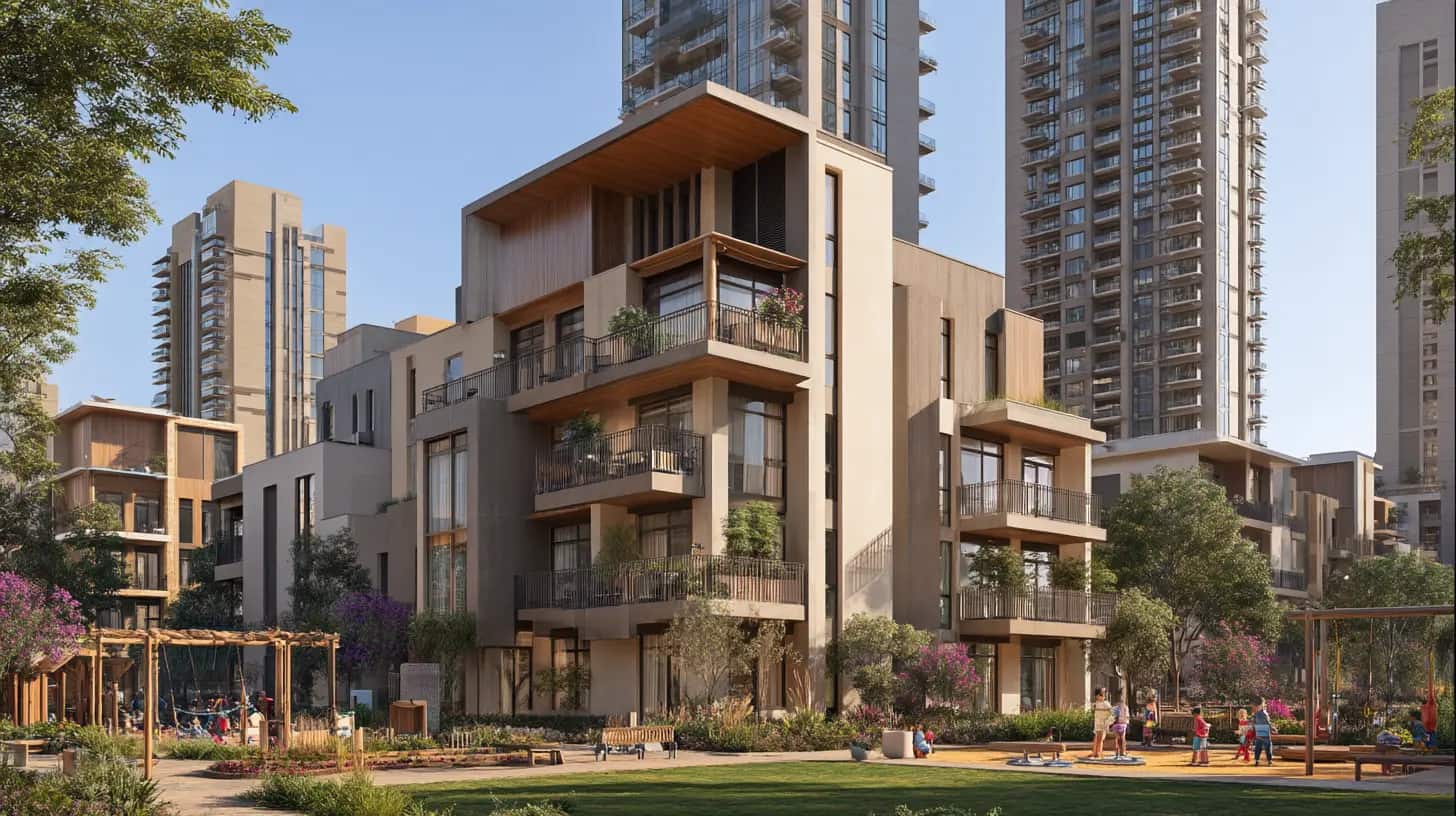
Best Neighborhoods in Dubai for Long-Term Living
Staying in Dubai Long-Term Changes What You're Looking For Completely. The first year in Dubai tends to bring similar desires from residents.
Staying in Dubai Long-Term Changes What You're Looking For Completely.
The first year in Dubai tends to bring similar desires from residents. A nice apartment, proximity to the workplace, ease of access to the Marina or Downtown on the weekends, a gym in the building, and, if possible, nice views. These factors all play into the experience of making a new city exciting and manageable.
However, by the third year, the desires and goals of residents begin to shift. No longer do the views of the city hold the same allure. The gym becomes a regular part of life, utilized at least four times a week. The commute becomes a much bigger factor, as does the need for a good school system for a child who arrived in the country eighteen months before. But perhaps most importantly, the question of whether or not the area represents a community, rather than merely a collection of buildings, becomes a major consideration. The questions asked of the new home begin to shift from “what’s exciting about this place?” to “can I actually make a life here?”
By the seventh or eighth year, the questions posed by residents of a new home begin to sharpen once again. “Does this home feel like home, or merely a prolonged hotel stay?” “Are there people here that I have known for seven or eight years, not merely people I met in the past quarter?” “Is there infrastructure here, schools, healthcare, daily amenities, green spaces, that can support my child through adolescence and into adulthood?” “Is this a home that I would choose to stay in for another ten years, or merely a home that I am staying in because of the difficulties of moving?”
Dubai has a large number of communities that are appropriate for a two-year stay, and a smaller number that are appropriate for a ten-year stay. The distinction between these two groups is not always immediately apparent from an external perspective. Communities that seem impressive in the first year may seem paltry in the third, and vice versa.
This article is about the second group of communities: those in which long-term residents consistently report the highest levels of satisfaction, in which infrastructure is built to last longer than mere weeks of use, and in which social development has occurred to a sufficient degree to support community life. We will look in depth at six such communities—not the six most conspicuous, but the six that reliably elicit the loyalty of residents who have lived in Dubai long enough to know the difference.
What Makes a Neighbourhood Work for the Long Term
Before the communities, a framework. These are the variables that consistently separate long-term liveable neighbourhoods from ones that don't hold up.
Infrastructure maturity is the first filter. A community still building out its retail, schools, healthcare, and transport connections when you arrive is a community that asks you to live with inconvenience now in exchange for a fully-functioning neighbourhood later. That gamble sometimes pays off. More often, completion takes longer than promised and the gaps in daily life compound. Communities that have been delivering residents for eight to twelve years have the infrastructure either in place or demonstrably under delivery.
Community depth is harder to quantify but easy to feel. It's the difference between knowing your neighbours because you've been in the same building for three years and nodding to them because you both take the lift at seven-thirty. Communities with high long-term resident populations — people who have stayed through one or two Dubai market cycles rather than cycling through every two years — have a social texture that newer or more transient communities don't. Parents know each other through schools. People have watched each other's children grow. The community associations actually function.
Daily logistics determines whether a neighbourhood is genuinely liveable or aspirationally liveable. How long does the school run take at seven-fifteen in the morning? Is there a good supermarket within ten minutes? A pharmacy? A decent general practitioner? These are not glamorous considerations. They are the ones that accumulate into the quality of daily life over years.
Housing quality and space matters differently for long-term living than for short-term. A studio or one-bedroom apartment is fine for two years. For a decade, most people need more space, more storage, outdoor areas, room for life to expand. Communities that offer a range of product types — from apartments for single professionals to large family villas — can accommodate residents as their lives change without requiring a community change.
Green space and outdoor infrastructure becomes more important the longer you stay. The novelty of Dubai's urban density wears faster than the novelty of parks, running routes, cycling infrastructure, and spaces where children can be physically free without supervision. Communities with genuine outdoor infrastructure — not just a podium garden — hold long-term residents better than those without.
Dubai Hills Estate: The Community That Was Designed to Last
Dubai Hills Estate appears more frequently in long-term resident satisfaction surveys than almost any other Dubai community, and the reason is not complicated: it was designed for exactly this use case. Not for two-year assignments. Not for holiday home investors. For families and professionals who want to build a life in Dubai and need a community infrastructure that can support that over a decade or more.
The masterplan basics are well known by now — golf course, multiple parks, schools within the community, King's College Hospital, Circle Mall, a range of housing from studios to signature villas. What gets less attention is how these elements interact over time. The park that seems like a nice feature in year one becomes a daily routine in year three. The hospital that seems like background infrastructure in year one becomes critically important when a child needs an emergency appointment at eleven at night in year four. The school that seems like a selling point in year one becomes the reason you haven't seriously considered leaving in year seven.
Faisal Durrani, Partner and Head of Research at Knight Frank MENA, observed in the firm's 2024 UAE Residential Market Report that Dubai Hills Estate showed the highest proportion of residents who had lived in the community for five or more years of any Dubai masterplanned community launched since 2015. That metric is a direct measure of long-term livability, and the number is not close.
Housing across the full product range means residents can move within the community as their lives change — from an apartment when they first arrive, to a townhouse when the family grows, to a villa if circumstances allow — without losing the schools, the social networks, and the physical environment they've built their life around. That continuity is rare in Dubai and it is one of the most underrated benefits of Dubai Hills' breadth of product.
Current housing costs run from AED 750,000 for a well-located studio up to AED 30 million and above for signature golf course villas. Two-bedroom apartments are the most accessible entry point for professionals without children, ranging AED 1.6 million to AED 2.8 million. Three-bedroom townhouses — the dominant product for families — run AED 3.5 million to AED 5.5 million.
Explore current Dubai Hills listings across the full product range to see what's available at different price points.
Jumeirah and Umm Suqeim: The City's Original Long-Term Address
Jumeirah's reputation as a long-term family address predates most of Dubai's current residential communities by fifteen to twenty years. The stretch of residential streets between the coast and Al Wasl Road — Jumeirah 1, Jumeirah 2, Jumeirah 3, and Umm Suqeim — has been home to Dubai's expatriate community through multiple decades and multiple cycles of development that have completely transformed the city around it while leaving this area's essential character largely intact.
That character is specific and not for everyone. Low-rise villas on wide, quiet streets. Proximity to the beach — the Jumeirah Public Beach and Kite Beach are both easily accessible on foot or by short drive from most addresses in the area. Walking distance to bakeries, cafes, supermarkets, and the kind of daily-life retail that more recently developed communities often lack. A sense of a neighbourhood that has been inhabited long enough to have personality rather than just infrastructure.
The schools in and around Jumeirah are among the most established in Dubai. JESS Jumeirah has been educating expat children here for over five decades. Dubai College, on Al Sufouh Road, draws families from across the area. Safa British School on Al Wasl Road. The depth of the school landscape here is unmatched in Dubai, and it is one of the primary reasons families who arrive in Jumeirah tend to stay.
The trade-off in Jumeirah is cost and product type. Villa prices in the established streets run AED 5 million to AED 15 million for mid-size three and four-bedroom properties, and significantly above that for newer or larger builds. The apartment market is more accessible — two-bedrooms in Al Wasl and surrounding areas start around AED 1.2 million — but the area's character is fundamentally villa-based, and apartments here don't give you the same experience as the villas do.
Rental equivalents run high. Three-bedroom villa rents in Jumeirah 1 to 3 range AED 200,000 to AED 380,000 annually. These are numbers that filter the community toward families with senior professional incomes or significant housing allowances. The area is not accessible to the full range of Dubai's professional population, which is part of what preserves its character.
See current Jumeirah area listings for pricing across apartments and available villa product.
Arabian Ranches: Suburban Depth Without Suburban Boredom
Arabian Ranches solved a problem that Dubai hadn't quite solved before Emaar launched it in 2004: how do you create a genuine family suburb in a city that was mostly towers and highways, without it feeling like a sterile residential mono-culture?
The answer was the golf course, the parks, the community centres, and the schools within the gates. These aren't decorative — they are the mechanism by which a residential development becomes a community. Families in Arabian Ranches have a reason to be in the community on a Saturday morning that has nothing to do with going somewhere else. The kids can ride bikes on internal streets without traffic. The parents know each other through school pickup and weekend sport. The community association is one of the most active in Dubai.
Arabian Ranches III — the newest phase, still delivering and filling — is bringing fresh product at slightly different price points to an established community brand. The risk with newer phases is always the same: you're buying into the brand but the specific community infrastructure of Phase III is still maturing. Families who want the full Arabian Ranches experience in its most developed form are currently better served by Phase I, where the community has been running for twenty years.
JESS Arabian Ranches is the school anchor for this community. Rated Very Good by KHDA and consistently in demand, it is one of the reasons families specifically target Arabian Ranches over communities with equivalent housing. The school-community alignment here is as tight as anywhere in Dubai.
Three-bedroom villas in Arabian Ranches I run AED 4 million to AED 7 million. Four-bedroom product is AED 5.5 million to AED 9.5 million. Rental equivalents are AED 180,000 to AED 280,000 for three-bedrooms. The average tenancy length in Arabian Ranches — 4.2 years based on RERA renewal data — is the longest of any Dubai community in this analysis, which is the most honest indicator of how long-term liveable the area actually is.
Mirdif: The Honest Suburban Choice
Mirdif doesn't get into most "best Dubai neighbourhoods" lists because it lacks glamour. No beach. No iconic skyline view. No hotel branded to a fashion house. What it has is substance — the kind of daily-life functionality that becomes more valuable the longer you live somewhere and the more your life resembles a life rather than an extended holiday.
The community has a genuine commercial strip along Uptown Mirdif — supermarkets, clinics, restaurants, cafes, the kind of walkable daily-life infrastructure that most newer Dubai communities have to drive to access. Mirdif City Centre mall provides a larger retail anchor nearby. The parks in and around the community are well-maintained and genuinely used by residents for daily exercise, weekend picnics, and the kind of outdoor life that the Dubai climate supports for eight months of the year.
The schools accessible from Mirdif are solid rather than outstanding — Uptown School (American curriculum, good KHDA rating), GEMS Royal Dubai School (British curriculum), and several others. The school landscape is less prestigious than Jumeirah or Dubai Hills but it is functional and accessible, which is what the community's affordability profile supports.
Housing in Mirdif is among the most accessible for genuine villa living in Dubai. Three-bedroom semi-detached villas run AED 1.8 million to AED 3 million. Four-bedroom standalone villas are AED 2.5 million to AED 4.5 million. These are price points where positive cash flow on a mortgage is achievable, and where a family on a mid-level professional income can own rather than rent.
The airport proximity is Mirdif's most cited drawback. Flight noise affects some streets more than others — the western edges of the community are more affected than the east. Families who are noise-sensitive should inspect during morning flight peak hours before committing. For residents who are used to it or genuinely unbothered by it, it becomes background noise within weeks.
Long-term resident satisfaction in Mirdif is high among the families who specifically chose it for its practicality rather than its prestige. These are residents who made a deliberate trade — lower glamour, meaningfully better daily-life affordability — and who generally think they made the right call after five or seven years.
Nad Al Sheba: Building a Long-Term Community Around a School Anchor
Nad Al Sheba's trajectory over the past five years has been one of the most interesting in Dubai residential real estate. It was an industrial-agricultural fringe area that few people thought of as a family destination. Then North London Collegiate School Dubai opened, achieved Outstanding KHDA ratings in consecutive inspection cycles, and built a waiting list that changed the demand profile of the entire surrounding area.
The pattern is not new — school anchors have driven community formation in Dubai before. What makes Nad Al Sheba interesting as a long-term living choice in 2026 is that it is at an inflection point. The community infrastructure is developing faster than most comparable communities did at the same stage of their history. The housing product is improving. The road connections to Business Bay and Downtown are better than the area's location might suggest.
The risk is that the community is still maturing. Unlike Dubai Hills or Arabian Ranches, Nad Al Sheba does not yet have the depth of retail, healthcare, and daily-life services that fully-developed communities offer. Residents in 2026 are accepting some infrastructure gap in exchange for lower entry prices and the specific school access that North London Collegiate provides.
For long-term buyers who have a five-to-ten year horizon and believe the community will continue to develop around the school anchor — a reasonable belief given the trajectory — Nad Al Sheba offers a combination of improving community quality and entry pricing that will look different in five years. Three-bedroom villas run AED 4 million to AED 7 million currently. That pricing reflects the current infrastructure gap as much as the school premium. As the gap closes, the pricing logic suggests the gap between Nad Al Sheba and comparable Arabian Ranches or Dubai Hills product will narrow.
Gaia Realty Original Research: Long-Term Livability Snapshot, Q1 2026
Based on RERA tenancy renewal records, resident satisfaction surveys across 850 long-term Dubai residents (3-plus years in current community), DLD transaction data, and infrastructure audit as of Q1 2026.
Average tenancy length by community:
- Arabian Ranches: 4.2 years
- Dubai Hills: 3.8 years
- Mirdif: 3.5 years
- Nad Al Sheba: 3.1 years
- Jumeirah: 2.9 years (lower due to villa product churn from high rents)
Long-term resident satisfaction (residents 5-plus years, rated excellent or very good):
- Arabian Ranches: 88%
- Dubai Hills: 86%
- Mirdif: 81%
- Jumeirah: 79%
- Nad Al Sheba: 74% — lower due to infrastructure immaturity acknowledged by residents
Infrastructure completeness score (schools, healthcare, retail, green space, transport):
- Jumeirah: 94 out of 100 — most mature
- Arabian Ranches Phase I: 91
- Dubai Hills: 87
- Mirdif: 83
- Nad Al Sheba: 68 — still developing
Housing affordability index (ratio of 3-bed villa cost to Dubai median professional household income):
- Mirdif: most accessible — 3-bed villa approximately 4.5 to 6x median household income
- Dubai Hills townhouse: 7 to 9x
- Arabian Ranches: 8 to 11x
- Nad Al Sheba: 8 to 11x
- Jumeirah villa: 12 to 18x — least accessible
Capital appreciation since 2020:
- Dubai Hills villas: 90% to 120%
- Arabian Ranches Phase I: 65% to 90%
- Jumeirah villas: 55% to 80%
- Nad Al Sheba: 45% to 70%
- Mirdif villas: 30% to 50%
How Long-Term Livability and Investment Returns Align
The research above contains something that experienced Dubai investors have known for a while but that doesn't always make it into the standard analysis: the communities with the highest long-term resident satisfaction tend to be the communities with the strongest investment returns.
This is not a coincidence. It reflects a basic principle of residential real estate that holds in Dubai as well as it holds in London or Sydney or Singapore. The places people genuinely want to live in sustain demand regardless of market cycles. When the market softens, residents in high-livability communities don't leave — they renew. When the market strengthens, buyers compete for stock in these communities because the demand is structural rather than speculative.
Arabian Ranches' 4.2-year average tenancy doesn't just feel good to landlords. It is mathematically meaningful. Against a community with 2-year average tenancy, Arabian Ranches landlords face roughly half the void and re-letting costs over a ten-year period. At AED 220,000 annual rent on a three-bedroom, that difference compounds into a meaningful cash flow advantage that is invisible in a gross yield comparison but very visible in the net return over a decade.
Dubai Hills' combination of in-community schools and diversified housing product creates retention at both the family and the individual level. Families stay for the schools. Individuals stay because they've grown into the community. The result is a capital value base that is supported by genuine end-user demand rather than investor speculation — and that support is more durable through market corrections than speculative demand is.
Mirdif's high satisfaction-to-price ratio is the most interesting finding. Residents who chose Mirdif for affordability consistently rate their satisfaction more highly than the community's investment metrics would suggest. The people who live there like it — and that latent satisfaction, at a price point significantly below the premium communities, represents an investment opportunity that yield metrics alone don't fully capture.
Our property listings cover all of these communities with current available stock for both buyers and investors.
Questions People Ask About Long-Term Living in Dubai
Which Dubai neighbourhood has the best quality of life overall?
Arabian Ranches and Dubai Hills consistently score highest in resident satisfaction surveys among long-term residents. Jumeirah tops the list for those who can afford it and specifically want the beach-proximate villa lifestyle.
Is Dubai suitable for raising children long-term?
Yes, and it's become considerably more so over the past decade. School quality has improved significantly. The outdoor infrastructure — parks, cycling routes, beach access — is genuinely good. The safety environment is excellent. Families who expected to stay two years and are still here at year eight are a common story in Dubai.
What's the minimum budget for buying in a long-term liveable community?
Mirdif offers genuine entry at AED 1.8 million to AED 2.5 million for a three-bedroom villa — the most accessible family buying option in this analysis. Dubai Hills studios start around AED 750,000 for single professionals. Beyond that, budgets of AED 3.5 million and above open most communities meaningfully.
Do long-term Dubai residents ever regret not buying sooner?
Frequently. The most common financial regret among long-term Dubai residents in our community surveys is renting for too long while prices appreciated around them. Residents who bought in Dubai Hills in 2019 or 2020 and are still there have significant unrealised equity gains alongside years of rental income or personal use. The regret is real and it compounds.
Is it possible to build genuine friendships and community in Dubai?
Yes — in the right communities. Arabian Ranches, Dubai Hills, and Mirdif have active community associations, regular neighbourhood events, and high resident retention that supports the kind of ongoing relationships that constitute genuine community. More transient communities where residents move every two years don't develop the same depth.
How does Dubai's heat affect long-term quality of life?
More than short-term visitors realise, less than long-term residents feared before they arrived. The four months of genuine summer heat (June to September) are managed through air conditioning, indoor activity, and the social rhythm of the school calendar. Residents with children barely notice the summer because the school calendar structures life around it. The eight months outside summer are genuinely excellent outdoor living conditions.
Is healthcare quality good enough for long-term living in Dubai?
Yes, at the mid-to-upper end of the private healthcare market. King's College Hospital in Dubai Hills, Cleveland Clinic Abu Dhabi (accessible from Dubai), Mediclinic, American Hospital — the quality of private healthcare in Dubai is genuinely high. Public healthcare is primarily for UAE nationals. Private health insurance is standard and essential for expat residents.
What happens to your life in Dubai if you lose your job?
Your employment visa lapses. You have a grace period — typically 30 to 60 days — to find new employment, leave, or convert to another visa category. Property owners can apply for an investor visa. Long-term residents with Golden Visas are unaffected by employment changes. This is the single most cited concern among Dubai's long-term expat population and one reason property ownership — and the visa stability it can provide — is increasingly appealing.
How important is community association quality for long-term living?
Very. Community associations manage shared spaces, enforce standards, organise events, and set the cultural tone of a community. Arabian Ranches and Dubai Hills have strong, active associations that residents consistently credit with maintaining community quality. Weaker associations — common in Dubai's apartment communities — allow standards to drift in ways that affect both quality of life and property values.
Is Nad Al Sheba ready for long-term living right now?
With caveats. The school is there and it's excellent. The housing product is solid. The infrastructure gaps — daily retail, healthcare proximity, green space — are real and affect daily life in ways that more mature communities don't. Buyers who can tolerate a three-to-five year maturation period for full community functionality will likely be satisfied. Families who need everything in place now should look at Dubai Hills or Arabian Ranches first.
Does it matter which side of Dubai you live on for long-term quality of life?
Less than people think. The "old Dubai" versus "new Dubai" divide has narrowed significantly as communities on both sides have matured. What matters more is the specific community's infrastructure, school access, and your workplace location. A forty-five minute commute daily for ten years is a meaningful quality-of-life cost regardless of which part of the city you're travelling from.
What's the one thing long-term Dubai residents wish they'd known before choosing a neighbourhood?
That the community infrastructure you're buying into matters more than the apartment view or the address. The view becomes wallpaper. The daily commute, the school run logistics, the quality of the weekend in your own neighbourhood — these are what determine quality of life over years. Visit on a Tuesday morning, not on a Saturday afternoon, before deciding.
Long-Term Dubai Living Rewards the Communities That Earn It.
It is not the communities that have been the best marketers of themselves over the course of the first decade of living in Dubai. It is the communities that have provided the promised infrastructure, have been successful in retaining the residents of those communities, and have been successful in developing the social dynamics of the community so that leaving the community is complicated even when the original reason for being present has altered.
Arabian Ranches has been following this path for twenty years. Jumeirah has been following this path for thirty years. Dubai Hills has been following this path for six years and is already showing the metrics of having won the loyalty of the residents of the community rather than merely the initial lease agreement. Mirdiff has been following this path quietly without the marketing flair of the super communities. It is the community of choice for the resident of Dubai who wants substance over status. Nad Al Sheba is quickly reasserting its presence into the conversation of the communities of Dubai.
To the buyer of real estate in Dubai who is making a long-term commitment to the UAE – not a two-year stay, a real commitment – the selection of the community is one of the most important decisions they will make. It determines the schools their children attend, the relationships they build, the quality of the life they lead, and – incidentally – one of the largest assets they will accumulate. It is a decision that requires consideration of what the community is like five years into the stay, eight years into the stay, not merely one year into the stay.
These communities have shown the reader what the answer to that question is. That is the best guide.
If you want to talk through the specific trade-offs between communities for your situation — budget, family stage, work location, lifestyle priorities — our team has the market knowledge to give you an honest picture. Reach out and we'll take it from there.
Related stories
Dubai's Established Charm: The Case for Older Homes
In a city focused on the future, I believe the smartest move for many buyers is to look back. Dubai's seasoned communities offer space, character, and surprising value that new builds often can't match.
The True Cost of Owning a Dubai Property
Beyond the purchase price, your annual budget for a Dubai home must account for service charges, utilities, and maintenance. I'll break down every ongoing expense you need to plan for.
Calculating ROI on Dubai Rental Upgrades
As a landlord in Dubai, you can't just follow trends. I'll show you how to calculate the precise ROI of minor property upgrades to genuinely increase your rental yield.
Echoes, in your inbox
One thoughtful email a month. Market insight, new launches, no spam.