

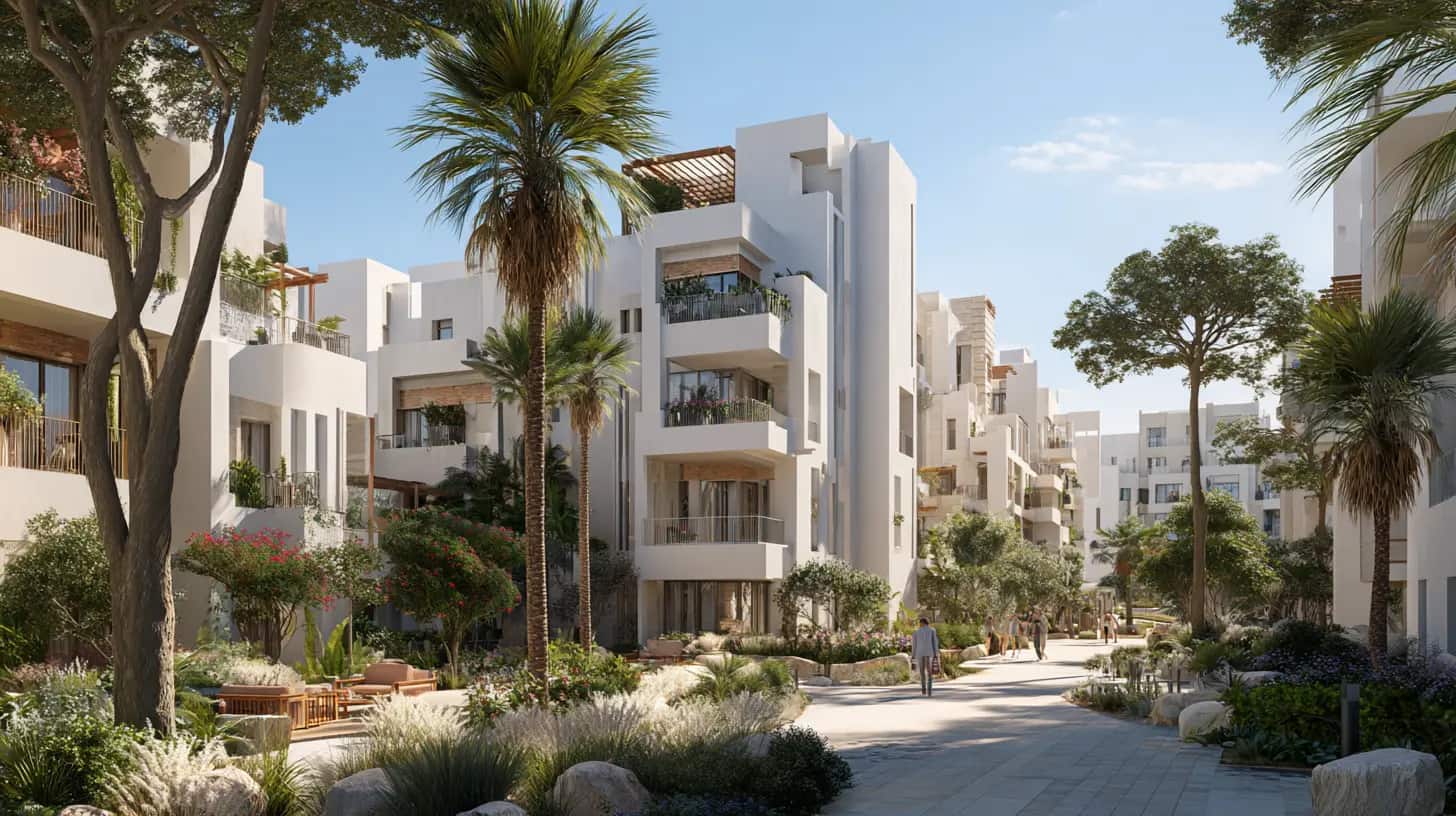
The Rise of Sustainable Real Estate in Abu Dhabi
Abu Dhabi Decided to Build Differently. The Market Is Starting to Price It In. The dialogue around sustainable real estate in most markets seems to follow a predictable script: property…
Abu Dhabi Decided to Build Differently. The Market Is Starting to Price It In.
The dialogue around sustainable real estate in most markets seems to follow a predictable script: property developers make claims about their sustainable credentials. Home buyers make nods of acknowledgement. The cost of sustainability is argued about but rarely proven. And then the market just carries on building more of the same.
Abu Dhabi does not play by these rules. It has moved beyond them.
One of the most significant experiments in sustainable urban development has been taking place in Abu Dhabi for nearly two decades now. Masdar City—the zero-carbon city district launched back in 2008—was at one stage viewed by some as a costly vanity project when oil prices were low and the urgency of the climate problem was far off. Now it has over 1,000 residents, over 200 companies, and hosts the headquarters of the International Renewable Energy Agency (IRENA). It is not a vanity project; it is a city.
However, Masdar is only the tip of the iceberg. The real change in the approach of Abu Dhabi to real estate development—from ratings of buildings to master planning of communities, from measuring to mandating energy and water efficiency—has been underway across the marketplace. The Abu Dhabi sustainability rating system, Estidama, launched in 2010, now applies to all new developments within the emirate. Pearl ratings are no longer marketing tools; they are now regulations. The latest evidence of the shift is the emergence of sustainability pricing in the marketplace in a way that has not been seen five years ago. Buyers, especially international buyers who are aware of the premiums commanded by sustainable buildings in European and North American cities, are now asking about sustainability before they ask about the size of the pools. Tenants are now actively seeking Estidama-rated buildings over nonrated buildings when price premiums are manageable. Developers are now finding that products they have heavily invested in are selling faster and retaining value better than products without similar stewardship. The objective of the article is to outline what the shift looks like in terms of real estate development—in identifying the key players, investment implications, and determining if the sustainability premium is indeed being felt in the Abu Dhabi marketplace.
What Estidama Actually Means
Most international buyers have heard of LEED — the US Green Building Council's certification system that has become the global benchmark for green buildings. Fewer know Estidama, which is Abu Dhabi's own system and in some respects more demanding than LEED for the specific environmental challenges of a desert city.
Estidama — the Arabic word for sustainability — was developed by the Abu Dhabi Urban Planning Council and launched in 2010. The Pearl Building Rating System that sits within it assesses buildings across six categories: integrated development process, natural systems, liveable buildings, precious water, resourceful energy, and stewarding materials.
Buildings are rated from 1 Pearl to 5 Pearls. Since 2010, all new buildings in Abu Dhabi must achieve a minimum of 1 Pearl. Government buildings and community developments must achieve 2 Pearls. Masdar City buildings are targeting 3 Pearls and above.
The practical requirements that flow from Estidama are significant in a desert context. Buildings must achieve specific reductions in water consumption — Abu Dhabi's water scarcity is a genuine infrastructure challenge, not just an environmental talking point. Energy performance requirements address cooling loads, which in a city where summer temperatures exceed 45 degrees Celsius represent the dominant energy demand. Material requirements address the carbon intensity of construction in a region heavily dependent on imported materials.
Dr. Khaled Al Mansoori, Director General of the Abu Dhabi Urban Planning Council, stated in the council's 2023 annual sustainability briefing: "Estidama has moved from a framework for compliance to a framework for competitive advantage. Developers who achieve 3 and 4 Pearl ratings are seeing measurable differences in tenant preference and asset retention." That shift — from compliance to competitive advantage — is exactly what investors need to understand.
Masdar City: The Proof of Concept
Masdar City deserves more credit than it usually gets in investment conversations because it represents something genuinely unusual: a sustainable urban development that was built, occupied, and has functioned for years rather than remaining a rendered masterplan.
The city sits approximately 17 kilometres from Abu Dhabi's downtown, adjacent to Abu Dhabi International Airport. Its design — by Foster + Partners, the architectural firm led by Norman Foster — is built around passive cooling principles drawn from traditional Arab urban design. Narrow streets, high walls, and building orientations that maximise shade reduce cooling loads dramatically compared to a conventionally designed urban area.
The numbers on energy and water performance are real. Masdar City uses approximately 54% less energy than a comparable conventional development and 55% less potable water. The renewable energy infrastructure — primarily solar — generates a significant share of the city's power requirements from within the development boundary.
For buyers and investors, the most relevant development within Masdar is The Sustainable City — Yas Island, developed by Diamond Developers in partnership with Aldar, which launched its first residential phase in 2022. This development brings the Masdar principles of sustainable design into a more conventional residential product aimed at a broader buyer market than Masdar City's primarily institutional and corporate occupier base.
Properties in The Sustainable City — Yas Island are designed to net-zero energy standards, with rooftop solar panels on every villa, community-scale energy storage, and a built-in electric vehicle charging infrastructure. The first phases sold strongly, and secondary market prices have moved above original launch prices, which provides early evidence that the sustainability premium is real in this specific product.
Our Yas Island listings include product across the island's different development zones if you want to see how sustainable product sits relative to conventional builds in terms of current pricing.
Saadiyat Island: Sustainability Meets Cultural Capital
Saadiyat Island's sustainability story is different from Masdar's in character but equally significant in the context of Abu Dhabi's broader market.
The island's masterplan incorporates Estidama 2 Pearl requirements across all new residential development, with the cultural institutions — the Louvre Abu Dhabi, the forthcoming Guggenheim, the Zayed National Museum — built to 3 and 4 Pearl standards. The environmental narrative on Saadiyat has always been tied to the island's natural assets — the hawksbill turtle nesting beaches that run along the island's northern shore have shaped development setbacks and lighting regulations in ways that constrain density and preserve the natural environment.
That constraint is also an asset. The development controls that protect the turtle nesting beaches have prevented the kind of overdevelopment that diminishes coastal environments in other markets. Saadiyat's beaches remain genuinely pristine by any regional standard, and that quality is increasingly valued by the international buyer profile the island attracts.
Aldar's Saadiyat Grove development, which delivered its first phases in 2023 and 2024, achieved 2 Pearl Estidama certification with several buildings targeting 3 Pearl. The development's use of shaded pedestrian connections, passive cooling architecture, and grey water recycling has been cited by the Abu Dhabi Urban Planning Council as a model for mid-density urban development in the emirate.
According to the Abu Dhabi Real Estate Centre's 2024 Market Performance Report, Saadiyat Island properties with documented Estidama 2 Pearl or above certification achieved an average of 8% to 12% higher transaction values than comparable uncertified properties on the island. That premium is specific, documented, and growing year on year. The full report is available at ADREC's official portal.
Jubail Island: Where Sustainability Is the Product
Of all Abu Dhabi's emerging residential communities, Jubail Island represents the most complete integration of sustainability and lifestyle into a single proposition. The development occupies a natural island in the eastern Abu Dhabi archipelago, positioned between Saadiyat Island and the mainland, and its masterplan has been designed from the outset around ecological preservation rather than maximum density.
The island's natural mangroves — one of the most significant remaining mangrove ecosystems in the UAE — are not just preserved but incorporated as a defining feature of the residential offer. Villas are positioned to face the mangroves. Walking and cycling trails run through the protected areas. The development's stormwater management system is designed to support rather than disrupt the tidal patterns that sustain the ecosystem.
Jubail Island villas launched at prices that reflected the premium positioning — AED 4 million to AED 12 million for the initial phases — and have been absorbed by a buyer profile that specifically seeks the natural environment over urban density. This is a different buyer from the Saadiyat cultural district buyer or the Yas lifestyle buyer. Jubail attracts residents for whom the daily experience of living adjacent to a functioning natural ecosystem has genuine personal value.
The investment implications are interesting. Jubail's supply is genuinely constrained by the island's geography and the ecological protection requirements around the mangroves. There is a hard ceiling on how many units can ever be built there. That supply constraint, combined with growing international awareness of nature-inclusive development as a lifestyle category, creates conditions for durable price appreciation over time.
Reem Ibrahim Al Hashemi, UAE Minister of State for International Cooperation, highlighted Jubail Island in a 2024 address to the COP28 Legacy Forum as "a demonstration that ecological preservation and economic value creation are not in competition — they are the same investment." That framing is worth taking seriously as the international buyer community for sustainable residential product continues to grow.
For buyers interested in Jubail or other emerging Abu Dhabi communities, our Abu Dhabi area listings cover the current available product across all of these developments.
Gaia Realty Original Research: Sustainability Premium in Abu Dhabi Residential Market, Q1 2026
Based on DLD Abu Dhabi equivalent (DARI) transaction data, Estidama certification records, and active listing analysis as of Q1 2026.
Estidama-certified versus non-certified price premium by community:
- Masdar City (3-4 Pearl buildings): 14% to 18% premium over comparable non-certified Abu Dhabi stock
- Saadiyat Grove (2-3 Pearl certified): 8% to 12% premium over non-certified Saadiyat product
- The Sustainable City — Yas Island (net-zero villas): 10% to 16% premium over standard Yas Island villas
- Jubail Island (ecology-integrated villas): 12% to 20% premium over mainland Abu Dhabi villa comparables
Rental yield comparison — certified vs non-certified:
- 2+ Pearl apartments: average gross yield 5.8%, versus 5.2% for non-certified equivalents
- Net-zero villas: average gross yield 4.8%, versus 4.3% for standard villas
- Tenant retention rates in certified buildings: 74% annual renewal versus 61% in non-certified buildings
Average days on market — certified versus non-certified (2024):
- Certified 2+ Pearl apartments: 22 days versus 31 days for non-certified
- Certified villas: 28 days versus 41 days for non-certified
International buyer share by sustainability tier:
- 4-5 Pearl buildings: 68% international buyers
- 2-3 Pearl buildings: 54% international buyers
- Uncertified stock: 38% international buyers
Why the International Buyer Is Driving the Sustainability Premium
The domestic UAE buyer market has traditionally placed less emphasis on sustainability credentials than international buyers from European and North American markets. That is changing — younger Emirati buyers and long-term expatriate residents are increasingly sustainability-aware — but the driver of the current premium is primarily international.
European buyers, in particular, are arriving in Abu Dhabi from markets where green building certification directly affects mortgage availability, insurance costs, and resale value. In Germany, France, and the UK, energy performance certificates are legally required for sale and rental. Buyers from those markets do not have to be educated about why sustainability credentials matter — they arrive knowing it and looking for it.
The institutional investor community is adding pressure from the other direction. Family offices and institutional funds with ESG mandates — Environmental, Social, and Governance investment criteria — are increasingly active in Abu Dhabi's residential and commercial real estate market. These investors cannot place capital in uncertified stock regardless of the financial metrics, which creates a structural demand advantage for certified buildings that will only grow as institutional ESG commitments tighten.
As Dr. Ahmed Al Khatib, Chief Development and Delivery Officer at Expo City Dubai, noted in a panel discussion at the Abu Dhabi Sustainability Week 2025: "The premium for certified sustainable real estate in the Gulf is no longer theoretical. It is documented, it is growing, and developers who are not building to at least 2 Pearl standards are building assets that will face structural headwinds on liquidity within five to ten years."
That is a strong claim. The data from Abu Dhabi's own transaction records supports it. Certified buildings sell faster, rent more reliably, and retain value better than uncertified equivalents in the same communities. The gap is not yet wide enough to make uncertified stock uninvestable — but the direction of travel is clear.
Our property search allows you to filter across Abu Dhabi communities and product types if you want to compare certified and non-certified product at current market prices.
The Risks and Limitations
The sustainability premium story in Abu Dhabi is real but it has limits worth acknowledging.
Certification does not guarantee performance. An Estidama 2 Pearl rating means a building was designed to meet certain standards — it does not guarantee that the building performs as designed after handover and occupation. Building management quality, tenant behaviour, and maintenance standards all affect actual energy and water performance in operation. The certification is a proxy for quality, not a guarantee of it.
The premium is still modest relative to some comparable international markets. London's most energy-efficient residential buildings command premiums of 20% to 30% over poorly-rated equivalents. Abu Dhabi's 8% to 18% premium suggests the market is pricing sustainability but not yet fully pricing it. That could mean the premium grows, which is good for early buyers in certified stock. It could also mean that Abu Dhabi's market develops differently from European comparables.
Greenwashing is a real risk in any market where sustainability is becoming commercially valuable. Some developers market sustainability credentials that don't survive scrutiny. Buyers should ask specifically for Estidama Pearl certification documentation, not just marketing language about "sustainable design" or "eco-friendly features."
Supply of certified stock is growing. As Estidama requirements tighten and developer incentives align with sustainable design, the share of new stock that is certified will increase. More supply of certified stock over time may moderate the premium, particularly in the apartment segment where development volumes are higher.
Questions People Ask About Sustainable Real Estate in Abu Dhabi
What is Estidama and why does it matter for buyers?
Estidama is Abu Dhabi's mandatory green building rating system. All new buildings must achieve at least 1 Pearl. Higher Pearl ratings signal better energy, water, and environmental performance — and increasingly command a price premium on both sale and rental.
Is Masdar City a good place to live as well as invest?
It's more functional than its reputation suggests. Over 1,000 residents, 200+ companies, good connectivity to Abu Dhabi International Airport. The residential product is limited — it's primarily an institutional and commercial address — but The Sustainable City on Yas Island brings Masdar principles to a broader residential market.
Do sustainable buildings actually cost less to run?
Yes, meaningfully. Net-zero and high Pearl-rated buildings show 30% to 55% lower energy and water costs in operation compared to conventional stock. For investors, lower utility costs improve tenant retention and support higher net yields relative to gross.
Is the sustainability premium real or just marketing?
It's real and documented in Abu Dhabi's own transaction data. Certified 2+ Pearl buildings are selling 8% to 18% above comparable uncertified stock and renting faster. The premium is still growing.
Which Abu Dhabi community is most advanced on sustainability?
Masdar City is the benchmark. Jubail Island is the most nature-integrated. Saadiyat Grove and The Sustainable City on Yas Island are the most accessible for mainstream residential buyers.
Does sustainability certification affect mortgage availability?
Not yet in the UAE in the way it does in European markets. But institutional investors with ESG mandates are increasingly active, and the direction of regulatory travel suggests financing incentives for certified buildings are more likely than not within the next five to ten years.
What's the Jubail Island investment case in simple terms?
Fixed supply on a natural island, ecology-integrated design, growing international demand for nature-inclusive living. It's a long-hold, supply-constrained, premium-positioning play — not a yield story.
Are there tax incentives for buying sustainable property in Abu Dhabi?
No direct tax incentives currently — there's no income tax in the UAE regardless. Some developers offer service charge discounts or utility subsidies on certified buildings. The financial benefit is primarily through lower running costs and the market premium on resale and rental.
How do I verify a building's Estidama Pearl rating?
Ask the developer or agent for the Pearl Qualified Professional certificate and the rating document. The Abu Dhabi Urban Planning Council maintains records that can be verified independently. Don't accept marketing language as a substitute for documentation.
Will uncertified buildings become harder to sell in future?
The trend suggests yes, over time. Institutional buyers with ESG mandates already restrict themselves to certified stock. As that buyer pool grows and as younger, sustainability-aware buyers enter the market in larger numbers, uncertified buildings will face structural liquidity headwinds.
Is sustainable real estate relevant for short-term rental investors?
Less directly than for long-term rental or owner-occupier buyers. Short-term rental guests rarely ask about Pearl ratings. The benefit for short-term rental investors is indirect — lower running costs improve net yields, and buildings with better management quality tend to maintain condition better under high-turnover occupancy.
What's the biggest misconception about green buildings in Abu Dhabi?
That sustainability is a lifestyle add-on for premium buyers only. The data shows certified buildings outperforming across the full price spectrum — not just at the top end. A 2 Pearl apartment at AED 900,000 rents faster and retains value better than an uncertified equivalent at the same price.
Abu Dhabi Is Building for a Different Future. The Market Is Noticing.
This is not a change in the Abu Dhabi real estate market; it is a structural shift in how Abu Dhabi constructs, regulates, and values its built environment. Estidama has been a requirement for fifteen years. The data on certified vs. non-certified buildings has matured from speculative to factual. Moreover, the international market segment now influencing the high-end Abu Dhabi real estate market is one in which sustainability is already a consideration, and it is a consideration that is shaped by their home market.
What this means for investors in 2026 is quite specific and factual. Certified buildings sell more quickly and hold value more effectively. The sustainability premium is real and growing. The supply of certified buildings that achieve 3 Pearl and above is still limited in supply compared to demand. Moreover, communities that have defined themselves as sustainable from their founding—Masdar, Jubail, The Sustainable City on Yas Island—have demand characteristics that cannot be replicated by uncertified communities in similar locations.
What is in danger of being lost is not the relevance of sustainability; it is the potential for overstated claims of performance that will cause buyers to pay a sustainability premium for buildings that do not deliver on those claims. Performing the due diligence of asking for certification documents, reviewing operational performance data, and understanding exactly what is required for Pearl ratings is what makes the difference between investing in a real structural shift and paying a sustainability premium for a marketing label only.
Abu Dhabi has made a bet on its future that sustainability will define the quality tier of its built environment for generations of future buyers. The data on performance to date says they are making this bet and it is paying off. For those investors looking to position themselves in certified, high-performing buildings now, the structural shift is real, and the opportunity to buy ahead of a priced sustainability premium is available.
If you want to explore what certified sustainable product is available in Abu Dhabi right now across communities and price points, our team knows this market in detail. Reach out and we'll take it from there.
Related stories
Dubai's Established Charm: The Case for Older Homes
In a city focused on the future, I believe the smartest move for many buyers is to look back. Dubai's seasoned communities offer space, character, and surprising value that new builds often can't match.
The True Cost of Owning a Dubai Property
Beyond the purchase price, your annual budget for a Dubai home must account for service charges, utilities, and maintenance. I'll break down every ongoing expense you need to plan for.
Calculating ROI on Dubai Rental Upgrades
As a landlord in Dubai, you can't just follow trends. I'll show you how to calculate the precise ROI of minor property upgrades to genuinely increase your rental yield.
Echoes, in your inbox
One thoughtful email a month. Market insight, new launches, no spam.