

Are Burj Khalifa Apartments a Strong Investment?
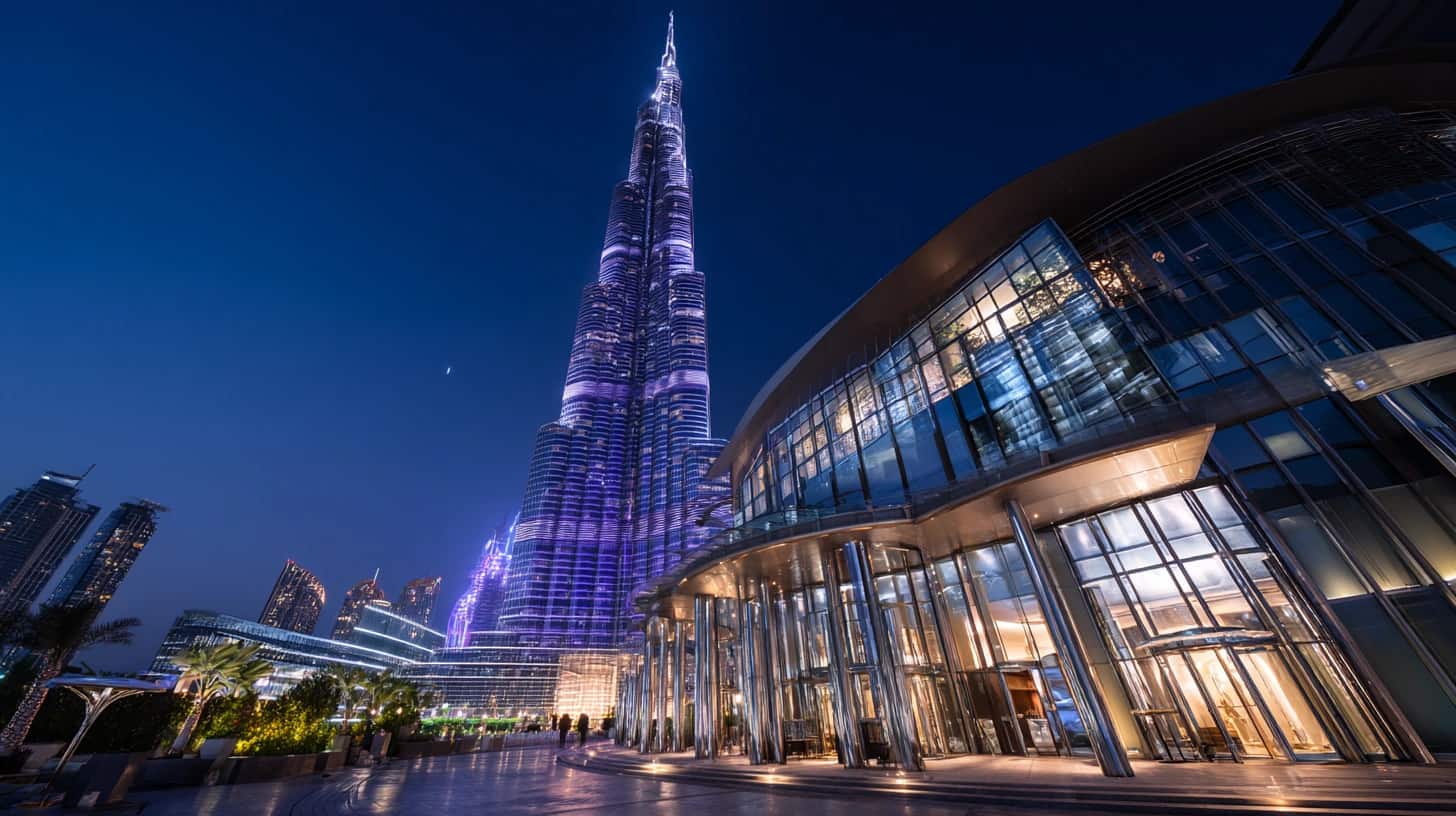
The topic of concern is the Burj Khalifa, considered to be the tallest structure in the world and contributing to the most photographed skyline in the Middle East.
The topic of concern is the Burj Khalifa, considered to be the tallest structure in the world and contributing to the most photographed skyline in the Middle East. It is an address that finds significance in boardroom and dinner table conversations all across the globe. On paper, an apartment in the Burj Khalifa may appear to be an obvious choice from an investment point of view; however, real-world realities point to a far more complex scenario than the obvious. It is this understanding that makes the difference between a shrewd purchase and a costly blunder.
This guide will seek to answer this question definitively: is buying an apartment in the Burj Khalifa a solid investment play in the current market? It will seek to highlight the actual figures and realities of buying an apartment in the Burj Khalifa, including the actual yields, capital growth, and secondary market dynamics that come into play when looking to sell the property. It will also highlight the positives and negatives of investing in the Burj Khalifa from an investment point of view, since no property is suitable for all investors and the Burj Khalifa is no different.
The short version:
The Burj Khalifa can be viewed as a good investment opportunity for those who have a long investment horizon, are comfortable with a low level of net returns, and have a high degree of confidence in the long-run economic prospects of Dubai. Conversely, the Burj Khalifa would be viewed as a less attractive investment opportunity for those who have high required returns to earn from the start, have a short investment horizon, or who are solely concerned with the relative returns compared to mid-tier Dubai alternatives without considering the premium location value.
The detailed analysis section below expands on the above short version. Upon completion of the analysis presented below, readers will have a clear understanding of whether or not the Burj Khalifa should be part of their investment portfolio and under what circumstances its inclusion would be justified.
The Dubai Land Department statistics on property transactions show that Downtown Dubai consistently ranks among the top three areas in terms of transaction volume for property above AED 3 million. Specifically, property in the Burj Khalifa has maintained one of the highest resale floors in Dubai over several market cycles. This is no coincidence; rather, it can be explained by the asset's fundamental structure, which will be discussed in detail below.
What Burj Khalifa Apartments Actually Return
Let's start with the numbers, because that's where most investment conversations should start and where a lot of Burj Khalifa discussions never quite land with enough precision.
Gross rental yields on Burj Khalifa apartments currently sit in the 4.5% to 5.5% range for long-term unfurnished tenancies. A one-bedroom on a mid-range floor renting for AED 150,000 per year against a purchase price of AED 3 million is a gross yield of 5%. A two-bedroom at AED 220,000 per year against AED 5 million is 4.4%. These are real numbers from real transactions, not projected figures.
Net yields tell a different story. Service charges in Burj Khalifa run approximately AED 19 to AED 22 per square foot per year. On a 1,100 square foot one-bedroom, that's AED 20,900 to AED 24,200 annually. Add property management fees of 5% to 8% of annual rent if you're not managing the unit yourself — another AED 7,500 to AED 12,000 per year. Factor in a realistic vacancy allowance of one to two months per year and your net yield on a one-bedroom at current prices is closer to 3% to 3.8%. That's the number you should be working with, not the gross.
For investors running the unit as a short-term rental through a holiday home operator, the income picture changes significantly. Well-positioned Burj Khalifa apartments — high floor, Fountain view, quality furnishing — can achieve AED 250,000 to AED 400,000 in annual short-term rental revenue during good years, driven by Dubai's peak tourist seasons and demand around major events like New Year's Eve when the building's Fountain show is globally broadcast. After holiday home management fees of 15% to 25% and operating costs, net yields on the short-term rental model can reach 4.5% to 6% on current purchase prices. Higher than long-term, but with more operational complexity and more income variability.
Capital appreciation over the past decade has been positive but uneven. Units bought at or near the 2014 to 2015 peak in many cases took until 2021 to recover their purchase price in nominal terms. Units bought during the 2020 market softness have appreciated significantly — some by 40% to 60% in nominal terms between 2020 and 2024. Timing matters in this building as it does everywhere.
Current return summary:
- Gross long-term rental yield: 4.5% to 5.5% depending on floor, view, and unit size
- Net long-term yield after costs: approximately 3% to 3.8%
- Short-term rental gross revenue (well-run): AED 250,000 to AED 400,000 per year for premium units
- Short-term rental net yield: approximately 4.5% to 6% after operator fees and costs
- Capital appreciation (2020 to 2024): approximately 40% to 60% for units bought during market softness
- Capital appreciation (2014 peak to 2021): broadly flat in nominal terms, negative in real terms
- Total return (yield plus appreciation) on a 10-year hold from 2014: approximately 4% to 6% annualised
- Total return (yield plus appreciation) on a 5-year hold from 2020: significantly stronger, 10% to 15% annualised
- Service charge annual cost: AED 19 to AED 22 per sq ft, one of the higher rates in Dubai
- Transaction costs on entry: 4% DLD fee plus 2% agent commission plus admin fees, approximately 6.5% total
The Case For Burj Khalifa as a Long-Term Investment
There are genuine structural reasons why Burj Khalifa holds value better than most Dubai properties through market cycles, and understanding those reasons is important for evaluating it as an investment rather than just reacting to the headline numbers.
Supply is permanently fixed. There are 900 residential units in the building. Emaar will never add more. There is no land available adjacent to the building where a comparable product could be built. In a market where new supply is a constant feature and where developers are always launching the next big thing, Burj Khalifa's fixed supply gives it a scarcity premium that compounds over time rather than eroding.
Global demand is genuinely diversified. Buyers and tenants come from Europe, Asia, the Americas, the Gulf, and beyond. That diversity of demand means the asset is not dependent on any single buyer cohort or economic cycle. When European buyers pull back, Asian buyers often fill the gap. When corporate tenants are scarce, high-net-worth individuals step in. That demand diversification is a genuine buffer against the kind of sharp corrections that affect more narrowly appealing assets.
The management quality is consistently above average. Emaar's ongoing management of the building — maintenance standards, common area quality, facility upkeep — has been notably reliable over the building's sixteen-year history. Building management quality is one of the most underrated factors in long-term property value preservation, and Burj Khalifa scores well on it.
The asset has demonstrated its ability to attract premium tenants. Senior executives, successful entrepreneurs, and high-net-worth individuals choose Burj Khalifa specifically — not just Downtown Dubai. That tenant profile means lower vacancy in downturns, better unit care, and a consistent rental price floor that doesn't exist for more commoditised buildings.
Robert Shiller, Nobel Prize-winning economist and author of Irrational Exuberance, has long argued that the most durable real estate assets are those with genuine scarcity characteristics that cannot be manufactured by developers responding to demand. Burj Khalifa has those characteristics. The building cannot be replicated anywhere in Dubai. The address cannot be invented elsewhere. Those are rare attributes in any property market.
Arguments for Burj Khalifa as an investment:
- Fixed supply of 900 units, no new Burj Khalifa product ever coming to market
- Global buyer and tenant pool provides demand diversification not available for most assets
- Consistently high management standards protect long-term value better than average buildings
- Premium tenant profile reduces vacancy risk and maintains rental price floor through cycles
- Address recognition opens doors in ways that are hard to quantify but easy to observe
- Strong resale liquidity relative to comparable ultra-premium product in Dubai
- Track record of holding value through the 2014 to 2019 downturn better than broader market
- Emaar's continued investment in building maintenance and facility quality
- Downtown Dubai as an area continues to strengthen with ongoing retail and hospitality investment
- UAE long-term economic trajectory supports sustained demand for premium residential product
The Case Against — Where Burj Khalifa Falls Short as an Investment
A balanced assessment requires equal honesty about the limitations, and there are real ones.
The yield story is not compelling for income-focused investors. At 3% to 3.8% net on a long-term tenancy, Burj Khalifa delivers less income per dirham invested than a mid-market Dubai property. A AED 3 million one-bedroom in Burj Khalifa generating AED 90,000 net per year is a weaker income position than a AED 1.5 million two-bedroom in JVC generating AED 90,000 net. For investors who need income now rather than capital growth over a decade, this matters enormously.
Transaction costs are high and they eat into returns. The 4% DLD fee, 2% agent commission, and associated admin fees mean you're starting the investment approximately 6.5% in the hole. On a AED 5 million unit, that's AED 325,000 in transaction costs before you've earned a dirham. To break even on those costs alone at a 3.5% net yield takes nearly two years. Short-horizon investors — anyone planning to sell within three to five years — face a meaningful return headwind from this entry cost.
Service charges are among the highest in Dubai and they're not going down. At AED 20 per square foot per year, a 1,500 square foot two-bedroom costs AED 30,000 per year just in service charges. That's before any management fees, maintenance costs, or furnishing expenses. For investors who didn't model this carefully before buying, the annual cost of ownership comes as an unpleasant surprise.
The building is ageing. Burj Khalifa opened in 2010. The original Emaar fit-out — kitchen, bathrooms, flooring — is now sixteen years old in many units. Buyers acquiring an unrefurbished unit are buying a renovation project. A full kitchen and bathroom upgrade costs AED 150,000 to AED 300,000 depending on scope. That cost needs to be reflected in the purchase price, and not all sellers price accordingly.
Stanley Ho, the late Macau gaming and real estate magnate who built one of the world's most valuable property portfolios over six decades, famously observed that the worst investment is a prestigious asset bought at the wrong price. Burj Khalifa bought at peak market pricing with a renovaton requirement and a short holding horizon is exactly that kind of investment.
Arguments against Burj Khalifa as an investment:
- Net long-term yield of 3% to 3.8% is below mid-market Dubai alternatives by 1.5% to 2%
- High transaction costs of approximately 6.5% require a minimum two to three year hold just to break even
- Service charges among the highest in Dubai at AED 19 to AED 22 per sq ft annually
- Building is sixteen years old, unrefurbished units require significant renovation investment
- Short-term rental model requires active management and income is variable, not guaranteed
- Buying at or near market peaks produces flat or negative real returns as demonstrated in 2014 to 2021 period
- Limited price negotiation room — the brand premium means motivated sellers are uncommon
- Tenanted units create a holding period before you can occupy or re-let on your terms
- Not the right asset for investors who need strong yield from year one
- Currency risk for non-AED investors if AED strength against their home currency changes
How It Compares to Other Downtown Dubai Investments
Understanding Burj Khalifa's investment case requires comparing it honestly against other buildings in and around Downtown Dubai, because the choice isn't just between Burj Khalifa and the rest of Dubai — it's also between Burj Khalifa and its immediate neighbours.
Address Downtown, Opera Grand, and Boulevard Point are all strong buildings in Downtown Dubai with comparable or slightly lower prices than Burj Khalifa, higher gross yields in most cases, and lower service charges. A AED 3 million one-bedroom in Address Downtown might yield 5.5% to 6% gross versus 4.5% to 5% in Burj Khalifa. That yield gap, compounded over a ten-year hold, is meaningful.
What Burj Khalifa has that none of these buildings can match is the address itself. "Burj Khalifa" as a residential address is recognised globally in a way that "Opera Grand" or "Boulevard Point" simply isn't. For investors who believe that address recognition translates to sustained premium pricing and demand — which the evidence supports — that gap justifies the yield compression.
For investors who are more focused on income than on prestige, Business Bay offers one-bedrooms at AED 1.2 million to AED 1.6 million with gross yields of 6% to 7.5% and growing short-term rental demand driven by proximity to Downtown. Three times the yield per dirham, less capital to commit, more operational flexibility. The tradeoff is less capital value stability and a less globally recognised address.
Investment comparison at a glance:
- Burj Khalifa one-bedroom: AED 2.8M to AED 3.5M, gross yield 4.5% to 5%, net yield 3% to 3.8%
- Address Downtown one-bedroom: AED 2.5M to AED 3.2M, gross yield 5.5% to 6%, net yield 4% to 4.8%
- Opera Grand one-bedroom: AED 2M to AED 2.8M, gross yield 5.5% to 6.5%, net yield 4% to 5%
- Business Bay one-bedroom: AED 1.2M to AED 1.6M, gross yield 6% to 7.5%, net yield 4.5% to 6%
- JVC one-bedroom: AED 700K to AED 950K, gross yield 7% to 8.5%, net yield 5.5% to 7%
- Burj Khalifa service charge: AED 19 to AED 22 per sq ft, among highest in Dubai
- Address Downtown service charge: AED 16 to AED 20 per sq ft, slightly lower
- Business Bay service charge: AED 12 to AED 18 per sq ft, varies by building
- Resale liquidity: Burj Khalifa marginally strongest due to global buyer recognition
- Capital value stability through cycles: Burj Khalifa and Address Downtown both strong, JVC more volatile
Who Should Buy and Who Shouldn't
This section is also the most practical, as it gets beyond general analysis to answer the specific question that every individual investor must answer for themselves: is this the right asset for me?
Burj Khalifa is a strong investment opportunity for those who have a minimum ten-year investment horizon and who are comfortable with a net yield of around 3% to 4% while waiting for capital appreciation to occur. The rationale for investing long-term is strong: the asset retains its value, the value of the address increases exponentially, and the demand base is global. Investing for a ten-year period in this building, with income reinvested and a well-timed entry, is a powerful investment opportunity, even with a relatively modest income figure on a yearly basis.
It is logical for a buyer to use a pied-à-terre as both a residence and an investment opportunity. The lifestyle benefits of ownership within Burj Khalifa—access to amenities within the building, views, and address—can't be quantified but are real benefits for those who use the building as a residence. For high net worth individuals who will use the residence on a regular basis, the calculation for investment return is a little different for them than for a pure investment opportunity.
It is sensible for investors who are focused on the short-term rental market, have a well-located, well-furnished product, and have appointed a professional operator. The revenue potential for the high-end Burj Khalifa apartments, assuming they are rented out as holiday homes, is substantially higher than what they would achieve as long-term rentals, and the location is certainly an attraction for the short-term rental market, willing to pay the premium for the experience.
It is not sensible for investors who require high yields, as there are other, more attractive options in terms of yield in Dubai, unequivocally. It is not sensible for investors who have a holding horizon of three to five years, who require an exit strategy that allows them to make back their transactional costs and achieve a return in the near term. It is also not sensible for an investor who is stretching themselves to make the purchase, as the cost of holding the asset is high, and the stress of making the numbers work over the holding period may force the investor to sell at an inopportune time.
If you're evaluating a specific unit in Burj Khalifa and want a straight read on whether the price, condition, and yield stack up, our team works this building regularly and can give you an honest assessment. You can also browse current Downtown Dubai listings to see what's available across the area at different price points. Reach out and we'll take it from there.
Related stories
Dubai's Established Charm: The Case for Older Homes
In a city focused on the future, I believe the smartest move for many buyers is to look back. Dubai's seasoned communities offer space, character, and surprising value that new builds often can't match.
The True Cost of Owning a Dubai Property
Beyond the purchase price, your annual budget for a Dubai home must account for service charges, utilities, and maintenance. I'll break down every ongoing expense you need to plan for.
Calculating ROI on Dubai Rental Upgrades
As a landlord in Dubai, you can't just follow trends. I'll show you how to calculate the precise ROI of minor property upgrades to genuinely increase your rental yield.
Echoes, in your inbox
One thoughtful email a month. Market insight, new launches, no spam.