

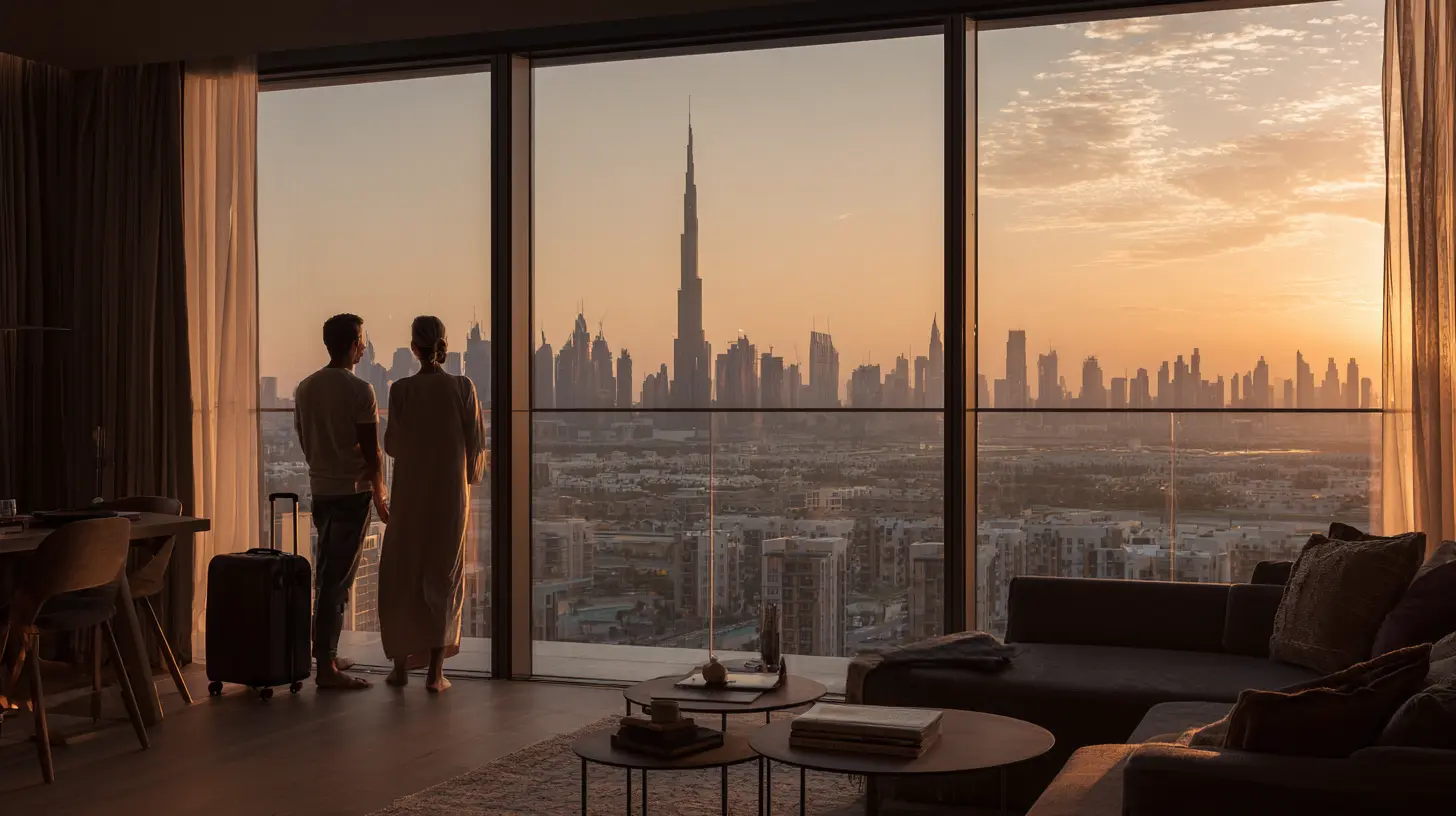
How Tourism Affects Dubai's Short-Term Rental Market
Dubai Has More Tourists Than It's Ever Had. The Rental Market Noticed. The figures are clear: in 2023, Dubai welcomed a record number of 17.15 million international overnight visitors.
Dubai Has More Tourists Than It's Ever Had. The Rental Market Noticed.
The figures are clear: in 2023, Dubai welcomed a record number of 17.15 million international overnight visitors. This achievement positions Dubai alongside Paris, London, and Bangkok as one of the world’s most visited cities. In 2024, Dubai’s growth trend has persisted. The city’s growth rate shows no signs of slowing down.
What does it mean to property investors? Every tourist who enters Dubai needs accommodation. Hotels are a major source of accommodation for tourists. In fact, Dubai has more than 140,000 hotel rooms. And it’s still growing. However, a growing number of tourists, especially those who stay longer or in groups, are increasingly preferring apartments, villas, and townhouses over hotel rooms. They need a kitchen; they need space; they need to stay in Dubai; they need to live in Dubai.
This shift in demand has fueled the development of a short-term rental market in Dubai that was virtually nonexistent fifteen years ago and today, by most measures, ranks among the most vibrant in the world. Online platforms such as Airbnb and Booking.com list tens of thousands of properties in Dubai. A holiday home industry has evolved around them, complete with licensed operators, a DTCM permitting structure, and a property management infrastructure that manages everything from check-in to linen changes.
What remains less understood are the relationships between tourism activity and rental investment performance—where the best investment opportunities are located, how events drive demand spikes, and where the biggest risks reside. The connection between tourism activity and short-term rental investment performance is certainly there, although not necessarily straightforward. Growing tourist numbers do not necessarily equate to increased profits for all holiday home investment licence holders.
This article will explain the mechanics of the opportunity. We will look at how the opportunity is structured, where the best-performing communities are, what the investment opportunity costs in hard numbers, how regulation influences the opportunity, and what experienced operators do differently from new players.
Whether you are a veteran of the market or considering entering the short-term rental investment space in Dubai, the information presented here will be more detailed and interesting than the general tourist activity numbers might suggest.
How Dubai's Holiday Home Market Actually Works
The legal framework for short-term rentals in Dubai is clearer than in many global cities. You need a holiday home licence from the Dubai Department of Economy and Tourism. The licence covers the specific property, not the owner — so each unit needs its own permit. Fees vary by property size and classification but typically run AED 1,520 to AED 3,720 per year for a standard apartment.
Once licensed, you can list on any platform — Airbnb, Booking.com, Vrbo, direct booking channels — and rent to guests on a nightly, weekly, or monthly basis. The system is relatively straightforward by regional standards, and Dubai's enforcement of unlicensed listings has increased significantly since 2020.
The operator model is how most serious investors approach the market. Rather than managing the property themselves, they hand it to a professional holiday home operator — companies like Deluxe Holiday Homes, Frank Porter, Lavish Homes, and several dozen others — who handle listing management, guest communication, cleaning, maintenance, and dynamic pricing. The operator takes a commission of 15% to 25% of gross revenue. In exchange, the investor gets a largely passive income stream without dealing with 2am check-in calls.
The alternative is self-management, which some owners do successfully — particularly if they're based in Dubai and have time to manage it. Self-managed properties can generate better net returns but require genuine time commitment. Most investors who try self-management and then switch to an operator do so because the operational demands exceeded what they expected.
How Pricing Actually Works
Dynamic pricing is central to short-term rental performance. Unlike a long-term tenant paying a fixed monthly rent, short-term rental revenue fluctuates with demand. A well-managed property in Dubai Marina might achieve AED 600 per night in a quiet February week and AED 1,800 per night during the Dubai Shopping Festival. The difference is not random — it's driven by occupancy data, event calendars, competitor pricing, and platform algorithms.
Professional operators run dynamic pricing tools that adjust rates daily based on these inputs. Owner-managed properties that use static pricing leave significant revenue on the table. This is one of the clearest advantages of using an experienced operator — they know when to push prices up and when to cut them to maintain occupancy.
Tourism Patterns and What They Mean for Rental Demand
Dubai's tourism calendar is not uniform across the year, and this shapes short-term rental performance in ways that investors need to understand before they enter the market.
The High Season
October to April is peak season. The weather is the reason — temperatures are pleasant, the beach is usable, and the city's outdoor infrastructure comes into its own. This period also contains most of Dubai's major events: the Dubai Shopping Festival (typically January to February), Art Dubai (March), the Dubai Food Festival, GITEX in October, and the Formula E race. Each of these events drives a demand spike that feeds directly into short-term rental occupancy and nightly rates.
New Year's Eve is the single highest-demand night of the year in most Dubai communities. Properties with views of the fireworks — Downtown, Dubai Marina, the Palm, JBR — command rates that can be three to five times a normal December night. Operators who understand this plan for it months in advance.
The Low Season
May to September is harder. The heat keeps leisure tourists away and the city's international visitor numbers drop significantly. Business travel continues — Dubai's MICE infrastructure runs year-round — but it's not enough to fill the gap left by leisure tourists. Occupancy rates for short-term rentals typically fall to 50% to 65% during the summer months, down from 75% to 90% in peak season.
According to data published by AirDNA in their 2024 Dubai Short-Term Rental Market Report, average daily rates in Dubai drop approximately 35% to 45% between January and July before recovering from October onward. The full analysis is worth reading for anyone modelling annual returns: AirDNA Dubai Market Report 2024.
Savvy operators manage the summer by targeting a different guest profile — longer stays, corporate relocations, staycation packages for UAE residents, and guests from markets where summer is when people travel (parts of Europe, South Asia). It doesn't fully offset the winter numbers, but it meaningfully improves annual yield.
Events as Demand Drivers
Beyond the seasonal pattern, individual events drive demand spikes that experienced operators build into their pricing calendars. The Dubai Airshow (November, odd years) fills hotels and short-term rentals across the city. Concerts at Coca-Cola Arena and the Expo City performance venues create short bursts of very high demand in surrounding communities. The Dubai World Cup horse racing event in March is another consistent demand spike.
Investors who position in communities near major venues — Downtown near the Opera, the Marina near the Expo City transport links, JBR near the beach clubs that host seasonal events — capture these spikes more reliably than investors in less well-connected locations.
Which Communities Perform Best for Short-Term Rentals
Not all of Dubai works equally well as a short-term rental market. Location drives performance more than almost any other variable, and the communities that consistently top the performance tables share a few characteristics: they're close to tourist infrastructure, they have strong brand recognition among international visitors, and they have a mix of leisure and business demand that smooths out seasonal swings.
Downtown Dubai
Downtown is the most recognisable Dubai address globally. The Burj Khalifa and The Dubai Fountain draw visitors who want to be within walking distance of both. Occupancy rates in well-managed Downtown apartments consistently run 80% to 90% in high season and rarely drop below 65% even in summer. Nightly rates are among the highest in the city. The trade-off is high entry prices — you're paying for the address, and that compresses yields relative to more affordable communities.
Dubai Marina and JBR
The Marina and JBR combination is the strongest performing short-term rental cluster in Dubai for most operators. The mix of beach access, marina views, walkable retail and dining, and strong international brand recognition drives year-round demand. Occupancy is consistently high, the guest profile is varied enough to span leisure and business travel, and the product range — from studios to large three-bedrooms — suits multiple booking types.
Properties on Dubai Marina and JBR typically achieve gross annual revenues of AED 80,000 to AED 180,000 for a one-bedroom unit, depending on quality, floor, and operator.
Palm Jumeirah
The Palm works differently from the Marina as a short-term rental market. The villa product — private beach, private pool, frond position — commands nightly rates that make the numbers work despite lower occupancy. A well-positioned frond villa can achieve AED 5,000 to AED 15,000 per night in peak season and still generate strong annual returns even at 50% to 60% occupancy. It's a premium segment with a specific guest profile — families, corporate groups, special occasion bookings.
Palm apartments in the Shoreline and other buildings perform similarly to Marina product, though with slightly higher rates reflecting the Palm premium.
Business Bay and DIFC
These communities attract a different guest profile — primarily business travellers, corporate relocations, and conference attendees. Occupancy is more evenly distributed across the year because the demand is less dependent on leisure tourism. Rates are lower than the Marina or Palm, but the consistency of demand through the summer is better. For investors who want steadier year-round performance over peak-season spikes, Business Bay and DIFC are worth serious consideration.
Gaia Realty Original Research: Short-Term Rental Performance by Community, Q1 2026
Based on operator data, platform analytics, and transactions across Dubai's main short-term rental communities as of Q1 2026.
- Downtown Dubai: avg. occupancy 82%, avg. nightly rate AED 950, gross annual yield 5% to 7%, peak season uplift 40% to 60%
- Dubai Marina (1-bed): avg. occupancy 78%, avg. nightly rate AED 700, gross annual yield 6% to 8%, peak season uplift 35% to 55%
- JBR (1-bed): avg. occupancy 76%, avg. nightly rate AED 750, gross annual yield 6% to 8%, peak season uplift 35% to 50%
- Palm Jumeirah apartments: avg. occupancy 72%, avg. nightly rate AED 1,100, gross annual yield 5% to 6%, strong event-driven spikes
- Palm Jumeirah villas: avg. occupancy 55% to 65%, avg. nightly rate AED 7,000 to AED 12,000, gross annual yield 4% to 6%
- Business Bay (1-bed): avg. occupancy 74%, avg. nightly rate AED 580, gross annual yield 6% to 7.5%, more consistent year-round
- DIFC (1-bed): avg. occupancy 71%, avg. nightly rate AED 620, gross annual yield 5.5% to 7%, corporate demand dominant
- JVC (1-bed): avg. occupancy 68%, avg. nightly rate AED 420, gross annual yield 7% to 9%, budget segment, high volume
Note: gross yields shown before operator commission (15% to 25%) and running costs. Net yields typically 1.5% to 2.5% lower than gross.
What Experienced Operators Do Differently
The gap between a well-run short-term rental and a poorly-run one is larger than most new investors expect. The property itself matters — but how it's managed matters at least as much.
A few things that consistently separate strong performers from average ones:
Professional photography is not optional. Listings with high-quality photography achieve 30% to 40% higher booking rates than comparable properties with average photos, according to Airbnb's own platform data. Guests are making decisions from a screen. The listing is the product until they arrive.
Interior design matters more than most investors want to hear. The Dubai short-term rental market has become visually competitive. A well-designed apartment in a standard building will outperform a poorly-styled apartment in a premium building, regularly. Investors who treat fit-out as a cost to minimise are leaving revenue on the table.
Guest reviews compound. A property with 50 five-star reviews and a Superhost badge on Airbnb or equivalent on Booking.com commands meaningfully higher rates than a new listing with no reviews. The first six months of operating a new property are the hardest. Operators who understand this prioritise early guest experience over early revenue extraction.
Response time and communication quality affect platform ranking. Platforms algorithmically reward hosts who respond quickly and receive positive messages from guests. This is another area where professional operators with dedicated guest communication teams outperform self-managed properties.
As Simon Baker, former CEO of REA Group and a frequent commentator on Asia-Pacific and Gulf property markets, noted in a 2023 interview with Property Portal Watch: "The short-term rental market rewards operators who treat it as a hospitality business, not a passive investment. The investors who understand that distinction consistently outperform those who don't."
The Regulatory Picture: What's Changed and What's Coming
Dubai's approach to short-term rental regulation has evolved considerably since the DTCM holiday home framework was formalised in 2016. The direction of travel has been toward tightening — more enforcement, clearer licensing requirements, and increasingly active monitoring of unlicensed listings.
The 2022 update to the holiday home regulations introduced stricter requirements around safety equipment, insurance, and property standards. Buildings can now opt out of allowing holiday home operations — a provision that some buildings in the Marina and Downtown have used, effectively restricting the short-term rental supply in specific towers.
Owners' association rules vary significantly by building. Before buying a property with the intention of operating it as a holiday home, confirm with the building management that short-term rental is permitted. This is a step many buyers skip and then regret.
The broader regulatory trend in global cities has been toward restricting short-term rentals as housing supply concerns grow. Dubai has not moved in that direction yet — the city's economic interest in supporting tourism infrastructure is significant — but it's worth watching. Any investor building a business plan around short-term rental returns should have a view on what happens to that plan if regulations tighten further.
For a full view of what's currently available for short-term rental investment, our property listings are searchable by community and property type.
Questions People Ask About Dubai Short-Term Rentals
Do I need a licence to run a short-term rental in Dubai?
Yes. A DTCM holiday home licence is required for every unit you operate. Running without one is technically illegal and enforcement has increased. Licences are per property, not per owner.
How much can I realistically earn from a Dubai holiday home?
Depends heavily on location and management quality. A well-run one-bedroom in Dubai Marina or JBR can gross AED 100,000 to AED 150,000 annually. Net of operator fees and costs, expect AED 70,000 to AED 110,000. JVC can deliver stronger net yields at lower absolute numbers.
Is it better to use an operator or self-manage?
For most investors, an operator makes more sense — better occupancy through platform optimisation, professional guest handling, and dynamic pricing. Self-management can net slightly more if you're genuinely hands-on, but the time cost is real.
What happens to my rental income in summer?
It drops. Expect occupancy to fall to 50% to 65% and nightly rates to decrease 35% to 45% from peak levels. Annual yield calculations should account for this — any projection showing flat performance year-round is not realistic.
Can any Dubai property be used as a holiday home?
No. The building's owners' association must permit short-term rentals. Some towers in the Marina, Downtown, and other communities have restricted or banned holiday home operations. Always confirm before buying.
What's the DTCM fee for a holiday home licence?
AED 1,520 to AED 3,720 per year depending on property size and classification. Plus a municipality fee of 10% on gross rental income and a tourism dirham fee charged per guest per night.
Which platform is best — Airbnb or Booking.com?
Both. Most serious operators list on multiple platforms simultaneously to maximise visibility. Airbnb tends to attract leisure travellers. Booking.com pulls more business and last-minute bookings. Diversifying across platforms reduces dependence on any single channel.
How long does it take to get a holiday home licence?
Usually two to four weeks from submitting a complete application. Delays typically come from missing documentation or the building's NOC process.
Is short-term rental income taxed in Dubai?
There's no income tax in the UAE. You will pay the 10% municipality fee on gross rental income and the tourism dirham fee, but there's no personal income tax on what you earn. Confirm your home country's tax treatment of overseas rental income — that's a separate question.
What's the minimum stay requirement in Dubai?
No legal minimum stay. You can rent for one night or one year. In practice, most holiday home operators optimise for stays of three to seven nights as the sweet spot between turnover cost and nightly rate.
Does furniture quality really affect returns?
More than most investors expect. Listings photographed well with quality interiors achieve meaningfully higher booking rates and can command 15% to 25% higher nightly rates than equivalent properties with basic fit-out.
What if a guest damages the property?
Platform security deposits and damage protection policies cover most incidents. Professional operators also maintain their own damage policies and conduct thorough check-in and check-out inspections. Major damage is rare — but having clear processes in place before it happens matters.
Tourism Isn't Slowing Down. The Question Is Whether Your Property Is Positioned to Benefit.
Dubai is one of a select group of cities across the globe where the tourism growth story has consistently been a positive one. Ongoing investment in infrastructure, from airports to hotels, events, and attractions, is an enduring theme. Visitors continue to grow because there are consistently new compelling reasons to visit the city.
From the perspective of short-term rental investors, the macro environment is a genuinely supportive one. Demand for visitor accommodation is structurally growing, the regulatory environment is clearer than in the vast majority of cities around the world, and the yield profile, particularly within the right communities, is a strong one when compared to nearly any other short-term rental investment opportunity around the globe.
While the macro environment is supportive, it is obviously no guarantee of success for individual investments. A property must be placed in the right community, have the right management, be competitively fitted out, and have the correct financial planning to take into account the variability of the short-term nature of the income stream, operator fees, and the fact that net yields are invariably lower than gross yields. Investors who are successful in delivering all of these elements of the investment will create truly outstanding assets. Investors who are not successful tend to be those who expect the tourism figures to somehow drive the investment.
The difference between successful and unsuccessful investors is largely a matter of information. If you are considering investment in short-term rentals in Dubai and would like to discuss the financials of a particular community or property type, we analyze the environment every day. Reach out and we'll take it from there.
Related stories

Dubai's Established Charm: The Case for Older Homes
In a city focused on the future, I believe the smartest move for many buyers is to look back. Dubai's seasoned communities offer space, character, and surprising value that new builds often can't match.
The True Cost of Owning a Dubai Property
Beyond the purchase price, your annual budget for a Dubai home must account for service charges, utilities, and maintenance. I'll break down every ongoing expense you need to plan for.

Calculating ROI on Dubai Rental Upgrades
As a landlord in Dubai, you can't just follow trends. I'll show you how to calculate the precise ROI of minor property upgrades to genuinely increase your rental yield.
Echoes, in your inbox
One thoughtful email a month. Market insight, new launches, no spam.