

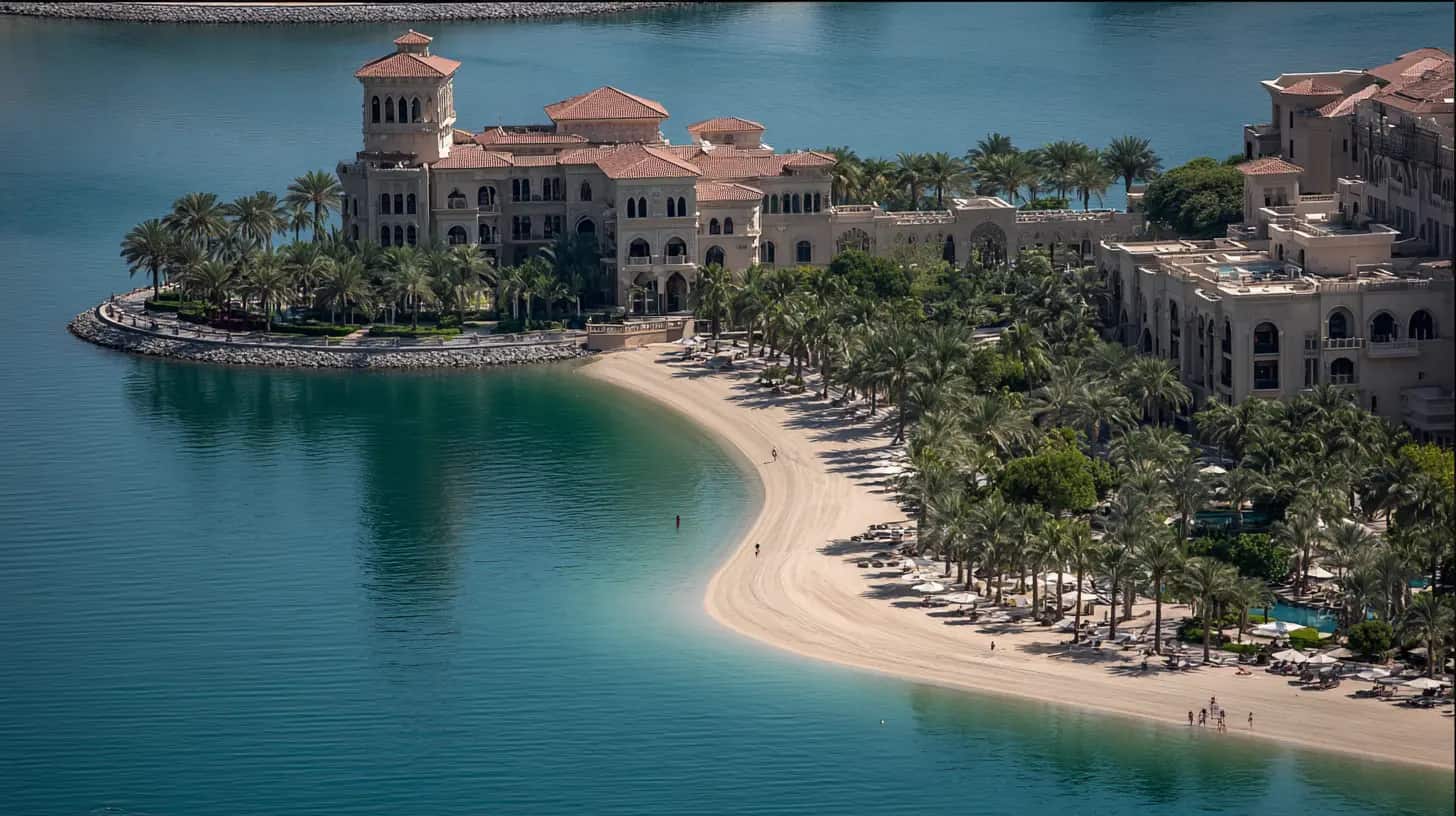
The Evolution of Island Living in Abu Dhabi
Abu Dhabi Was Always an Island. It Just Took a While to Act Like One. Most people miss this point entirely. Abu Dhabi, as a city, as a downtown, as a governmental center, is an island.
Abu Dhabi Was Always an Island. It Just Took a While to Act Like One.
Most people miss this point entirely. Abu Dhabi, as a city, as a downtown, as a governmental center, is an island. The capital of the UAE was built on a foundation of coral and sand in the Arabian Gulf, connected by bridges to the mainland and surrounded by water on three sides. Island living was not invented by Abu Dhabi as a real estate concept.
What has changed is how the emirate has decided to respond to that reality.
For much of Abu Dhabi's recent history, the water was not a major factor at all. It was an afterthought, a thing that happened as the city expanded inward and upward: towers, roads, government buildings, the infrastructure of a capital city that had more pressing concerns than access to water. The corniche was there, and people walked on it, and so forth. But the concept of water as a central feature of how people live, not just as a view from a high floor, is a more recent development.
It arrived in stages, and it continues to arrive. Yas Island was the first indication that Abu Dhabi was thinking differently, that entertainment and destination living could coexist in the same geography. Saadiyat Island offered an alternate vision: culture, museums, beaches, a certain brand of luxury that was less theme park and more a place you would actually want to live in permanently. Al Reem Island filled in another gap, providing a home for a significant portion of the city’s working population in a mid-rise environment surrounded by water on all sides. Al Marjan Island, although technically located in Ras Al Khaimah, nonetheless represents part of the same broader narrative of Gulf Island development, injecting international casino resort investment into the conversation in a manner that was completely unforeseen five years ago.
And there is much more to come. Palm Jebel Ali is re-emerging from a period of dormancy. New districts on and around Abu Dhabi’s existing islands are being master-planned on a scale that suggests the emirate has not yet exhausted its development trajectory—indeed, not by a long shot.
This is the story of how that evolution occurred, what’s behind it, and what it portends for those considering investment in the same. Property analyst Matthew Benson of Knight Frank MENA, who has been tracking Abu Dhabi’s residential market for over a decade, offered a succinct assessment in the company’s 2024 UAE Outlook report: “Abu Dhabi’s island communities are no longer aspirational—they are the market.”
Saadiyat Island: Where Culture Became a Sales Pitch — and Then Delivered
Saadiyat was announced with ambition that made people quietly sceptical. A cultural district anchoring the Louvre Abu Dhabi, the Guggenheim, the Zayed National Museum, and a string of world-class beaches — all on one island, 500 metres from the Abu Dhabi mainland. It sounded like a masterplan slide more than a place that would actually exist.
But Saadiyat delivered. The Louvre Abu Dhabi opened in 2017 and became, genuinely, one of the most visited museums in the region. Designed by Pritzker Prize-winning architect Jean Nouvel, the museum's iconic dome — described by Nouvel himself as "a rain of light" — became one of the UAE's most recognisable structures and a genuine anchor for the island's identity. The Guggenheim Abu Dhabi, designed by Frank Gehry, is now under active construction after years of delays, with an opening projected for 2025 to 2026.
The beaches — particularly Saadiyat Beach — built a reputation among residents and tourists alike as the best in the emirate. The residential product that grew up around the cultural institutions found a buyer profile that no other Abu Dhabi development had quite reached: internationally mobile, culturally motivated, willing to pay for quality in a way that pushed prices toward a tier the market hadn't seen before.
Emaar and Aldar both have significant presence on the island. Aldar's Saadiyat Grove, launched in phases from 2021, brought a mixed-use retail and residential offer into the cultural district. The Grove itself opened in 2024 and has been pulling F&B and lifestyle operators that the broader Abu Dhabi market had been waiting on.
According to the Abu Dhabi Real Estate Centre (ADREC), Saadiyat Island recorded some of the highest average transaction values in the emirate in 2023, with villa sales averaging AED 18.4 million — a figure that would have seemed implausible a decade ago. You can read their full market data at ADREC's official portal.
What the Numbers Look Like
Saadiyat villa prices have moved significantly over the past three years. Beachfront villas on the island transact between AED 15 million and AED 40 million depending on size and position. Apartment product — particularly in the Saadiyat Reserve and Mamsha Al Saadiyat developments — ranges from around AED 2.5 million for a one-bedroom up to AED 8 million for larger units with direct beach access.
Rental yields on Saadiyat sit at roughly 5% to 6% for apartments, lower for villas where the capital value is high and the tenant pool is thinner. The buyer profile skews toward end users rather than investors, which keeps the product premium and vacancy low.
Yas Island: From Formula One to Full-Time Living
Yas Island started as a destination. The Yas Marina Circuit opened in 2009, hosting the Abu Dhabi Grand Prix from its first year. Ferrari World followed. Yas Waterworld. Warner Bros. World. Yas Mall. For a long time, the island's identity was tourism and entertainment — a place you visited, not a place you lived.
That changed gradually and then quite fast.
Residential supply on Yas has grown substantially in the last five years. Aldar's Yas Acres — a gated villa community launched in 2016 — was one of the first serious signals that the island could sustain a permanent population. It sold out. The follow-on projects — Noya, Noya Luma, Water's Edge — each sold strongly, and each one brought a slightly different product to a market that was clearly not saturated.
The appeal is practical as much as it is lifestyle. Yas is close to Abu Dhabi International Airport. The road connections to Dubai are better than almost anywhere else in the emirate. The schools — Yas School and several others — have grown with the residential population. And the entertainment infrastructure means that residents don't need to leave the island for most of what a family needs on a weekend.
Aldar Properties CEO Talal Al Dhiyebi noted in the company's 2023 annual report that Yas Island residential communities had achieved over 95% occupancy across completed units — a number that reflects genuine demand rather than speculative holding.
Investor vs End User: How Yas Splits
Yas attracts a higher proportion of investors relative to end users than Saadiyat does. The yield profile is different — shorter-term rentals are significant here given the tourism infrastructure, and some investors run holiday home strategies on Yas that wouldn't work as well on a more residential island.
Long-term rental yields for standard apartments run around 6% to 7%. For properties operated as short-term rentals in proximity to the circuit or theme parks, gross yields can push higher — but with more management intensity and more volatility around event calendars.
Villa prices on Yas have risen sharply. Yas Acres villas that transacted at AED 2.5 million in 2018 are changing hands at AED 4.5 million to AED 5.5 million today. New off-plan product on the island is launching at prices that would have seemed optimistic three years ago and is selling without much resistance.
Al Reem Island: The City's Workhorse
Al Reem doesn't have the beaches of Saadiyat or the rides of Yas. What it has is density, connectivity, and a price point that absorbs a huge proportion of Abu Dhabi's professional expat population.
The island sits immediately off the northeast coast of Abu Dhabi island — so close that the bridges connecting it feel almost like crossing a wide road rather than moving between islands. That proximity to the city centre is one of Al Reem's defining advantages. You can be in the ADGM financial centre, the Abu Dhabi corniche, or the main government district in fifteen minutes from most parts of the island.
The residential product on Al Reem is predominantly apartments. Mid-rise and high-rise towers line the waterfront and the internal streets. Shams Abu Dhabi — the main development zone — brought several million square feet of residential space to market over roughly fifteen years, and the island's population has grown to the point where it has its own school ecosystem, hospital, and retail infrastructure.
Where Al Reem Sits on Price
One-bedroom apartments on Al Reem transact between AED 700,000 and AED 1.3 million depending on age, finish, and view. Two-bedrooms range from AED 1.1 million to AED 2 million. These are some of the most affordable waterfront-adjacent prices in the Abu Dhabi market, which explains the depth of demand.
Rental yields on Al Reem are among the strongest in Abu Dhabi — consistently 6% to 8% for well-located apartments. The tenant pool is wide: government employees, ADGM professionals, healthcare workers from Cleveland Clinic and the broader Reem hospital cluster, families priced out of Saadiyat. Vacancy is low and has been for several years.
The island is still growing. Several new towers are under construction, and the northern end of Al Reem — historically less developed — is starting to fill in with new product from both Aldar and smaller regional developers.
Al Marjan Island, Ras Al Khaimah: The Wildcard
Technically this is Ras Al Khaimah, not Abu Dhabi. But any serious discussion of UAE island living in 2025 and 2026 has to include Al Marjan, because what's happening there is changing the conversation about what Gulf island development can attract.
Wynn Al Marjan Island — the first legal casino resort in the UAE — broke ground in 2022 and is targeting a 2027 opening. The announcement alone repriced the surrounding area almost immediately. Investors who bought on Al Marjan before the Wynn announcement and sold after it made returns that looked, at the time, almost implausible.
The island itself is a set of four artificial peninsulas extending into the Gulf from the RAK coastline. It's been developing steadily since the mid-2000s, with hotels, apartments, and some villa product. Pre-Wynn, it was a quieter market. Post-Wynn, it became one of the most watched off-plan destinations in the country.
According to JLL's 2024 UAE Real Estate Market Overview, Ras Al Khaimah recorded a 35% year-on-year increase in residential transaction volumes in 2023, driven largely by activity on and around Al Marjan Island. The full report is worth reading if you want the macro picture: JLL UAE Real Estate Overview 2024.
What Wynn Changes
The hospitality infrastructure that follows a casino resort of Wynn's scale is substantial. Convention facilities, multiple restaurants from internationally known operators, retail, entertainment. These aren't just hotel amenities — they're the kind of anchors that make residential real estate more valuable and more liquid.
Investors from markets with experience of integrated resort development — Macau, Singapore, Las Vegas — understand this dynamic well. Many of the buyers who moved quickly on Al Marjan after the Wynn announcement came from exactly those backgrounds.
Current apartment prices on Al Marjan range from AED 800,000 for smaller units up to AED 3 million plus for larger waterfront product in newer launches. Off-plan launches from developers like Emaar, Sobha, and several regional names have been well-absorbed. Yields for completed product currently run around 6% to 8%, with the expectation — not the guarantee — that the Wynn opening will push both capital values and rental demand higher.
If you want to look at what's currently available on Al Marjan Island, the development pipeline is active and there's still off-plan product at prices that will look different in two years.
Gaia Realty Original Research: Island Price Comparison, Q1 2026
We pulled transaction data and current listing prices across the four main island markets covered in this article to give a side-by-side snapshot of where each one sits today. Data is based on completed transactions recorded with relevant land departments and current active listings as of Q1 2026.
- Saadiyat: 1-bed avg. AED 2.5M, 2-bed avg. AED 4.2M, yields 5% to 6%, dominant buyer type — end user
- Yas: 1-bed avg. AED 1.1M, 2-bed avg. AED 1.8M, yields 6% to 7%, dominant buyer type — mixed
- Al Reem: 1-bed avg. AED 850K, 2-bed avg. AED 1.4M, yields 6% to 8%, dominant buyer type — investor and long-term tenant
- Al Marjan (RAK): 1-bed avg. AED 900K, 2-bed avg. AED 1.5M, yields 6% to 8%, dominant buyer type — investor
Villa pricing sits in a different tier entirely:
- Saadiyat beachfront villas: AED 18M to AED 40M
- Yas villas: AED 4.5M to AED 5.5M
- Al Reem and Al Marjan: limited villa stock available
Capital appreciation over the past three years:
- Yas: 70% to 80% on some products — strongest of the four
- Al Marjan: 50% to 60% post-Wynn announcement
- Saadiyat: 20% to 30% steady growth
- Al Reem: 15% to 20% more modest but consistent
What's Still Coming: The Next Chapter of Island Development
The islands covered above are established — they have populations, infrastructure, track records. But Abu Dhabi's island story isn't finished. Not remotely.
Palm Jebel Ali and the Dubai Connection
Palm Jebel Ali sits in Dubai rather than Abu Dhabi, but it belongs in this conversation because it represents the return of large-scale artificial island ambition to the UAE market. Nakheel relaunched the project in 2023 after years of dormancy, and the response — frenzied early sales, prices well above initial estimates — confirmed that appetite for this type of product is very much alive.
For Abu Dhabi, Palm Jebel Ali is a data point. It tells you something about where the ceiling on island villa pricing might be and what buyers will pay for a position they consider exclusive.
Upcoming Abu Dhabi Island Projects
Several new masterplans are in various stages of announcement and early development around Abu Dhabi's existing island geography. Jubail Island — a natural island being developed with an eco-conscious residential offer — has been selling villas to buyers who want space and natural environment over urban density. It's a different pitch from Saadiyat or Yas, and it's finding its audience.
Hudayriyat Island is another one to watch. The leisure and outdoor infrastructure there has developed faster than the residential side, but residential product is coming and the island's position relative to Abu Dhabi city gives it real practical appeal.
For a broader look at what's available across Abu Dhabi right now — ready and off-plan — the range is wider than most people expect when they start looking.
Is Island Living in Abu Dhabi Worth It? The Honest Answer.
The question we get most often from buyers considering Abu Dhabi island property is some version of this: is it actually worth the premium?
The honest answer is: it depends entirely on which island, which product, and what you're trying to do with it.
Saadiyat commands a premium that is justified by a combination of genuine lifestyle quality and a cultural infrastructure that is still growing. The Guggenheim opening will matter. End users who buy on Saadiyat and hold tend to be satisfied — both with the living experience and the capital appreciation. Investors find yields lower but the asset more stable.
Yas makes more sense for investors and for families who genuinely use the lifestyle infrastructure. The yield profile is stronger than Saadiyat. The community is more established than people expect. The price growth over the past five years has been real and reasonably consistent.
Al Reem is the practical choice. Best yields in Abu Dhabi, strong tenant demand, price points that allow entry without a ten-year savings plan. It lacks the cachet of Saadiyat and the excitement of the newer islands — but it works, reliably, for a wide range of buyer profiles.
Al Marjan is a bet, and a calculated one. The Wynn catalyst is real. The risk is timing and delivery. Buyers going in with a five-year horizon and an understanding that casino resort development timelines shift are better positioned than buyers expecting a quick flip.
Our property listings across all of these areas are updated regularly if you want to see what's actually on the market today. And if you'd like to talk through which island makes the most sense for your situation specifically, our team knows these markets in detail. Reach out and we'll take it from there.
Questions People Ask About Abu Dhabi Island Property
Can foreigners buy on all of these islands?
Yes — Saadiyat, Yas, Al Reem, and Al Marjan are all designated freehold areas open to non-UAE nationals. Abu Dhabi expanded its freehold zones significantly from 2019 onward, and the process for foreign buyers is now well-established. Always confirm the freehold status of any specific plot with the developer before you commit.
Is Abu Dhabi property cheaper than Dubai?
Generally yes, but the gap has closed more than most people realise.
What's the service charge situation on island developments?
It varies a lot. Saadiyat beachfront properties can run AED 25 to AED 35 per square foot given the beach and landscaping infrastructure, while Al Reem apartments typically sit at AED 12 to AED 18. Factor this into your yield calculation — it makes a real difference to net returns.
Are there good schools on these islands?
Yas is the strongest on this — several established schools serving a large permanent residential population. Al Reem is well covered too and close enough to the mainland that the options widen further. Al Marjan is still early days for families with school-age kids.
What are the visa benefits of buying property in Abu Dhabi?
Purchases above AED 2 million qualify for a 10-year Golden Visa covering the buyer and immediate family. Between AED 750,000 and AED 2 million, a 2-year investor visa may apply. Confirm current thresholds directly — federal visa rules do change.
How does buying off-plan on these islands work?
You pay the developer in installments during construction — usually 20% to 30% across milestones — with the balance at handover. If you're financing, the bank mortgage typically activates at handover rather than at launch. Capital appreciation between launch and handover has been meaningful on well-located projects, though nothing is guaranteed.
Is Al Marjan Island safe to invest in given its RAK location?
RAK's legal framework is solid and freehold ownership for expats is fully supported. The real question isn't legal safety — it's whether the Wynn resort opens on time and delivers the demand spike investors are pricing in.
Which island has the best rental yields?
Al Reem and Al Marjan are consistently the strongest at 6% to 8% gross for well-located apartments. Yas runs close behind at 6% to 7%, with short-term rental upside near the circuit. Saadiyat is lower at 5% to 6% but attracts a more stable, longer-term tenant profile.
Can I get a mortgage to buy on these islands?
Yes. All four islands are mortgageable. Ready vs off-plan matters more for financing than which island you pick.
How do I know which island suits my budget and goals?
Three questions narrow it down fast: are you buying to live, to rent, or both? What's your real total budget including transaction costs? And what's your hold horizon? Al Reem for value and yield, Yas for families and investors, Saadiyat for quality end users, Al Marjan for higher-risk higher-upside investors.
What are the main transaction costs when buying in Abu Dhabi?
Abu Dhabi's transfer fee is 2% — half of Dubai's 4% DLD fee, which is one of the underrated advantages of buying here. Add agent commission (2%), mortgage registration if applicable (0.25%), valuation fees, and trustee registration. All in, expect 4% to 6% on top of the purchase price.
Is now a good time to buy, or should I wait?
Nobody knows. What we do know is that the market has grown consistently since 2020, foreign buyer infrastructure has never been stronger, and the supply being delivered is being absorbed without obvious overhang. Whether that makes now right for you depends on your finances and your goals — not the market's mood.
Abu Dhabi's Islands Are the Market Now. The Question Is Which One.
Abu Dhabi has spent decades in a process of building a capital city where its waterfront has been a secondary consideration. Well, that process is over. The islands are no longer peripheral; they are the top residential product, they have the greatest investor interest, and they have the greatest demand. Saadiyat Island represents the premium option. Yas Island represents the practical option for families but still has significant investor credentials. Al Reem represents a reliable workhorse that can deliver a decent return, a wide range of tenant interest, and a relatively affordable price point. And Al Marjan represents a calculated risk that has the greatest potential return and the most dynamic elements. They are all correct; they are just correct answers to different questions. The thing that has changed most in the past five years is not the islands; it’s the buyer. It’s the expatriate professional who might have been a tenant all along, sending money home to a foreign country. It’s the international investor who might have been focused on Dubai but is now seriously looking at the numbers in Abu Dhabi. It’s the local buyer who might have always wanted to live on Saadiyat but thought it was out of reach until they found that Al Reem or Yas might give them a way to get into the island living story at a price that they can afford. The supporting infrastructure that underpins all of this—airports, road systems, schools, hospitals, the visa requirements for foreign buyers—is arguably in a state that it’s never been in before. This is not a market that can be outgrown; it’s a market that’s already growing.
Our property listings cover all the islands discussed here, updated regularly with ready and off-plan options. If you want to talk through the numbers on a specific island or development, our team works these markets every day. Reach out and we'll take it from there.
Related stories
Dubai's Established Charm: The Case for Older Homes
In a city focused on the future, I believe the smartest move for many buyers is to look back. Dubai's seasoned communities offer space, character, and surprising value that new builds often can't match.
The True Cost of Owning a Dubai Property
Beyond the purchase price, your annual budget for a Dubai home must account for service charges, utilities, and maintenance. I'll break down every ongoing expense you need to plan for.
Calculating ROI on Dubai Rental Upgrades
As a landlord in Dubai, you can't just follow trends. I'll show you how to calculate the precise ROI of minor property upgrades to genuinely increase your rental yield.
Echoes, in your inbox
One thoughtful email a month. Market insight, new launches, no spam.