

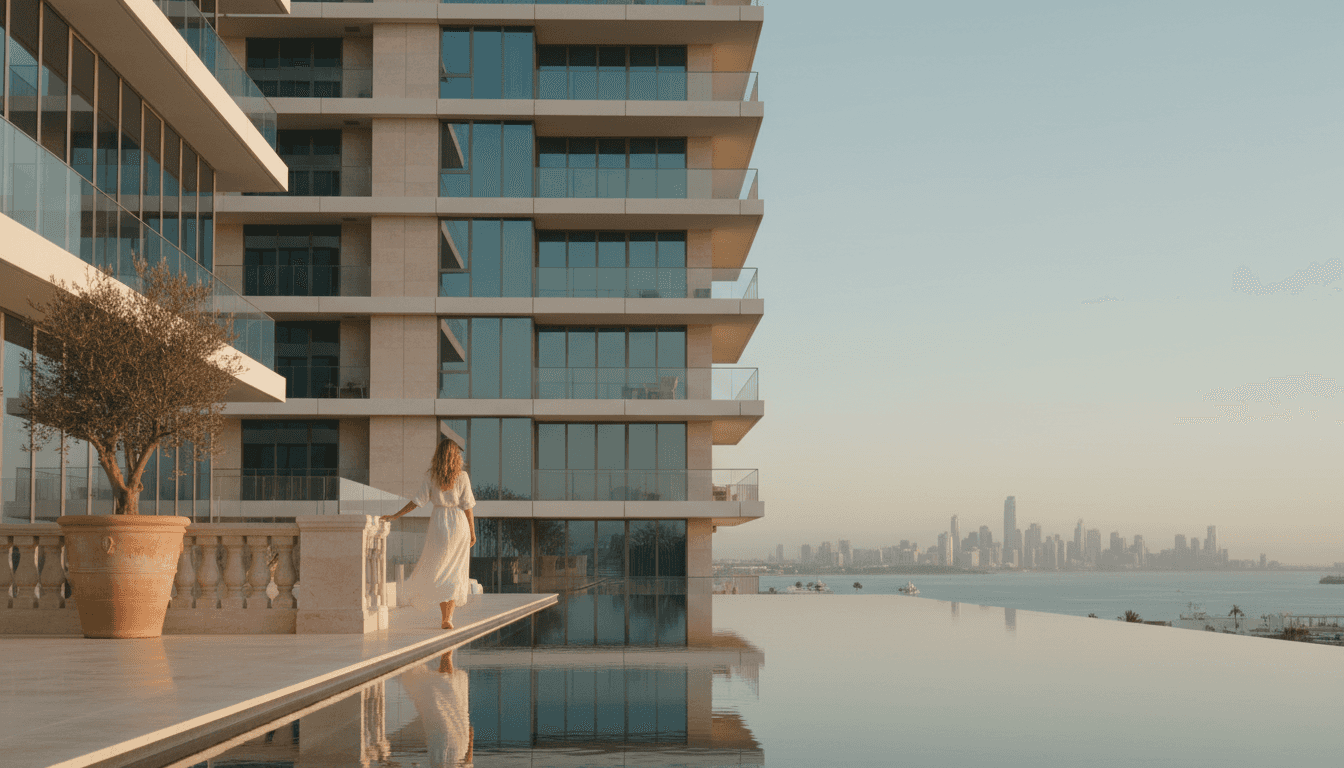
The Corporate Relocation Effect on Dubai Property
I explore how the strategic placement of new business hubs and corporate headquarters is creating powerful, predictable ripples in Dubai's residential property values, rewarding investors who can read the map.

For decades, Dubai's real estate story was written along its coastline and signature arteries. I believe that narrative is shifting. Today, a new, powerful force is reshaping residential values in highly specific micro-markets: the strategic clustering of corporate headquarters and the rise of specialised business hubs.
Here’s what my analysis will cover:
- The fundamental link between commercial hubs and residential demand.
- Case Study 1: The established nexus of DIFC and Business Bay.
- Case Study 2: The growth corridor of JAFZA, Expo City, and Al Maktoum Airport.
- Case Study 3: The emerging science and media cluster.
- The 'Commute Calculus': Why proximity is the new premium.
- Identifying the next wave: Where to look for future growth.
- A cost analysis of investing in a high-potential zone.
- My final verdict on using this trend for investment.
The Job-Housing Nexus: A Fundamental Driver
At its core, the value of a home is tied to its accessibility to life's essentials: schools, healthcare, leisure, and, most critically, employment. In a city as dynamic as Dubai, where thousands of professionals relocate each year, the link between where people work and where they choose to live is a primary engine of the property market. This isn't a novel concept, but its application in Dubai's master-planned environment creates uniquely clear and actionable patterns for investors. The corporate relocation effect isn't just about a single company moving; it's about the gravitational pull of an entire economic zone.
When the government or a master developer designates a large area as a free zone or a specialised business park — think Dubai Internet City, DIFC, or Dubai Science Park, they are planting a seed of future residential demand. This seed doesn't sprout overnight. It begins with the construction of office towers and infrastructure. Then, anchor tenants arrive, followed by SMEs and support services. Each new company brings employees, from executives seeking premium villas to junior staff looking for affordable apartments. This influx creates a concentric circle of demand, with the highest pressure on the residential areas closest to the employment hub.
This is a phenomenon we at Gaia Living have observed repeatedly. The initial demand wave is for properties for rent, as new arrivals need immediate housing. This rental pressure pushes up yields, which in turn attracts buy-to-let investors. As the community matures and employees become more established, many transition from tenants to owners, driving sales demand and capital appreciation. The beauty of Dubai's structured development is that these phases are often visible and predictable. By tracking announcements from government entities and major developers, one can map out the future trajectory of the office market and, by extension, the residential demand that will follow.
It’s important to understand the role of economic zones and their specific incentives. Free zones like JAFZA or DMCC offer 100% foreign ownership, tax exemptions, and streamlined logistics, attracting multinational corporations. Specialised hubs like Dubai Media City or Dubai Design District create ecosystems that draw in entire industries. This clustering of talent and capital is the engine. The residential effect is the consequence. An investor who understands this mechanism can move beyond simply buying in a 'good area' to strategically positioning their assets to capture the spillover from Dubai's economic growth engines.
Case Study 1: The DIFC and Business Bay Blueprint
 Featured project
The most mature example of the job-housing nexus in Dubai is the corridor formed by the Dubai International Financial Centre (DIFC) and Business Bay. When DIFC was established in 2004, it was envisioned as a global financial hub. The master plan wisely included not just office towers but also high-end residential, retail, and hospitality components directly within the free zone's gate. This created an integrated 'live-work-play' environment that became the gold standard. The demand from bankers, lawyers, and consultants who wanted a zero-minute commute drove property values within DIFC itself to a significant premium.
However, not everyone working in DIFC could afford, or wanted, to live within its immediate boundaries. This created a powerful spillover effect into adjacent neighbourhoods. Business Bay, originally conceived as a more purely commercial district, rapidly evolved as developers recognised the immense residential demand from the DIFC workforce. It became the logical address for those who wanted proximity to the financial centre without the DIFC price tag. The result was a surge in the development of residential towers, and today, Business Bay is one of Dubai's most densely populated and dynamic communities, with a property market deeply intertwined with the fortunes of DIFC.
“The value of a home is not just in its four walls, but in the time it saves you getting to the place that pays for them. Proximity to work is a non-negotiable anchor of value in a growing city.”
This relationship demonstrates the core mechanism: a high-density employment node creates tiered residential demand. The first tier is for ultra-prime, convenient housing *within* the hub (e.g., DIFC's own residences). The second tier is for high-quality, slightly more affordable housing in the immediate vicinity (Business Bay, Downtown Dubai). The third tier extends further out to family-oriented communities like those along Sheikh Zayed Road or even into villa communities like Jumeirah for senior executives. An investor tracking this in the mid-2000s could have predicted the immense growth potential of Business Bay long before it became the residential powerhouse it is today. The blueprint is clear: where Grade A offices go, residential demand follows.
Case Study 2: The Southern Growth Corridor
If DIFC and Business Bay are the established model, the southern corridor encompassing Jebel Ali Free Zone (JAFZA), Expo City, and Al Maktoum International Airport is the next chapter being written at a massive scale. For years, JAFZA has been a cornerstone of Dubai's economy — a colossal industrial and logistics hub. However, the residential offerings in its immediate vicinity were historically limited, forcing a large part of its vast workforce into long daily commutes from areas like Dubai Marina or even Sharjah.
This historical gap is now being aggressively filled. The development of Expo City as a permanent, tech-focused hub, combined with the ambitious expansion of Al Maktoum International Airport, has created a new economic centre of gravity in Dubai South. This is no longer just a logistics zone; it is becoming a multifaceted economic city. The government's strategic focus on this area, mandating that all Dubai airport operations eventually shift to Al Maktoum, is a clear signal of long-term commitment. This provides a powerful tailwind for surrounding residential districts. Employee housing near business parks Dubai is no longer a niche; it is a central pillar of the city's urban planning.
Communities like Al Furjan, Discovery Gardens, and The Gardens are the primary beneficiaries of this shift. They offer the ideal combination of proximity and relative affordability for the thousands of employees working in the JAFZA-Expo City corridor. Nakheel, the master developer of these areas, has seen both rental demand and sales values firm up significantly. A new apartment in Al Furjan, which might have been a secondary consideration a decade ago, is now a prime asset because it offers a 10-minute commute to a major employment zone. We are also seeing a new wave of development in Dubai South itself, with projects like Hayat 1 by Nshama, offering townhouses and apartments designed for the families who will power this new economic heartland.
This southern shift is a textbook example of corporate relocations Dubai property impact on a macro scale. It's not just one company, but an entire ecosystem of logistics, aviation, exhibition, and tech firms concentrating in one zone. For an investor, the strategy here is clear. Acquiring assets in well-established, well-managed communities like Al Furjan provides a durable income stream from the existing JAFZA workforce, with the added upside of future appreciation driven by the expansion of Expo City and the airport. This is a long-term play, grounded in one of the most significant infrastructure projects in the world.
Case Study 3: The Science & Media Cluster
A more nascent but equally compelling example is the cluster of business parks along Umm Suqeim Road and Al Qudra Road. This includes Dubai Science Park, Dubai Studio City, and Dubai Production City, which together form a hub for the life sciences, media, entertainment, and creative industries. While smaller in scale than the southern corridor, this cluster's impact on its local residential micro-markets has been profound and serves as a perfect illustration of the corporate relocation effect.
For years, these business parks were somewhat isolated, with limited nearby housing. The nearest options were in distant communities. This changed with the explosive growth of residential projects in areas like Jumeirah Village Circle (JVC), Arjan, and Motor City. Developers, initially drawn by the availability of land, quickly found a ready-made tenant and buyer base among the thousands of professionals working just a few kilometres away. Suddenly, a 5-10 minute commute was possible, and the value proposition of these emerging communities skyrocketed.
Arjan, in particular, has become a prime beneficiary. Its location, directly adjacent to Dubai Science Park, makes it the default choice for many of the pharmaceutical, research, and biotech professionals working there. This has created a robust rental market and has been a key factor in the success of recent off-plan launches in the area. The growth of these communities is a direct response to the office market demand next door. We can see this in the profiles of tenants and buyers; there is a clear and measurable flow of people from the Science Park and Studio City offices into the apartment buildings of Arjan and JVC.
This cluster demonstrates how even specialised, medium-sized business hubs can anchor the growth of entire residential districts. The key is the concentration of high-value employment. The presence of major pharmaceutical companies and research institutions in Dubai Science Park means a workforce with stable, well-paying jobs and a strong desire for convenient, quality housing. This creates a virtuous cycle: employee demand supports rental yields, which encourages investment and further development, leading to better community amenities, which in turn attracts more residents. This is how economic zones property value is transmitted from the commercial to the residential sphere.
The 'Commute Calculus': Why Proximity is the New Premium
As Dubai matures and its population grows, traffic and commute times are becoming increasingly significant factors in lifestyle and housing decisions. What I call the 'commute calculus' — the mental trade-off between housing cost, quality, and travel time to work, is tilting decisively in favour of proximity. A decade ago, a 45-minute commute might have been acceptable in exchange for a larger home or lower rent. Today, for many professionals and families, that trade-off is no longer appealing. Time is a luxury, and a short commute is one of the most valuable amenities a home can offer.
This shift in preference has a direct and measurable impact on property values. A two-bedroom apartment within a 15-minute drive of a major business hub will, all else being equal, command a higher rent and a higher sales price than an identical apartment located 45 minutes away. This premium for proximity is not just a perception; it is a tangible market reality reflected in transaction data. It represents the monetised value of saved time, reduced transport costs, and improved quality of life. This is a fundamental reason why the Dubai business hub residential impact is so powerful.
Consider the practical implications for different demographics: - Young Professionals: For those starting their careers, often working long hours, a short commute is paramount. They are willing to accept smaller living spaces in locations like JVC or Business Bay in exchange for being close to their offices in places like Internet City or DIFC. - Working Parents: For families, the equation is even more critical. A shorter commute means more time with children, less stress, and easier management of school runs and after-school activities. This is why villa communities near major employment zones, such as Arabian Ranches for those working in the southern corridor, command such a strong premium. - Senior Executives: While they can afford to live anywhere, many high-level executives still choose proximity for convenience. A C-suite executive working in DIFC may choose a penthouse in the same district or a villa in nearby Jumeirah to minimise travel time and maximise personal time.
The city's world-class public transport network, managed by the Roads & Transport Authority (RTA), further amplifies this effect. Properties located within walking distance of a Dubai Metro station that directly serves a business hub see an additional value uplift. A property in Al Furjan near the Metro's Route 2020 extension is inherently more valuable because it offers a direct, traffic-free commute to Expo City and the JAFZA area. As the city continues to expand its public transport infrastructure, investors should pay close attention to properties that lie along these strategic transit corridors connecting homes and jobs.
Identifying the Next Wave: Where to Look
For an investor, understanding past trends is useful, but anticipating future ones is where true value is created. The key to using the corporate relocation effect is to identify the next generation of economic hubs before their impact on residential prices is fully realised. This requires a forward-looking analysis of Dubai's economic strategy and infrastructure pipeline. My analysis points to several areas with significant potential.
The most significant is the continued expansion of Dubai South around Al Maktoum International Airport. This is not just an airport; it is a planned aerotropolis, a city in its own right, with logistics, commercial, and residential districts. As more airlines and logistics firms relocate their operations here, the demand for housing will grow exponentially. Investing in the surrounding areas, or even within the new residential districts being launched by developers like Emaar Properties in Emaar South, is a bet on the long-term strategic vision of Dubai itself. It requires patience, as the full build-out will take years, but the potential for capital appreciation is, in my view, immense.
Another area I am watching closely is the expansion eastwards and inland. The development of hubs like Dubai Silicon Oasis and the residential communities growing around it, such as Liwan, shows a clear pattern. As the city grows, new economic clusters are being established away from the traditional coastal strip. We should also consider the 'spillover squared' effect, where the growth of a secondary residential area like JVC, initially fuelled by one business hub, becomes so significant that it starts to attract its own commercial and retail infrastructure, becoming a sub-hub in its own right. This creates a self-sustaining ecosystem and further solidifies property values.
Finally, we must consider cross-emirate connectivity. The ongoing development of the Etihad Rail network will fundamentally change the commute calculus between Dubai and Abu Dhabi. Areas in Dubai that are close to the future rail stations, particularly in the Jabal Ali and Dubai South regions, could see a new wave of demand from professionals who work in one emirate but choose to live in the other. This could open up entirely new investment dynamics, making areas that are currently considered 'fringe' much more central and valuable. The key is to look at the map not as it is today, but as it will be in five to ten years, guided by the government's infrastructure and economic master plans.
Cost Analysis: Investing in a High-Potential Zone
To make this tangible, let's walk through a hypothetical but realistic cost analysis for an investor looking to purchase a property based on this strategy. Let's assume the investor targets a two-bedroom apartment in Jumeirah Village Circle (JVC), chosen for its proximity to the Science Park/Studio City/Production City cluster and its track record of strong rental demand and capital growth.
Let's assume a purchase price of AED 1,800,000 for a quality off-plan or newly completed two-bedroom unit. Here is a breakdown of the typical upfront costs an investor would face. Note that these are based on regulations from the Dubai Land Department (DLD) and standard market practice.
Example Upfront Investment Costs (AED): - Property Purchase Price: 1,800,000 - Down Payment (20% for expatriate mortgage): 360,000 - DLD Transfer Fee (4% of purchase price): 72,000 - DLD Admin Fee: ~4,200 - Mortgage Registration Fee (0.25% of loan amount): 3,600 (on a loan of AED 1,440,000) - Real Estate Agency Fee (2% of purchase price + 5% VAT): 37,800 - Mortgage Arrangement & Valuation Fee: ~8,000 - Trustee Office Fee (for transfer): ~4,200 - Total Upfront Cash Required (approx.): 489,800
This initial cash outlay of nearly AED 490,000 is significant, and it's crucial for investors to have this liquidity. The remaining AED 1,440,000 would be financed via a mortgage. Assuming an interest rate of 4.5% over a 25-year term, the monthly mortgage payment would be approximately AED 7,980. The investor must then consider the potential rental income and ongoing expenses.
Ongoing Financials (Monthly): - Estimated Monthly Rent: AED 10,000 - AED 11,000 (annual rent of AED 120k-132k is realistic for a new 2-bed in JVC) - Monthly Mortgage Payment: ~AED 7,980 - Annual Service Charges: ~AED 22,500 (assuming AED 15/sqft on a 1,500 sqft apartment) - Monthly Service Charge Equivalent: AED 1,875 - Net Monthly Cash Flow (before maintenance): AED 145 (at AED 10,000 rent) to AED 1,145 (at AED 11,000 rent)
As you can see, in the current interest rate environment, a leveraged investment may be cash-flow neutral or slightly positive. The primary return comes from capital appreciation driven by the sustained demand from the nearby business hubs. If the area continues its growth trajectory, the property's value could appreciate by 5-8% annually, adding AED 90,000 - AED 144,000 in equity in the first year alone. This, combined with the gradual paying down of the mortgage principal, is how wealth is built through this strategy. The rental income effectively covers the financing and operational costs while the asset grows in value due to its strategic location.
The most successful property investments in Dubai are often not about finding a hidden gem, but about understanding the publicly available map of economic development and placing your capital just ahead of the demographic wave that is sure to follow.
My Verdict: A Strategy for the Analytical Investor
Having analysed the patterns across Dubai for years, I am convinced that investing based on the corporate relocation effect is one of the most robust and data-driven strategies available in our market. It moves beyond speculation and grounds investment decisions in the clear and measurable fundamentals of urban economics: jobs create demand for homes. In a city that is actively and strategically building its economic future through master-planned business hubs, this link is stronger and more predictable than in almost any other global city.
This strategy is not for the passive investor. It requires active research, a willingness to look beyond the most obvious prime areas, and an understanding of Dubai's long-term economic plans. You need to read the news from the Dubai government, track announcements from major developers like Emaar and Nakheel, and understand the specific industries being nurtured in each economic zone. It is a game of connecting the dots between a press release about a new corporate HQ and the sales prices in an apartment building three kilometres away.
My advice for investors looking to use this strategy is threefold. First, focus on the 'commute-shed' — the areas within a 15-20 minute drive of a major, growing employment hub. Second, prioritise quality and community management. As these areas mature, the best-managed buildings and communities will retain their value better. Third, take a long-term view. While the initial rental demand can be immediate, significant capital appreciation builds over a period of 3-7 years as a business hub reaches full occupancy and maturity. By aligning your investment timeline with the development timeline of a nearby economic zone, you position yourself to capture the full wave of value creation.
At Gaia Living, this is precisely the kind of analytical approach we encourage. We help our clients look past the glossy brochures to understand the underlying drivers of value. The corporate relocation effect is a powerful, ongoing force in the Dubai property market, and for the informed investor, it offers a clear path to building a resilient and profitable real estate portfolio. The map is there for all to see; the key is knowing how to read it.
## Sources - Dubai Land Department (DLD): https://dubailand.gov.ae/ - Roads & Transport Authority (RTA): https://www.rta.ae/ - UAE Government Portal: https://u.ae/
Questions, answered
- How do corporate relocations affect nearby residential property prices in Dubai?
- Corporate relocations create a sudden, concentrated demand for housing from employees. This increased demand for both rentals and sales in close proximity to the new workplace drives up prices and rental yields in surrounding residential communities, a trend known as the corporate relocation effect.
- Which areas in Dubai have benefited most from new business hubs?
- Areas like JVC, Arjan, and Al Furjan have seen significant value appreciation due to their proximity to hubs like Dubai Science Park, Dubai Production City, and the Expo City/JAFZA corridor. Similarly, communities around DIFC and Business Bay continue to command a premium.
- Is it a good strategy to invest in property near a planned business park in Dubai?
- In my view, yes, provided you have a long-term outlook. Investing early, before a business hub is fully operational and announced, can offer the highest potential for capital appreciation as infrastructure develops and employee demand materialises over several years.
- What is the 'commute calculus' and how does it impact property choice?
- The 'commute calculus' is the trade-off employees make between housing cost, quality of life, and travel time to their office. As Dubai grows, a shorter, more convenient commute is becoming a primary factor, increasing the value of homes located within a 15-20 minute drive of major employment centers.
- Are there risks to investing based on the corporate relocation effect?
- Yes, the main risks are timing and execution. If a announced business hub is delayed or fails to attract the projected number of companies and employees, the anticipated residential demand may not materialise as quickly, potentially leading to slower-than-expected rental uptake and price growth.
- How much does it cost to buy a two-bedroom apartment near a business hub like Dubai Science Park?
- In a nearby community like JVC, a two-bedroom apartment might cost around AED 1.8 million. Upfront costs would include a 20% down payment (AED 360,000), 4% DLD fee (AED 72,000), agency fee (AED 36,000 + VAT), and other administrative fees, totalling approximately AED 480,000.

Amara translates DLD transaction data, supply pipelines, and macro signals into clear calls on where Dubai's market is heading. She writes the numbers most brokers only feel.
Related stories
Established vs. New Launch: Where Is Dubai's Enduring Value?
The Dubai property market presents a constant choice between the allure of new launches and the stability of established communities. I'll break down where true long-term value is found for investors and end-users.
Desert's Edge Serenity: Space and Calm in Dubai
The new definition of Dubai luxury isn't a penthouse view, but the space, quiet, and privacy found in its tranquil desert-edge communities. I'll explore where to find this serenity and what it truly costs.
Dubai's Most Walkable Villa Communities
For families seeking a life less reliant on the car, certain Dubai villa communities are pioneering pedestrian-friendly design. We explore the best options where you can walk to schools, shops, and parks, creating a true neighbourhood feel.
Echoes, in your inbox
One thoughtful email a month. Market insight, new launches, no spam.