

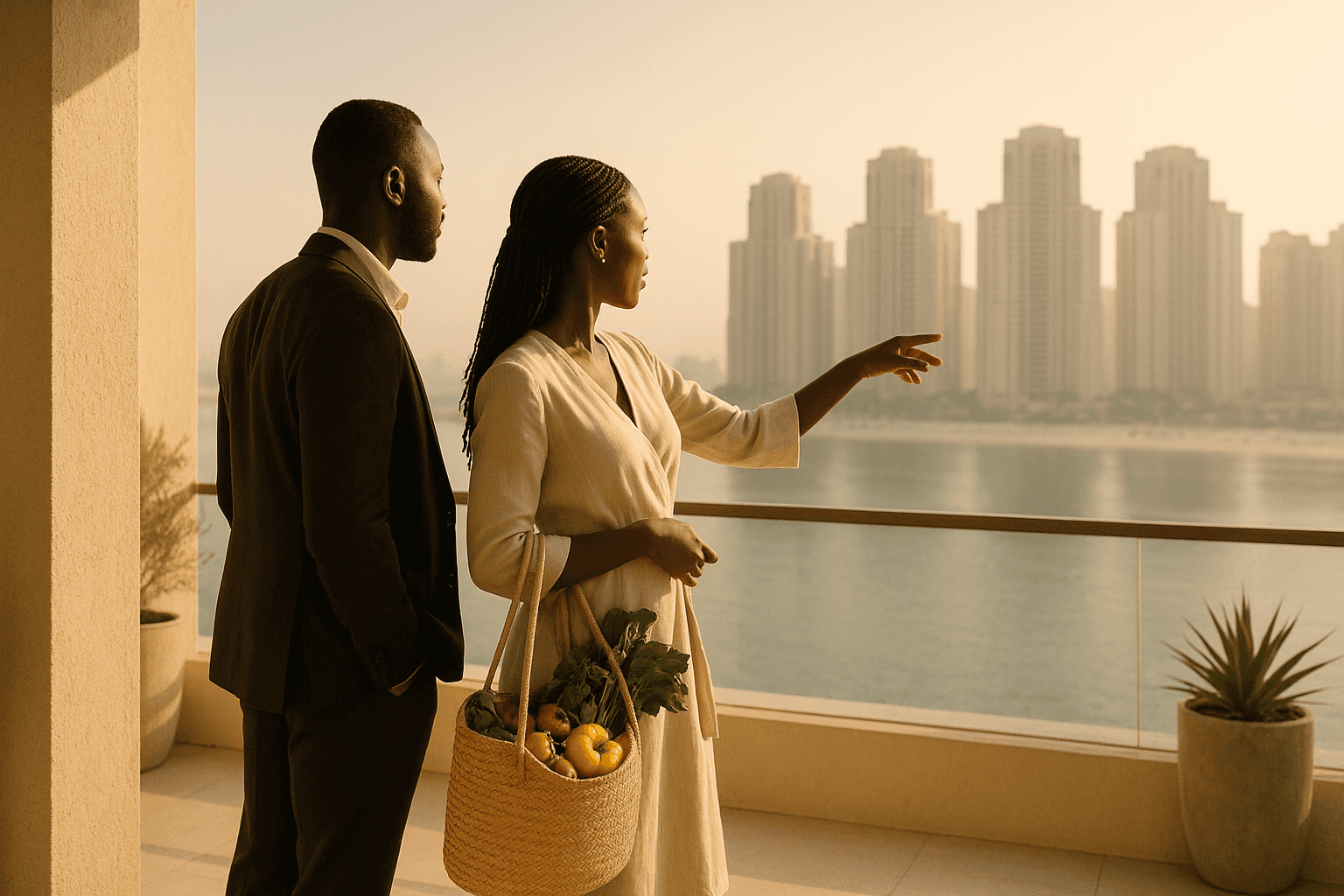
Souk-to-Table: A Guide to Dubai's Culinary Neighbourhoods
Discover the Dubai neighbourhoods that offer an authentic souk-to-table lifestyle. I explore communities where proximity to fresh markets and local produce shapes daily life and property value.

For many, the true heart of a city isn’t found in its skyscrapers, but in its markets. I believe the daily ritual of selecting fresh ingredients, the chatter of vendors, and the vibrant colours of local produce form the bedrock of an authentic culinary lifestyle Dubai residents increasingly seek.
In this guide, I want to take you beyond the hypermarket and explore what I call ‘souk-to-table living’. We'll look at:
- The timeless appeal of Old Dubai's market districts and their residential reality.
- The rise of the modern farmers' market and the communities that embrace them.
- How communities like Al Barari are redefining 'local produce homes Dubai' with their own green initiatives.
- The surprising foodie enclaves that offer both convenience and culinary discovery.
- A realistic look at the property costs, premiums, and trade-offs in these neighbourhoods.
- My personal verdict on where you can find the most satisfying blend of home and plate.
The Original Hub: Deira and the Waterfront Market
When we talk about Dubai fresh markets living, we must start at the source. For decades, the epicentre of food in this city wasn't a celebrity chef's restaurant; it was the bustling, chaotic, and utterly magnificent Deira Fish Market. Today, its successor, the Waterfront Market, carries that torch. It’s a state-of-the-art facility on the Deira Corniche, but the soul is the same. The call of the fishermen, the sheer variety of seafood from the Arabian Gulf and beyond, and the sprawling fruit and vegetable hall next door — this is the raw, unfiltered essence of Dubai's food supply chain.
Living with this on your doorstep is a unique proposition. The neighbourhoods fanning out from the market — Deira, Al Rigga, parts of Bur Dubai across the Creek, offer a living experience that is worlds away from the glossy brochures of new developments. This is not a manicured 'lifestyle community'. This is a vibrant, working part of the city. The residential options here are predominantly older apartment buildings. You won't find the infinity pools and resident lounges of Dubai Marina, but you will find spacious layouts, often at a much lower rental price point. It’s a trade-off I’ve seen many clients, particularly chefs and serious food enthusiasts, willingly make.
From a property perspective, Deira and Bur Dubai are primarily rental markets for expatriates. The building stock is older, and while the Dubai Land Department (DLD) has designated some freehold areas in other parts of the city, much of Old Dubai remains for UAE and GCC nationals. For a foreign buyer, this means direct ownership options are limited compared to newer districts. However, for those looking to immerse themselves in the city’s most authentic culinary scene without the commitment of buying, the value proposition is immense. You can find a large two-bedroom apartment for an annual rent that might only secure a small studio in a more fashionable, newer district. The trade-off is in amenities and modernity, but the gain is a direct line to the city's culinary heartbeat.
Jumeirah and Umm Suqeim: Coastal Living and Artisanal Finds
 Featured project
Moving west along the coast, we enter a different world entirely. Jumeirah and Umm Suqeim represent a more serene, affluent version of souk-to-table living. This isn't about the raw, high-volume energy of the Waterfront Market. Instead, it’s a more curated, artisanal experience. The defining feature here isn’t one central market, but a constellation of smaller, high-quality purveyors. The iconic Jumeirah Fish Market, tucked away behind the beach road, offers a cleaner, more intimate version of the Deira experience. Residents stroll down in the morning to see the day's catch and have it prepared to their liking.
Beyond the fish market, this stretch of coastline is dotted with specialty food shops that have become institutions. You have bakeries milling their own flour, butcher shops that know their customers by name, and small, independent grocers importing specialty items you simply won't find in the large supermarket chains. This is where the term 'local' takes on a different meaning. It's not just about proximity to a market; it's about being part of a community where food is a central topic of conversation. The lifestyle here is less about a weekly bulk shop and more about daily trips to pick up specific, high-quality ingredients for that evening’s meal.
Property in Jumeirah and Umm Suqeim reflects this premium lifestyle. We're talking primarily about villas, ranging from older, charming single-storey homes to sprawling, modern architectural statements. Prices are significant. A standard three-bedroom villa can command a sale price well into the millions of dirhams, and rentals follow suit. In my experience, buyers here are not just purchasing a home; they are buying into a very specific, low-rise, beach-proximate lifestyle. They value walkability, the sense of community, and the access to these small, independent businesses. While there are some freehold apartment options, particularly in newer developments like those around La Mer, the area's soul is in its villas. The premium you pay is for space, privacy, and the undeniable charm of living in one of Dubai’s most established and desirable residential addresses.
The Rise of the Farmers' Market: Al Barari and Sobha Hartland
The concept of local produce homes Dubai has evolved dramatically over the past decade. It's no longer just about being near a traditional souk. A new breed of master-planned community has taken the idea of 'green living' and made it a core pillar of their identity. The two standout examples, in my opinion, are Al Barari and Sobha Hartland and Sobha Hartland II. These communities have moved beyond simple landscaping and have integrated food production and wellness into their very DNA.
Al Barari is perhaps the most literal interpretation of this ethos. Its name translates to 'the wilderness', and it lives up to it with a density of greenery unheard of in a desert city. But the real game-changer is The Farm, its on-site restaurant and hub, which champions fresh, locally sourced ingredients. Al Barari also has its own allotments and a thriving community feel that revolves around wellness. Living here means your children might learn about growing vegetables as a standard part of their community life. The Ripe Market, a weekend staple for many Dubai residents, often found a home here, cementing the link between the community and the broader organic food movement. Property in Al Barari is at the ultra-luxury end of the market — sprawling villas and high-end apartments that command a premium for this unique, green-infused environment.
Sobha Hartland, located in Meydan closer to the city's core, offers a different but equally compelling vision. While not as overtly 'wild' as Al Barari, its master plan dedicates a huge percentage of its area to green space. Developer Sobha has consistently emphasised a lifestyle of tranquillity and nature. The community hosts its own farmers' market events and its proximity to the new Ripe Market location at the Dubai Police Academy makes it an ideal base. Residents here enjoy the benefits of a modern, centrally located development without sacrificing the connection to green space and fresh food. The property mix includes apartments, townhouses, and villas, making it accessible to a wider range of budgets than Al Barari. For many families we work with at Gaia Living, the combination of excellent schools, green parks, and this fresh-food focus makes Sobha Hartland a top contender.
“In Dubai's property market, lifestyle is the ultimate amenity. Proximity to a good fish market or a weekend farmers' market can be a more powerful driver of value for the right buyer than an extra bedroom or a marble-clad lobby.”
The Walkability Factor: Weekend Markets and Urban Hubs
An authentic culinary lifestyle isn't just about the food itself; it's about the experience surrounding it. This is where walkability and community atmosphere play a crucial role. The success of The Ripe Market has spawned a city-wide appreciation for weekend outdoor markets, and certain neighbourhoods are perfectly positioned to capitalize on this.
Take the communities surrounding the Dubai Police Academy Park, the current home of The Ripe Market’s flagship event. Areas like Al Sufouh, The Greens, and Barsha Heights suddenly have one of the city's best weekly sources of fresh, organic produce, artisanal breads, and local honey within a short drive or even a long walk. This has a tangible impact on the weekend lifestyle of residents. I've spoken to clients who specifically chose an apartment in The Greens for its community feel and now find their Saturdays transformed by a morning stroll to the market.
This principle extends to other urban hubs. A development like Dubai Hills Estate by Emaar Properties, with its central park and community-focused events, is a natural host for pop-up markets and food festivals. Residents who buy here are investing in a master plan that prioritizes this kind of active, outdoor community life. Similarly, areas like Jumeirah Lake Towers (JLT) and Dubai Marina, while known for their high-rise living, have fostered a vibrant ground-level culture of cafes, small grocers, and regular community markets. While you might not find a sprawling souk, the ability to walk out of your building and discover a new bakery or a stall selling fresh produce is a powerful lifestyle draw. For many, this constant, low-level culinary discovery is more appealing than a once-a-week trip to a mega-market.
From a property standpoint, this 'walkability premium' is real. In our experience at Gaia Living, apartments in JLT clusters with good ground-level retail and easy access to the park consistently hold their value better than those in more isolated parts of the community. Buyers are willing to pay for the convenience and atmosphere of a neighbourhood where daily needs and weekend pleasures are just an elevator ride and a short walk away.
The Cost of Culinary Proximity: A Realistic Breakdown
It's easy to be romantic about the souk-to-table lifestyle, but as a property advisor, it's my job to ground that dream in financial reality. The premium for living in these culinary-focused neighbourhoods is tangible and needs to be factored into any purchase decision. Let's look at what it actually costs.
Imagine you're considering a two-bedroom apartment in a modern community known for its farmers' markets, like Sobha Hartland and Sobha Hartland II. A high-quality unit might be listed at AED 2,500,000. The sticker price is just the beginning. Here is a more realistic breakdown of the upfront costs you'll face, based on Dubai Land Department (DLD) regulations:
Sample Purchase Cost Breakdown (AED 2.5M Property): * Purchase Price: AED 2,500,000 * DLD Transfer Fee (4%): AED 100,000 * DLD Admin Fee: approx. AED 4,200 * Property Registration Fee: approx. AED 4,200 * Real Estate Agency Fee (2% + VAT): AED 52,500 * Mortgage Arrangement Fee (if applicable, up to 1%): AED 25,000 * Mortgage Registration Fee (0.25% of loan): approx. AED 5,000 (on a typical 80% loan) * NOC (No Objection Certificate) Fee: AED 500 - AED 5,000 (varies by developer) * Initial Service Charge Deposit: Varies, but budget for 3-6 months upfront.
Your initial cash outlay isn't just the 20-25% down payment required for a mortgage; it's that amount plus around 6-7% of the purchase price in fees. For our AED 2.5M apartment, that’s a down payment of AED 500,000 plus roughly AED 160,000 in fees — a total of AED 660,000 in cash required just to get the keys.
Now, let's contrast this with a rental in an older, more 'authentic' area like Deira. A spacious two-bedroom apartment near the Waterfront Market might rent for AED 80,000 per year. The financial barrier to entry is dramatically lower, but you sacrifice modern amenities and the potential for capital appreciation. On the other hand, a villa in Jumeirah offering that coastal, artisanal lifestyle could easily be AED 8,000,000. The 4% DLD fee alone would be AED 320,000. The choice depends entirely on your priorities and your budget. Are you buying a home, or are you buying a lifestyle? In these neighbourhoods, the two are inextricably linked.
The Off-Plan Connection: Future Foodie Havens
The discussion about souk proximity property Dubai isn't just about established neighbourhoods. Some of the most exciting developments are happening in the off-plan launches sector. Developers have recognised the powerful appeal of the 'farm-to-table' narrative and are embedding it into their master plans from day one.
Projects in emerging areas are designing community gardens, spaces for farmers' markets, and commercial zones dedicated to artisanal food retailers. When we at Gaia Living review a new launch, these lifestyle elements are something we scrutinize closely. It's one thing to have a render of a leafy park; it's another to have a credible, funded plan for community allotments, educational programs, and partnerships with operators like Ripe Market. Developers like Emaar Properties and Nakheel have become masters at this, creating entire ecosystems where the lifestyle is as important as the real estate.
For an investor or end-user, buying off-plan in a community with a strong food-centric vision can be a savvy move. You are buying into the neighbourhood's identity at its earliest stage. As the community matures and these amenities become a reality, they create a unique selling proposition that can drive both rental demand and capital appreciation. Consider the trajectory of communities that have successfully executed this. The first residents often benefit the most, as they bought in before the lifestyle was a proven, tangible asset. The key is to do your due diligence. Look at the developer's track record. Is there a history of delivering on these lifestyle promises? Is the master plan realistic? A community farm needs water, expertise, and ongoing management — it's more than just a marketing tagline.
This is where working with an experienced agency becomes critical. We have seen countless master plans over the years and can help you distinguish genuine, well-conceived lifestyle programming from simple marketing fluff. The goal is to find a future community where the promise of an authentic culinary lifestyle Dubai is not just a dream, but a deliverable part of the development plan.
The best souk-to-table neighbourhood is a deeply personal choice. It's a balance between your budget, your tolerance for the old versus the new, and how you define 'culinary lifestyle'. Do you want the raw energy of a central market, the manicured perfection of a luxury green community, or the weekend charm of a pop-up farmers' market? Each comes with a distinct property type and price tag. My advice is to first define your ideal food life, and then we can find you the home to match.
My Verdict: Finding Your Perfect Plate and Place
After years of exploring every corner of this city, my personal view is that the perfect souk-to-table lifestyle is a blend. It’s not about choosing one extreme over the other. For me, the ideal neighbourhood would be one like Umm Suqeim or the quieter parts of Jumeirah. Here, you have the peace and space of a villa community, but you are a short, pleasant drive from a multitude of options.
On a Friday morning, you can head to the Waterfront Market for the big shop, stocking up on fish, meat, and vegetables for the week. On a Saturday, you can take a leisurely stroll to the Ripe Market for specialty items and a great coffee. And on a Tuesday evening, you can walk to your local butcher or bakery for something fresh for dinner. This 'hub and spoke' model, where you have a comfortable, quiet home base with easy access to different types of culinary experiences, offers the best of all worlds.
For those on a different budget, the areas around the new Ripe Market site — like Barsha, The Greens, or even parts of JVC, offer a compelling alternative. Apartment living here is more affordable, and you are centrally located to access not only the market but also the diverse, hidden-gem restaurants of these neighbourhoods. It's a younger, more dynamic version of the same principle.
The search for an authentic culinary lifestyle in Dubai is, ultimately, a search for community and connection. It’s about knowing the face of the person who sells you your fish, about discovering a local honey that tastes of the desert, and about sharing that experience with your family and neighbours. The property is the enabler of this lifestyle, the key that unlocks the door. The real value isn’t just in the square footage or the view; it's in the richness of the life you can live there.
Sources
- Dubai Land Department (DLD): https://dubailand.gov.ae/
- UAE Government Portal (Property Purchase Regulations): https://u.ae/
- Central Bank of the UAE (Mortgage Regulations): https://www.centralbank.ae/
Questions, answered
- Which Dubai neighbourhood is best for access to traditional food markets?
- Deira offers unparalleled access to Dubai's most famous traditional markets, including the Waterfront Market for fish and produce, and the Spice and Gold Souks. While primarily an area for rentals and commercial property, it provides an authentic, bustling market experience.
- Are there modern communities in Dubai with a focus on fresh produce?
- Yes, communities like Al Barari and Sobha Hartland integrate green spaces and a farm-to-table ethos. They host farmers' markets and feature amenities that promote a lifestyle centred on wellness and fresh, local ingredients, blending modern luxury with nature.
- What are the costs of buying property near Dubai's fresh markets?
- Costs vary dramatically. In older areas like Deira or Bur Dubai, you'll find more affordable rentals. In premium areas with popular weekend markets, like Jumeirah or near Dubai Hills Estate, expect to pay a premium for villas and apartments, with prices ranging from AED 2 million for an apartment to over AED 10 million for a villa.
- How much are property transfer fees in Dubai?
- When buying a property in Dubai, you must pay a Dubai Land Department (DLD) transfer fee, which is 4% of the property's purchase price. This is a standard, non-negotiable government fee applicable to all resale property transactions.
- Can I get a mortgage for a property in older Dubai areas?
- Yes, but it can be more challenging. Banks assess the age and condition of the building when approving a mortgage. For older properties, they may require a larger down payment or offer a shorter loan term compared to new or off-plan properties in modern developments.
- What is a Ripe Market in Dubai?
- The Ripe Market is a community event held in various locations across Dubai, such as at the Academy Park and Dubai Police Academy. It features organic and local farm produce, artisanal foods, crafts, and family-friendly activities, promoting a community-focused, fresh-food lifestyle.

Yusuf writes about how Dubai actually lives — waterfront mornings, community dining, walkability, and the lifestyle premium built into an address.
Related stories
Dubai's Big Squeeze: Smaller Plots, Denser Living
Dubai real estate is undergoing a fundamental shift towards smaller plot sizes and higher density. We analyse the economic drivers, the impact on property values, and what this new era of compact urban living means for both homebuyers and investors.
Resort Living as Your Dubai Reality
Explore how to trade temporary staycations for a permanent home with five-star amenities in Dubai. I'll break down the real costs, best communities, and lifestyle trade-offs of embracing high-end resort living every day.
Finding Your Tribe in Dubai's Villa Communities
I explore which of Dubai's renowned villa communities attract specific expat nationalities and lifestyle groups, offering insights to help you find a place that feels like home.
Echoes, in your inbox
One thoughtful email a month. Market insight, new launches, no spam.