


Judging a Developer's Track Record Off-Plan
A developer's history is the single best predictor of your off-plan investment's future. I'll show you how to analyse their track record like a professional, beyond the glossy brochures.

When you buy an off-plan property, you are not just buying square footage; you are investing in a developer's promise. In my experience, understanding the nuances of that developer's history is the single most important piece of due diligence an investor can perform — it is the best predictor of your future returns, and your peace of mind.
Here's how we'll break down the process of scrutinising a developer's past performance before you commit your capital:
- The foundations: Why a track record is the cornerstone of off-plan investment.
- Analysing delivery history: Moving beyond 'on-time' to 'on-promise'.
- The quality test: How to assess build quality before a brick is laid.
- Financial stability and transparency: Checking the developer's health.
- Post-handover performance: The crucial role of community management.
- Using Dubai's official tools: Your guide to the DLD REST app.
- Red flags and warning signs: What should make you walk away.
- My verdict: Balancing reputation with opportunity.
The Bedrock of Off-Plan: Your Developer is Your Partner
Buying a ready property is a transaction. You inspect the physical asset, you agree on a price, you transfer funds, and you take ownership. The risks are known and tangible. Buying off-plan is fundamentally different. It's a partnership, whether you see it that way or not. You are advancing capital to a developer based on a set of plans and a timeline. For the next two, three, or even four years, your financial outcome is directly tied to their competence, integrity, and financial stability.
This is why I always counsel my clients to shift their mindset. Don't think of yourself as a customer buying a product. Think of yourself as a venture partner funding a project. Your partner — the developer, is responsible for execution. Your primary job, before signing any agreement, is to conduct exhaustive due diligence on that partner. The glossy brochures, the stunning renders, the charismatic sales agents... that's all marketing. Your focus must be on the developer's history of execution. Every Dirham of your deposit is a vote of confidence in their ability to deliver.
In the Dubai market, the legal framework provides a strong safety net. The mandatory use of escrow accounts, overseen by the Dubai Land Department (DLD), means your funds are tied to construction milestones. The Oqood registration system secures your legal title to the under-construction unit. These are world-class protections. But they are protections against a total project failure. They do not, and cannot, protect you from the financial consequences of a mediocre developer. A two-year delay, shoddy finishing that requires immediate renovation, or a poorly managed community with plummeting rents are all risks that fall outside the regulator's primary scope. These are the risks that solid due diligence is designed to mitigate.
“The regulatory framework protects you from catastrophe. Diligent research on the developer protects you from disappointment and financial drag.”
I've seen firsthand how this plays out. Two clients buy into two different projects at similar price points. One is with a top-tier developer with a rock-solid history. The other is with a newer or less proven entity offering a slightly more attractive payment plan. Fast forward to handover. The first client receives a flawless apartment, on time, in a community where amenities are already operational and vibrant. The property's value has appreciated significantly. The second client faces a one-year delay, finds multiple defects upon handover, and discovers the promised retail promenade is still a vacant plot. Their capital has been tied up, underperforming, for an extra year, and the unit's immediate resale or rental value is compromised. The developer's track record was the only meaningful difference in their initial choice.
Analysing Delivery History: Beyond 'On-Time'
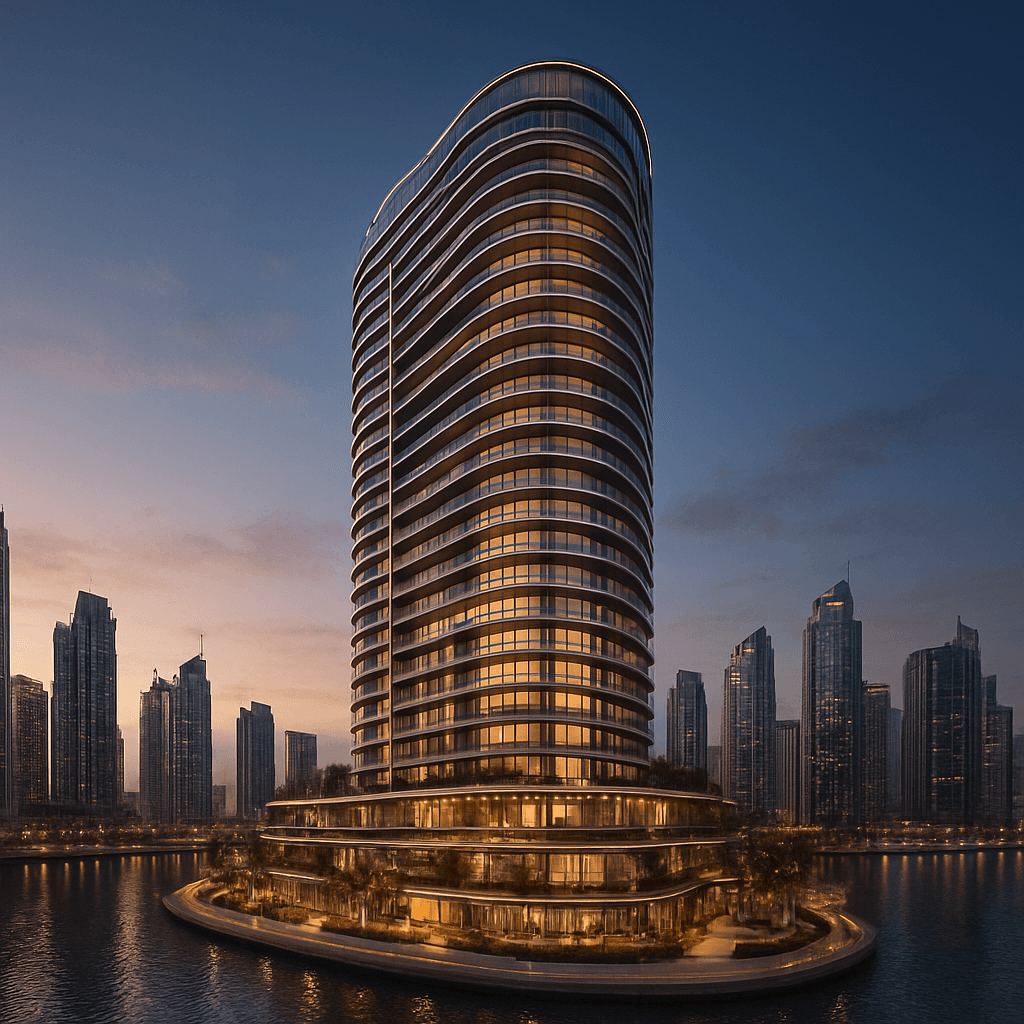 Featured project
When investors look at a developer's delivery history, they often ask a single question: "Do they deliver on time?" It's a good question, but it's not the only one. A truly thorough analysis goes much deeper. At Gaia Living, we dissect a developer's history across three axes: punctuality, consistency, and fidelity to the original promise.
Punctuality is the easiest to measure. Did the project's completion date, as registered with the DLD, align with the actual handover date? A history of consistent, multi-year delays across multiple projects is the brightest of red flags. However, you must be pragmatic. In a complex construction environment, minor delays of three to six months can happen even to the best developers due to supply chain issues or regulatory approvals. The key is to look for a *pattern* of excessive delays. A developer who is consistently 18-24 months late on every project has a systemic problem with planning, cash flow, or both. Conversely, a developer like Emaar has built a formidable reputation by, for the most part, hitting their projected timelines for major communities like Dubai Hills Estate or the original Dubai Marina towers.
Consistency is about performance across a portfolio. Does the developer deliver the same quality and experience whether they are launching a flagship skyscraper or a suburban townhouse community? Some developers excel at high-end luxury but struggle with their mid-market offerings, or vice-versa. Look at their entire history, not just the project they are using as their current marketing halo. A developer who has successfully delivered projects across different price points demonstrates operational depth and a stable business model. This is a sign of a mature organisation that you can trust with your capital.
Fidelity to the promise is the most nuanced metric. This is about comparing the initial marketing materials and master plan with the final, delivered reality. Were the promised parks, retail centres, and community amenities delivered alongside the residential units, or did they follow years later, if at all? Did the quality of the public realm — the landscaping, the road network, the lighting, match the aspirational renders? This is where a developer's true character is revealed. Top-tier developers understand that they are not just building units; they are building destinations. The value of your property is intrinsically linked to the quality of the surrounding community. A developer who consistently delivers on the full 'lifestyle' promise is one that creates lasting value for its homeowners.
The Quality Test: Due Diligence You Can Touch
Assessing the future quality of a building that is currently a patch of sand is one of the biggest challenges for an off-plan buyer. You cannot conduct a snagging report on a JPEG. This is where you must become a detective, and the developer's past portfolio is your primary crime scene. The evidence of their commitment to quality — or lack thereof, is hiding in plain sight in their completed projects.
My advice is simple and non-negotiable: go and visit them. Do not just drive by. Park the car. Walk into the lobbies of their completed apartment towers. Feel the weight of the doors. Look at the wear and tear on the corridor carpets and wall finishes. Are the common areas clean and well-maintained? Do the elevators look pristine or are they scuffed and poorly serviced? If you are considering a villa, walk the streets of their established communities. Observe the quality of the landscaping, the condition of the pavements, and the general state of repair. This is the most reliable preview you will ever get of what your own property will look and feel like in five years.
Here is a practical checklist for your 'quality tour' of a developer's past projects:
- Common Areas: Check lobbies, hallways, and shared facilities like gyms and pools. Look for scuff marks, peeling paint, water stains, or broken fixtures. This indicates the durability of the original materials and the quality of the ongoing maintenance.
- Finishing Details: In a lobby or a show unit if available, examine the details. How are the tiles aligned? Is the grouting neat? How do the switches and sockets feel? These small things speak volumes about the level of supervision on the construction site.
- Exterior Cladding & Facade: Look at the building's exterior. Are there signs of staining, cracking, or fading? A building that looks worn after just a few years suggests that corners were cut on materials to save costs.
- Landscaping & Public Realm: Is the greenery lush and mature, or sparse and struggling? Are the pathways and children's play areas well-maintained? This is a proxy for the developer's long-term commitment to the community's quality of life.
- Talk to Residents: If you feel comfortable, strike up a polite conversation with a resident in the lobby or a parent at the playground. Ask them about their experience with the build quality, any common issues (like AC or plumbing problems), and how responsive the developer's facilities management team is. Their unfiltered feedback is worth more than any sales pitch.
This process allows you to build a mental benchmark. When you visit a community by a developer like Meraas — think City Walk or Bluewaters Island, you notice an obsessive attention to the public realm and high-quality materials. When you compare that to a budget-focused project from a smaller developer, the difference in philosophy becomes tangible. One is building an asset for the next 30 years; the other might be focused on the quickest path to handover. Your investment goals will determine which philosophy you should back.
Financial Health and Transparency
Beyond the physical aspects of their past projects, you are also investing in the developer's financial stability. A developer with weak financials is more likely to cut corners, face delays, or, in the worst-case scenario, fail to complete the project. While you won't have access to their full balance sheets, there are several public-facing indicators you can use to gauge their financial health and commitment to transparency.
The first and most important is their compliance with RERA's escrow account regulations. For any off-plan launches, the developer must have a DLD-approved escrow account for that specific project. All your payments should go directly to this account. You should ask for and verify the escrow account details. A developer who is hesitant to provide this information or pressures you to make payments to their corporate account is a major red flag. This system ensures that your funds are used specifically for the construction of your project, with disbursements tied to progress certified by an independent consultant. It's the cornerstone of investor protection in Dubai.
Next, look at their project pipeline and sales activity. A healthy developer has a steady stream of new launches alongside ongoing construction. They are actively selling and marketing their projects, which indicates positive cash flow and market confidence. You can track this through their own announcements and by monitoring the DLD's data on sales transactions. A developer that suddenly goes quiet, with no new launches and slow progress on existing sites, might be facing financial strain. Be wary of developers who launch a huge number of projects simultaneously without a clear track record of managing such a large pipeline; they may be over-using and using deposits from new projects to finish old ones, a risky strategy that can unravel quickly.
Transparency is another key factor. How does the developer communicate with its existing buyers? Do they provide regular, detailed construction updates with genuine photos and progress reports? Top-tier developers often have dedicated mobile apps or online portals for their customers, showing percentage of completion, photos, and news. A developer who is open and proactive in their communication is one who is confident in their progress. A developer who goes silent for months or provides vague, non-committal updates is often hiding problems. Before you buy, try to find out from existing owners (through online forums or community groups) what the communication has been like on their other projects. This 'soft' data point is a powerful indicator of the developer's corporate culture and respect for its clients.
Post-Handover: Community Management and Service Charges
Your relationship with the developer does not end at handover. In most cases, a subsidiary or affiliate of the developer will manage the community and the building for years to come. This is a critical and often overlooked aspect of due diligence. The quality of this long-term management will have a direct and significant impact on your quality of life as an end-user and on your net rental yield and capital appreciation as an investor.
A well-managed community maintains its value. A poorly managed one can see its value erode quickly, regardless of how well it was built. When assessing a developer, you must also assess their management arm. Visit their established communities. Are they clean? Are the security staff professional? Is the landscaping immaculate? These are all signs of a competent and well-funded management company.
Service charges are a crucial part of this equation. These are the annual fees you pay for the maintenance of common areas, security, and amenities. Before you buy, you must get a clear estimate of the projected service charges per square foot. Then, you need to verify if that estimate is realistic. The best way to do this is to find out the actual service charges in the developer's other, similar completed projects. The DLD's service charge index on the Dubai REST app provides a benchmark. If a developer is promising suspiciously low service charges for a luxury building with multiple pools and extensive facilities, be sceptical. They may be underestimating the cost to make the sale, which can lead to two negative outcomes: a sudden hike in fees after the first year, or a decline in maintenance quality as the management company struggles to cover costs.
Here is a simple cost-of-ownership analysis you must perform. Let's say you're looking at a 1,000 sq. Ft. apartment for AED 2 million:
- Purchase Price: AED 2,000,000
- Dubai Land Department Fee (4%): AED 80,000
- Oqood Registration Fee: AED 4,200 (fixed)
- Agency Fee (if applicable, often 0% from developer): AED 0
- Total Upfront Cost: AED 2,084,200
Now, let's factor in the annual service charge. Developer A's building has a charge of AED 18 per sq. Ft. Developer B's building, with similar amenities, is AED 25 per sq. Ft.
- Developer A Annual Service Charge: 1,000 sq. Ft. x AED 18 = AED 18,000
- Developer B Annual Service Charge: 1,000 sq. Ft. x AED 25 = AED 25,000
The AED 7,000 annual difference directly impacts your net rental yield. If the gross annual rent is AED 140,000, your net rent is AED 122,000 with Developer A but only AED 115,000 with Developer B. This is why a developer's history of setting fair and sustainable service charges is a critical part of their track record. Look for a balance: charges should be high enough to maintain the property impeccably, but not so high that they are uncompetitive and eat into your returns.
Your Secret Weapon: The Dubai REST App
The Dubai Land Department has empowered investors with an incredibly powerful tool: the Dubai REST (Real Estate Self Transaction) app. It is, in my opinion, the single most important app on any serious property investor's phone. It provides direct, official data that allows you to verify many of the claims a developer might make. Learning to navigate it is a crucial part of modern due diligence.
First, you can use the app to investigate a developer's portfolio. You can search for developers and see a list of their registered projects. For each project, the DLD provides key information. The most important of these is the 'Project Status' tracker. This shows the official percentage of completion, based on inspections by the DLD's technical team. This is the ultimate fact-check against a developer's own construction updates. If a developer's email says 60% complete but the DLD app says 45%, you trust the app. This feature alone is invaluable for tracking progress and holding developers accountable.
Second, the app provides information on the project's escrow account. You can verify the name of the bank and the account number, ensuring the developer is compliant with RERA regulations. This simple check gives you peace of mind that your funds are protected. The app also lists all the properties registered within a project, their status (e.g., 'Sold', 'Available'), and the transaction history. This gives you a sense of the sales velocity and market demand for the project.
Third, for completed properties, the REST app is your source for verifying title deeds and checking the official service charge index. You can see the approved service charges for thousands of buildings across Dubai, broken down by category (maintenance, utilities, etc.). This allows you to compare the promised service charge of your off-plan unit with the real-world charges in similar, completed buildings by the same developer and their competitors. It's the best tool for spotting unrealistically low estimates. Using these official data sources transforms you from a passive recipient of information into an active, informed analyst.
Red Flags and Warning Signs
Throughout your due diligence, you're not just looking for positive signs; you're actively hunting for red flags. These are the warning signals that suggest you should pause, dig deeper, or even walk away from a deal. Having analysed hundreds of projects, I've compiled a list of my most critical red flags. If you encounter several of these with one developer, I would strongly advise against investing.
- A Pattern of Major Delays: As discussed, a single delay can be explained. A history of every project being over a year late cannot. It points to fundamental issues in their planning or financing.
- Poor Quality in Delivered Projects: If their five-year-old buildings already look twenty years old, what will yours look like? Never believe that your project will be the exception to a rule of shoddy construction.
- Unrealistically Low Service Charge Estimates: This is a bait-and-switch tactic. It lures you in with a low running cost, which will inevitably be corrected with a sharp fee hike post-handover, angering residents and hurting your yield.
- Lack of an Escrow Account or Vague Details: This is a non-negotiable deal-breaker. If a developer cannot provide clear, verifiable escrow account details for your specific project, you must walk away. Immediately.
- High Volume of Negative Owner Feedback: Look for community groups on social media or building forums related to the developer's past projects. A few disgruntled owners are normal. A constant torrent of complaints about the same issues (e.g., persistent AC leaks, battles over service charges) is a huge red flag.
- Frequent Rebranding or Corporate Restructuring: A developer that constantly changes its name or corporate structure may be trying to distance itself from a poor reputation or past failures. Stability is a sign of strength.
- Over-reliance on Aggressive Sales Tactics: Top-tier developers with strong projects don't need to create a false sense of urgency. If you're being pressured to sign immediately with 'limited-time offers' that seem too good to be true, it's often a sign that they are compensating for a weak product.
Spotting these signs requires a cool head and a commitment to research over emotion. The excitement of a new launch event can be intoxicating. Your job is to remain objective and trust your due diligence. A great deal with a bad developer is never a great deal.
Ultimately, a developer's track record is a narrative. Your job is to read that story and decide if it's one you want to be a part of. The best developers have a consistent story of quality, punctuality, and long-term community building. Investing with them is less of a gamble and more of a strategic partnership for growth.
My Verdict: Balancing Reputation and Opportunity
So, how do you put this all together? Does this mean you should only ever buy properties from the top three developers in Dubai? Not necessarily. While investing with a blue-chip name like Emaar carries the lowest execution risk, it's also true that their properties often command a premium from day one. The potential for explosive, early-stage appreciation can sometimes be greater with a well-run, ambitious, mid-tier developer that is hungry to build its reputation.
This is where your personal risk appetite comes in. My role as an advisor is not to tell you what to buy, but to give you the analytical framework to make your own informed decision. If you are a conservative, first-time overseas investor, sticking with the most established developers is a very sensible strategy. You are paying a premium for peace of mind and a predictable outcome.
However, if you are a more experienced investor with a higher tolerance for risk and a willingness to do deep due diligence, there can be opportunities with smaller or newer developers who are on an upward trajectory. For this to work, you must see clear evidence that they have learned from the best. Their leadership team might have a pedigree from top-tier firms. Their first few completed projects, while small, might be of exceptional quality. They might be incredibly transparent, offering detailed updates and direct access to management. In these cases, you are betting that their hunger to join the top tier will translate into a superior product and a positive investment outcome.
The key is that this is a conscious, calculated risk, not a blind punt. You are trading the established reputation of a large developer for the potential upside of a rising star, but you are doing so with your eyes wide open, having meticulously vetted their history, financials, and quality. That is the art of sophisticated off-plan investing. It's not about avoiding risk entirely — it's about understanding it, pricing it, and making sure the potential rewards are worth it.
At Gaia Living, our approach is to present clients with this full spectrum of options, complete with our unvarnished analysis of the developer's track record. The final decision is always yours, but we ensure it's made from a position of knowledge and strength, not from the hype of a launch event.
Sources
- Dubai Land Department (DLD): https://dubailand.gov.ae
- Dubai REST App Information: https://dubairest.gov.ae
- UAE Central Bank (for mortgage information): https://www.centralbank.ae
- Official UAE Government Portal: https://u.ae/en/
Questions, answered
- What is the most important factor when choosing an off-plan property in Dubai?
- The developer's track record is the single most critical factor. Their history of delivering on time, at the promised quality, and managing communities effectively is a better indicator of future success than any marketing material.
- How can I check a developer's past projects in Dubai?
- You can use the Dubai Land Department's REST app, which provides information on projects, their status, and developer details. I also recommend visiting their completed communities in person to assess the build quality and maintenance standards firsthand.
- Are there official developer ratings in Dubai?
- While RERA and the DLD regulate developers, there isn't a simple A-B-C public rating system. Your due diligence, involving checking delivery timelines, quality, financial stability via DLD data, and real-world community assessments, serves as your own rating process.
- What are the key red flags to look for in a developer?
- Key red flags include a history of significant project delays, poor finishing in past projects, high service charges in their communities, and a lack of transparency about construction progress or escrow account details. Constant rebranding or a history of failed project announcements are also warning signs.
- How does a developer's track record affect resale value?
- A strong developer track record creates brand equity, leading to higher demand and premium resale values. Buyers are willing to pay more for properties in communities built by reputable names like Emaar or Damac because they trust the quality, management, and long-term value.
- What is an Oqood registration?
- Oqood is the process of registering an off-plan property purchase with the Dubai Land Department. It legally documents your ownership interest in the under-construction property and is a critical step in securing your investment. The Oqood registration fee is 4% of the property purchase price.

Isabelle covers off-plan and investment strategy — payment plans, handover risk, developer track records, and the maths of buying before completion.
Related stories

Rising Rates: A Stress Test for Dubai's Off-Plan Market
As global interest rates climb, I'm analyzing the real-world impact on Dubai's off-plan affordability for end-users and the crucial holding power of investors facing new exit pressures.

DWC Expansion: A New Gravity for Dubai Property
The colossal AED 128 billion expansion of Al Maktoum International Airport is set to fundamentally reshape southern Dubai. I break down what this means for property investors and residents in the surrounding communities.

Calculating Your Real Dubai Holiday Home Net Yield
A detailed cost analysis of managing a short-term rental in Dubai. We break down every operational and regulatory expense to reveal the true net yield you can expect.
Echoes, in your inbox
One thoughtful email a month. Market insight, new launches, no spam.