

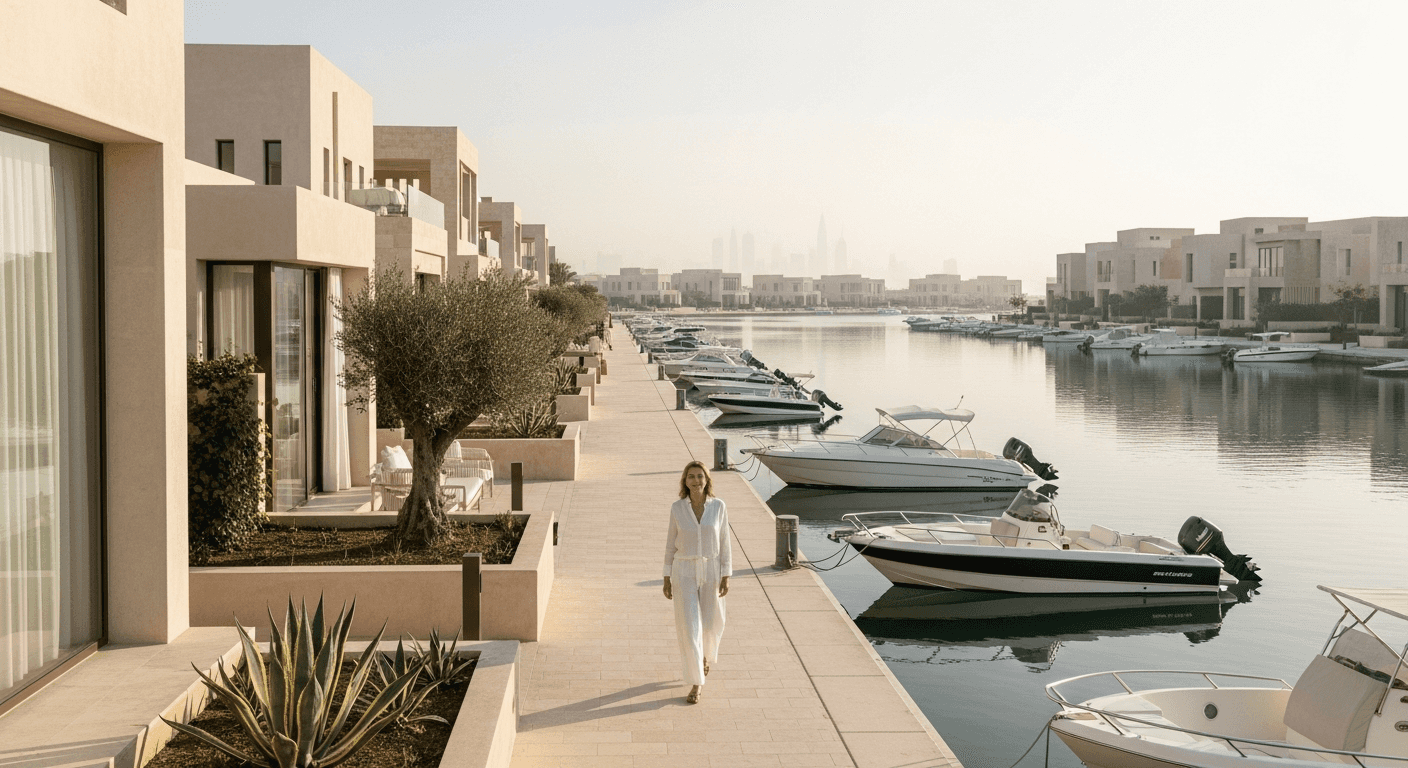
Dubai's Secret Gardens: The Hunt for Private Green Space
I explore the value of finding a home in Dubai with intimate green spaces, from secluded villa gardens to ingeniously designed apartment courtyards.

When clients first imagine life in Dubai, they often picture shimmering towers and vast desert horizons. They're not wrong. But over my years guiding people to their homes here, I’ve learned that the ultimate luxury isn't always the highest floor or the most panoramic view. Often, it's something far more intimate: a patch of green to call your own.
Here's what we'll explore in the hunt for these private sanctuaries:
- The post-pandemic shift and the new premium on private green space.
- The Villa Archetype: traditional gardens in communities like Arabian Ranches and Meadows.
- The Courtyard Home: modern interpretations and the rise of the townhouse.
- The Unrivalled Oasis: analysing the unique proposition of Al Barari.
- The Apartment Garden: finding greenery without a villa.
- The Financial Greenery: budgeting for the cost of acquiring and maintaining your garden.
- The Rules of the Garden: navigating developers, NOCs, and community guidelines.
The New Premium on Private Greenery
Before 2020, a private garden was a 'nice-to-have' for many buyers in Dubai. It was a feature primarily associated with large family villas, a symbol of a certain suburban lifestyle. For the young professional in a slick city apartment, the communal pool deck or the public park down the road was more than sufficient. The global lockdowns changed that calculus completely. Suddenly, being confined to your own four walls made the definition of 'home' expand. It needed to include a space for fresh air, for morning coffee not contained by glass, for children to play safely under your own watch. Private outdoor space went from a bonus feature to an essential requirement for a huge segment of the market.
This shift was immediate and dramatic. At Gaia Living, we saw the change in real-time through our client enquiries. Requests for properties with gardens, balconies, and terraces skyrocketed. This wasn't just a trend for villas; apartment buyers started prioritising ground-floor units with small yards or podium-level homes with oversized terraces that could accommodate a few planters and a table. The psychological value of this private green space became directly convertible into a hard financial premium. A villa with a well-maintained, private garden began commanding a significantly higher price than an identical one next door that backed onto a road or had a neglected yard. The market had spoken: a garden wasn't just landscaping; it was a critical component of wellbeing.
This demand for `private green spaces Dubai` has reshaped development strategies. We're now seeing a greater emphasis on townhouses, which cleverly balance density with individual outdoor areas, and a more thoughtful approach to apartment layouts. Developers are keenly aware that a unit with a usable terrace is a far easier sell. Look at the newer phases in master communities or the design briefs for `off-plan launches` — the language is all about lifestyle, wellness, and a connection to nature. This isn't just marketing fluff; it's a direct response to a fundamental change in what buyers value. A `peaceful property Dubai` is no longer just about quiet interiors; it's about having a personal retreat from the city's buzz, a serene courtyard or garden where you can truly disconnect.
The Villa Archetype: Arabian Ranches & The Meadows
 Featured project
When you think of a classic Dubai villa with a garden, two communities inevitably come to mind: Arabian Ranches and The Meadows. These developments, both by Emaar Properties, essentially wrote the book on suburban family living in the emirate. They were conceived in an era when land was more plentiful, allowing for generous plot sizes where a proper garden wasn't an afterthought but a core part of the product. Driving through these communities, you see the result: mature trees, manicured lawns, and a genuine sense of established greenery that can feel worlds away from the city's steel and glass core.
The appeal is deeply rooted in this sense of space. A standard three-bedroom villa in The Meadows, for example, might sit on a plot of around 6,000 square feet. This gives a family a proper backyard — space for a trampoline, a small pool, a barbecue area, and still have lawn left over. This is the traditional dream of suburban life, transplanted to Dubai. Arabian Ranches offers a similar proposition, with a slightly more rustic, desert-themed architectural style. The key is that these are not just token patches of grass. They are functional, private, and integral to the lifestyle. It’s where children's birthday parties are held, where families gather on cooler winter evenings, and where the day's stress can be shed with a bit of light gardening.
However, this classic model comes with its own set of considerations. The most significant is age. Many of these properties are now 15-20 years old. While the communities are mature and beautifully green, the homes themselves may require upgrades. Kitchens, bathrooms, and AC systems might not be to the standard of a brand-new build. For buyers, this presents a choice: do you prefer the larger plot and established community feel, and are you willing to budget for renovation? Or do you sacrifice some garden space for a modern, turnkey home in a newer area? Beyond that, the very success of these areas means they command a premium. You are paying for the location, the established infrastructure, and that precious, mature greenery. It’s a tangible asset that is fully priced into the market.
The Courtyard Home: Modern Interpretations
The traditional villa isn't the only way to secure a private garden. As Dubai has grown denser, developers have become more creative, leading to the resurgence of a classic architectural form: the courtyard home. This design, often found in townhouses and semi-detached villas, is a brilliant solution to providing `serene courtyards Dubai homes` while maintaining a more efficient use of land. Instead of a large, open backyard, these homes are often built in a U-shape or L-shape around a central, private outdoor space. This courtyard becomes the heart of the home, a secure and sheltered area that blurs the line between indoors and outdoors.
Communities like Jumeirah Golf Estates and certain clusters within Damac Hills and Damac Hills II have mastered this model. The townhouses here offer a compelling alternative to the sprawling villa. You may not have a vast lawn, but you get a perfectly proportioned space that can be transformed into a stunning outdoor living room. Think plunge pools, vertical gardens, built-in seating, and outdoor kitchens. The privacy is often superior to a traditional backyard, as the courtyard is shielded by the home's own walls. This design is particularly well-suited to the Dubai climate, providing a shaded, intimate area that remains usable even when the sun is at its peak. It's a modern, sophisticated take on `intimate greenery residences`.
From a lifestyle perspective, the courtyard home appeals to a different sensibility. It's less about expansive play space and more about curated, private entertaining and relaxation. We find these homes are incredibly popular with professional couples, small families, and empty nesters who want the benefit of outdoor space without the maintenance burden of a huge garden. The financial aspect is also attractive. Townhouses generally offer a more accessible entry point into landed property ownership compared to detached villas. While you might be sacrificing overall plot size, you're gaining a modern, efficient, and often very stylish home. This model proves that a `Dubai hidden gardens property` doesn't need to be a mansion; it can be a smartly designed townhouse where the garden is a smooth extension of the living space.
The Unrivalled Oasis: A Deep Dive into Al Barari
It is impossible to discuss private gardens in Dubai without dedicating a section to Al Barari. To call it a 'green community' is a profound understatement. Al Barari is an ecosystem. From its inception, it was designed with a radical concept for this region: 60% of the development would be dedicated to landscaped gardens, lakes, and waterways. The result is a place that feels entirely different from anywhere else in the city. The air is cooler, the soundscape is dominated by birdsong and rustling leaves, and the visual landscape is an almost impossibly lush mix of green.
This is not the manicured, golf-course green of other communities. The landscaping in Al Barari is dense, varied, and botanically ambitious, with themed gardens, streams, and walkways that create a genuine sense of exploration. The properties themselves are designed to integrate with this environment. The villas and low-rise apartments are set on huge plots, and privacy is paramount. Driving through the 'Residences' or 'The Nest' sub-communities, you don't see rows of identical houses. You see green walls, mature trees, and glimpses of stunning homes enveloped by their own private jungles. The philosophy here is that the garden is not an accessory to the house; the house is a guest in the garden. This is the absolute peak of the market for `private green spaces Dubai`.
Of course, living in paradise comes at a cost. The service charges in Al Barari are among the highest in Dubai, ranging from AED 20-30 per square foot on the gross floor area. This is a necessary expense to maintain the incredibly complex and water-intensive landscaping. A typical 5-bedroom villa of 6,000 sq ft could face annual service charges of AED 120,000 to AED 180,000. This is before you even consider the cost of maintaining your own extensive private garden, which can easily run into thousands of dirhams per month. For buyers, this is the critical trade-off. Al Barari offers a lifestyle that is genuinely unique in the Middle East, but you must be prepared to pay for it. It attracts a specific type of resident: those for whom privacy, nature, and tranquility are non-negotiable priorities, and who have the financial capacity to sustain that lifestyle. In my opinion, for this niche market, the premium is entirely justified.
The Apartment Garden: Greenery Without the Villa
The dream of a private garden isn't exclusive to villa owners. In a city of towers, developers have found ingenious ways to incorporate private greenery into apartment living. The most common and accessible form is the ground-floor unit with a dedicated garden area. In communities like JVC, Arjan, and Sobha Hartland and Sobha Hartland II, many low-to-mid-rise buildings feature apartments that open out onto small, fenced-off yards. These spaces, typically ranging from 200 to 800 square feet, are a game-changer for apartment dwellers. They provide a safe play area for children, a space for a pet, or simply a spot to place a table and chairs and enjoy the outdoors.
Beyond the ground floor, the podium level is the next frontier for apartment gardens. Many modern towers are built on top of a multi-story parking structure, the roof of which is often converted into a communal amenity deck. Clever developers are now carving out sections of this podium to create private terraces for a select number of apartments. These can be surprisingly spacious and offer a great blend of privacy and elevation. A well-designed podium garden can feel like a genuine backyard, despite being several stories up. We're also seeing a trend in luxury developments for duplexes and penthouses to feature expansive terraces that are specifically designed for landscaping, sometimes even with reinforced floors to support the weight of soil and small trees.
“In Dubai's vertical city, the most innovative architecture is now happening on the horizontal plane of terraces, podiums, and ground-floor plots.”
This search for `intimate greenery residences` in the apartment sector requires a keen eye. These units are a small fraction of the total stock and are highly sought after. They often command a premium over identical apartments on higher floors. When considering such a property, it's crucial to look at the specifics. What is the orientation of the garden? Will it get enough sun for plants to thrive? What are the rules set by the owners' association regarding landscaping, fencing, and use of the space? While they may not offer the scale of a villa garden, these apartment oases provide a vital connection to nature for city dwellers and, in my experience, they consistently outperform the wider market in both rental yield and capital appreciation. They represent a smart, lifestyle-driven investment.
The Financial Greenery: Budgeting for Your Garden
Finding your perfect `Dubai hidden gardens property` is only the first step. The true cost of ownership extends far beyond the purchase price. A garden, especially in Dubai's climate, is an ongoing financial commitment. It’s crucial to budget for this realistically to avoid your green dream turning into a financial burden. The costs can be broken down into two main categories: setup and maintenance.
Setup costs are the initial investment to get your garden into the shape you want. This could be as simple as buying some pots and soil for a terrace, or as complex as a full landscape redesign for a villa plot. For a new villa handed over as just sand and soil, a professional landscaping project can be a significant expense. A basic package with grass, an irrigation system, and some simple planting might start around AED 20,000-30,000 for a typical townhouse garden. For a larger villa garden, with features like a swimming pool, a pergola, an outdoor kitchen, and sophisticated lighting, the cost can easily exceed AED 250,000. It's essential to get multiple quotes from reputable landscaping companies and to check what approvals are needed from your developer before you start.
Ongoing maintenance is the recurring cost that many first-time garden owners underestimate. Dubai's climate is harsh on plant life, and an irrigation system is non-negotiable. This means higher water bills. A professional gardening service is also a near-necessity for most people. Here’s a rough idea of monthly maintenance costs:
- Small Townhouse Garden: Basic mowing, weeding, and system check: AED 300 - AED 500 per month.
- Medium Villa Garden (no pool): More extensive planting care, trimming: AED 800 - AED 1,500 per month.
- Large Villa Garden (with pool): Includes pool maintenance, extensive plant care, pest control: AED 2,000 - AED 5,000+ per month.
These figures don't include the periodic costs of replacing plants that don't survive, replenishing soil, or repairing the irrigation system. When we at Gaia Living help a client assess a property with a garden, we always advise them to factor in an annual maintenance budget of at least 1-2% of the property's value, purely for the outdoor space. It's a significant number, but it's the realistic cost of preserving the asset that attracted you to the property in the first place.
Rules of the Garden: NOCs, Developers, and Communities
Your private garden in Dubai is not entirely your private kingdom. It exists within a master community, governed by a developer and an owners' association with a vested interest in maintaining a certain aesthetic and structural standard. Before you dream of installing a sunken fire pit or a sprawling pergola, you must familiarise yourself with the rules of your specific community. These are typically outlined in a document you receive upon purchasing the property. Ignoring them can lead to fines and orders to remove unapproved structures at your own cost.
For almost any structural change to your garden, you will need to obtain a No Objection Certificate (NOC) from the developer or owners' association. This is a formal process where you submit your plans for review. Common alterations that require an NOC include:
- Building a swimming pool
- Erecting a pergola, gazebo, or any other fixed shade structure
- Installing a permanent barbecue or outdoor kitchen
- Changing the boundary walls or fences
- Building any form of extension or additional room
For major works, like a pool, you may also need permits from Dubai Municipality or other government bodies in addition to the developer's NOC. The process can take several weeks, and approval is not guaranteed. Developers are primarily concerned with safety, the uniformity of the community's appearance, and ensuring your plans don't negatively impact your neighbours. For example, a large structure on the edge of your plot could block a neighbour's view or light, leading to a rejection of your plan.
Even soft landscaping — the plants themselves, can be subject to rules. Some high-end communities have approved lists of plant species to maintain a consistent look and feel. There are often rules about tree heights, particularly near boundary walls. Before you invest in beautiful but fast-growing trees, check the community guidelines. While this might seem restrictive, it serves a purpose. These rules protect the overall value of the community. They prevent your neighbour from painting their house bright pink or building a structure that devalues your own home. When buying into a community with `serene courtyards Dubai homes`, you are also buying into a set of shared standards. It's always our advice at Gaia Living to request and thoroughly read the community guidelines as part of your due diligence before finalising a purchase.
The search for a private garden in Dubai is a search for a higher quality of life. Whether it’s a sprawling villa lawn, a chic townhouse courtyard, or a clever apartment terrace, these green spaces have become a defining feature of luxury. They offer a tangible premium in the property market, reflecting a deep-seated human need for a personal sanctuary. However, this lifestyle comes with tangible costs and responsibilities, from high service charges in lush communities like Al Barari to the diligent process of securing NOCs for garden alterations. A successful purchase requires balancing the emotional pull of a beautiful garden with a clear-eyed financial plan for its acquisition and upkeep.
Sources
- Dubai Land Department (DLD): dubailand.gov.ae
- UAE Government Portal (Golden Visa): u.ae
Questions, answered
- Which Dubai communities are best for private gardens?
- For large, lush gardens, Al Barari is unparalleled. For more traditional family villa gardens, consider Arabian Ranches and The Meadows. For townhouses with courtyards and smaller gardens, communities like Jumeirah Golf Estates, Damac Hills, and some sub-communities in JVC offer great options.
- Can I find a Dubai apartment with a private garden?
- Yes, though they are less common. Ground-floor apartments in developments like those in JVC, Arjan, or Sobha Hartland often feature private gardens or large terraces. Some luxury towers and podium-level units also offer private outdoor green space.
- How much does it cost to maintain a garden in Dubai?
- Costs vary significantly. Basic maintenance for a small townhouse garden might cost AED 300-500 per month. A large, landscaped villa garden with complex features could easily cost AED 2,000-5,000+ monthly for maintenance, irrigation, and potential plant replacements.
- Are private gardens a good investment in Dubai property?
- In my view, yes. Usable outdoor space consistently adds a premium to both sale and rental values. Post-2020, the demand for private green spaces has intensified, making properties with well-maintained gardens highly sought-after and helping them hold their value better.
- What are service charges for green communities like Al Barari?
- Communities with extensive greenery like Al Barari have higher service charges to cover the intensive landscaping, water features, and maintenance. Expect charges in the range of AED 20-30 per square foot, which is significantly higher than communities with less greenery, but it's what funds the unique environment.
- Do I need a No Objection Certificate (NOC) to landscape my garden in Dubai?
- For major structural changes like adding a pergola, a built-in BBQ, or a swimming pool, you will almost certainly need an NOC from your developer and possibly permits from Dubai Municipality. For simple planting and soft landscaping, an NOC is not usually required, but always check your community's specific rules.

Yusuf writes about how Dubai actually lives — waterfront mornings, community dining, walkability, and the lifestyle premium built into an address.
Related stories
Dubai's Big Squeeze: Smaller Plots, Denser Living
Dubai real estate is undergoing a fundamental shift towards smaller plot sizes and higher density. We analyse the economic drivers, the impact on property values, and what this new era of compact urban living means for both homebuyers and investors.
Resort Living as Your Dubai Reality
Explore how to trade temporary staycations for a permanent home with five-star amenities in Dubai. I'll break down the real costs, best communities, and lifestyle trade-offs of embracing high-end resort living every day.
Finding Your Tribe in Dubai's Villa Communities
I explore which of Dubai's renowned villa communities attract specific expat nationalities and lifestyle groups, offering insights to help you find a place that feels like home.
Echoes, in your inbox
One thoughtful email a month. Market insight, new launches, no spam.