

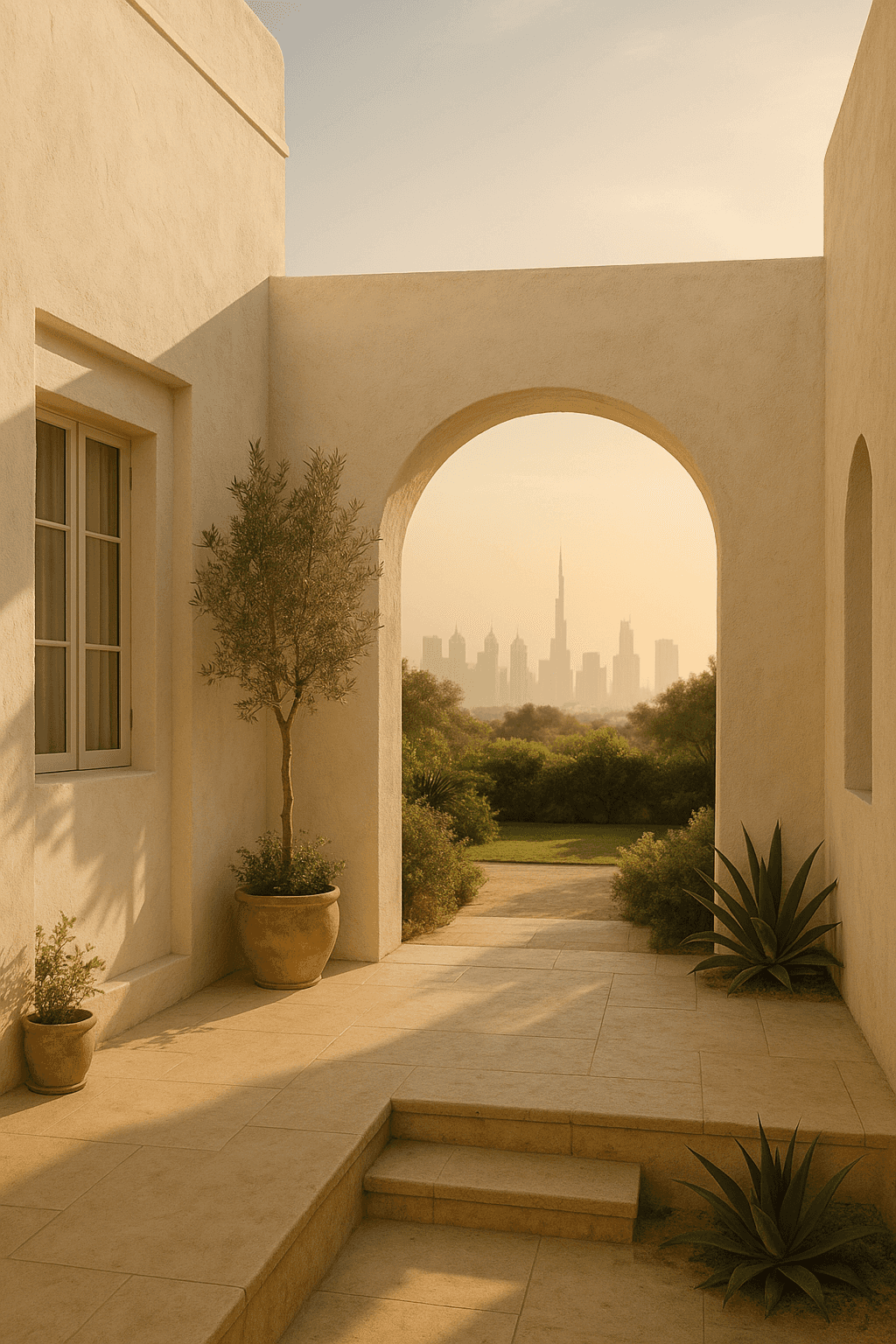
Dubai's Next Frontier: Unlocking Hidden Real Estate Value
As Dubai's prime new land becomes scarcer, the focus is shifting. I argue that the next wave of value creation lies not in new masterplans, but in the strategic redevelopment and refurbishment of Dubai's original freehold communities.

For two decades, Dubai’s property story has been one of relentless expansion outwards, a narrative written on blank desert canvases. Yet as the city matures and the most desirable land becomes scarce, I believe the next great cycle of value creation will be found by looking inwards. The real frontier for smart capital is no longer just the next off-plan launch; it’s the significant, and largely untapped, potential for Dubai urban regeneration within its original, now-aging freehold communities.
Here is the core of my thesis:
- Why location and infrastructure are becoming Dubai’s most valuable, non-replicable assets.
- A deep dive into the communities I see as prime candidates for regeneration, from villas to apartments.
- The crucial role of individual refurbishment in unlocking value, with detailed cost analyses.
- A look at the legal and practical hurdles to redevelopment, including homeowners associations and NOCs.
- The longer-term potential for larger-scale, collective redevelopment and what it would take to get there.
- A framework for identifying and executing a successful value-add investment in an older Dubai property.
The End of 'Easy' Land and the Rise of Infill Value
Dubai’s growth model has been breathtakingly effective. Master developers like Emaar Properties and Nakheel acquired vast parcels of land, installed world-class infrastructure, and built entire cities from scratch. This created a highly efficient development pipeline, but it's a model with a natural shelf life. The prime, centrally located, easy-to-develop plots are now largely spoken for. New master-planned communities are, by necessity, being pushed further and further out from the city's established economic centres like DIFC and Business Bay.
This geographic reality creates a fundamental shift in the market's value equation. For years, the newest product was axiomatically the best. Now, the immutable value of location is reasserting itself. A 15-year-old villa in The Meadows, ten minutes from the beach and business hubs, possesses an advantage that a brand-new villa 45 minutes out on Al Qudra road simply cannot replicate. This is where the concept of freehold community redevelopment comes into focus. The land under these older communities is, in my opinion, significantly undervalued relative to its locational premium.
This isn't a phenomenon unique to Dubai; it's the natural life cycle of every global city. London’s mews houses, once stables, are now prime assets. New York's SoHo lofts were once derelict warehouses. The pattern is always the same: as the city expands, the original, well-located core ages. Its building stock becomes tired, but its underlying land and infrastructure — the roads, the utilities, the proximity to schools and offices, become ever more precious. The value gap between the aging physical asset and the premium land it sits on widens, creating a compelling opportunity for capital to step in and close that gap through refurbishment and regeneration.
At Gaia Living, we are increasingly guiding clients to consider this dynamic. While the allure of a pristine, off-plan property is strong, the strategic purchase and renovation of an older asset can often deliver a superior blend of location, space, and lifestyle for the same, or even lower, all-in cost. This strategy requires more work than simply signing a sales and purchase agreement for a new build, but the potential rewards — both in terms of lifestyle and capital appreciation, are becoming too significant for savvy investors to ignore. The market is slowly waking up to the older property investment Dubai thesis.
Prime Candidates: Where to Look for Regeneration Potential
 Featured project
Identifying the right communities for this strategy is crucial. The key is to find areas that combine an 'A-grade' location with 'B-grade' or 'C-grade' building stock. The goal is to buy the tired asset in the irreplaceable location. In my analysis, these fall into two main categories: villa communities and high-density apartment districts.
For villas, the original Emaar communities are the gold standard. The Meadows, The Springs, and the original Arabian Ranches are the most obvious candidates. Developed in the early 2000s, these homes feature layouts that are often more generous than their modern counterparts, with larger plots and more established, mature landscaping. However, the interiors — the kitchens, bathrooms, flooring, and MEP (mechanical, electrical, plumbing) systems, are now 15-20 years old and feel dated. Their location, however, is simply superb. They sit within the city's established central corridor, with unrivalled access to Sheikh Zayed Road, top-tier schools, and mature retail and dining hubs. The value proposition here is to acquire a villa at a price reflecting its current, dated condition and invest in a full-scale renovation to bring it to a 2026 standard. The end product is a modern, spacious home in a location that new developments cannot match.
For apartments, the analysis is slightly different. I see immense potential in the earliest freehold apartment districts like the original six towers in Dubai Marina, parts of Jumeirah Lakes Towers (JLT), and The Greens. These buildings, constructed between 2003 and 2008, offer solid build quality and prime locations on the metro line. Their weakness is often tired common areas and dated apartment interiors. An investor can acquire a unit, perform a gut renovation, and create a product that competes directly with brand new, but smaller and less centrally located, apartments. The key in these high-density areas is to also assess the health of the Owners Association (OA). A well-managed building with a proactive OA that is already investing in upgrading lobbies, pools, and gyms is a far better bet than one suffering from deferred maintenance. Information on a building's financial health and service charge accounts is accessible via the Dubai REST app, a crucial due diligence step for any buyer.
Finally, there are wildcard areas like Discovery Gardens or Dubai International City. While these areas have historically been positioned at the lower end of the market, their locations are increasingly strategic. Discovery Gardens is adjacent to the new developments around Expo City and benefits from metro access. As Dubai's centre of gravity shifts south, these areas could become targets for larger-scale regeneration projects, though this is a longer-term and higher-risk proposition. For now, the most predictable returns on real estate refurbishment potential lie in the prime, established communities.
The Individual Refurbishment Playbook: Costs and Returns
For most investors, the most direct path to value unlocking existing communities is through the purchase and renovation of a single property. This is a hands-on strategy that requires careful budgeting and project management, but the financial mechanics are compelling. Let's break down the real costs using a tangible example: a 3-bedroom Type 3M villa in The Springs, a popular target for this strategy.
First, the acquisition. A dated 3M villa might be acquired for approximately AED 3.0 million. The upfront transaction costs are fixed and must be budgeted for. Based on Dubai Land Department (DLD) regulations, these are non-negotiable.
Acquisition Cost Breakdown (Example): - Purchase Price: AED 3,000,000 - DLD Transfer Fee (4% of price): AED 120,000 - DLD Registration Trustee Fee: ~AED 4,200 - Agency Fee (2% of price): AED 60,000 - Total Acquisition Cost: AED 3,184,200
Next comes the renovation budget. This is the variable that determines the project's success. Costs can vary dramatically based on the scope and quality of finishes. A light cosmetic refresh (paint, new light fixtures, deep cleaning) might cost as little as AED 150-250 per square foot. However, to truly unlock value and compete with new products, a full gut renovation is usually required. This involves stripping the villa back to its shell: new flooring, new bathrooms, a new kitchen, upgraded AC units, modernised electricals, and often landscaping. For a villa of approximately 2,500 sqft, a realistic budget for a high-quality gut renovation is essential.
Renovation Budget Breakdown (Example for a 2,500 sqft villa): - Demolition and Debris Removal: AED 20,000 - MEP (Electrical, Plumbing, AC overhaul): AED 80,000 - AED 120,000 - Kitchen (cabinetry, countertops, appliances): AED 70,000 - AED 150,000 - Bathrooms (3-4 units, tiling, sanitary ware): AED 80,000 - AED 160,000 - Flooring (tiling or wood): AED 60,000 - AED 100,000 - Plastering, Painting, and Finishing: AED 50,000 - Windows and Doors (optional upgrade): AED 40,000 - AED 80,000 - Landscaping and Exterior: AED 30,000 - AED 60,000 - Permits, Design, and Contingency (15%): ~AED 75,000 - AED 120,000 - Total Renovation Estimate: AED 505,000 - AED 900,000
Adding it all up, the total project cost would be in the range of AED 3.7 million to AED 4.1 million. A fully renovated, modernised 3M villa in a prime location within The Springs can realistically command a market price of AED 4.5 million or more in the current market, offering a potential gross profit of AED 400,000 to AED 800,000. This demonstrates a clear financial incentive. The same logic applies to apartments in JLT or Dubai Marina, albeit on a smaller scale. A two-bedroom apartment might be bought for AED 1.8 million, renovated for AED 300,000, and be worth AED 2.4 million post-renovation — a comparable percentage uplift.
Navigating the Hurdles: NOCs, Owners Associations, and Regulations
While the financial case is strong, the process is not without its administrative and logistical challenges. Dubai’s real estate ecosystem is highly regulated, and any renovation project must adhere to a strict set of rules governed by the master developer, the building's Owners Association (OA), and Dubai's municipal authorities.
Before a single wall is touched, an investor must secure a No Objection Certificate (NOC) from the master developer (e.g., Emaar, Nakheel, Dubai Properties). This process involves submitting detailed architectural and engineering drawings of the proposed changes. The developer will review these plans to ensure they comply with the community's overall aesthetic and structural guidelines. For instance, you cannot unilaterally change the external colour of your villa in Arabian Ranches or build an extension that violates plot boundaries. The developer’s role is to maintain the integrity and uniformity of the masterplan. This process can take several weeks and may involve revisions.
Simultaneously, for apartment renovations or any work in a shared community, the OA's approval is required. The OA is responsible for the building's common areas and ensuring that your renovation work does not damage shared infrastructure or unduly disturb your neighbours. They will typically require you to provide a security deposit against potential damages and will set strict working hours for your contractor. For major projects, especially in apartment towers, the OA might also require a third-party engineering report to confirm that you are not altering any structural elements of the building. This is a critical check-and-balance that protects all homeowners.
“The biggest mistake investors make is underestimating the time and complexity of securing permits. Assuming you can start demolition the day after you get the keys is a recipe for costly delays.”
Finally, for any significant structural or MEP changes, a building permit from the Dubai Municipality or the Trakhees authority (depending on the free zone) is mandatory. This is a legal requirement to ensure all work complies with the UAE's building codes and safety standards. A reputable, licensed contractor will handle this process on your behalf, but the property owner is ultimately responsible for ensuring all work is fully permitted. Attempting to bypass these official channels is a serious offence and can result in heavy fines and a legal order to restore the property to its original condition at your own expense.
This three-layered approval process — developer, OA, and municipality, is the primary operational hurdle in any Dubai urban regeneration project. It requires patience, meticulous documentation, and the use of qualified professionals. At Gaia Living, we always advise clients to factor in a 2-3 month period for design and approvals before any physical work can begin. This timeline must be built into the project plan and holding cost calculations.
The Collective Action Problem: The Future of 'En-Bloc' Redevelopment
While individual unit refurbishment is the dominant trend today, the ultimate expression of freehold community redevelopment is the 'en-bloc' or collective sale. This is a process where all owners in an apartment building or a cluster of villas vote to sell their entire property to a single developer. The developer then demolishes the old structure and builds a new, more valuable one, paying the original owners a premium over their individual unit's market price.
This is common practice in mature, land-scarce markets like Singapore and Hong Kong, where it is a primary driver of urban renewal. In Dubai, the legal framework for this is still nascent. The Jointly Owned Property Law (Law No. 6 of 2019) provides a mechanism for Owners Associations to vote on major decisions regarding their building, including significant upgrades or even demolition. However, achieving the high threshold of owner agreement required (often 75% or more) for such a drastic step is exceptionally difficult in practice. Dubai's property market is highly international, and tracking down and gaining consensus from dozens of overseas-based owners is a major logistical challenge.
Despite these challenges, I am convinced this will become a feature of the Dubai market within the next decade. The economic logic is simply too powerful to ignore. Consider a 15-year-old, 20-storey apartment tower in a prime Palm Jumeirah location. Current regulations might allow for a 40-storey tower to be built on the same plot. A developer could theoretically offer each owner a 30-40% premium over their apartment's current value, acquire the entire building, redevelop it into a much larger and more luxurious project, and still generate a substantial profit. The value unlocked would be immense.
For this to become a reality, several things need to happen. First, the legal process outlined by the Dubai Land Department and RERA needs to be further clarified and streamlined, perhaps with specific tribunals to handle disputes. Second, a market for 'redevelopment specialists' — developers who focus exclusively on this niche, needs to emerge. Third, Owners Associations need to become more sophisticated and proactive in exploring these long-term options for their buildings. We are in the very early stages of this evolution, but the first successful, high-profile 'en-bloc' sale in a prime Dubai location will, in my view, open the floodgates and establish redevelopment as a major new asset class in the city.
A Practical Framework for Your Regeneration Investment
For an investor or end-user looking to pursue a value-add strategy today, a disciplined approach is paramount. Success hinges on rigorous due diligence and planning, not speculation. Here is a step-by-step framework we use at Gaia Living when advising clients on this path.
1. Identify the Target Profile: Are you looking for a villa or an apartment? What is your ideal location? As discussed, areas like The Meadows for villas or JLT for apartments are prime hunting grounds. Define your target property type, size, and location before you start searching. Be specific.
2. Assemble Your Team Early: This is not a standard transaction. You need more than just a real estate agent. You should identify and speak with a reputable interior designer and a licensed contractor *before* you make an offer. Their initial feedback on a potential property can be invaluable in assessing renovation feasibility and costs.
3. 'As-Is' Valuation and 'After-Repair' Valuation (ARV): For any property you shortlist, you need two values. First, its current market price 'as-is'. We can provide this based on DLD transaction data for comparable dated units. Second, you need a projected ARV — the realistic selling price once the renovation is complete. This requires analysing sales of recently modernised properties in the same area. The difference between the ARV and the 'as-is' price is the gross potential you have to work with.
4. Forensic Budgeting: This is the most critical step. Work with your contractor to build a line-item budget for the renovation. It must include everything from demolition to final fixtures, plus a mandatory contingency of at least 15-20% for unexpected issues. Add this to your acquisition costs (purchase price + fees). If your total project cost is comfortably below the ARV, the investment has merit. If the numbers are too tight, walk away.
5. Thorough Due Diligence on the Asset: Go beyond the standard viewing. You must scrutinise the property's underlying health. - For Villas: Commission an independent snagging/inspection report focusing on the MEP systems and structural integrity. - For Apartments: Request the building's service charge accounts and OA meeting minutes via the Dubai REST app. Is the building financially healthy? Is there a healthy reserve fund for future capital works, or is it struggling? Avoid buildings with dysfunctional OAs or poor financials.
6. Execute with Discipline: Once you acquire the property, manage the project tightly. Use a formal contract with your builder that specifies timelines, payment milestones, and finishing standards. Visit the site regularly. Document everything. A well-managed project stays on budget; a poorly managed one will see costs spiral and erase your potential profit.
This disciplined, data-driven approach transforms a speculative venture into a calculated investment. It moves the focus from simply 'buying old property' to a strategic process of real estate refurbishment potential analysis and execution.
Dubai's property market is entering a new phase of maturity. While new launches will always capture headlines, the quiet, fundamental process of urban regeneration in established communities offers a powerful and, in my view, more sustainable path to value creation. For investors and homeowners willing to engage in the details of renovation and navigate the regulatory landscape, the opportunity to create modern, desirable assets in Dubai's best locations is immense. The future of smart real estate investment in this city isn't just about buying the new; it's about renewing the best of the old.
Sources
- Dubai Land Department (DLD): dubailand.gov.ae
- Real Estate Regulatory Agency (RERA): Rules and regulations on Owners Associations.
- Dubai REST App: Access to service charge data and building information.
- Central Bank of the UAE: centralbank.ae (for mortgage regulations and LTV limits).
- UAE Government Portal: u.ae
Questions, answered
- Which older freehold communities in Dubai have the best redevelopment potential?
- In my view, communities with prime locations, strong infrastructure, and older but well-built stock offer the most potential. These include Emaar's original villa communities like The Meadows, The Springs, and Arabian Ranches, as well as high-density apartment areas like Jumeirah Lakes Towers (JLT), Dubai Marina, and The Greens.
- Is it better to buy a new property or renovate an older one in Dubai?
- This depends entirely on your goals. New properties offer modern amenities and payment plans, but older, renovated properties can provide superior location, larger layouts, and a mature community feel for a comparable or even lower all-in cost. The key is to accurately budget for the refurbishment.
- What are the main costs involved in renovating a property in Dubai?
- Beyond the purchase price and standard DLD/agency fees, renovation costs are key. A light cosmetic refresh might cost AED 150-250 per sqft. A full gut renovation can range from AED 400-800+ per sqft, depending on the quality of finishes. You must also secure a building permit and an NOC from the developer and relevant authorities.
- Can I get a mortgage to cover renovation costs in Dubai?
- Yes, some banks offer mortgage products that include financing for renovations, often called 'purchase plus improvement' loans. However, the lending criteria can be strict, and the loan amount will still be subject to the Central Bank of the UAE's loan-to-value (LTV) limits, which typically require a 20-25% down payment on the property's value.
- How do service charges in older buildings compare to new ones?
- It's a misconception that older buildings always have higher service charges. While they may have higher maintenance funds, they often lack the extensive amenities of new towers (like multiple pools, cinemas, etc.) which keeps costs down. It is essential to check the specific building's financial health and service charge history, which is available through the Dubai REST app.
- What is the 'collective sale' or 'en-bloc' redevelopment potential in Dubai?
- The legal framework for this is still developing in Dubai. While there is a mechanism for owners associations to vote on major building changes, a full 'en-bloc' sale (where all owners agree to sell the entire building to a developer for demolition and redevelopment) is complex and not yet a common practice as it is in cities like Singapore. The current focus is on individual unit and villa refurbishment.

Amara translates DLD transaction data, supply pipelines, and macro signals into clear calls on where Dubai's market is heading. She writes the numbers most brokers only feel.
Related stories
Dubai's Big Squeeze: Smaller Plots, Denser Living
Dubai real estate is undergoing a fundamental shift towards smaller plot sizes and higher density. We analyse the economic drivers, the impact on property values, and what this new era of compact urban living means for both homebuyers and investors.
Resort Living as Your Dubai Reality
Explore how to trade temporary staycations for a permanent home with five-star amenities in Dubai. I'll break down the real costs, best communities, and lifestyle trade-offs of embracing high-end resort living every day.
Finding Your Tribe in Dubai's Villa Communities
I explore which of Dubai's renowned villa communities attract specific expat nationalities and lifestyle groups, offering insights to help you find a place that feels like home.
Echoes, in your inbox
One thoughtful email a month. Market insight, new launches, no spam.