

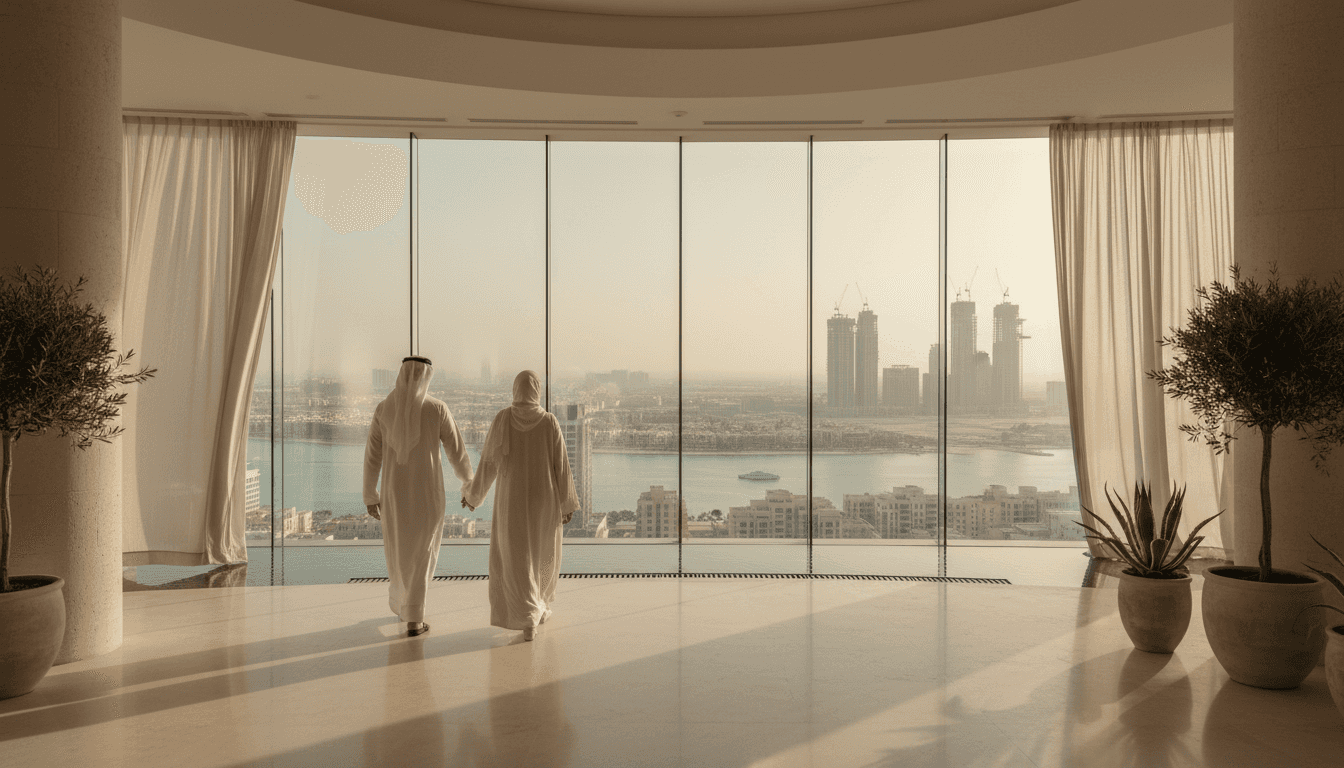
Dubai's New Wave: The Value of Inland Waterfront Living
Dubai's definition of prime waterfront property is expanding inland. I'm taking a deep dive into the master-planned communities built around man-made lagoons and canals, analysing their genuine value against the city's traditional coastal icons.

For two decades, the term 'Dubai waterfront property' conjured a very specific image: a penthouse in Dubai Marina, a villa on the fronds of Palm Jumeirah, or a mansion on Jumeirah Bay. This was the apex of the market, a tangible asset class defined by proximity to the Arabian Gulf. But the city's relentless ambition is redrawing that map. The new frontier for waterfront living isn't on the coast; it's being excavated, filled, and filtered deep within the mainland.
Here’s what we'll explore as we unpack this significant market shift:
- The established premium of Dubai's traditional coastal real estate.
- The engineering and business model behind the new wave of man-made lagoons.
- A close look at the flagship communities leading this trend.
- A detailed financial breakdown: comparing the costs and potential returns.
- The lifestyle proposition and the target demographic for these new addresses.
- The crucial role of master planning and long-term community management.
- My final verdict on the long-term value of investing in these inland oases.
The Coastal Benchmark: Why Sea Views Command Millions
Before we can assess the value of the new wave of canal-front and lagoon developments, we must first establish the benchmark. In Dubai, proximity to the natural coastline of the Arabian Gulf has always been the ultimate measure of luxury real estate. It's a finite resource, and this scarcity, combined with iconic engineering, has created some of the world's most valuable property. The premiums are not just a matter of perception; they are quantifiable, baked into every square foot. Look at projects like the Palm Jumeirah, an audacious feat of land reclamation that created 78 kilometres of new waterfront. A Signature Villa on a mid-to-high number frond can trade for upwards of AED 40 million, while a similar-sized villa in a non-waterfront, albeit premium, community like Arabian Ranches might be half that price. The difference is the water, the private beach, and the unobstructed view of the sea and skyline.
This premium is echoed across all of Dubai's prime coastal zones. In Dubai Marina, apartments with a full sea view command a 15-25% premium over those with a partial or community view within the same building. Move to ultra-exclusive zones like Jumeirah Bay, home to the Bvlgari Resort and Residences, and the figures become even more pronounced. A plot of sand there has been known to sell for prices that make it some of the most expensive land on earth. The allure is a combination of exclusivity, the sensory experience of living by the sea, and the status that comes with it. This is the established top tier of the market, a mature asset class that has proven its resilience and desirability over multiple market cycles. Investors and end-users alike understand the intrinsic, lasting value of a home on the natural coast.
The economics of these areas are also well-understood. Service charges are high, reflecting the cost of maintaining beachfronts, marina berths, and high-end building facilities. But owners accept this as part of the price of admission. The rental yields, while respectable, are often secondary to the primary driver of investment: capital appreciation. Owning a piece of Dubai's prime coastline is seen as a legacy purchase, a store of wealth. This is the gold standard that the new inland lagoon development real estate projects are now challenging, not by competing on the same patch of sand, but by changing the definition of 'waterfront' itself. They aim to replicate the lifestyle and the feeling of waterside living, but at a more accessible price point and in new, developing parts of the city.
The Engineering of an Oasis: Enter the Crystal Lagoon
 Featured project
At the heart of Dubai's inland waterfront boom is a specific piece of technology: the swimmable crystalline lagoon. The company most associated with this is Crystal Lagoons, a Chilean firm that has patented a method for building and maintaining massive bodies of water that are more like turquoise swimming pools than natural lakes. This innovation is the key enabler for the entire concept. Without it, creating a multi-hectare water body in the middle of the desert that remains clean, safe, and aesthetically pleasing would be prohibitively expensive and environmentally unsustainable. The technology allows developers to turn what would otherwise be arid, lower-value land into a prime commodity: waterfront real estate.
The system works through a series of coordinated technologies. A network of sensors and injectors monitors water quality in real-time and applies controlled pulses of disinfectants in specific areas, rather than treating the entire volume of water at once. The company claims this uses up to 100 times fewer chemicals than a conventional swimming pool. Filtration is also handled differently. While a traditional pool filters its entire volume of water multiple times a day, these lagoons use a targeted system that only requires filtering a small fraction of the total volume. This drastically reduces energy consumption — reportedly up to 50 times less than a conventional system. The water itself is often brackish water sourced from underground aquifers, which is unsuitable for drinking but perfect for this application, reducing the strain on the city's desalinated water supply.
From a developer's perspective, this technology is a game-changer. It allows them to create a powerful central amenity that becomes the unique selling proposition for an entire master plan. Projects like Sobha Hartland and Sobha Hartland II and the enormous DAMAC Lagoons community are fundamentally built around this concept. The presence of the lagoon immediately elevates the land value of the surrounding plots. It provides the visual anchor for the community and a hub for recreation — swimming, kayaking, paddle-boarding, that justifies a price premium. Critically, the developers claim the ongoing maintenance costs are surprisingly low, comparable to or even less than maintaining the landscaping of a park or the turf of a golf course of a similar size. This is a crucial point, as it means the high 'wow factor' of the lagoon shouldn't, in theory, translate into unmanageable service charges for residents down the line. It's a model that effectively 'manufactures' a waterfront lifestyle far from the sea.
The New Flagships: Sobha Hartland II and DAMAC Lagoons
To understand this trend, you need to look at the communities where it's being executed at scale. Two projects stand out as the primary examples: Sobha Hartland and Sobha Hartland II and DAMAC Lagoons. While both are centred around large, swimmable water bodies, their approaches and market positioning offer a fascinating contrast. Sobha Hartland II, located in Meydan, is an extension of the developer Sobha Realty’s focus on high-quality construction and finishing. It's positioned as a premium, even luxury, offering. The master plan includes not one but two crystalline lagoons, with apartments, townhouses, and expansive villas set around them. The emphasis here is on creating a serene, green, and exclusive environment just a short drive from Downtown Dubai.
Sobha's key differentiator has always been its vertical integration — they are not just the developer but also the main contractor. This gives them immense control over the quality of materials and the final finish, a point they emphasize in all their marketing. For buyers in Sobha Hartland II, the lagoon is a headline amenity, but it's part of a broader package that includes premium schools, extensive parklands, and a reputation for delivering a product that feels solid and well-built. The properties directly fronting the water, particularly the villas, carry a significant premium and are marketed as a truly upscale Dubai waterfront property. The target audience is clearly high-net-worth individuals and families who want the 'resort' lifestyle without the density of coastal high-rises, and who value build quality above all else.
In contrast, DAMAC Lagoons, located out past the DAMAC Hills and DAMAC Hills II community on Hessa Street, is a project of breathtaking scale and ambition. The entire master plan is a collection of distinct 'clusters', each themed around a Mediterranean city or destination — Santorini, Costa Brava, Portofino, all interconnected by a gigantic, swimmable lagoon. The strategy here is different from Sobha's. DAMAC is aiming for a broader segment of the market, with a focus on townhouses and smaller villas at a more accessible entry price. The marketing is heavily focused on the lifestyle: the white sandy beaches, the water-based activities, the feeling of being on a permanent holiday. The project is effectively selling a dream, a destination in itself. The sheer scale means the community will have its own retail centres, clubs, and facilities, creating a self-contained world. The investment thesis for DAMAC Lagoons is one of scale and future potential. Early investors are betting that as this massive community is built out and the population grows, the amenities and the unique lagoon concept will drive significant capital appreciation.
The Financial Case: Cost vs. Premium
Here is where the 'value' proposition of inland waterfront living becomes most tangible. The core argument is that these communities offer a facsimile of the coastal lifestyle for a fraction of the price. Let's break down the numbers. A new, off-plan four-bedroom villa in Sobha Hartland II with a prime lagoon view might be launched in the range of AED 9-12 million. A five-bedroom villa could be closer to AED 15-25 million. Now, compare that to a similar new-build villa on Palm Jumeirah or Emaar Beachfront. You would be looking at a starting price of at least AED 25-30 million, and likely much more for a prime location. The lagoon property offers a 40-50% discount for a home of similar size and 'waterfront' status.
Let’s run through a hypothetical but realistic cost breakdown for an off-plan townhouse purchase in a community like DAMAC Lagoons. This helps illustrate the total capital required for a waterfront community investment.
Example: 4-Bedroom Townhouse in DAMAC Lagoons * Purchase Price: AED 2,500,000 * Dubai Land Department (DLD) Fee (4% of purchase price): AED 100,000 * DLD Registration Trustee Fee: ~AED 4,200 (fixed fee) * Oqood (Off-plan Registration) Fee: AED 5,250 (if applicable) * Agency Fee (2% of purchase price + 5% VAT): AED 52,500 * Total Upfront Cost (at time of transfer): ~AED 2,661,950
This total cost is significant, but it's an entry point to waterfront living that would be impossible on the natural coastline. For apartments, the entry point is even lower. A one-bedroom apartment in a lagoon-facing tower in Sobha Hartland II might start around AED 1.5 million, whereas a similar new unit with a sea view in Dubai Marina would be well over AED 2.5 million. This price differential is the central pillar of the investment case. The bet is that as these inland communities mature, as the lagoons are filled, and the landscaping grows, the price gap between them and their coastal counterparts will narrow, delivering strong capital appreciation for early buyers.
“The value proposition of an inland lagoon community is simple: it democratises the waterfront lifestyle, making it attainable for a market segment that was previously priced out of the coastal prime corridors.”
However, investors must also consider the holding costs. Service charges are a key factor. For villas and townhouses in these new communities, we're seeing charges in the range of AED 4-7 per square foot per year, calculated on the plot area. For apartments, it's higher, typically AED 16-22 per square foot on the built-up area. These fees cover the immense cost of maintaining the lagoon, extensive landscaping, security, and shared amenities. While developers claim the lagoon tech is efficient, it's still a significant operational expense that owners must bear. These charges are regulated by RERA and must be justified, but they are a permanent and escalating cost that eats into net rental yields and overall profitability. A smart investor will model these costs carefully when projecting their returns.
Canal-Front Living: A Different Proposition
While lagoons create a self-contained resort feel, the extension of Dubai's canal network offers a different kind of canal-front properties Dubai experience. The prime example is the Dubai Water Canal, an audacious 3.2km waterway that flows from the Creek in Old Dubai, through Business Bay, and out to the Arabian Gulf. This project effectively turned a huge swathe of inland Dubai into a waterfront district. Unlike the static, recreational lagoons, the canal is a living, flowing part of the city's transport and leisure network, with water taxis and private yachts navigating its length. Properties along the canal, such as those in Business Bay and Al Jaddaf, offer a more urban, dynamic form of waterfront living.
The value here is tied to both the view and the connectivity. An apartment in a tower directly overlooking the canal commands a significant premium over one just a block away. The views, especially at night with the illuminated bridges and passing boats, are spectacular. The lifestyle is also different. Residents can enjoy waterside promenades for running and cycling, access to floating restaurants, and the general buzz of a vibrant urban waterway. Developers like Emaar Properties and Omniyat have capitalised on this by launching premium residential towers that are oriented entirely towards the canal. Projects like The Peninsula by Select Group in Business Bay are master-planned specifically to maximise this canal frontage.
Financially, canal-front properties sit somewhere between the inland lagoons and the prime coastal real estate. They are more expensive than a typical city apartment but generally more accessible than a sea-view unit in Emaar Beachfront. The appeal is particularly strong for young professionals and couples who want the vibrancy of city life combined with the aesthetic appeal of water. From an investment perspective, the rental demand is strong. Proximity to the DIFC and Downtown Dubai, combined with the unique canal-side setting, makes these properties highly desirable for long-term tenants. The maritime leisure property impact is tangible; the ability to see boats, access a water taxi, or simply walk along the promenade adds a layer of value that translates directly into higher rents and stronger capital preservation.
Master Planning: The Real Driver of Long-Term Value
The success or failure of these large-scale inland waterfront projects will not be determined by the water feature alone. It will be determined by the quality and execution of the master plan. A hole filled with turquoise water is a gimmick; a fully integrated community is a long-term asset. This is where the track record and vision of the developer become paramount. A successful master plan considers far more than just the residential units. It includes a logical road network, sufficient parking, high-quality public spaces, retail and dining options, schools, clinics, and all the other soft infrastructure that turns a collection of houses into a desirable place to live.
Consider the details that make a community work:
- Walkability and Connectivity: Are there shaded walkways? Are the retail areas easily accessible on foot from the residential zones? Is the community well-connected to major road networks like Sheikh Zayed Road or Al Khail Road?
- Amenities Mix: Does the community offer more than just the lagoon? Are there sports courts, children's play areas, gyms, and community pools separate from the main water body? Is there a genuine community centre?
- Phasing and Delivery: Large projects are built in phases over many years. A good developer will ensure that essential amenities are delivered early in the development cycle, so the first residents aren't living on a permanent construction site. They will also manage the phasing to minimise disruption.
- Retail and Commercial Strategy: A successful community needs its own commercial heart. This requires a curated retail strategy that brings in the right mix of cafes, supermarkets, and services that residents actually need. Empty retail units are a sign of a failing master plan.
This is where established developers like Emaar Properties, Sobha, and Nakheel have a distinct advantage. They have decades of experience in not just building, but managing large-scale communities like Downtown Dubai, Arabian Ranches, and the Palm Jumeirah. They understand the complexities of community management, from security and landscaping to waste management and enforcing community rules. For an investor, buying into a project from a developer with a proven track record in master planning provides a significant layer of security. You are not just buying a property; you are buying into a managed ecosystem that has a higher probability of maturing into a thriving, high-value neighbourhood.
The Verdict: A Calculated Bet on Dubai's Future
So, what is my final take on this inland waterfront boom? I believe it represents a fundamental and permanent shift in the Dubai property market. The concept of manufacturing a waterfront lifestyle away from the coast is not a fleeting trend; it is a sophisticated development strategy that unlocks value in previously overlooked areas of the city. For buyers and investors, these communities present a compelling, if calculated, opportunity. The potential for capital appreciation is significant, particularly for those who buy early in well-conceived projects from reputable developers. The chance to own a 'waterfront' home at a 30-50% discount to its coastal equivalent is a powerful proposition.
However, I would caution against viewing all these projects as equal. The devil is in the detail. The long-term success of a lagoon community will depend entirely on the developer's ability to deliver the promised lifestyle and maintain the complex infrastructure, especially the water body itself. As an investor, you must do your due diligence. Scrutinise the master plan. Research the developer's track record on delivery and community management. And most importantly, model the running costs, particularly the service charges, which are a perpetual liability. The projects that will succeed and deliver the best returns will be those that create a genuine, sustainable community, not just a property with a view of a big pool.
The inland waterfront is now a legitimate and important asset class within Dubai's real estate market. It offers a more accessible entry point to a desirable lifestyle and holds genuine potential for capital growth. However, its value is inextricably linked to the quality of the master developer and the long-term execution of the community vision. My advice is to approach this segment with optimism, but also with a healthy dose of critical analysis. Choose the community, not just the water feature.
## Sources - Dubai Land Department (DLD): https://dubailand.gov.ae/en/ - Real Estate Regulatory Agency (RERA): Part of the DLD, governing rules on service charges and off-plan sales. - UAE Government Portal (u.ae): Information on property ownership laws and freehold zones. - Central Bank of the UAE: https://www.centralbank.ae/ for regulations concerning mortgages.
Questions, answered
- Are lagoon properties in Dubai a good investment?
- In my professional view, they can be. These properties often launch at a lower price point than traditional coastal real estate but offer a similar lifestyle, creating potential for significant capital appreciation as the communities mature and the amenities are delivered. However, investment success depends heavily on the developer's reputation and the project's specific location and master plan.
- How much do lagoon properties cost in Dubai?
- Prices vary widely, but as a general guide, apartments can start from around AED 1.2 million, while townhouses and villas in projects like DAMAC Lagoons or Sobha Hartland II typically start from AED 2 million and can exceed AED 15 million for larger, more exclusive homes directly on the water.
- What are the service charges for a property in a lagoon community?
- Service charges for apartments are usually between AED 16-22 per square foot annually, while for villas it's lower, typically AED 4-7 per square foot on the plot area. These fees cover the maintenance of the lagoon, landscaping, security, and all shared community amenities, and are regulated by Dubai's Real Estate Regulatory Agency (RERA).
- Which developers are building the best lagoon communities in Dubai?
- Leading developers in this space include Sobha Realty, known for the high-quality finish in communities like Sobha Hartland and Sobha Hartland II, and DAMAC Properties with their large-scale DAMAC Lagoons project. Emaar is also integrating more extensive water features and canals into its new master plans.
- What is the difference between a coastal and a lagoon property in Dubai?
- The primary difference is location and the nature of the water. Coastal properties are on the natural Arabian Gulf, offering sea views and direct beach access. Lagoon properties are typically located inland, built around large, man-made crystalline swimming lagoons with artificial beaches, offering a resort-like feel often at a more accessible price.
- Can foreigners buy property in Dubai's lagoon communities?
- Yes, these communities are located within designated 'freehold' zones, where non-GCC nationals can purchase property with full ownership rights. This is a key factor driving international demand for these waterfront homes.
Omar tracks the announcements that move the market — new launches, regulation, mega-projects, and developer moves — and tells you what they actually mean for buyers.
Related stories

Dubai Property Ownership: Freehold vs. Leasehold Explained
As a first-time buyer in Dubai, understanding the difference between freehold and leasehold ownership is the single most important step you will take. This guide breaks down what each model means for you, your rights, and your investment.

Old Dubai: Living Along the Creek
I explore the unique lifestyle of living along the Dubai Creek, weighing the romance of heritage areas like Al Fahidi against the practical realities of property ownership and investment in the city's historic heart.
The Real Yield of Dubai Holiday Homes
Discover the true annual net yield of a Dubai short-term rental by moving past gross figures. I'll break down seasonal occupancy, hidden costs, and the peak rates you actually need to achieve profitability.
Echoes, in your inbox
One thoughtful email a month. Market insight, new launches, no spam.