

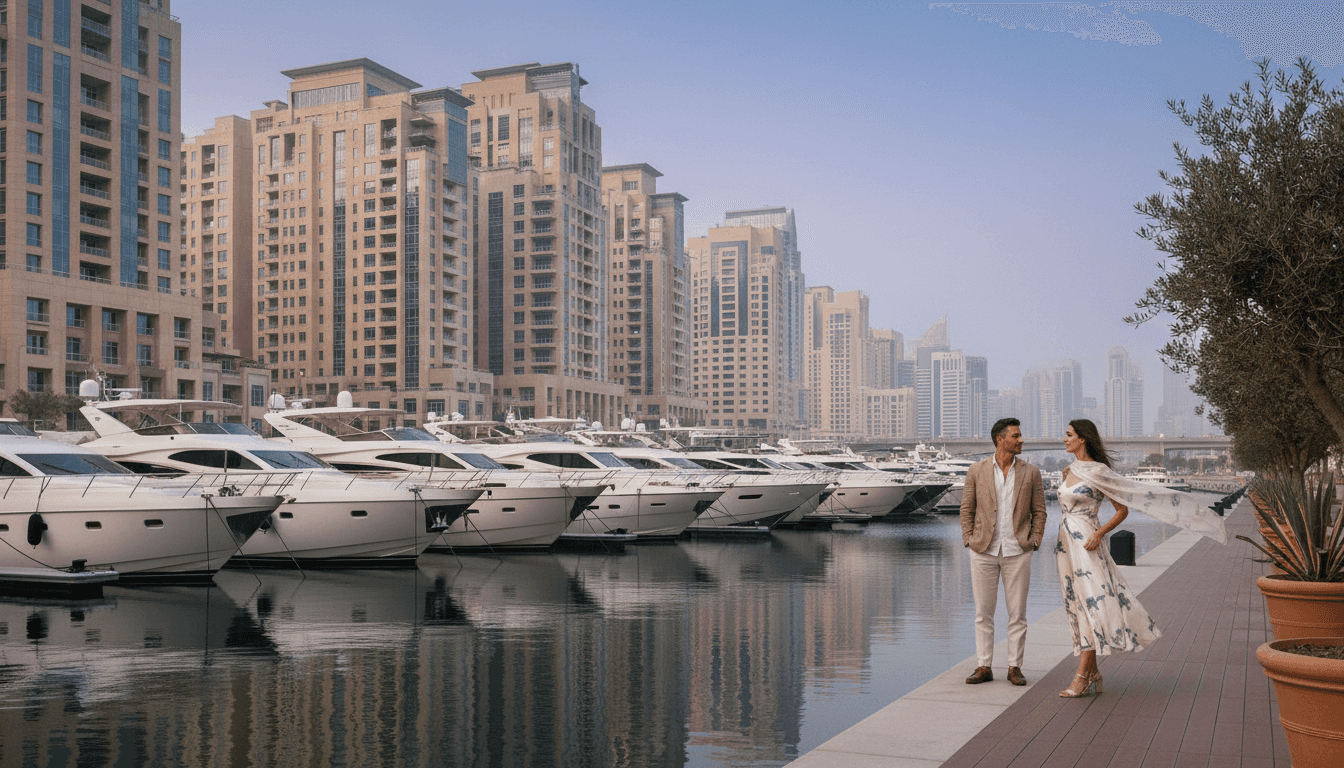
Dubai's Branded Residences: Beyond the Peak
As branded residences expand into Dubai's mid-market, I assess the risk of brand dilution and whether the promised premium can hold its value.

For years, the contract was simple: a top-tier brand on a prime piece of Dubai real estate guaranteed a significant price premium. Now, as the market matures, that formula is being rewritten. We're witnessing a rapid democratisation of the concept, with the Dubai branded residences expansion pushing into new geographies and, crucially, new price points. The question for any serious investor is no longer *if* a brand adds value, but *how much*, for *how long*, and in *which segments*. I believe we are approaching an inflection point where brand association alone is not enough, and the risk of value dilution branded residences face is becoming a material factor in due diligence.
Here is the framework I'll use to dissect this evolving market:
- The classic value proposition of an ultra-luxury branded residence.
- How the model is changing with the move into mid-market segments.
- The mechanics of brand dilution and branded apartments market saturation.
- A deep dive into the financial equation: Are the premiums and yields sustainable?
- The critical role of the operator and the service level agreement.
- A checklist for investors considering a purchase in this category.
- My final verdict on where the real opportunities lie.
The Bedrock of the Brand Premium
To understand where the market is going, we must first be precise about where it came from. The initial wave of branded residences in Dubai was anchored in the ultra-luxury segment and predicated on a clear value exchange. A buyer paid a substantial premium — often cited as 25-35% over a comparable unbranded property in a AAA location, for a package of tangible and intangible benefits. These were not just apartments with a fancy logo in the lobby; they were fully integrated lifestyle products, typically managed by world-renowned hospitality groups like Four Seasons, Mandarin Oriental, or The Ritz-Carlton. The address itself, think Jumeirah Bay or the upper floors of a tower in DIFC, was as much a part of the brand as the name on the door.
The tangible benefits are straightforward. Owners gain access to five-star hotel amenities: world-class spas, state-of-the-art fitness centres, multiple swimming pools, fine dining restaurants, and, most importantly, the service infrastructure that runs it all. This includes a dedicated residential concierge, 24/7 security, valet parking, and the option for à la carte services like housekeeping, in-residence dining, and maintenance handled to the exacting standards of a global hospitality leader. For a non-resident owner, this is the ultimate peace-of-mind asset. The property is maintained, managed, and can often be placed into a rental pool managed by the hotel, providing a hassle-free, if not always chart-topping, yield.
Intangibly, the purchase was about scarcity, status, and trust. Owning a residence in one of only a handful of such projects globally conferred a certain prestige. The brand acted as a powerful signifier of quality and a guarantee of a specific living standard. For international buyers, particularly those unfamiliar with local developers or construction standards, a trusted global brand name de-risks the purchase. It provides an assurance that the building will be finished and maintained to a recognisable international benchmark. This was, and still is, a powerful driver of demand, especially in a market as diverse and dynamic as Dubai's. The brand promises a consistent, predictable experience, insulating the owner from the vagaries of local property management standards.
The New Frontier: Mid-Luxury and Mass Affluence
 Featured project
The landscape is now shifting dramatically. The success of the ultra-luxury model has, predictably, invited imitation and expansion. Developers and brands, seeing the potential for high-margin sales, are pushing the concept into new territories. We are seeing the rapid growth of mid-luxury branded property Dubai, a category that targets a broader segment of the market. This involves collaborations with brands that are accessible and well-known, but not necessarily synonymous with the rarefied air of five-star hospitality. Think upscale-but-not-luxury hotel brands, fashion labels, and even automotive marques venturing into real estate for the first time.
This expansion is happening in two dimensions: price and location. Instead of AED 5-10 million starting points, we are now seeing branded one-bedroom apartments launching in the AED 1.5-2.5 million range. Geographically, they are moving beyond the established prime corridors of Palm Jumeirah, Downtown, and the beach front. New projects are emerging in developing master communities like Arjan, Liwan, and parts of JVC. These areas, while offering excellent growth potential, do not have the established trophy-asset status of their prime counterparts. The core thesis here is that the brand's pull is strong enough to create a desirable address even in a location that is not yet considered 'prime'. Developers like Binghatti have pioneered this with their automotive collaborations, planting flags in areas like Business Bay that are central but have a wide spectrum of quality and price points.
This strategic shift changes the fundamental calculus for a buyer. The purchase is less about acquiring a scarce trophy asset and more about securing a superior-quality home with better amenities than the surrounding unbranded stock. The target demographic is not the global ultra-high-net-worth individual, but the resident end-user or smaller-scale investor who wants a better living experience and a potentially more resilient rental asset. The brand promise shifts from ultimate luxury and exclusivity to one of curated design, reliable quality, and a managed lifestyle. The hospitality brands real estate impact is being tested: can a 4-star hotel brand command a premium in a residential context? The answer is still being written, but the sheer volume of launches suggests developers are betting heavily that it can.
Saturation and the Spectre of Dilution
My primary concern, as I observe the market, is the dual risk of saturation and dilution. When a concept that derives its value from scarcity becomes ubiquitous, its inherent premium is threatened. The sheer volume of new launches under the 'branded' umbrella is staggering. It feels as though every week a new collaboration is announced, stretching the definition of what constitutes a 'brand' in the real estate context. This rapid Dubai branded residences expansion creates a crowded field where it becomes increasingly difficult for buyers to distinguish between a genuinely premium, integrated offering and a simple marketing exercise.
Brand dilution is a serious risk. When a luxury automotive brand, known for its extreme performance and exclusivity, puts its name on thousands of apartments in a secondary location, does it elevate the property or devalue the car brand? Or both? More critically for property investors, when a hospitality brand that operates dozens of hotels across a city at various price points also brands a residential tower, the exclusivity proposition is weakened. The name no longer signifies a unique, singular standard of excellence. If you can experience the 'brand lifestyle' by checking into one of their hotels for a weekend, the incentive to pay a 20% premium to own it diminishes. This is the central paradox: the more successful a brand is at monetising its name through real estate, the less power that name may have over time.
“The ultimate stress test for any branded residence is not the price it achieves on launch day, but the premium it can sustain in the secondary market five years later, when it is no longer the newest product available.”
This leads directly to the problem of branded apartments market saturation. In a few years, an area like Business Bay or even Dubai Marina will have multiple towers all claiming a 'branded' status. They will be competing for the same pool of tenants and resale buyers. In such an environment, the 'brand' itself becomes a generic feature, not a differentiator. The factors that will truly determine value will revert to the fundamentals: the quality of the construction, the efficiency of the floor plan, the actual level of service delivered (not just promised), the reasonableness of the service charges, and the enduring appeal of the location. An investor buying into a mid-market branded project today must ask: when I come to sell or rent this property in 2030, and there are five other 'branded' towers on the same road, what will make mine stand out? The answer has to be more than just the logo on the towels.
The Financials: Deconstructing the Premium
An investor must look past the glossy brochures and deconstruct the financial proposition. The headline premium is only one part of the story; the ongoing costs and realistic rental potential are where the investment thesis is proven or broken. Let's model a hypothetical example to illustrate the point. Consider a one-bedroom apartment in a developing but popular area like Arjan. A good quality, non-branded new building from a reputable developer might cost around AED 1.2 million. A new, mid-market 'branded' project in the same area might be marketed for AED 1.5 million — a 25% premium.
First, let's break down the upfront costs. The higher purchase price immediately scales up all transaction fees. Using Dubai's standard fee structure:
Cost Breakdown: Branded vs. Non-Branded 1-Bed Apartment
| Cost Item | Non-Branded (AED) | Branded (AED) | |---|---|---| | Purchase Price | 1,200,000 | 1,500,000 | | DLD Transfer Fee (4%) | 48,000 | 60,000 | | DLD Admin Fee | ~4,200 | ~4,200 | | Agency Fee (2%) | 24,000 | 30,000 | | Trustee Registration Fee | ~4,200 | ~4,200 | | Total Upfront Cost | 1,280,400 | 1,598,400 |
*Note: These are illustrative figures. VAT applies to fees. Off-plan purchases also involve Oqood registration fees.*
The investor in the branded unit is starting from a position of being approximately AED 318,000 deeper into the investment for a comparable asset, before considering the most critical variable: service charges. This is where the value dilution branded residences can experience becomes most acute. The enhanced amenities and service levels of a branded building come at a significant cost. A non-branded building in Arjan might have service charges of AED 16-18 per sq. Ft. A branded counterpart could easily be AED 25-30 per sq. Ft. For an 800 sq. Ft. apartment, this is the difference between paying AED 14,400 per year and AED 24,000 per year. That's an extra AED 9,600 in non-recoverable operating costs annually.
To justify these higher costs, the property must generate a superior rental income. If the non-branded unit rents for AED 90,000 per year, the branded unit would need to achieve AED 112,500 just to deliver the same gross yield on the purchase price (7.5%). After accounting for the higher service charges, the net yield calculation looks even more challenging. The branded unit needs to command a significant and sustainable rental premium not just to match, but to outperform the non-branded alternative to justify the additional risk and capital outlay. In a saturated market, I question whether a 25% rental premium is consistently achievable for a mid-market brand in a secondary location. A 10-15% premium is more realistic, which may not be enough to produce a superior net return on investment.
The Operator is Everything
In this evolving market, my advice to clients has shifted. I now tell them to scrutinise the operator and the management agreement more than the brand itself. The name on the building is a promise, but the operator is the entity responsible for delivering on it. A developer might partner with a famous fashion or automotive brand that has zero experience in hospitality or property management. In these cases, that brand will subcontract the actual day-to-day operations to a third-party white-label management company. The quality of your investment hinges entirely on the capability and incentives of this, often invisible, third party.
An investor must ask pointed questions before signing any contract. Who is the actual operator? What is their track record in Dubai? Are they managing other properties to a high standard? What are the terms of the management agreement? How are the service charge budgets set and approved? What rights do homeowners have in overseeing the operator's performance? A true hospitality brand like a Four Seasons or a Mandarin Oriental is putting its core business reputation on the line; their incentive is to deliver flawless service because it protects their primary hotel business. The incentive structure for a sub-contracted operator, or a brand for whom real estate is a peripheral licensing activity, can be very different.
Here is a checklist of due diligence points I recommend for any potential buyer of a branded residence:
- The Brand's Role: Is the brand the operator, or just a licensor? If it's a license, who is the contracted operator and what is their local track record?
- The Management Agreement: Request to see a summary of the homeowner's association (HOA) or owner's association (OA) management agreement. What are the term lengths? What are the performance clauses and termination rights?
- Service Charge Budgets: Review the projected service charges. Ask for a line-item breakdown. Are they benchmarked against comparable properties? Is there a cap on annual increases? Under RERA regulations, budgets must be audited and approved, but understanding the initial projections is key.
- Rental Program (if any): If there's an optional rental pool, what is the revenue split? What are the management, marketing, and other associated fees? Is participation mandatory? How is income distributed among owners?
- Use of Amenities: Are there any restrictions on owner access to amenities? Will residents be competing with hotel guests for pool loungers or gym equipment? Are there 'owners only' facilities?
- Brand Benefits: Get a written schedule of the ancillary benefits (e.g., hotel discounts, loyalty status). Are these guaranteed for the life of the ownership, or can they be changed by the brand?
Investor Checklist: Cutting Through the Hype
The decision to invest in a branded residence requires a more sophisticated analysis than ever before. It's a trade-off between a higher entry price and potentially higher, more stable returns, all wrapped in the convenience of professional management. The key is to dispassionately assess whether the specific project you are considering truly offers a sustainable advantage or simply a marketing veneer. The hospitality brands real estate impact is real, but it is not uniform across all projects and all brands. A savvy investor needs to look beyond the launch-day excitement and model the asset's performance over a 5-to-10-year hold period.
Beyond the operator, the fundamentals of real estate investing remain paramount. A great brand cannot fix a bad location or a poorly designed building. I still see projects launching in fringe areas with challenging access or a lack of supporting community infrastructure, hoping the brand name alone will attract buyers. This is a high-risk strategy. The most successful branded projects, in my view, will be those that layer a credible brand onto an already excellent real estate proposition. That means a great location with proven demand drivers, a developer with a sterling reputation for quality construction (Emaar and Sobha are prime examples), and a building design that is both beautiful and highly functional.
Consider the resale market. When you eventually sell, your buyer will be conducting the same analysis. They will compare your property's total cost of ownership — purchase price plus accumulated service charges, against its rental performance and capital growth. If the numbers don't add up relative to high-quality unbranded alternatives, the brand premium you paid upfront will evaporate. This is the essence of value dilution branded residences can face. The projects that will hold their value are those where the brand experience is so demonstrably superior that tenants and future buyers are willing to pay a sustained premium for it. This is delivered through impeccable service and maintenance, not just a logo.
My Verdict: Where to Find Value Now
So, where does this leave us? I am not bearish on the concept of branded residences as a whole. I believe the model, when executed correctly, offers a compelling proposition for both end-users and investors. However, I am increasingly selective. The automatic premium is no longer a given, and the market is bifurcating.
At the very top, the ultra-luxury segment with premier hospitality operators in trophy locations like the Palm Jumeirah or along the canal in Business Bay will continue to command a significant and, I believe, durable premium. The supply of these assets is inherently limited, the brands are unimpeachable, and the target audience is less sensitive to price. These are the modern-day equivalents of owning an apartment on Park Avenue or Eaton Square — the address and the brand are a global currency of prestige.
The real challenge and risk lie in the expanding middle. My analysis suggests that the mid-luxury branded property Dubai segment will see a wide dispersion of outcomes. There will be winners and losers. The winners will be projects backed by strong developers in well-chosen, high-growth locations, managed by credible operators who deliver a tangible uplift in quality and service. These properties will successfully differentiate themselves from the surrounding stock and will likely hold a modest but stable 10-15% premium in the long run. They represent a good choice for buyers seeking a higher quality of life and a relatively hassle-free investment.
The greatest risk of branded apartments market saturation and value dilution is in projects that are merely 'badge-engineered' — where a non-specialist brand has licensed its name to an average product in a secondary location. These investments rely almost entirely on marketing hype. I suspect many will struggle to maintain their rental and capital value premiums once the initial shine wears off and the high service charges bite. The smart money in this cycle will not be chasing logos, but will instead focus on the underlying quality of the real estate and the proven capability of the operator.
For investors looking at this space, the message is clear: do your homework. Look past the brand and analyse the asset as you would any other property investment. Model the costs, question the rental assumptions, and investigate the operator. The right branded residence can be an excellent, resilient addition to a portfolio. The wrong one can be a lesson in how quickly a premium can turn into a discount.
## Sources - Dubai Land Department (DLD): dubailand.gov.ae - Real Estate Regulatory Agency (RERA): Part of DLD, setting rules for service charges and owner associations. - Central Bank of the UAE: For information on mortgage regulations. centralbank.ae - UAE Government Portal: For information on residency and visa rules. u.ae
Questions, answered
- What is the typical price premium for a branded residence in Dubai?
- Historically, ultra-luxury branded residences command a premium of 25-35% over comparable non-branded properties in the same location. This premium is now being tested as brands enter more accessible, mid-market price points.
- Are branded residences a good investment in Dubai's current market?
- It depends entirely on the specific project, brand, location, and your investment horizon. While they offer management convenience and a potential rental premium, investors must scrutinize the higher service charges and the risk of value dilution as the market becomes more crowded.
- What are the main risks with the expansion of branded residences into new market segments?
- The primary risks are brand dilution, where the exclusivity and value of the brand name diminishes, and market saturation. This can lead to compressed rental yields and a smaller-than-expected capital appreciation premium compared to non-branded alternatives.
- How do service charges in branded residences compare to regular apartments?
- Service charges are significantly higher, often ranging from AED 25 to over AED 50 per square foot annually, compared to AED 15-25 for non-branded premium buildings. These fees cover the enhanced amenities, concierge services, and brand-standard maintenance.
- Can any developer launch a branded residence?
- No, a developer must enter into a formal licensing agreement with a brand, typically a hotel operator, fashion house, or automotive company. This agreement dictates the design standards, service levels, and use of the brand name, for which the developer pays a significant fee.
- Does owning a branded residence give you special perks with the brand?
- Often, yes. Owners may receive loyalty status, discounts, and preferential access to the brand's global network of hotels and services. The specifics of these benefits are outlined in the sale and purchase agreement and should be carefully reviewed.

Amara translates DLD transaction data, supply pipelines, and macro signals into clear calls on where Dubai's market is heading. She writes the numbers most brokers only feel.
Related stories

Dubai's Big Squeeze: Smaller Plots, Denser Living
Dubai real estate is undergoing a fundamental shift towards smaller plot sizes and higher density. We analyse the economic drivers, the impact on property values, and what this new era of compact urban living means for both homebuyers and investors.
Resort Living as Your Dubai Reality
Explore how to trade temporary staycations for a permanent home with five-star amenities in Dubai. I'll break down the real costs, best communities, and lifestyle trade-offs of embracing high-end resort living every day.
Finding Your Tribe in Dubai's Villa Communities
I explore which of Dubai's renowned villa communities attract specific expat nationalities and lifestyle groups, offering insights to help you find a place that feels like home.
Echoes, in your inbox
One thoughtful email a month. Market insight, new launches, no spam.