

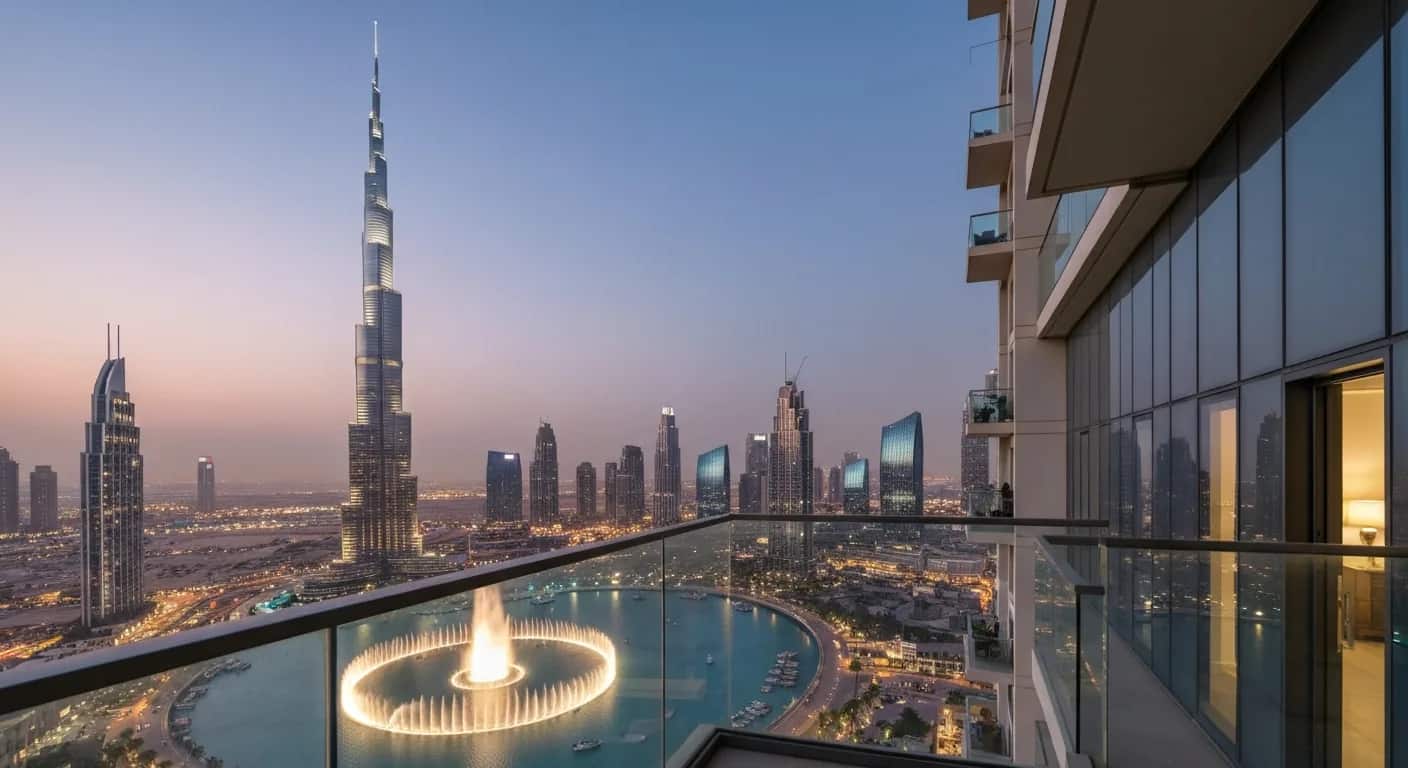
Downtown vs Dubai Marina apartments: which suits which buyer
Downtown vs Dubai Marina apartments — two of Dubai's most sought-after addresses offer distinct trade-offs. This guide compares stock, costs, rental demand and buying mechanics to help buyers choose the right neighbourhood.

Downtown vs Dubai Marina apartments — the shorthand buyers use when they mean 'central prestige' versus 'waterfront lifestyle'. This piece gives a frank, apartment-level comparison so you can match the neighbourhood to your needs.
Thesis: what this comparison is really about
Downtown vs Dubai Marina apartments is more than a question of view; it's a decision about daily life, running costs and the kind of buyer you are. Downtown is the civic heart of Dubai — proximate to the Burj Khalifa, Dubai Mall and Mohammed bin Rashid Boulevard — and it sells a compact urban lifestyle: high-density towers, podium retail and short walks to destination amenities. Dubai Marina, by contrast, sells a horizontal waterfront life: a long promenade, yacht berths nearby, a mix of towers with private terraces and easy beach access at Jumeirah Beach Residence (JBR) and Bluewaters Island.
The real choice hinges on four linked variables: product type (layout, floor plates and branded options), cashflow implications (price per square foot, service charges and sales liquidity), everyday lifestyle (walkability, traffic and outdoor access) and buying mechanics (freehold rules, off-plan escrow, nomination/NOC and mortgage implications). I’ll argue that Downtown best fits buyers who prize prestige, short commutes to central business districts and compact floor plans; Marina fits buyers who prioritise outdoor living, terrace space and rental flexibility. Neither is objectively superior — they suit different buyer profiles.
In the rest of this guide I compare stock and layouts, running costs and service charges, rental demand and yields, lifestyle trade-offs, the legal and financing mechanics you’ll face, and practical negotiation and selection tips. I use building-level examples and common buyer scenarios so you can draw parallels to the exact unit you’re looking at. Expect a verdict at the end and a short checklist to apply before you sign.
Market positioning and buyer profiles
 Featured project
Downtown positions itself as Dubai's formal centre: civic architecture, tourism anchors and mixed-use podiums. The area attracts buyers who want to be at the city's pulse — frequenting events at the Opera District, dinners around Mohammed bin Rashid Boulevard, or shopping at Dubai Mall. This skews demand to professionals working in DIFC, Business Bay, or the financial corridor, empty-nesters who appreciate the short walks and theatrical urban vistas, and investors who prize branded addresses and iconic views (Burj Khalifa facing apartments carry a particular cachet). Expect a higher share of compact one-bedroom and studio apartments built for convenience and rental turnover; the apartment mix is engineered for high footfall and immediate access to amenities.
Dubai Marina sells a complementary proposition: waterfront living and a more relaxed daily rhythm. The Marina attracts families and expatriate professionals who want external spaces — promenades, marina views, and comparatively larger 2–3 bedroom layouts. It is also a magnet for tourists and mid-term renters because the marina promenade, beach access at JBR and nearby leisure attractions offer a lifestyle that photographs well and rents consistently. Investors who prioritise yield and straightforward short-term holiday rentals often gravitate to Marina because of its perennial tourist demand and diversified tenant base.
There’s overlap — many buyers consider both — but the subtle market positioning makes a difference when you assess resale liquidity and tenant profiles. Downtown units often change hands among investors and buyers who value capital appreciation driven by location prestige. Marina units trade on lifestyle strength and rental income stability. Knowing which profile you are helps prioritise floor level, layout and whether to pay a premium for a branded residence or exclusive podium amenities.
Stock and product mix: towers, layouts and branded residences
Downtown’s inventory is dense and vertically oriented. The neighbourhood is dominated by towers with compact floor plates designed for efficient one- and two-bedroom apartments; many blocks are podium-style with retail and concierge services. Notable products include high-profile branded residences and hotel-residence hybrids that trade on name recognition and hotel management — these command premiums for service levels and brand cachet. Floors offering direct views onto Burj Khalifa and the Dubai Fountain are a separate category, and buildings marketed as 'iconic view' often carry higher service charges and sales premiums because of curated public realm spaces they help maintain.
Dubai Marina’s stock is more varied in typology and usually offers larger footprints. You'll find towers with deeper floor plates and designs that prioritise outdoor terraces or wraparound balconies, which suit families and long-stay tenants. Marina towers frequently include split-level layouts, larger master bedrooms, and more generous living areas than comparable Downtown units. The area includes a number of branded and luxury options too — from hotel-managed suites to established names known for leisure offerings — but the big differentiator is the prevalence of units with marina or sea views and generous balcony space.
Which product is worth a premium? In Downtown, you typically pay extra for a branded residence, a Burj-facing view, or a lower floor density that offers better privacy. In Marina, the premium often goes to podium-private access units, corner apartments with uninterrupted marina vistas, or towers with dedicated marina-side amenities. From a floor-plan perspective, buyers who need storage, in-unit laundries and separate servants’ or guest bedrooms will generally find better options in Marina; buyers seeking a compact, low-maintenance pied-à-terre will usually find Downtown’s offerings more tailored to their needs.
Price structure, running costs and service charges
One of the least-discussed but most consequential differences between Downtown and Marina is the ongoing cost of ownership. Service charges in Dubai vary by community and building, and they reflect the intensity of shared amenities and public realm responsibilities. Downtown’s centrality and the presence of high-quality public spaces — professionally maintained promenades, water features, and hotel-grade lobbies — create higher recurring costs in many buildings. When you evaluate a unit, insist on the service charge register and the reserve fund contribution. Some premium downtown towers include concierge, valet and extensive landscaping in their operating budgets; these raise charges but maintain the common areas that preserve resale value.
Marina’s service-charge profile is mixed. Certain waterfront towers with private marina management, dedicated pier maintenance and extensive external landscaping command higher fees; others are more efficient, especially developments where towers share infrastructure and the amenities are less hotel-like. A practical way to compare is to normalise service charges to per-square-foot and then compare like-for-like between towers with comparable amenity levels. Also ask for a three-year history — well-managed buildings show stable or modestly increasing charges and a healthy reserve fund, while buildings with volatile or steep single-year jumps can signal deferred maintenance.
Don’t forget transaction costs and holding costs beyond service charges. DLD registration fees, mortgage arrangement fees, property management and agent commissions on rentals are common to both markets and will affect net yield. From a purchase-price perspective, Downtown command premiums for views and centrality; Marina may offer more value per square foot for larger units and terraces. The right calculation ties expected rental income (or personal use utility) to the net running cost to estimate true ownership affordability.
Rental demand, tenant profiles and yields
Rental dynamics are where the Downtown vs Dubai Marina debate often becomes practical rather than philosophical. Downtown’s tenant base skews towards business travellers, short-stay tourists and professionals who want proximity to central business areas. This creates very high occupancy rates during peak tourism and conference seasons, and strong short-term rental demand if you are managing the asset as a holiday let. However, because purchase prices — especially for premium views or branded residences — are often elevated, gross-to-net yields can look compressed compared to other Dubai neighbourhoods.
Dubai Marina delivers a different rental profile: stable long-term expat families, corporate leases for staff with longer assignments, and a healthy flow of holidaymakers who prefer beachfront-adjacent accommodation. That means demand can be steadier year-round and less correlated to specific city events. Historically, investor returns in Marina have benefited from a larger stock of mid-sized units — 1–3 bedroom apartments — which align closely with tenant demand and produce a good balance between occupancy and achievable rents.
For investors, the yield conversation must include turnover costs and management intensity. Downtown short-term rentals can produce high headline rates but require active management, furnishing and higher turnover maintenance. Marina’s longer-stay tenants may reduce vacancy and operating churn. Also weigh factors such as seasonal occupancy patterns (peaks in winter months), tourism infrastructure around your building, and proximity to corporate hubs which drives corporate letting. Always stress-test rental expectations against the building’s historical occupancy and advertised short-term rental performance rather than citywide averages.
Lifestyle trade-offs: commute, walkability and outdoor access
Downtown is the neighbourhood Dubai shows the world: compact, walkable and urban. If you want to step out for breakfast, see a show at the Opera or shop at Dubai Mall without driving, Downtown shines. Commutes to DIFC, Business Bay and many corporate hubs are short; taxi and metro access are well-developed for city-centre travel. But Downtown is denser and has more tower-to-tower sightlines — privacy, sunlight and breeze can be constrained depending on your level and orientation. If you prize living-room balcony hours and long open-air walks, Downtown can feel visually spectacular but spatially tight.
Dubai Marina's primary asset is its outdoor realm. The Marina promenade, JBR beach and connected walking routes invite morning jogs, weekend family time and al fresco dining. The area is bicycle- and stroller-friendly, and towers typically provide more balcony space and in-unit terraces. Traffic flows in Marina vary; the drive to central business districts is longer than Downtown’s immediate catchment, and peak-hour routes can be congested. But for residents who prioritise life outside the apartment — terrace lunches, beach access and marina-side leisure — Dubai Marina delivers a qualitatively different lifestyle.
Both areas are well-served by retail and F&B, but the tenor differs. Downtown’s dining scene skews high-concept and event-led; Marina offers laid-back cafes and tourist-oriented hospitality anchored around the promenade. Families with school-age children should weigh school commute times: many of Dubai’s international schools sit inland, and Marina parents may face longer daily drives. For buyers whose priority is short commute and high-amenity walkability, Downtown often wins; for those who want outdoor living and space, Marina is usually the better fit.
Buying mechanics: freehold, off-plan, mortgages and paperwork
Both Downtown and Dubai Marina sit in Dubai’s freehold zones where expatriates can own property outright. From a legal mechanics perspective you’ll encounter the same core steps: due diligence on title and community, checking for outstanding service-charge arrears, confirming the developer’s track record for off-plan projects, and ensuring transactions pass through the Dubai Land Department (DLD) registry. Off-plan purchases are registered via DLD processes (including Oqood for certain projects), and developers are required to use escrow accounts for buyer funds where the project qualifies. Ask to see the escrow registration to confirm your payment protections.
The resale process routinely involves a developer NOC; many master-developer communities require that the developer or management signs an NOC confirming the unit has no outstanding liabilities before a transfer at DLD can proceed. This is a factual step and a potential timing bottleneck — clarify with your broker whether an NOC is a simple administrative release or a process that may take weeks. For mortgages, central-bank rules and lender policies determine eligibility, LTV and servicing thresholds. Non-resident borrowers typically face stricter lending criteria and lower loan-to-value; resident buyers can access standard mortgage products but should confirm maximum tenure caps and income documentation requirements with their bank.
Golden Visa and residency pathways sometimes factor into property purchases: while Dubai has long offered long-term residency routes linked to investment thresholds, the qualifying rules are set by federal and local authorities and can change. Don’t buy property purely for visa reasons without confirming current eligibility rules. Finally, budget for DLD transfer fees, possible real estate agent commissions on resale, and conveyancing support. A careful checklist at offer stage — clear title, service charge history, NOC timeframe and mortgage pre-approval — will prevent surprises and speed closing.
Practical selection, negotiation and which towers are worth a premium
Selecting the right apartment means matching layout to lifestyle and then testing price against running costs. In Downtown, pay premiums only when the benefit is durable: Burj-facing apartments with a direct fountain view, branded residences with hotel-level management, or units with large internal storage and concierge services can justify higher per-square-foot prices. However, beware paying extra for short-lived trends like temporary retail pop-ups — the lasting value drivers are view corridor, developer reputation and service-charge transparency.
In Dubai Marina, premiums should follow practical advantages: marina frontage, podium private access, larger terraces and family-friendly floor plans. Towers with well-run marina operations and dedicated leisure facilities such as private gyms, playgrounds and landscaped communal spaces usually hold value better. I’m cautious about paying top dollar for towers with thin ownership registers or erratic service-charge histories: you can end up with surprise assessments or deferred maintenance if the fund is low.
Negotiation levers are similar in both markets: timing, vendor motive and building comparables matter. For resales, establish the vendor’s holding costs — are they servicing a mortgage or trying to move before a market uptick? For off-plan, use developer incentives (payment-plan flexibility, post-handover plans) to secure better terms. Always require a clear breakdown of service charges, a recent reserve fund audit and a statement of outstanding arrears. When evaluating a tower’s worthiness, ask to see three years of minutes from owners’ association meetings; those minutes reveal maintenance backlogs, special levy risks and management quality.
“If you want prestige and short commutes, buy Downtown; if you prize space, terraces and steadier rental cashflow, buy Marina.”
Verdict: who should buy Downtown and who should buy Marina
This is where we weigh trade-offs against buyer personas. Downtown is the right choice for buyers who value prestige, location and an urban lifestyle that minimises daily driving. It suits frequent business travellers, professionals working in central business districts, and buyers who prioritise an internationally recognisable address (which helps with corporate leases and some kinds of resale liquidity). Downtown suits downsizers and empty-nesters who want low-maintenance living with immediate access to cultural venues and top-tier retail.
Dubai Marina is the right fit for buyers who prioritise outdoor living, larger apartments and straightforward rental demand. It suits families who want beach access and space, long-stay expatriates who prefer terraces and recreational amenities, and investors prioritising rental yield and occupancy stability over prestige-driven capital appreciation. Marina also fits buyers who want a tangible lifestyle product — terraces, promenade walks, and easy social life — without always paying Downtown’s premium for centrality.
If you need a simple rule of thumb: choose Downtown for place-of-work convenience and address prestige; choose Marina for space, outdoor amenity and renter-friendly layouts. Within each area, apply the practical checks covered here: service-charge stability, reserve fund health, developer and building reputation, and realistic rental or personal-use projections. Your final decision should be a function of your expected holding period and whether you prioritise cashflow, capital appreciation or daily lifestyle.
Downtown suits buyers seeking prestige, short commutes and compact, low-maintenance living; Dubai Marina suits buyers seeking outdoor space, family-friendly layouts and steadier rental returns.
Practical checklist before you sign:
1. Obtain three years of service-charge accounts and owners’ association minutes. 2. Confirm developer NOC procedure and typical turnaround time for resales. 3. Normalise running costs per square foot and compare like-for-like amenity levels. 4. Stress-test rental and resale scenarios with conservatively estimated vacancy and upkeep costs. 5. Verify escrow and Oqood registration for off-plan deals and confirm DLD transfer mechanics for resales.
Final word from my desk: don’t buy the neighbourhood on brochure emotion alone. Inspect the exact floor plate, test sunlight and cross-ventilation, examine the service-charge ledger, and run conservative rental projections. Both Downtown and Dubai Marina offer blue-chip Dubai living — the right one depends on whether you pay for centrality or for outdoor living and usable space.
Ravi Menon Apartments Editor, Gaia Living
Questions, answered
- Which types of buyers are best suited for Downtown Dubai apartments?
- Downtown Dubai primarily attracts professionals working in DIFC or Business Bay, empty-nesters seeking urban amenities, and investors valuing capital appreciation from prestige and iconic views. It offers a compact, high-density urban lifestyle with short walks to destination amenities.
- How do the apartment types and layouts differ between Downtown Dubai and Dubai Marina?
- Downtown Dubai features dense, vertically oriented towers with compact one- and two-bedroom units, often branded or hotel-managed. Dubai Marina offers more varied typology with larger footprints, deeper floor plates, and generous terraces or wraparound balconies, ideal for families or longer stays.
- What makes Downtown Dubai attractive to real estate investors?
- Downtown Dubai appeals to investors due to its iconic status, proximity to major attractions like Burj Khalifa and Dubai Mall, strong demand for branded residences, and potential for capital appreciation driven by location prestige, especially for units with iconic views.
- What lifestyle advantages do Dubai Marina apartments offer?
- Dubai Marina provides a waterfront lifestyle with a long promenade, yacht berths, easy beach access at JBR and Bluewaters Island, and larger apartments with outdoor spaces, appealing to families and those who prefer a more relaxed daily rhythm.
- What features command a premium in Downtown Dubai apartments?
- In Downtown Dubai, premiums are typically paid for branded residences, direct views of the Burj Khalifa and Dubai Fountain, or units within blocks offering lower floor density for enhanced privacy. These often come with higher service charges due to curated public realm spaces.
- Why do investors often gravitate towards Dubai Marina for rental properties?
- Dubai Marina attracts investors seeking yield and short-term holiday rentals due to its perennial tourist demand, appealing lifestyle (promenade, beach access), diversified tenant base, and stable rental income potential. Its residential units often offer flexible rental options.

Ravi lives and breathes apartment living — from studio yields in JVC to branded residences on the Palm. Floor plans, service charges, and view lines are his love language.
Related stories
Right-Sizing Your Dubai Villa for a New Chapter
As an empty nester or active retiree, your idea of the perfect Dubai home shifts. I explore the best villa communities that prioritise lifestyle and low-maintenance living over sheer size.

Dubai's AC Dilemma: The Real Cost of Cooling
Your apartment's air conditioning is more than just a utility—it's a major factor in your monthly budget and comfort. I'll break down the real costs and benefits of Dubai's two main cooling systems, helping you choose your next home wisely.
Managing Multiple Offers: A Dubai Seller's Playbook
Receiving multiple offers on your Dubai property is an excellent problem to have, but handling it incorrectly can cost you time and money. Here’s my strategic playbook for managing competitive bids to secure the best possible outcome.
Echoes, in your inbox
One thoughtful email a month. Market insight, new launches, no spam.