

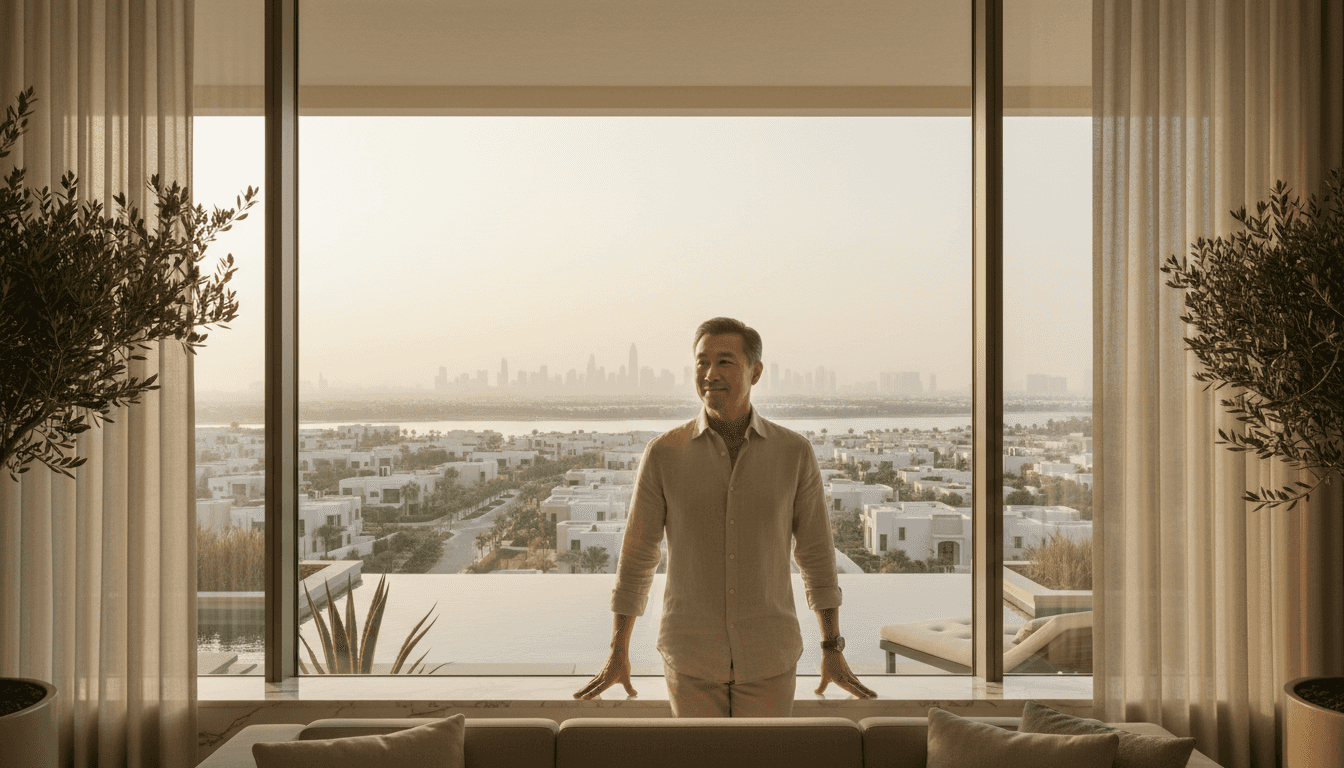
Right-Sizing Your Dubai Villa for a New Chapter
As an empty nester or active retiree, your idea of the perfect Dubai home shifts. I explore the best villa communities that prioritise lifestyle and low-maintenance living over sheer size.

For years, the large family villa was the Dubai dream. Now, as the children forge their own paths, many of my clients find themselves rattling around in homes built for a different era of their lives. Right-sizing isn't about downgrading; it's about upgrading your lifestyle by choosing a home that serves you now, prioritising community, convenience, and quality of life over cavernous, empty rooms.
Here’s what we'll explore in this guide to finding the perfect home for your next chapter:
- The true meaning of 'right-sizing' for active adults in Dubai.
- Key communities offering low-maintenance villas and townhouses.
- The financial realities: a detailed cost breakdown of buying your new home.
- Single-storey living versus compact townhouses, and which is right for you.
- The crucial role of community amenities in an active retirement.
- Navigating the mortgage and visa landscape for over-55s.
- My final verdict on the best communities for this new stage of life.
Beyond Square Footage: Redefining the 'Right Size'
For many years, the pinnacle of success in Dubai’s property market was the sprawling five or six-bedroom villa. It was a statement, a home for a growing family, a space for entertaining on a grand scale. But what happens when the children leave for university or to start their own families? Suddenly, that vast space can feel less like a luxury and more like a burden. The endless cleaning, the high running costs, the rooms that are never used — it's a common story I hear from clients who are ready for a change. This is where the concept of 'right-sizing' comes in, and it's a conversation we at Gaia Living are having more frequently. It’s a shift in mindset from 'bigger is better' to 'smarter is better'.
'Right-sizing' for empty nesters and active retirees in Dubai is not about sacrifice. It’s a strategic choice to align your living space with your current lifestyle. It means swapping unused bedrooms for a home with a manageable garden, world-class community facilities on your doorstep, and lower maintenance overheads. This frees up not only capital — often unlocking significant equity from the larger family home, but also your time. Instead of spending weekends managing a large property, you could be on the golf course, at the community pool, or travelling, all with the peace of mind that your home is secure and easy to look after.
I find the most successful transitions happen when clients focus on a 'lifestyle checklist' rather than a square footage target. What do you want to do with your newfound freedom? Are you a keen golfer? A social butterfly who thrives on community events? Do you want to be able to lock up and leave for extended holidays without a second thought? The answers to these questions point towards specific communities. For some, it might be a modern two-bedroom townhouse with a small patio in a bustling community like Nshama's Town Square. For others, a single-storey garden home in Jumeirah Park or a classic bungalow in Arabian Ranches might be the perfect fit. The goal is to find a property that facilitates the life you want to lead now, not the life you needed ten years ago. These are the conversations that truly excite me — helping people design their next chapter.
Spotlight on Communities: Where to Find Your Perfect Fit
 Featured project
When clients ask for my recommendations on Dubai villas for empty nesters, I immediately think of a handful of communities that master the balance of quality, amenities, and manageable living. These aren't purpose-built 'retirement communities' in the traditional sense; rather, they are multi-generational neighbourhoods where the design and facilities naturally appeal to those seeking an active, comfortable, and lower-maintenance lifestyle. My personal favourite for its established charm and green, open spaces is Arabian Ranches. The original Ranches, developed by Emaar Properties, offers a variety of smaller two and three-bedroom townhouses (in the Palmera and Al Reem sub-communities) and some beautiful single-storey bungalows that are highly coveted. The sense of community here is palpable, with a mature town centre, a golf club, and an equestrian centre that foster a real neighbourhood feel.
For those who prefer a slightly more contemporary aesthetic, Jumeirah Park, a project by Nakheel, is an excellent choice. While known for its larger villas, it also features three-bedroom homes that are more compact and have smaller, more manageable plots. The community is distinguished by its excellent location, sandwiched between JLT and The Meadows, and its namesake parks and green spaces that are dotted throughout. Another Nakheel community worth serious consideration is Al Furjan. The Quortaj and Dubai-style townhouses offer three bedrooms in a very usable layout, and the community has benefited hugely from the completion of its own Metro station on the Route 2020 line, making it exceptionally well-connected. The Al Furjan Club offers a great restaurant, a large gym, and pools, acting as a social hub for residents.
If brand-new is a priority, then communities like Damac Hills and Damac Hills II offer a huge range of smaller villas and townhouses, often with very attractive post-handover payment plans from the developer. While further out, the sheer scale of amenities — from the Trump International Golf Club to wave pools and sports parks, provides a self-contained, resort-like lifestyle that appeals to many active adults. Similarly, Town Square by Nshama has been a runaway success, offering smartly designed two and three-bedroom townhouses that are among the most affordable in the city. The central town square, with its cinema, shops, and restaurants, creates a vibrant, walkable heart that many newer communities lack. The key is to visit these places, walk around the community centres, and get a feel for the atmosphere. One person's perfect fit is another's compromise, and the 'vibe' of a neighbourhood is just as important as the floor plan.
The Financials: A Clear-Eyed Look at Costs
Transitioning from a large family home to a more compact villa is also a significant financial event. For many, it's an opportunity to release capital tied up in their previous property, providing a welcome boost to retirement funds or travel budgets. But buying a new property, even a smaller one, comes with its own set of costs that must be budgeted for accurately. It's crucial to look beyond the headline sticker price. At Gaia Living, we always prepare a detailed statement of costs for our clients to ensure there are no surprises on closing day.
Let's break down the typical upfront costs for purchasing a ready two-bedroom townhouse valued at AED 2,500,000 in a community like Arabian Ranches. This is what a buyer should expect to pay on top of the purchase price:
- Dubai Land Department (DLD) Transfer Fee: 4% of the property value - AED 100,000
- DLD Admin Fee: AED 4,200 (fixed fee)
- Property Registration Trustee Fee: AED 4,200 (for properties over AED 500k)
- Real Estate Agency Fee: 2% of the property value + 5% VAT - AED 52,500
- No Objection Certificate (NOC) Fee: Paid to the developer, typically ranges from AED 500 to AED 5,000 (let's estimate AED 1,500)
- Mortgage Arrangement Fee (if applicable): Usually 1% of the loan amount + 5% VAT
- Mortgage Registration Fee (if applicable): 0.25% of the loan amount, paid to the DLD
- Initial Service Charge Deposit: Developers often require a 3-month advance on community fees.
In this example, the total mandatory upfront costs, excluding any mortgage-related fees, would be approximately AED 158,200. This is a significant sum, around 6.3% of the property's value. It's essential to have this amount available in liquid cash, as it cannot be included in the mortgage. Understanding these figures from the outset, as detailed on the Dubai Land Department (DLD) website, allows for realistic financial planning and a smoother transaction.
Beyond the purchase, ongoing costs must also be factored in. Low maintenance villas Dubai are not 'no maintenance'. The primary ongoing expense is the annual community service charge. This fee, levied by the developer's owner's association management company, covers the upkeep of all common areas: landscaping, security, swimming pools, gyms, and roads. It's calculated on the plot area of your villa in square feet. In established communities like The Meadows or Arabian Ranches, this might be around AED 3.00 - AED 4.50 per sq. Ft. For a townhouse with a 2,500 sq. Ft. plot, this translates to an annual fee of AED 7,500 to AED 11,250. This is a non-negotiable cost, and it's vital to request the service charge history for any property you're considering. It's a key part of the total cost of ownership and a good indicator of how well-managed the community is.
Single-Storey vs. Townhouse: Choosing Your Layout
One of the most important practical decisions when right-sizing is the layout of the home itself. The debate often centres on single-storey bungalows versus two-level townhouses or villas. For many of my clients in their late 50s and beyond, the idea of 'future-proofing' their home is a top priority. This is where the appeal of single-storey living becomes undeniable. A bungalow eliminates the daily necessity of climbing stairs, a consideration that becomes increasingly important with age. It offers a sense of smooth flow and accessibility that two-storey homes simply can't match. Communities like The Springs, The Meadows, and parts of Arabian Ranches have some excellent single-level options, though they are often older and command a premium due to their rarity and high demand.
These single-level homes, often called garden homes or bungalows, are some of the most sought-after smaller villas for adults Dubai has to offer. They typically feature two or three bedrooms and a living space that opens directly onto the garden, creating a wonderful indoor-outdoor connection. The downside? They are scarce. Because they require a larger plot footprint for the same built-up area compared to a two-storey home, developers have built fewer of them in recent years. This scarcity means they hold their value exceptionally well but can be harder to find and may require renovation to bring them up to modern standards. In my view, if you can find a well-located, single-storey villa and have the budget for it, it’s an unbeatable long-term choice for retirement living.
>Right-sizing isn't about giving things up. It's about gaining a lifestyle that's richer, more manageable, and perfectly tailored to who you are today.
However, we shouldn't dismiss the modern two or three-bedroom townhouse. What they lack in single-level convenience, they often make up for in modern design, efficiency, and value. Newer townhouses in communities like Town Square, Damac Hills 2, or Sobha Hartland and Sobha Hartland II are built to a high standard, with contemporary finishes, smarter layouts, and better energy efficiency, leading to lower utility bills. They are also significantly more affordable, on a price-per-square-foot basis, than a rare bungalow. For active, healthy adults, stairs are a non-issue. A layout with the living area downstairs and bedrooms upstairs provides a nice separation of space. Many of my clients in their early 60s are perfectly happy with a townhouse, preferring its modern amenities and lower purchase price, and they see it as a home for the next 10-15 years. The choice is deeply personal and depends on your mobility, priorities, and long-term view.
The Power of Community: Amenities for an Active Life
When you're no longer tied to the school run or a daily commute to a specific business district, your immediate neighbourhood becomes the centre of your universe. This is why, when advising on active senior living Dubai villas, I place an enormous emphasis on the quality and variety of community amenities. The swimming pool, the gym, the tennis courts, the walking trails, the clubhouse — these are no longer just weekend nice-to-haves; they become an integral part of your daily routine and social life. A great community fosters interaction and makes it easy to stay active, engaged, and connected.
Master-planned communities by developers like Emaar, Nakheel, and Meraas excel at this. They understand that they aren't just selling houses; they're selling a lifestyle. In a community like Arabian Ranches, you don't just have a pool; you have multiple pools, tennis and basketball courts, landscaped parks with barbecue stations, and miles of shaded walking paths. The Arabian Ranches Golf Club and the Dubai Polo & Equestrian Club provide a sophisticated social anchor for the entire area. These are places where neighbours meet, friendships are formed, and a genuine community spirit is built. The same can be said for Victory Heights in Dubai Sports City, which is built around the Els Club golf course and offers a green, pedestrian-friendly environment perfect for an active lifestyle.
The social infrastructure is just as vital as the physical. A good community has a town centre with a supermarket, a pharmacy, cafes, and restaurants. This creates a walkable hub where you can run daily errands and meet neighbours for a coffee without ever needing to get in the car. It fosters independence and convenience. Some of the newer communities are also incorporating dedicated wellness centres, yoga studios, and even medical clinics within the master plan. As a buyer, you should scrutinise the master plan for these features. Ask about the residents' clubs. Are there organised activities? Fitness classes? Social groups? A well-managed community will actively program its spaces to bring people together, which is invaluable for anyone, but especially for those looking to build a new social circle in retirement.
Visas and Mortgages: The Practicalities of Retiring in Dubai
Dubai has made significant strides in making itself a globally attractive destination for retirees, and the legal framework now fully supports this ambition. The key to this is the UAE's renewable five-year retirement visa. This has been a game-changer, providing long-term security for those over 55 who wish to make Dubai their home. To be eligible, an applicant must meet one of four financial requirements, which are clearly outlined by the government and can be verified via the Dubai government's official portal.
Here are the current pathways to securing the retirement visa:
1. Property Ownership: Own one or more properties in the UAE with a total value of at least AED 1 million. The property must be fully paid for, not mortgaged. 2. Bank Savings: Have a fixed deposit or savings of at least AED 1 million in a UAE-based bank for a minimum of three years. 3. Active Income: Provide proof of a stable monthly income of at least AED 15,000 (for Dubai-issued visas), sourced from a pension or other investments. 4. Combination: A combination of property (valued at least AED 500,000) and savings (at least AED 500,000) to meet the AED 1 million threshold.
For many of my clients, the property ownership route is the most straightforward. Buying a townhouse or villa for, say, AED 2 million, automatically qualifies them for the visa once the title deed is issued in their name and the property is not under a mortgage. This provides a direct and tangible path to long-term residency, linking your home to your right to live in the country.
Obtaining a mortgage as an older buyer is also more feasible than many assume. While UAE banks are naturally cautious, they are open for business. The Central Bank of the UAE sets the lending regulations. Generally, banks will lend up to a maximum age of 65 or 70 for the final mortgage payment. This means a 60-year-old applicant could potentially secure a 10-year mortgage term. The key is demonstrating a clear and stable source of repayment, which can be a pension, investment income, or post-retirement employment. Banks will conduct a thorough assessment of your income and overall financial health. For expatriates, the maximum loan-to-value (LTV) ratio for a first property is typically 75-80%, meaning you will need a cash down payment of 20-25% plus the associated purchase fees. Having a healthy down payment and a clear financial picture is the best way to ensure a successful mortgage application in your later years.
My Verdict: The Best of the Best for a New Beginning
After years of guiding clients through this exact transition, certain patterns and preferences become clear. While every individual's needs are unique, there are a few communities that I consistently find deliver the best all-around package for active empty nesters and retirees in Dubai. They blend comfort, community, and convenience in a way that truly enhances this new phase of life.
For those who value maturity, green space, and a deeply established sense of community, my top recommendation remains the original Arabian Ranches. The two-bedroom townhouses in Al Reem and Palmera are perfectly proportioned, the amenities are second to none, and the entire community feels like a true neighbourhood. The slightly older properties may require a cosmetic update, but their build quality is solid, and their location is superb. Finding one of the rare single-storey bungalows here is like striking gold — in my professional opinion, it's the ideal retirement property in Dubai.
For buyers prioritising modern construction and a more central location, I would point towards Jumeirah Park or Sobha Hartland. Jumeirah Park's location is almost unbeatable, and its three-bedroom villas, while not tiny, offer manageable plots and a high-quality living environment. Sobha Hartland, closer to Downtown, offers impeccably finished townhouses and a burgeoning community feel, with the added benefit of being a stone's throw from the city's main attractions. It’s a great choice for those who want to be closer to the urban core while still enjoying the space of a villa.
Ultimately, the process of right-sizing is a deeply personal journey of rediscovery. It’s about asking what you truly want from your home and your community now that your needs have evolved. The goal is to find a place that doesn’t just house you, but energises you. My advice is to spend time in these communities, walk the streets, visit the clubhouses, and talk to residents. The perfect villa is out there, and finding it is the first step to a vibrant, fulfilling, and wonderfully manageable new chapter in Dubai.
Sources
- Dubai Land Department (DLD): https://dubailand.gov.ae
- UAE Government Portal (Retirement Visa): https://u.ae/en/information-and-services/visa-and-emirates-id/residence-visas/residence-visa-for-retired-expats
- Central Bank of the UAE (CBUAE): https://www.centralbank.ae
Questions, answered
- Are there specific retirement communities in Dubai?
- While Dubai does not have US-style 'retirement-only' communities, many master-planned villa communities are exceptionally well-suited for active retirees. They offer single-level homes, extensive amenities like clubhouses and pools, and a strong social fabric, making them de facto retirement-friendly.
- Can I get a residence visa if I retire in Dubai?
- Yes, the UAE offers a 'Retire in Dubai' visa for individuals over 55. To qualify, you must meet one of several financial criteria, such as owning a property worth at least AED 1 million (unmortgaged), having AED 1 million in savings, or a proven active income of at least AED 15,000 per month.
- What are typical service charges for a smaller villa in Dubai?
- Service charges for villas are calculated per square foot of plot area. For a smaller 2 or 3-bedroom villa, you can expect to pay anywhere from AED 2.50 to AED 5.50 per square foot annually. This typically covers community security, landscaping, pool maintenance, and upkeep of communal facilities.
- Is it better to buy an off-plan or ready villa for retirement?
- This depends on your timeline and preferences. A ready villa allows you to move in immediately and understand the established community, but requires a larger upfront payment. An off-plan property offers attractive payment plans and a brand-new home, but involves a waiting period and the standard risks of construction.
- What is the smallest type of villa available in Dubai?
- The most common smaller configurations are two and three-bedroom townhouses or semi-detached villas. Some communities, like those in Arabian Ranches or Jumeirah Park, also offer bungalows or single-storey homes which are highly sought after by those seeking to avoid stairs.
- What are the main costs when buying a resale villa in Dubai?
- The main upfront costs for a resale property include the purchase price deposit (typically 10%), a 4% transfer fee payable to the Dubai Land Department (DLD), a 2% (+VAT) real estate agency fee, and various administrative fees for the trustee office and title deed issuance, totalling around 7-8% of the property value.

Sophia profiles Dubai's villa communities — schools, commute times, green space, and the intangible feel of a neighbourhood. She writes for families putting down roots.
Related stories
Dubai's AC Dilemma: The Real Cost of Cooling
Your apartment's air conditioning is more than just a utility—it's a major factor in your monthly budget and comfort. I'll break down the real costs and benefits of Dubai's two main cooling systems, helping you choose your next home wisely.
Managing Multiple Offers: A Dubai Seller's Playbook
Receiving multiple offers on your Dubai property is an excellent problem to have, but handling it incorrectly can cost you time and money. Here’s my strategic playbook for managing competitive bids to secure the best possible outcome.

Gifting Property to Family in Dubai
Thinking of transferring a Dubai property to a family member? Learn how to navigate the DLD's rules for gifting to first-degree relatives and significantly reduce your transfer costs.
Echoes, in your inbox
One thoughtful email a month. Market insight, new launches, no spam.