

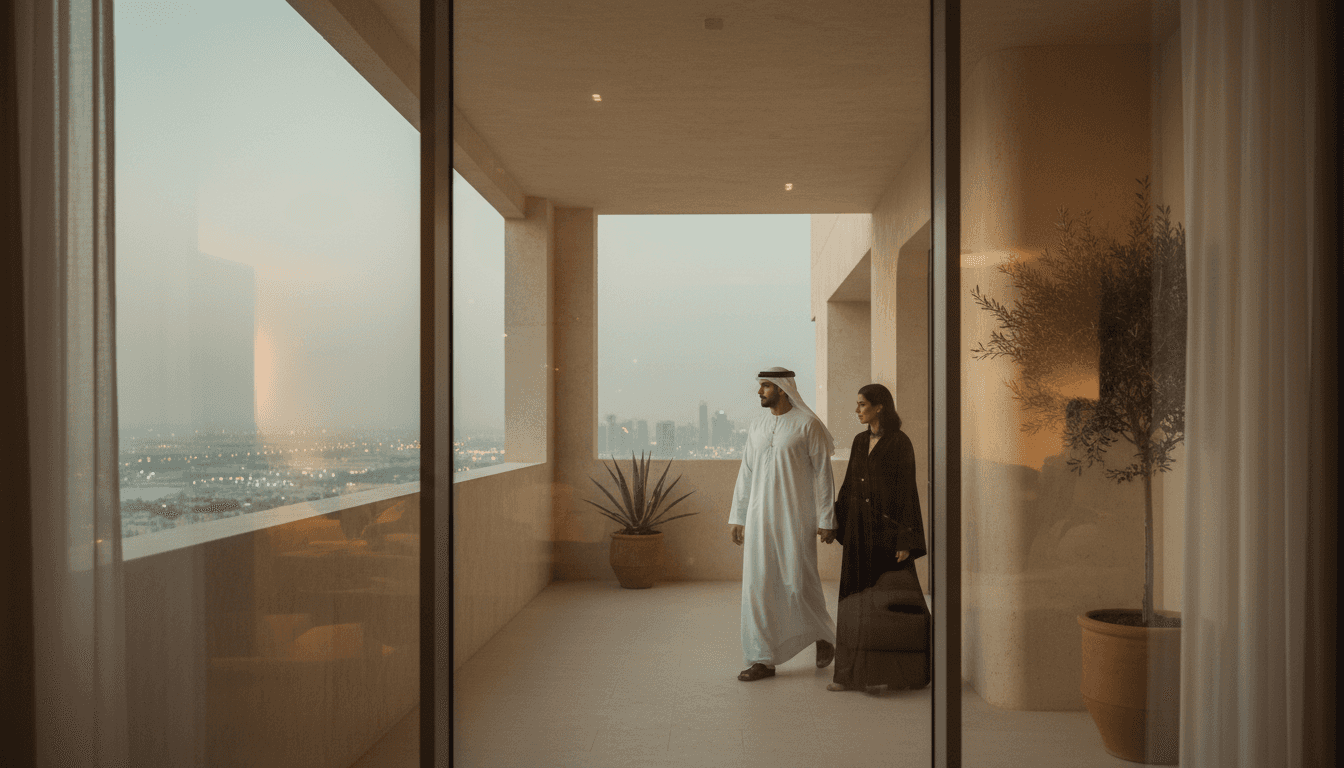
Beyond the Gadgets: A Guide to Smart Homes in Dubai
I explore how new developments in Dubai are redefining 'intelligent living' beyond mere gadgets, embedding technology that genuinely enhances daily life, efficiency, and comfort.

The term 'smart home' gets thrown around so much in Dubai property marketing that it’s almost lost its meaning. But true intelligent living goes far beyond a voice-activated speaker or colour-changing lightbulb. It’s about a home that anticipates your needs, streamlines your day, and operates with a quiet efficiency that genuinely improves your quality of life.
Here’s what we’ll explore:
- What 'intelligent living' really means in the context of Dubai in 2026.
- The core technologies that make up a modern smart home.
- How developers are integrating this tech, from master communities to luxury towers.
- A look at the best neighbourhoods for a tech-forward lifestyle.
- The crucial difference between developer-integrated systems and DIY retrofits.
- The real costs involved, from purchase premiums to running expenses.
- My personal take on whether this tech is a valuable investment or a fleeting gimmick.
Unpacking 'Intelligent Living': Beyond the Hype
When we at Gaia Living talk about intelligent living, we're not just talking about gadgets. We're discussing integrated systems that create a responsive, efficient, and secure environment. For years, the concept was sold on novelty: turn on your lights from the office! The reality is, after the first week, few people do. True intelligence is smooth. It’s the air conditioning pre-cooling your apartment to your preferred 22°C half an hour before you typically get home from work, using geolocation from your phone. It’s the blinds automatically lowering on the west-facing windows during the afternoon sun, reducing the load on the AC and saving you money on your DEWA bill. This is the new baseline for smart homes Dubai.
This shift from gimmick to utility is a reflection of Dubai's own evolution. The city’s ambition, as laid out in strategies like the Dubai 2040 Urban Master Plan, is to be a global leader in smart, sustainable living. This top-down vision is now becoming a ground-up reality in its residential sector. Developers are no longer just building apartments; they're crafting experiences. They understand that for the modern buyer, luxury isn’t just about marble finishes and skyline views. It's about convenience, efficiency, and peace of mind. A home that works for you, not the other way around. That’s the promise of intelligent living Dubai is starting to deliver on.
What this means in practice is that the technology is becoming invisible. It’s baked into the building's infrastructure rather than being a collection of aftermarket devices plugged into the wall. Think of it like a central nervous system for your home. You don't see the wiring, but you experience the results: consistent comfort, effortless control, and subtle efficiencies that add up over time. This is a fundamental change from the first wave of smart homes, which often involved complicated setups and multiple competing apps. The new standard is a single, unified interface — often a developer-branded app or a wall-mounted tablet, that orchestrates everything.
The Core Components of a Modern Dubai Smart Home
 Featured project
So, what does this 'central nervous system' actually consist of? While the specific brands and configurations vary, the best new developments Dubai has to offer are built around a few core pillars of home automation. Understanding these helps you cut through the marketing jargon and assess the real value on offer.
First and foremost is Climate and Energy Management. In a city where air conditioning can account for up to 70% of a summer electricity bill, this is not a luxury, it's a necessity. Modern systems use smart thermostats, learning algorithms, and motion sensors to cool rooms efficiently. They know when you're home, when you're away, and even which rooms you're using. This granular control can lead to significant savings on DEWA bills, making it one of the most practical applications of smart technology. The best systems, like those seen in projects at Creek Harbour, integrate this with smart blinds and curtains, creating a passive cooling strategy that works in tandem with the active AC system.
Security and Access is the second pillar. This has moved far beyond a simple video intercom. We're now seeing keyless entry using facial recognition or smartphone proximity, temporary digital keys you can issue to guests or maintenance staff, and a network of high-definition cameras you can monitor from anywhere in the world. Developers like Emaar Properties have integrated this into their community apps, so the same platform that lets you book a gym slot also lets you see who is at your front door. It provides a powerful sense of security, especially for residents who travel frequently or own the property as an investment to rent out.
Finally, there's the pillar of Ambience and Convenience. This is where you find the more 'lifestyle' oriented features:
- Smart Lighting: Systems from Lutron or similar brands allow for the creation of 'scenes'. A 'Movie Night' scene might dim the main lights, turn on soft accent lighting, and lower the blinds, all with a single tap.
- Integrated Audio: Ceiling speakers in main living areas that can stream music directly from your phone.
- Smart Appliances: While less common as a standard inclusion, high-end developments are beginning to feature kitchens with smart refrigerators that track inventory or ovens you can preheat on your way home.
- Centralised Control: The key is bringing it all together. A wall-mounted tablet (often an iPad) or a proprietary developer app (like DAMAC Living or Emaar One) acts as the command centre for the entire home.
These components form the backbone of home automation Dubai-style. The quality of a smart home is not determined by how many of these features it has, but by how well they are integrated to work together smoothly.
From Master Plan to Your Front Door: Developer Integration
The most significant trend I'm seeing is the shift towards developer-led, community-wide integration. It's no longer about a single 'smart villa'. It's about smart communities. Developers like Sobha Realty in their flagship Sobha Hartland and Meydan communities are designing the technological infrastructure from the ground up. This means the smart features in your home are connected to the wider community's amenities and services. From your living room tablet, you can book a paddle tennis court, check the real-time availability of the gym, order from the local café, and grant entry to a delivery driver at the main community gate.
This creates a level of convenience that standalone systems can't match. Emaar Properties is a master of this ecosystem approach. In communities like Dubai Hills Estate or Arabian Ranches, the 'Emaar One' app is the digital key to your entire life there. It handles service charge payments, maintenance requests, amenity bookings, and home automation. This single point of contact is incredibly powerful. It simplifies life for residents and, from a developer's perspective, creates a 'sticky' environment that fosters community loyalty. When your home is so deeply integrated with its surroundings, it becomes much more than just bricks and mortar.
We're also seeing this on a smaller, more boutique scale in ultra-luxury towers. Developers like Omniyat are renowned for their tech-forward approach. In their properties like The Lana or AVA at Palm Jumeirah, the home automation is part of the building's core identity. These aren't just apartments with smart lighting; they are 'intelligent residences' managed by a digital 'butler'. The technology is deeply embedded and customised, often controlling everything from the scent diffusion in the lobby to the specific water temperature of your private pool. This level of integration in modern homes Dubai is a major selling point in the ultra-high-net-worth segment, where convenience and bespoke service are paramount.
This holistic approach is a game-changer. It means the system is professionally installed, warrantied, and maintained as part of the building's infrastructure. You aren't left troubleshooting a connection between your smart lock and your thermostat. It all just works, supported by the building management. This reliability is key to moving smart technology from a hobby for tech enthusiasts to an essential utility for everyday residents. It’s the difference between a house with gadgets and a truly intelligent home.
The Best Neighbourhoods for a Tech-Forward Lifestyle
If you are looking to buy or rent a home where this level of integration is standard, your best bet is to focus on Dubai’s newer master-planned communities and high-end towers. These are the areas where developers have had the opportunity to lay the necessary fibre-optic groundwork and design the communities around a smart-living ethos from the very beginning.
“For the most smooth smart home experience, look at communities built in the last five years. The underlying infrastructure is just as important as the devices in the apartment itself.”
Dubai Hills Estate is perhaps the prime example of a large-scale, family-oriented smart community. Developed by Emaar, almost every villa and apartment here comes with a foundational smart home package controlled via the Emaar One app. The entire neighbourhood is designed for this connected lifestyle, from its smart irrigation systems in the parks to the integrated community management platform. Similarly, newer phases in communities like Arabian Ranches III and The Valley are being built to this modern standard. These areas are ideal for families looking for spacious homes with gardens, but who don't want to compromise on modern technological conveniences.
For those who prefer apartment living with stunning views, waterfront communities like Emaar Beachfront and Creek Harbour are setting the standard. Here, the smart home features are complemented by the stunning location. Imagine your blinds automatically opening in the morning to a view of the marina, or being able to pre-cool your apartment to perfection after a day at the beach, all from your phone. In these high-density areas, the smart integration also extends to building management, with smart elevators that reduce waiting times and app-based systems for booking shared amenities like infinity pools and private cinemas. Bluewaters Island by Meraas is another standout, offering a resort-style living experience where technology smoothly blends into the background to enhance the sense of luxury and ease.
At the ultra-luxury end of the market, you have iconic locations like Palm Jumeirah and Jumeirah Bay. Projects here by developers like Omniyat and Meraas treat technology as a form of art. These aren't just tech-integrated homes; they are bespoke digital canvases. The level of customisation is extraordinary, and the systems are often managed by the building's 5-star hospitality provider. This is where you'll find the absolute cutting edge of home automation, but it comes with a price tag to match. It's a very different proposition from the more accessible, standardised systems in the master communities, but for a certain type of buyer, it represents the pinnacle of modern luxury living.
DIY Retrofit vs. Integrated Systems: A Crucial Distinction
As the demand for smart features grows, many homeowners in older buildings across areas like Dubai Marina or Downtown Dubai ask us: can I just upgrade my own apartment? The answer is yes, but it's vital to understand the difference between a DIY retrofit and a developer-integrated system. They are not the same thing, and the distinction has significant implications for cost, reliability, and user experience.
A DIY approach involves buying off-the-shelf smart products — a Ring doorbell, Philips Hue lightbulbs, a Nest thermostat, a few Sonos speakers, and connecting them to your home Wi-Fi. This can be an excellent way to dip your toes into home automation. It's flexible, you can start small, and you can take the devices with you when you move. However, this approach often leads to what I call 'app fatigue'. You end up with a separate app for your lights, your security, your thermostat, and your music. Getting them to work together can be complex, often requiring third-party platforms like IFTTT (If This Then That) or Apple HomeKit, which can be daunting for the non-tech-savvy.
In contrast, a developer-integrated system, like those in the new developments Dubai is known for, is designed to be a unified ecosystem from day one. The developer works with a single automation partner (like Control4, Crestron, or a proprietary software solution) to ensure all the components speak the same language. This results in a far more stable and smooth experience, usually controlled from a single app or wall panel. The wiring is done during construction, meaning it's invisible and reliable. More importantly, there's a single point of accountability. If the system has an issue, you call building management; you don't have to spend hours on tech support forums trying to figure out why your smart lock isn't talking to your Wi-Fi router.
There's also the question of future value. In my experience, a fully integrated, professionally installed smart home system from a reputable developer adds tangible value to a property. It's a feature that shows up on a sales listing and can justify a higher asking price or rental income. A collection of DIY gadgets, on the other hand, is usually seen as personal effects by prospective buyers or tenants. They may not value your specific choice of devices or be willing to take on the complexity of managing them. A built-in system is part of the property; a plug-in device is just furniture. This is a critical consideration for anyone thinking about the long-term investment potential of their home.
The True Cost of Intelligent Living
Let’s talk numbers, because that’s where the dream of a smart home meets reality. What is the actual cost premium for these tech-enabled properties, and do the long-term savings justify the upfront investment? The answer, as with most things in real estate, is nuanced. Developers don't typically itemise the 'smart package' as a separate cost. Instead, it's bundled into the overall sale price, reflecting the higher quality and specification of the unit. As a rule of thumb, you can expect a property in a new, fully integrated smart community to be priced at a premium compared to a similar-sized, older unit in a non-smart building nearby.
However, this premium is not just for the technology. It's for the newer construction, modern amenities, and master-planned environment. When you buy in a community like Sobha Hartland II, the smart home system is part of a larger value proposition that includes crystal lagoons, green spaces, and a prime location. The question is less about the cost of the tech and more about the value of the overall lifestyle. That said, let's break down the tangible costs and potential savings. Let’s imagine a typical two-bedroom apartment of 1,200 sq. Ft. in a new, smart-enabled development.
Let's break down the potential long-term financial picture for a smart home:
- Upfront Cost Premium: While not explicitly listed, let's estimate the smart home package contributes roughly AED 30,000 - AED 60,000 to the total price of a new AED 2,000,000 apartment compared to a bare-bones unit. This is often absorbed into the developer's payment plan.
- Energy Savings: This is the most quantifiable benefit. A well-managed smart climate control system can reduce AC-related electricity consumption by 15-20%. For our 1,200 sq. Ft. apartment, the average DEWA bill in summer might be AED 1,500/month. A 15% saving is AED 225 per month, or AED 2,700 per year.
- Increased Rental Yield: As a landlord, a tech-ready property is highly attractive. You can often command a 5-7% rental premium. On an apartment that would normally rent for AED 120,000/year, that’s an extra AED 6,000 - AED 8,400 in annual income.
- Lower Maintenance (in theory): Predictive maintenance alerts (e.g., 'AC filter needs cleaning') can prevent larger, more expensive breakdowns. This is harder to quantify but adds to the property's longevity and reduces hassle.
- Enhanced Resale Value: When it's time to sell, a property with a modern, integrated smart system will stand out against older stock. It signals a well-maintained, contemporary home and can help you achieve a higher selling price and a quicker sale.
It's important to remember that service charges are not typically higher in smart buildings. These fees are calculated based on the building's operational budget and the unit's area (in sq. Ft.), as mandated by the Dubai Land Department (DLD) and RERA. The efficiency gains from smart building management (e.g., optimising chiller plant operation) can actually help keep these charges stable over the long term. When considering a property for sale, always ask for the approved service charge figures to get a complete picture of your annual running costs.
My Verdict: An Essential Upgrade, Not a Passing Fad
After years of observing the evolution of home automation in Dubai, my verdict is clear: this is not a gimmick. Integrated smart home technology has crossed the threshold from a novelty for early adopters to an essential component of modern, high-quality living. The focus has shifted decisively from flashy features to genuine, everyday utility — saving energy, enhancing security, and simplifying daily routines. For new buyers in the market today, particularly those looking at off-plan or recently completed projects, a robust, developer-backed smart home system should be high on your list of non-negotiables.
Does this mean you should ignore older, non-smart properties? Not at all. A classic villa in Jumeirah or a well-located apartment in the Marina still holds immense appeal and value. You can always retrofit basic smart features yourself. But you will never be able to replicate the deep, smooth integration of a system that was designed into the building's DNA from the start. That unified experience — controlling your home, booking amenities, and communicating with management all from one platform, is the real game-changer. It represents a fundamental upgrade in the residential experience.
For investors, the calculation is just as compelling. In a competitive rental market, a tech-enabled property stands out. It attracts a higher calibre of tenant, can justify a rental premium, and is likely to be better cared for. In the long run, as smart homes become the expected standard, properties without these features will likely date more quickly and may see slower capital appreciation. Investing in a smart home today is, in my view, a forward-looking strategy that hedges against the inevitable obsolescence of older building stock. It’s about buying into the future of how we will live in this city.
Ultimately, the 'smartest' thing about these new homes isn't the technology itself, but the lifestyle it enables. It’s a lifestyle of greater convenience, lower running costs, and enhanced peace of mind. While the initial outlay may be higher, the long-term benefits — in both quality of life and investment value, are, in my professional opinion, undeniable. This is the new standard of living in Dubai, and it's here to stay.
Sources
- Dubai Land Department (DLD): https://dubailand.gov.ae/en/
- Dubai's 2040 Urban Master Plan: https://u.ae/en/about-the-uae/strategies-initiatives-and-awards/local-governments-strategies-and-plans/dubai-2040-urban-master-plan
- Dubai Electricity and Water Authority (DEWA) for tariff information: https://www.dewa.gov.ae/
Questions, answered
- Are smart homes in Dubai more expensive?
- Initially, homes in new developments with integrated smart systems might have a higher purchase price. However, they can lead to long-term savings through energy efficiency and may command better resale value and rental yields.
- Can I make my current Dubai apartment a smart home?
- Yes, many standalone smart devices like thermostats, locks, and lighting systems can be retrofitted into older properties without major structural changes. You will need your landlord's permission for any alterations that require drilling or electrical work.
- What is the 'smart' standard in new Dubai developments?
- Most new premium developments now include a base package of smart features as standard. This typically covers climate control, lighting, and a digital entry system, all manageable through a proprietary developer app or a central tablet.
- Are these smart home systems secure?
- Reputable developers use encrypted networks and partner with established tech brands to ensure security. However, homeowners are still responsible for maintaining security hygiene, such as using strong, unique passwords and keeping software updated.
- Do smart home features increase service charges?
- Not directly. Service charges are calculated based on the building's total running costs and the unit's size. While the building's central tech infrastructure is part of this, individual in-unit smart systems do not typically add a separate line item to your service charge bill.
- Which developers are leading in smart home technology in Dubai?
- Developers like Emaar Properties, Meraas, Sobha Realty, and Omniyat are known for integrating advanced smart home systems into their projects, from master-planned communities to ultra-luxury towers.

Yusuf writes about how Dubai actually lives — waterfront mornings, community dining, walkability, and the lifestyle premium built into an address.
Related stories

Sharia Mortgages in Dubai: An Investor's Guide
Sharia-compliant mortgages offer an ethical, asset-backed alternative to conventional loans. I'll break down how these non-interest home loans work for property investment in Dubai and who should consider them.
Dubai's Best Villa Communities for Cyclists & Commuters
Discover the rare Dubai villa communities that combine spacious family living with genuine car-light convenience, featuring direct cycling paths and robust public transport connections.

Beyond the Pool & Gym: The True Value of Resident Facilities
I explore how the evolution of luxury apartment amenities in Dubai, from private cinemas to exclusive resident clubs, creates genuine lifestyle value and justifies premium prices in the city's top towers.
Echoes, in your inbox
One thoughtful email a month. Market insight, new launches, no spam.