

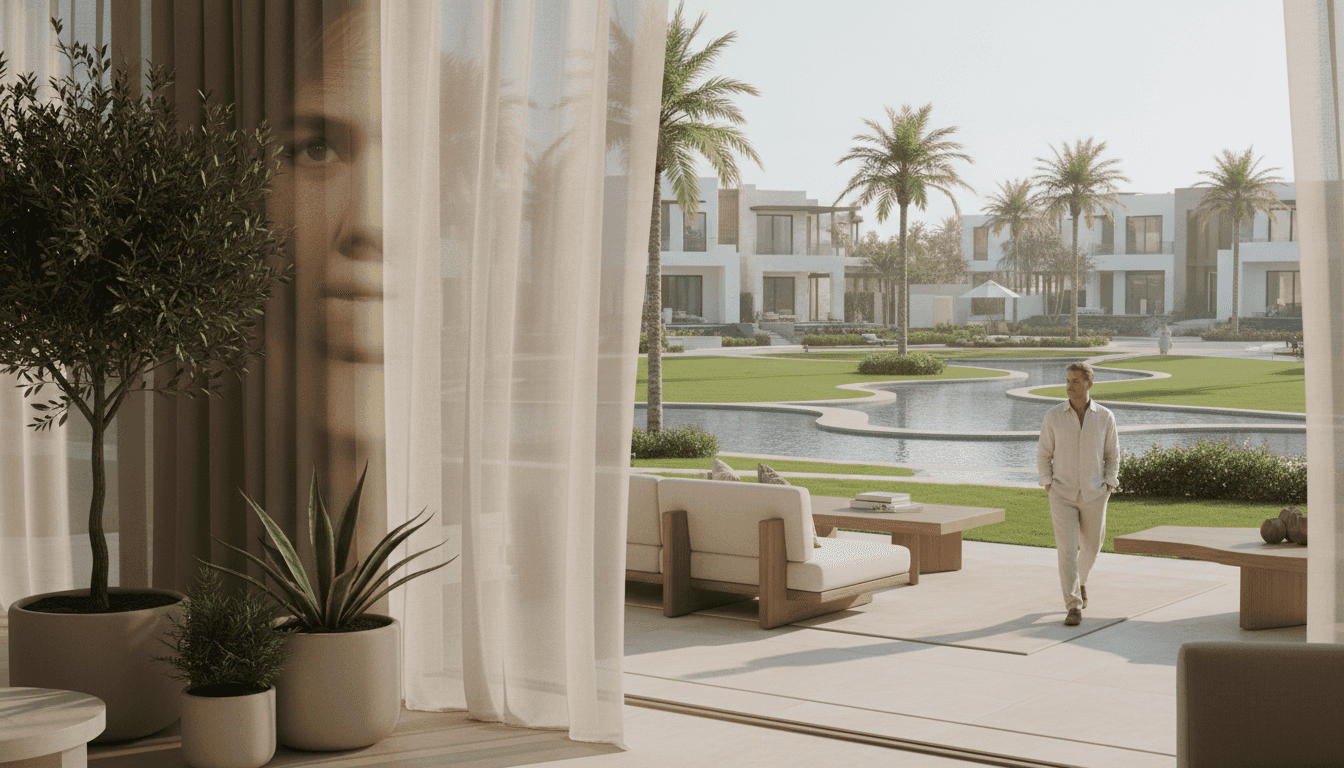
Dubai's Best Villa Communities for Cyclists & Commuters
Discover the rare Dubai villa communities that combine spacious family living with genuine car-light convenience, featuring direct cycling paths and robust public transport connections.

For years, the dream of a Dubai villa came with a non-negotiable condition: a multi-car garage and the acceptance of a life lived on motorways. I'm here to tell you that this is finally, genuinely changing.
Here’s what we'll explore:
- The evolving mindset of Dubai's master developers towards connectivity.
- A deep dive into Arabian Ranches: the original gold standard for active living.
- Al Furjan: the outlier with true Metro connectivity.
- Sobha Hartland: the new benchmark for integrated luxury and mobility.
- The crucial role of 'last-mile' transport within these vast communities.
- A line-by-line breakdown of the costs involved in buying your active-commute home.
- The future outlook for car-light villa living in Dubai.
The New Commuter Calculus: Beyond the Driveway
The traditional image of Dubai villa life is one of serene, leafy streets that are, in essence, beautiful cul-de-sacs. They offered space, privacy, and community, but demanded complete reliance on the private car for every single journey. For a long time, this was a trade-off most families were willing to make. The commute to the office, the school run, the trip to the supermarket — all were factored in as part of the suburban bargain. But a shift is underway, driven by a new generation of residents and a city that is rapidly maturing. Today, the desire for a more sustainable, active, and less car-dependent lifestyle is no longer a niche preference. It’s a powerful driver of demand in the property market, and the smartest developers are paying close attention.
This isn't about giving up cars entirely. This is about having the choice. It's about being able to cycle safely with your children to the park, take a brisk walk to a local café, or hop on a train for a stress-free journey to the office. This demand for what I call 'active connectivity' is reshaping how master-planned communities are designed. We're moving away from the isolated suburban model towards something more integrated and holistic. It's a complex challenge. Retrofitting old communities with this infrastructure is difficult and expensive, which is why the communities that either got it right from the start or were planned with this future in mind are now commanding a significant premium.
At Gaia Living, we see this conversation playing out every day with our clients. Questions about commute times are being replaced with questions about cycling path access. Queries about parking are supplemented by inquiries into the frequency of community shuttle buses. The ideal home is no longer just about the square footage of the villa; it's about the quality of the 15-minute radius around it. This is why a closer look at the few communities that truly deliver on the promise of active commute Dubai homes is so vital. It separates the marketing brochures from the lived reality and helps families find a home that supports their lifestyle, not dictates it.
Arabian Ranches: The Pioneer of the Path
 Featured project
When we talk about established, cycling friendly communities Dubai, Arabian Ranches is always the first name that comes to my mind. Developed by Emaar Properties, it set a benchmark for master-planned suburban living long before 'walkability' was a buzzword. What Emaar understood intuitively was that the spaces *between* the homes are just as important as the homes themselves. The result is a sprawling community interconnected by a vast network of paved, landscaped pathways. These aren't just narrow footpaths running alongside busy roads; they are generous, meandering trails that wind through parks, past lakes, and connect the various sub-communities to the central retail and leisure hubs.
For a cycling enthusiast or a family that enjoys walking, this is transformative. You can comfortably and safely cycle from your villa in, say, Saheel to the Arabian Ranches Retail Centre for groceries or a coffee. Children can bike to the community pool or to visit friends in a neighbouring cluster without ever having to cross a major thoroughfare. The pathways are well-lit, impeccably maintained (a hallmark of Emaar communities and a key component of their service charges), and designed to feel like a natural extension of the community's green spaces. The original Ranches 1 offers over 10 kilometres of these trails, creating a truly integrated environment. This network then connects to the broader Al Qudra Cycle Track, a massive draw for serious road cyclists, offering a smooth transition from a leisurely family ride to a serious weekend workout.
However, the Ranches model has its limitations for public transport. There is no Metro station within the community itself. The primary mode of public transport is the RTA bus service (Route J02), which connects the Ranches to the Mall of the Emirates Metro station. While reliable, it's not the rapid transit solution some commuters dream of. This is the fundamental trade-off of Arabian Ranches: it offers best-in-class internal active mobility but still requires a bus link or a car for efficient travel to major business hubs like DIFC or Business Bay. In my view, this makes it perfect for families where one partner perhaps works from home or has a flexible schedule, but less so for a household of daily downtown commuters seeking to eliminate their car dependency entirely.
Al Furjan: The Unlikely Metro Hero
If Arabian Ranches represents the peak of internal active living, then Al Furjan represents a different, and in many ways, more radical, vision of connectivity. For a long time, Al Furjan was seen as a solid, mid-market villa community by developer Nakheel, well-regarded but perhaps lacking the glamour of its more famous peers. That all changed with the launch of the Dubai Metro's Route 2020 expansion for Expo 2020. The opening of the Al Furjan Metro Station, located right at the edge of the community, was a complete game-changer. Suddenly, this neighbourhood became one of the very few places in Dubai where you could genuinely own a spacious villa and still have a rapid transit station within walking or cycling distance. This makes it a standout choice for those searching for Dubai villas near metro.
This direct Metro access fundamentally alters the daily commute. A resident can leave their four-bedroom villa, cycle for five minutes along the community's dedicated cycle tracks, park their bike at the station, and be in Dubai Marina or JLT in under 15 minutes, or connect onwards to the city's main business districts, all without touching a car key. This is a level of convenience that simply does not exist in most other villa communities. The community itself is laced with two major cycle paths: a 3km track and a 7km track, which connect the residential clusters to the Al Furjan Pavilions — community retail centres that host supermarkets, clinics, gyms, and restaurants. This combination of internal cycling infrastructure and external mass transit creates a powerful proposition for car-light living Dubai villas.
“The real luxury isn't a marble staircase; it's the freedom to choose between a 10-minute cycle to the Metro or a 2-minute drive to the school, and having both be safe, pleasant options.”
Of course, there are trade-offs. While Nakheel has invested heavily in landscaping and infrastructure, Al Furjan doesn't quite have the lush, established feel of the older Emaar communities. The architecture is more uniform, and the plot sizes can be more compact. However, for many buyers I speak with, these are minor points compared to the overwhelming advantage of the Metro link. The convenience factor is immense, particularly for professionals working in the southern and central parts of the city. It also opens up the community to a wider range of residents, including young professionals and couples who want the space of a villa without the necessity of a two-car household. This unique selling proposition has had a noticeable impact on property values and rental demand, making Al Furjan a very shrewd investment in my opinion.
Sobha Hartland: A Blueprint for the Future
Looking towards the future of integrated community design, all eyes are on developments like Sobha Hartland and Sobha Hartland II. Located in Mohammed Bin Rashid City, just minutes from Downtown Dubai, this area represents the next evolution in luxury living with connectivity at its core. What Sobha Realty has done here is masterfully blend the grand scale of a villa community with the accessibility and walkability of an urban neighbourhood. A significant portion of the masterplan — around 30%, is dedicated to green and open spaces, but these are not just decorative parks. They are functional, connected spaces, threaded with beautifully designed boardwalks, as well as dedicated walking and cycling trails that link every part of the community.
What truly sets Sobha Hartland apart is its waterfront access along the Dubai Water Canal. The developer is constructing a 1.8km boardwalk that will allow residents to walk, jog, or cycle along the water's edge, creating a stunning recreational corridor right on their doorstep. This focus on an active, outdoor lifestyle is evident throughout the community's design. The plan is not just to provide a path from A to B, but to make the journey itself an experience. For a resident, this means a morning run along the canal, an evening stroll to a waterfront café, or a safe cycle route for children to the two highly-regarded international schools located *within* the community itself — Hartland International School and North London Collegiate School.
In terms of public transport, the connectivity is planned rather than present. The Dubai Metro's Green and Purple line extensions are slated to serve the wider MBR City area, which would provide Sobha Hartland with the rail access it currently lacks. For now, its prime location means it's only a 10-15 minute drive from major hubs, and it's well-serviced by RTA buses and ride-hailing apps. The community's master plan, however, clearly anticipates a multi-modal future. My verdict is that for buyers with a long-term view, Sobha Hartland offers a compelling glimpse into the future of public transport access villas Dubai. It's a wager on a future where luxury is defined not just by the quality of one's home, but by the quality of life and mobility options right outside the front door.
The Last Mile: Shuttles, Scooters, and Walkability
Even in the best-connected communities, a critical piece of the active commute puzzle is the 'last-mile' solution. It's one thing to have a Metro station on the edge of your community; it's another to get to it from your front door on a hot August morning. This is where the micro-mobility infrastructure within a community becomes paramount. The most successful communities are those that plan for this last leg of the journey with the same rigour they apply to the grand masterplan. This includes a mix of shaded walkways, robust internal bus services, and an environment that is safe and welcoming for e-scooters and bicycles.
Let's look at some practical examples:
- Internal Shuttle Buses: Communities like Arabian Ranches and Damac Hills run their own branded shuttle buses. These are often free for residents and operate on a loop, connecting the various residential clusters to the main community centre, entrance gates, and sometimes the nearest public transport hub. Their frequency and reliability are key. A bus that runs every 15 minutes is a genuine utility; one that runs twice a day is not.
- Safe Cycling & Scooter Infrastructure: This goes beyond just painting a line on a road. It means physically separated paths, clear signage, and safe intersections. Al Furjan's network is a great example of this, as is the developing network in Expo City, which was designed from the ground up for pedestrians and micro-mobility.
- Walkability and Shade: Dubai's climate is a major factor. The most walkable communities are those that provide ample shade through mature trees and covered walkways. Emaar's older communities like The Meadows excel here due to their established landscaping. Newer developers are using clever architectural design and faster-growing tree species to try and replicate this effect more quickly.
These last-mile solutions are what bridge the gap between having public transport nearby and having it be truly usable on a daily basis. Before committing to a property, I always advise my clients to test the journey themselves. Walk from the villa you're considering to the community pool. Cycle the route to the retail centre. Time the walk to the bus stop. This experiential due diligence is invaluable. It helps you understand the reality of car-light living in that specific location, ensuring that the community's infrastructure aligns with your family's daily routines and lifestyle aspirations.
Budgeting for Your Active Commute Home
Opting for a well-connected villa community often involves a price premium, but it's essential to understand the full financial picture. The benefits of reduced transportation costs can, over time, offset a higher purchase price. Let's break down the typical upfront costs for buying a villa in one of these desirable areas, using a hypothetical AED 4,000,000 villa in Al Furjan as an example.
First, you have the government fees, which are non-negotiable. The Dubai Land Department (DLD) transfer fee is the largest of these, calculated at 4% of the property purchase price. There is also a DLD registration trustee fee, which is a fixed cost of AED 4,200 (including VAT) for properties valued over AED 500,000. These fees must be paid to finalise the transfer of ownership and are legally mandated. You can find the precise fee structures on the Dubai Land Department (DLD) official website, which we at Gaia Living always recommend clients consult for the most current information.
Here’s a sample breakdown of the upfront costs for a secondary market purchase:
- Purchase Price: AED 4,000,000
- Dubai Land Department (DLD) Fee (4%): AED 160,000
- DLD Registration Trustee Fee: AED 4,200
- Agency Fee (2% + VAT): AED 84,000
- No Objection Certificate (NOC) Fee: Typically between AED 500 - AED 5,000 (varies by developer)
- Mortgage Arrangement Fee (if applicable, ~1%): AED 40,000
- Mortgage Registration Fee (0.25% of loan): AED 7,500 (on a typical 75% loan)
- Property Valuation Fee: Approx. AED 3,000
- Total Estimated Upfront Cost (excluding down payment): Around AED 298,700
This calculation doesn't include your mortgage down payment. As per the Central Bank of the UAE's regulations, for a first property purchase by an expatriate valued under AED 5 million, the maximum loan-to-value is 80%, meaning a minimum 20% down payment is required. For our AED 4 million villa, this would be AED 800,000. Therefore, the total cash you would need on hand would be the down payment plus the upfront fees, totalling approximately AED 1,098,700. It's a substantial figure, and it’s crucial to budget for it accurately to avoid any surprises during the transaction process.
The Future: Integrated Transport and Smart Communities
The trend towards integrated, active communities is only set to accelerate. The Dubai 2040 Urban Master Plan explicitly calls for a city where residents can meet 80% of their daily needs within a 20-minute walk, cycle, or public transport trip. This top-down vision is providing a powerful incentive for developers to prioritise connectivity in all new projects. We are seeing this philosophy baked into the DNA of emerging 'cities-within-a-city' like the aforementioned Expo City and the planned developments around the new Al Maktoum International Airport. These projects are being designed with public transport as their central spine, not as an afterthought.
We can expect to see several key developments in the coming years. Firstly, the expansion of the Dubai Metro and the introduction of new transit modes like tramways and rapid bus transit will bring more villa communities into the public transport fold. Secondly, technology will play a larger role. On-demand, autonomous shuttle services within communities could become a reality, solving the 'last mile' problem with unprecedented efficiency. App-based services for renting e-bikes and scooters, already present in some areas, will become standard in most master-planned communities.
For families considering a villa purchase, this means the criteria for a 'good location' are expanding. Proximity to a major highway is still important, but proximity to a dedicated cycle path or a planned Metro station is becoming just as critical for long-term value. My advice is to study the city's strategic plans, available through government portals like the Government of Dubai (dubai.ae), to understand where the next wave of infrastructure investment is heading. Buying in a location that is set to benefit from a future transport link can be a very effective strategy for securing both a fantastic lifestyle and strong capital appreciation.
For those seeking a vibrant family life without total car dependency, the choice of villa communities in Dubai is growing. While Arabian Ranches offers unparalleled internal active living and Al Furjan provides a unique direct Metro link, the future belongs to holistically planned communities like Sobha Hartland that integrate luxury, green space, and multi-modal transport from day one. The key is to look beyond the four walls of the villa and evaluate the entire ecosystem of connectivity that surrounds it.
Sources
- Dubai Land Department (DLD) - https://dubailand.gov.ae/
- Central Bank of the UAE - https://www.centralbank.ae/
- Roads & Transport Authority (RTA) - https://www.rta.ae/
- Government of Dubai - https://www.dubai.ae/
Questions, answered
- Which Dubai villa communities are best for cycling commuters?
- Communities like Arabian Ranches, Al Furjan, and Sobha Hartland are excellent choices. They feature extensive, dedicated cycling paths that connect residential areas to local amenities and, in some cases, to the broader Dubai Cycle Track network.
- Can I find a villa in Dubai near a Metro station?
- Yes, Al Furjan is one of the few villa communities with its own dedicated Metro station on the Route 2020 line, making it a top choice for car-light living. The Gardens and Discovery Gardens also offer proximity to the Metro, though with more townhouses and apartments.
- Are new villa communities in Dubai being built with public transport in mind?
- Master developers are increasingly integrating multi-modal transport. Newer communities like Sobha Hartland and the expanded Arabian Ranches feature dedicated cycling and walking paths, while masterplans for Expo City and similar projects prioritise pedestrian access and public transit.
- What are the typical costs for buying a villa in one of these connected communities?
- Prices vary significantly. A three-bedroom villa in Al Furjan might start from AED 3.5 million, while a similar home in Arabian Ranches could be AED 4.5 million or more. In premium areas like Sobha Hartland, villas can range from AED 10 million upwards, depending on size and location.
- How practical is a 'car-light' lifestyle in a Dubai villa?
- It's becoming more practical in specific communities. A combination of a nearby Metro station for long commutes, an internal community bus service, dedicated cycle paths for local trips, and accessible ride-hailing services can significantly reduce the need for a personal car.

Sophia profiles Dubai's villa communities — schools, commute times, green space, and the intangible feel of a neighbourhood. She writes for families putting down roots.
Related stories
Sharia Mortgages in Dubai: An Investor's Guide
Sharia-compliant mortgages offer an ethical, asset-backed alternative to conventional loans. I'll break down how these non-interest home loans work for property investment in Dubai and who should consider them.
Beyond the Gadgets: A Guide to Smart Homes in Dubai
I explore how new developments in Dubai are redefining 'intelligent living' beyond mere gadgets, embedding technology that genuinely enhances daily life, efficiency, and comfort.
Beyond the Pool & Gym: The True Value of Resident Facilities
I explore how the evolution of luxury apartment amenities in Dubai, from private cinemas to exclusive resident clubs, creates genuine lifestyle value and justifies premium prices in the city's top towers.
Echoes, in your inbox
One thoughtful email a month. Market insight, new launches, no spam.