

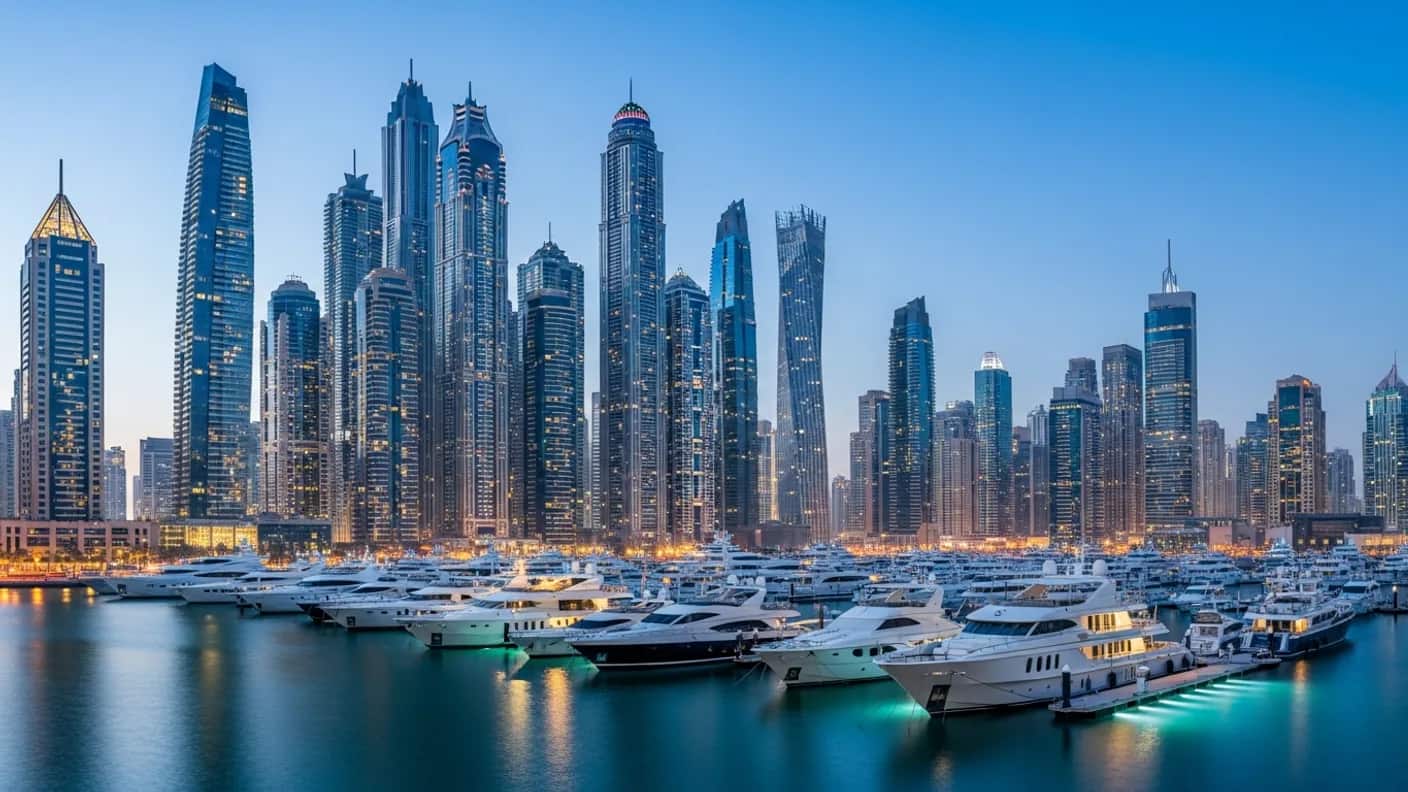
Beyond the Boom: Dubai's Ultra-Luxury Market
This isn't just a market cycle. I analyse the structural forces—from UHNWI migration to engineered scarcity—that sustain demand for Dubai's most exclusive properties and explain the outlook for this top-tier segment.

Dubai's ultra-luxury property market continues to defy global trends, but this is more than a fleeting boom. I believe we are witnessing a structural re-anchoring of global wealth, driven by forces that extend far beyond cyclical market behaviour.
Here's what we'll explore in this analysis:
- The fundamental economic and lifestyle shifts attracting Ultra-High-Net-Worth Individuals (UHNWIs) to Dubai.
- How absolute scarcity in prime locations underpins the value of trophy assets.
- The unstoppable rise of branded residences and the premium they command.
- A comparative analysis of the `high-end villa market Dubai` versus the city's most `exclusive penthouses Dubai`.
- How Dubai's master developers are shaping the next generation of luxury.
- A detailed breakdown of the true, all-in costs of acquiring and owning a top-tier property.
- The unique complexities and nuances of transacting at the AED 50 million+ level.
- My professional outlook on the sustainability of this demand and future value preservation.
A Structural Shift, Not a Cyclical Blip
In my role, I spend my days analyzing data, but the most significant `Dubai luxury real estate trends` are not found in spreadsheets alone. They are visible in the shifting flight paths of private jets, the establishment of new family offices in the DIFC, and the calibre of international schools expanding across the city. The narrative that Dubai's current property boom is a simple post-pandemic rebound is, in my view, a fundamental misreading of the situation. What we are experiencing is a structural migration of capital and human talent to an emirate that has successfully positioned itself as a global bastion of stability, pro-business policy, and unparalleled lifestyle. The drivers are deep-seated and long-term, representing a deliberate choice by the world's wealthiest individuals to make Dubai a primary, rather than secondary, hub for their families and enterprises.
The UAE's Golden Visa programme has been a masterstroke in this regard. While other countries have made their long-term residency schemes more complex or costly, the UAE has streamlined its offering. For property investors, a minimum investment of AED 2 million secures a 10-year renewable visa, granting residency for the investor and their family. This isn't just a visa; it's a clear signal from the government that long-term investment is welcome and rewarded with stability. According to the UAE Government's official portal, this initiative is explicitly designed to attract and retain global talent and investment. This policy has transformed the mindset of the UHNW buyer, moving the conversation from speculative investment to legacy planning, wealth preservation, and establishing a secure, multi-generational base. It has fundamentally changed the answer to the question, "Where in the world offers the best combination of security, lifestyle, and business opportunity?"
The introduction of a federal corporate tax was another pivotal moment. Initially met with some trepidation, it has ironically strengthened Dubai's position. By implementing a low-rate, globally-compliant tax system, the UAE has shed any lingering "tax haven" perceptions and cemented its status as a serious, transparent, and permanent global business centre. For the UHNWI considering where to headquarter their global operations, this provides certainty and legitimacy. This strategic policy framework, combined with the emirate's world-class infrastructure, time-zone advantage connecting East and West, and unwavering commitment to public safety, has created an ecosystem that is incredibly "sticky." Once families and businesses relocate here, the reasons to leave are few, which provides a constant and growing bedrock of demand for high-quality housing. This isn't just about buying a holiday home; it's about relocating a life.
The Anatomy of Scarcity: Prime Locations and Land Value
 Featured project
The first rule of real estate is location, and in Dubai's ultra-luxury segment, this principle is amplified to an extreme. The most coveted addresses are defined by an irreversible, absolute scarcity. There is only one Palm Jumeirah, a man-made wonder offering direct private beach access to its frond villas. There is only one Emirates Hills, an enclave of sprawling mansions set around a championship golf course, often referred to as the "Beverly Hills of Dubai." Similarly, islands like Jumeirah Bay and Bluewaters Island offer a finite number of plots with iconic skyline and sea views. This irreplaceability is the ultimate bulwark against market fluctuations. You simply cannot create more of it. This finite supply of `prime waterfront property Dubai` and exclusive inland plots forms the bedrock of the ultra-luxury market's value.
This scarcity directly translates into land value appreciation, which in turn props up the value of the homes built upon it. In recent years, we've seen record-breaking sales for empty plots of land in these prime locations, sometimes trading for figures that exceed the price of existing mansions in other good, but not great, areas. When a single plot of sand on Jumeirah Bay Island sells for over AED 100 million, it sends a powerful signal to the market. It recalibrates the baseline value for every property in that vicinity. This phenomenon is critical for `UHNW property investment Dubai`; buyers are not just acquiring a structure, they are securing a piece of an un-replicable map. This is asset preservation in its purest form. The house itself may age, but the land and the location only become more desirable over time as the city grows around them.
The psychological impact of this scarcity cannot be overstated. For the UHNW buyer, the motivation is often less about finding a "deal" and more about securing an asset that is, by its very nature, exclusive. The ability to own a home in a community where all plots are sold and there will be no further releases creates a powerful sense of arrival and a durable store of value. It's a club with a fixed number of memberships. We see this effect clearly in Emirates Hills, where the large plot sizes and freedom to build bespoke mansions have created a collection of unique, non-fungible assets. Unlike in a tower with hundreds of similar apartments, each villa in Emirates Hills or on the Palm's fronds is a one-of-a-kind statement, further enhancing its appeal and insulating its value from the broader market's ebbs and flows.
“For the UHNW client, the most valuable asset isn't the marble or the technology; it's the irreplaceability of the address.”
Branded Residences: The Ultimate Convergence of Hospitality and Home
One of the most defining `Dubai luxury real estate trends` of the past decade is the explosion of branded residences. This concept, where a luxury hospitality brand lends its name, standards, and services to a residential development, has found its most fertile ground in Dubai. Developers like Emaar Properties with their Address and Vida brands, and Nakheel with projects like Atlantis The Royal Residences, have perfected this model. More recently, we've seen a surge of top-tier global fashion and jewellery brands entering the space, with developers like Damac leading partnerships with names like Cavalli and de GRISOGONO. The appeal for the UHNW buyer is multifaceted: it combines the privacy and equity of ownership with the effortless convenience and impeccable service of a five-star hotel.
The value proposition is compelling. For a start, there's the brand promise. Buying a property managed by Four Seasons, Ritz-Carlton, or Bvlgari comes with an implicit guarantee of quality, from the finishing of the interiors to the training of the concierge. This de-risks the purchase, especially for international buyers who may not be familiar with local developers. Secondly, the amenities are on a different scale. These aren't just buildings with a pool and a gym; they are vertical resorts offering fine-dining restaurants, private cinemas, residents-only lounges, full-service spas, and dedicated a la carte services for everything from housekeeping to in-residence catering. This "hotelification" of living caters directly to a clientele that values time and convenience above all else. This turnkey lifestyle is a powerful magnet for `UHNW property investment Dubai`, as it also makes the property far more attractive on the high-end rental market.
Of course, this level of service comes at a cost, reflected in significantly higher annual service charges. While a premium non-branded building in Business Bay might have service charges around AED 18-22 per square foot, a branded residence next door could easily command AED 30-45 per square foot. Is the premium justified? In my analysis, for the target buyer, the answer is often yes. The premium they pay in fees is offset by the quality of life, the potential for higher rental income, and, crucially, superior value preservation. Branded residences tend to hold their value better and command a higher resale price compared to their non-branded counterparts in the same location. They are a distinct asset class, and buyers are knowingly paying for the brand equity, management quality, and hassle-free ownership experience.
Vertical Palaces vs. Horizontal Estates: Penthouses and Villas
Within Dubai's ultra-luxury market, two distinct property archetypes dominate: the sprawling villa and the sky-high penthouse. The choice between them often reflects a buyer's fundamental lifestyle preferences. The `high-end villa market Dubai` offers space, privacy, and a connection to the land. Communities like Al Barari, with its lush botanical gardens and sprawling plots, or the custom-built mansions of Sector L in Emirates Hills, cater to those who seek a private sanctuary for their families. These are horizontal estates, often exceeding 20,000 square feet of built-up area on plots of 30,000 square feet or more. The luxury here is measured in square metres, in private gardens, multi-car garages, and the freedom to create a truly bespoke home. This segment is particularly popular with end-user families who are relocating full-time to Dubai and require space for multiple generations, staff, and entertaining on a grand scale.
On the other side of the spectrum are the `exclusive penthouses Dubai` has become famous for. These are vertical palaces, occupying the highest floors of the city's most iconic towers in locations like Palm Jumeirah, Downtown Dubai, and Dubai Marina. The ultimate luxury here is the view. A triplex penthouse in IL Primo overlooking the Burj Khalifa and The Dubai Fountain, or a sprawling full-floor residence in One at Palm Jumeirah with 360-degree views of the sea and skyline, offers a visual spectacle that no villa can match. These properties appeal to a buyer who prizes urban convenience, security, and a lock-up-and-leave lifestyle. They are often purchased by global executives, financiers, and those who split their time between multiple cities. The penthouse buyer wants to be at the centre of the action, with world-class dining and entertainment just an elevator ride away.
The pricing dynamics and buyer profiles for these two segments can be quite different. While both can easily command prices north of AED 100 million, penthouses often achieve a higher price per square foot due to their rarity and the "view premium." A tower can only have one or a handful of penthouses, making them the ultimate trophy asset within that development. Villas, while also exclusive, exist in larger numbers within their respective communities. In my experience, the penthouse buyer is often more focused on the asset as a statement piece and a convenient global base, while the villa buyer is typically making a deeper, more permanent commitment to living in Dubai. Both segments remain incredibly strong, but they cater to distinct, non-overlapping needs within the UHNW demographic, ensuring robust demand for both property types. Developers like Meraas have expertly catered to both, with projects like the villas at Jumeirah Bay and the penthouses at Bluewaters.
The Developer's Hand: Crafting Exclusivity in New Launches
Dubai's leading developers are not passive participants in the ultra-luxury market; they are its architects. They have become masters at engineering scarcity and desirability. Gone are the days of large-scale, homogenous launches. Today, the strategy at the top end of the market revolves around limited-edition collections, bespoke customisation, and creating entirely new ultra-prime destinations. Master developers like Emaar Properties and Nakheel don't just build properties; they build ecosystems. When Emaar launches a new penthouse collection in Downtown Dubai, they are selling access to an entire lifestyle curated over two decades — the mall, the opera, the restaurants, the parks. This holistic approach creates a powerful brand moat that independent projects struggle to replicate.
We are also seeing the rise of boutique, specialist developers who focus exclusively on the ultra-luxury niche. Firms like AHS Properties and Zaya have made a name for themselves by delivering a handful of exceptionally high-quality, design-led projects. Their strategy is one of hyper-exclusivity. They might only build five villas or one low-rise building with a dozen apartments, but each one is a work of art, featuring collaborations with world-renowned architects and interior designers. Sales for these properties are often handled discreetly, on an invitation-only basis, to a pre-qualified list of potential buyers. This approach enhances the allure and creates a sense of urgency and prestige that a mass-market launch could never achieve. It's a clear signal that the product is for a discerning few, not the many.
The mechanics of purchasing these off-plan launches are also evolving. While the standard 4% Oqood registration fee (for off-plan properties, paid to the Dubai Land Department) remains, the payment plans are becoming more structured and often back-loaded, requiring a significant commitment upfront but with the bulk of the payment due upon completion. This filters out speculators and ensures that buyers are well-capitalised end-users or long-term investors. The entire process is managed digitally through platforms like the DLD's REST app, ensuring transparency and security for the buyer's investment, which is typically held in a RERA-approved escrow account until construction milestones are met. This robust regulatory framework, governed by RERA, is a cornerstone of buyer confidence in Dubai's off-plan market, particularly at the high-stakes, ultra-luxury level.
Understanding the True Cost of Acquisition and Ownership
Securing a trophy property in Dubai involves more than just the headline purchase price. For any serious `UHNW property investment Dubai` plan, a clear-eyed understanding of the total acquisition and ongoing ownership costs is essential. At Gaia Living, we make it a priority to provide our clients with a transparent and comprehensive view of these figures from the outset. The ancillary costs are significant and must be factored into any budget. These government-mandated fees and industry-standard commissions are non-negotiable and form a substantial part of the initial cash outlay. For a secondary market transaction (a resale property), the costs are clear and payable upon transfer of the title deed.
Let's walk through a realistic, line-by-line cost breakdown for the acquisition of a ready property valued at AED 50 million. This clarity is crucial for financial planning and avoids any surprises at the closing table. The figures below are based on regulations set by the Dubai Land Department (DLD) and standard market practice.
- Sample Acquisition Costs for an AED 50,000,000 Property:
- Purchase Price: AED 50,000,000
- DLD Transfer Fee: AED 2,000,000 (Calculated at 4% of the purchase price).
- DLD Admin Fee: AED 5,250 (This is a fixed fee for properties over AED 500,000, inclusive of VAT).
- Real Estate Agency Fee: AED 1,050,000 (Calculated at 2% of the purchase price, plus 5% VAT).
- Trustee Office Fee: AED 4,200 (For processing the transfer at a DLD-approved Trustee Office, inclusive of VAT).
- Title Deed Issuance Fee: AED 580 (A standard fee for issuing the new title deed).
- Total Estimated Upfront Cost: AED 53,059,030
This demonstrates that a buyer needs to budget for over AED 3 million in additional costs on top of the property's price. If a mortgage is used, which is less common but possible at this price point, further fees apply, such as a 0.25% mortgage registration fee paid to the DLD on the total loan amount, plus bank arrangement fees. The Central Bank of the UAE mandates stricter loan-to-value (LTV) ratios for high-value properties, typically requiring a down payment of at least 35-40% for properties over AED 5 million for expatriate buyers.
Beyond the initial acquisition, the costs of ownership are an equally important consideration. The primary recurring expense is the service charge, which covers the maintenance and operation of the building or community's common areas. For ultra-luxury properties, particularly branded residences, these can be substantial. A 10,000 sq. Ft. penthouse with a service charge of AED 40 per sq. Ft. would incur an annual fee of AED 400,000. For a villa in a community like Dubai Hills, the charges might be lower on a per-square-foot basis (e.g., AED 4-6 per sq. Ft. of plot area) but still amount to a significant annual sum for a large estate. On top of this, owners must budget for utilities (DEWA), home insurance, and private maintenance for pools, landscaping, and the property itself. These ongoing costs directly impact the net rental yield for investors and the annual budget for end-users.
Navigating the Deal: The Nuances of UHNW Transactions
Transacting at the highest echelon of the market is a specialized discipline. Deals involving properties north of AED 50 million operate with a different set of rules, driven by discretion, complexity, and the need for absolute trust. A significant portion of these transactions happen off-market. These are properties that will never be listed on a public portal. Sourcing them requires a deep network of contacts among family offices, wealth managers, and private owners — a network that we at Gaia Living have cultivated over many years. For the UHNW seller, an off-market approach avoids public exposure and allows for quiet, targeted negotiations. For the buyer, it provides access to a truly exclusive tier of properties that are simply unavailable to the general public.
The due diligence process for an ultra-luxury asset is also far more intensive. It's not just about checking the title deed. Our process involves a forensic examination of the property's history, service charge accounts, and ensuring all necessary No Objection Certificates (NOCs) are in place from the developer and any relevant master community. For a villa with custom modifications, we verify that all construction permits and building completion certificates from Dubai Municipality are in order. For a penthouse, we scrutinize the building's health, the state of the owners' association, and any upcoming special assessments. We often work in concert with our client's legal and tax advisors to ensure the ownership structure is optimized, whether it's held by an individual, a trust, or a Special Purpose Vehicle (SPV) in a free zone like the DIFC.
Here is a simplified checklist of what a UHNW buyer should expect their advisory team to handle during a transaction:
- Document Verification:
- Valid Title Deed verification via the DLD's REST app.
- Seller's passport and Emirates ID verification.
- Affection Plan for the plot/unit to confirm boundaries and details.
- Financial & Developer Clearance:
- Confirmation of no outstanding mortgage or charges on the property.
- Developer NOC confirming all community service charges are paid.
- Clearance from DEWA and the cooling provider (if applicable).
- Legal & Structural:
- Review of the Memorandum of Understanding (MOU) or Sale and Purchase Agreement (SPA) by a qualified lawyer.
- For villas, confirmation of all municipal approvals for any extensions or alterations.
- For off-plan, review of the escrow agreement and developer's RERA compliance.
This level of detail is non-negotiable. The role of a brokerage in this segment transcends that of a simple intermediary. We act as project managers, risk mitigators, and trusted advisors throughout a complex and high-stakes process. Navigating these intricacies is key to a successful acquisition, and it's why clients seek out specialists when looking to browse properties for sale at this level.
My Outlook: Is This Level of Demand Sustainable?
The question I am most frequently asked by clients and fellow analysts is whether this intense demand in Dubai's ultra-luxury segment is a bubble waiting to burst. My considered view is that while the pace of price growth may moderate, the fundamental drivers supporting this market are robust and likely to endure. The key is to differentiate the trophy asset market — the top 1% of properties, from the broader real estate market. This niche segment is not driven by mortgage availability or average salary growth. It is driven by global wealth flows, and Dubai has successfully cemented itself as a premier destination for that capital. The network effect is now in full force; the UHNWIs who have already moved here are attracting their peers, creating a self-reinforcing cycle of demand.
The "stickiness" of this new demand is a critical factor. Unlike previous cycles that may have been driven by more speculative, short-term investors, the current wave of buyers are putting down deep roots. They are enrolling their children in schools, moving their business headquarters, and integrating into the social fabric of the city. The UAE government's long-term vision, from the Golden Visa to its infrastructure and economic diversification plans, provides the confidence for these individuals to make multi-decade commitments. This creates a stable and permanent resident demand base for high-quality properties, providing a strong floor for the market. This is particularly true for the `high-end villa market Dubai`, which is overwhelmingly dominated by end-user families.
However, it would be remiss not to acknowledge potential headwinds. A severe global economic recession could impact the wealth of even the richest individuals, potentially slowing decision-making. Geopolitical instability is a perennial risk, although Dubai has historically benefited from regional turmoil by acting as a safe haven. On the supply side, while trophy locations remain scarce, there is a risk of over-exuberance from developers leading to an oversupply in the "entry-level" luxury segment (e.g., AED 5-15 million), which could have a ripple effect. However, I believe the truly unique, AED 100 million+ properties are largely insulated from this. There is no new supply of frond-tip villas on Palm Jumeirah or 40,000 sq. Ft. plots in Emirates Hills. This inherent scarcity provides a powerful defence against price volatility. The future performance of this market will hinge on continued political stability and the government's steadfast commitment to its pro-business, pro-investment agenda.
The ultra-luxury market in Dubai is no longer just a component of the city's property cycle; it has become a distinct asset class on the global stage, supported by structural wealth migration and engineered scarcity. Its performance is now more closely tied to global UHNWI trends than to local economic indicators.
## Sources - Dubai Land Department (DLD) - https://dubailand.gov.ae - Real Estate Regulatory Agency (RERA) - https://dubailand.gov.ae/en/eservices/real-estate-regulatory-agency/ - UAE Government Portal (Golden Visa & Corporate Tax) - https://u.ae/en/information-and-services/visa-and-emirates-id/residence-visas/golden-visa - Central Bank of the UAE (Mortgage Regulations) - https://www.centralbank.ae
Questions, answered
- What qualifies as an "ultra-luxury" property in Dubai?
- While there's no official definition, in my analysis, "ultra-luxury" typically refers to properties valued above AED 35 million (approx. $10M USD). The most exclusive "trophy asset" segment starts around AED 100 million and is defined by unique locations, extreme rarity, and bespoke features.
- Can foreigners own freehold property in Dubai's ultra-luxury areas?
- Yes. Foreign nationals can purchase property on a freehold basis in designated zones, which include all of Dubai's prime luxury communities like Palm Jumeirah, Emirates Hills, Downtown Dubai, and Al Barari. This gives the buyer full ownership of the property.
- What are the benefits of the UAE Golden Visa for property investors?
- Investing a minimum of AED 2 million in property grants a 10-year renewable residency visa for the investor, their spouse, children, and even domestic staff. This provides long-term stability and simplifies living, working, and banking in the UAE without needing a local sponsor.
- Are branded residences a good investment?
- Branded residences typically command a price premium and higher service charges, but in my view, they are often a strong investment. They tend to have superior value retention, higher rental demand from a discerning clientele, and offer a hassle-free ownership experience, which UHNW investors value highly.
- How common are off-market property deals in Dubai?
- Off-market transactions are very common in the ultra-luxury segment. Many high-profile sellers and buyers prioritize discretion, meaning the most exclusive properties are sourced through specialist broker networks and are never advertised publicly.
- What are the typical ongoing costs of owning a luxury villa in Dubai?
- The main ongoing cost is the annual service charge, which for a luxury villa community might be AED 4-6 per sq. Ft. of the plot area. Owners must also budget for utilities (DEWA), private landscaping and pool maintenance, and comprehensive home insurance, which can amount to a significant annual sum.

Amara translates DLD transaction data, supply pipelines, and macro signals into clear calls on where Dubai's market is heading. She writes the numbers most brokers only feel.
Related stories
Dubai's Big Squeeze: Smaller Plots, Denser Living
Dubai real estate is undergoing a fundamental shift towards smaller plot sizes and higher density. We analyse the economic drivers, the impact on property values, and what this new era of compact urban living means for both homebuyers and investors.
Resort Living as Your Dubai Reality
Explore how to trade temporary staycations for a permanent home with five-star amenities in Dubai. I'll break down the real costs, best communities, and lifestyle trade-offs of embracing high-end resort living every day.
Finding Your Tribe in Dubai's Villa Communities
I explore which of Dubai's renowned villa communities attract specific expat nationalities and lifestyle groups, offering insights to help you find a place that feels like home.
Echoes, in your inbox
One thoughtful email a month. Market insight, new launches, no spam.