

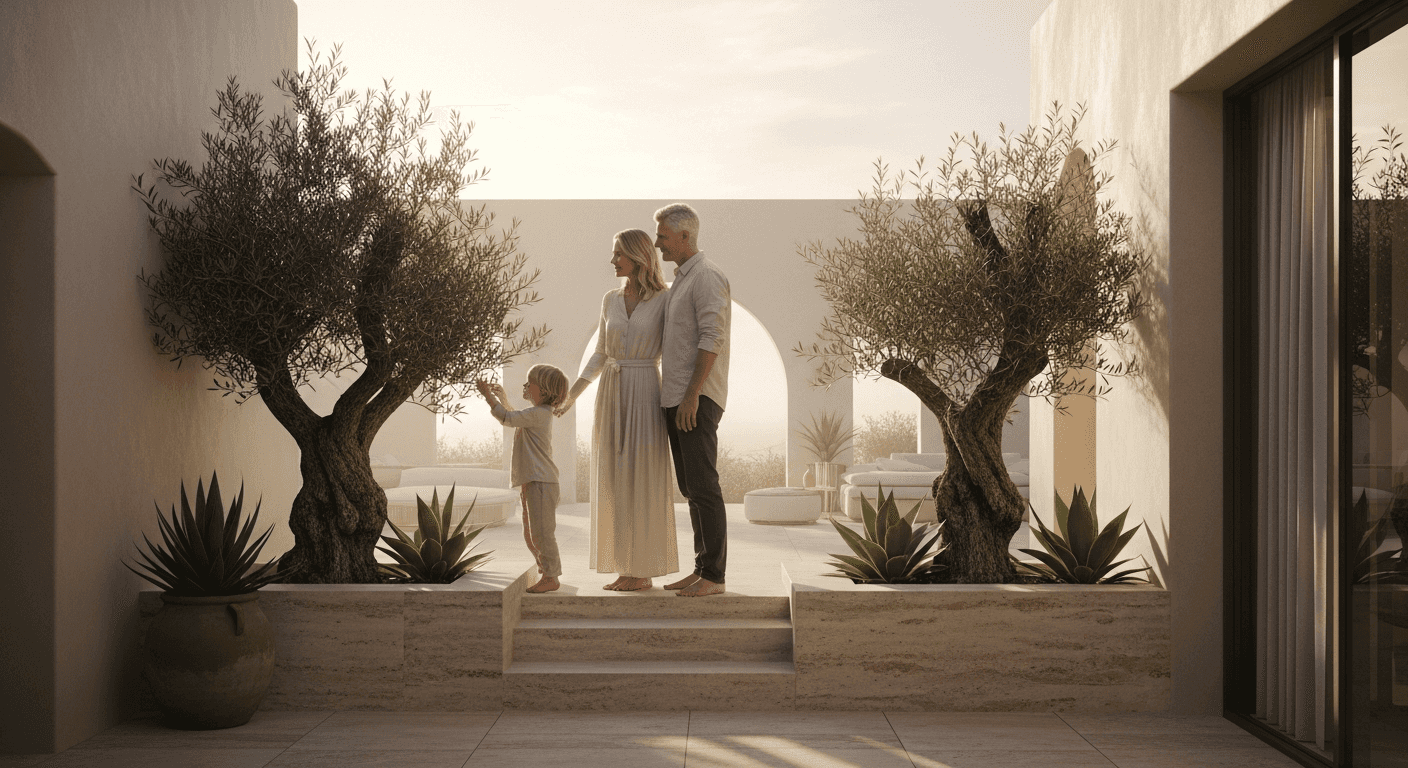
Your Dubai Property Needs Checklist
My complete needs assessment guide for first-time buyers in Dubai. Follow this checklist to define your budget, location, and property goals before you start your search.

Hello, I’m Hana Suzuki. As Gaia Living's specialist for first-time buyers, the most common feeling I encounter in my clients isn’t just excitement, it’s overwhelm. The Dubai property market is vast and fast-moving. Without a clear plan, it’s easy to get lost in a sea of listings that don’t quite fit, wasting precious time and energy. This is why I believe the most important work happens before you ever step into a viewing. Pinpointing your ideal Dubai property starts with a thorough needs assessment — a structured conversation with yourself and your family to translate vague wants into a concrete, actionable brief. This guide is that conversation, turned into a checklist.
Here’s the step-by-step process we'll walk through to build your personal property brief:
- Defining your primary 'why' for buying.
- Calculating your true, all-in budget beyond the property price.
- Mapping your lifestyle needs to specific Dubai communities.
- Deciding on the right property size and type for your future.
- Comparing the merits of new-build versus resale properties.
- Separating your absolute must-haves from your nice-to-haves.
- Understanding the real long-term costs of ownership.
The 'Why' Before the 'What': Defining Your Primary Goal
Before we even think about square footage or swimming pools, we need to be crystal clear on your primary motivation. Why are you buying a property in Dubai now? The answer to this question fundamentally shapes every subsequent decision. Are you an end-user, looking for a place to call home for the next five, ten, or even fifteen years? Or are you an investor, focused primarily on rental yield and capital appreciation? It’s possible to be a bit of both, but one goal must take priority. Trying to perfectly satisfy both is a recipe for compromise and confusion. Defining your property goals is the essential first step in any successful `expat property search criteria Dubai`.
If you are an end-user, your priorities are rooted in your daily life. Proximity to your child's school or your office, the quality of community parks, the feel of the neighbourhood, and the layout of the home become paramount. You're buying a lifestyle, not just bricks and mortar. You might accept a slightly lower rental yield in a community like Arabian Ranches because its family-friendly environment, parks, and school access are invaluable to your quality of life. You'll likely favour established communities where the amenities are proven and the resident profile is stable. Your emotional connection to the property matters; it has to *feel* like home. For you, the search is deeply personal.
If you are primarily an investor, your lens is different. You must think like a tenant. What do tenants in Dubai want? Proximity to a Metro station, ease of access to major business hubs like DIFC or Business Bay, and efficient, modern amenities often top the list. The emotional connection is replaced by cold, hard numbers: service charges, potential rental income, vacancy rates, and the developer's track record. An investor might choose a smaller apartment in a high-demand area like Dubai Marina over a larger villa in a more remote suburb because the rental demand is stronger and more consistent. They will also pay close attention to payment plans on off-plan launches, looking for opportunities to maximise their return on capital. Be honest with yourself about your primary 'why'. It's the compass that will guide your entire search.
Budget Realism: Beyond the Sticker Price
 Featured project
This is the part of the journey where dreams meet reality, and it's the most critical step for any `first home buyer requirements Dubai`. Many first-time buyers make the mistake of looking at property portal listings and assuming the sticker price is their only major outlay. In Dubai, the upfront costs to acquire a property are significant, and you must budget for them meticulously. Failing to do so can lead to major financial stress just when you should be celebrating. As a rule of thumb, I advise my clients to budget an additional 7-8% of the purchase price for fees and taxes. This is not a 'nice to have'; it is an absolute necessity.
Let’s break down the real, all-in cost of buying a ready property. The single largest cost after your down payment is the Dubai Land Department (DLD) transfer fee, which is a non-negotiable 4% of the property's purchase price. On top of that, you have DLD administrative fees, which are currently AED 4,200 for properties valued above AED 500,000. You will also need a Property Registration Trustee to handle the transfer; their fees are typically around AED 4,200 (including VAT). Then there is the real estate agency fee, which is customarily 2% of the purchase price plus 5% VAT. If you are taking out a mortgage, you'll also have bank fees, including a valuation fee (around AED 2,500 - AED 3,500) and an arrangement fee, which can be up to 1% of the loan amount.
Let's put this into a concrete example. Imagine you’ve found your ideal first home, a two-bedroom apartment priced at AED 1,500,000. You are a resident with a good salary and qualify for an 80% mortgage. Here is what your upfront costs would look like:
- Purchase Price: AED 1,500,000
- Down Payment (20%): AED 300,000
- DLD Transfer Fee (4%): AED 60,000
- Real Estate Agency Fee (2% + 5% VAT): AED 31,500
- Property Trustee Fee: AED 4,200
- DLD Admin Fees: AED 4,200
- Mortgage Arrangement Fee (approx. 0.5% of loan): AED 6,000
- Mortgage Valuation Fee: AED 3,000
- NOC Fee from Developer (estimate): AED 1,000
- Total Upfront Cash Required: AED 410,000
As you can see, you need over AED 110,000 in cash *on top* of your AED 300,000 down payment. This is why the first and most important step in your property search is to speak with a mortgage advisor and get a formal mortgage pre-approval. This document, based on your verified income and financial status, tells you the maximum amount a bank will lend you. It transforms your budget from a guess into a certainty and makes you a serious, credible buyer in the eyes of sellers and their agents. It's the true starting line for your search.
Lifestyle & Location: Mapping Your Daily Life
Once your budget is set, we move from numbers to life itself. Where you live dictates the rhythm of your day. This section of your `Dubai property needs checklist` is about analysing your daily routines and aspirations to find a community that truly fits. Don't fall for a beautiful apartment in a location that creates daily friction. I encourage my clients to literally map out their lives. Get on Google Maps during peak hours and check the real commute times from potential communities to your workplace, your partner's workplace, and your children's school or nursery. A 20-minute drive at 10 pm can easily become a 60-minute crawl at 8 am. This single factor can make or break your quality of life.
Think about your weekends and evenings. What do you love to do? If your ideal Saturday involves surfing followed by brunch at a beach cafe, a villa deep in the suburbs might feel isolating. You'd be better suited to areas with coastal access like Jumeirah or the vibrant, walkable high-rises of Emaar Beachfront. Conversely, if you have a young family and your weekends are about kids' playdates, barbecues, and peaceful bike rides, the green, sprawling communities of Damac Hills and Damac Hills II or the established quiet of The Meadows would be a perfect match. Don't just look at property listings; spend a weekend visiting your shortlisted communities. Grab a coffee, walk around the parks, visit the local supermarket. Get a feel for the energy, the people, and the general atmosphere.
Dubai offers a vast spectrum of lifestyles. There’s the ultra-urban, 24/7 buzz of Downtown Dubai or Dubai Marina, where everything is a short walk or taxi ride away, perfect for young professionals and couples who thrive on energy and convenience. Then there are self-contained suburban communities like JVC or Arjan, which offer excellent value and a growing number of parks, schools, and retail options, attracting many first-time buyers and young families. For those seeking luxury and tranquillity, areas like Al Barari with its botanical gardens or the serene waterfront villas of Sobha Hartland and Sobha Hartland II offer a different pace of life entirely. The key is to be honest about what you truly value. Don't choose a location based on prestige or what you think you *should* want. Choose the one that makes your actual, day-to-day life easier and more enjoyable.
“The perfect property doesn't exist. The perfect property *for you* does, and the difference lies in honest, structured self-assessment before you view a single listing.”
The Property Itself: Size, Layout, and Future-Proofing
With a budget and a few target locations in mind, it's time to zoom in on the property itself. This is where we define `what to look for buying property Dubai` on a micro-level. The most fundamental choice is between an apartment and a villa or townhouse. For many first-time buyers in Dubai, an apartment is the natural starting point due to its accessibility and lower maintenance. However, townhouses in communities like Al Furjan or Liwan are becoming increasingly popular for families looking for more space and a small garden without the price tag of a large, standalone villa.
Beyond the type, let's talk about size and layout. Don't get fixated on the number of bedrooms alone. I've seen sprawling two-bedroom apartments that feel more spacious than poorly designed three-beds. Look at the total square footage, but more importantly, look at the floor plan. Is there wasted space in long, dark corridors? Does the layout flow logically? A 'one-bedroom-plus-study' can often function as a small two-bedroom for a new family, offering incredible value. A large, usable balcony can feel like an extra room, especially in the cooler months, significantly enhancing your living space. Natural light is another factor that has a huge impact on how a space feels; a home with large, well-placed windows will always feel bigger and more welcoming.
Crucially, you must think about your future plans. You might be a couple today, but are you planning to have children in the next three to five years? If so, that chic one-bedroom in Business Bay might feel very cramped very quickly. Buying and selling property incurs significant costs (that 7-8% we discussed), so you want your first home to serve your needs for a reasonable period. Think about your life in five years. Will you need a dedicated home office? A nursery? Space for visiting family? Future-proofing your purchase is one of the smartest decisions a first-time buyer can make. It might mean stretching your budget slightly for that extra study or choosing a community with good schools even if you don't need them today. It's about buying for the life you're building, not just the life you have now.
New Build vs. Resale: Weighing Your Options
One of the biggest decisions you'll face is whether to buy a brand-new property directly from a developer (off-plan) or a home from a previous owner on the secondary market (resale). Each path has distinct advantages and disadvantages, and my advice for first-time buyers is often quite specific here. For most people buying their primary residence, especially if they are new to the country, I strongly lean towards the secondary market. The reason is simple: what you see is what you get. You can walk through the actual apartment, check the view, assess the quality of the finishing, and experience the community and its amenities as they exist today.
The process for buying a resale property is well-established and transparent. Once your offer is accepted, you and the seller sign a Memorandum of Understanding (MOU or Form F), pay a 10% security deposit (held by the agent), and then work on securing the developer's No Objection Certificate (NOC) and finalising your mortgage. The entire process to transfer ownership at the DLD can take between three to six weeks. It's predictable. You can move in as soon as the transfer is complete. You know exactly what the service charges are because there's a history, and you can speak to other residents in the building to understand the pros and cons.
Off-plan properties, on the other hand, are sold before or during construction. Their main appeal lies in the attractive payment plans offered by developers like Emaar Properties or Nakheel, which allow you to pay the purchase price in instalments over several years. This can be fantastic for investors or those who don't need to move in immediately. You also get a brand-new property, often with the latest amenities and design trends. However, there are inherent risks. Construction delays are common, the final quality of the finishing may not match the glossy brochure, the promised view could be obstructed by a future project, and the community feel is an unknown quantity until it's fully populated. For a first home, this level of uncertainty can be stressful. My opinion is that unless you have a very high-risk tolerance and a flexible living situation, the certainty and security of a ready property make it the smarter choice for your first purchase in Dubai.
The Non-Negotiables vs. The Nice-to-Haves
By this point, your vision for your ideal home should be taking shape. Now, we need to bring focus and discipline to the search process. This is where you create two crucial lists: your 'Non-Negotiables' and your 'Nice-to-Haves'. This simple exercise is the key to an efficient and successful property hunt. It prevents you from getting distracted by features you don't really need and ensures that your final choice ticks all the boxes that truly matter for your lifestyle. This is the heart of a practical `what to look for buying property Dubai` checklist.
Your 'Non-Negotiables' list should be short and absolute. These are the deal-breakers. If a property doesn't meet every single one of these criteria, you don't even book a viewing. This saves you an immense amount of time. Examples of non-negotiables could include:
- Must-Have List (Example for a Family):
- Minimum 3 bedrooms
- Within a 15-minute drive of the children's school
- A closed kitchen
- At least one covered parking space
- Not on the ground floor
- Must allow pets
Your 'Nice-to-Haves' list can be longer and more aspirational. These are the features that would be wonderful to have but aren't essential. When you find a property that meets all your non-negotiables, you then use this second list to compare it with other suitable options. The property that ticks the most boxes on your 'nice-to-have' list is likely your winner. Examples might include a pool view, a large balcony, a walk-in wardrobe, being on a high floor, or having a gym in the building.
This two-list system is your practical filter. It structures your conversations with your real estate agent and allows them to search more effectively on your behalf. When an agent at Gaia Living receives these two lists from a client, we know exactly what to look for and, just as importantly, what to ignore. It moves the search from a vague 'let's see what's out there' to a targeted mission to find a specific type of property. It imposes discipline and clarity, ensuring you make a decision based on your pre-defined priorities, not on the emotion of a single viewing.
Understanding Long-Term Ownership Costs
Your financial diligence doesn't end once the purchase is complete. Owning a property in Dubai involves ongoing running costs that you must factor into your monthly and annual budget. The most significant of these are the service charges. These charges are levied by the Owners Association management company to cover the cost of maintaining the building's common areas. This includes cleaning, security, landscaping, swimming pool maintenance, gym upkeep, lift servicing, and so on. They are calculated in AED per square foot of your property's total area (as per the title deed) and are payable annually.
Service charges can vary dramatically. A premium tower in Palm Jumeirah with extensive facilities might command charges of AED 25-30 per sq. Ft., while a more standard building in a community like Dubai Production City might be closer to AED 12-15 per sq. Ft. This difference is substantial. For a 1,200 sq. Ft. two-bedroom apartment, that's a difference between paying AED 18,000 and AED 36,000 per year. It's vital that you verify the exact service charge for any property you are serious about. You can ask the seller for the latest invoice or, even better, use the Dubai REST app to check the building’s approved service charge index. A low purchase price can sometimes be offset by excessively high service charges, making the property less affordable in the long run.
In addition to service charges, you are responsible for your own utility bills from DEWA (Dubai Electricity and Water Authority). You also need to consider your consumption of chilled water for air conditioning. In some buildings, the cost of cooling (chiller) is included in the service charges, while in others it's a separate bill from a provider like Empower or Emicool, which can be a significant extra expense, especially during the summer months. Finally, don't forget home insurance, which is mandatory if you have a mortgage, and a small budget for routine internal maintenance. Understanding these recurring costs is a non-negotiable part of your `first home buyer requirements Dubai` assessment, ensuring your dream home remains affordable year after year.
Your ideal property brief is a living document. Start with your life, not a listing. Define your budget, lifestyle needs, and long-term goals first, and you'll filter the market with confidence rather than being overwhelmed by it. When you're ready, we at Gaia Living are here to help you translate that brief into your first home.
## Sources - Dubai Land Department (DLD): dubailand.gov.ae - Dubai REST App Information: dubailand.gov.ae - Mortgage Regulations: Central Bank of the UAE - Dubai Government Portal: dubai.ae
Questions, answered
- What are the biggest hidden costs for a first-time buyer in Dubai?
- The main costs beyond the property price are the 4% Dubai Land Department (DLD) transfer fee, a 2% agency fee, a mortgage arrangement fee (up to 1% of the loan amount), and various administrative fees which can total around AED 10,000-15,000. Always budget an additional 7-8% of the purchase price for these costs.
- How much should I budget for service charges in Dubai?
- Service charges vary significantly by community and building quality, typically ranging from AED 12 to over AED 30 per square foot per year. For a 1,000 sq. Ft. apartment, this means you could be paying anywhere from AED 12,000 to AED 30,000 annually. Always verify the exact rate for any property you are serious about.
- Is it better to buy off-plan or a ready property for a first home?
- For a first home, I generally recommend buying a ready (secondary market) property. You can see exactly what you're getting, move in immediately, and the community is already established. Off-plan properties can be good investments but come with risks like construction delays and uncertainty about the final finish and community feel.
- How do I get a mortgage pre-approval in Dubai?
- You can approach a bank directly or use a mortgage broker. You will need to provide documents like your passport, visa, Emirates ID, a salary certificate, and six months of bank statements. Getting pre-approved before you start your property search is critical as it defines your real budget.
- What is the minimum down payment I need to buy a home in Dubai?
- For expatriate residents buying a property under AED 5 million, the legal minimum down payment is 20% of the purchase price, as mandated by the UAE Central Bank. For properties over AED 5 million, the minimum down payment increases. Non-residents typically require a higher down payment, often 25% or more.
- What is an NOC and why is it important when buying property?
- An NOC, or No Objection Certificate, is a legal document issued by the property's developer. It confirms that the seller has no outstanding service charges or other liabilities. You cannot legally transfer ownership of a secondary market property at the Dubai Land Department without a valid NOC from the developer.

Hana demystifies the buying journey for first-timers and expats — mortgages, visas, escrow, and the paperwork. No jargon, no assumptions.
Related stories
Dubai's New Demographics: Reshaping Property Demand
Dubai's population is not just growing, it's changing profoundly. I'll break down how new resident profiles are shifting demand from studios to larger family homes, and what this means for investors and homebuyers.

A First-Timer's Guide to Vetting Dubai's Developers
Buying off-plan in Dubai requires more than just loving the renders. This guide walks you through the essential steps for vetting a developer's track record to protect your first property investment.

Living in the Limelight: Dubai's Cultural Neighbourhoods
Discover the premium you'll pay and the lifestyle you'll gain when you buy a home near Dubai's top arts and culture hubs. From Al Quoz to Downtown, we explore what it truly costs to live a creative life.
Echoes, in your inbox
One thoughtful email a month. Market insight, new launches, no spam.