

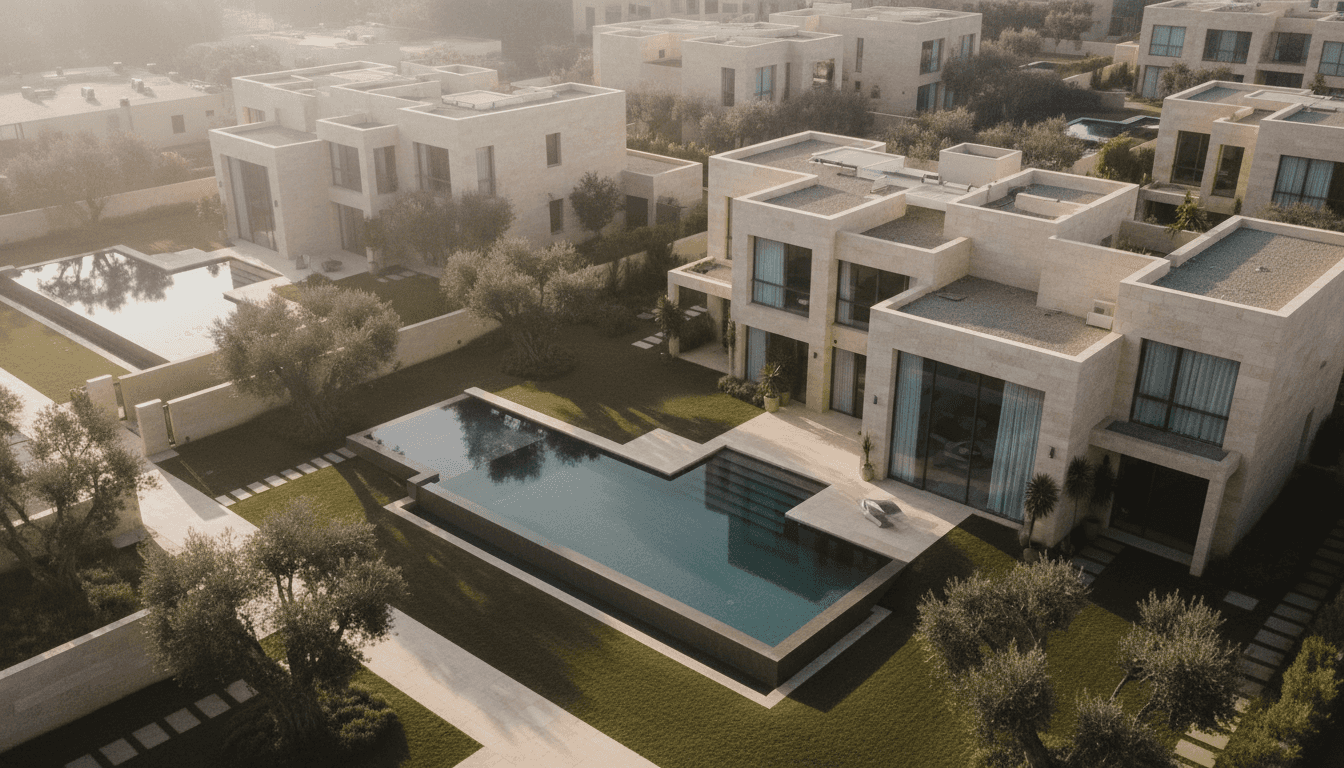
Who is the New Dubai Off-Plan Buyer?
I explore the significant shift in Dubai's off-plan buyer demographics and analyse how this evolution is reshaping developer strategies and the future of the property market.

The classic image of the Dubai off-plan buyer — a fast-moving speculator chasing quick-flip profits, is becoming a relic. A fundamental and, in my view, sustainable shift is underway, creating a more mature and nuanced market driven by a new cohort of buyers with very different priorities.
Here's what we will explore:
- The decline of the speculator and the rise of the end-user.
- The powerful influence of the Golden Visa on buyer psychology.
- The new 'Affordable Affluence' segment and its impact.
- Why community is the new currency for developers.
- The evolution of developer product strategy in response.
- How the payment plan is being weaponised for end-users.
- My analysis of future trends and where the opportunities lie.
The End of an Era: From Speculator to Settler
For years, the engine of the Dubai off-plan market was the short-term investor. The model was simple: secure a unit at launch with a minimal down payment, wait for the market to rise during the construction phase, and sell the contract (via an Oqood transfer) for a profit before handover, avoiding the need for a mortgage or the final balloon payment. This dynamic fuelled rapid price growth and frantic launch-day queues, but it also created a market susceptible to volatility. When sentiment turned, these highly leveraged positions could unwind just as quickly, leaving a trail of unfinished projects and distressed sellers.
Today, that buyer profile is no longer dominant. The changing real estate investor profile in Dubai is now heavily weighted towards end-users and long-term 'buy-and-hold' investors. These are individuals and families purchasing property with the intention of living in it or renting it out for consistent income over many years. This is not just a cyclical change; I believe it's a structural one, driven by a confluence of government policy, global economic shifts, and a newfound appreciation for Dubai's quality of life. The market's centre of gravity has moved from speculative gain to lifestyle acquisition and long-term stability.
Several factors have contributed to this shift. Firstly, regulatory maturity has played a huge role. The introduction of robust escrow account laws by the Real Estate Regulatory Agency (RERA) ensures that buyer funds are protected and used specifically for construction, significantly reducing developer default risk. The 4% transfer fee levied by the Dubai Land Department (DLD), coupled with agency fees, makes flipping a less profitable venture than it once was. A 6-8% round-trip transaction cost erodes the thin margins that speculators rely on. This friction, deliberately introduced, discourages high-frequency trading of property contracts and encourages a longer-term mindset.
The Golden Visa: An Unprecedented Market Catalyst
 Featured project
Perhaps the single most powerful catalyst for the Dubai property market evolution has been the expansion and clarification of the UAE's Golden Visa program. The ability to secure a 10-year renewable residency visa for an entire family by investing AED 2 million or more in property has been a game-changer. This isn't just a visa; it's a residency solution. It has fundamentally altered the buyer's calculation from 'Where can I make the quickest return?' to 'Where can I build a life for my family?'.
This shift in motivation has profound implications. A buyer considering putting down roots has a completely different checklist. Proximity to quality schools, parks, healthcare facilities, and community retail becomes paramount. The internal layout of the home matters more — is there a home office space? Is there a garden for the children? These are not questions a speculator asks. In my work with clients at Gaia Living, this conversation has become standard. We are no longer just discussing potential capital appreciation; we are mapping out school runs, commute times, and weekend lifestyle options. The Golden Visa has tied property acquisition directly to life planning.
This has had a direct impact on the types of properties in demand. The AED 2 million threshold has created a distinct focal point in the market. Buyers are often willing to stretch their budget to meet this requirement, knowing the residency benefit it unlocks. This has channelled significant demand into townhouses and smaller villas in master communities like Arabian Ranches or three-bedroom apartments in prime locations. Developers have responded astutely, often pricing their new launches to align perfectly with this threshold. A project with a good mix of two-bedroom apartments below AED 2 million and three-bedroom units just above it can effectively cater to two different buyer pools simultaneously.
Here is a list of key considerations that Golden Visa-motivated buyers prioritise, which now directly influence developer product strategy Dubai:
- Family-Sized Units: Demand for 3+ bedroom apartments, townhouses, and villas has surged.
- School Proximity: The quality and availability of nearby international schools is a top-three consideration for families.
- Community Amenities: Expansive parks, swimming pools, sports courts, and resident-only clubhouses are no longer optional luxuries but essential features.
- Healthcare Access: Proximity to reputable clinics and hospitals is a key factor for peace of mind.
- Flexible Spaces: Rooms that can serve as a home office, a playroom, or a guest room are highly valued in the post-pandemic world.
The Rise of 'Affordable Affluence'
While the ultra-luxury segment, with its branded residences and headline-grabbing penthouses, captures media attention, a far more significant trend is shaping the bulk of the market: the rise of what I call 'Affordable Affluence'. This refers to the growing demand from young professionals, creatives, and entrepreneurs for well-designed, high-quality homes in emerging, well-connected communities, but at a more accessible price point than traditional prime areas like Dubai Marina or Downtown.
This demographic is often priced out of the prime districts but has aspirations beyond the older, more basic apartment blocks. They are digitally native, globally-minded, and place a high value on design, community, and convenience. They are a core part of the changing real estate investor profile Dubai is witnessing. Developers like Nshama with its Town Square, Deyaar in communities like Dubai Science Park, and the burgeoning growth in areas like Arjan and Al Furjan are directly catering to this segment. They offer projects with a superior finish, thoughtful amenities like co-working spaces and high-spec gyms, and a strong sense of place, but with starting prices for one-bedroom apartments that might be in the AED 700,000 to AED 1.2 million range, rather than the AED 1.5 million+ seen in more established areas.
This buyer is often an end-user, but they are also a savvy investor. They understand that by getting into a growing master community early, they stand to benefit from significant capital appreciation as the area matures and amenities are delivered. They are not looking for a 20% pop in six months; they are banking on the five-year story of the neighbourhood. They see the new metro line extension, the planned community mall, and the new school as future value drivers. It's a hybrid mindset: part home-owner, part long-term strategist.
This trend has forced a positive change in the market. It's no longer enough to simply build a concrete tower. Developers must now curate a lifestyle. The success of projects in areas like JVC, despite its density, is a sign of developers who have focused on delivering superior build quality and genuine community facilities, differentiating themselves from the mass of generic buildings. This focus on quality at an accessible price point is a key component of future off-plan market trends and is creating a more resilient and diverse property ecosystem.
Community is the New Currency
If there is one single takeaway for developers observing the new Dubai off-plan buyer, it is this: you are no longer selling square feet; you are selling membership to a community. The most successful new launches of recent years have been those embedded within a comprehensive, amenity-rich master plan. Buyers are willing to pay a premium — and commit years in advance for an off-plan property, for access to a curated environment.
Look at the enduring appeal of projects by Emaar. Whether it's the established greenways of Arabian Ranches, the coastal lifestyle of Emaar Beachfront, or the urban buzz of Dubai Creek Harbour, the individual apartment or villa is only part of the value proposition. The real draw is the master plan: the parks, the waterfront promenade, the retail boulevards, the sense of safety and belonging. Emaar's premium is not just for build quality; it's for their proven track record as master-planners and community managers. They deliver the lifestyle they promise.
This principle now extends across the market. Aldar, having consolidated its strength in Abu Dhabi, is making significant inroads in Dubai with projects that emphasize holistic living. Sobha Realty has built its entire brand around the concept of a self-contained, luxurious enclave with Sobha Hartland, complete with its own schools and high street. Even in the affordable luxury space, developers are selling the neighbourhood first and the apartment second. A sales pitch for a project in Arjan will focus as much on its proximity to the Dubai Miracle Garden and its easy access to Sheikh Mohammed bin Zayed Road as it will on the unit's kitchen countertops.
“The modern off-plan purchase is an investment in a developer's ability to execute not just a building, but a vision for a neighbourhood.”
This has massive implications for future market trends. Standalone towers in disconnected locations with no surrounding amenities will struggle to compete, regardless of price. Buyers have become too sophisticated for that. They understand that long-term value and rental appeal are intrinsically linked to the quality of the surrounding environment. This puts immense pressure on developers to think like urban planners. The battle for the new off-plan buyer will be won not in the sales centre, but on the master plan drawing board.
The Product Pivot: How Developers are Responding
The shift in Dubai off-plan buyer demographics has triggered a necessary and welcome evolution in developer product strategy. The 'one-size-fits-all' approach of building endless towers of identical studios and one-beds is over. Developers are now segmenting their offerings with far greater precision, tailoring products to the specific needs of the new buyer profiles.
We're seeing a clear move towards larger units. The three-bedroom apartment, once a niche product, is now a staple of new launches, directly targeting the Golden Visa family. Townhouses, particularly in the AED 2 million to AED 4 million range, are in extremely high demand and consistently sell out at launch. These properties offer the space and privacy families desire, combined with the lock-up-and-leave convenience that still appeals to the expatriate mindset. Projects like the new phases in Damac Hills or the villas in master-planned communities by Aldar are prime examples of this strategy in action.
Another key evolution is the focus on flexible design and wellness. The global pandemic permanently changed how we view our homes. The demand for a home office, a dedicated study, or even just a nook that can be cordoned off for work is now a standard requirement. Developers are responding with 'plus one' or 'plus study' unit types (e.g., 2-bed + study) and more adaptable floor plans. Wellness is another major theme. This goes beyond just a gym in the basement. We're now seeing projects that incorporate yoga lawns, running tracks, air and water filtration systems, and designs that maximize natural light and green space. Developers like Omniyat have long been pioneers in this space, and now these concepts are filtering down into the mainstream market.
Finally, the rise of branded residences continues unabated, but with a new twist. While brands like Four Seasons or Bvlgari cater to the ultra-high-net-worth individual, we are now seeing the emergence of 'lifestyle' brands. These are collaborations with designers, wellness gurus, or even automotive brands like Binghatti's partnership with Bugatti. This is a clever strategy to appeal to a buyer's identity and sense of belonging to a tribe. It creates an emotional connection to the property that transcends mere bricks and mortar, providing a built-in narrative and a point of differentiation in a crowded market. It's a sophisticated play for the buyer who is not just buying a home, but a statement.
Weaponising the Payment Plan for End-Users
The payment plan has always been a core tool in the off-plan sales kit, but its strategic use has evolved significantly. In the speculator era, the goal was a low entry point (e.g., 5-10% down) to maximize use. Today, the payment plan is being redesigned to attract and enable end-users, for whom cash flow and mortgage eligibility are the primary concerns.
The most common structure we see now is the 'during construction' plan, such as a 60/40, 70/30, or 80/20. Here, the buyer pays the majority of the property's price in installments throughout the 3-4 year construction period, with the final 20-40% due upon handover. This is highly attractive to end-users for two key reasons. First, it gives them several years to save up for the final payment. Second, it aligns with Central Bank of the UAE mortgage rules, which typically cap loan-to-value (LTV) ratios at 75-80%. A buyer on an 80/20 plan will have built up 80% equity by handover, meaning they only need to finance the final 20%, a sum easily covered by a mortgage.
To illustrate, let's look at a hypothetical cost breakdown for an off-plan townhouse priced at AED 2,500,000 on a 70/30 plan:
Upfront & During Construction Costs:
- Down Payment (10%): AED 250,000
- DLD Fee (4%): AED 100,000
- Oqood Registration Fee: AED 5,250 (approximate fixed fee)
- Agency Fee (if applicable, typically 2%): AED 50,000
- Total Initial Outlay: AED 405,250
- Further 60% During Construction (paid over ~3 years): AED 1,500,000
At Handover (Year 3-4):
- Final 30% Payment: AED 750,000
This structure makes the purchase manageable. The buyer has paid AED 1,750,000 (70%) by handover. The remaining AED 750,000 can be paid in cash or, more commonly, financed with a mortgage. The buyer's significant equity makes securing that mortgage far easier.
More aggressive are the Post-Handover Payment Plans (PHPPs). Here, a developer might offer a plan where buyers pay, for example, 60% during construction and the remaining 40% in installments over 3-5 years *after* they have moved in. This is a powerful tool. It allows the buyer to live in the property (or rent it out) and use that rental income to help pay off the remaining balance. It effectively provides developer-led financing, bypassing banks entirely for a period. While less common with top-tier developers who don't need to offer such incentives, PHPPs are a key strategy for newer developers or those launching in emerging areas to attract buyers and build market confidence.
My Verdict: Future Trends and Investor Strategy
So, what does this all mean for the future of the Dubai off-plan market? I see three key trends solidifying over the next few years.
First, the bifurcation of the market will accelerate. On one end, you will have large, integrated master communities from established developers like Emaar Properties, Nakheel, and Aldar. These will command a premium and be seen as the 'blue-chip' safe havens for end-users and conservative long-term investors. On the other end, you will have a vibrant and competitive market of mid-sized developers fighting for distinction in emerging zones like Arjan, Liwan, and Dubai Studio City. Success here will be defined by superior product design, competitive pricing, and intelligent community-building on a smaller scale.
Second, sustainability and technology will move from marketing buzzwords to essential features. The new generation of buyers, both local and international, expects smart home integration as standard and is increasingly conscious of the environmental footprint of their homes. Developers who invest in green building certifications, energy-efficient systems, and integrated tech solutions will have a significant competitive edge. Projects in sustainable communities like Expo City are at the vanguard of this movement.
Third, the market's geographic footprint will continue to expand. As central areas become saturated and prices rise, demand will naturally flow outwards. We are already seeing this with the incredible success of launches in more peripheral locations that offer more space for the money. The announcement of mega-projects like the revived Palm Jebel Ali signals a long-term confidence in this expansion, creating entirely new city districts from scratch. For investors, this means the biggest opportunities for capital appreciation may lie not in the established core, but in being among the first to invest in the next wave of master-planned satellite communities.
For the modern off-plan buyer, the investment case has matured from a short-term gamble on price to a long-term investment in lifestyle and community. The developers who understand this profound shift and align their products, master plans, and payment structures accordingly will be the ones who define the next chapter of Dubai's remarkable real estate story. The focus must be on delivering real, tangible value to the end-user, because in today's market, the end-user is king.
Sources
- Dubai Land Department (DLD): dubailand.gov.ae
- Real Estate Regulatory Agency (RERA): Part of the DLD website.
- UAE Government Portal (Golden Visa): u.ae/en/information-and-services/visa-and-emirates-id/residence-visas/golden-visa
- Central Bank of the UAE (Mortgage Regulations): centralbank.ae
Questions, answered
- Who is the typical Dubai off-plan property buyer today?
- The profile has shifted from short-term speculators to a more diverse group, including long-term investors, end-user families seeking community living, and young professionals. Many are motivated by the UAE Golden Visa and the desire for a stable, high-quality lifestyle.
- How have developers in Dubai changed their projects in response to new buyer profiles?
- Developers are now focusing on larger, family-oriented homes with flexible spaces, extensive community amenities, and integrated wellness features. There's a move away from identical small apartments towards more diverse and user-focused product lines, including branded residences.
- Is buying off-plan in Dubai still a good investment?
- In my view, it can be, but the strategy has changed. The focus is less on quick flips and more on long-term capital appreciation and rental yields. Success depends heavily on choosing the right developer, location, and a project that aligns with end-user demand.
- What is the biggest change in the Dubai off-plan market recently?
- The most significant change is the pivot towards end-user demand and long-term residency. This has led to the development of master communities with schools and parks, and a greater emphasis on quality of life over pure investment metrics.
- What fees are involved in buying an off-plan property in Dubai?
- The main upfront costs are the Dubai Land Department (DLD) transfer fee of 4% of the property value, an Oqood registration fee (around AED 5,250), and any applicable agency fees. These are paid on top of your initial down payment to the developer.
- How does the Golden Visa affect the off-plan market?
- The Golden Visa, available for property investments of AED 2 million or more, is a major driver. It attracts buyers seeking long-term residency for their families, encouraging them to invest in larger, more permanent homes and strengthening the end-user segment of the market.

Isabelle covers off-plan and investment strategy — payment plans, handover risk, developer track records, and the maths of buying before completion.
Related stories

Your Hobby, at Home: The Rise of Bespoke Amenities
In Dubai, the new standard of luxury isn't just a bigger pool; it's a home that offers purpose-built spaces for your passions, from private cinemas to professional-grade golf simulators.
Service Charges: The Hidden Off-Plan Yield Killer
Off-plan developer service charge estimates can be misleadingly low, creating a significant gap between promised and actual rental yields. Here’s how to calculate the true cost of your Dubai property investment.
The New Heart of the Neighbourhood
A great villa community centre is more than just a gym and pool. I explore what truly elevates these neighbourhood hubs from a simple amenity to the vibrant core of family life in Dubai.
Echoes, in your inbox
One thoughtful email a month. Market insight, new launches, no spam.