

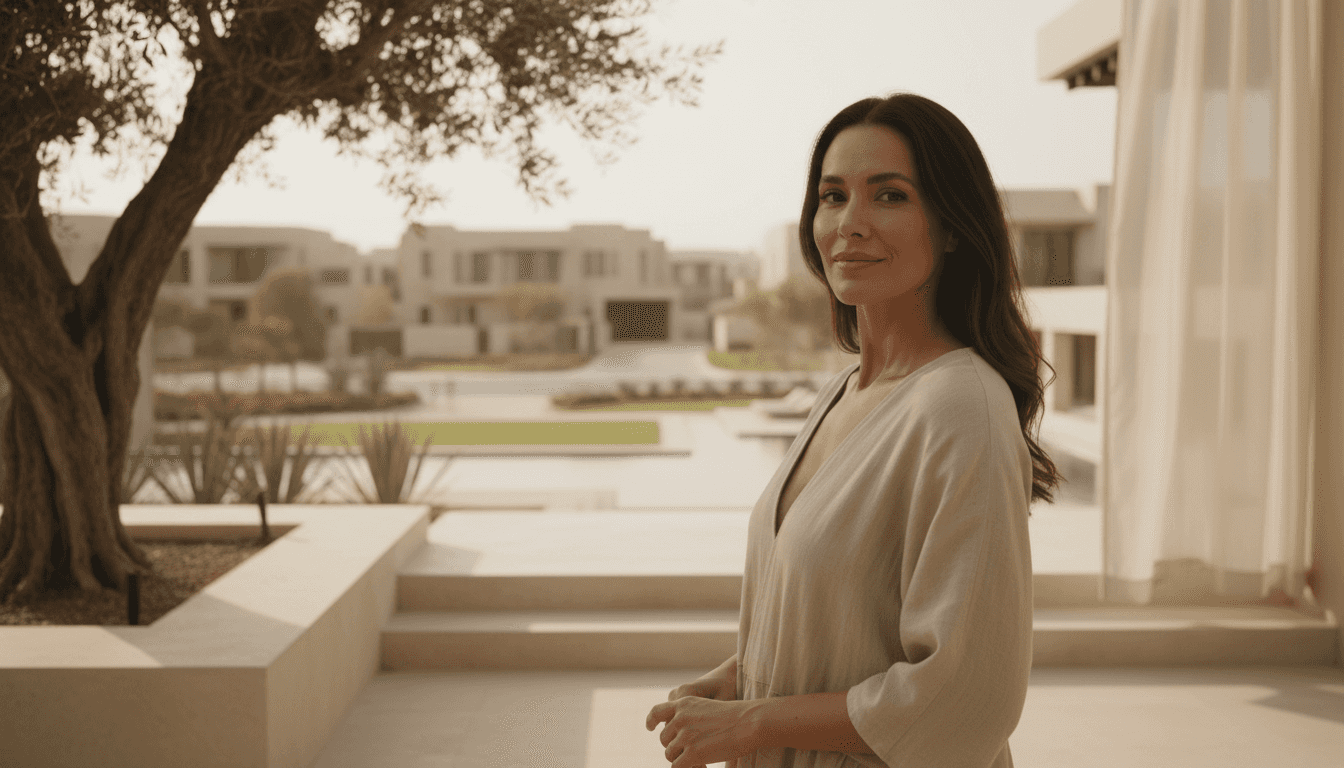
The New Heart of the Neighbourhood
A great villa community centre is more than just a gym and pool. I explore what truly elevates these neighbourhood hubs from a simple amenity to the vibrant core of family life in Dubai.

When my clients begin their search for a family home in Dubai, the conversation almost always starts with the villa itself — the number of bedrooms, the garden size, the quality of the finish. But I find the discussion quickly, and rightly, expands outwards. The second, and in my view, equally important home they are choosing is the community. And at the centre of that choice, both literally and figuratively, is the community centre.
Here’s what we’ll explore in this guide to Dubai's neighbourhood hubs:
- The evolution of the Dubai community centre from basic amenity to lifestyle destination.
- My essential checklist for families: the non-negotiable facilities.
- Beyond the basics: the amenities and services that create a true lifestyle.
- A deep dive into the classic model: Emaar Properties and the legacy of Arabian Ranches.
- The luxury wellness approach: The 'Heart & Soul' of Al Barari.
- The new generation: Integrated visions in communities like Sobha Hartland and Town Square.
- The invisible but vital elements: Management, maintenance, and programming.
- Calculating the real cost: How community centres impact your service charges.
The Evolution of the Dubai Community Centre
When I first started in Dubai real estate over a decade ago, the concept of a community centre in a villa development was quite basic. It was a functional add-on, a box-ticking exercise for the developer. You’d typically find a slightly dated gym with a few treadmills, a standard rectangular swimming pool, and perhaps a tired-looking tennis court. They were facilities, but they weren't destinations. They served a purpose but rarely inspired a sense of belonging or became the focal point of daily life. Families used them, but they didn’t linger. They were places for a quick workout or a swim, not for spending a Saturday afternoon.
The shift I've witnessed has been profound. As Dubai's property market has matured, so has the understanding of what makes a community desirable. Developers realised that they weren't just selling square footage; they were selling a lifestyle. The competition between master communities is fierce, and a standout community centre has become a powerful differentiator. Today, the best villa community centres in Dubai are less like utilitarian clubhouses and more like exclusive private member clubs for residents. The focus has moved from merely providing facilities to curating experiences. This is a crucial distinction and one that directly impacts the happiness of the families living there.
This evolution is driven by the changing demographics of Dubai’s residents. We see more and more families putting down deep roots, staying for the long term, and seeking a genuine neighbourhood feel. They want spaces where their children can make friends, where they can connect with other parents, and where daily conveniences are just a short walk or golf buggy ride away. The community centre has become the answer to that need. It's the modern-day village square, a place that fosters social connection and simplifies the logistics of family life. It’s no longer enough to just have a gym; it needs to be a state-of-the-art fitness centre with a range of classes. The pool needs a splash pad for toddlers and cabanas for parents. And increasingly, these hubs are incorporating cafés, co-working spaces, and even licensed restaurants.
My Non-Negotiable Checklist for Families
 Featured project
When I'm walking a family through a potential community, I have a mental checklist I run through as we tour the local centre. These are the foundational elements that, in my experience, make the biggest difference to day-to-day family life. A community that nails these basics is already ahead of the curve. Ignoring them can lead to frustration and a sense that the community isn't living up to its promise (or its service charges).
First and foremost is the swimming pool complex. A single, deep pool doesn't cut it for families. What I look for is a multi-pool setup: a main pool for laps and general swimming, and, critically, a separate, shallow, shaded children's pool or splash park. The shade is non-negotiable for anyone with young children in Dubai's climate. The best ones have engaging water features — sprinklers, tipping buckets, small slides, that can keep little ones entertained for hours. Equally important is the surrounding area. Is there ample, comfortable seating? Are there enough umbrellas for shade? Is it safely gated and supervised by attentive lifeguards? The pool is often the primary social hub for families, especially on weekends, and its design dictates how usable it really is.
Next on my list is the quality and scope of the play areas. A single, sun-beaten slide and a swing set in a patch of sand is the old model. Top-tier family-friendly community facilities in Dubai now offer imaginative, well-maintained playgrounds, often with soft, rubberised flooring for safety. I look for a variety of equipment catering to different age groups, from toddler-safe climbing frames to more challenging structures for older kids. Crucially, I also look for an indoor, air-conditioned play area. This is a game-changer during the long summer months, providing a vital space for children to burn off energy when it's too hot to be outside. A small soft-play structure or even just a well-stocked room with toys and games makes a huge difference.
Here’s my quick-reference checklist for the absolute essentials:
- Pools: Separate, shaded kids' pool with play features. A clean main pool for adults.
- Playgrounds: A well-equipped, shaded outdoor playground and a clean, air-conditioned indoor play space.
- Fitness: A modern, well-maintained gym with a good mix of cardio, resistance machines, and free weights.
- Multipurpose Space: A bookable room or hall for community events, birthdays, or classes.
- Basic Conveniences: Clean, accessible changing rooms and toilets.
- Safety: Secure access (usually via an access card), good lighting, and visible staff or security.
A community centre that ticks all these boxes provides a solid foundation. It ensures that on any given day, there are accessible, high-quality options for fitness, leisure, and play for every member of the family. Without these, a community can feel hollow, forcing residents to drive elsewhere for the very amenities they thought they were paying for through their service fees.
Beyond the Basics: Amenities That Create a True Lifestyle
While getting the basics right is essential, the communities that truly stand out are the ones that go further. These are the places that understand modern family life is about more than just swimming and swings. They offer amenities that add layers of convenience, wellness, and social opportunity, transforming the community centre from a facility into an indispensable neighbourhood hub for families in Dubai. This is where developers can really show their understanding of their target audience and create a 'sticky' environment where residents genuinely want to spend their time.
One of the biggest trends I've seen is the integration of high-quality food and beverage outlets. A simple vending machine has been replaced by artisanal cafés serving specialty coffee and healthy snacks. In my view, this is one of the most effective ways to foster a community atmosphere. The café becomes the de facto meeting point: for parents after school drop-off, for residents working remotely, or for a casual weekend brunch. Some of the more ambitious centres, like those in Dubai Hills Estate or Damac Hills, have even incorporated licensed restaurants and bars. This allows residents to enjoy a quality evening meal or a drink with friends without ever having to get in the car, adding a whole new dimension to the community's social life.
Another area of innovation is in wellness and sports facilities that go beyond the standard gym. We're seeing more dedicated yoga and Pilates studios with full class schedules. We're seeing Padel tennis courts — a hugely popular sport in Dubai, alongside traditional tennis and basketball courts. Some centres now include indoor squash courts, which are perfect for the summer. For me, the mark of a truly thoughtful community centre is the provision of varied sporting options that cater to different interests and skill levels. It shows a commitment to the holistic well-being of residents. These are the Dubai villa clubhouse amenities that people talk about and that genuinely enhance their quality of life.
“The best community centres don't just provide amenities; they provide convenience and connection, effectively extending the footprint of your home and enriching your daily life.”
Beyond that, the recognition of flexible working patterns has led to the inclusion of co-working spaces or business lounges. These are often quiet, well-designed areas with reliable Wi-Fi, power outlets, and sometimes even bookable meeting rooms. For the growing number of professionals who work from home, this is an invaluable asset. It provides a 'third space' — a place to work that isn't the office or the kitchen table, offering a change of scenery and a professional environment just steps from home. This is a perfect example of a community centre evolving to meet the real-world needs of its residents, adding tangible value that goes far beyond leisure.
Case Study: The Emaar Model at Arabian Ranches
The master developer Emaar Properties is, in many ways, the architect of the modern Dubai community concept, and nowhere is their original vision better exemplified than in Arabian Ranches. When it launched, 'The Ranches' set a new benchmark for family living, and its community centres were a huge part of that success. What Emaar understood early on was the power of creating a self-contained world for its residents. The community centres here weren't afterthoughts; they were integral components of the master plan, designed to be the social and commercial heart of each sub-community.
The classic Ranches model, which you can see at the centres in Saheel or Mirador, is a masterclass in comprehensive planning. They combine leisure facilities with essential retail. You don't just get a pool and a gym; you get a supermarket (often a Spinneys or Carrefour Market), a pharmacy, a salon, a dry-cleaner, and a selection of casual dining outlets. This integration is genius. It means that the daily errands which would otherwise require a car journey are woven into the fabric of the community. Residents pop into the centre for a swim and pick up groceries for dinner on their way out. This level of convenience is incredibly 'sticky' and is a primary reason why Arabian Ranches has remained one of Dubai's most sought-after family communities for so long.
Drilling down into the facilities themselves, Emaar established a high-quality baseline that many others have since emulated. The gyms are consistently well-equipped and maintained by Emaar's dedicated community management arm. The pools are large, well-staffed, and almost always accompanied by a separate, shaded kids' pool. The tennis and basketball courts are floodlit and well-surfaced. But it's the space around these facilities that also matters. Emaar communities are known for their lush, mature landscaping. The walk to the community centre is genuinely pleasant, along shaded pathways surrounded by greenery. This thoughtful master-planning elevates the entire experience and reinforces the sense of living in a premium, established neighbourhood.
Of course, this level of quality comes at a cost, which is reflected in the service charges. Emaar Community Management is known for being one of the more expensive operators, but in my experience, most residents feel they get value for money. The high standard of maintenance, security, and landscaping is visible everywhere. When you see a pristine park, a clean pool, and functioning facilities year after year, you understand where that money is going. The Arabian Ranches model proved that families are willing to pay a premium for a well-managed, amenity-rich environment that genuinely makes their lives easier and more enjoyable.
Case Study: The Luxury Wellness Approach at Al Barari
If Arabian Ranches represents the gold standard for comprehensive family convenience, then Al Barari represents the pinnacle of luxury wellness. This community has taken a completely different approach. The focus here is not on integrating retail and errands, but on creating an exclusive, resort-like sanctuary for residents. The community centre, if you can even call it that, is a sprawling complex of high-end wellness and dining experiences. It's less of a clubhouse and more of a destination spa and lifestyle hub that happens to be in the middle of a residential community.
The centrepiece of Al Barari's offering is 'The Heart & Soul' spa. This is not your typical community spa. It is a full-fledged, award-winning wellness destination with an extensive treatment menu, private suites, a dedicated hammam, and hair and nail salons. It attracts clientele from all over Dubai, but for residents, it is an incredible amenity to have on their doorstep. Complementing this is a state-of-the-art gym called 'Body Language', which features a stunning glass-walled design overlooking the community's famous gardens, a temperature-controlled swimming pool, and a packed schedule of fitness classes. The whole ethos is one of high-end, holistic wellbeing, surrounded by the incredible greenery that defines Al Barari.
What truly sets Al Barari apart, though, is its integration with nature. The community is famous for its botanical gardens, streams, and themed landscapes, and the central amenities are woven into this environment. The most famous example is 'The Farm', a restaurant set in a beautiful garden that has become a Dubai institution for breakfast and lunch. Having a destination restaurant of this calibre within your own community is a unique selling point. It creates a lifestyle that feels both secluded and sophisticated. You can go for a yoga class at Body Language, followed by a healthy breakfast at The Farm, all within a short walk from your villa. This is the kind of experience people associate with a five-star holiday, but Al Barari has made it a part of daily life for its residents.
This luxury approach, however, comes with a different set of considerations. The service charges in Al Barari are among the highest in Dubai, reflecting the immense cost of maintaining the extensive waterways, gardens, and premium facilities. Beyond that, access to many of these amenities is not fully included in the service charge. While residents may get preferential rates or membership packages for the gym and spa, these are generally pay-to-use services. This is a different model from the all-inclusive Emaar approach. Buyers in Al Barari are paying for the exclusivity, the incredible environment, and the privilege of having these world-class facilities on-site. It's a choice that appeals to a specific segment of the market that prioritises luxury, privacy, and wellness above all else.
The New Generation: Integrated, Experience-Led Hubs
The lessons learned from pioneers like Emaar and Al Barari are now being refined and reimagined by a new generation of developers. Communities that have launched more recently, such as Sobha Hartland and Nshama's Town Square, are creating community centres that are arguably even more ambitious and integrated. They are taking the best elements of the past — convenience, quality, and experience, and pushing them further. The focus is on creating a complete, walkable lifestyle where the lines between home, work, leisure, and nature are blurred.
Sobha Hartland, for instance, benefits from its prime location in Meydan, close to Downtown Dubai. But its master plan is designed to be a self-sufficient oasis. The community concept revolves around two key pillars: extensive green space (a significant portion of the master plan is dedicated to parks and gardens) and a complete lifestyle offering. The community hubs here are planned to include not just the standard pools and gyms, but also international schools, retail boulevards, and fine dining. The vision is to create a 'city within a city' where residents' daily needs are met within the community's borders. The clubhouse amenities are designed to a very high standard, reflecting Sobha's reputation for quality construction and finishing, creating a premium feel throughout.
Similarly, Town Square by Nshama, located on Al Qudra Road, was designed from the ground up around its central hub, Town Square Park. This is a massive public space that acts as the community's living room. Surrounding it, you'll find a cinema, a huge variety of restaurants and cafés, supermarkets, and countless shops. The residential clusters then radiate outwards, each with its own smaller, more traditional community centre featuring a pool, gym, and play area. This hybrid model is very effective. It provides residents with both the intimacy of a local pool and the buzz of a major town centre, all within walking distance. Nshama has also been very aggressive with its amenity list, including a skate park, a trampoline park, a carousel, and a splash pad, making it one of the most compelling options for families with active children.
What these newer communities do exceptionally well is go beyond gym community centres Dubai. They understand that the modern family wants experiences. They are building outdoor cinemas, organising farmers' markets, and creating dedicated spaces for events. They are building skate parks, wave pools, and climbing walls. The goal is to provide so much to do within the community that residents rarely feel the need to leave. This approach not only enhances the lifestyle of the residents but also builds a powerful sense of place and community identity, which in turn supports long-term property value.
The Invisible Essentials: Management and Programming
A developer can build the most spectacular, amenity-rich community centre in Dubai, but if it's poorly managed, it will fail. This is a point I stress constantly to my clients. The 'software' of a community centre — the management, maintenance, and programming, is just as important as the 'hardware' of the physical facilities. This is what brings a building to life and ensures it remains a valuable asset for years to come. When you're assessing a community, you should be looking for signs of a proactive and professional owners' association management company.
Maintenance is the most obvious factor. Is the gym equipment clean and in good working order? Is the swimming pool water crystal clear? Are the changing rooms spotless? Is the paint fresh and are the common areas tidy? A well-maintained centre is a sign that service charge funds are being used effectively. Neglect is a major red flag. If you see broken equipment, dirty facilities, or tired-looking common areas, it suggests a management company that is cutting corners or is unresponsive to resident needs. Over time, this neglect erodes the value of the amenity and the community as a whole. Reputable management companies, like Emaar Community Management or those appointed by developers like Sobha, have rigorous maintenance schedules and on-site staff to address issues promptly.
Equally important is community programming. The best community centres are not static spaces; they are vibrant hubs with a calendar of activities. This is what truly fosters a sense of community. I always advise clients to ask for the community's events calendar. Look for things like: group fitness classes (yoga, HIIT, Zumba), kids' movie nights, seasonal events (like National Day celebrations or festive markets), sports tournaments, and social clubs. This kind of programming requires dedicated community managers who are actively engaged in creating opportunities for residents to connect. It is this active curation of social life that transforms a collection of houses into a genuine neighbourhood and makes it one of the best villa community centres in Dubai for families.
Finally, the rules, regulations, and communication from the management are key. Is it easy to book a tennis court or a barbecue pit? Is the process fair and transparent? Does the community management communicate effectively with residents through an app, email newsletters, or notice boards? Clear communication and well-enforced, sensible rules ensure that the facilities can be enjoyed by everyone. When management is professional and responsive, it creates a harmonious living environment where residents feel heard and respected. This invisible layer of service is the bedrock upon which a successful community is built.
The Real Cost: Service Charges and Value
It’s impossible to discuss the fantastic amenities of Dubai's top community centres without addressing how they are paid for: the annual service charges. For anyone looking to browse properties for sale, this is a critical and recurring cost that must be factored into your budget. Service charges are levied by the Owners Association management company to cover the cost of maintaining all common areas, including landscaping, security, waste management, and, of course, the community centre. The more extensive the facilities, the higher the service charges are likely to be.
In Dubai, service charges for villa communities are calculated in AED per square foot of the property's built-up area (BUA), not the plot size. The rates are approved annually by the Dubai Land Department's (DLD) Real Estate Regulatory Agency (RERA), which provides transparency for homeowners. As a general guide, you can expect the following ranges:
- Basic/Older Communities: Communities with minimal facilities (perhaps just a pool) might have service charges in the range of AED 2.50 — AED 4.00 per sq. Ft.
- Mid-Range/Established Communities: Places like Arabian Ranches or Dubai Hills Estate with comprehensive community centres often fall in the AED 4.00 — AED 6.00 per sq. Ft. range.
- Luxury/Ultra-Lush Communities: High-end communities with exceptionally lavish landscaping and amenities, like Al Barari, can have service charges of AED 6.00 — AED 10.00+ per sq. Ft.
Let’s look at a practical example. Imagine you're considering a 4,000 sq. Ft. villa in a community like Arabian Ranches with a service charge of AED 5.50 per sq. Ft. Your annual service charge calculation would be:
- Villa BUA: 4,000 sq. Ft.
- Service Charge Rate: AED 5.50 per sq. Ft.
- Annual Service Charge: 4,000 x 5.50 = AED 22,000
This is a significant annual cost, and it's vital to understand what you're getting for it. Is it worth paying AED 22,000 a year? If your family uses the gym several times a week, the pool every weekend, and your kids are at the playground daily, the value is clear. A family gym membership alone could cost upwards of AED 10,000-15,000 per year, without including pool access, sports courts, and all the other benefits. When you break it down, a well-run community centre can offer excellent value compared to paying for these amenities separately. The key is to be realistic about your own lifestyle. If you know you're unlikely to use the facilities, you may be better off in a community with lower fees.
When choosing a villa in Dubai, look beyond the four walls of the house and critically assess the community centre. It is the single most important factor in shaping your family's lifestyle, social connections, and daily convenience. The right hub is not an expense; it's an investment in your family's happiness and well-being.
## Sources - Dubai Land Department (DLD): dubailand.gov.ae - Real Estate Regulatory Agency (RERA): rera.gov.ae
Questions, answered
- What are the essential amenities in a family-friendly Dubai community centre?
- Key amenities include a well-maintained swimming pool (preferably with a separate kids' pool), a modern gym, a children's play area (both indoor and outdoor), and a multi-purpose space for events. A good café or small grocery is also a significant plus for convenience.
- Are community centre facilities included in the service charges?
- Yes, access to the core facilities like the gym and pools is typically included in your annual service charges, which are paid to the Owner's Association management company. However, specific classes, court bookings, or special events may incur additional fees.
- Which Dubai communities are known for having the best community centres?
- Emaar communities like Arabian Ranches and Dubai Hills Estate are famous for their well-rounded, family-focused centres. Al Barari offers a unique luxury wellness experience with its 'The Heart & Soul' spa, while newer developments like those by Sobha and Nshama are also setting high standards.
- How do service charges for villa communities with good centres compare to others?
- You can expect to pay a premium. Villa communities with extensive facilities often have service charges ranging from AED 4 to AED 7 per square foot of built-up area annually. Less amenity-rich communities might be lower, around AED 2.50 to AED 4 per sqft.
- Can I use the community centre of a neighbouring community?
- Generally, no. Access to community centres is restricted to residents of that specific community or sub-community who pay the associated service charges. This exclusivity is part of what residents are paying for.
- How important is community programming at these centres?
- It's crucial. The best villa community centres in Dubai go beyond static facilities by offering a calendar of events like fitness classes, kids' clubs, seasonal markets, and social gatherings. This programming is what transforms the building into a true neighbourhood hub for families.

Sophia profiles Dubai's villa communities — schools, commute times, green space, and the intangible feel of a neighbourhood. She writes for families putting down roots.
Related stories
Furnished vs. Unfurnished: A Dubai Apartment Buyer's Guide
It's the eternal Dubai property question. I'll break down the financial and lifestyle implications of buying a furnished versus an unfurnished apartment to help you make the right call.
Selling Your Off-Plan Dubai Property: A Strategic Guide
A strategic guide for investors on how and when to sell an off-plan property in Dubai before completion. I'll cover the right timing, true costs, developer permissions, and marketing strategies to maximise your return on a pre-completion sale.
Dubai Mortgage Refinance: The Complete Guide
Refinancing your Dubai mortgage can unlock significant savings, but the process involves costs and complexities. Here is my complete breakdown of the process, costs, and timing to help you decide if it's the right move for you.
Echoes, in your inbox
One thoughtful email a month. Market insight, new launches, no spam.