

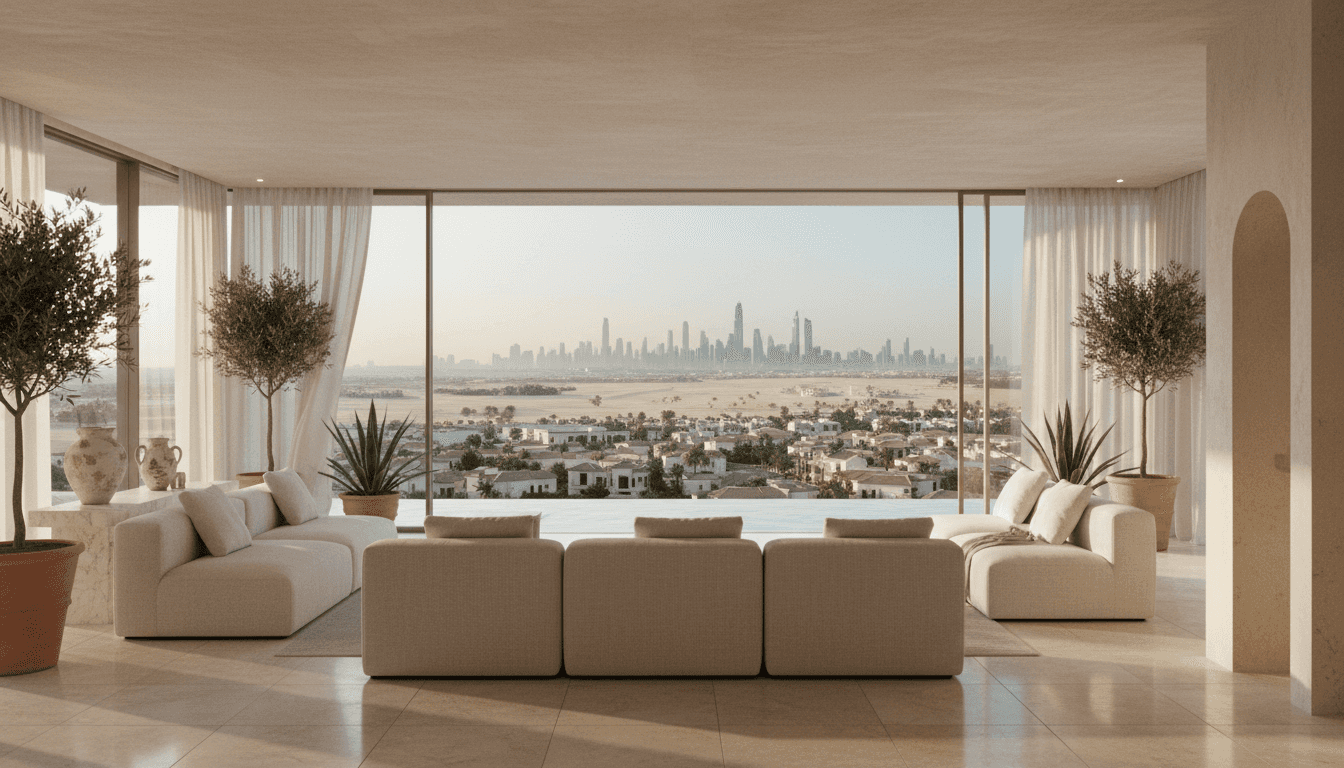
Villa vs Apartment: The Great Dubai Market Divergence
A deep analysis of the divergent performance trends between Dubai's villa and apartment markets, exploring why one segment has consistently outpaced the other in capital growth.

Since mid-2020, a clear narrative has dominated Dubai’s property market: the remarkable outperformance of villas. This analysis dissects the factors driving this residential market divergence and assesses whether these trends will define the city’s real estate landscape for the years to come.
Here is the framework for my analysis:
- The post-2020 market shift and the root of the villa-apartment divergence.
- A granular look at price growth metrics and the supply dynamics for each segment.
- Comparing apartment and villa investment cases through the lens of rental yields.
- The crucial role of service charges and their impact on net returns.
- End-user demand versus investor appetite in each category.
- The pipeline of new supply and where future development is focused.
- My verdict on the outlook for both property types.
The Great Divergence: A Story of Scarcity and Space
The fundamental story of Dubai's property market over the past few years is one of two distinct trajectories. The performance gap between villas and apartments is not a minor statistical variation; it is a structural chasm driven by deep shifts in both supply and demand. To understand the present, we must look back to the market correction that preceded the recent boom. From 2015 to mid-2020, the market was heavily oversupplied, particularly in the apartment sector. A wave of new projects, conceived in the optimism of the previous cycle, delivered a glut of inventory that suppressed both prices and rents. During this period, the divergence was less pronounced. Both segments were in a buyer's market.
The pandemic acted as an accelerant for trends that were already latent. Suddenly, the world re-evaluated the concept of 'home'. Space became the ultimate luxury. A private garden, a home office, and distance from neighbours transitioned from 'nice-to-have' to essential. This global behavioural shift coincided with Dubai's expert handling of the pandemic, which attracted a significant influx of new residents and high-net-worth individuals seeking a safe, open, and high-quality lifestyle. This new wave of demand, disproportionately made up of families and senior professionals, skewed heavily towards larger properties. They were not just looking for an asset; they were looking for a home that could accommodate a new way of living and working. They wanted villas.
This demand surge crashed against a stark reality: a structural undersupply of villas and townhouses. The development pipeline for the preceding five years had been overwhelmingly focused on apartments, which are quicker and often more profitable for developers to build per square foot of land. Major developers like Emaar Properties and Nakheel had certainly built villas, but the sheer volume of apartment towers in areas like Business Bay and JVC dwarfed the new supply of standalone homes. This scarcity was most acute in prime, established communities like Arabian Ranches, the Palm Jumeirah, and Emirates Hills. There was simply not enough ready inventory to absorb the new demand. The result was inevitable: a fierce bidding environment and a rapid, sustained surge in villa prices. This wasn't just a market recovery; it was a fundamental repricing of space and privacy in a post-pandemic world.
Price Growth: A Tale of Two Tapes
 Featured project
When we examine the hard data, the scale of the Dubai villa market trends becomes apparent. While the exact percentages vary depending on the specific index and time frame, the directional trend is unambiguous. From the market bottom in late 2020 to the present, villa prices in many prime communities have more than doubled. In contrast, while the apartment segment has also seen healthy growth, it has been far more modest. The city-wide apartment price index is still, in many analyses, hovering around or slightly below its previous 2014 peak. The villa index, however, has soared past its old highs and is in uncharted territory.
This is the core of the residential market divergence in Dubai. It's a story of scarcity premium. For example, a standard five-bedroom villa in Arabian Ranches that might have been valued at AED 3.5 million in 2020 could easily command a price north of AED 7 million today. A similar story has played out in communities like The Meadows and Jumeirah Islands. The growth has been most pronounced in these established, green, family-centric master communities. The value attributed to a plot of land, a private pool, and community amenities skyrocketed. This villa price growth in Dubai was not just a speculative flurry; it was underpinned by a wave of end-user buyers, many of whom were cash purchasers or had significant equity, making the rally less susceptible to interest rate fluctuations than a purely investor-driven market.
Apartments have followed a different path. Their recovery has been steadier but far less dramatic. In high-density, popular areas like Dubai Marina or Downtown Dubai, prices have performed well, driven by their prime location, lifestyle appeal, and the return of tourism and business travel. However, in secondary locations with a large volume of existing and upcoming supply, price growth has been much more subdued. The sheer number of available units acts as a natural cap on price inflation. For every seller asking for an ambitious price, there are ten others with similar units, creating a more balanced market. An apartment that sold for AED 1.5 million in 2019 might now be worth AED 1.8 million — a solid return, but nowhere near the explosive growth seen in the villa segment.
“The core reason for the villa market's outperformance is simple: for five years, Dubai built apartments for investors, then suddenly the world's families wanted to move in and buy homes with gardens.”
Rental Yields: The Apartment Investor's Advantage
While capital appreciation has been the headline story for villas, the investment case for apartments is built on a different metric: rental yield. This is where the apartment vs villa investment Dubai equation becomes more nuanced. Generally, apartments in Dubai offer superior gross rental yields compared to villas. The reason is a simple function of mathematics. Gross yield is calculated as (Annual Rent / Purchase Price) * 100. Because apartments have a significantly lower purchase price, the rent they generate represents a larger percentage of the initial investment.
Let's consider a practical, illustrative example:
- One-Bedroom Apartment in JVC:
- Purchase Price: AED 900,000
- Annual Rent: AED 75,000
- Gross Rental Yield: 8.3%
- Four-Bedroom Villa in Arabian Ranches:
- Purchase Price: AED 5,500,000
- Annual Rent: AED 250,000
- Gross Rental Yield: 4.5%
These figures demonstrate the typical trade-off. The apartment investor sacrifices the potential for explosive capital growth in exchange for stronger, more immediate cash flow. For an investor whose primary goal is to generate passive income, the apartment segment remains compelling. Apartment rental yields in Dubai are among the most attractive globally for a city of its stature, and they provide a consistent income stream that can be used to cover mortgage payments, service charges, and still generate a profit. Areas like JVC, Arjan, and Dubai Production City are hotspots for this type of investment, offering a blend of affordability and strong tenant demand.
Villas, on the other hand, are more of a 'total return' play. The lower rental yield is accepted by the buyer because the primary expectation is long-term capital appreciation. The rental income is often seen as a way to cover running costs rather than as the main source of profit. A villa owner in a prime community like Al Barari is banking on the long-term desirability and scarcity of their asset to drive its value up over time. This distinction is critical for any investor considering the market. Are you optimising for monthly cash flow or for long-term wealth creation through asset value growth? The answer will likely point you towards one segment over the other.
The Hidden Cost: Service Charges and Net Returns
Gross yield is a useful starting point, but savvy investors focus on the net yield — the return after all expenses are paid. And the single largest operational expense for any property in Dubai is the service charge. This is an area where the divergence between villas and apartments can narrow, and sometimes even invert the investment case. Service charges are levied by the Owners' Association management company to cover the maintenance and upkeep of all common areas. This includes everything from security and landscaping to swimming pool maintenance, gym operation, and the building's facade cleaning.
These charges are calculated on a per-square-foot basis of the property's total area as registered with the Dubai Land Department (DLD). The rate can vary dramatically depending on the community, the developer, and the level of amenities. Here's a typical range of what to expect:
- Apartment Buildings: Rates often fall between AED 14 and AED 25 per square foot per year. Premium projects in prime locations with extensive facilities, like those in DIFC or on Bluewaters Island, can be higher, sometimes exceeding AED 30 per sq. Ft.
- Villa Communities: Rates are typically lower on a per-square-foot basis, often ranging from AED 3 to AED 7 per square foot. This is because the common areas are less complex — mostly roads, parks, and community centres, rather than elevators, lobbies, and complex HVAC systems for an entire tower.
Let's revisit our earlier example and factor in these costs to calculate a more realistic net yield. Assuming a service charge of AED 18/sqft for the apartment and AED 5/sqft for the villa:
- One-Bedroom Apartment (900 sq. Ft. in JVC):
- Annual Service Charge: 900 sq. Ft. * AED 18/sq. Ft. = AED 16,200
- Annual Net Rent: AED 75,000 - AED 16,200 = AED 58,800
- **Net Rental Yield: (58,800 / 900,000) * 100 = 6.5%**
- Four-Bedroom Villa (4,000 sq. Ft. BUA on 6,000 sq. Ft. plot in Arabian Ranches):
- Annual Service Charge: 4,000 sq. Ft. * AED 5/sq. Ft. = AED 20,000
- Annual Net Rent: AED 250,000 - AED 20,000 = AED 230,000
- **Net Rental Yield: (230,000 / 5,500,000) * 100 = 4.2%**
As the calculation shows, even after accounting for the higher service charge rate, the apartment still provides a superior net yield in this scenario. However, the gap has narrowed. Beyond that, villa owners have more direct control over their property's major expenses (e.g., private pool and garden maintenance), whereas apartment owners are subject to the collective management of the building. A poorly managed building can lead to spiralling service charges that decimate net returns. This makes due diligence on the developer's track record and the quality of the Owners' Association management absolutely critical for any apartment investor.
End-Users vs. Investors: A Segmented Demand Profile
The divergence in performance is also a reflection of two very different buyer pools. The Dubai property segment analysis shows that the villa market, particularly in the premium and prime segments, is now overwhelmingly dominated by end-users. These are the families putting down roots, the executives relocating their households, and the entrepreneurs who have chosen Dubai as their long-term base. This has profound implications for market stability. An end-user-driven market is less speculative and less flighty than one dominated by investors. End-users are less likely to sell at the first sign of market softness because their purchase is primarily a lifestyle decision, not a quarterly portfolio adjustment.
This is why communities like Dubai Hills Estate or the newer phases of Sobha Hartland have seen such resilient demand. They are designed for living, with schools, parks, and retail in close proximity. The Golden Visa program has been a huge catalyst here, giving residents the confidence to make multi-million dirham home purchases with the assurance of long-term residency. This creates a stable 'floor' for prices, as the transactional activity is driven by life events — needing a bigger home for a growing family, for instance, rather than pure profit motives. This is a mature market dynamic, and it's a very healthy sign for the long-term sustainability of the villa segment.
The apartment market, by contrast, has a more balanced, and in many sub-markets, investor-heavy demand profile. While end-users are certainly active, particularly single professionals and young couples in areas like the Marina or Downtown, a huge portion of transactions for smaller units (studios and one-bedrooms) is driven by investors. These buyers are a mix of local and international individuals seeking rental income and a foothold in the Dubai market. They are highly sensitive to price, rental yields, and developer payment plans. The rise of post-handover payment plans on off-plan launches is a direct appeal to this investor segment, lowering the barrier to entry and allowing them to start earning rent before the full purchase price is paid off.
This investor focus means the apartment market is more cyclical and more susceptible to shifts in global economic sentiment and financing conditions. When mortgage rates rise, as they have recently, it has a more immediate cooling effect on the investor-led apartment market than on the cash-heavy, end-user villa market. It also means that rental demand is the absolute lifeblood of the apartment segment. As long as Dubai's population continues to grow and attract new workers, the rental market will remain robust, supporting apartment values. However, any slowdown in population growth would be felt much more acutely in the apartment sector than in the supply-constrained villa market.
The Supply Pipeline: Where is Dubai Building Next?
Looking ahead, the future supply pipeline reinforces the current divergence. The city's master plan for growth, the Dubai 2040 Urban Master Plan, prioritises densification and the development of integrated communities. However, the immediate development pipeline reflects the lessons learned from the recent cycle. The scarcity of villas has not gone unnoticed by the city's major developers.
Consequently, a significant portion of new large-scale master communities is focused on villas and townhouses. We are seeing this with major projects from Emaar in The Valley and the expansion of Arabian Ranches, Nakheel's ambitious plans for new islands and communities like the revived Palm Jebel Ali, and significant villa-focused projects from developers like Aldar and Sobha. Most of these new villa communities, by necessity, are located further out from the city's traditional centre, in areas like Dubai South near Expo City, along the E611 and D54 corridors. This creates a new trade-off for buyers: more space and modern amenities, but a longer commute. The success of these new communities will depend on their ability to deliver a compelling, self-contained lifestyle with schools, retail, and recreation on-site.
The apartment pipeline, while still vast, is becoming more targeted. We are seeing a flight to quality and specialisation. Instead of generic towers, developers are focusing on specific niches. This includes branded residences (e.g., Baccarat, Four Seasons), ultra-luxury towers with premium finishes and services in prime locations like Jumeirah Bay or along the Canal, and lifestyle-oriented projects in vibrant urban hubs like Dubai Design District. Developers like Omniyat have built their entire brand on this ultra-premium niche. At the more affordable end, developers like Binghatti and Nshama continue to deliver high volumes in areas with proven rental demand, but the focus is on efficient design and community amenities to stand out from the competition.
This bifurcated supply strategy suggests that the core dynamics of the last few years will persist. The supply of new, prime, centrally located villas will remain extremely limited, supporting values in established communities. The supply of new apartments will continue to be plentiful, meaning that location, quality, and professional management will be the key differentiators for price and rental performance. An investor buying an off-plan apartment today must be confident that their chosen project offers something unique that will allow it to compete with the thousands of other units that will be handed over in the same period.
My Verdict: A Market for Every Strategy
So, what is the final word on the apartment vs villa investment Dubai debate? My analysis leads me to believe that the era of dramatic, market-wide divergence in capital growth is likely behind us. The explosive repricing of villas was a one-off event, a correction of a long-term supply-demand imbalance that was catalysed by the pandemic. While I expect the villa segment to remain a resilient store of value, particularly in prime communities, the pace of growth will inevitably moderate and align more closely with the broader market. The scarcity premium is now largely priced in.
The apartment market, in my view, is entering a more interesting phase. The headline city-wide index masks a huge degree of variation. While older, poorly maintained buildings in oversupplied areas will likely see stagnant or even declining values, I see significant opportunity in specific sub-markets. These include:
- Boutique luxury projects: Buildings with a unique architectural design, high-end finishes, and excellent services in prime locations.
- Transit-oriented developments: Properties within walking distance of a Metro station, which will become increasingly valuable as the city grows and traffic increases.
- Well-managed community-focused projects: Buildings in areas like Dubai Hills or Town Square that offer a 'villa lifestyle' with apartment affordability, including access to parks, pools, and retail.
Ultimately, there is no single 'better' investment. The right choice depends entirely on an investor's capital, risk appetite, and goals. The villa market is for the long-term, equity-rich buyer prioritising lifestyle and wealth preservation. The apartment market offers a more accessible entry point for those seeking immediate rental income and who are willing to do the homework to select a quality asset in a competitive landscape.
At Gaia Living, our guidance to clients is to look beyond the headline trends and focus on the specific attributes of the property itself. A well-priced villa in an emerging community could offer better growth potential than an overpriced apartment in a prime one. Conversely, a unique, well-managed apartment in a supply-constrained micro-market could be a far superior rental asset to a generic villa. The era of buying anything and watching it rise is over. The future belongs to the discerning buyer.
The extreme outperformance of villas was a necessary market correction, but the future of the Dubai property market lies in nuance. Apartments offer superior yields and a lower entry point, while prime villas represent a stable, long-term store of value. Success in either segment now demands careful asset selection rather than simply betting on a market-wide trend.
Sources
- Dubai Land Department (DLD): dubailand.gov.ae
- Real Estate Regulatory Agency (RERA): dubailand.gov.ae/en/about-dld/dld-sectors/real-estate-regulatory-agency/
- Dubai 2040 Urban Master Plan: u.ae/en/about-the-uae/strategies-initiatives-and-awards/local-governments-strategies-and-plans/dubai-2040-urban-master-plan
- Central Bank of the UAE (CBUAE): centralbank.ae
Questions, answered
- Have villas or apartments performed better for capital growth in Dubai?
- Villas have significantly outperformed apartments in capital appreciation since mid-2020. This is due to a structural undersupply of larger, family-oriented homes and a post-pandemic shift in buyer preference towards space and privacy.
- Which property type offers better rental yields in Dubai, villas or apartments?
- Apartments generally offer higher gross rental yields than villas. Their lower purchase prices relative to rental income make them attractive for investors focused on cash flow, especially in high-demand areas like Dubai Marina or Business Bay.
- Is now a good time to buy a villa in Dubai?
- While villa price growth has moderated from its peak, the underlying supply-demand imbalance for quality family homes remains. Well-located villas in established communities are likely to be a resilient store of value, though the rapid capital gains of recent years are unlikely to be repeated.
- What are the main costs when buying a villa or apartment in Dubai?
- The main upfront costs include the property price, a 4% Dubai Land Department (DLD) transfer fee, a 2% real estate agency fee (+5% VAT), a trustee office fee (approx. AED 4,200), and the cost of an NOC from the developer. Buyers should budget for roughly 7-8% of the property's value in transaction costs.
- Where are new villa communities being developed in Dubai?
- Major new villa developments are concentrated in master communities further from the city's traditional centre. Key areas include the expansion of Arabian Ranches, The Valley by Emaar, communities in Meydan like Sobha Hartland II, and large-scale projects in Dubai South near Expo City.
- Why are apartment rental yields higher than villa yields?
- Apartments have a much lower entry price, meaning the rental income represents a larger percentage of the initial investment. While a villa's absolute rental income in AED is higher, its multi-million dirham purchase price brings the percentage yield down compared to a more affordable apartment.

Amara translates DLD transaction data, supply pipelines, and macro signals into clear calls on where Dubai's market is heading. She writes the numbers most brokers only feel.
Related stories
Selling Your New Dubai Home: The First-Year Playbook
I'm Lena Fischer, Seller's Strategist at Gaia Living. This is my definitive guide for owners looking to sell a newly handed-over property in Dubai, covering everything from snagging and warranties to maximising your sale price within the first 12 months.
Protecting Your Asset: A Dubai Homeowner's Guide
You've secured the keys to your new Dubai property. Now, the crucial work of protecting and managing your asset begins. This guide covers everything from insurance and security to maintenance contracts and tenant management.
Dubai's Established Charm: The Case for Older Homes
In a city focused on the future, I believe the smartest move for many buyers is to look back. Dubai's seasoned communities offer space, character, and surprising value that new builds often can't match.
Echoes, in your inbox
One thoughtful email a month. Market insight, new launches, no spam.