

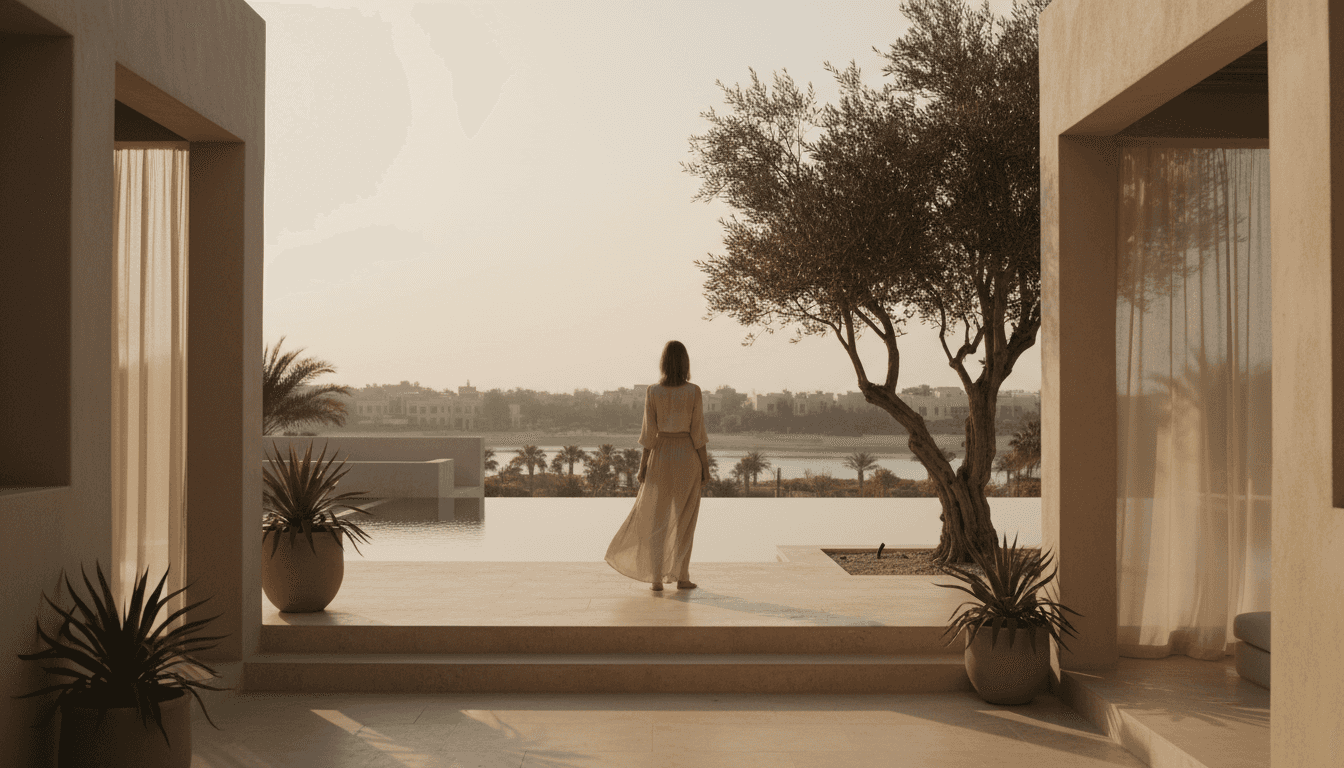
Dubai's Established Charm: The Case for Older Homes
In a city focused on the future, I believe the smartest move for many buyers is to look back. Dubai's seasoned communities offer space, character, and surprising value that new builds often can't match.

In a city defined by its relentless pursuit of the next big thing, looking backwards can feel like a contrarian act. Every week at Gaia Living, we see the excitement building around glossy off-plan launches with their cutting-edge renders and post-handover payment plans. Yet, I find myself increasingly advising clients to pause and consider a different path. A path that leads not to a construction site, but to the tree-lined streets and established courtyards of Dubai's first generation of freehold communities. There's a quiet confidence to these neighbourhoods, a sense of lived-in reality that offers a compelling alternative to the off-plan promise.
This isn't just about nostalgia. It's a strategic decision rooted in space, lifestyle, and tangible value. This is the case for Established Charm.
Here is what I want to explore with you:
- The fundamental differences between Dubai's new and seasoned properties.
- Identifying the city's benchmark 'seasoned' communities.
- The 'Space Dividend': Why older homes are simply bigger.
- A detailed financial breakdown of buying and owning an older property.
- The intangible — but valuable, lifestyle of a mature neighbourhood.
- Practical steps for renovating to unlock modern value.
- A guide to due diligence: what to inspect before you buy.
- My final verdict on who should be buying established properties today.
The Allure of the New vs. The Wisdom of the Old
The Dubai property market is, in many ways, driven by a powerful psychology of the new. A brand-new apartment comes with the implicit promise of perfection: untouched appliances, flawless finishes, and the latest amenities. For many buyers, particularly those from overseas, this feels like the safest bet. There's no hidden history, no wear and tear to worry about. Developers have perfected the art of selling this dream, with slick marketing suites and attractive payment structures that make acquiring a piece of the future feel deceptively simple. This is especially true for investors who may never see the property and prioritise a hassle-free, hands-off asset.
I understand the appeal completely. The excitement of being the first person to live in a home is powerful. There's also the security of a developer warranty and the initial period of lower maintenance. However, this focus on the 'new' often obscures what you're giving up in return. The premium for 'brand new' is significant, not just in the purchase price but often in the compromises on space and location. The most desirable plots of land were, by definition, the first to be developed. This means many of today's new builds are in emerging areas, further from the city's core, requiring a longer-term vision and a tolerance for ongoing construction.
Conversely, the wisdom of the old lies in its transparency. What you see is what you get. An apartment in a 15-year-old building has a track record. You can walk through the actual unit, not a show home. You can speak to residents in the lobby. You can see how the landscaping has matured, how the facilities have been maintained, and what the genuine community atmosphere feels like. The value proposition shifts from a future promise to a present reality. You are buying into a known quantity, and in my experience, that certainty holds immense financial and lifestyle value that is frequently underestimated in the rush for the latest launch from Emaar Properties or Nakheel.
What Defines a 'Seasoned' Dubai Community?
 Featured project
When I talk about 'seasoned' or 'established' communities, I'm not referring to dusty relics. I'm referring to the pioneering master-planned developments that came of age in the early-to-mid 2000s. These are the neighbourhoods that proved the concept of freehold Dubai and set the standard for community living that developers are still trying to replicate today. They are typically 10 to 20 years old, have fully matured infrastructure, and a stable ecosystem of schools, retail, and parks.
Let's name names. For apartment living, the gold standard for me has always been The Greens & Views. Built by Emaar, this low-to-mid-rise community is a masterclass in urban planning. Its shaded walkways, central lake, and integrated retail create a walkable, village-like atmosphere that is incredibly rare. The buildings themselves are well-maintained, and the layouts are famously generous. Similarly, the first six towers in Dubai Marina — the 'Emaar Original Six' (Al Mass, Fairooz, Murjan, etc.), offer prime marina locations with square footages that are simply unheard of in new towers. While the lobbies might not have the soaring opulence of a 2026 launch, the apartment interiors and panoramic water views are timeless. Another excellent example is Jumeirah Lakes Towers (JLT), where certain well-managed clusters from the early development phases offer huge apartments at a fraction of the cost of their marina-side neighbours, with the added benefit of a park and lake at your doorstep.
For villas and townhouses, the conversation must start with Arabian Ranches. The original 'Ranches 1' is perhaps the city's most beloved family community. Its winding streets, desert-themed landscaping, and high-quality construction have aged beautifully. The plot sizes are substantial, affording a level of privacy and garden space that newer villa communities often sacrifice for density. Following this model are The Springs and The Meadows, also by Emaar, which form part of the wider Emirates Living ecosystem. These communities offer a tiered range of villa sizes, all benefiting from mature trees, serene lakes, and an established network of community centres and schools. These places don't just feel like housing developments; they feel like hometowns.
What unites these disparate locations is a development philosophy that prioritised lifestyle and space over maximising density. Developers like Emaar and Nakheel were building reputations and setting a global benchmark. The land was less expensive, allowing for more generous master planning — wider roads, more green space between buildings, and larger individual units. This is a luxury that is difficult and expensive to replicate on the scarcer, pricier plots available today. Buying into one of these communities is an investment in that foundational quality.
The Space Equation: A Generational Shift in Layouts
This is perhaps the most critical, data-driven argument for considering an older property. The simple fact is that apartments and villas built between 2002 and 2008 are, on average, significantly larger than their modern counterparts. I call this the 'Space Dividend'. It’s a tangible return you get every single day you live in the home. It’s the difference between a cramped living room and one that can host a dinner party, the difference between a kitchenette and a proper closed kitchen, the difference between a balcony for a single chair and a terrace you can dine on.
Let's look at some concrete examples. A standard two-bedroom apartment in The Greens typically ranges from 1,300 to 1,600 square feet. It often includes a proper laundry room, a spacious storage closet, and a large, square-shaped living area. Now, compare that to a new, premium two-bedroom apartment launching today in a desirable area like Business Bay or the newer phases of Creek Harbour. You will find many are in the 1,000 to 1,200 square foot range. That 30-40% reduction in space is not trivial. It’s a study, a guest powder room, a pantry. It's the breathing room that makes a home feel like a sanctuary rather than just a base.
This trend is even more pronounced in villas. An original three-bedroom villa in Arabian Ranches (like an Al Reem or Palmera type) sits on a decent plot and offers a built-up area (BUA) that feels comfortable for a family. Newer three-bedroom townhouses, in a bid to hit a more accessible price point, are often built on smaller plots with much smaller BUAs, sometimes sacrificing a closed kitchen or a formal dining space. We see this shift in design philosophy everywhere: open-plan kitchens are now the default (cheaper to build, makes a small space feel bigger), maids' rooms are shrinking or disappearing, and storage is an afterthought. While these modern layouts can be efficient, they often lack the practicality and graciousness of older designs.
“In the Dubai property market, square footage is the one true luxury that you can't easily add later. You can change the floors, modernise the kitchen, and upgrade the bathrooms, but you can almost never make a small room bigger.”
This isn't a criticism of modern developers. They are responding to higher land costs and a market that, for a time, prioritised affordability and compact 'lock-up-and-go' units. However, as the market matures and more buyers seek long-term family homes, this historic Space Dividend becomes an increasingly powerful differentiator. When you view properties for sale, I urge you to look beyond the brochure and focus on the floor plan and the total square footage. A 15-year-old apartment with a 'dated' kitchen but an extra 400 square feet of living space often presents a far greater opportunity for long-term value and lifestyle quality.
The Financial Case for Seasoned Properties
The lifestyle and space advantages are compelling, but for most of us, the numbers have to work. And this is where established properties truly shine, both for end-users and investors seeking value in established Dubai properties. The financial argument rests on three pillars: a lower acquisition cost per square foot, potentially more manageable running costs, and the potential for value creation through renovation.
First, the price per square foot (PSF) is almost always lower. A quick market survey reveals the disparity. A well-maintained two-bedroom apartment in The Greens might trade for around AED 1,300-1,500 PSF. A brand-new, off-plan two-bedroom in a comparable 'mid-luxury' development could easily be priced at AED 1,800-2,200 PSF or higher. For a 1,400 sqft apartment, this is a difference of over half a million dirhams at the outset. This lower entry point makes these homes more accessible, reduces your mortgage burden, and immediately improves your potential rental yield if you're an investor. An investor buying for yield is looking for the highest possible rent relative to the lowest possible purchase price, and older properties often win this calculation hands down.
Second, let's talk about running costs, specifically the service charges. It’s a common misconception that older buildings always have higher fees. While it's true that a poorly managed building can be a money pit, a well-run, established community often has more stable and sometimes even lower service charge properties Dubai. Why? They typically have fewer complex, high-maintenance amenities. The resort-style lagoon pools, intricate water features, and tech-heavy smart home systems of new buildings come with a hefty long-term maintenance bill. An older building with a simple, clean pool and a well-maintained gym may have annual charges in the range of AED 14-18 per sqft. Many new, amenity-rich towers are charging AED 22-30+ per sqft. Over the years, this difference adds up to tens of thousands of dirhams.
Third is the opportunity for 'forced appreciation' through renovation. Buying a slightly dated property allows you to invest a smaller sum to bring it up to modern standards, capturing a significant uplift in value. A budget of AED 100,000-150,000 can completely transform an older apartment's kitchen and bathrooms, which are the key areas that influence perceived value. This strategic investment often yields a return far greater than the initial outlay upon resale. Let's walk through a real-world cost breakdown for buying an older two-bedroom apartment:
Sample Cost Breakdown: 1,400 sqft Apartment in The Greens * Purchase Price: AED 2,000,000 * Dubai Land Department (DLD) Fee (4%): AED 80,000 * DLD Registration Fee: AED 4,200 * Agency Fee (2% + VAT): AED 42,000 * Mortgage Registration Fee (0.25% of loan): AED 4,000 (on an 80% loan of AED 1.6m) * Bank Processing/Valuation Fee: AED 5,000 (approx.) * NOC (No Objection Certificate) Fee from Developer: AED 1,000 (approx.) * Total Upfront Cost (before renovation): AED 2,136,200
Now, let's add a renovation budget: * Full Kitchen Remodel (cabinets, counters, appliances): AED 50,000 * Two Bathroom Remodels (tiles, sanitary ware, fixtures): AED 40,000 * New Flooring & Painting Throughout: AED 30,000 * Renovation Budget: AED 120,000
Your 'all-in' cost for a fully modernised, spacious 1,400 sqft apartment is AED 2,256,200. A brand-new apartment of a much smaller size (say, 1,100 sqft) in a less central location could easily cost this much *before* you've even paid your DLD fees. This clear financial path makes a compelling case for investment in seasoned Dubai neighbourhoods.
The Unspoken Value of a Mature Community
Beyond the floor plans and financials lies something less tangible but, in my opinion, far more valuable: the soul of a place. Mature communities with character Dubai offer a quality of life that takes years, even decades, to cultivate. You cannot fast-track the growth of a 50-foot flame tree that provides genuine shade over a walkway. You cannot instantly create the friendly rapport between neighbours who have seen each other's children grow up. This is the organic fabric of a real neighbourhood.
Walk through The Meadows on a weekday afternoon. You'll see people jogging around the lakes, children cycling home from school, and families walking their dogs. The greenery isn't just decorative landscaping; it's a functional, thriving park ecosystem. The community centres aren't just vacant retail spaces; they are bustling hubs with familiar cafes, grocery stores, and fitness studios. This creates a deeply convenient and pleasant living experience. You aren't waiting for the community to be 'finished'; it already is. The roads are all built, the traffic patterns are established, and the local amenities are tried and tested.
This sense of permanence and stability is profoundly comforting. It also fosters a stronger sense of ownership and responsibility among residents. In an established community, the Owners Association is typically run by actual residents who have a vested, long-term interest in the upkeep and enhancement of their shared home. This can lead to more sensible financial planning, better maintenance, and a greater focus on projects that genuinely improve residents' lives, rather than just ticking boxes for a marketing brochure. This is a stark contrast to new buildings where the developer may control the OA for the first few years, sometimes with different priorities. This established social infrastructure is a powerful, if invisible, asset.
Unlocking Value: A Practical Guide to Renovation
The idea of renovating can be daunting, but it's the key that unlocks the full potential of an older property. A strategic, well-managed renovation allows you to combine the superior space and location of a seasoned home with the contemporary aesthetics and functionality of a new one. The goal isn't to gut the entire property; it's to make targeted, high-impact changes.
Here’s my advice on where to focus your budget for the best return on lifestyle and investment:
1. The Kitchen is King: This is the heart of the modern home. An old, dark, closed-off kitchen is the single biggest factor that dates a property. If the layout allows, opening up a wall to create a more integrated kitchen-living space can be transformative. If not, a full cosmetic overhaul will still work wonders. Think new cabinet fronts (or even just professionally repainting the existing ones), modern quartz or sintered stone countertops, a new backsplash, and updated, energy-efficient appliances. This alone can make the entire home feel ten years younger.
2. Brighten the Bathrooms: Dated tiles and bulky sanitary ware can make bathrooms feel dreary and unhygienic. A refresh here is essential. You don't always need to change the plumbing layout. Simply re-tiling with large-format, light-coloured porcelain, installing a modern wall-hung toilet, a walk-in rain shower instead of a bulky tub, and a new vanity with good lighting can completely change the feel of the space.
3. Flooring and Lighting: Old, mismatched floor tiles or worn-out carpets can drag down the entire aesthetic. Replacing them with a consistent, high-quality flooring material throughout — like wide-plank wood-effect LVT (Luxury Vinyl Tile) or large-format porcelain, creates a sense of flow and spaciousness. At the same time, update the lighting. Replace dated fixtures with modern LED spotlights, add pendant lights over the kitchen island or dining table, and ensure every room is bright and welcoming.
4. The 'Fifth Wall' and Details: Don't forget the ceilings and walls. A fresh coat of paint in a modern, neutral palette is the most cost-effective upgrade you can make. Scrape off any textured 'popcorn' ceilings, which immediately date a property. Finally, update the small details: replace old, chunky light switches and sockets with sleek, modern alternatives, and change out all the interior door handles and cabinet hardware. These small touches make a subconscious but powerful statement of quality and care.
When embarking on a renovation, it's crucial to get multiple quotes from reputable contractors and to secure a No Objection Certificate (NOC) from both the developer and the building management before any work begins. This is a mandatory step for any structural, plumbing, or significant electrical work. A good contractor will guide you through this process. Investing AED 100,000-200,000 on a well-planned renovation can easily add AED 300,000+ to the value of an older villa or apartment, making it a financially astute move as well as a lifestyle upgrade.
The Buyer's Checklist: Due diligence for Older Properties
Buying an older property requires a slightly different, more rigorous due diligence process than buying off-plan. You have the advantage of inspecting a physical asset, and you should use it to your full advantage. Being thorough at this stage can save you significant money and stress down the line. We always guide our clients at Gaia Living through this process, but here is a checklist of what you should be looking for:
- Professional Inspection is Non-Negotiable: Hire a reputable, independent snagging or home inspection company. They will produce a detailed report on the property's condition, from the foundations to the roof. Key areas they should cover are:
- MEP Systems: Electrical wiring, plumbing (checking for leaks and water pressure), and especially the AC system. AC units have a lifespan of 10-15 years, and replacing them can be a major expense.
- Water Heater: Check its age and condition. This is another common replacement item.
- Structural Integrity: Look for any signs of cracks, dampness, or water damage, particularly on ceilings and around windows.
- Deep Dive into Service Charges: Don't just ask for the current year's service charge. Request the audited financial statements for the building or community from the Owners Association for the last 2-3 years. This is your right as a prospective buyer. Look for:
- The Sinking Fund: Is it healthy? A well-managed building sets aside a significant portion of service fees into a sinking fund for major future capital expenses (e.g., repainting the building, replacing elevators, re-roofing). A low sinking fund is a major red flag.
- Special Assessments: Has the building had to levy special, one-off payments from owners to cover unexpected costs? This can indicate poor financial planning.
- Year-on-Year Trends: Are the charges stable, or have they been increasing rapidly?
- Review the Title Deed and Affection Plan: Your agent should verify that the Title Deed is clean and that the seller is the legitimate owner. The affection plan from Dubai Municipality shows the exact plot boundaries, which is crucial for villas to ensure there are no encroachments.
- Check for Approved Modifications: If the property has been extended or significantly modified (e.g., a villa extension or a balcony enclosed), ask for the developer and authority approvals (NOCs) for this work. Unauthorized modifications can cause serious issues when you try to sell the property later.
This level of scrutiny isn't meant to scare you off; it's meant to empower you. By going in with your eyes open, you can identify potential costs, negotiate more effectively, and buy with confidence, knowing exactly what you are getting.
For buyers prioritising space, a tangible sense of community, and the potential to create personalised value, seasoned properties represent the smartest money in the Dubai market today. The financial and lifestyle dividends they offer are a powerful counterpoint to the relentless drumbeat of the new.
My Verdict
I have walked through countless new launches and just as many 15-year-old apartments and villas. The excitement of a brand-new building is undeniable. But as a professional who helps people make long-term life decisions, I find the enduring, quiet confidence of Dubai's established communities profoundly compelling. The value proposition is simply too strong to ignore.
For a young family looking for a villa, the choice between a new, compact townhouse an hour's drive from the city and a spacious, renovatable villa in The Springs with its mature parks and excellent schools seems clear to me. For a professional couple, the choice between a cramped new one-bedroom in a peripheral area and a huge, light-filled one-bedroom in The Greens, where you can walk to a dozen cafes, is a lifestyle calculation that heavily favours the older property.
These well-maintained traditional homes are not for everyone. They are not for the pure investor who wants a hands-off asset with a 5-year warranty and no immediate maintenance concerns. They are not for the buyer who is completely allergic to the idea of even minor renovation work. But for the growing number of people looking to put down roots in Dubai, to find a genuine home rather than just a financial instrument, they are an outstanding choice.
My advice is this: don't be blinded by the gloss of the new. Expand your search on our property portal. Go and stand in a 15-year-old apartment in Dubai Marina. Feel the sheer volume of the space. Go for a walk on a Saturday morning in Arabian Ranches. See the community for yourself. The charm is real. And in a market that moves as fast as Dubai's, that enduring, established quality might just be the most valuable asset of all.
Sources
- Dubai Land Department (DLD) for transfer fee information: dubailand.gov.ae
- UAE Government Portal for residency and visa rules: u.ae
- Central Bank of the UAE for mortgage regulations: centralbank.ae
Questions, answered
- Are older properties in Dubai a good investment?
- Yes, they can be an excellent investment. They often offer a lower price per square foot, providing a higher rental yield from day one, and present opportunities for capital appreciation through targeted renovations. Their location in established, central neighbourhoods also ensures consistent tenant demand.
- Which are the best established communities in Dubai?
- For apartments, The Greens & Views, the original Emaar Six Towers in Dubai Marina, and certain JLT clusters are highly regarded for their space and community feel. For villas, Arabian Ranches 1, The Meadows, and The Springs offer mature landscaping, larger plots, and a well-established family lifestyle.
- Are service charges lower in older Dubai buildings?
- Service charges can be lower in some older, well-managed communities, especially those with fewer high-maintenance amenities like complex water features. However, it's crucial to check the building's financial health, as deferred maintenance can lead to future special assessments. Always review the service charge history and budget provided by the Owners Association.
- What should I check when buying an older apartment or villa in Dubai?
- Insist on a professional snagging and inspection report to check for structural, electrical, and plumbing issues. Review the Owners Association's financial statements for the past few years to assess sinking fund health and service charge history. Also, investigate the age and condition of key systems like the AC units and water heater, as these are common replacement costs.
- Can I get a mortgage for an older property in Dubai?
- Yes, banks in the UAE provide mortgages for older properties. However, the property's age and condition will be a factor in the bank's valuation and lending decision. Some lenders may have an age limit on the building (e.g., 20-25 years), so it's wise to get a pre-approval and discuss the specific property with your mortgage advisor early in the process.
- Is it worth renovating an older Dubai property?
- Renovating can add significant value, both for your lifestyle and for future resale. Focus on high-impact areas like kitchens and bathrooms. A well-executed cosmetic renovation can often deliver a strong return on investment, allowing you to modernise the space to your taste while benefiting from the superior size and location of the original property.

Yusuf writes about how Dubai actually lives — waterfront mornings, community dining, walkability, and the lifestyle premium built into an address.
Related stories
The True Cost of Owning a Dubai Property
Beyond the purchase price, your annual budget for a Dubai home must account for service charges, utilities, and maintenance. I'll break down every ongoing expense you need to plan for.
Calculating ROI on Dubai Rental Upgrades
As a landlord in Dubai, you can't just follow trends. I'll show you how to calculate the precise ROI of minor property upgrades to genuinely increase your rental yield.

Off-Plan vs Ready: The Real Cost of Capital
I analyse the fundamental trade-off every Dubai investor faces: the lure of off-plan capital growth versus the security of immediate rental income from a ready property.
Echoes, in your inbox
One thoughtful email a month. Market insight, new launches, no spam.