

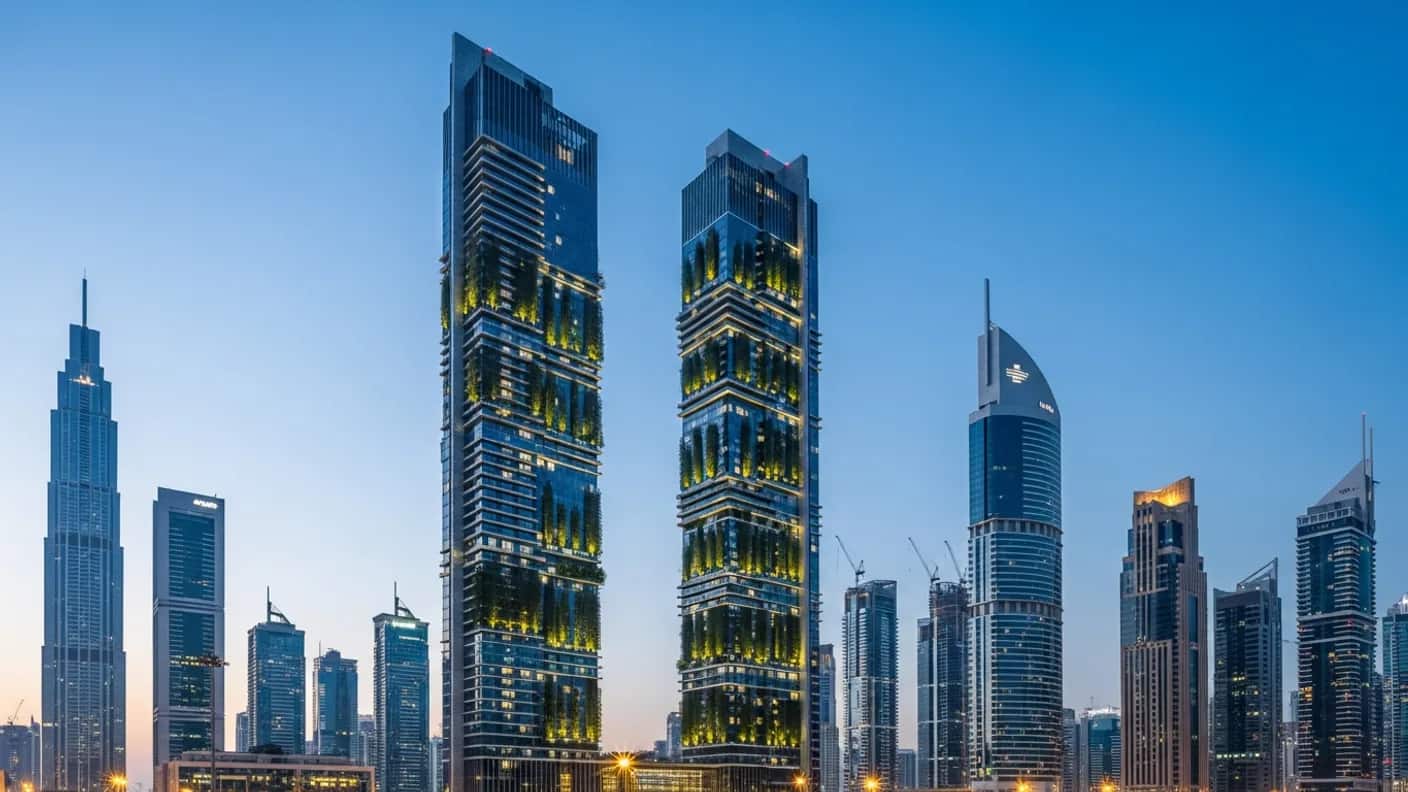
The Green Premium: Valuing ESG in Dubai Property
ESG is no longer a 'nice-to-have' in Dubai real estate; it's a measurable factor driving value. As Head of Market Research, I'll break down how sustainable properties command a premium in both sales and rentals, and what it means for your next investment.

For years, the conversation around sustainability in Dubai real estate was largely aspirational. Today, it is fundamentally commercial. As Head of Market Research at Gaia Living, my work is to separate market narrative from market reality, and the data I see points to an undeniable conclusion: a 'Green Premium' for properties with strong Environmental, Social, and Governance (ESG) credentials is no longer a future concept, but a present-day factor in asset valuation.
Here's what we'll explore:
- Decoding the 'Green Premium' in the Dubai market
- The regulatory push from Al Sa'fat and beyond
- Developer strategies and who is leading the charge
- Quantifying the value with a look at the numbers
- The bottom line: operational savings for owners and tenants
- Beyond 'E': The impact of 'S' (Social) and 'G' (Governance)
- Future-proofing your investment with an ESG strategy
- My verdict on eco-friendly property investment
Decoding the 'Green Premium' in the Dubai Market
My thesis is simple: the Green Premium in Dubai is real, it is growing, and it can be measured. It represents the quantifiable increase in a property's market value — whether for sale or for rent, that is directly attributable to its sustainable features. This isn't about marketing jargon or a developer vaguely labelling a project 'eco-friendly'. It's about tangible, certified attributes that deliver genuine, long-term benefits to the owner and occupier. The market is maturing, and sophisticated buyers now look past the superficial gloss to assess the underlying performance of an asset. The value is rooted in two core economic drivers: reduced operational expenditure and heightened occupier demand.
First, let's consider the direct financial benefit. A well-designed, certified green building significantly lowers the total cost of ownership. This is primarily seen through reduced Dubai Electricity and Water Authority (DEWA) bills, a major monthly expense for any resident. Features like high-performance glazing, superior insulation, energy-efficient cooling systems, and water-saving fixtures translate into monthly savings that can amount to thousands of dirhams per year. For an investor, this means a tenant can afford to pay a slightly higher base rent because their total monthly outlay is lower, directly boosting net yield. For an end-user, it’s cash back in their pocket, month after month.
Second, the demand-side pressure is intensifying. This pressure comes from multiple sources. We see a rising tide of environmentally conscious private residents, particularly high-net-worth individuals and expatriates from Europe and Asia, who actively seek out healthier, more efficient living spaces. They understand the benefits of better indoor air quality, access to natural light, and the general wellness associated with green communities. This is compounded by a powerful force in the corporate world. Many multinational companies now have strict ESG mandates that dictate where they can lease office space and, by extension, where they prefer to house their executives. A company needing to report its carbon footprint will favour a LEED-certified tower in DIFC for its offices and apartments in verifiably green buildings for its senior staff. This creates a deep pool of premium tenants for whom ESG is not a preference but a policy requirement.
In my analysis of market transactions, this premium is most pronounced in communities that have made sustainability a core part of their identity. A prime example is Al Barari, a community that has built its entire brand on low-density living, lush landscaping, and a connection to nature. Villas in Al Barari often trade at a significant premium compared to properties of a similar size and quality in other areas, a premium I attribute in large part to this 'wellness' and 'green' halo. We also see it in projects like The Sustainable City by Diamond Developers, which functions as a living laboratory for green innovation. These communities aren't just selling homes; they're selling a lifestyle underpinned by verifiable environmental performance, and the market is rewarding them for it.
The Regulatory Push: Al Sa'fat and Beyond
 Featured project
While consumer and corporate demand provides the pull, the government's regulatory framework provides the decisive push. The Green Premium is not emerging in a vacuum; it is being actively cultivated by a clear and ambitious national strategy. The UAE's Net Zero by 2050 strategic initiative and the Dubai Clean Energy Strategy 2050 are the North Stars guiding policy, and the real estate and construction sectors — as major consumers of energy and resources, are central to achieving these goals. The most direct and impactful instrument of this policy is the Al Sa'fat Green Building Rating System, launched and managed by the Dubai Municipality.
Since 2014, Al Sa'fat has been mandatory for all new buildings in Dubai. This single piece of regulation fundamentally altered the baseline for development across the emirate. It is no longer possible to build without adhering to a minimum standard of sustainability. The system operates on a tiered model, providing a clear classification for the market to understand:
- Bronze Sa'fa: The mandatory minimum, covering basic efficiencies.
- Silver Sa'fa: A higher level of performance, required for all government-led developments. This tier typically requires around 20% savings in energy and water consumption.
- Gold Sa'fa: A significant step-up, demanding more advanced techniques and technologies for substantial resource savings.
- Platinum Sa'fa: The highest certification, reserved for elite projects that demonstrate exceptional innovation in sustainable design and performance.
This framework has been transformative. It provides a standardized language for developers to market their green credentials and for buyers to assess them. A 'Platinum' rating is not a marketing claim; it's a verifiable certification from the Dubai Municipality, as detailed on official government portals like the Dubai Land Department (DLD). This regulatory oversight is being further integrated into the property ecosystem. The DLD is exploring initiatives like a 'Green List' to highlight sustainable buildings, making it easier for buyers and tenants to identify leading properties. This institutionalizes the Green Premium, embedding it directly into the market's infrastructure.
The long-term impact of Al Sa'fat will be the creation of a two-tiered market. On one side, you have the newer, post-2014 building stock that is, by law, more efficient and sustainable. On the other, you have the older stock built before these regulations came into effect. These legacy buildings, unless they undergo significant and costly retrofitting, will increasingly face a 'brown discount'. They will be more expensive to run, less attractive to premium and corporate tenants, and potentially subject to future levies or stricter energy standards. For any investor with a long-term horizon, the direction of travel is clear: regulatory compliance is a key defence against future obsolescence and value erosion. The ESG real estate impact UAE is being written into law.
Developer Deep Dive: Who is Building Dubai's Green Future?
The implementation of ESG principles across the Dubai property market is not uniform. While Al Sa'fat sets the floor, a select group of visionary developers are aiming for the ceiling, using sustainability not just for compliance but as a core competitive advantage. In my view, their strategies offer a clear insight into where the market is headed. We can broadly categorize these leaders into pioneers who created the category, and innovators who are refining it for the luxury segment.
Among the pioneers, Diamond Developers stands out with its flagship project, The Sustainable City. This development is arguably the most comprehensive execution of a sustainable community in the region. It goes far beyond just energy efficient homes Dubai. The entire master plan is engineered for a lower environmental impact, featuring car-free zones, reliance on solar power for much of its energy needs, on-site waste recycling facilities that process close to 90% of waste, and urban farms that supply residents with fresh produce. Properties here have consistently shown strong performance precisely because they offer a holistic lifestyle that is impossible to replicate in a standard development. It is a proof-of-concept for the entire industry.
Then there are the large-scale master developers like Emaar Properties, whose impact comes from sheer scale and the consistent integration of green principles across their vast portfolio. In communities like Dubai Hills Estate, the commitment is visible in the form of vast green spaces, extensive cycling and jogging tracks, and smart resource management at the community level. In their high-rise developments, such as those in Downtown Dubai, Emaar has a long track record of achieving international LEED certifications. The Burj Khalifa itself is a sign of this, holding several records for its vertical transportation and resource efficiency. Emaar's approach demonstrates how to apply sustainable practices to create premium, large-scale, and commercially successful communities.
In the innovator category, we find developers who are weaving sustainability into the fabric of luxury. Al Barari is the quintessential example. Long before 'wellness' became a buzzword, Al Barari was delivering it. The developer dedicated over 60% of the master plan to landscaped gardens, lakes, and streams, creating a microclimate that is measurably cooler than surrounding areas. The low-density planning and focus on privacy and nature command one of the highest per-square-foot rates in Dubai's villa market. This is the 'Social' and 'Environmental' aspect of ESG translated into pure asset value. Similarly, a developer like Meraas has excelled in creating design-led urban communities such as City Walk and Bluewaters Island. These projects prioritize walkability, human-scale design, and intelligent infrastructure, integrating technology for efficient traffic and resource management. Their success proves that sustainability and sophisticated urban living are not mutually exclusive; in fact, they are mutually reinforcing.
Quantifying the Value: A Look at the Numbers
This is where theory must meet practice. While it's difficult to isolate a single variable in a complex transaction, a clear pattern emerges when analyzing sales and rental data. The green building value Dubai is not just a concept; it's a figure that can be estimated. Based on global benchmarks and my own observations of the Dubai market, the premiums are substantial and consistent.
Globally, numerous studies have attempted to quantify this effect. Research from bodies like the U.S. Green Building Council and the World Green Building Council consistently finds that certified green buildings command higher asset values. The premiums typically range from 5% to 10% on sales prices compared to non-certified buildings in the same location. In my professional opinion, Dubai's prime market can exceed these figures. For an exceptional, well-designed villa in a community like Al Barari or a high-spec apartment in a LEED Platinum tower, I believe the premium could approach 15% or even 20%. This is because the buyer profile in this segment is highly discerning, financially capable, and globally attuned to the benefits of sustainable living. They are not just buying square footage; they are buying superior air quality, lower running costs, and a healthier environment for their families.
On the rental side, the premium is just as evident. The global average suggests a rental premium of 3-8% for green-certified spaces. In Dubai, this is powerfully influenced by the commercial sector. As I mentioned, corporate tenants with ESG policies are a formidable source of demand, particularly for executive housing in areas like Dubai Marina or Business Bay. These tenants have less price sensitivity and a greater need for compliance, making them willing to pay more for a certified property. Beyond the corporate world, savvy individual tenants are now doing the maths. They understand that a slightly higher rent can be more than offset by significantly lower utility bills, leading to a lower total monthly cost.
However, the most compelling financial metric for an investor is not just the premium but the reduced risk. Green buildings consistently demonstrate lower vacancy rates and higher tenant retention. A happy tenant paying lower DEWA bills in a pleasant, well-managed building is less likely to move. This stability is gold for an investor. Lower tenant turnover means fewer void periods with zero income, no repeated agency fees for finding a new tenant, and less wear and tear on the property. When you factor in a sales premium, a rental premium, and lower vacancy rates, the financial case for an eco-friendly property investment becomes overwhelmingly strong. It's a trifecta of returns that traditional assets struggle to match.
The Bottom Line: Operational Savings for Owners and Tenants
The abstract concept of a 'Green Premium' becomes concrete when you look at a household's monthly expenses. The single most compelling argument for many buyers and tenants is the direct and substantial saving on utility bills. In a climate like Dubai's, where air conditioning accounts for a huge portion of electricity consumption, the financial benefits of energy efficiency are immediate and significant. Let's analyze a realistic, line-by-line comparison to illustrate the point.
Consider two hypothetical but representative two-bedroom apartments, both 1,500 sq. Ft., in a desirable area like Jumeirah Beach Residence (JBR). One is in a standard tower built in 2008, before the Al Sa'fat regulations. The other is in a new, Al Sa'fat Gold-rated building.
Case Study: Monthly Utility Cost Comparison
1. Standard 2-Bed Apartment (Built 2008) * Cooling System: Older, less efficient centralized AC system. Poor building insulation and standard single-pane glass lead to high thermal load. * Lighting & Appliances: Likely equipped with older halogen or CFL lighting and standard appliances. * Water Fixtures: Standard-flow faucets and showers. * Estimated Monthly DEWA Bill (Electricity & Water): AED 1,600 * Estimated Monthly Chiller Fees (if billed separately): AED 900 * Total Estimated Monthly Utilities: AED 2,500
2. 'Green' 2-Bed Apartment (Al Sa'fat Gold, Built 2024) * Cooling System: High-efficiency VRF/VRV system with a high SEER rating. The building features superior insulation, thermal breaks, and low-emissivity (Low-E) double-glazed windows that reflect heat. * Lighting & Appliances: Full LED lighting and Energy Star-rated appliances as standard. * Water Fixtures: Low-flow faucets and aerated showerheads, reducing water consumption by up to 40% without sacrificing pressure. * Estimated Monthly DEWA Bill (Electricity & Water): AED 1,000 * Estimated Monthly Chiller Fees (if billed separately): AED 550 * Total Estimated Monthly Utilities: AED 1,550
In this scenario, the resident of the green apartment saves AED 950 per month, which adds up to AED 11,400 per year. This is a significant sum that directly impacts the affordability and attractiveness of the property. For a tenant, it means they have an extra AED 11,400 in their budget. An investor can confidently price this unit at a higher rent, knowing the tenant's total outlay will still be competitive. This annual saving is the Green Premium in its purest form — a direct return on the investment in sustainable technology and design.
Beyond utilities, we must also consider service charges. While one might assume that a technologically advanced building would have higher service charges, the reality is more nuanced. While maintenance for specialized systems like solar arrays or greywater recycling may add costs, these are often offset by dramatic savings in the building's common area utility bills (for lighting, cooling of lobbies, running pools, etc.), which are a major component of the service charge budget. A well-managed green building can often deliver a superior living experience with service charges that are competitive with, or even lower than, older, less efficient buildings. Full transparency on this is available through the RERA regulated Mollak system.
Beyond 'E': The Impact of 'S' (Social) and 'G' (Governance)
A common mistake is to view ESG investing in real estate through the narrow lens of 'E' for Environment. While energy efficiency and resource conservation are critical, the 'S' for Social and 'G' for Governance are equally powerful drivers of long-term value. In my experience, the most successful and resilient properties are those that perform strongly across all three pillars.
“The market is maturing. Buyers no longer just ask 'What's the price per square foot?'. They're asking 'Who runs the building? What are the utility costs? Is there a real community here?'. That's the S and G of ESG in action.”
The 'Social' component refers to a property's impact on its community and the well-being of its occupants. This is the human side of real estate. It encompasses everything from the provision of quality amenities to the creation of a genuine sense of community. Master-planned communities like Arabian Ranches or Town Square are prime examples. Their value is derived not just from the individual homes but from the ecosystem of parks, schools, retail centers, clinics, and community events that surround them. This focus on liveability creates 'stickiness' — residents put down roots, leading to stable occupancy and a strong secondary market. The post-pandemic era has also placed an immense premium on wellness. Features that were once considered luxuries are now necessities for many buyers: access to green space for recreation, state-of-the-art gyms, and building designs that maximize natural light and ensure high indoor air quality. This is the value proposition that has made communities like Al Barari so successful; they are selling a healthier lifestyle.
The 'Governance' aspect is perhaps the most underrated, yet it is fundamental to protecting an investment. 'G' is about transparency, fairness, and competent management. In the context of Dubai real estate, this translates to several key areas. For an off-plan buyer, it means choosing a reputable developer with a solid track record and clear, ethical sales contracts. The regulatory framework, with mechanisms like mandatory escrow accounts overseen by the DLD, provides a crucial layer of protection here. For a homeowner in a completed building, governance comes down to the quality of the Owners Association (OA) and its appointed management company. A well-run OA with a transparent budget, fairly calculated service charges managed through the Mollak system, and proactive maintenance schedules is essential for preserving and enhancing the value of the asset. A poorly managed building, by contrast, will see its value decline regardless of its physical attributes.
At Gaia Living, when we advise clients, we place huge emphasis on this due diligence. We scrutinize the developer's history, the structure of the OA, and the history of the service charges. Strong governance is the invisible framework that upholds property values. It ensures that the building you invest in today will still be a desirable and well-maintained asset in ten or twenty years. The combination of a positive social environment and robust governance creates a powerful moat around an investment, protecting it from market volatility and ensuring its long-term appeal.
Future-Proofing Your Investment: ESG as a Long-Term Strategy
Investing in property is a long-term commitment, and the smartest investors are always looking at the horizon. From this perspective, integrating an ESG framework into your investment criteria is not just about capturing a premium today; it's about mitigating risk tomorrow. The forces shaping the future of real estate — regulatory, demographic, and environmental, all point towards a greater emphasis on sustainability. Ignoring this trend is, in my view, a strategic error.
The most significant risk facing non-compliant properties is the emergence of a 'brown discount'. As the market continues to bifurcate, older, energy-guzzling buildings will become progressively less attractive. They will be more expensive to operate, harder to rent to premium tenants, and may eventually require substantial capital expenditure for mandatory retrofits just to remain viable. This discount will erode capital values over time. Conversely, a certified green property is already compliant with the standards of tomorrow. It is future-proofed against the next wave of regulation and insulated from the rising operational costs associated with climate change.
Beyond that, the flow of institutional capital is increasingly directed by ESG mandates. Global investment funds, pension funds, and REITs are now legally or strategically obligated to invest in assets that meet specific sustainability criteria. As this pool of capital grows, it will be channeled towards green-certified buildings and communities, increasing their liquidity and providing a strong underpin for price appreciation. An individual who invests in a LEED Gold-certified apartment in a prime location like Emaar Beachfront is not just buying a home; they are buying an asset class that is in high demand from the world's largest investors. This alignment with institutional capital is a powerful long-term tailwind.
Demographic trends also support this strategy. Dubai's success in attracting global talent through initiatives like the Golden Visa means a constant influx of professionals and families from mature markets where ESG is already a well-established norm. These new residents arrive with a built-in preference for sustainable living. They expect EV charging stations, efficient public transport links, high-performance buildings, and accessible green spaces. This incoming demand will continue to bid up the price of properties that meet these modern expectations. Investing in sustainable properties Dubai is therefore a direct play on the city's continued growth as a global hub for talent and innovation.
The Green Premium is an investment in resilience. It reduces your exposure to rising utility costs, shields you from regulatory obsolescence, and aligns your asset with powerful capital and demographic flows. It is the most logical way to build lasting value in the Dubai real estate market of tomorrow.
My Verdict: Is a Green Property a Smarter Investment?
After analyzing the regulatory landscape, developer strategies, and the hard numbers on value and savings, my conclusion is clear. The 'Green Premium' in Dubai's property market is a durable and growing phenomenon. For any buyer or investor with a medium to long-term horizon, prioritizing properties with strong, verifiable ESG credentials is not just the ethical choice — it is the financially astute one.
Of course, no investment is without its trade-offs. It's essential to approach this with a critical eye. Here is how I weigh the considerations:
The Case for a Green Property Investment:
- Lower Total Cost of Ownership: The most tangible benefit. Annual savings on utility bills can be substantial, directly improving an investor's net yield or an end-user's disposable income.
- Higher Capital Appreciation Potential: Green properties are better positioned to capture demand from a growing segment of the market, leading to stronger price growth over time.
- Enhanced Rental Income: The ability to attract premium corporate and individual tenants who are willing to pay more for efficiency, wellness, and quality.
- Reduced Vacancy Risk: Higher tenant satisfaction and retention mean fewer void periods and more consistent income streams.
- Future-Proofing: An investment that is resilient to future regulatory tightening and insulated from the risk of a 'brown discount'.
- Alignment with Global Capital: Owning an asset class that is in high demand from large-scale institutional investors.
Points for Consideration:
- The Initial Premium: A certified green property can have a higher initial purchase price. This should be viewed as an investment, not a cost, but it needs to be factored into your budget.
- The Risk of 'Greenwashing': Not all claims of sustainability are equal. It is crucial to look for official certifications like Al Sa'fat or LEED and to conduct thorough due diligence, rather than relying on marketing brochures.
- Nascent Technologies: While most green technologies are well-established, cutting-edge systems may have higher maintenance costs or a shorter track record. This requires careful assessment of the building's management and maintenance plan.
My verdict is that the advantages decisively outweigh the potential drawbacks. The initial higher cost is an investment in future savings and reduced risk. In a market as dynamic as Dubai's, owning an asset that is cheaper to run, more desirable to tenants, and aligned with both government policy and global trends is a powerful formula for success. The conversation has shifted. Smart capital is no longer just chasing square footage; it's chasing performance, efficiency, and quality of life.
At Gaia Living, our role is to help clients navigate this evolving landscape. We encourage a focus on the total cost of ownership, a deep dive into a building's governance, and a long-term view of an asset's place in the market. An eco-friendly property investment is, at its core, simply a smarter property investment.
Sources
- Dubai Land Department (DLD): https://dubailand.gov.ae/
- Real Estate Regulatory Agency (RERA): https://www.rera.gov.ae/
- UAE Government Portal (Net Zero 2050): https://u.ae/
Questions, answered
- Is there a 'green premium' for property in Dubai?
- Yes, properties with certified sustainable features consistently command higher sales prices and rental rates in Dubai. This premium, driven by lower operational costs and greater occupier demand, can range from 5% to over 15% in prime communities.
- What are the key green building standards in Dubai?
- The primary standard is the Al Sa'fat Green Building Rating System from Dubai Municipality, which is mandatory for all new constructions. It has four tiers: Bronze, Silver, Gold, and Platinum. Many premium developers also pursue international certifications like LEED (Leadership in Energy and Environmental Design).
- How much can I save on bills with an energy-efficient home in Dubai?
- The savings on utility bills are significant. In my analysis, a modern, energy-efficient home in Dubai can lower your DEWA (electricity and water) costs by 30-40% or more, which can translate to annual savings of AED 10,000 to AED 15,000 for a typical family apartment.
- Are all new buildings in Dubai considered 'green'?
- Yes, all new buildings constructed in Dubai must legally comply with the Al Sa'fat green building regulations. This establishes a mandatory baseline for energy and water efficiency, though the level of sustainability varies, with top-tier developers often exceeding the minimum requirements to achieve higher ratings and greater value.
- Does ESG in real estate only refer to environmental features?
- No, ESG encompasses Environmental, Social, and Governance factors. While environmental aspects like energy efficiency are key, 'Social' (community, wellness, amenities) and 'Governance' (transparent management, fair service charges) are equally critical components that contribute to a property's long-term value and desirability.
- Which developers in Dubai are known for sustainable properties?
- Several developers lead in this space. Diamond Developers are pioneers with The Sustainable City, while major players like Emaar Properties and Meraas integrate high-level sustainable design into their master communities. Niche developers like Al Barari also focus on wellness and greenery as a core part of their brand.

Amara translates DLD transaction data, supply pipelines, and macro signals into clear calls on where Dubai's market is heading. She writes the numbers most brokers only feel.
Related stories
Dubai's Big Squeeze: Smaller Plots, Denser Living
Dubai real estate is undergoing a fundamental shift towards smaller plot sizes and higher density. We analyse the economic drivers, the impact on property values, and what this new era of compact urban living means for both homebuyers and investors.
Resort Living as Your Dubai Reality
Explore how to trade temporary staycations for a permanent home with five-star amenities in Dubai. I'll break down the real costs, best communities, and lifestyle trade-offs of embracing high-end resort living every day.
Finding Your Tribe in Dubai's Villa Communities
I explore which of Dubai's renowned villa communities attract specific expat nationalities and lifestyle groups, offering insights to help you find a place that feels like home.
Echoes, in your inbox
One thoughtful email a month. Market insight, new launches, no spam.