

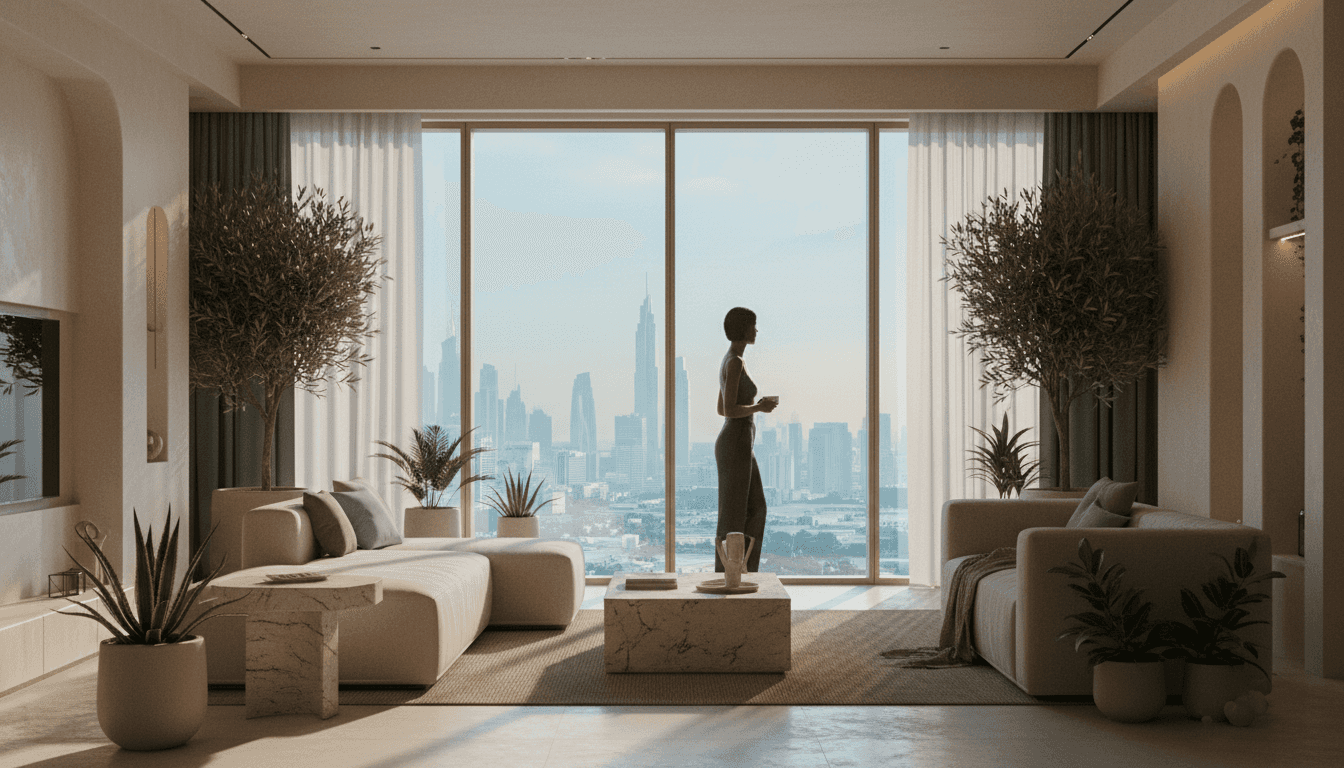
The Branded Residence Premium: A New Analysis
I analyse the measurable price premium for Dubai's branded residences, arguing their value proposition now extends far beyond the ultra-luxury market into more accessible mid-to-high price points.

The concept of the branded residence is no longer confined to the rarefied air of penthouses selling for hundreds of millions of dirhams. My analysis shows this property class is undergoing a fundamental shift, moving downstream to create a compelling, and measurable, value proposition in Dubai's mid-to-high market segments.
Here’s a look at the core of my argument:
- The precise definition of a 'branded residence' and why it matters for value.
- How to quantify the price premium and what it buys you.
- The tangible value drivers: service, amenities, and brand assurance.
- How the model is expanding into new, more accessible price points.
- A case study breakdown of costs and potential returns.
- The specific risks and considerations for this asset class.
- My final verdict on the long-term investment case.
Defining the 'Branded Residence'
Before we can measure a premium, we must be precise about what we are measuring. The term 'branded residence' is often used loosely, conflating several distinct models. At its core, a true branded residence is a private home whose value and appeal are enhanced by its association with a recognised brand. The most common and, in my view, most valuable form is the hotel-branded residence. Here, a residential tower is co-located with or adjacent to a hotel, managed by the same operator. Residents gain access to the hotel’s services — concierge, housekeeping, in-room dining, spa facilities, while owning a private, titled property.
This is distinct from a 'serviced apartment', which is often part of a hotel's inventory and managed in a rental pool, or a property that simply has its interiors designed by a fashion or luxury goods brand. The latter offers a design aesthetic but lacks the crucial operational component of service delivery. The true premium lies in the smooth integration of five-star hotel living into one's private life. This is what differentiates a project like Address Residences in Dubai Marina from a standalone luxury tower. The physical asset — the apartment itself, is only part of the equation. The other part is the intangible but highly valuable service layer, which provides a 'lock-and-leave' lifestyle convenience that is particularly attractive to international buyers and high-net-worth individuals.
This operational integration is key. It's the difference between having a gym in your building and having a state-of-the-art wellness centre managed by a world-class hospitality brand. It’s the difference between a standard security desk and a 24/7 five-star concierge who can handle everything from restaurant bookings to travel arrangements. This is not just a marketing gimmick; it's a fundamental change in the residential product, shifting it from a static asset to a dynamic living experience. This is the foundation of the Dubai branded residences premium and the primary reason it has proven so resilient.
Quantifying the Price Premium
 Featured project
So, what is the measurable premium for this service layer? Across global markets, research consistently places the premium for a branded residence at 25-35% above a comparable non-branded luxury property in the same location. My analysis of the Dubai market aligns with this, though the range is wider and more nuanced. At the very top end of the market, for trophy assets in locations like Palm Jumeirah or Jumeirah Bay, the premium can easily exceed 100%. Brands like Dorchester Collection, Four Seasons, or Bulgari command scarcity value that transcends typical market metrics.
However, the more interesting story is happening in the segment just below this. For projects by established local brands like Emaar’s Address or Vida, the premium is more consistently in the 20-40% range. Consider two high-floor, two-bedroom apartments with marina views in Dubai Marina. A unit in a high-quality, non-branded tower might trade for AED 4 million. A similar unit in a neighbouring Address-branded tower could realistically command AED 5.2 million — a 30% uplift. This is not an arbitrary figure. It is the market's pricing of the brand's assurance of quality, the superior level of maintenance, the access to hotel amenities, and the 'hassle-free' ownership experience.
This premium is not just an upfront cost; it’s a feature that tends to persist through market cycles. During downturns, branded residences have historically demonstrated greater price resilience. Their superior management ensures the physical asset doesn't degrade, and the desirability of the brand provides a defensive moat, protecting capital value better than their non-branded peers. This resilience is a critical component of the branded real estate ROI. Investors are not just buying a home; they are buying a degree of insulation from market volatility, a factor that is difficult to price but is of immense value to long-term holders.
The Real Value Drivers: Service, Amenities, and Brand Halo
The premium is paid, but what exactly does it deliver? The value of hotel serviced residences value can be broken down into three core components.
First is the tangible layer of service. This goes far beyond a simple concierge. It is a comprehensive ecosystem of on-demand services, often available via an app or a direct call. This includes: - A la carte housekeeping and maintenance services. - In-residence dining from the hotel’s signature restaurants. - Valet parking and bellboy services. - Access to the hotel’s business centre and meeting rooms. - Priority booking and discounts at the hotel's spa, pools, and F&B outlets.
Second is the quality of the amenities themselves. The 'luxury' label is applied liberally in Dubai, but in a branded residence, it carries contractual weight. The fitness centre is not just a room with equipment; it is a professionally managed gym with trainers. The pool is not just a basin of water; it’s a resort-style deck with attendants, towel service, and a poolside cafe. These facilities are maintained to the hotel's exacting standards, not left to the whims of an owners' association management company. This guaranteed luxury amenities property premium ensures the living environment remains pristine for years, directly impacting long-term value and rental appeal.
Third, and perhaps most importantly, is the intangible 'brand halo'. A brand like Address, Kempinski, or Mandarin Oriental brings with it an assurance of quality and a global reputation. For an investor living overseas, this is a powerful de-risking tool. They know the property will be managed professionally, maintained impeccably, and will always be desirable to a discerning class of tenants. This brand association acts as a powerful marketing tool, attracting tenants who are willing to pay a premium for the same quality assurance. It simplifies the investment journey, removing many of the uncertainties that come with being a remote landlord. This halo effect is what allows branded residences to consistently command higher rental yields compared to their neighbours.
“The true value of a branded residence isn't the marble in the lobby; it's the peace of mind that comes from knowing the hotel's professional management is safeguarding your asset's quality and value every single day.”
The Mid-Market Expansion
Historically, the conversation around branded residences has been dominated by ultra-luxury projects in prime beachfront or financial district locations. The significant shift I'm observing in the market is the expansion of this model into more accessible, mid-to-high price points, from roughly AED 2 million to AED 10 million. Developers are recognising the powerful appeal of the branded proposition and are applying it to new segments of the market. This is where the model becomes particularly interesting for a broader base of investors.
We are seeing this in several forms. Master developers like Emaar Properties are deploying their own successful brands, like Address, Vida, and Palace, into burgeoning communities like Dubai Creek Harbour and Dubai Hills Estate. These are not just token branding exercises; they are fully integrated hotel-residential projects bringing a new level of amenity and lifestyle to these areas. A two-bedroom apartment in an Address-branded tower in Dubai Hills Estate offers a product that was previously only available in Downtown Dubai or Dubai Marina, but at a more attainable price point, attracting a new wave of end-users and investors.
Simultaneously, we're seeing design-led and fashion-branded residences emerge from developers like Damac with partners like Cavalli and de GRISOGONO, and Binghatti with Bugatti. While some of these projects push into the ultra-luxury space, many offer smaller units — studios and one-bedroom apartments, that fall squarely within the mid-to-high price bracket. These projects appeal to a younger, more design-conscious demographic and are often located in high-growth urban areas like Business Bay. While the service component might be less intensive than a full hotel brand, the unique design and brand affiliation create a distinct market niche and strong rental demand, forming a key part of the branded apartments investment Dubai thesis.
This democratisation of the branded concept is a significant market evolution. It means the benefits of professional management, enhanced amenities, and brand assurance are no longer the exclusive preserve of the ultra-wealthy. An investor can now acquire a branded one-bedroom apartment for a price that is competitive with a non-branded unit in a prime location, but with the added benefits of higher potential rental yield and stronger capital preservation. This is a strategic move by developers to differentiate their products in a competitive market, and it presents a compelling opportunity for savvy investors.
Cost & Return: A Case Study Breakdown
To make this concrete, let's analyse a hypothetical but realistic example: a one-bedroom branded apartment in a developing master community like Dubai Creek Harbour.
Let's assume a purchase price of AED 2.5 million for a 750 sq. Ft. unit. A comparable non-branded unit nearby might be AED 2.0 million. The investor is paying a 25% premium. What does the financial picture look like?
Upfront Investment Costs: - Purchase Price: AED 2,500,000 - Dubai Land Department (DLD) Fee (4%): AED 100,000 - DLD Registration Fee: AED 4,200 (approx.) - Real Estate Agency Fee (2% + VAT): AED 52,500 - Total Upfront Cost: AED 2,656,700
Now, let's consider the ongoing costs and potential returns. This is where the numbers for branded residences diverge significantly. The most critical factor is the service charge.
Annual Operating Picture: - Service Charge: Branded residences carry higher fees to cover the extensive services. A realistic figure would be AED 30 per sq. Ft. per year. For our 750 sq. Ft. apartment, this is AED 22,500 annually. - *Comparison:* A non-branded building might have service charges of AED 18-20 per sq. Ft., equating to AED 15,000. The investor is paying an extra AED 7,500 per year for the branded service layer.
- Rental Income: Here is where the premium should be recouped. The superior quality, amenities, and brand name allow for a higher rental price. While the non-branded unit might rent for AED 120,000 per year, the branded unit could achieve AED 150,000 or more.
- Net Yield Calculation:
- Gross Rental Income: AED 150,000
- Less Service Charge: (AED 22,500)
- Net Rental Income: AED 127,500
- Net Yield: (AED 127,500 / AED 2,656,700) = 4.8%
Compare this to the non-branded alternative. With a total cost of ~AED 2,136,200 and net rent of AED 105,000 (120k rent - 15k fees), the net yield is 4.9%. On a pure yield basis in year one, the advantage seems negligible. However, this calculation misses the bigger picture. The branded residence typically has lower vacancy rates, attracts more reliable corporate tenants, and, most importantly, is likely to experience stronger rental growth and capital appreciation over the long term. The 4.8% yield is more secure and has greater upside potential, a crucial factor in calculating long-term branded real estate ROI.
Risks and Considerations
Despite the compelling proposition, investing in a branded residence is not without its specific risks and trade-offs. It is crucial for buyers to go in with their eyes open.
The most significant consideration is the high service charge. These fees are non-negotiable and are fundamental to the product. While they fund the superior experience, they represent a substantial ongoing financial commitment, particularly during periods when the property might be vacant. An investor must have the financial buffer to cover these costs comfortably. It is essential to get a clear and detailed breakdown of what the service charges include from the developer and operator before committing. In my experience, a well-managed branded residence justifies its fees, but a poorly managed one can become a significant drain.
Another risk is brand dilution or failure. The value of your property is intrinsically linked to the health and prestige of the associated brand. If the hotel operator's standards slip, or if the brand itself loses its lustre, it can have a direct negative impact on your property's value and rental appeal. This is why it is critical to invest with reputable, established operators with a long track record in hospitality — brands like Address, Four Seasons, or Kempinski carry less risk than a new or unproven market entrant. Due diligence on the operator is just as important as due diligence on the developer.
Finally, there's the issue of furnishing and design standards. Many branded residences require owners to purchase a mandatory furniture pack to maintain brand consistency, especially if the unit is to be placed in a rental pool. Even if not mandatory, there are often strict design guidelines for private units. This can add a significant upfront cost (often AED 100,000-300,000 or more for a one or two-bedroom unit) and limits an owner's ability to personalise their space. While this ensures a consistent quality level across the building, which underpins value, it reduces owner flexibility and adds to the initial cash outlay.
My Verdict: The Long-Term Case
After weighing the premiums, the benefits, and the risks, what is my verdict on the investment case for branded residences in Dubai's current market?
In my professional opinion, the long-term value proposition is robust, particularly as the model moves into the mid-to-high price segment. The upfront premium is not just for a name; it is for a tangible package of services, quality assurance, and professional management that creates a superior residential product. This product is better positioned to retain its value during market downturns and to capture upside during growth periods. For investors seeking a less volatile, lower-maintenance entry into the Dubai property market, the premium can be a price worth paying for peace of mind and long-term stability.
The expansion of this model into communities like Dubai Hills Estate, Creek Harbour, and even emerging locations offers a new entry point for investors who were previously priced out of the branded market. These projects combine the lifestyle and amenity benefits of a branded residence with the growth potential of a developing master community — a powerful combination. They are attracting a diverse mix of end-users and investors, creating healthy, sustainable micro-markets.
However, success hinges on careful selection. The key is to look beyond the marketing and analyse the fundamentals: the reputation of the operator, the sustainability of the service charges, the location's long-term growth story, and the developer's track record. Not all branded residences are created equal. The most successful investments will be those where a strong brand is paired with a prime location and an experienced developer. At Gaia Living, our focus is on helping clients identify these top-tier opportunities, cutting through the hype to find genuine, lasting value. The branded apartments investment Dubai market is maturing, and for the discerning investor, it holds significant promise.
The premium for a branded residence is a quantifiable investment in quality, service, and brand equity. In Dubai, this model is no longer just for the ultra-rich; its expansion into the AED 2-10M range offers a compelling, risk-mitigated path to long-term value for a new class of investor, provided they choose projects with reputable operators and sustainable cost structures.
## Sources - Dubai Land Department (DLD): dubailand.gov.ae - Real Estate Regulatory Agency (RERA): rera.gov.ae - Central Bank of the UAE (CBUAE): centralbank.ae - The Official Portal of the UAE Government: u.ae
Questions, answered
- How much more do branded residences cost in Dubai?
- The premium for a branded residence in Dubai typically ranges from 20% to over 100% compared to a non-branded luxury property in the same area. The exact premium depends on the brand's prestige, the level of service, and the location, with a market average often cited around 30%.
- Are branded residences a good investment in Dubai?
- In my view, they can be. Branded residences often command higher rental yields and demonstrate better value retention, especially during market downturns, due to their superior management and brand assurance. However, this comes at the cost of higher upfront prices and service charges, so the branded real estate ROI must be carefully calculated.
- What are the service charges for branded apartments in Dubai?
- Service charges for branded residences are significantly higher than for standard apartments, typically ranging from AED 25 to over AED 50 per square foot annually. These fees cover the extensive hotel-style services, enhanced amenities, and professional management that define the category.
- Can I get a mortgage for a branded residence in Dubai?
- Yes, you can obtain a mortgage for a completed branded residence in the same way as any other property, subject to bank approval and Central Bank of the UAE regulations. For off-plan branded residences, financing is typically only available upon handover, requiring you to cover the developer's payment plan first.
- What is the difference between a hotel apartment and a branded residence?
- While related, a 'hotel apartment' or 'serviced apartment' is often part of a hotel's rental pool and is primarily an investment vehicle. A 'branded residence' is a private home that benefits from a hotel's services and brand affiliation but is not typically part of the hotel inventory. The latter prioritises the resident's lifestyle.
- Which developers in Dubai are known for branded residences?
- Top developers in this space include Emaar Properties, often partnering with Address Hotels; Omniyat, known for its work with Dorchester Collection and other ultra-luxury brands; and Damac, which has collaborations with brands like de GRISOGONO and Cavalli. Increasingly, other developers are entering this market with various brand partners.

Amara translates DLD transaction data, supply pipelines, and macro signals into clear calls on where Dubai's market is heading. She writes the numbers most brokers only feel.
Related stories
Dubai's Big Squeeze: Smaller Plots, Denser Living
Dubai real estate is undergoing a fundamental shift towards smaller plot sizes and higher density. We analyse the economic drivers, the impact on property values, and what this new era of compact urban living means for both homebuyers and investors.
Resort Living as Your Dubai Reality
Explore how to trade temporary staycations for a permanent home with five-star amenities in Dubai. I'll break down the real costs, best communities, and lifestyle trade-offs of embracing high-end resort living every day.
Finding Your Tribe in Dubai's Villa Communities
I explore which of Dubai's renowned villa communities attract specific expat nationalities and lifestyle groups, offering insights to help you find a place that feels like home.
Echoes, in your inbox
One thoughtful email a month. Market insight, new launches, no spam.