

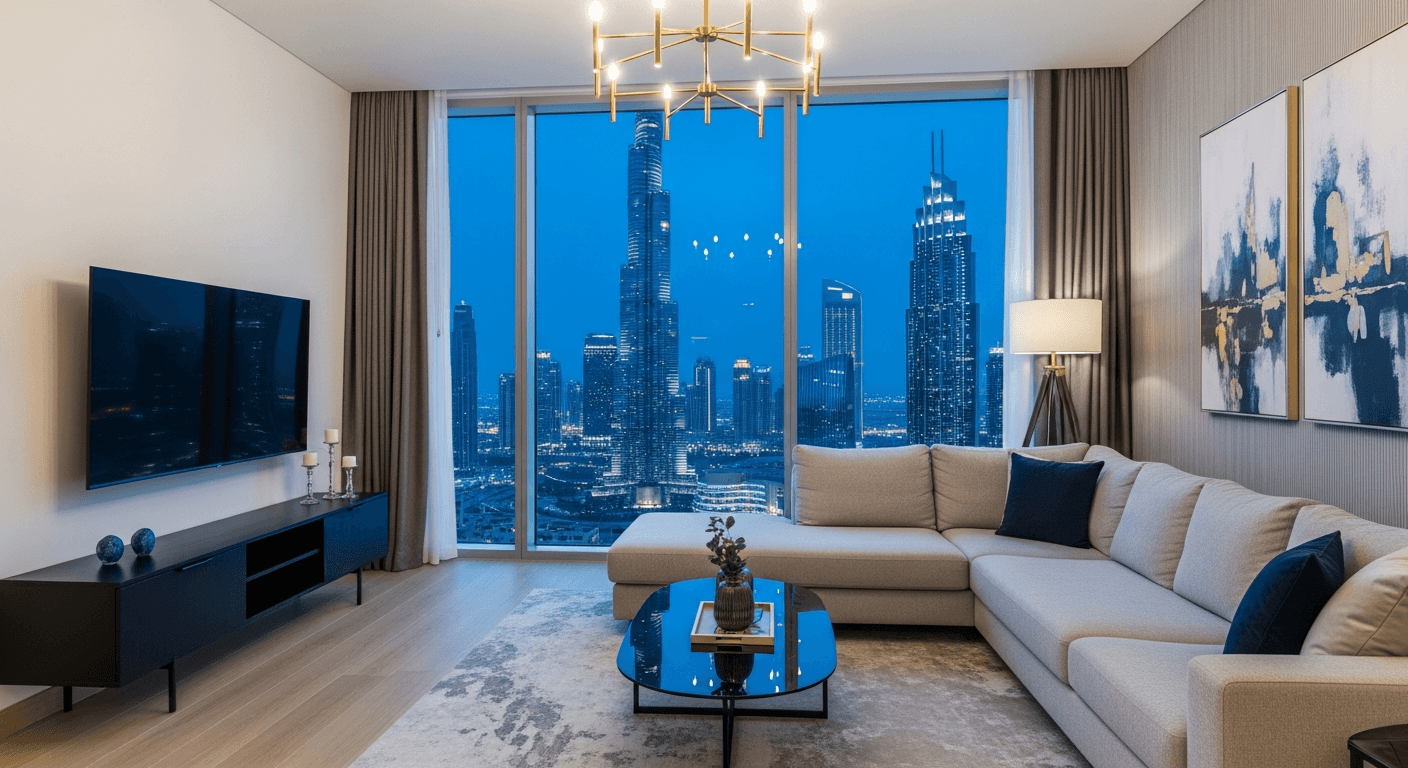
The Airbnb Effect: Reshaping Dubai's Property Market
The rise of short-term rentals is fundamentally altering investment returns and housing supply in Dubai's prime districts. I'll break down the real yields, hidden costs, and strategic shifts investors must understand.

The rapid expansion of Dubai’s holiday home market is one of the most significant forces shaping our real estate landscape today. While the headline figures of high nightly rates can be intoxicating, my analysis shows that a successful `Dubai short-term rental investment` is a complex, active business venture, not a simple path to passive income. It is profoundly reshaping supply dynamics and investor calculations in our city's most desirable postcodes.
Here’s the framework I’ll use to unpack this phenomenon:
- The regulatory environment that makes Dubai attractive for holiday homes.
- A detailed yield comparison: `buy-to-let vs holiday home Dubai`.
- The specific neighbourhoods that are outperforming and the reasons why.
- The `impact of short-term rentals property` supply for annual tenants.
- The true operational workload and the role of management companies.
- A complete breakdown of the upfront costs involved.
- How developers are now building specifically for this market.
- My final verdict on who this strategy is truly for.
The Regulatory Framework: Dubai's Open-Armed Approach
Unlike many global cities that have moved to restrict platforms like Airbnb, Dubai has taken a characteristically pragmatic and welcoming stance. The government, through Dubai’s Department of Economy and Tourism (DET), has established a clear and regulated pathway for property owners to enter the `holiday home market Dubai`. This regulatory clarity is, in my view, the foundational element of the sector's success. It provides investors with confidence and a legitimate framework within which to operate, removing the legal ambiguity that plagues this asset class elsewhere.
The process is managed by the DET, which issues permits for individual properties to be operated as holiday homes. An owner can apply for a permit directly, provided they meet the quality standards and requirements, or they can engage one of the many DET-licensed holiday home management companies to handle the entire process. This includes everything from the initial application and inspection to the ongoing management of the unit. The system is designed to ensure a minimum standard of quality, safety, and guest experience, which in turn protects Dubai’s reputation as a world-class tourist destination. According to the official UAE Government Portal, this framework is designed to diversify the hospitality sector and offer visitors a wider range of accommodation choices.
This supportive environment has directly fueled the growth of short-term rentals. It creates a virtuous cycle: a clear process encourages more owners to list their properties, which increases the variety of options for tourists. This enhanced offering makes Dubai more attractive, boosting tourist numbers and, consequently, demand for short-term lets. The government benefits from increased tourism spending and economic activity, while investors benefit from a new, potentially high-yielding asset class. It’s a strategic decision that aligns perfectly with the city's broader economic goals as outlined in initiatives like the Dubai Economic Agenda D33.
However, it's crucial to understand that this is not an unregulated free-for-all. The DET enforces specific standards regarding amenities, health and safety, insurance, and property maintenance. Each unit must pass an inspection to qualify, and permits must be renewed. Beyond that, operators are required to collect and remit the 'Tourism Dirham' fee from guests, just as hotels do, ensuring a level playing field and a direct contribution to the city's tourism infrastructure. This structured approach is what separates Dubai's market from others and makes it a serious consideration for professional investors, not just casual hosts.
Yields Under the Microscope: Buy-to-Let vs. Holiday Home Dubai
 Featured project
The central question for any property investor is return on investment. The debate of `buy-to-let vs holiday home Dubai` hinges entirely on the net yield, and the calculation for a short-term rental (STR) is far more complex than for a traditional annual lease. While the potential for higher gross revenue is real, so are the significantly higher operational costs and revenue volatility. My analysis shows that a well-managed STR in a prime location can outperform a long-term rental (LTR) by a significant margin, but a poorly managed one can easily underperform.
Let’s start with a standard LTR. The calculation is straightforward: (Annual Rent - Service Charges - Maintenance) / Property Value. In Dubai, this typically results in a net yield of 4-6% in established areas. It's predictable, stable, and requires minimal active management. Now, consider an STR. The potential gross income is a function of the average daily rate (ADR) and the occupancy rate. During Dubai's peak season (October to April), an apartment in Dubai Marina might achieve 85-95% occupancy at a high ADR. In the slower summer months (June to August), occupancy might drop to 50-60% with a much lower ADR. An investor must model for this seasonality.
From this gross revenue, you must subtract a much longer list of expenses. A professional holiday home management company will charge between 15% and 25% of the gross revenue. All utility bills (DEWA, internet, TV) are on the owner, unlike an LTR where the tenant pays. There are costs for frequent cleaning, laundry services, restocking consumables (coffee, toiletries), and marketing on various platforms. Then you have the same underlying service charges and periodic maintenance. After all these deductions, the net `Airbnb yields Dubai` can range from 6% to over 10% in exceptional cases. The premium over an LTR is the reward for taking on higher risk, volatility, and operational complexity.
Let’s illustrate with a hypothetical one-bedroom apartment in Downtown Dubai purchased for AED 2,000,000.
- Long-Term Rental (LTR) Scenario:
- Annual Rent: AED 120,000
- Service Charges: AED 25,000 (approx. AED 25/sqft for 1,000 sqft)
- Net Revenue: AED 95,000
- Net Yield: 4.75% (predictable and stable)
- Short-Term Rental (STR) Scenario (Managed by a professional company):
- Average Occupancy: 75% (blended across the year)
- Average Daily Rate (ADR): AED 700 (blended across the year)
- Gross Annual Revenue: 365 days * 75% * AED 700 = AED 191,625
- Operating Costs:
- Management Fee (20% of gross): AED 38,325
- Utilities (DEWA, Wi-Fi, etc.): AED 18,000
- Service Charges: AED 25,000
- Cleaning & Consumables: AED 12,000
- Minor Maintenance Fund: AED 5,000
- Total Costs: AED 98,325
- Net Revenue: AED 191,625 - AED 98,325 = AED 93,300
- Net Yield: 4.67%
In this realistic scenario, the STR barely matches the LTR. To achieve the coveted 8-10% yields, an investor needs a combination of higher-than-average occupancy, a premium ADR due to a superior unit, and very tight cost control. This illustrates my core point: the outsized returns are not automatic. They must be earned through strategic asset selection and operational excellence.
Prime Hunting Grounds: Which Neighbourhoods Excel and Why?
Location is paramount in all real estate, but for short-term rentals, it operates on a micro-level of granularity. The success of a `Dubai short-term rental investment` is dictated by a property’s immediate proximity to the specific attractions and infrastructure that tourists and business travellers value. It’s not just about being in a “good area”; it’s about being on the right street, in the right building.
Unsurprisingly, the trifecta of tourism — Downtown Dubai, Palm Jumeirah, and the combined area of Dubai Marina and Jumeirah Beach Residence, remains the undisputed champion for STRs. Downtown, anchored by the Burj Khalifa and Dubai Mall, is a magnet for first-time visitors and those on short city breaks. Its connectivity via the Metro makes it a hub for both leisure and business. On the Palm, tourists seek a resort-style experience with beach access and sea views, making shoreline apartments and villas perennial favourites. Marina and JBR offer a vibrant, walkable community with a high concentration of restaurants, beach clubs, and access to Bluewaters Island. These areas command the highest ADRs precisely because they deliver the quintessential Dubai experience that visitors see on social media.
However, the market is maturing, and other districts are emerging as strong contenders. Business Bay, adjacent to Downtown, is a powerful alternative. It benefits from proximity to the central business district and attractions but often at a slightly lower price point, attracting both corporate travellers and savvy tourists. Its canal-front properties, especially those in newer towers by developers like Damac, offer excellent amenities and views. Another area I’m watching closely is Jumeirah Village Circle (JVC). While it lacks a headline attraction, its central location relative to the city's main arteries (Al Khail Road and Sheikh Mohammed Bin Zayed Road) and its reputation for offering good value make it popular for longer-stay tourists and families who may be more price-sensitive. The key here is building quality; a unit in a well-managed building with a great pool and gym will significantly outperform a comparable one in a lesser building.
Beyond these, niche opportunities exist. For instance, communities near Expo City are seeing sustained demand from business events and conferences. Areas like Dubai Hills, while primarily an end-user family community, have pockets of apartments that appeal to golf tourists or those seeking a greener, quieter environment while remaining a short drive from the city's core. The critical factor in all these locations is the combination of destination appeal (beaches, malls, landmarks), connectivity (Metro, tram, major roads), and property-level amenities (pool, gym, modern finishes, views). An investor must analyse a location through the eyes of a visitor, not just a resident.
“The premium on short-term rental yields is not a market subsidy; it is the direct payment for assuming the risks and workload of a hotelier.”
The Supply-Side Squeeze: Impact on Long-Term Renters
The `impact of short-term rentals property` extends far beyond the individual investor's P&L sheet. It is actively reshaping the housing supply in Dubai's most popular districts, creating a noticeable squeeze on the long-term rental market. When an investor buys a new apartment in a prime area like Emaar Beachfront or a new tower in the Marina, the decision to place it on the STR market instead of the LTR market removes one unit from the pool available to annual tenants. Multiplied by thousands of units, this has a material effect on supply and, consequently, on price.
This phenomenon is most acute in the very neighbourhoods that are most popular for STRs. Areas like Downtown, the Marina, and Palm Jumeirah have a finite number of residential units. As a growing percentage of this stock is diverted to the holiday home market, the remaining supply for residents seeking a one-year lease shrinks. Basic economics dictates that when supply decreases while demand remains constant or increases, prices go up. This is precisely what we are observing. Long-term rents in these prime zones have seen upward pressure that, in my analysis, is partly attributable to the success of the STR market. Tenants who want to live in these lifestyle-rich locations are competing for a smaller pool of available properties, giving landlords of LTR units more pricing power.
The effect is less pronounced in sprawling villa communities like Arabian Ranches or suburban apartment districts where the tourist appeal is lower. In these areas, the vast majority of properties are on the LTR market, and supply dynamics are driven more by traditional factors like new handovers and population growth. This creates a widening gap in rental performance and dynamics between the tourist-heavy core and the residential suburbs. It is a market bifurcation driven by a new class of asset use.
Developers have also taken note. Many new off-plan projects in prime locations are being marketed with explicit or implicit references to their STR potential. This attracts a specific type of investor buyer, further cementing the trend. While the Dubai Land Department's rental index, accessible via the Dubai REST app, provides guidance for annual leases, the STR market operates on a dynamic pricing model that is untethered from it. This dual system means that an investor's decision on which market to serve has significant ripple effects on the affordability and availability of housing for the city's residents.
The Operational Burden: More Than Just Handing Over Keys
One of the most common misconceptions I encounter among new investors is that running a short-term rental is a form of passive income. It is anything but. Successfully managing a holiday home is a high-touch, operationally intensive business that requires constant attention. The fantasy of simply listing a property on Airbnb and watching the money roll in quickly collides with the reality of guest management and logistics.
If you choose to self-manage, your responsibilities become a part-time job. This includes a wide range of tasks that a traditional landlord rarely deals with. Here's a non-exhaustive list of the daily and weekly workload:
- Guest Communication: Responding to inquiries instantly, 24/7, from prospective guests in different time zones.
- Booking Management: Handling reservations, processing payments, managing security deposits, and updating calendar availability across multiple platforms.
- Check-in & Check-out: Coordinating guest arrivals and departures, which can happen at all hours of the day and night.
- Cleaning & Turnover: Arranging professional cleaning and laundry services between every single stay, often with tight turnaround times.
- Maintenance & Repairs: Being on call to fix any issues immediately, from a Wi-Fi outage to a leaking tap. A hotel guest expects instant service, and an STR guest is no different.
- Restocking: Ensuring the property is always stocked with essentials like coffee, tea, soap, shampoo, and fresh linens.
- Marketing & Pricing: Constantly monitoring market trends, competitor pricing, and local events to adjust your nightly rates dynamically to maximize revenue.
Given this workload, it's no surprise that a robust industry of professional holiday home management companies has emerged in Dubai. These firms take over the entire operational burden in exchange for a fee, which is typically a percentage of the gross rental revenue, usually ranging from 15% to 25%. For most overseas investors or those with busy schedules, using a management company is not a luxury but a necessity. They provide a turnkey solution, from securing the DET permit to managing every aspect of the guest experience. The trade-off is clear: you sacrifice a significant portion of your top-line revenue for a more passive, hands-off investment. Your choice between self-management and professional management is a critical decision that will fundamentally shape your net returns and personal time commitment.
Financing and Initial Outlay: The True Cost of Entry
Calculating the potential returns of an STR is meaningless without first understanding the full upfront capital required. The purchase price is just the beginning. The total cost of entry is significantly higher than for a standard buy-to-let property, primarily due to the need for complete, high-quality furnishing. An investor must budget for this substantial additional outlay from day one.
Let’s create a detailed cost breakdown for acquiring and setting up a one-bedroom apartment in a prime Dubai location, assuming a purchase price of AED 1,800,000. For financing, we'll assume the buyer is an expatriate resident eligible for a mortgage, following the rules set by the Central Bank of the UAE, which typically cap the loan-to-value (LTV) at 80% for a first property for residents.
A realistic line-by-line breakdown of upfront costs would look like this:
- Property Price: AED 1,800,000
- Down Payment (20%): AED 360,000
- Dubai Land Department (DLD) Transfer Fee (4%): AED 72,000. This is a mandatory government fee, as stated on the Dubai Land Department (DLD) website.
- DLD Registration/Trustee Fee: Approximately AED 4,200 (fixed fee)
- Real Estate Agency Fee (2% + VAT): AED 37,800
- Mortgage Arrangement & Valuation Fees (if applicable): Approximately AED 10,000
- Subtotal for Property Acquisition: AED 484,000
Now, we must add the costs specific to setting up the holiday home:
- Furniture, Fixtures & Equipment (FF&E): This is the largest variable. A tasteful, durable, and complete furniture package for a one-bedroom apartment, including all electronics, kitchenware, linens, and decor, can range from AED 50,000 to AED 90,000 or more. Skimping here is a false economy, as poor-quality furnishings lead to bad reviews and high replacement costs.
- DET Permit & Initial Setup Fees: If using a management company, they often charge a one-time onboarding fee. Including the government permit fee, this can be around AED 5,000 - AED 10,000.
- Contingency Fund: I always advise clients to set aside a buffer of at least AED 10,000 for unforeseen initial expenses.
Total Estimated Upfront Cash Required: AED 484,000 (acquisition) + AED 70,000 (FF&E midpoint) + AED 7,500 (setup midpoint) + AED 10,000 (contingency) = AED 571,500
This detailed calculation reveals that an investor needs over 30% of the property's value in cash to complete the purchase and prepare it for the STR market. This is a far cry from just the 20% down payment. Failing to budget for the FF&E and other setup costs is a critical error that can derail an investment before it even begins.
The Developer Response: Designing for the STR Market
The real estate development community in Dubai is highly responsive to market trends, and the rise of the holiday home sector is no exception. We are now seeing a clear shift in the design and marketing of new projects, particularly in prime locations, to cater specifically to the STR investor. This goes beyond simply acknowledging the potential; it involves fundamentally shaping the product to maximize its performance in the short-term rental ecosystem.
Leading developers like Emaar Properties and Select Group have been pioneers in this space. In projects located in high-demand tourist areas like the Marina or Downtown, there is an increased focus on smaller units — studios and one-bedroom apartments, which consistently demonstrate the highest occupancy rates and yields in the STR market. The design of these buildings often mirrors that of a five-star hotel. Lobbies are grander, concierge services are standard, and the amenity decks are spectacular, featuring infinity pools, state-of-the-art gyms, resident lounges, and sometimes even co-working spaces. These features are not just for residents; they are critical marketing tools for an Airbnb listing, allowing a property to compete directly with hotels.
Beyond that, some developers are integrating STR management directly into their offerings. Emaar, for instance, has its own hospitality and property management division, Emaar Hospitality Group, which can offer a smooth, branded management solution for owners in its buildings. This can be a powerful proposition for an investor, providing a turnkey solution with the backing of a reputable master developer. Other developers may partner with third-party holiday home operators to offer owners a preferred management package upon handover. This developer-led approach simplifies the investment process and provides a degree of quality control, which is attractive to both buyers and, ultimately, the tourists who will stay there.
This design philosophy is evident in newer communities like Creek Harbour and Emaar Beachfront. These master-planned districts are being built from the ground up with a mixed-use, lifestyle-centric vision that is perfectly suited for tourism. They combine high-quality residential towers with retail, dining, and leisure attractions, creating self-contained destinations. By building the "attraction" and the "accommodation" simultaneously, developers are creating purpose-built ecosystems for the STR market. This proactive approach from the supply side will continue to fuel the growth of the holiday home sector, making it an even more integral part of Dubai’s property and tourism landscape.
The allure of high Airbnb yields in Dubai is justified, but these returns are a direct compensation for higher costs, greater risk, and a significant operational workload. A successful short-term rental investment is an active business, not a passive one. My verdict is that this strategy is best suited for investors who either have the time and expertise to manage the property actively themselves or who have budgeted for the 15-25% gross revenue fee for a professional management company. The choice between a holiday home and a traditional buy-to-let must be a strategic one, based on a realistic assessment of capital, risk appetite, and desired level of personal involvement. For the right investor with the right property in the right location, it can be a highly rewarding venture. For the unprepared, it can be a costly lesson in the complexities of the hospitality business.
Sources
- UAE Government Portal (u.ae): https://u.ae/en/information-and-services/business/dubai-business-licences/holiday-homes-licence
- Dubai Land Department (DLD) (dubailand.gov.ae): https://dubailand.gov.ae
- Dubai REST App (Dubai Land Department): https://dubairest.gov.ae
- Central Bank of the UAE (centralbank.ae): https://www.centralbank.ae
Questions, answered
- Are short-term rentals more profitable than long-term rentals in Dubai?
- They can be, but it's not guaranteed. Gross revenue from short-term lets is often higher, but so are the operational costs, including management fees, utilities, and furnishing. Your net yield depends heavily on occupancy rates, nightly pricing strategy, and efficient management.
- What are the best areas for a Dubai short-term rental investment?
- Prime, tourist-centric areas like Dubai Marina, Downtown Dubai, and Palm Jumeirah are consistent performers due to their attractions and amenities. However, areas like Business Bay and JVC are also gaining traction by offering value and good transport links.
- How much does it cost to set up a holiday home in Dubai?
- Beyond the property price and standard transaction fees (4% DLD, 2% agency), you must budget for furnishing, which can range from AED 40,000 to over AED 100,000 for a one-bedroom apartment. You also need to account for licensing fees with the Dubai Department of Economy and Tourism (DET) and potential setup fees with a management company.
- Do I need a special license to run an Airbnb in Dubai?
- Yes. You must register your property as a holiday home and obtain a permit from Dubai's Department of Economy and Tourism (DET). You can do this yourself as the owner or use a licensed holiday home operator to manage the process and the property on your behalf.
- How are short-term rentals affecting the wider Dubai property market?
- They are absorbing a significant portion of new housing supply in prime areas, which reduces the inventory available for long-term tenants. This can lead to increased annual rents in high-demand neighbourhoods, creating a supply-side squeeze for residents.
- Is managing a short-term rental in Dubai a passive investment?
- No, it is an active business. It requires constant effort in guest communication, marketing, cleaning, and maintenance. If you want it to be passive, you must hire a professional management company, which typically charges 15-25% of your rental revenue, impacting your net returns.

Amara translates DLD transaction data, supply pipelines, and macro signals into clear calls on where Dubai's market is heading. She writes the numbers most brokers only feel.
Related stories

Dubai's Big Squeeze: Smaller Plots, Denser Living
Dubai real estate is undergoing a fundamental shift towards smaller plot sizes and higher density. We analyse the economic drivers, the impact on property values, and what this new era of compact urban living means for both homebuyers and investors.
Resort Living as Your Dubai Reality
Explore how to trade temporary staycations for a permanent home with five-star amenities in Dubai. I'll break down the real costs, best communities, and lifestyle trade-offs of embracing high-end resort living every day.
Finding Your Tribe in Dubai's Villa Communities
I explore which of Dubai's renowned villa communities attract specific expat nationalities and lifestyle groups, offering insights to help you find a place that feels like home.
Echoes, in your inbox
One thoughtful email a month. Market insight, new launches, no spam.