

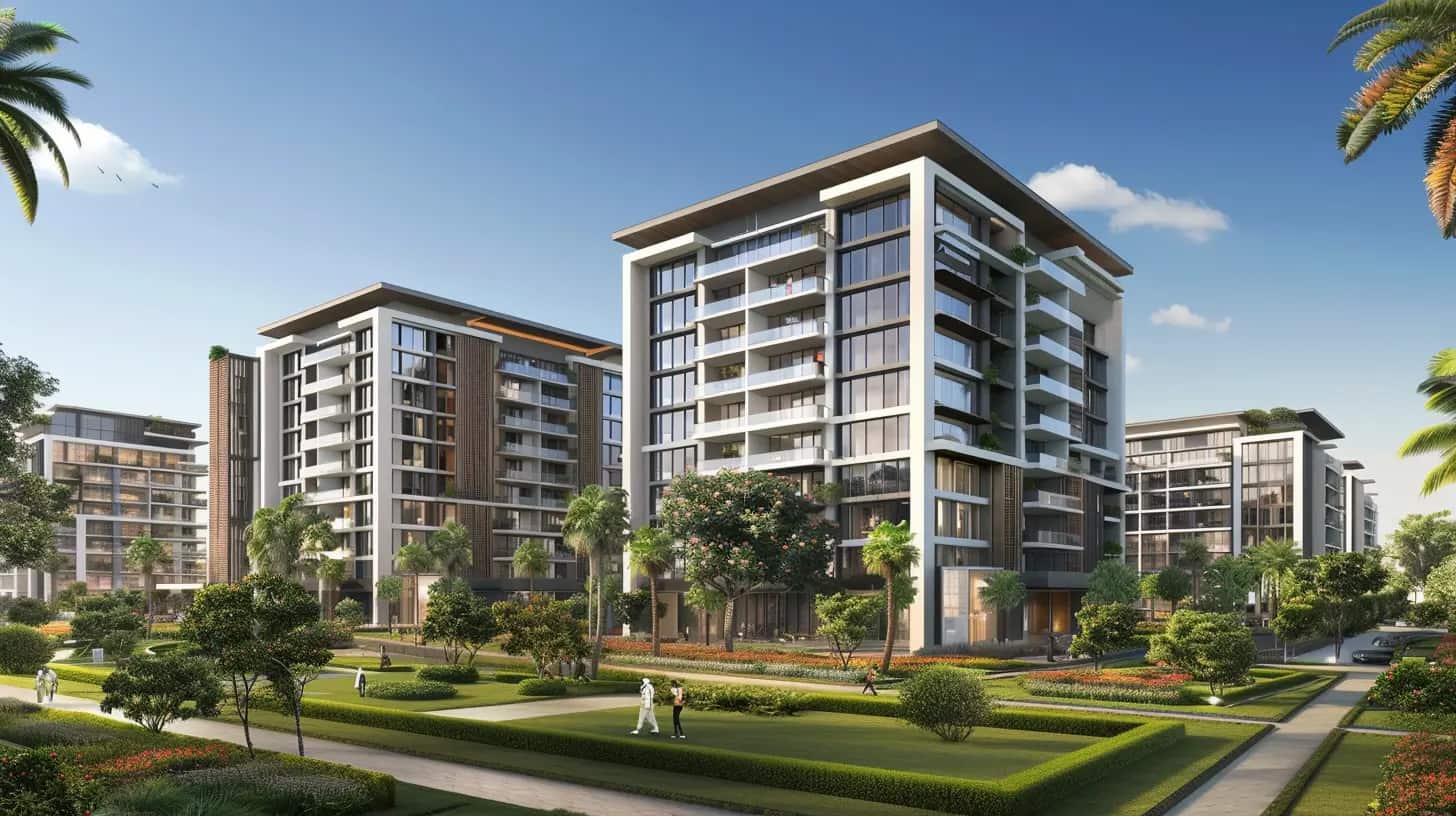
Sobha Hartland Phase 3: A Standout Investment for 2025
There is a time in every property cycle when a specific project is a topic of conversation among many people. Real estate agents mention it to their clients, investors ask about it before…
There is a time in every property cycle when a specific project is a topic of conversation among many people. Real estate agents mention it to their clients, investors ask about it before it is even broached by their agent, and fence-sitting friends ask to view it. That is where Sobha Hartland Phase 3 is today.
Lamentably, it is easy to understand why.
Sobha Hartland as a whole is one of the more consistent performers in the Dubai residential market over the last five years. It is not flashy, nor is it aggressively marketed as some other projects are. Instead, it is a product that boasts good build quality, a genuinely green plan, and a price trend that is favorable to early adopters. Phase 3 is an extension of the good attributes of the first two phases and applies them to a larger and more ambitious footprint situated on the periphery of the Dubai Water Canal, with Mohammed Bin Rashid City as a backdrop.
This article is a thorough analysis of what Phase 3 is offering, what the numbers suggest about its value, who is buying and why, and whether the investment thesis holds up to scrutiny. We will discuss the community offering, the product types and prices, the yields that investors might expect, Sobha’s track record as a developer, and other considerations that might be important to a buyer.
There are two things to note before we begin: we believe that this product is worthy of the attention that it is receiving. That said, we also do not believe in sugarcoating its benefits. There are some aspects of this community that are more important to some people than to others, and some considerations that you might want to be aware of before you start to consider it as a viable option. At the end of this analysis, you should be able to decide for yourself whether it is a product that you should include on your short list.
What Sobha Hartland II Phase 3 Actually Is
Before getting into numbers, it's worth being clear about what we're talking about.
Sobha Hartland II is the second master-planned community by Sobha Realty within the Mohammed Bin Rashid City district. It sits adjacent to the original Sobha Hartland community but is a separate, larger development with its own amenities, streetscape, and vision. Phase 3 is the latest release within Sobha Hartland II.
Key facts about the broader community and Phase 3 specifically:
- Total Sobha Hartland II master plan covers approximately 6 million square feet of mixed-use residential development
- Located in Mohammed Bin Rashid City, District 11, with direct access to Al Khail Road and Ras Al Khor Road
- About 10 to 12 minutes by car to Downtown Dubai and Business Bay, depending on traffic
- 30% to 40% of the total land area is dedicated to green space, parks, and water features
- Phase 3 includes a mix of high-rise towers, mid-rise clusters, and a limited number of waterfront-facing units
- Unit types range from one-bedroom apartments through to four-bedroom sky villas
- The community has two international schools already operating within the master plan (North London Collegiate School and Hartland International School)
- A waterfront promenade running along the community's edge is part of the Phase 3 delivery
- Sobha Realty's founder PNC Menon has publicly described Hartland II as the company's flagship long-term community project for Dubai
The combination of location, schools already in place, greenery, and a developer with a reputation for finishing what they start is a significant part of why this one gets attention from both end-users and investors.
The Investment Case: What the Numbers Say
Let's get into the actual data, because that's what serious buyers want to see.
Pricing in Phase 3 at launch was broadly in the following ranges, based on available data from DLD registrations and Sobha's public releases:
- One-bedroom apartments: from AED 1.6 million to AED 2.2 million depending on floor and view
- Two-bedroom apartments: from AED 2.5 million to AED 3.8 million
- Three-bedroom apartments: from AED 4 million to AED 6.5 million
- Four-bedroom sky villas and larger units: from AED 8 million upwards
These are launch prices. Secondary market prices for equivalent Sobha Hartland II units from earlier phases have already moved above these figures in several cases, which tells you something about where the market is pricing future delivery.
Rental yields in the Sobha Hartland area have been running between 6% and 7.5% for one and two-bedroom units, based on DLD rental transaction data for 2023 and 2024. That's above the Dubai average of around 5.5% to 6% for comparable mid-to-premium apartments.
Capital appreciation in the original Sobha Hartland community between 2020 and 2024 averaged around 42% across apartment types, according to data compiled from DLD records. That's not a guarantee of future performance in Hartland II, but it's a useful reference point for how Sobha communities have performed historically.
- Average price per square foot in Sobha Hartland II as of Q3 2024: AED 1,850 to AED 2,200
- Comparable price per square foot in Downtown Dubai: AED 2,800 to AED 3,500
- Comparable price per square foot in Business Bay: AED 2,000 to AED 2,600
- Projected handover for most Phase 3 towers: 2027 to 2028
The value gap versus Downtown and Business Bay is real and it's one of the clearest arguments for Phase 3 as an investment. You're buying a comparable quality product at a meaningful discount to the established luxury zones, in a community that's already partly built and occupied.
Sobha as a Developer: Track Record and What Buyers Say
PNC Menon founded Sobha Group in 1976 in India before establishing Sobha Realty in Dubai in 2014. The company is unusual in the UAE developer landscape for one specific reason: they do almost all of their construction in-house. Concrete, interiors, joinery, MEP. Most developers outsource most of this. Sobha largely doesn't.
The practical result is that Sobha's build quality is consistently among the highest in Dubai's mid-to-premium segment. It's not a matter of opinion, it's something that comes up repeatedly in buyer feedback, in professional valuations, and in resale premiums.
A few things worth knowing about Sobha's track record specifically:
- Sobha Hartland Phase 1 and 2 towers were delivered broadly on schedule with minimal snagging issues relative to Dubai market norms
- The developer has never had a project cancellation registered with RERA in Dubai
- Sobha has approximately 130 real estate projects completed globally, per their official company profile
- DLD completion records show Sobha consistently in the top tier of developers by on-time delivery percentage
- Secondary market premiums for Sobha units versus other developers in the same zone typically run 8% to 15% higher, reflecting buyer confidence in quality
- Damac and Emaar both have larger marketing budgets and more brand awareness but neither consistently matches Sobha's finish quality at comparable price points, according to multiple independent valuers we've spoken with
The one caveat worth mentioning: Sobha's customer service and post-handover support has had mixed reviews. The product is excellent but some buyers have found the after-sales process slower than expected. Worth knowing going in.
Who Is Actually Buying Here
The buyer mix in Sobha Hartland II Phase 3 is genuinely diverse, which is itself a positive signal for long-term liquidity.
Based on DLD nationality data for the broader MBR City and Sobha Hartland zone in 2023 and 2024:
- Indian nationals are consistently the largest buyer group, typically accounting for 35% to 40% of transactions
- British, Russian, and Chinese buyers each represent significant cohorts, roughly 8% to 12% each
- UAE nationals and GCC buyers account for around 15% combined
- The remaining share is spread across European, African, and other Asian nationalities
The school factor is a big driver for families specifically. Having North London Collegiate School already operating within the community removes one of the biggest friction points for expat families making a relocation decision. In most Dubai communities, families buy first and hope the schools follow. Here, the schools are already there.
For investors without a personal use plan, the renters who target this area tend to be mid-to-senior level professionals, many of them families with school-age children. That tenant profile generally means longer tenancies, better maintenance, and lower vacancy rates compared to single-professional-dominant buildings.
Location: How It Actually Connects to the Rest of Dubai
Meydan and Mohammed Bin Rashid City sit in what used to feel like a slightly awkward in-between location. Not quite Downtown, not quite the suburbs. That's changed a lot in the last four years as the road infrastructure has caught up and the community has filled in.
From Sobha Hartland II today:
- Downtown Dubai and the Burj Khalifa: 10 to 12 minutes by car via Al Khail Road
- Business Bay: 8 to 10 minutes
- Dubai International Airport: 15 to 18 minutes
- Dubai Mall: 12 minutes
- DIFC: 15 minutes
- Dubai Hills Mall: 18 to 20 minutes
- Meydan Racecourse: 5 minutes
There's no metro connection yet and that's the honest limitation of this location. The community is car-dependent. For buyers who rely on public transport or don't drive, this is a real consideration. A metro extension through MBR City has been discussed as part of Dubai's 2040 Urban Master Plan but no confirmed timeline exists for the specific Sobha Hartland corridor.
If you have a car and work anywhere between Downtown and the airport, the locatin is genuinely convenient. If you work in JBR or Dubai Marina, the commute is more like 30 to 35 minutes and that's worth factoring in.
Original Research: Sobha Hartland vs the Broader MBR City Market
We pulled DLD transaction data and compared Sobha Hartland and Sobha Hartland II performance against the wider Mohammed Bin Rashid City zone from 2021 to 2024.
What the data shows:
- Sobha Hartland average price per square foot grew from AED 1,280 in Q1 2021 to AED 2,050 in Q3 2024, a gain of around 60% over the period
- MBR City as a whole (excluding Sobha) grew from AED 1,150 to AED 1,720 over the same period, approximately 49%
- Sobha units have outperformed the broader MBR City average by roughly 11 percentage points over four years
- Rental transactions in the Sobha Hartland zone grew 34% by volume from 2022 to 2024, indicating rising occupancy and demand from tenants, not just investors
- Average days on market for Sobha Hartland resale listings dropped from 68 days in 2022 to 41 days in 2024, showing improved liquidity
- Off-plan registrations for Sobha Hartland II Phase 3 in the first 90 days after launch exceeded 1,100 units, per DLD off-plan registration data, making it one of the highest-volume off-plan launches in MBR City history
- As property analyst Faisal Durrani, Partner at Knight Frank Middle East, noted in a 2024 Dubai market briefing: "Communities with embedded school infrastructure and green space premiums have demonstrated the most resilient price floors in Dubai's correction periods"
The numbers support the narrative. Sobha communities have consistently outperformed the zone averages, with improving liquidity and a growing rental market underneath.
What to Watch Out For
Every honest review needs this section. Here's what we'd flag:
The off-plan risk is real. Phase 3 won't be handed over until 2027 or 2028. A lot can happen in three years. Dubai's property market has historically been volatile and while the current cycle has been unusually long and stable, there's no guarantee that continues through to handover.
The car dependency is a genuine lifestyle constraint. If you're buying for yourself and you or your partner don't drive, or you're expecting to rent to the kind of tenant who doesn't own a car, factor that in honestly.
Payment plans require liquidity over a period of years, not just a down payment today. Make sure you've modelled your cash flow across the full construction period before committing.
Service charges in newer Sobha developments have been running higher than some buyers expect. AED 15 to AED 18 per square foot per year is the range most buyers are seeing. On a 900 square foot one-bedroom, that's AED 13,500 to AED 16,200 annually. Not huge, but worth including in your yield calculations.
Units with the best views, waterfront facing or Downtown skyline facing, carry a significant premium over equivalent internal-facing or road-facing units. In a strong market these premiums are justified. In a softer market they compress first. If you're buying primarily for yield and not for view enjoyment, the premium may not earn its keep.
Should You Buy in Sobha Hartland Phase 3?
The honest answer is that it depends on the purpose of the purchase. - In terms of rental yield, the numbers are good and the tenant profile is excellent. A yield between 6% and 7% and a tenant profile that stays longer than average is a very robust combination. - In terms of capital growth and a 5 to 7-year timeframe, the success of the first two Sobha Hartland phases, the location trajectory of MBR City, and the relative under-pricing to Downtown all point to a good chance of capital growth. - If a buyer is planning to live in the property, and specifically if he or she has children, then schools in the community are a major plus. There are very few communities in Dubai that can point to schools that are already up and operating, which is a big plus. The only buyer profile that we would not recommend is if a buyer needs immediate rental returns and cannot wait for handover. In that case, a ready property in a comparable yield zone would be a better bet. Have a look at what's currently available to buy now if that's your situation.
For everyone else, Phase 3 belongs on the shortlist. You can explore current Sobha listings and projects to see what's available across their portfolio, or browse the Sobha Hartland area page for a broader look at the community. If you want to talk through whether this makes sense for your specific situation, reach out to the team and we'll give you a straight answer.
Related stories
Dubai's Established Charm: The Case for Older Homes
In a city focused on the future, I believe the smartest move for many buyers is to look back. Dubai's seasoned communities offer space, character, and surprising value that new builds often can't match.
The True Cost of Owning a Dubai Property
Beyond the purchase price, your annual budget for a Dubai home must account for service charges, utilities, and maintenance. I'll break down every ongoing expense you need to plan for.
Calculating ROI on Dubai Rental Upgrades
As a landlord in Dubai, you can't just follow trends. I'll show you how to calculate the precise ROI of minor property upgrades to genuinely increase your rental yield.
Echoes, in your inbox
One thoughtful email a month. Market insight, new launches, no spam.