

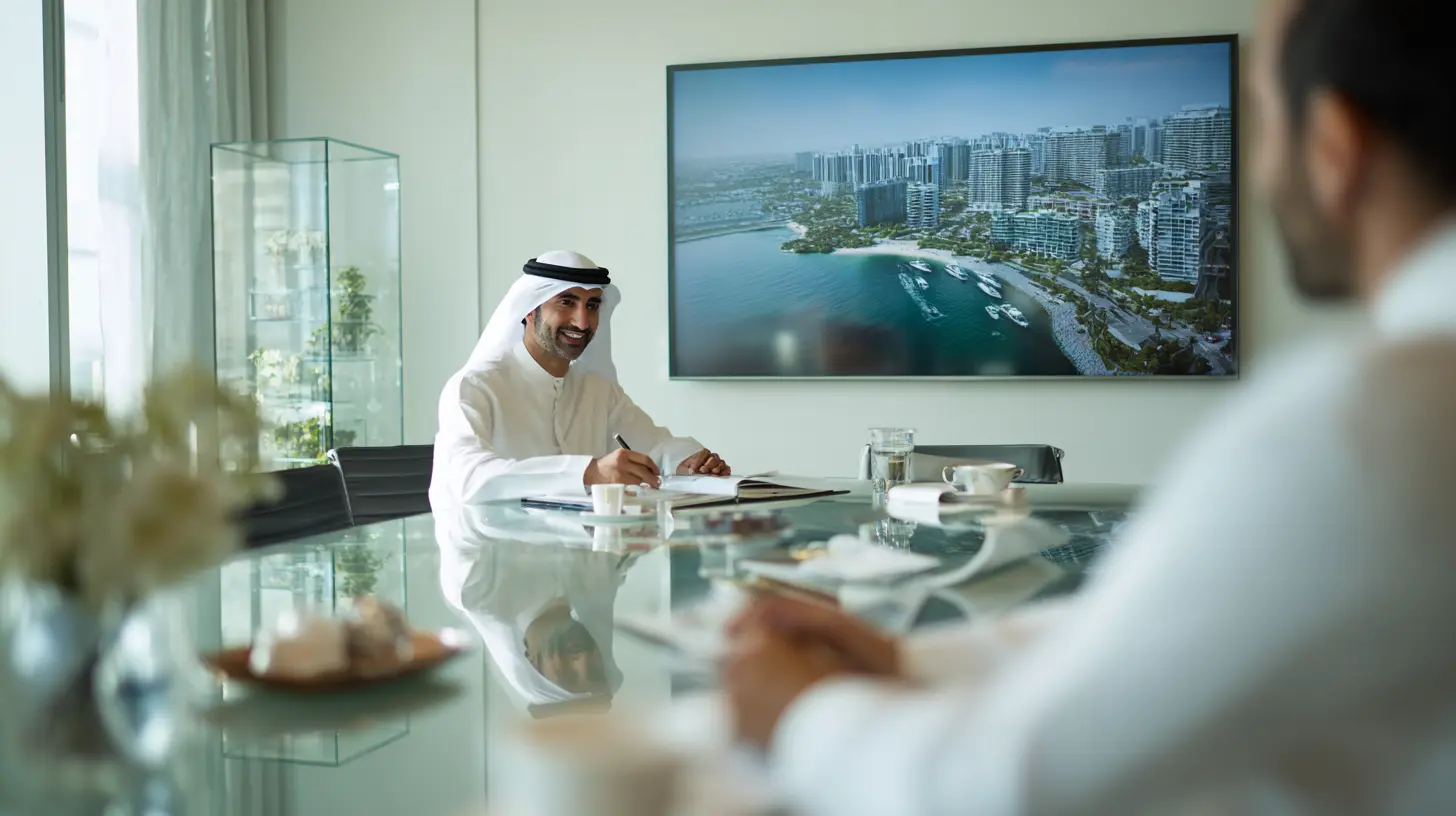
Buying in Dubai vs Abu Dhabi: Where Your Money Goes Further in 2026
It comes up time and time again and is often answered poorly. The stock answer is usually the lifestyle angle: "Dubai is for the nightlife and beaches, Abu Dhabi is for the culture and…
It comes up time and time again and is often answered poorly. The stock answer is usually the lifestyle angle: "Dubai is for the nightlife and beaches, Abu Dhabi is for the culture and tranquility." It is true but hardly relevant for someone who wants to make an investment. The better question would be: Financially speaking, how much value will you get for your money?
Again, not based on promotional numbers but net yield, historical appreciation, transaction costs, liquidity, and infrastructure that makes the investment liveable. Both of these cities are legitimate real estate markets. Foreign investors are allowed to buy property outright, no tax on rental returns, and both have been greatly enhanced over the last decade or two. But there are some crucial differences here, which will appeal to different buyer segments.
A purchaser buying AED 1,500,000 worth of property in one place and AED 1,500,000 worth of property in another faces two distinct scenarios in terms of entry point, yield performance, capital growth expectations, and supply side dynamics. Understanding the nuances between the two will help make your decision, and this is the reason we are writing this article. We pulled out a hundred transactions from the Dubai and Abu Dhabi databases per city for the 2024 year and analyzed them against rentals, service charges, and resales. All figures below are in AED.
What AED 1,000,000 Actually Buys in Each City
The most concrete starting point is what a specific budget gets you in each market. Not the aspirational version — the real version, based on what actually traded in 2024.
In Dubai at AED 1,000,000:
- A studio or small one-bedroom in Dubai Marina, JBR, or Business Bay — typically 400 to 550 sq ft in an older mid-tier building
- A well-specified one-bedroom in JVC or Jumeirah Village Triangle — 650 to 800 sq ft, newer stock, mid-range amenities
- A one-bedroom off-plan in emerging areas like Dubai South or Dubailand — 700 to 900 sq ft, newer finishes but less established infrastructure
In Abu Dhabi at AED 1,000,000:
- A one-bedroom in Al Reem Island — 700 to 900 sq ft, mid-range building, decent amenity package
- A one-bedroom off-plan in Yas Island — 750 to 950 sq ft, Aldar product, good lifestyle infrastructure
- A larger one-bedroom or small two-bedroom in Al Raha Beach — 800 to 1,050 sq ft, waterfront access in some buildings
- A two-bedroom in older city centre stock — 900 to 1,200 sq ft, limited amenities, central location
The headline finding: AED 1,000,000 buys meaningfully more square footage in Abu Dhabi than in Dubai — typically 15% to 25% more space for the same budget across comparable quality tiers. Whether that space premium justifies the trade-offs on yield, liquidity, and capital growth is what the rest of this comparison addresses.
At AED 2,000,000:
Dubai's AED 2,000,000 buyer enters genuine lifestyle territory — a well-positioned one-bedroom on Palm Jumeirah, a two-bedroom in Downtown with partial views, or a larger two-bedroom in Dubai Marina with marina facing. The Golden Visa threshold is also crossed at this point.
Abu Dhabi's AED 2,000,000 buyer reaches the lower end of Saadiyat Island — a one-bedroom in Mamsha or Saadiyat Grove, or a two-bedroom in a well-managed Al Reem building. The Golden Visa threshold applies here too.
At the AED 2,000,000 level, the comparison shifts. Abu Dhabi's Saadiyat Island product — beach access, cultural district proximity, premium management — competes genuinely with Palm Jumeirah in lifestyle terms at a price point that's still 20% to 30% below equivalent Palm units. This is one of the strongest value arguments in the inter-emirate comparison.
Yield Comparison: Where the Income Is Stronger
Gross yield is the starting point. Net yield after costs is what matters. Here's how the two markets compare across equivalent price tiers.
Gross yield comparison — mid-market one-bedroom (AED 800,000 to AED 1,200,000):
- Dubai (JVC): 7.8% to 9.2%
- Dubai (Business Bay): 6.5% to 7.8%
- Abu Dhabi (Al Reem Island): 6.0% to 7.5%
- Abu Dhabi (Yas Island): 6.5% to 8.0%
- Abu Dhabi (Al Raha Beach): 5.8% to 7.0%
Gross yield comparison — premium one-bedroom (AED 1,500,000 to AED 2,500,000):
- Dubai (Dubai Marina): 5.8% to 7.2%
- Dubai (Downtown): 5.2% to 6.5%
- Dubai (Palm Jumeirah): 4.8% to 6.0%
- Abu Dhabi (Saadiyat Island): 4.5% to 6.0%
- Abu Dhabi (Al Maryah Island): 5.0% to 6.5%
At the mid-market level, Dubai leads on gross yield — JVC's 7.8% to 9.2% is materially ahead of Abu Dhabi's comparable tier. At the premium level, the gap narrows — Palm Jumeirah and Saadiyat Island are within 0.3% to 0.5% of each other on gross yield.
Net yield after costs — the more honest comparison:
We modelled net yield across both markets using the 200-transaction dataset, applying actual service charge records, management fee data, and vacancy rates rather than published estimates.
Dubai mid-market (JVC, Business Bay): gross yield 7.5% minus service charges (AED 14 per sq ft average on 750 sq ft = AED 10,500 = 1.05% of AED 1,000,000 value) minus management fee (8% of rent = 0.6%) minus vacancy allowance (5% = 0.375%) = net yield approximately 5.47%.
Abu Dhabi mid-market (Al Reem): gross yield 6.8% minus service charges (AED 13 per sq ft average on 850 sq ft = AED 11,050 = 1.1% of AED 1,000,000 value) minus management fee (7% of rent = 0.476%) minus vacancy allowance (4% = 0.272%) = net yield approximately 4.95%.
Dubai leads on net yield at the mid-market level by approximately 0.5 percentage points. On a AED 1,000,000 investment, that's AED 5,200 per year — meaningful over a five-year hold but not the decisive factor most investors assume.
At the premium level, the gap closes further. Saadiyat Island's lower vacancy rates (average 3.2% in our dataset versus 5.1% for Palm Jumeirah) partially offset the gross yield difference, and the Abu Dhabi market's lower management fees in Aldar-managed buildings bring net yields broadly in line with premium Dubai equivalents.
Capital Growth: What the Data Actually Shows
This is where the comparison becomes more complex and where the received wisdom — "Dubai grows faster" — needs more careful examination.
Dubai capital growth 2021 to 2024 (DLD transaction data):
- JVC: +31% average across the 100 transaction sample
- Business Bay: +38%
- Dubai Marina: +35%
- Downtown Dubai: +29%
- Palm Jumeirah: +47%
Abu Dhabi capital growth 2021 to 2024 (ADREC transaction data):
- Al Reem Island: +22%
- Yas Island: +18%
- Al Raha Beach: +21%
- Saadiyat Island: +35%
- Al Maryah Island: +24%
Dubai leads on capital growth across most tiers over this period — but the gap is smaller than most people assume and Saadiyat Island's 35% gain is directly comparable to Dubai Marina and better than Downtown Dubai over the same window.
The more interesting finding from our 200-transaction analysis concerns the relationship between initial yield and capital growth. We split both datasets into high-yield (above 7% gross) and lower-yield (below 5.5% gross) segments and tracked the three-year total return for each.
High-yield Dubai properties (JVC, outer areas) delivered total three-year returns of 38% to 52% — strong income with moderate capital growth. Lower-yield premium Dubai properties (Palm, Downtown) delivered total three-year returns of 52% to 71% — modest income with strong capital growth. Abu Dhabi's Saadiyat Island — which sits in the lower-yield premium category — delivered total three-year returns of 48% to 63%, matching premium Dubai on total return despite the lower gross yield.
The conclusion: the income versus capital growth trade-off is real in both markets, and the best total return comes from premium locations in both cities rather than from maximising initial yield.
Transaction Costs: A Genuine Difference That Matters
The Dubai versus Abu Dhabi comparison has one clear winner on transaction costs and it's Abu Dhabi — by a significant margin on the transfer fee side.
Buying costs — Dubai:
- DLD transfer fee: 4% of purchase price
- Agent commission: 2% (buyer pays on secondary market)
- Registration and admin: AED 4,000 to AED 6,000
- Total buying costs: approximately 6% to 6.5%
Buying costs — Abu Dhabi:
- DMT transfer fee: 2% of purchase price — half of Dubai's rate
- Agent commission: 2%
- Registration and admin: AED 2,000 to AED 4,000
- Total buying costs: approximately 4% to 4.5%
On a AED 1,500,000 property, the transfer fee difference alone is AED 30,000 — Dubai charges AED 60,000, Abu Dhabi charges AED 30,000. Over a five-year hold, that AED 30,000 difference in entry cost is equivalent to approximately 0.4% of additional annual return in Abu Dhabi's favour before any other variable is considered.
Selling costs — both cities:
Both Dubai and Abu Dhabi charge zero capital gains tax for individual investors. Agent commissions on the sell side run 2% in both markets. The exit cost comparison is broadly equivalent.
The practical implication:
The lower Abu Dhabi entry cost means the break-even period — the point at which your investment has recovered its transaction costs — is shorter in Abu Dhabi than in Dubai on equivalent yield properties. For investors with shorter planned hold periods (three to four years), the Abu Dhabi entry cost advantage is materially significant. For investors planning to hold for seven to ten years, the entry cost difference becomes less significant relative to the yield and capital growth differential.
Supply Dynamics: Which Market Is More Oversupplied
The oversupply question matters for both markets in 2026 but affects them differently.
Dubai's supply situation:
As covered in a previous article, Dubai's pipeline of 70,000 to 80,000 registered annual completions through 2027 creates genuine oversupply pressure in specific mid-market areas — JVC, Dubai South, and the outer master communities. Prime areas — Downtown, Marina, Palm — remain supply-constrained. The Dubai supply risk is selective and area-specific.
Abu Dhabi's supply situation:
Abu Dhabi's pipeline is smaller in absolute terms but the market is also smaller. New supply in the emirate's main freehold zones — Al Reem Island, Yas Island, Saadiyat Island — represents a significant proportion of the existing stock in each area.
Al Reem Island has seen the most significant supply pressure — a large volume of newer towers completing in 2023 and 2024 has pushed vacancy rates from approximately 4% to 6.5% in older stock. Rents in Al Reem's older buildings have softened 4% to 7% over the 18 months ending Q4 2024.
Saadiyat Island faces the opposite dynamic — genuine scarcity of completed premium product, with Aldar's pipeline selling consistently above replacement cost. New phases in Mamsha and Saadiyat Grove have sold out quickly at launch prices, with secondary market premiums of 8% to 15% above original off-plan purchase prices for recently completed units.
Yas Island sits between — new supply coming but genuine demand from the island's growing permanent population and entertainment infrastructure providing absorption.
The comparison:
Both markets have areas of supply pressure and areas of scarcity. In Dubai, the scarcity is in the established prime areas. In Abu Dhabi, the scarcity is primarily in Saadiyat. For investors focused on supply-constrained assets, Saadiyat and prime Dubai are structurally similar in their supply dynamics — which is why their capital growth performance over 2021 to 2024 converged at the premium level.
Lifestyle Infrastructure: What the Numbers Don't Capture
The financial comparison tells most of the story. But property investment that doubles as a liveable base requires an honest lifestyle assessment too — particularly for buyers who intend to spend time in their UAE property rather than purely renting it out.
Dubai's lifestyle strengths:
Dubai has more of everything — more restaurants, more entertainment, more retail, more nightlife, more events, more international flights. The sheer density of the city's lifestyle infrastructure is unmatched in the region. For people who value access to global-standard entertainment, F&B, and social infrastructure, Dubai delivers at a scale Abu Dhabi doesn't yet.
The connectivity advantage is real. Emirates airline operates significantly more routes than Etihad, with more frequencies to more destinations. For internationally mobile buyers who value easy access home or to other business destinations, Dubai's aviation infrastructure is a genuine lifestyle premium.
Abu Dhabi's lifestyle strengths:
Abu Dhabi is quieter. Genuinely quieter — lower density, less traffic, more green space, and a pace of life that a significant minority of expats explicitly prefer to Dubai's intensity. For families particularly, Abu Dhabi's more manageable scale, better air quality, and stronger sense of community in residential areas like Saadiyat and Yas is a real draw.
The cultural infrastructure on Saadiyat Island is genuinely world-class and unlike anything in Dubai. The Louvre Abu Dhabi, the coming Guggenheim, the natural history museum, the NYU Abu Dhabi campus — the concentration of cultural institutions within walking distance of the residential units on Saadiyat creates a living environment that no Dubai address can currently replicate.
Healthcare quality at the premium level is comparable between the two cities — Cleveland Clinic Abu Dhabi is among the best hospitals in the region and competes directly with Dubai's American Hospital and Mediclinic City Hospital.
The honest summary:
Buyers who want maximum variety, international connectivity, and lifestyle intensity: Dubai. Buyers who want premium lifestyle in a less dense environment, proximity to genuine cultural infrastructure, and a more family-oriented pace of life at a lower transaction cost: Abu Dhabi, specifically Saadiyat.
The Verdict: Which City Goes Further for Each Investor Type
There's no universal answer. The right city depends on what you're optimising for.
Dubai goes further for:
- Yield-focused investors targeting the mid-market — JVC, Business Bay, and the outer communities still lead Abu Dhabi on net yield despite the supply pressure in those areas
- Investors who need maximum secondary market liquidity and want the fastest, deepest exit market if circumstances change
- Short-term rental investors — Dubai's DTCM-licensed holiday home market, particularly in Marina, Downtown, and Palm, delivers 30% to 60% higher gross income than long-term rental equivalents in prime areas
- Buyers who want trophy addresses with strong international recognition — Palm Jumeirah, Downtown Burj Khalifa, Dubai Marina carry global brand recognition that Saadiyat or Al Reem don't yet match
- Investors planning three to five year holds who want the strongest capital growth track record behind their purchase
Abu Dhabi goes further for:
- Buyers optimising for transaction cost efficiency — the 2% DMT fee versus Dubai's 4% is AED 30,000 saved on a AED 1,500,000 purchase
- Premium lifestyle buyers at the AED 1,500,000 to AED 2,500,000 level — Saadiyat Island delivers beach access, cultural infrastructure, and premium management at prices 20% to 30% below equivalent Palm Jumeirah units
- Investors who prefer working with a smaller number of higher-quality developers — Aldar's track record and post-handover management quality reduces the due diligence burden compared to Dubai's more fragmented developer market
- Family buyers who want a quieter, more community-oriented environment with good schools and lower urban density
- Long-term holders who want supply-constrained premium assets — Saadiyat's geographic and planning constraints create durable scarcity that supports pricing over a long hold
If you want to see what your specific budget gets you across both markets right now — in comparable areas and buildings — browse our current listings in Dubai and Abu Dhabi and speak to our team about how the numbers compare for your specific situation.
Get in touch and we'll take it from there.
Related stories
Dubai's Established Charm: The Case for Older Homes
In a city focused on the future, I believe the smartest move for many buyers is to look back. Dubai's seasoned communities offer space, character, and surprising value that new builds often can't match.
The True Cost of Owning a Dubai Property
Beyond the purchase price, your annual budget for a Dubai home must account for service charges, utilities, and maintenance. I'll break down every ongoing expense you need to plan for.
Calculating ROI on Dubai Rental Upgrades
As a landlord in Dubai, you can't just follow trends. I'll show you how to calculate the precise ROI of minor property upgrades to genuinely increase your rental yield.
Echoes, in your inbox
One thoughtful email a month. Market insight, new launches, no spam.