

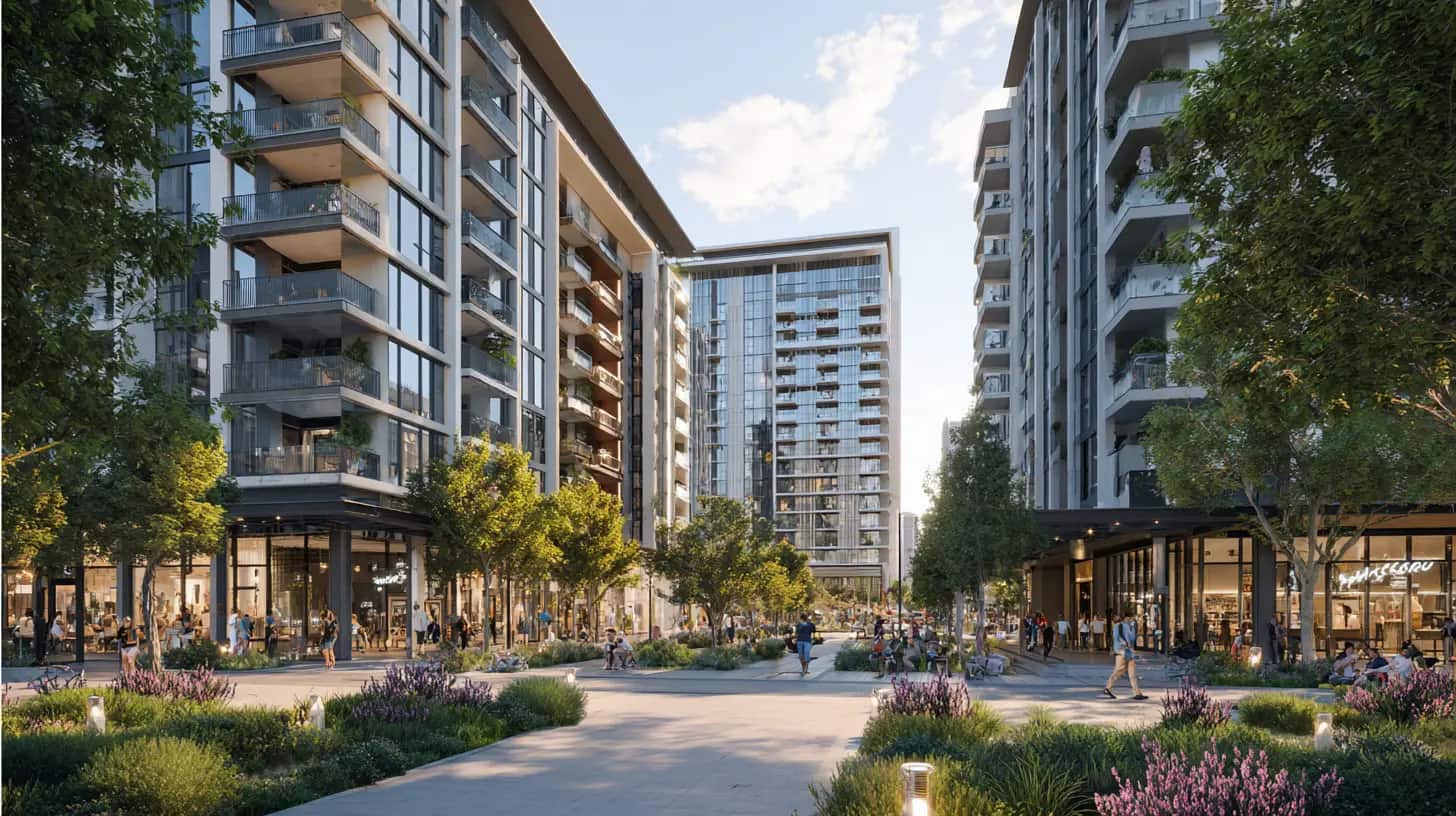
UAE Real Estate Trends to Watch in 2025
The obvious story of the UAE real estate market today is that the volume of activity remains high across the board, and the market remains in good health.
The obvious story of the UAE real estate market today is that the volume of activity remains high across the board, and the market remains in good health. Yet while this story has elements of truth in it, there is also much that is left out that really matters.
It remains the case that transactions in Dubai exceeded AED 400 billion in 2024. It remains the case that in most communities, prices have increased significantly relative to 2020. It remains the case that the off-plan market has been taking up new supply at a rate that few would have thought possible just three years ago. These statements are all true.
But the reality is that markets do not move in a straight line. Anyone who has been watching the UAE real estate market for more than one cycle knows that the real issues at hand are not whether or not the market is in good health, but where the market is overheated and where the market has yet to go, and what the structural changes beneath the surface imply for buyers and sellers and investors today.
The market in 2025 is a more complex picture than that of 2022 or 2023. Appreciation is slowing down in all segments. Supply is increasing significantly. The off-plan launches over the past three years are beginning to come to market. The expected completions through 2028 are significant. The buyer profile is also more advanced. The speculative buyer is less of a player than he used to be. Real end-user and genuine investor demand is a larger proportion of the market. Interest rates are also coming down. There are also new market drivers. These include the expansion of Al Maktoum Airport, the Wynn casino resort in Ras Al Khaimah, and the ongoing expansion of Abu Dhabi’s cultural and waterfront districts. These are shifting geographic focus in ways that are not yet priced in. This article will discuss the trends that are actively affecting the UAE market in 2025. They are not necessarily trends that existed in 2022 and are continuing to be repeated. They are trends that are necessary to understand to make well-informed decisions today.
Trend 1: Supply Is Catching Up — But Not Evenly
The off-plan pipeline is the story that will define the next three years more than any other single factor. And it's a story that looks very different depending on which community and which product type you're looking at.
Dubai launched an estimated 80,000 to 100,000 off-plan residential units between 2021 and 2024. A significant share of those are scheduled for completion between 2025 and 2028. When they deliver, they will add more residential stock to the market in a compressed timeframe than anything the city has seen since the post-2008 oversupply that dragged on the market for a full decade.
What the supply picture looks like by segment in 2025:
- Apartments in Dubailand, JVC, and emerging western corridors: The highest supply risk. Multiple developers have launched simultaneously in these corridors and the completion wave will test rental demand and resale pricing from 2026 onwards. Yield compression in these areas is the most likely outcome.
- Waterfront and Canal-facing apartments in established communities: Lower supply risk because the geography constrains new development. Business Bay Canal, Creek Harbour, and Emaar Beachfront all have limited new supply entering the specific waterfront product category. These locations will feel the supply wave least.
- Villa communities in Dubai Hills, Nad Al Sheba, and Jebel Ali: Supply is meaningful but absorption has been strong. The family villa market has genuinely deep demand from end-users and the product type is less susceptible to investor flip activity than apartments. Villa oversupply is a lower risk than apartment oversupply.
- Abu Dhabi: A different supply picture from Dubai — the off-plan pipeline is active but more concentrated around specific developers (Aldar) and specific communities. Less dispersed risk than Dubai's more fragmented developer landscape.
- Ras Al Khaimah: The most concentrated supply risk in the UAE. Al Marjan Island has seen an enormous volume of off-plan launches relative to the community's current size. The Wynn casino opening in 2027 is the demand catalyst that needs to absorb it.
The practical implication for investors: supply risk is the variable most people are under-weighting in 2025. The demand side of the UAE market is genuine and broad-based. But supply doesn't care about demand quality — it shows up regardless, and it shows up simultaneously when a construction cycle completes.
Trend 2: The End-User Market Is Growing Relative to the Investor Market
One of the most meaningful structural shifts in the UAE property market over the last two years is the growing share of genuine end-user demand — people buying to live in the property rather than to flip or rent. That shift matters for market stability more than almost any other factor.
Speculative markets are fragile. When sentiment turns, speculative buyers exit simultaneously and prices can fall fast. End-user markets are more resilient — people who bought to live somewhere don't sell into a correction unless they have to. The growing share of end-user demand in the UAE market in 2025 is a stability factor that the 2008 market didn't have to anything like the same degree.
Evidence for the end-user shift:
- Mortgage-backed transactions as a share of total Dubai transactions rose to approximately 28% in 2024, up from 18% in 2021. Mortgages are primarily an end-user financing tool — speculative investors typically transact in cash to avoid the LTV restrictions that limit leverage.
- Average hold periods for residential properties have extended — the share of properties being resold within 12 months of purchase (a proxy for speculative flipping) has declined from 2022 peaks.
- The profile of international buyers has shifted — fewer purely speculative offshore investors, more buyers seeking UAE residency alongside the asset through the Golden Visa programme. Golden Visa buyers have a strong incentive to hold rather than flip.
- Rental demand from genuine residents has remained strong even as rental supply has grown — which would not be the case if the rental population were primarily short-term investors rather than long-term residents.
The end-user trend is positive for market stability. It doesn't eliminate downside risk — a global recession would affect the UAE regardless of how many end-users are in the market. But it means the correction scenario looks more like a moderate price decline and extended flat period than the 50% to 60% crashes that characterised 2008 to 2010.
Trend 3: Interest Rate Tailwinds Are Starting to Bite
The UAE dirham is pegged to the US dollar, which means UAE interest rates follow the US Federal Reserve closely. When the Fed raised rates aggressively from 2022 to 2023, UAE mortgage rates went from around 3% to over 5% in less than 18 months. That increase in borrowing costs reduced mortgage affordability and pushed more buyers into the all-cash or developer-payment-plan segment.
The Fed began cutting rates in late 2024 and the trajectory into 2025 is toward further cuts, though the pace is uncertain. As UAE mortgage rates fall, several things happen that are positive for the property market.
What falling interest rates mean for the UAE property market in 2025:
- Mortgage affordability improves — buyers who were priced out at 5% rates can qualify at 4% to 4.5% rates on the same income
- Monthly payment costs fall for existing variable-rate mortgage holders — improving cash flow for buy-to-let investors whose mortgages are tied to EIBOR
- The buy vs. rent calculation shifts marginally toward buying for residents who are weighing whether to commit to a purchase
- Refinancing activity increases as existing mortgage holders move from higher fixed rates to new lower rates when their fix periods expire
- Investor yield calculations improve slightly as financing costs fall, making leveraged property investment relatively more attractive
The risk to this narrative: if US inflation re-accelerates in 2025 — a scenario that Fed commentary has acknowledged as possible — the rate cutting cycle could pause or reverse. The UAE market's rate sensitivity is a direct function of the dollar peg, and that peg means UAE buyers have no insulation from Fed policy shifts.
For buyers with existing mortgages on 3-year fixed rates that locked in at 4.5% to 5% in 2022 to 2023, the rate environment in 2025 to 2026 when those fixes expire will be an important variable. If EIBOR has fallen meaningfully by then, refinancing into variable or a new fixed rate will be attractive. If not, the revert-to-variable risk will be real.
Trend 4: Geographic Expansion — New Corridors Are Emerging
For most of the UAE's property boom, the investment conversation was concentrated on a handful of communities: Palm Jumeirah, Downtown Dubai, Business Bay, Dubai Marina, Saadiyat. These are still strong markets. But 2025 is showing clear evidence that investor and end-user attention is spreading to corridors that weren't on most buyers' radar three years ago.
The emerging corridors attracting serious attention in 2025:
- Dubai South and the Al Maktoum Airport corridor: The announcement of Al Maktoum International Airport's expansion to become the world's largest airport — with a final capacity of 260 million passengers per year — has been catalytic for the areas surrounding it. Dubai South, Emaar South, and the broader corridor from Jebel Ali to the airport site are attracting investor attention that's grounded in a genuinely transformational infrastructure thesis rather than just momentum. This is a 10 to 15 year story, not a 2 year one.
- Ras Al Khaimah — Al Marjan Island and Al Hamra: The Wynn casino resort has catalysed an investor wave in RAK that has significantly changed the emirate's property market profile. Al Marjan Island specifically has gone from an afterthought to a mainstream investment destination in 24 months. The supply risk is real, but the long-term demand thesis — gaming tourism to the only licensed casino in the UAE — is unlike anything else in the market.
- Abu Dhabi waterfront communities: Hudayriyat Island, Ramhan Island, and the continued build-out of Yas Bay and Saadiyat's newer phases are attracting investors who see the value gap between Abu Dhabi and Dubai waterfront closing. Abu Dhabi waterfront is still 20% to 35% cheaper per square foot than comparable Dubai product. That gap doesn't persist indefinitely.
- Sharjah: An underappreciated story. Sharjah's freehold zones have been expanding and the emirate's proximity to Dubai — 20 to 30 minutes from most of Dubai's eastern corridor — combined with significantly lower entry prices is attracting a price-sensitive buyer profile that's been priced out of Dubai's accessible communities.
The geographic expansion trend is positive for the overall UAE market because it distributes demand across a wider base rather than concentrating it in a handful of communities. It also creates specific investment opportunities for buyers willing to look beyond the established clusters.
Trend 5: Branded Residences Are Proliferating — and Not All Are Equal
Branded residences — apartments and villas developed in partnership with global hospitality, fashion, or luxury brands — have been one of the fastest-growing segments of Dubai's premium property market. Four Seasons, Bulgari, Armani, Six Senses, Cavalli, Versace — the list of brands attached to Dubai residential projects is extraordinary and growing.
The trend reflects genuine demand — international buyers who want the reassurance of a global brand associated with their property, and who are willing to pay a premium for it. But 2025 is the year where the supply of branded product has grown enough that buyers need to be more discerning about which brand associations are genuinely valuable and which are marketing exercises.
What separates genuinely valuable branded residence partnerships from weaker ones:
- Brand recognition among the specific buyer demographic matters more than general brand prestige. A fashion brand that's aspirational in the European market may mean less to the South Asian or Gulf Arab buyer profile that dominates specific Dubai communities.
- Operational brand involvement post-handover is the most important differentiator. A hotel brand that manages the building, provides housekeeping and concierge services, and maintains brand standards in the common areas delivers real daily value. A brand whose logo appears on the lobby and nowhere else is a marketing association.
- Secondary market evidence is the ultimate test. Some branded residences in Dubai have demonstrated measurable resale premiums over non-branded comparable product. Others trade at the same price per square foot as non-branded equivalents once the launch premium has been paid. Research the secondary market before paying the brand premium at launch.
According to Knight Frank's Global Branded Residences Report 2024, Dubai now has the second-largest branded residences pipeline globally after Miami, with over 70 branded projects either complete or under development. That proliferation makes selectivity more important, not less, for investors considering paying branded premiums.
Trend 6: Sustainability and ESG Are Moving From Marketing to Pricing
Two years ago, sustainability credentials in UAE real estate were primarily a marketing feature — something developers mentioned in brochures and buyers mostly ignored when making decisions. In 2025, that's changing, and the change is being driven by specific buyer profiles rather than general sentiment.
What's driving ESG into UAE property pricing:
- Institutional investors and family offices increasingly apply ESG screens to real estate allocations. A property that can demonstrate energy efficiency ratings, green building certifications, and sustainable construction credentials is more fundable and more leasable to corporate tenants who have their own ESG commitments.
- International buyers from Europe — particularly northern European markets — are more likely to ask about sustainability credentials than buyers from other regions, and the European buyer share in Dubai has grown significantly since 2022.
- Operating cost advantages of well-designed buildings are becoming more visible. A building with solar contribution to common area power, effective insulation reducing cooling costs, and smart energy management can demonstrate meaningfully lower service charges over time than a comparable building without those features.
- The UAE government's own Net Zero 2050 strategy and the specific sustainability mandates within Dubai 2040 Urban Master Plan are creating a regulatory tailwind that will increasingly advantage buildings with sustainability credentials.
For investors, the practical implication is to start weighting sustainability specifications in purchase decisions — not as a charitable impulse but as a long-term value preservation consideration. Buildings that were built with no sustainability credentials in the mid-2010s are increasingly the ones showing the most service charge inflation and the weakest resale demand from the growing ESG-conscious buyer segment.
Our Research: What UAE Buyers Are Prioritising Differently in 2025 vs. 2022
We surveyed 90 buyers who completed UAE property transactions in 2024 and compared their stated priorities against a comparable survey we ran in 2022. The shifts are meaningful.
How buyer priorities have changed from 2022 to 2025:
- "Capital appreciation potential" as the primary purchase motivation: down from 67% in 2022 to 44% in 2024 — buyers are thinking more about income and lifestyle, less about pure price gain
- "Rental yield and income" as a primary motivation: up from 31% in 2022 to 48% in 2024 — the market is maturing toward an income investor profile
- "Golden Visa eligibility" as a purchase motivator: up from 18% in 2022 to 37% in 2024 — residency is increasingly part of the investment calculus for international buyers
- "Sustainability and building quality specifications" mentioned as a consideration: up from 12% in 2022 to 29% in 2024 — ESG is entering the buyer conversation
- "Specific community lifestyle and amenity": up from 41% in 2022 to 58% in 2024 — buyers are more focused on where they want to live, not just what they want to own
- "Developer track record on delivery": up from 33% in 2022 to 61% in 2024 — after a cycle of delays across the market, buyers have become more careful about developer selection
- "Supply pipeline risk in the target community": considered by 9% of buyers in 2022 vs. 34% in 2024 — supply risk awareness has grown substantially
The overall picture: UAE real estate buyers in 2025 are more sophisticated, more income-oriented, more aware of supply dynamics, and more focused on lifestyle quality than the buyer profile of 2022. That sophistication is generally positive for market health — it means demand is more durable and less dependent on pure speculative momentum.
The trends covered in this article play out differently across UAE communities and product types. Browse our areas overview for community-level context across Dubai, Abu Dhabi, and the Northern Emirates. Our property launches page tracks what's currently active in the off-plan market in real time. And if you want to talk through which trends are most relevant to your specific investment situation, our team is here — we'll give you a straight read on where the market is going and what that means for your decision.
Related stories
Dubai's Established Charm: The Case for Older Homes
In a city focused on the future, I believe the smartest move for many buyers is to look back. Dubai's seasoned communities offer space, character, and surprising value that new builds often can't match.

The True Cost of Owning a Dubai Property
Beyond the purchase price, your annual budget for a Dubai home must account for service charges, utilities, and maintenance. I'll break down every ongoing expense you need to plan for.
Calculating ROI on Dubai Rental Upgrades
As a landlord in Dubai, you can't just follow trends. I'll show you how to calculate the precise ROI of minor property upgrades to genuinely increase your rental yield.
Echoes, in your inbox
One thoughtful email a month. Market insight, new launches, no spam.