

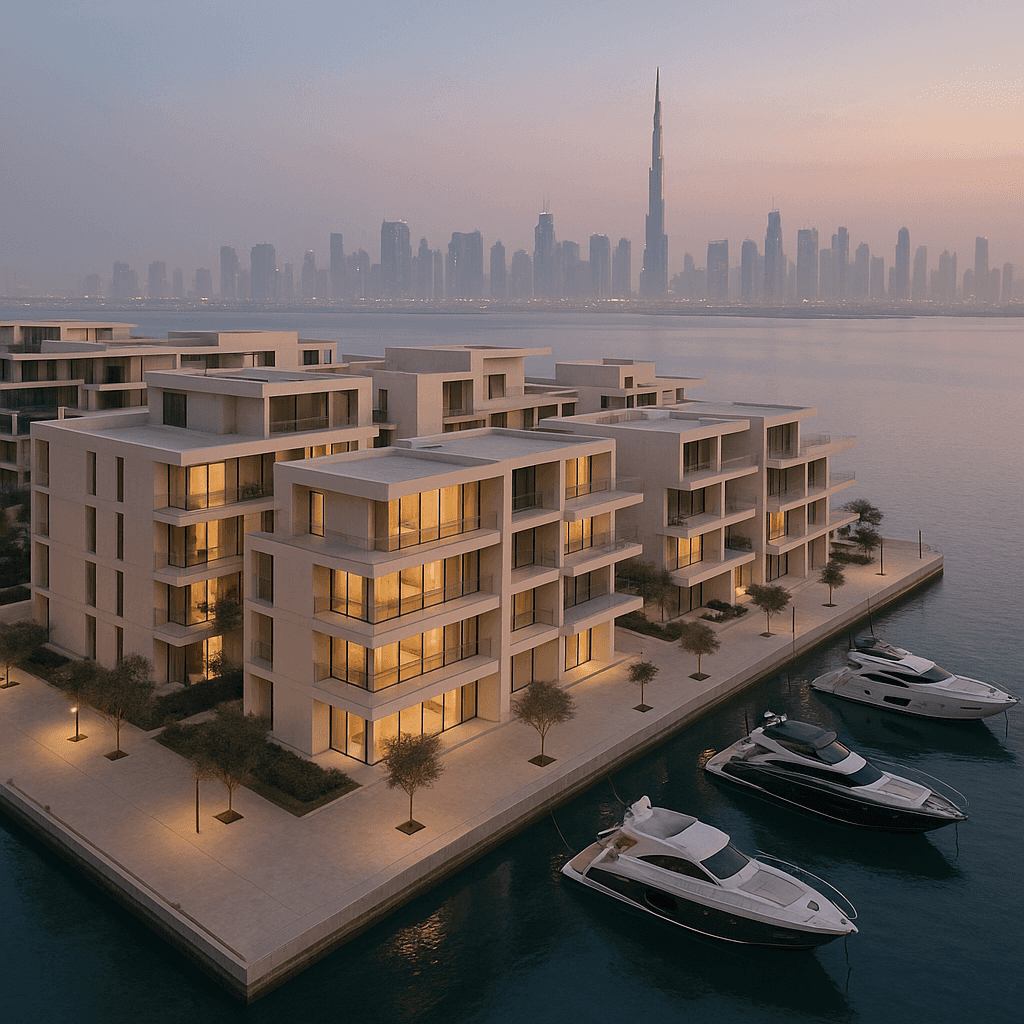
Quantifying Smart Home Value in Dubai Property
A deep analysis of how smart home integration truly affects property values and rental yields in Dubai. We break down the real ROI for buyers and investors, moving beyond the hype.

The term 'smart home' has become one of the most overused phrases in Dubai real estate marketing. In my view, its meaning has been diluted to the point of being almost useless, applied equally to a villa with a single smart thermostat and a penthouse with a fully automated environmental system. This ambiguity presents a challenge for buyers and investors: how do we cut through the noise and quantify the actual value of property technology in Dubai? The real smart home value in Dubai is not about gadgets; it is about integrated, smooth ecosystems that genuinely improve quality of life and deliver a measurable return.
Here's the framework I use to analyse this topic, and what we will explore in this report:
- The difference between superficial 'smart' features and deeply integrated systems.
- How to categorise smart home technology into tiers of value and investment.
- The specific ROI metrics: capital appreciation, rental yield, and operational savings.
- Case studies of developers and communities that get it right.
- A realistic cost-benefit analysis for retrofitting an older property.
- My final verdict on when and where smart tech is a smart investment.
Defining the 'Smart Home' Spectrum in Dubai
Before we can assign a dirham value to a 'smart home', we need a clear definition. I see the market offerings falling into three distinct tiers. Understanding this spectrum is the first step in calculating any potential property technology ROI. Tier 1 is the most common but offers the least financial upside. It consists of basic, often DIY-installed devices like a smart doorbell, a Nest-style thermostat, or a few Wi-Fi-enabled light bulbs. These are consumer electronics, not integrated infrastructure. While they might be a nice bonus for a tenant, they add almost no quantifiable value to a property's sale price. A buyer will view them as personal effects, much like a piece of furniture, and they will not factor into a formal valuation.
The second tier is what I call 'Developer Standard'. This is where we start to see genuine IoT in Dubai real estate. In many new projects, particularly from major developers like Emaar Properties or Nshama, a baseline of smart technology is now expected. This typically includes pre-wired smart lighting in main living areas, a digital main door lock, and a video intercom system connected to building security. These are hardwired and part of the property's core systems. While this level of integration is becoming the new normal, its primary value is in meeting market expectations rather than creating a significant premium. A new apartment in Business Bay lacking these features would feel dated and might be at a slight disadvantage, but having them doesn't automatically add 10% to its price. It simply makes it competitive.
Tier 3 is the 'Integrated Ecosystem'. This is where a true, defensible premium emerges. This involves a centralised control system (like Control4, Crestron, or a proprietary developer system) that manages lighting, climate, security, curtains, and AV from a single, intuitive interface — be it wall-mounted panels or a unified app. More importantly, it extends beyond the apartment's four walls to connect with building-wide amenities. Imagine booking a gym slot, ordering concierge services, paying service charges, and granting visitor access from the same platform that controls your living room lights. This level of integration, seen in ultra-luxury towers by developers like Omniyat or within master-planned communities like Al Barari, is what creates a powerful, sticky user experience. It's this ecosystem that sophisticated buyers are willing to pay for, creating a measurable tech-enabled homes premium.
The Three Pillars of Smart Home ROI
 Featured project
When my clients ask about the financial return on smart homes, I tell them to think in terms of three distinct pillars: direct capital appreciation, enhanced rental yield, and operational cost savings. Each pillar contributes to the overall investment case, but their relative importance depends on whether you are an end-user or an investor. For an investor focused purely on numbers, the equation is about the premium a buyer will pay or the extra rent a tenant will shell out. For an end-user, the 'return' is also measured in quality of life, which is harder to quantify but no less real.
Capital appreciation is the most sought-after return. Does a smart home sell for more? My analysis of market data suggests that for Tier 3 integrated ecosystems, the answer is a cautious yes. In prime locations like Palm Jumeirah or Jumeirah Bay, a villa with a state-of-the-art, professionally installed automation system can command a price premium of 5-10% over a comparable 'dumb' villa. This premium is not just for the hardware; it's for the turnkey convenience and the perception of a modern, future-proofed asset. However, this premium is fragile. It depreciates as technology ages and is highly dependent on the quality and user-friendliness of the system. A clunky, unreliable system can actively detract from a property's value.
The second pillar, rental yield, is often a more immediate and reliable source of return. In a competitive rental market like Dubai, a tech-enabled home is a powerful differentiator. For long-term rentals, a smart apartment can attract a better quality of tenant and potentially a 5-7% rental premium. The effect is even more pronounced in the short-term rental market. A holiday-maker browsing listings is far more likely to be swayed by features like keyless entry, app-controlled AC, and smart lighting. In my experience, a fully automated unit on Bluewaters Island or in Dubai Marina can achieve a 10-15% higher nightly rate and better occupancy than its non-smart equivalent. The technology enhances the guest experience, leading to better reviews and higher demand.
Finally, operational savings represent the third, and often overlooked, pillar of ROI. This is particularly relevant in Dubai, where cooling costs are a significant part of household expenditure. An intelligent climate control system that learns occupancy patterns, integrates with smart blinds to manage solar gain, and allows for remote management can reduce DEWA bills by a notable margin — potentially 15-25%. While this might only amount to a few hundred dirhams a month for an apartment, in a large villa, the annual savings can run into the thousands. For a building owner or manager, smart building features like predictive maintenance alerts for HVAC systems or smart irrigation can lead to substantial reductions in service charge budgets over the long term.
The Developer Perspective: Building Value from the Ground Up
Developers are the primary drivers of meaningful smart home adoption in Dubai. They have the scale, control, and technical capacity to implement the 'Integrated Ecosystems' that generate real value. A key insight is that the most successful implementations are not technology-led, but experience-led. Developers like Sobha Realty in their Sobha Hartland projects or Emaar in its premium communities don't just sell smart lighting; they sell a vision of effortless, connected living. This is a crucial distinction. The value is not in the list of features, but in the coherence of the system and its integration into the resident's daily life.
This integration starts at the master plan level. In communities like Expo City, the vision for a smart city informs the design of individual residences. The connectivity infrastructure — high-speed fibre, 5G coverage, and a common data backbone, is laid before the first foundation is poured. This allows for a level of reliability and functionality that is impossible to achieve with retrofitting. When a developer controls the entire stack, from the building's central command to the resident's app, they can create a smooth experience. The app that opens your apartment door can also be used to hail an autonomous shuttle to the community metro station or check the air quality index.
From a commercial standpoint, incorporating Tier 3 systems allows developers to create a distinct product category and justify a higher price point. It moves the conversation from price per square foot to the value of the living experience. For example, in a project launch, we might see a standard apartment block and a 'signature' or 'tech-enabled' block at a 10% premium. This premium is justified by a package that includes a top-tier automation system, upgraded appliances, and exclusive access to certain digital services. This strategy has proven effective, particularly in the luxury segment where buyers are less price-sensitive and more focused on features, convenience, and status.
“The most significant smart building features market value comes not from individual gadgets, but from a unified platform that integrates the home with the wider community's services.”
Finally, developers are increasingly using property technology as a long-term asset management tool. By collecting anonymised data on energy usage, amenity utilisation, and traffic flow, they can operate their buildings and communities more efficiently. This data can inform future designs, optimise service charge expenditure, and enable new revenue streams like on-demand services. For the buyer, this translates into a better-managed, more sustainable, and potentially more affordable community in the long run. The initial investment in technology pays a dividend over the entire lifecycle of the building, a fact that sophisticated investors are beginning to appreciate.
Retrofitting vs. Buying New: A Cost-Benefit Analysis
For owners of existing properties in Dubai, the key question is whether to invest in retrofitting smart technology. The decision hinges on a frank assessment of costs, goals, and the property's underlying character. It's one thing to add a smart lock to a modern apartment in JVC; it's another entirely to attempt a deep retrofit on a 15-year-old villa in The Meadows. My advice is to be realistic about the potential ROI and to understand that the primary return will often be in lifestyle enhancement, not capital gain.
A basic, wireless retrofit is the most common path. This involves using Wi-Fi or Zigbee/Z-Wave-based devices that don't require major electrical work. A typical starter package might include:
- Smart Lighting: Replacing key switches and bulbs (e.g., Philips Hue, Lutron Caseta). Cost: AED 3,000 - 8,000 for a 2-bedroom apartment.
- Smart Climate Control: A smart thermostat (e.g., Nest, Ecobee). Cost: AED 1,000 - 2,500, including installation.
- Smart Security: A smart door lock, doorbell camera, and a few indoor sensors (e.g., Ring, Yale). Cost: AED 2,500 - 6,000.
- Voice Control: Amazon Echo or Google Home devices. Cost: AED 500 - 1,500.
Total Estimated Basic Retrofit Cost for an Apartment: AED 7,000 - 18,000.
While this setup enhances convenience, it will not add AED 18,000 to your selling price. A potential buyer will see it as a collection of disparate gadgets that they may or may not want to keep. The investment is unlikely to be recouped directly in a sale. However, it can make the property significantly more attractive on the rental market, potentially justifying a slightly higher rent and reducing vacancy periods. The real return here is in livability for an end-user or marketability for a landlord.
A deep, wired retrofit is a much more serious undertaking. This involves chasing walls, running new cables, and installing a centralised control system like Control4 or KNX. This is the only way to replicate the smooth experience of a new-build Tier 3 system. The costs are substantial and can escalate quickly. For a 4-bedroom villa, a comprehensive wired system controlling lighting, AC, curtains, and multi-room audio can easily range from AED 150,000 to AED 500,000 or more. This level of investment is rarely justifiable from a pure ROI perspective unless it's part of a full gut renovation of a high-value property in a prime location. The risk is that you spend AED 300,000 on a system that adds only AED 150,000 to the final valuation. In most cases, if a Tier 3 ecosystem is a priority, it is far more financially prudent to sell the older property and purchase a new one where the technology is included and amortised within the developer's sale price.
The Buyer's Due Diligence Checklist
When evaluating a property marketed as 'smart', a buyer needs to be a discerning critic, not a passive consumer. The marketing brochure will always promise a smooth future, but the reality can be very different. Before you let the 'tech-enabled homes premium' factor into your offer, I recommend a thorough due diligence process. The goal is to determine which of the three tiers the property truly belongs to and to assess the quality and longevity of the system.
Here is a checklist I use with clients to scrutinise a smart home's credentials:
1. Identify the Core System: What is the brand of the central controller (e.g., Control4, Crestron, KNX, or a proprietary developer app)? Is it a reputable, open platform, or a closed, unknown system that might be difficult to service? A proprietary system from a major developer like Emaar carries less risk than one from a small, unknown builder.
2. Test the User Interface: Spend time with the app and any wall panels. Is it intuitive and responsive, or is it buggy, slow, and confusing? A poorly designed interface will be a source of constant frustration and will negate any potential value.
3. Assess the Integration Level: Does one app control everything smoothly, or do you need to open five different apps to manage the lights, AC, and security? True value lies in unification. Check if the system integrates with building services like concierge, visitor access, and facility booking.
4. Enquire about Ongoing Costs: Are there mandatory subscription fees for the app or cloud services? What are the service and maintenance contracts for the system? These are ongoing ownership costs that need to be factored into your budget, much like service charges.
5. Understand the Handover and Warranty: Who is responsible for setting up the system for you upon moving in? What is the warranty period for the hardware and software? Who provides technical support when something goes wrong — the developer, a third-party integrator, or a remote call centre? Getting a clear answer on this is critical.
6. Check for Manual Overrides: This is a crucial, often overlooked point. What happens if the Wi-Fi goes down or the central controller fails? Can you still operate your lights and AC with a physical switch on the wall? A system without robust manual backups is a liability, not a feature.
By systematically working through these questions, you can move past the marketing claims and make an informed judgement about the real, tangible value the technology adds. An impressive feature list is meaningless if the system is unreliable, expensive to maintain, or difficult to use. A positive assessment, on the other hand, can give you the confidence that you are paying a premium for a genuine enhancement, not just for a gimmick.
The Future Trajectory: AI, Sustainability, and Wellness
Looking ahead to 2026 and beyond, the definition of a premium smart home in Dubai is set to evolve further. The conversation is already shifting from simple automation to proactive intelligence and wellness. The next generation of smart building features market value will be driven by Artificial Intelligence (AI), sustainability, and a focus on resident well-being.
AI-powered homes will move beyond pre-programmed 'scenes' to become truly adaptive environments. The system will learn your family's routines, preferences, and patterns, and proactively adjust the lighting, temperature, and even ambient music to suit the moment without requiring any manual input. It might suggest opening the blinds at a certain time to maximise natural light based on the weather forecast or prepare your preferred 'work focus' environment when it detects you've sat down at your desk on a weekday morning. This level of predictive assistance is where technology becomes truly invisible and indispensable, creating a powerful lifestyle benefit that buyers will seek out.
Sustainability will also become a central pillar of the smart home value proposition. With Dubai's strong focus on green initiatives, buyers and tenants are increasingly conscious of their environmental footprint and utility costs. The next wave of smart homes will integrate deeply with energy systems. This includes not just optimising AC usage but also managing solar panel output, electric vehicle charging, and water consumption. A home that can demonstrate, with real data, that it uses 30% less energy and water than a standard home will command a clear and quantifiable premium, both in resale value and rental attractiveness. This aligns financial ROI with environmental responsibility.
Finally, the concept of 'wellness real estate' is gaining significant traction. Smart homes will play a key role in creating healthier living spaces. This could include dynamic circadian lighting systems that support natural sleep cycles, advanced air and water purification systems that monitor and display quality in real-time, and biophilic design elements (like automated irrigation for indoor plants) that are controlled by the central home system. Developers who can credibly link their technology packages to tangible health and wellness outcomes — and provide the data to back it up, will tap into a powerful and growing segment of the market. This transforms the home from a passive shelter into an active participant in the residents' well-being.
The financial return on smart home technology in Dubai is not guaranteed. It is realised only when the integration is deep, the user experience is flawless, and the features provide tangible benefits in convenience, cost savings, or wellness. For buyers, the key is to look past the gadgets and evaluate the coherence of the entire ecosystem, from the apartment to the building to the wider community.
Sources
- Dubai Land Department (DLD): dubailand.gov.ae
- Real Estate Regulatory Agency (RERA): rera.gov.ae
- Central Bank of the UAE (CBUAE): centralbank.ae
- UAE Government Portal: u.ae
- Dubai Statistics Center: dsc.gov.ae
Questions, answered
- Does adding smart home tech increase my Dubai property's value?
- Yes, but it depends on the level of integration. A professionally installed, whole-home system in a premium property can add a 5-10% price premium. Basic, DIY gadgets add negligible resale value as they are seen as personal effects.
- How much does a full smart home system cost in Dubai?
- A basic retrofit might cost AED 15,000-30,000 for an apartment. A comprehensive, developer-integrated system for a luxury villa can cost anywhere from AED 150,000 to over AED 500,000, depending on the complexity and features.
- Can I get a higher rent for a smart apartment in Dubai?
- Yes, a well-equipped smart apartment, particularly in tech-focused areas like Dubai Science Park or for short-term lets, can command a 5-15% rental premium over a comparable non-smart unit due to enhanced convenience and potential energy savings for tenants.
- Which developers in Dubai are known for smart home integration?
- Developers like Emaar Properties, Sobha Realty, and Omniyat are at the forefront of integrating comprehensive smart home systems into their new projects, particularly in luxury communities and high-end towers. These are often included as a standard feature in their premium offerings.
- Is retrofitting an older Dubai property with smart tech a good investment?
- For personal use, it can greatly enhance your lifestyle. For investment ROI, a basic retrofit (under AED 30,000) can make your property more attractive to renters but is unlikely to be fully recouped in a sale. Deep, structural retrofits are expensive and often not financially viable compared to buying a new, pre-integrated property.
- What are the most valued smart features by Dubai buyers?
- Buyers and tenants prioritise features that offer tangible benefits in security, convenience, and cost savings. Highly valued features include integrated smart climate control (AC), smart security systems (CCTV, access), smart lighting, and building-wide services accessible via a single app.

Amara translates DLD transaction data, supply pipelines, and macro signals into clear calls on where Dubai's market is heading. She writes the numbers most brokers only feel.
Related stories

Dubai's Big Squeeze: Smaller Plots, Denser Living
Dubai real estate is undergoing a fundamental shift towards smaller plot sizes and higher density. We analyse the economic drivers, the impact on property values, and what this new era of compact urban living means for both homebuyers and investors.
Resort Living as Your Dubai Reality
Explore how to trade temporary staycations for a permanent home with five-star amenities in Dubai. I'll break down the real costs, best communities, and lifestyle trade-offs of embracing high-end resort living every day.

Finding Your Tribe in Dubai's Villa Communities
I explore which of Dubai's renowned villa communities attract specific expat nationalities and lifestyle groups, offering insights to help you find a place that feels like home.
Echoes, in your inbox
One thoughtful email a month. Market insight, new launches, no spam.