

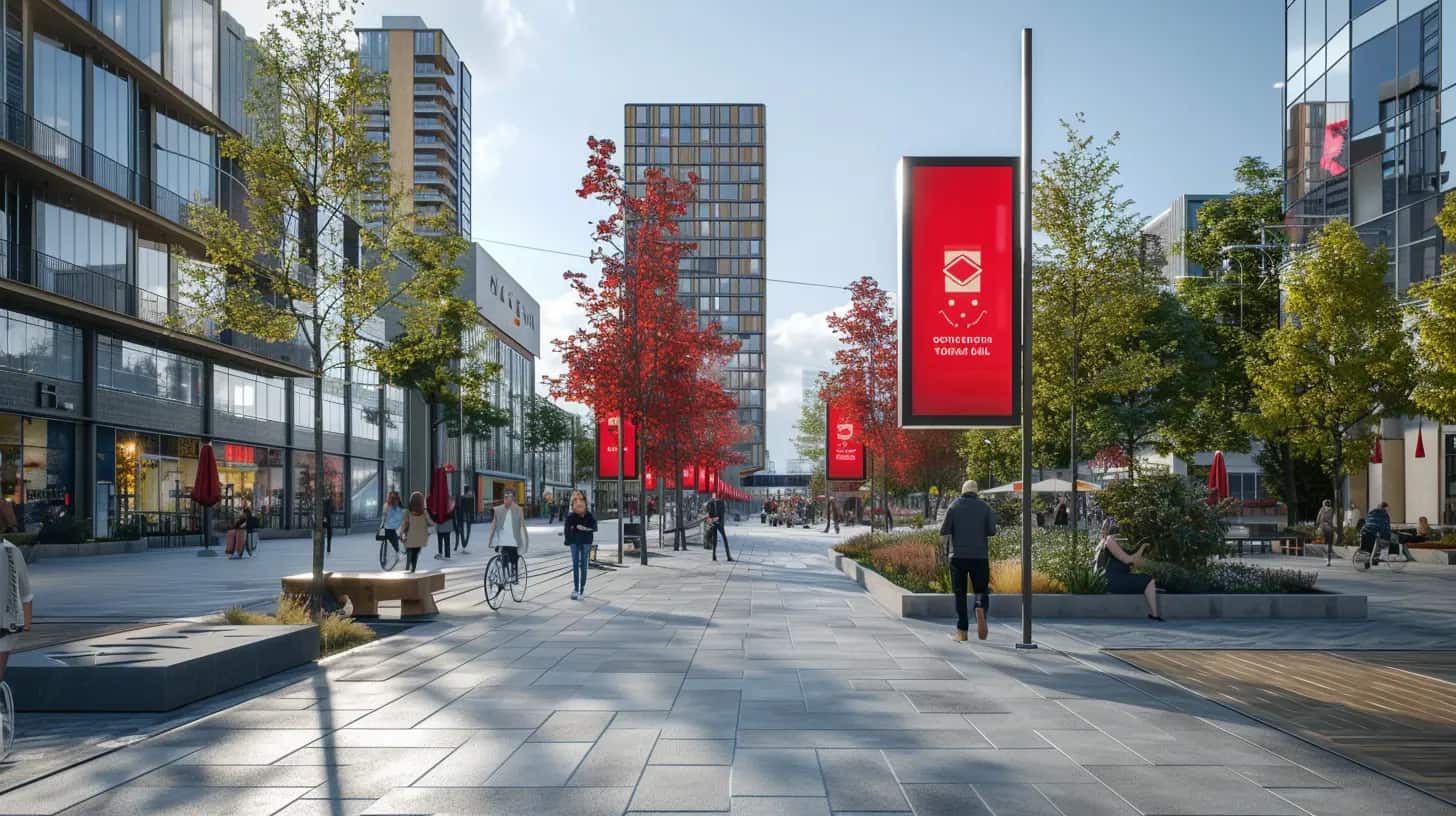
MAG's Vision for Smart City Developments in 2025
Many of the developers in Dubai focus on the integration of smart technology, such as keyless entry systems, smart lighting systems, and the use of QR codes at the gym.
Many of the developers in Dubai focus on the integration of smart technology, such as keyless entry systems, smart lighting systems, and the use of QR codes at the gym. While such features are prominently placed in marketing brochures, the reality of living in the building has been the experience of apps freezing and the building management sending service charge notifications via fax.
What MAG is trying to do is a different story. Whether or not they are succeeding in their efforts is a more interesting question, one which merits a more in-depth analysis beyond the face value of the press releases they send out. MAG Property is the real estate arm of the MAG Group, which has been active in the UAE market for over two decades. For most of the last two-plus decades, they have been a mid-tier developer: solid products, fair prices, nothing terribly exciting to write home about in terms of architectural innovation. However, a change has been afoot. In the last four to five years, MAG has been increasingly embracing a more aspirational model: smart city integration, technology at the core, sustainability at the core, a level of lifestyle offering which sits at the high end of the Dubai residential market.
Projects such as MAG City in Mohammed Bin Rashid City, MAG 330 and related developments in District 7, and the recently launched Keturah Resort and Keturah Reserve—the latter of which is the developer’s most premium and perhaps most talked-about launch in recent memory.
In 2025, with several of their projects either complete or well into the construction phase, it is possible to say definitively whether their ambitions have been achieved. This article seeks to do just that, in a balanced fashion supported by data, with a level of pragmatism in terms of what it means to integrate smart city living into the residential offering.
What MAG Is Actually Building: The Project Portfolio
Before getting into the smart city angle, it's worth mapping out what MAG's current Dubai portfolio actually looks like. The company has several active developments at different stages, and they're not all the same product.
MAG's active Dubai developments as of 2025:
- Keturah Reserve, Mohammed Bin Rashid City (MBR City): MAG's most premium project and their clearest statement of intent in the luxury segment. A villa and mansion community in District 7 of MBR City, positioned around a biophilic design philosophy — the idea that buildings and landscapes should integrate natural elements at every level, not just plant a few trees in the lobby.
- Keturah Resort, MBR City: The hospitality and branded residence counterpart to Keturah Reserve. A resort-style community with hotel services, spa infrastructure, and a food and beverage programme that MAG is developing as a destination in its own right rather than purely a hotel amenity stack.
- MAG City, MBR City: An earlier and more mid-market MAG development in the same masterplan area, now largely delivered. Provides a useful benchmark for how MAG projects perform post-handover — and the secondary market data from MAG City is relevant context for anyone assessing the newer launches.
- MAG 330, District 7: Apartment-focused development targeting the mid-to-upper segment of the Dubai residential market. Smart home integration is a central marketing point. Units range from studios to 3-bedrooms.
- MAG Eye, MBR City: A more affordable entry point within the MBR City corridor, targeting buyers who want the location and developer brand at a lower ticket size.
The common thread across the portfolio is Mohammed Bin Rashid City — specifically District 7 — as MAG's chosen territory. That geographic concentration is worth noting both as a strength (coherent masterplan vision, cumulative infrastructure investment) and a risk (concentrated exposure to a single submarket's performance).
What "Smart City" Actually Means in a MAG Development
This is the section that needs the most scrutiny — because smart city language is among the most overused and least defined in real estate marketing.
When MAG talks about smart city integration in their developments, what are they actually describing? We went through their published specifications, project documentation, and available resident feedback to separate the substance from the branding.
What MAG's smart home and community technology actually includes:
- Centralised building management systems (BMS): Energy monitoring and management at the building level, with real-time consumption data accessible to building management and aggregated reporting available to residents. More advanced than the standard UAE building management setup.
- Smart unit control systems: App-controlled lighting, climate, and access in units across the Keturah and MAG 330 developments. Voice integration with Alexa and Google Home reportedly available in premium units.
- Visitor and access management: Digital visitor passes, smart intercom systems, and keyless entry at unit and building level. Residents can grant and revoke access remotely.
- Community app: A dedicated resident app covering service requests, community announcements, facility booking, payment of service charges, and communication with building management. The app is one area where resident feedback from delivered MAG projects is actually positive — more functional than many competitor apps.
- EV charging infrastructure: Pre-installed EV charging points in parking allocations across newer developments, with smart load management to avoid grid overload during peak charging periods.
- Solar integration: Rooftop solar contributing to common area energy consumption in the Keturah developments, with the sustainability data reported through the building management system.
- Waste management systems: Automated waste collection chutes with smart monitoring in MAG 330 and Keturah developments.
What's notably absent from the current MAG smart city specification — and relevant for buyers comparing against genuine smart city developments internationally — is neighbourhood-level data integration, predictive maintenance systems with real-time resident notification, and the kind of AI-driven building optimisation that the most advanced smart city projects in Singapore or Songdo deploy. MAG's technology is real and above the Dubai average. It's not frontier smart city infrastructure.
Karim El Sadek, a UAE-based real estate technology analyst and contributor to MIPIM's annual PropTech report, described MAG's approach in a 2024 industry review as "meaningfully above the regional baseline but still in the first generation of genuine smart community development — the infrastructure is there, the data layer is still maturing." That's a fair assessment.
Keturah Reserve and Keturah Resort: The Premium Bet
These two projects are where MAG's ambition is most clearly visible — and where the price points are highest. Worth spending real time on them.
Keturah Reserve is a villa community in MBR City District 7 built around what MAG calls "bio-living" — a design philosophy developed with international specialists in biophilic architecture that goes further than most developers attempt. The principles include maximising natural light penetration, integrating living plant walls and water features as structural rather than decorative elements, using natural materials throughout, and designing outdoor spaces that connect residents to the natural environment even within an urban setting.
The villas themselves are large — starting from approximately 8,000 square feet and going up to mansion-scale — with private pools, landscaped gardens, and smart home integration across all systems. The build quality, based on completed show homes and early-phase deliveries, is among the best in the Dubai market at this price tier. Not Omniyat level, but not far off.
Prices at Keturah Reserve range from AED 14 million for the smallest villa typologies to AED 60 million and above for the largest mansion plots. That puts it in direct competition with Palm Jumeirah frond villas and Jumeirah Islands at the lower end, and with Emirates Hills and Sector E Custom Build plots at the upper end.
What buyers at Keturah are paying for specifically:
- Bio-living design framework — measurable natural light levels, plant integration, water features
- Smart home systems fully integrated at build rather than retrofitted
- Keturah Resort amenity access — spa, restaurants, pool facilities — for Reserve residents
- MBR City location with good access to Downtown and the Meydan corridor
- Developer brand that is moving deliberately upmarket with consistent investment in delivery quality
- Landscaping standards that are above the Dubai villa community norm
Keturah Resort, the branded residence and hotel component, adds a serviced layer on top of the residential offer. Apartments and serviced suites within the Resort benefit from hotel-standard housekeeping, concierge services, and F&B access — a product type that commands a rental premium in the short-term market. Prices for Resort residences range from AED 2.8 million for 1-bedroom apartments to AED 12 million for larger units with resort views.
The MAG City Secondary Market: What Past Buyers Actually Got
MAG City — an earlier MBR City project that's now largely delivered and transacting in the secondary market — gives us real data on MAG's post-handover performance. It's worth looking at honestly.
MAG City secondary market data (2024 to 2025):
- Secondary market transaction volume: steady and growing year-on-year since 2022
- Price per square foot appreciation from off-plan launch to current secondary market: approximately 35% to 50% for units purchased at early launch pricing in 2019 to 2020
- Average gross rental yield on MAG City units: 6.5% to 7.8%, broadly in line with comparable MBR City product
- Resident feedback on smart home systems: mixed — the technology works, but some residents report that the app and building management integration has been less seamless than marketed; software updates have improved this over time
- Build quality assessment from secondary market buyers: generally positive on structural quality and common area maintenance; some variation in fit-out finish quality between unit types
The picture that emerges: MAG City has delivered reasonable returns for early buyers, competent build quality, and a functional — if not flawless — smart home experience. The technology gap between marketing promise and lived reality is real but not dramatic. As a predecessor to Keturah, it suggests that the newer projects will deliver on their promise with fewer teething issues, having learned from MAG City's post-handover feedback loop.
According to Property Monitor's MBR City Residential Report Q3 2024, Mohammed Bin Rashid City as a whole posted 13.7% average price per square foot growth in 2024, outperforming the wider Dubai market. MAG's District 7 projects were among the better-performing subsets within that broader trend.
Prices, Payment Plans, and What You Actually Need Upfront
Current pricing across MAG's active Dubai developments (2025):
- MAG Eye, MBR City — studios and 1-bedrooms: AED 650,000 to AED 1.1 million
- MAG 330, District 7 — 1 to 3 bedrooms: AED 950,000 to AED 2.4 million
- Keturah Resort residences — 1 to 3 bedrooms: AED 2.8 million to AED 12 million
- Keturah Reserve villas: AED 14 million to AED 60 million and above
MAG's payment plans are competitive with the wider Dubai off-plan market. Standard structures across their current launches include 20/80 during construction with post-handover options, and selected units on 1% per month plans. The Keturah projects carry slightly more conservative payment structures — reflecting the higher ticket size and longer build timeline.
Buying costs on a AED 2 million MAG off-plan purchase:
- DLD transfer fee: 4% = AED 80,000 (some MAG launches have offered DLD fee waivers as launch incentives — always check)
- Registration fee: AED 4,000
- Agent commission: 2% = AED 40,000
- SPA legal review: AED 5,000 to AED 8,000
- Valuation (at mortgage stage): AED 2,500 to AED 3,000
Total acquisition costs on top of purchase price: approximately AED 131,500 to AED 135,000. Budget 7% to 8% above the headline price.
Our Research: MAG vs. Comparable Dubai Smart-Positioned Developers
We compared MAG's smart city and technology positioning against three developers making similar claims in the Dubai market — Sobha, Emaar's premium sub-brands, and Ellington — across the metrics most relevant to tech-forward buyers.
MAG vs. comparable Dubai developers on smart home and community technology (2025):
- Smart home integration depth: MAG and Ellington broadly comparable and ahead of most mid-market developers; Sobha strong on build quality but lighter on technology integration
- Biophilic and sustainability design: MAG's Keturah is the most developed biophilic framework in Dubai; Sobha and Emaar Address residences incorporate sustainability credentials but without the same conceptual framework
- Community app functionality: MAG ahead of most competitors based on resident feedback from delivered projects
- EV charging infrastructure: MAG, Sobha, and Emaar premium products broadly comparable — all include pre-installed EV provisions
- Post-handover technology support: limited data for MAG's newer projects; MAG City feedback suggests improvement over time but initial post-handover support was inconsistent
- Price premium for technology features vs. comparable non-tech-positioned product: MAG carries a 10% to 18% price premium over comparable spec non-tech-branded developments in the same corridors
- Secondary market recognition of technology premium: still limited — the Dubai secondary market does not yet reliably price smart home features into resale values the way it prices view and floor level
The honest read: MAG's technology proposition is real and above average for Dubai. The premium it commands at purchase is not yet fully reflected in secondary market pricing — which means buyers are paying for a lifestyle and investment thesis, not a fully proven resale premium. That may change as the market matures and smart community features become a more standardised buyer expectation.
Is MAG Worth Buying Into in 2025?
Thus, the opportunity may be viewed favorably by the appropriate purchaser, while it may be viewed unfavorably by the inappropriate purchaser. The strengths of MAG are obvious: truly superior construction quality, technology integration beyond the majority of competitors, a masterplan vision for MBR City, and a developer who has progressively delivered the upper end of the market with reliability rather than marketing hyperbole. Keturah is a serious product for serious consideration by the AED 3 million to AED 60 million purchaser.
The honest caveats are as follows: the premium for smart city living has yet to be fully validated at the secondary market price level, the geographic concentration within MBR City District 7 links the investment to the performance of the corridor, and the technology experience has had some post-handover frictions to resolve.
For investors who want yield, MAG's mid-market projects — MAG 330, MAG Eye — offer solid numbers in the 6.5% to 7.5% gross range with reasonable entry prices. For buyers who want a premium villa community with a genuine design philosophy and above-average smart home integration, Keturah Reserve is one of the more credible high-end products currently on the Dubai market.
Browse MAG's current projects on our developer page or explore what's available in MBR City and surrounding areas in our area guides. If you want to compare MAG against other developers at a similar price point before you decide, our team can walk you through the options and give you a straight read on where the value sits right now.
Related stories
Dubai's Established Charm: The Case for Older Homes
In a city focused on the future, I believe the smartest move for many buyers is to look back. Dubai's seasoned communities offer space, character, and surprising value that new builds often can't match.

The True Cost of Owning a Dubai Property
Beyond the purchase price, your annual budget for a Dubai home must account for service charges, utilities, and maintenance. I'll break down every ongoing expense you need to plan for.
Calculating ROI on Dubai Rental Upgrades
As a landlord in Dubai, you can't just follow trends. I'll show you how to calculate the precise ROI of minor property upgrades to genuinely increase your rental yield.
Echoes, in your inbox
One thoughtful email a month. Market insight, new launches, no spam.